I . A . Richard’s
two uses of
Language
I am BhumikaMahida
I am here because I love to give presentation
before you on the topic “I.A.Richard’stwo
uses ofthelanguage”.
Hello!
NAME : MAHIDA BHUMIKA PRAKASHBHAI
M A SEM – 2
ROLL NUMBER : 4
ENROLLMENT NUMBER :3069206420200021
TOPIC : I.A.Richard’s two uses of the language”
subject : ‘paper-109 Literary Theory & Criticism and
Indian Aesthetics’
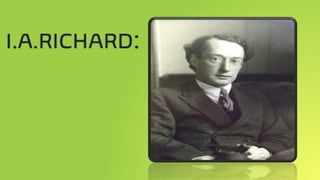
I.A.RICHARD:
I.A.RICHARD :
I.A. Richards, born in 1893, is one of the great critics
of the modern age, and has influenced a number
of critics on both sides of the Atlantic. He and T.S.
Eliot are pioneers in the field of New Criticism,
though they differ from each other in certain
important respects.
Richard , In his “Principles of
Literary Criticism” chapter 34, he
discusses the most neglected subject,
i.e. the theory of language and the
two uses of language.
According to I.A. Richards
language can be used in two
ways, i.e.
▪ the scientific use
and
▪ the emotive one
Let’s define…
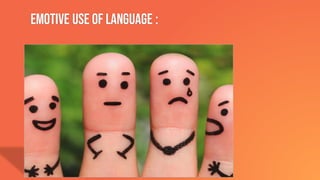
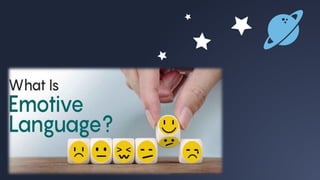
Emotive Use of Language :
Emotive use of language :
▪ Emotive Language is the type of language which
conveys or evokes an emotion in the mind of the
reader.
▪ Emotive language often aims to persuade the reader
or listener to share the writer or speaker’s point of
view, using language to stimulate an emotional
reaction.
According to Richard’s…
▪ Using words in emotive manner means using them for
the sake of attitudes and emotions which ensue.
▪ For example… In poetry, the word fire may denote ‘with
heart on fire’, where ‘on fire’ means ‘in an excited state’.
Instead of recalling the object, the word stands to evoke
an emotion.
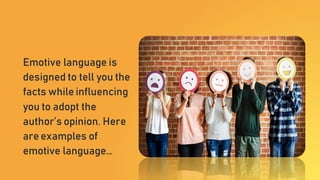
Emotive language is
designed to tell you the
facts while influencing
you to adopt the
author’s opinion. Here
are examples of
emotive language…
Scientific use of
language:
Scientificview:
Whenpeopleareengagedin science, thelanguageof
communication theyusetriestobe morepreciseand
consistent.Scienceoftenintroduces technical
words withspecificmeaningsand alsogives
scientificmeaningto words which may havea
differentusage in everydaylanguage…
Use of
scientific
language:
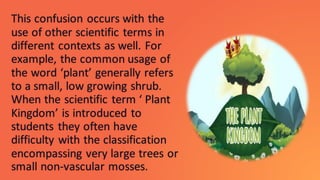
This confusion occurs with the
use of other scientific terms in
different contexts as well. For
example, the common usage of
the word ‘plant’ generally refers
to a small, low growing shrub.
When the scientific term ‘ Plant
Kingdom’ is introduced to
students they often have
difficulty with the classification
encompassing very large trees or
small non-vascular mosses.
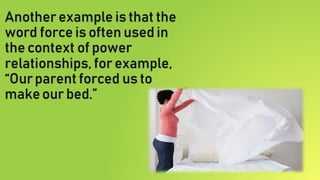
Another example is that the
word force is often used in
the context of power
relationships, for example,
“Ourparent forced us to
makeour bed.”
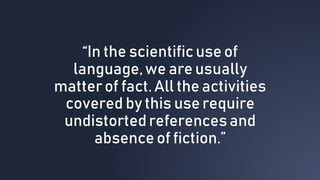
“In the scientificuse of
language,we areusually
matterof fact.All the activities
covered by this use require
undistortedreferencesand
absence of fiction.”
Differences
between use
of the
scientific
language and
emotive
language
According to Richard…
In the scientific use of the language, the difference in
reference is fatal (a failure) but in the emotive
language it is not so.
In the scientific use of language, the references should
be correct and the relation of references should be
logical. In the emotive use of language, any truth or
logical arrangement is not necessary
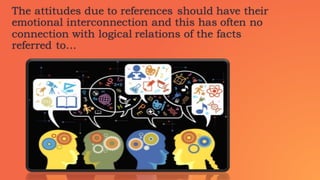
The attitudes due to references should have their
emotional interconnection and this has often no
connection with logical relations of the facts
referred to…
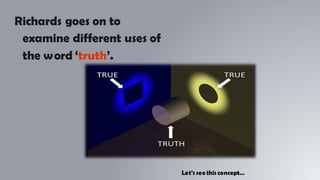
Richards goes on to
examine different uses of
the word ‘truth’.
Let’s see this concept…
In the scientific use, the
referencesare true and
logical there is very little
involvement of arts.
Richards says that the
term ‘true’ should be
reserved for the scientific
use. But the emotive
power of the word is far
too great for ThiS.
So Richards goes
on to consider
the connotations
of the word
‘truth’ in
criticism. In
literary
criticism, the
common use is
‘acceptability’
or ‘probability’.
For example, Robinson Crusoe is true in
the sense of the acceptability of things
we are told, in the interest of the
narrative whether or not such a person
existed in real life is not relevant to the
‘truth’ of the novel.
Keats uses
‘truth’ in a
confused way.
He said, ‘What
the
imagination
seizes as
beauty must
be truth.”
So, In the last I want to say that
Richard tries to promote the idea of harmony
betweenscience and poetry …
We can conclude In short that The chief motifs of
the writer iS to establish the difference between the
language of science and language of art …
References:
“Introducing scientific language”
• https://www.education.vic.gov.au/school/teachers/teachingresources/discipline/scie
nce/continuum/Pages/scilang.aspx
“What Is Emotive Language? (with Examples)”
• https://www.grammar-monster.com/glossary/emotive_language.htm
“IA Richards’ Concept of the Two Uses of Language”
• https://literariness.org/2016/03/18/ia-richards-concept-of-the-two-uses-of-language/
anyquestions?
You can find me at:
@gudubanku
and
Mail me :
mahidabhumika6128@gmail.com

I.A.Richard's Two Uses of Languages

  • 1.
    I . A. Richard’s two uses of Language
  • 2.
    I am BhumikaMahida Iam here because I love to give presentation before you on the topic “I.A.Richard’stwo uses ofthelanguage”. Hello!
  • 3.
    NAME : MAHIDABHUMIKA PRAKASHBHAI M A SEM – 2 ROLL NUMBER : 4 ENROLLMENT NUMBER :3069206420200021 TOPIC : I.A.Richard’s two uses of the language” subject : ‘paper-109 Literary Theory & Criticism and Indian Aesthetics’
  • 4.
  • 5.
    I.A.RICHARD : I.A. Richards,born in 1893, is one of the great critics of the modern age, and has influenced a number of critics on both sides of the Atlantic. He and T.S. Eliot are pioneers in the field of New Criticism, though they differ from each other in certain important respects.
  • 6.
    Richard , Inhis “Principles of Literary Criticism” chapter 34, he discusses the most neglected subject, i.e. the theory of language and the two uses of language.
  • 7.
    According to I.A.Richards language can be used in two ways, i.e. ▪ the scientific use and ▪ the emotive one Let’s define…
  • 8.
    Emotive Use ofLanguage :
  • 10.
    Emotive use oflanguage : ▪ Emotive Language is the type of language which conveys or evokes an emotion in the mind of the reader. ▪ Emotive language often aims to persuade the reader or listener to share the writer or speaker’s point of view, using language to stimulate an emotional reaction.
  • 11.
    According to Richard’s… ▪Using words in emotive manner means using them for the sake of attitudes and emotions which ensue. ▪ For example… In poetry, the word fire may denote ‘with heart on fire’, where ‘on fire’ means ‘in an excited state’. Instead of recalling the object, the word stands to evoke an emotion.
  • 12.
    Emotive language is designedto tell you the facts while influencing you to adopt the author’s opinion. Here are examples of emotive language…
  • 13.
  • 14.
    Scientificview: Whenpeopleareengagedin science, thelanguageof communicationtheyusetriestobe morepreciseand consistent.Scienceoftenintroduces technical words withspecificmeaningsand alsogives scientificmeaningto words which may havea differentusage in everydaylanguage…
  • 15.
  • 16.
    This confusion occurswith the use of other scientific terms in different contexts as well. For example, the common usage of the word ‘plant’ generally refers to a small, low growing shrub. When the scientific term ‘ Plant Kingdom’ is introduced to students they often have difficulty with the classification encompassing very large trees or small non-vascular mosses.
  • 17.
    Another example isthat the word force is often used in the context of power relationships, for example, “Ourparent forced us to makeour bed.”
  • 18.
    “In the scientificuseof language,we areusually matterof fact.All the activities covered by this use require undistortedreferencesand absence of fiction.”
  • 19.
  • 20.
    According to Richard… Inthe scientific use of the language, the difference in reference is fatal (a failure) but in the emotive language it is not so. In the scientific use of language, the references should be correct and the relation of references should be logical. In the emotive use of language, any truth or logical arrangement is not necessary
  • 21.
    The attitudes dueto references should have their emotional interconnection and this has often no connection with logical relations of the facts referred to…
  • 22.
    Richards goes onto examine different uses of the word ‘truth’. Let’s see this concept…
  • 23.
    In the scientificuse, the referencesare true and logical there is very little involvement of arts. Richards says that the term ‘true’ should be reserved for the scientific use. But the emotive power of the word is far too great for ThiS.
  • 24.
    So Richards goes onto consider the connotations of the word ‘truth’ in criticism. In literary criticism, the common use is ‘acceptability’ or ‘probability’.
  • 25.
    For example, RobinsonCrusoe is true in the sense of the acceptability of things we are told, in the interest of the narrative whether or not such a person existed in real life is not relevant to the ‘truth’ of the novel.
  • 26.
    Keats uses ‘truth’ ina confused way. He said, ‘What the imagination seizes as beauty must be truth.”
  • 27.
    So, In thelast I want to say that Richard tries to promote the idea of harmony betweenscience and poetry … We can conclude In short that The chief motifs of the writer iS to establish the difference between the language of science and language of art …
  • 28.
    References: “Introducing scientific language” •https://www.education.vic.gov.au/school/teachers/teachingresources/discipline/scie nce/continuum/Pages/scilang.aspx “What Is Emotive Language? (with Examples)” • https://www.grammar-monster.com/glossary/emotive_language.htm “IA Richards’ Concept of the Two Uses of Language” • https://literariness.org/2016/03/18/ia-richards-concept-of-the-two-uses-of-language/
  • 29.
    anyquestions? You can findme at: @gudubanku and Mail me : mahidabhumika6128@gmail.com