Dhvani Theory
NAME::- SNEHA AGRAVAT
BATCH:- 2020-22 (MA SEM 2)
PAPER 9:- LITERARY THEORY& CRITICISM AND INDIAN AESTHETICS
ROLL NO.:-16
ENROLLMENT NO.:-3069206420200001
E-MAIL ID :- SNEHAAGRAVAT2000@GMAIL.COM
SUBMITTED TO:- S.B.GARDI DEPARTMENT OF ENGLISH MAHARAJA KRISHNKUMARSINHJI BHAVNGAR UNIVERSITY
Indian Aesthetics
 In Indian poetics, scholars had different viewpoints, so they formed different
sampradayas (school of thought).
 Alamkara (poetic figure)
 Rasa (aesthetic pleasure)
 Riti (style)
 Guna (attribute)
 Dhvani (suggestion)
 Vakrokti (obliquity)
 Aucitya (propriety)
Dhvani School of Poetry
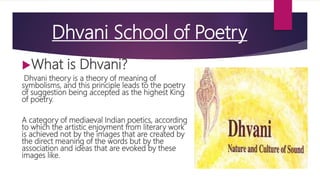
What is Dhvani?
Dhvani theory is a theory of meaning of
symbolisms, and this principle leads to the poetry
of suggestion being accepted as the highest King
of poetry.
A category of mediaeval Indian poetics, according
to which the artistic enjoyment from literary work
is achieved not by the images that are created by
the direct meaning of the words but by the
association and ideas that are evoked by these
images like.
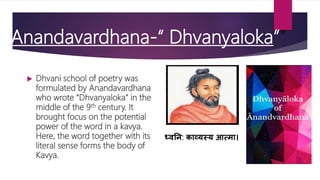
 Dhvani school of poetry was
formulated by Anandavardhana
who wrote “Dhvanyaloka” in the
middle of the 9th century. It
brought focus on the potential
power of the word in a kavya.
Here, the word together with its
literal sense forms the body of
Kavya.
Anandavardhana-“ Dhvanyaloka””
ध्वनि: काव्यस्य आत्मा।
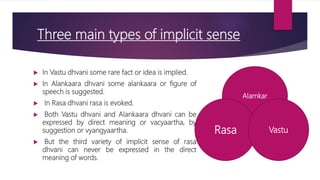
Three main types of implicit sense
 In Vastu dhvani some rare fact or idea is implied.
 In Alankaara dhvani some alankaara or figure of
speech is suggested.
 In Rasa dhvani rasa is evoked.
 Both Vastu dhvani and Alankaara dhvani can be
expressed by direct meaning or vacyaartha, by
suggestion or vyangyaartha.
 But the third variety of implicit sense of rasa
dhvani can never be expressed in the direct
meaning of words.
Alamkar
Rasa Vastu
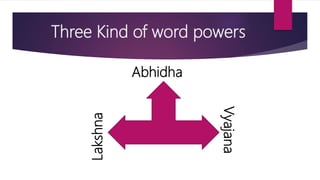
Three Kind of word powers
Abhidha
Lakshna
Vyajana
Abhidha
 Ahidha is basic and two saktis rest upon it. Abhidha may
be defined as that power of words which conveys the
conventional meaning or the literal meaning of the
expression.
 Example:-
 1) Cow is eating grass.
 2)અંધારું થયું અને અજવાળું ગયું.
 In Both sentence we get direct meaning and
that is Abhidha.
Lakshana
Lakhsha second power of the word is, it is indication power. It
consists in the external characteristics of the expression which are
indicative of something deeper.
 Example:-
 1)મારું ઘર હાઈ કોર્ટ રોડ પર છે.
 2)Mountain and squirrel are quarrel.
 In this both sentence we can’t take direct meaning.
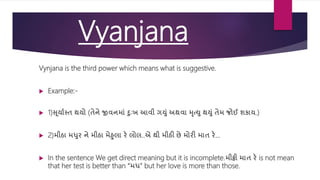
Vyanjana
Vynjana is the third power which means what is suggestive.
 Example:-
 1)સ ૂર્ાટસ્ત થર્ો (તેને જીવનમાું દુઃખ આવી ગયું અથવા મૃત્ય થયું તેમ જોઈ શકાર્.)
 2)મીઠા મધર ને મીઠા મેહલા રે લોલ..એ થી મીઠી છે મોરી માત રે...
 In the sentence We get direct meaning but it is incomplete.મીઠ્ઠી માત રે is not mean
that her test is better than “મધ” but her love is more than those.
Conclusion
 In sum up we can say that Anandavardhana, who
was an advocate of rasa, was also the greatest
exponent of Dhvani. He concluded that rasa was
expressed only through dhvani. His commentator
Abhinavagupta lays down that dhvani can be
employed in the whole work or in just the meaning
or only in a word.
Reference
Beehive digital concepts cochin. “chapter iii. Dhvani and rasa.”
shodhganga.inflibnet.ac.in.
<shodhganga.inflibnet.ac.in/bitstream/10603/644/8/08_chapter3pdf>.
Rao, sreenivasa. “kavya and indian poetics.” 24 july 2015. wordpress.com.
http://sreenivasarao.com/tag/classifications-of-dhvani/.
Shodhganga. “chapter iii indian poetics.” n.d.
Dhvani  Theory

Dhvani Theory

  • 1.
    Dhvani Theory NAME::- SNEHAAGRAVAT BATCH:- 2020-22 (MA SEM 2) PAPER 9:- LITERARY THEORY& CRITICISM AND INDIAN AESTHETICS ROLL NO.:-16 ENROLLMENT NO.:-3069206420200001 E-MAIL ID :- SNEHAAGRAVAT2000@GMAIL.COM SUBMITTED TO:- S.B.GARDI DEPARTMENT OF ENGLISH MAHARAJA KRISHNKUMARSINHJI BHAVNGAR UNIVERSITY
  • 2.
    Indian Aesthetics  InIndian poetics, scholars had different viewpoints, so they formed different sampradayas (school of thought).  Alamkara (poetic figure)  Rasa (aesthetic pleasure)  Riti (style)  Guna (attribute)  Dhvani (suggestion)  Vakrokti (obliquity)  Aucitya (propriety)
  • 3.
    Dhvani School ofPoetry What is Dhvani? Dhvani theory is a theory of meaning of symbolisms, and this principle leads to the poetry of suggestion being accepted as the highest King of poetry. A category of mediaeval Indian poetics, according to which the artistic enjoyment from literary work is achieved not by the images that are created by the direct meaning of the words but by the association and ideas that are evoked by these images like.
  • 4.
     Dhvani schoolof poetry was formulated by Anandavardhana who wrote “Dhvanyaloka” in the middle of the 9th century. It brought focus on the potential power of the word in a kavya. Here, the word together with its literal sense forms the body of Kavya. Anandavardhana-“ Dhvanyaloka”” ध्वनि: काव्यस्य आत्मा।
  • 5.
    Three main typesof implicit sense  In Vastu dhvani some rare fact or idea is implied.  In Alankaara dhvani some alankaara or figure of speech is suggested.  In Rasa dhvani rasa is evoked.  Both Vastu dhvani and Alankaara dhvani can be expressed by direct meaning or vacyaartha, by suggestion or vyangyaartha.  But the third variety of implicit sense of rasa dhvani can never be expressed in the direct meaning of words. Alamkar Rasa Vastu
  • 6.
    Three Kind ofword powers Abhidha Lakshna Vyajana
  • 7.
    Abhidha  Ahidha isbasic and two saktis rest upon it. Abhidha may be defined as that power of words which conveys the conventional meaning or the literal meaning of the expression.  Example:-  1) Cow is eating grass.  2)અંધારું થયું અને અજવાળું ગયું.  In Both sentence we get direct meaning and that is Abhidha.
  • 8.
    Lakshana Lakhsha second powerof the word is, it is indication power. It consists in the external characteristics of the expression which are indicative of something deeper.  Example:-  1)મારું ઘર હાઈ કોર્ટ રોડ પર છે.  2)Mountain and squirrel are quarrel.  In this both sentence we can’t take direct meaning.
  • 9.
    Vyanjana Vynjana is thethird power which means what is suggestive.  Example:-  1)સ ૂર્ાટસ્ત થર્ો (તેને જીવનમાું દુઃખ આવી ગયું અથવા મૃત્ય થયું તેમ જોઈ શકાર્.)  2)મીઠા મધર ને મીઠા મેહલા રે લોલ..એ થી મીઠી છે મોરી માત રે...  In the sentence We get direct meaning but it is incomplete.મીઠ્ઠી માત રે is not mean that her test is better than “મધ” but her love is more than those.
  • 10.
    Conclusion  In sumup we can say that Anandavardhana, who was an advocate of rasa, was also the greatest exponent of Dhvani. He concluded that rasa was expressed only through dhvani. His commentator Abhinavagupta lays down that dhvani can be employed in the whole work or in just the meaning or only in a word.
  • 11.
    Reference Beehive digital conceptscochin. “chapter iii. Dhvani and rasa.” shodhganga.inflibnet.ac.in. <shodhganga.inflibnet.ac.in/bitstream/10603/644/8/08_chapter3pdf>. Rao, sreenivasa. “kavya and indian poetics.” 24 july 2015. wordpress.com. http://sreenivasarao.com/tag/classifications-of-dhvani/. Shodhganga. “chapter iii indian poetics.” n.d.