GAMIFICATION
PREPARED BY:
ANKIT HASIJA (12409)
Gamification is : the process of using game
thinking, mechanics and rewards for non-
game applications in order to increase
engagement and loyalty
GAMIFICA
TION
LOYALTY
PROGRAM
S
GAME
DESIGN
BEHAVIOU
RAL
ECONOMI
CS
What exactly does
it do?
YOU ARE NOT MAKING A GAME….
YOU ARE USING GAME-LIKE MECHANICS TO
IMPROVE
IT IS NOT VIDEO GAMES…
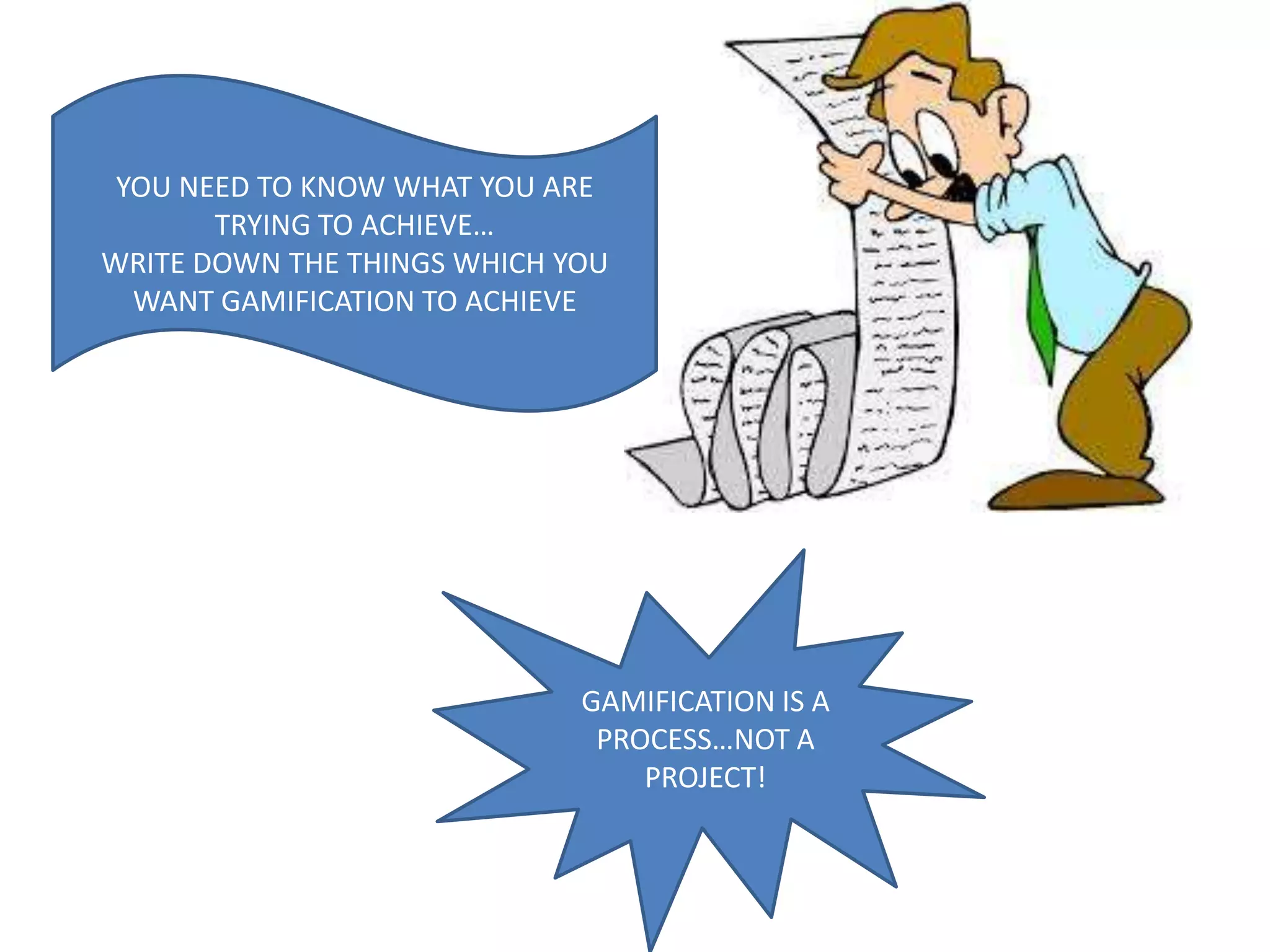
GAMIFICATION IS A
PROCESS…NOT A
PROJECT!
YOU NEED TO KNOW WHAT YOU ARE
TRYING TO ACHIEVE…
WRITE DOWN THE THINGS WHICH YOU
WANT GAMIFICATION TO ACHIEVE
HISTORY TIMELINE
NEEDS ADDRESSED BY
GAMIFICATION:
 USERS STAY LONGER
 COME BACK MORE OFTEN
 GENERATE MORE REVENUES
 1910: TOYS IN CRACKER JACK BOXES
 1980: BRITISH LEGENDS
 2002-PRESENT:
 SERIOUS GAME INITIATIVES
 GAMES FOR CHANGE
 EXAMPLES: CONUNDRA,
BUNCHBALL
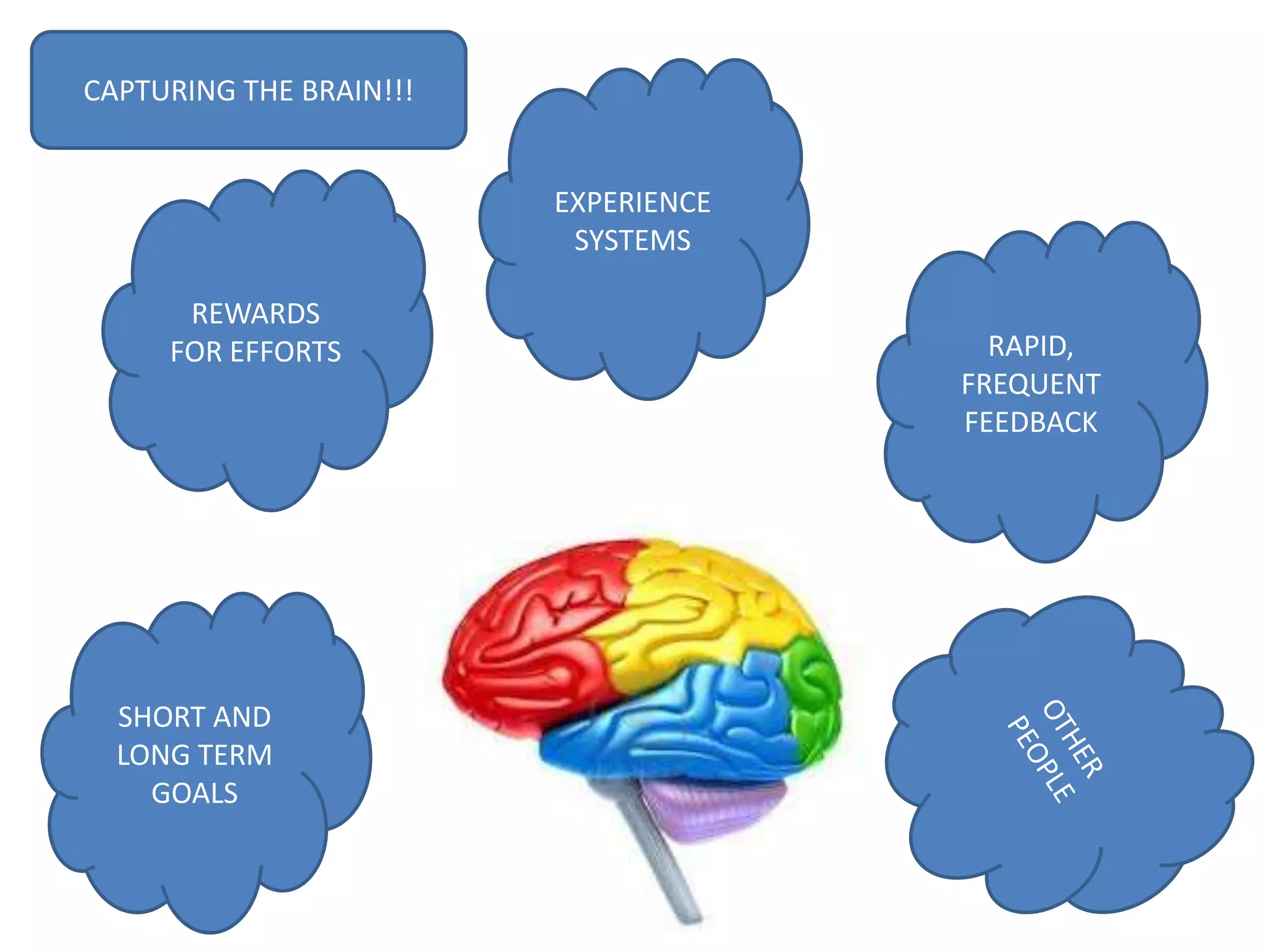
SHORT AND
LONG TERM
GOALS
RAPID,
FREQUENT
FEEDBACK
EXPERIENCE
SYSTEMS
REWARDS
FOR EFFORTS
CAPTURING THE BRAIN!!!
ADVANTAGES
Community curation
Does Market amplification
Helps in Market Research
Helps in customer retention
DISADVANTAGES
Rewards are not equivalent to
achievements
Distort social interaction
Skew research outputs
Limited participation bandwidth
Under mining intrinsic values
Interfering with social norms
ONE OF ITS KEY ADVANTAGES:
Market Research Consideration- Since market
research industry has been slow in making
surveys more engaging, so here’s what
Gamification has to offer…
IT CAN BRING A DOUBLE SHIFT IN FOCUS AND
FRAMING…
 From usability to motivation
 From extrinsic to intrinsic motivation
 Sometimes in order to change something into a
game, it often needs to change so much!
It is placed at “Peak of Inflated Expectations”
Expectation of reaching the Plateau of
Productivity in 5 to 10 years
Gamification is expected to grow in the areas
of:
employee performance
innovation management
education
personal development
customer engagement
PLACE IN GARTNER HYPE CYCLE
FUTURE OF GAMIFICATION
• By 2014, 70% of Global 2000 organisations will
have at least one gamified application
• By 2015 more than 50% of the organisations
that undertake innovation processes, will
gamify those processes
• It is predicted to become a significant trend in
the next five years
Gamification,

Gamification,

  • 1.
  • 2.
    Gamification is :the process of using game thinking, mechanics and rewards for non- game applications in order to increase engagement and loyalty GAMIFICA TION LOYALTY PROGRAM S GAME DESIGN BEHAVIOU RAL ECONOMI CS
  • 3.
  • 4.
    YOU ARE NOTMAKING A GAME…. YOU ARE USING GAME-LIKE MECHANICS TO IMPROVE IT IS NOT VIDEO GAMES…
  • 5.
    GAMIFICATION IS A PROCESS…NOTA PROJECT! YOU NEED TO KNOW WHAT YOU ARE TRYING TO ACHIEVE… WRITE DOWN THE THINGS WHICH YOU WANT GAMIFICATION TO ACHIEVE
  • 6.
    HISTORY TIMELINE NEEDS ADDRESSEDBY GAMIFICATION:  USERS STAY LONGER  COME BACK MORE OFTEN  GENERATE MORE REVENUES  1910: TOYS IN CRACKER JACK BOXES  1980: BRITISH LEGENDS  2002-PRESENT:  SERIOUS GAME INITIATIVES  GAMES FOR CHANGE  EXAMPLES: CONUNDRA, BUNCHBALL
  • 8.
  • 9.
    ADVANTAGES Community curation Does Marketamplification Helps in Market Research Helps in customer retention DISADVANTAGES Rewards are not equivalent to achievements Distort social interaction Skew research outputs Limited participation bandwidth Under mining intrinsic values Interfering with social norms
  • 10.
    ONE OF ITSKEY ADVANTAGES: Market Research Consideration- Since market research industry has been slow in making surveys more engaging, so here’s what Gamification has to offer… IT CAN BRING A DOUBLE SHIFT IN FOCUS AND FRAMING…  From usability to motivation  From extrinsic to intrinsic motivation  Sometimes in order to change something into a game, it often needs to change so much!
  • 11.
    It is placedat “Peak of Inflated Expectations” Expectation of reaching the Plateau of Productivity in 5 to 10 years Gamification is expected to grow in the areas of: employee performance innovation management education personal development customer engagement PLACE IN GARTNER HYPE CYCLE
  • 12.
    FUTURE OF GAMIFICATION •By 2014, 70% of Global 2000 organisations will have at least one gamified application • By 2015 more than 50% of the organisations that undertake innovation processes, will gamify those processes • It is predicted to become a significant trend in the next five years