PRESENTATION
ON
NATIONAL CURRICULUM
FRAMEWORK 2005
13 December, 2023
DEPARTMENT OF EDUCATION,
ARYA MAHILA PG COLLEGE,
CHETGANJ, VARANASI
DEPARTMENT
OF
EDUCATION
Presented by : FACULTY
Nausheen Khan (Social Science) Prof. Namita Sinha
&
Nidhi Tiwari (Science)
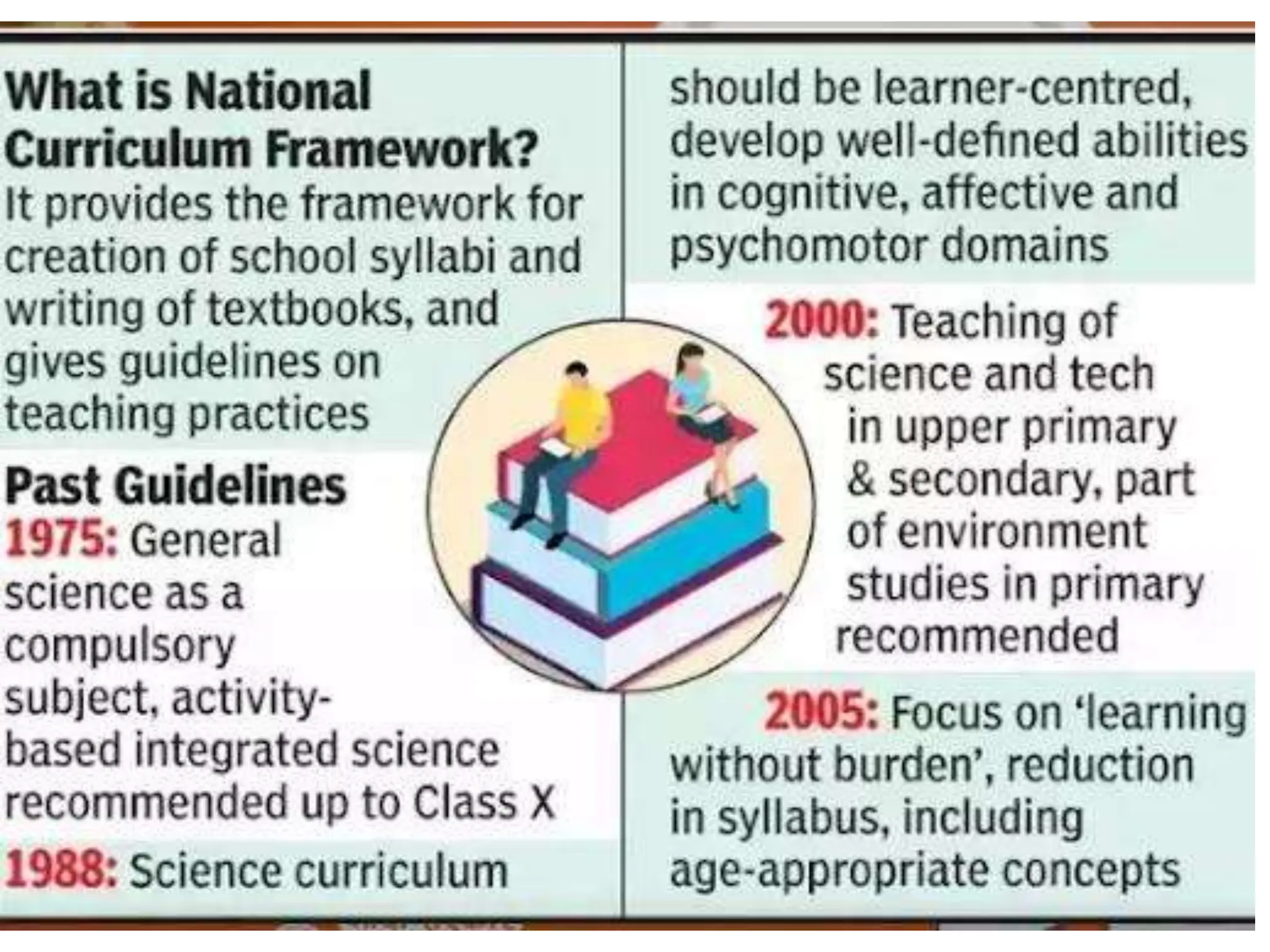
Development of NCF-2005
• The revision of National Curriculum
framework was to be done in the light of
the report, Learning Without Burden
(1993).
• The process of development of
NCF(National curriculum framework) was
initiated in November 2004 by setting up
various structures like the National
Steering Committee Chaired by Prof. Yash
Pal and twenty-one National Focus Groups
on themes of curricular areas, systemic
reforms, and national concerns.
Continued…
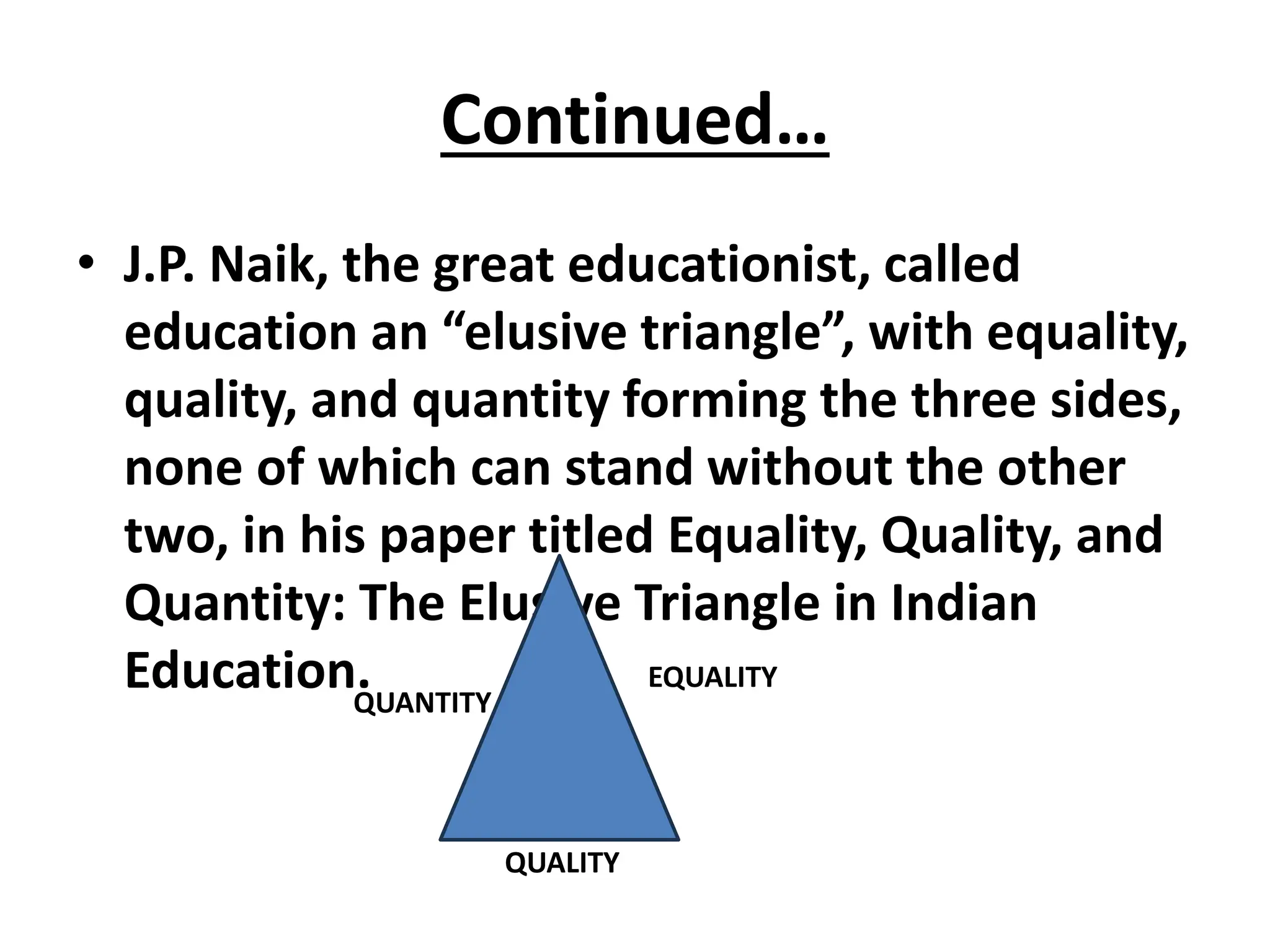
• J.P. Naik, the great educationist, called
education an “elusive triangle”, with equality,
quality, and quantity forming the three sides,
none of which can stand without the other
two, in his paper titled Equality, Quality, and
Quantity: The Elusive Triangle in Indian
Education.
QUALITY
EQUALITY
QUANTITY
Continued…
• NCF 2005 is also influenced by Mahatma
Gandhi’s concept of Nai Talim, or Basic
Education.
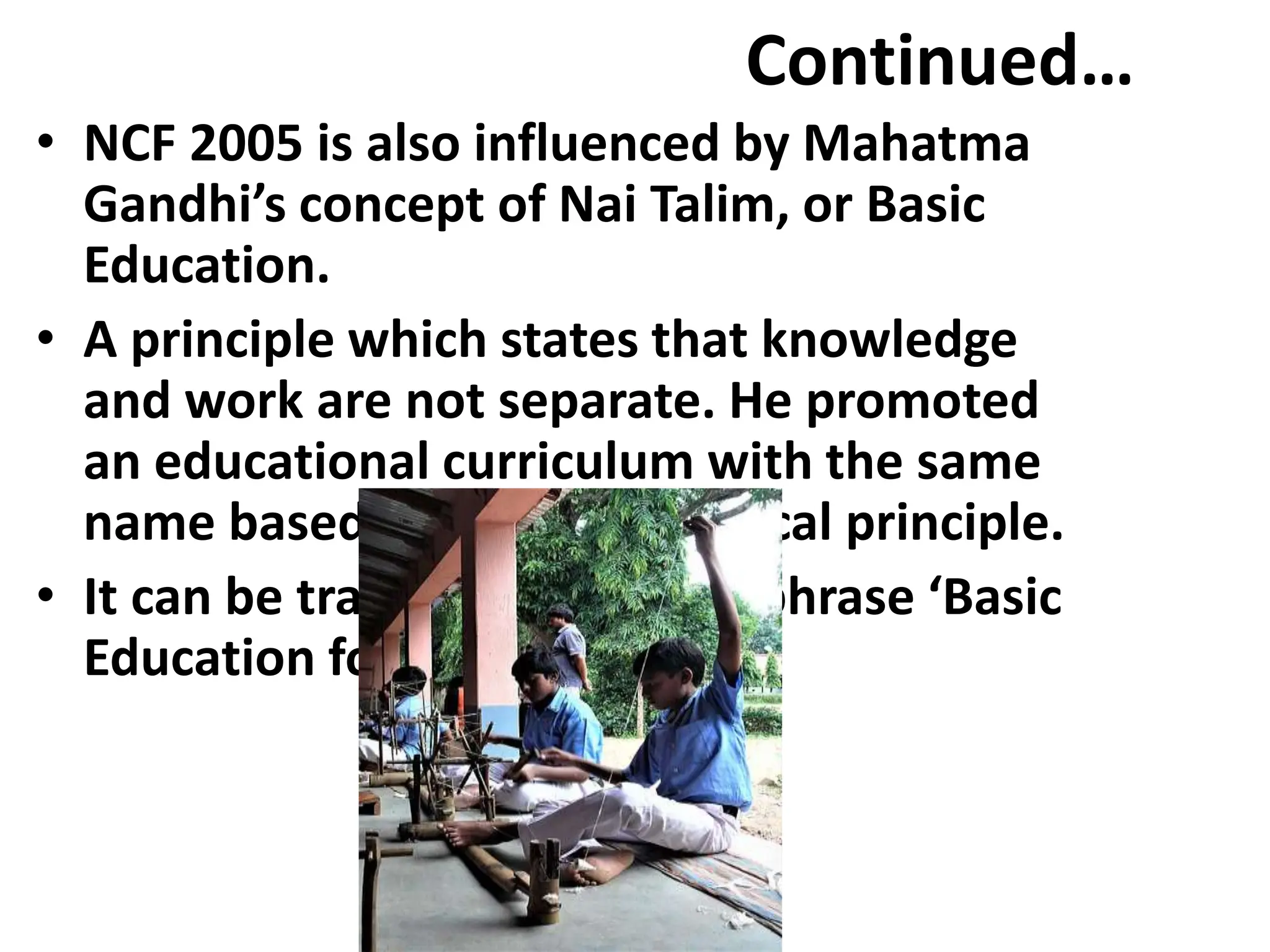
• A principle which states that knowledge
and work are not separate. He promoted
an educational curriculum with the same
name based on this pedagogical principle.
• It can be translated with the phrase ‘Basic
Education for all’.
Contents Of NCF-2005
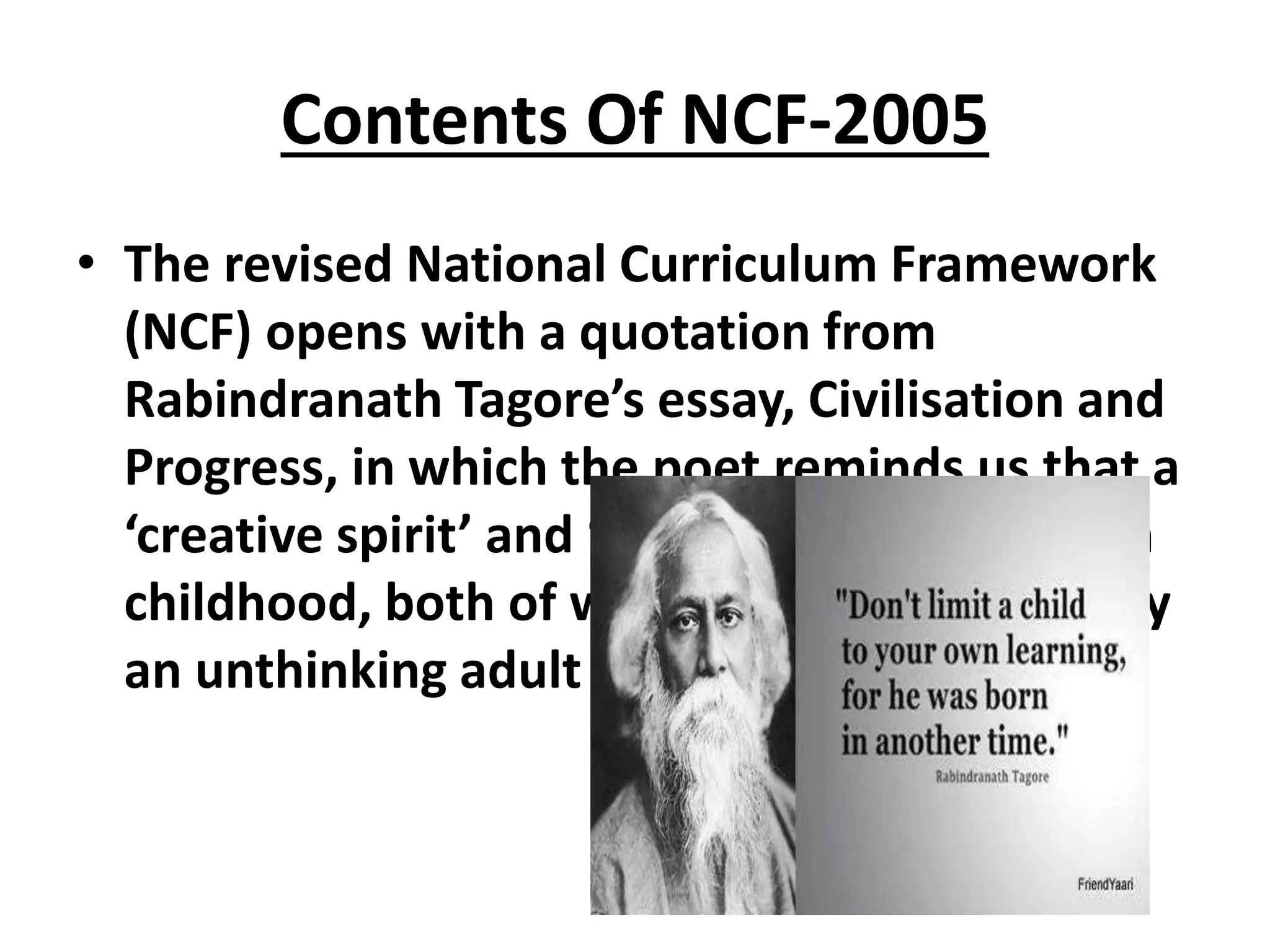
• The revised National Curriculum Framework
(NCF) opens with a quotation from
Rabindranath Tagore’s essay, Civilisation and
Progress, in which the poet reminds us that a
‘creative spirit’ and ‘generous joy’ are key in
childhood, both of which can be distorted by
an unthinking adult world.
Continued…
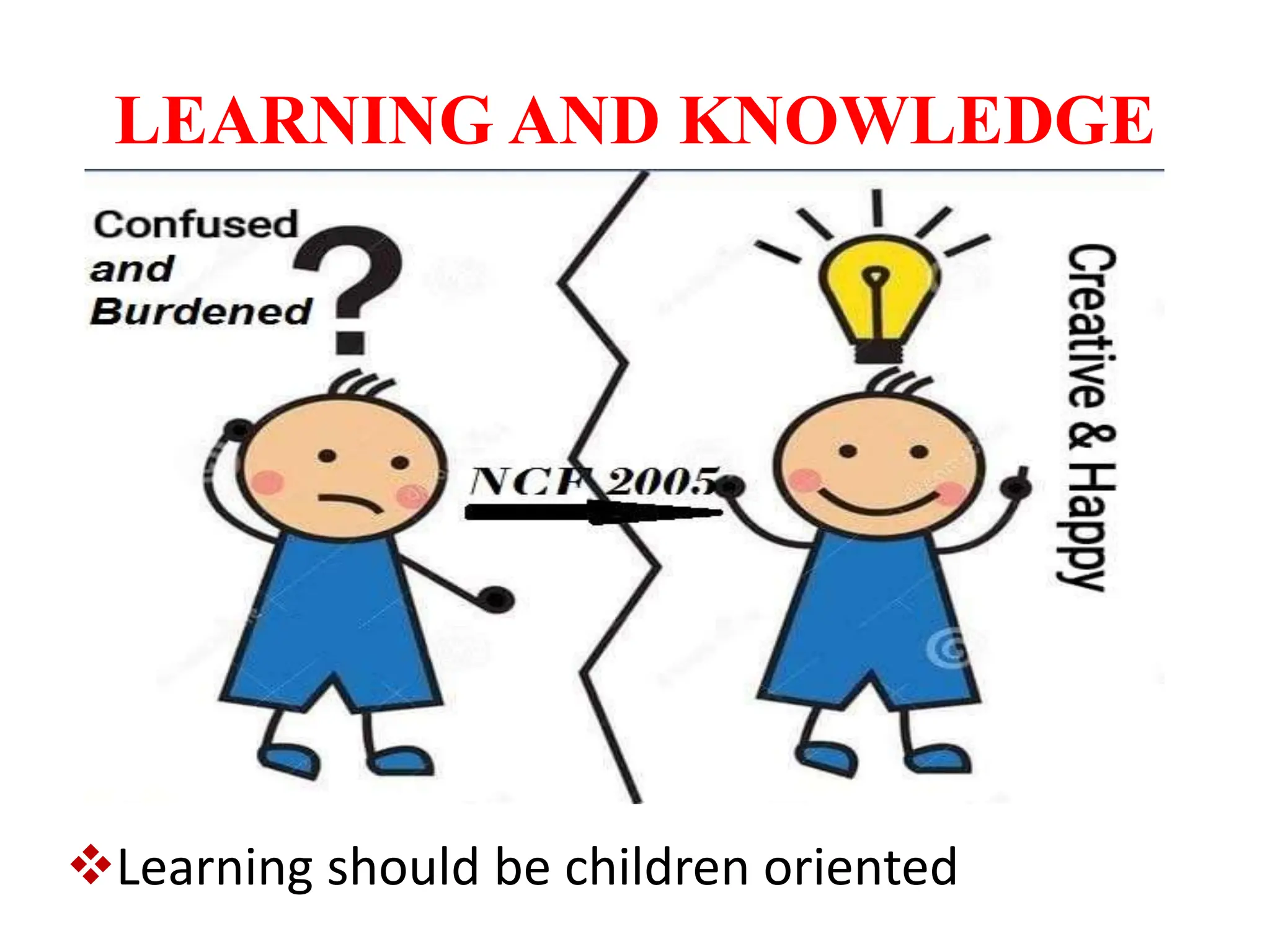
LEARNING AND KNOWLEDGE
Learning should be children oriented
Children should not feel burdened by it
Children should feel valued, heard, safe and
appreciated
Adequate room for children’s thought
curiosity and questions in teaching
Connecting knowledge across boundaries
Inclusive environment for all including those
with impairment
Curriculum should promote children's
physical, social and mental growth
Encouraging students to interact with peers,
teachers and elderly persons for richer
learning possibilities
Encouraging children to construct and connect
their own ideas with the concepts/ activities
presented to them
Encouraging and recognizing multiple views
by open discussion
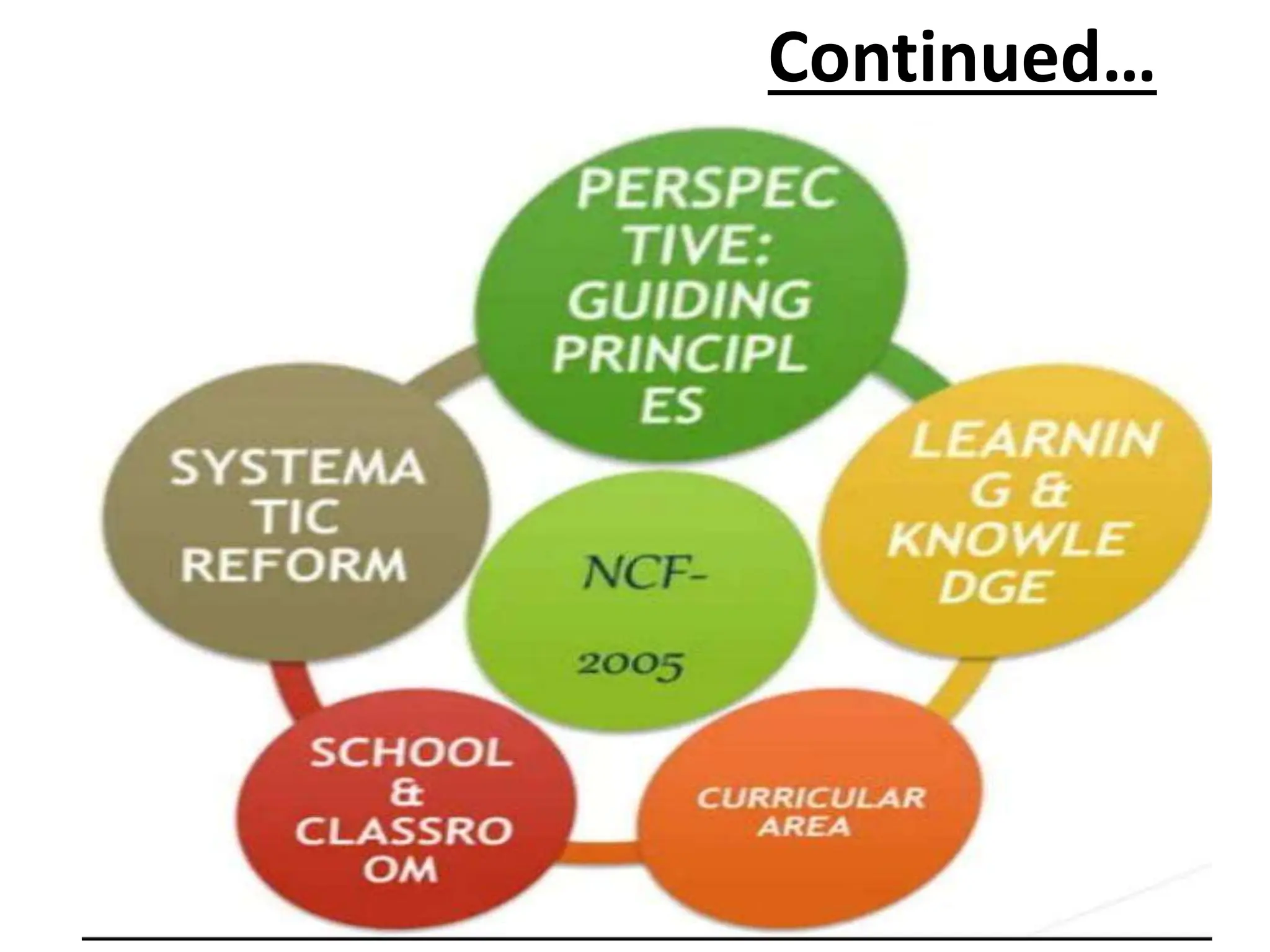
CURRICULAR AREAS
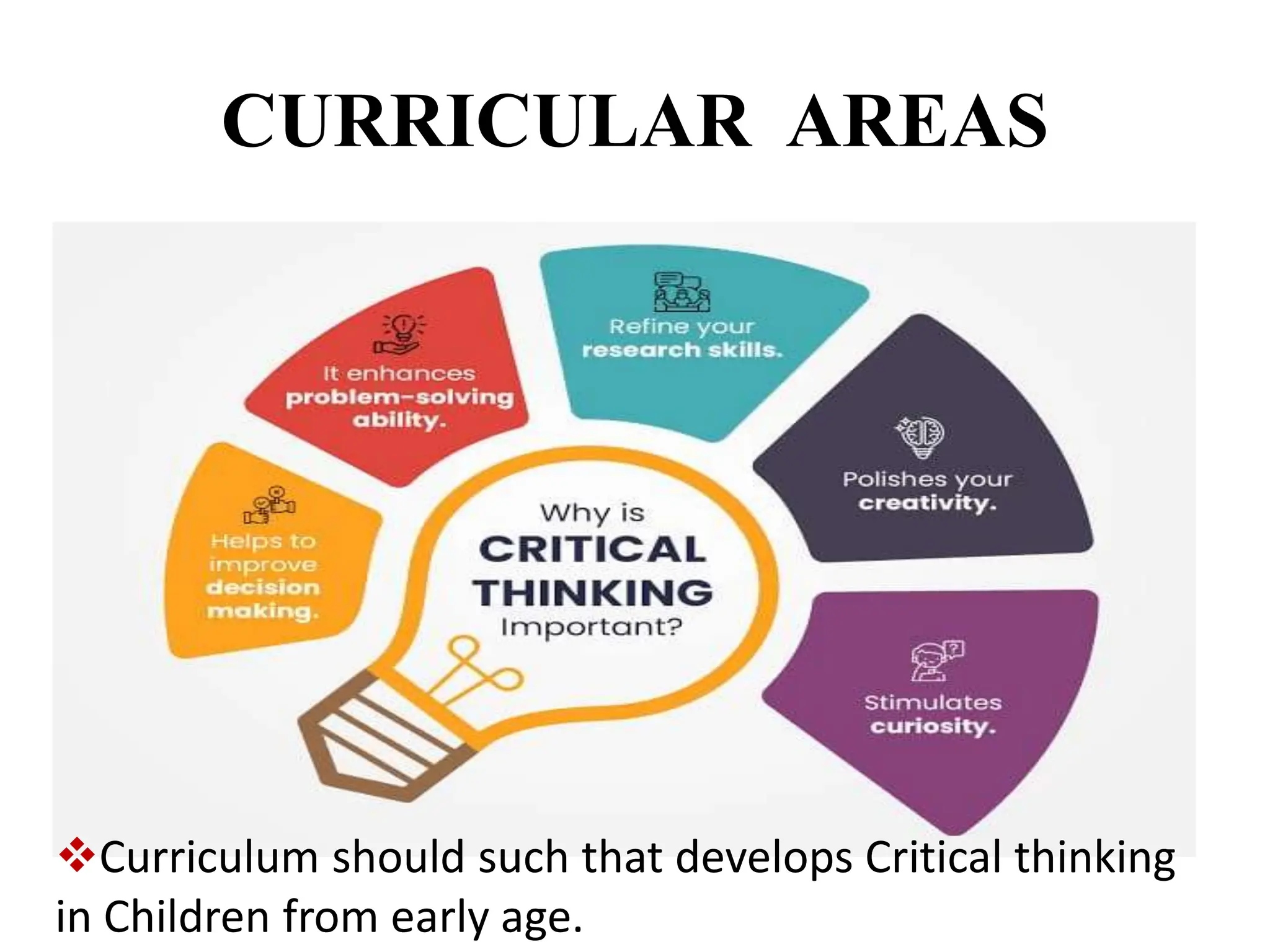
Curriculum should such that develops Critical thinking
in Children from early age.
Implementation of three Language formula
i.e., multilingual education
Math curriculum should such that promotes
Logical Thinking and Reasoning rather than
only formulas and theorems
Science curriculum should be such that
promotes children to acquire methods and
processes that nurture their thinking process,
curiosity and creativity
Social Science syllabus should be such that it
promotes children’s curiosity in learning about
environment and the social fabric our society
Arts Education should promote the rich and
various artistic tradition of our country
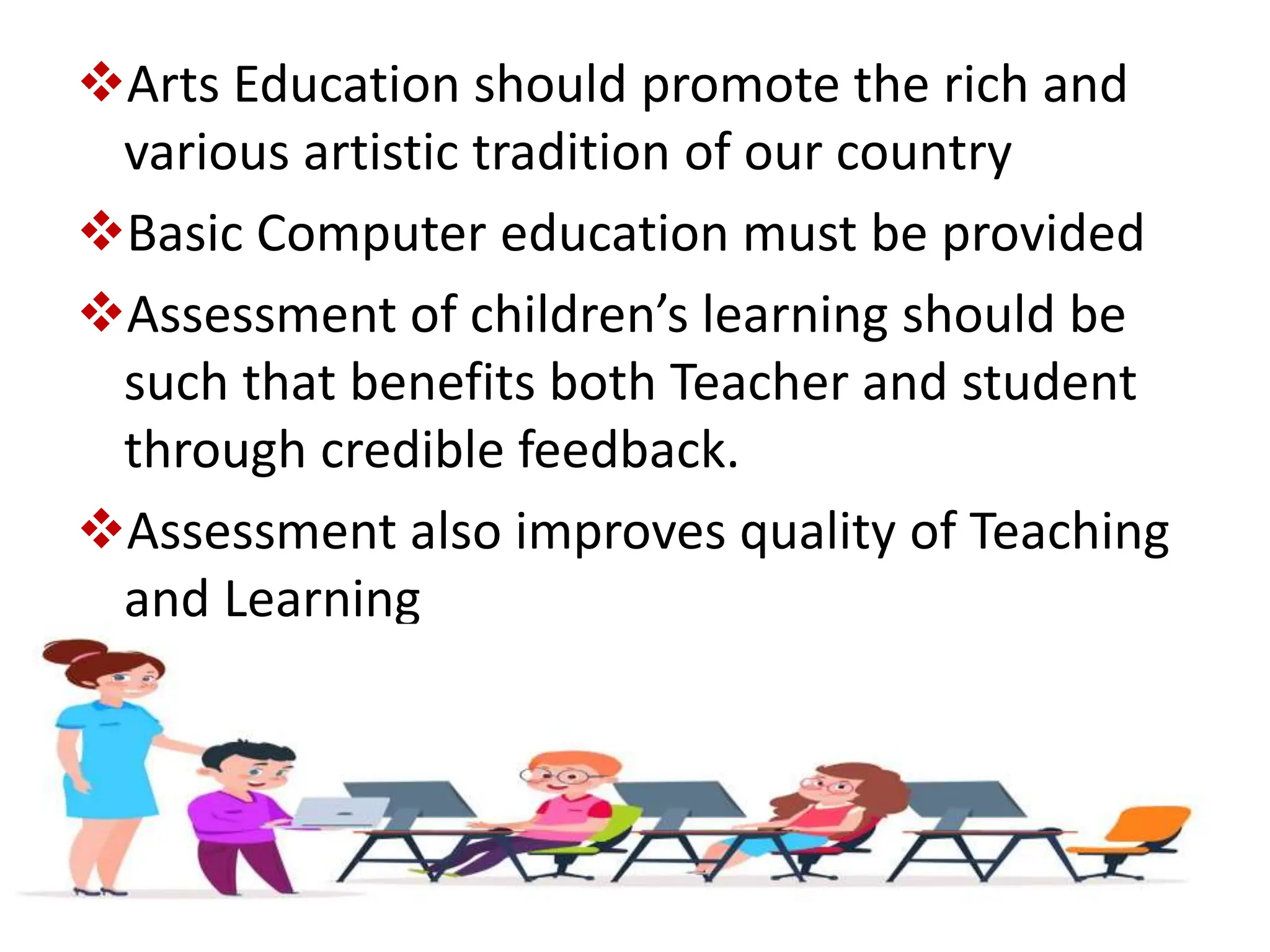
Basic Computer education must be provided
Assessment of children’s learning should be
such that benefits both Teacher and student
through credible feedback.
Assessment also improves quality of Teaching
and Learning
SCHOOLAND CLASSROOM
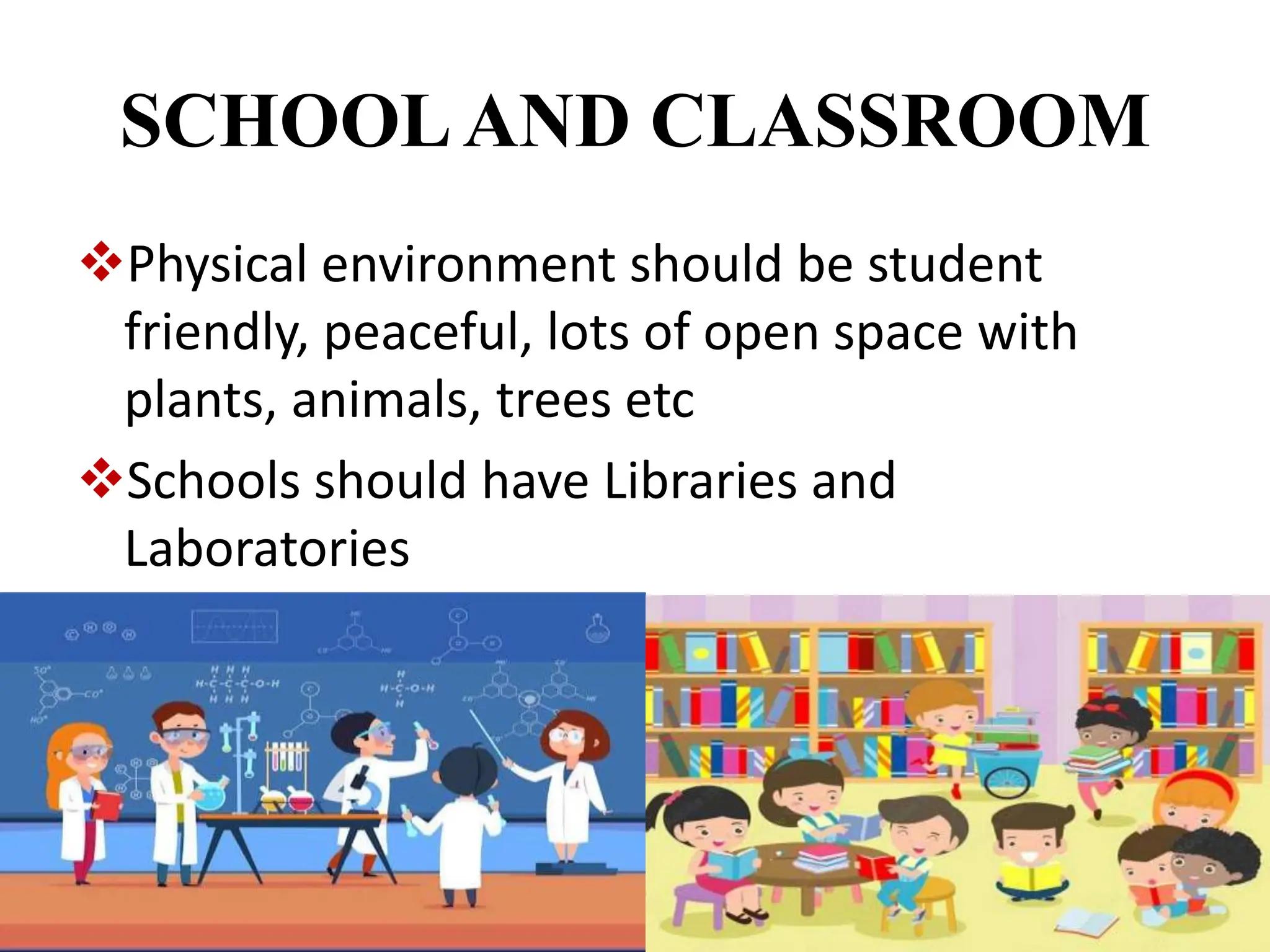
Physical environment should be student
friendly, peaceful, lots of open space with
plants, animals, trees etc
Schools should have Libraries and
Laboratories
Textbook chosen should be professionally
written ,designed, edited and tested with
writer’s focus on elaborating concepts and
interactive activities and exercises related to
those concepts
Multiple textbooks should be allowed
SYSTEMIC REFORM
Teaching should be a professional activity
Minimum basic infrastructure facilities is must
for better teaching
Locally planned School calendars and Time
tables
Encouraging community participation
In service education of teachers should be
encouraged for development of attitude , skill
and practice.
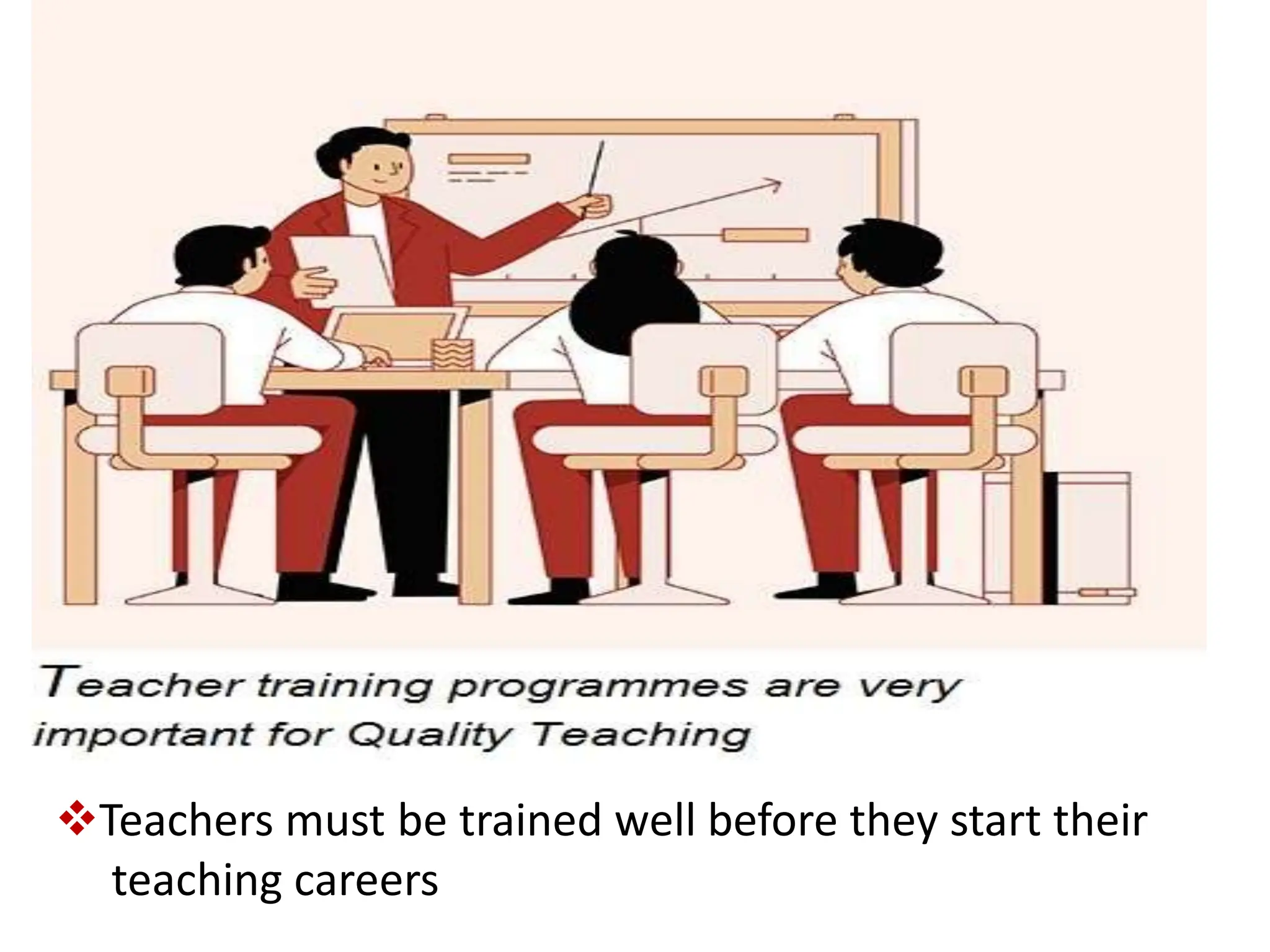
Teachers must be trained well before they start their
teaching careers
Exam reform: Exams should be based on
problem solving and competency rather than
content based. Exams should be of shorter
durations.
Guidance and counseling for Children’s Future
should be provided in School
Job centered training and Vocational training
should be promoted.
CONCLUSION
NCF 2005 carries forward the work of the previous
frameworks published by NCERT. It brings back the
focus of Education to being Children oriented that
elevates the learning experience for students . It tries to
provide a framework for education that could benefit all
sections of students of our society.
It is a vital step in India's early childhood education
history, prioritizing high-quality education and care for
young children.
It aims to create an inclusive, modern, and flexible
education system that gives all children access to
excellent education, regardless of their background or
circumstances.
THANK YOU

PRESENTATION on NEF 2005 in AMPG BHU Varanasi

  • 1.
    PRESENTATION ON NATIONAL CURRICULUM FRAMEWORK 2005 13December, 2023 DEPARTMENT OF EDUCATION, ARYA MAHILA PG COLLEGE, CHETGANJ, VARANASI DEPARTMENT OF EDUCATION Presented by : FACULTY Nausheen Khan (Social Science) Prof. Namita Sinha & Nidhi Tiwari (Science)
  • 5.
    Development of NCF-2005 •The revision of National Curriculum framework was to be done in the light of the report, Learning Without Burden (1993). • The process of development of NCF(National curriculum framework) was initiated in November 2004 by setting up various structures like the National Steering Committee Chaired by Prof. Yash Pal and twenty-one National Focus Groups on themes of curricular areas, systemic reforms, and national concerns.
  • 6.
    Continued… • J.P. Naik,the great educationist, called education an “elusive triangle”, with equality, quality, and quantity forming the three sides, none of which can stand without the other two, in his paper titled Equality, Quality, and Quantity: The Elusive Triangle in Indian Education. QUALITY EQUALITY QUANTITY
  • 7.
    Continued… • NCF 2005is also influenced by Mahatma Gandhi’s concept of Nai Talim, or Basic Education. • A principle which states that knowledge and work are not separate. He promoted an educational curriculum with the same name based on this pedagogical principle. • It can be translated with the phrase ‘Basic Education for all’.
  • 8.
    Contents Of NCF-2005 •The revised National Curriculum Framework (NCF) opens with a quotation from Rabindranath Tagore’s essay, Civilisation and Progress, in which the poet reminds us that a ‘creative spirit’ and ‘generous joy’ are key in childhood, both of which can be distorted by an unthinking adult world.
  • 9.
  • 11.
    LEARNING AND KNOWLEDGE Learningshould be children oriented
  • 12.
    Children should notfeel burdened by it Children should feel valued, heard, safe and appreciated Adequate room for children’s thought curiosity and questions in teaching Connecting knowledge across boundaries Inclusive environment for all including those with impairment Curriculum should promote children's physical, social and mental growth
  • 13.
    Encouraging students tointeract with peers, teachers and elderly persons for richer learning possibilities Encouraging children to construct and connect their own ideas with the concepts/ activities presented to them Encouraging and recognizing multiple views by open discussion
  • 14.
    CURRICULAR AREAS Curriculum shouldsuch that develops Critical thinking in Children from early age.
  • 15.
    Implementation of threeLanguage formula i.e., multilingual education Math curriculum should such that promotes Logical Thinking and Reasoning rather than only formulas and theorems Science curriculum should be such that promotes children to acquire methods and processes that nurture their thinking process, curiosity and creativity Social Science syllabus should be such that it promotes children’s curiosity in learning about environment and the social fabric our society
  • 16.
    Arts Education shouldpromote the rich and various artistic tradition of our country Basic Computer education must be provided Assessment of children’s learning should be such that benefits both Teacher and student through credible feedback. Assessment also improves quality of Teaching and Learning
  • 17.
    SCHOOLAND CLASSROOM Physical environmentshould be student friendly, peaceful, lots of open space with plants, animals, trees etc Schools should have Libraries and Laboratories
  • 18.
    Textbook chosen shouldbe professionally written ,designed, edited and tested with writer’s focus on elaborating concepts and interactive activities and exercises related to those concepts Multiple textbooks should be allowed
  • 19.
    SYSTEMIC REFORM Teaching shouldbe a professional activity Minimum basic infrastructure facilities is must for better teaching Locally planned School calendars and Time tables Encouraging community participation In service education of teachers should be encouraged for development of attitude , skill and practice.
  • 20.
    Teachers must betrained well before they start their teaching careers
  • 21.
    Exam reform: Examsshould be based on problem solving and competency rather than content based. Exams should be of shorter durations. Guidance and counseling for Children’s Future should be provided in School Job centered training and Vocational training should be promoted.
  • 22.
    CONCLUSION NCF 2005 carriesforward the work of the previous frameworks published by NCERT. It brings back the focus of Education to being Children oriented that elevates the learning experience for students . It tries to provide a framework for education that could benefit all sections of students of our society. It is a vital step in India's early childhood education history, prioritizing high-quality education and care for young children. It aims to create an inclusive, modern, and flexible education system that gives all children access to excellent education, regardless of their background or circumstances.
  • 23.