Natural Gas
Natural Gas.
Content: Group No-06
1. Introductory. Group Partners ID:
2. History. 198026
3. Mechanism. 198027
4. Application. 198028
5. Environmental Effect. 198029
6. Conclusion. 198030
7. Reference.
1.Introductory.
Describe By: Md. Sohel Rana.(198030)
Introduction.
What is natural gas?
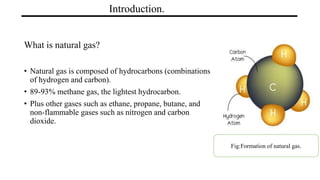
• Natural gas is composed of hydrocarbons (combinations
of hydrogen and carbon).
• 89-93% methane gas, the lightest hydrocarbon.
• Plus other gases such as ethane, propane, butane, and
non-flammable gases such as nitrogen and carbon
dioxide.
Fig:Formation of natural gas.
Introduction.
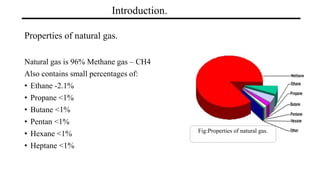
Properties of natural gas.
Natural gas is 96% Methane gas – CH4
Also contains small percentages of:
• Ethane -2.1%
• Propane <1%
• Butane <1%
• Pentan <1%
• Hexane <1%
• Heptane <1%
Fig:Properties of natural gas.
Introduction.
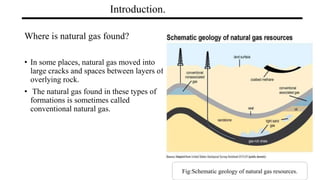
Where is natural gas found?
• In some places, natural gas moved into
large cracks and spaces between layers of
overlying rock.
• The natural gas found in these types of
formations is sometimes called
conventional natural gas.
Fig:Schematic geology of natural gas resources.
Introduction.
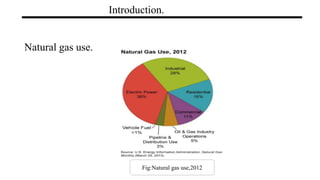
Natural gas use.
Fig:Natural gas use,2012
2. History.
Describe By : Jane alam Khalipa(198026)
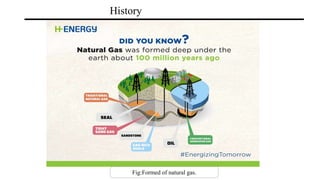
History
Fig:Formed of natural gas.
History.
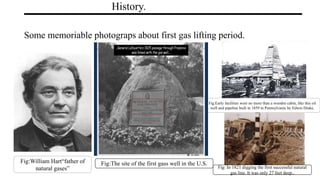
Some memoriable photograps about first gas lifting period.
Fig:William Hart“father of
natural gases”
Fig:Early facilities were no more than a wooden cabin, like this oil
well and pipeline built in 1859 in Pennsylvania by Edwin Drake.
Fig: In 1821 digging the first successful natural
gas line. It was only 27 feet deep..
Fig:The site of the first gass well in the U.S.
History
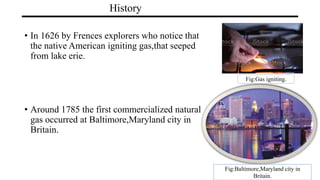
• In 1626 by Frences explorers who notice that
the native American igniting gas,that seeped
from lake erie.
• Around 1785 the first commercialized natural
gas occurred at Baltimore,Maryland city in
Britain.
Fig:Baltimore,Maryland city in
Britain.
Fig:Gas igniting.
History
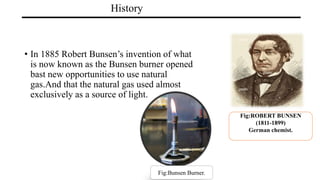
• In 1885 Robert Bunsen’s invention of what
is now known as the Bunsen burner opened
bast new opportunities to use natural
gas.And that the natural gas used almost
exclusively as a source of light.
Fig:ROBERT BUNSEN
(1811-1899)
German chemist.
Fig:Bunsen Burner.
History
History
3. Mechanism.
Describe By : Sakib (198029)
Mechanism.
Mechanism.
Mechanism.
Mechanism.
4.Application.
Describe By : Iqball (198028)
Application.
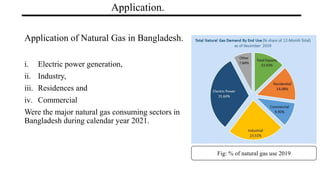
Application of Natural Gas in Bangladesh.
i. Electric power generation,
ii. Industry,
iii. Residences and
iv. Commercial
Were the major natural gas consuming sectors in
Bangladesh during calendar year 2021.
Fig: % of natural gas use 2019
Application.
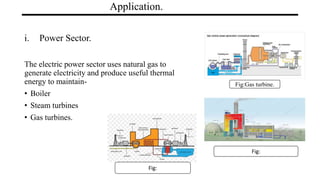
i. Power Sector.
The electric power sector uses natural gas to
generate electricity and produce useful thermal
energy to maintain-
• Boiler
• Steam turbines
• Gas turbines.
Fig:Gas turbine.
Fig:
Fig:
Application.
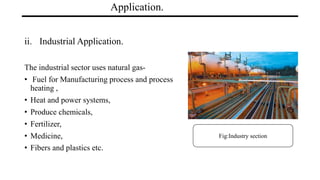
ii. Industrial Application.
The industrial sector uses natural gas-
• Fuel for Manufacturing process and process
heating ,
• Heat and power systems,
• Produce chemicals,
• Fertilizer,
• Medicine,
• Fibers and plastics etc.
Fig:Industry section
Application.
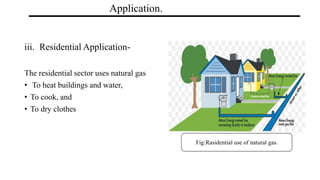
iii. Residential Application-
The residential sector uses natural gas
• To heat buildings and water,
• To cook, and
• To dry clothes
Fig:Rasidential use of natural gas.
Application.
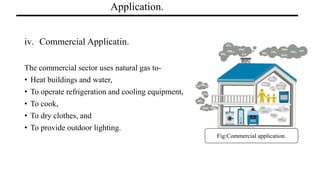
iv. Commercial Applicatin.
The commercial sector uses natural gas to-
• Heat buildings and water,
• To operate refrigeration and cooling equipment,
• To cook,
• To dry clothes, and
• To provide outdoor lighting.
Fig:Commercial application.
5. Environmental Effect.
Describe By : Ananda Bala(198027)
Environmental Effect.
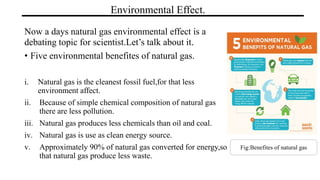
Now a days natural gas environmental effect is a
debating topic for scientist.Let’s talk about it.
• Five environmental benefites of natural gas.
i. Natural gas is the cleanest fossil fuel,for that less
environment affect.
ii. Because of simple chemical composition of natural gas
there are less pollution.
iii. Natural gas produces less chemicals than oil and coal.
iv. Natural gas is use as clean energy source.
v. Approximately 90% of natural gas converted for energy,so
that natural gas produce less waste.
Fig:Benefites of natural gas
Environmental Effect.
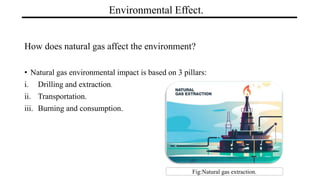
How does natural gas affect the environment?
• Natural gas environmental impact is based on 3 pillars:
i. Drilling and extraction.
ii. Transportation.
iii. Burning and consumption.
Fig:Natural gas extraction.
Environmental Effect.
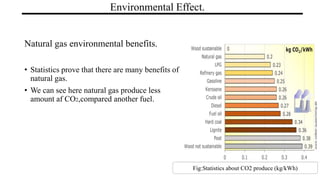
Natural gas environmental benefits.
• Statistics prove that there are many benefits of
natural gas.
• We can see here natural gas produce less
amount af CO2,compared another fuel.
Fig:Statistics about CO2 produce (kg/kWh)
6.Conclusion.
Conclusion.
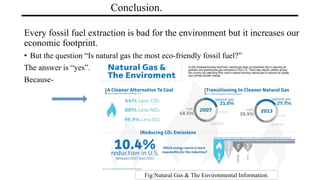
Every fossil fuel extraction is bad for the environment but it increases our
economic footprint.
• But the question “Is natural gas the most eco-friendly fossil fuel?”
The answer is “yes”.
Because-
Fig:Natural Gas & The Environmental Information.
Conclusion.
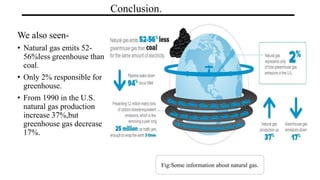
We also seen-
• Natural gas emits 52-
56%less greenhouse than
coal.
• Only 2% responsible for
greenhouse.
• From 1990 in the U.S.
natural gas production
increase 37%,but
greenhouse gas decrease
17%.
Fig:Some information about natural gas.
7. Reference.
Thank you so much.
My dear honourable teacher,and my dear classmates.
Natural Gas.
If there any question.?

Natural Gas.pptx

  • 1.
  • 2.
    Natural Gas. Content: GroupNo-06 1. Introductory. Group Partners ID: 2. History. 198026 3. Mechanism. 198027 4. Application. 198028 5. Environmental Effect. 198029 6. Conclusion. 198030 7. Reference.
  • 3.
  • 4.
    Introduction. What is naturalgas? • Natural gas is composed of hydrocarbons (combinations of hydrogen and carbon). • 89-93% methane gas, the lightest hydrocarbon. • Plus other gases such as ethane, propane, butane, and non-flammable gases such as nitrogen and carbon dioxide. Fig:Formation of natural gas.
  • 5.
    Introduction. Properties of naturalgas. Natural gas is 96% Methane gas – CH4 Also contains small percentages of: • Ethane -2.1% • Propane <1% • Butane <1% • Pentan <1% • Hexane <1% • Heptane <1% Fig:Properties of natural gas.
  • 6.
    Introduction. Where is naturalgas found? • In some places, natural gas moved into large cracks and spaces between layers of overlying rock. • The natural gas found in these types of formations is sometimes called conventional natural gas. Fig:Schematic geology of natural gas resources.
  • 7.
  • 8.
    2. History. Describe By: Jane alam Khalipa(198026)
  • 9.
  • 10.
    History. Some memoriable photograpsabout first gas lifting period. Fig:William Hart“father of natural gases” Fig:Early facilities were no more than a wooden cabin, like this oil well and pipeline built in 1859 in Pennsylvania by Edwin Drake. Fig: In 1821 digging the first successful natural gas line. It was only 27 feet deep.. Fig:The site of the first gass well in the U.S.
  • 11.
    History • In 1626by Frences explorers who notice that the native American igniting gas,that seeped from lake erie. • Around 1785 the first commercialized natural gas occurred at Baltimore,Maryland city in Britain. Fig:Baltimore,Maryland city in Britain. Fig:Gas igniting.
  • 12.
    History • In 1885Robert Bunsen’s invention of what is now known as the Bunsen burner opened bast new opportunities to use natural gas.And that the natural gas used almost exclusively as a source of light. Fig:ROBERT BUNSEN (1811-1899) German chemist. Fig:Bunsen Burner.
  • 13.
  • 14.
  • 15.
    3. Mechanism. Describe By: Sakib (198029)
  • 16.
  • 17.
  • 18.
  • 19.
  • 20.
  • 21.
    Application. Application of NaturalGas in Bangladesh. i. Electric power generation, ii. Industry, iii. Residences and iv. Commercial Were the major natural gas consuming sectors in Bangladesh during calendar year 2021. Fig: % of natural gas use 2019
  • 22.
    Application. i. Power Sector. Theelectric power sector uses natural gas to generate electricity and produce useful thermal energy to maintain- • Boiler • Steam turbines • Gas turbines. Fig:Gas turbine. Fig: Fig:
  • 23.
    Application. ii. Industrial Application. Theindustrial sector uses natural gas- • Fuel for Manufacturing process and process heating , • Heat and power systems, • Produce chemicals, • Fertilizer, • Medicine, • Fibers and plastics etc. Fig:Industry section
  • 24.
    Application. iii. Residential Application- Theresidential sector uses natural gas • To heat buildings and water, • To cook, and • To dry clothes Fig:Rasidential use of natural gas.
  • 25.
    Application. iv. Commercial Applicatin. Thecommercial sector uses natural gas to- • Heat buildings and water, • To operate refrigeration and cooling equipment, • To cook, • To dry clothes, and • To provide outdoor lighting. Fig:Commercial application.
  • 26.
    5. Environmental Effect. DescribeBy : Ananda Bala(198027)
  • 27.
    Environmental Effect. Now adays natural gas environmental effect is a debating topic for scientist.Let’s talk about it. • Five environmental benefites of natural gas. i. Natural gas is the cleanest fossil fuel,for that less environment affect. ii. Because of simple chemical composition of natural gas there are less pollution. iii. Natural gas produces less chemicals than oil and coal. iv. Natural gas is use as clean energy source. v. Approximately 90% of natural gas converted for energy,so that natural gas produce less waste. Fig:Benefites of natural gas
  • 28.
    Environmental Effect. How doesnatural gas affect the environment? • Natural gas environmental impact is based on 3 pillars: i. Drilling and extraction. ii. Transportation. iii. Burning and consumption. Fig:Natural gas extraction.
  • 29.
    Environmental Effect. Natural gasenvironmental benefits. • Statistics prove that there are many benefits of natural gas. • We can see here natural gas produce less amount af CO2,compared another fuel. Fig:Statistics about CO2 produce (kg/kWh)
  • 30.
  • 31.
    Conclusion. Every fossil fuelextraction is bad for the environment but it increases our economic footprint. • But the question “Is natural gas the most eco-friendly fossil fuel?” The answer is “yes”. Because- Fig:Natural Gas & The Environmental Information.
  • 32.
    Conclusion. We also seen- •Natural gas emits 52- 56%less greenhouse than coal. • Only 2% responsible for greenhouse. • From 1990 in the U.S. natural gas production increase 37%,but greenhouse gas decrease 17%. Fig:Some information about natural gas.
  • 33.
  • 35.
    Thank you somuch. My dear honourable teacher,and my dear classmates.
  • 36.
    Natural Gas. If thereany question.?