NATURAL
GAS
DEFINITION OF NATURAL GAS
• Natural gas is a hydrocarbon, which means it
is made up of compounds of hydrogen and
carbon.
• The simplest hydrocarbon is methane; it
contains one carbon atom and four hydrogen
atoms.
• Water, oil, sulphur, carbon dioxide, nitrogen,
and other impurities may be mixed with the
gas when it comes out of the ground
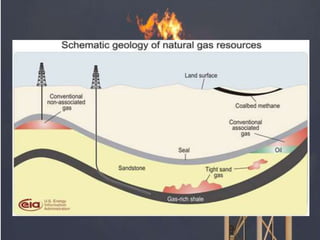
There are two general categories of natural gas
deposits; conventional and unconventional.
1. Conventional natural gas deposits are
commonly found in association with oil
reservoirs, with the gas either mixed with the
oil or buoyantly floating on top.
2. unconventional deposits include sources
like shale gas, tight gas sandstone, and
coalbed methane, methane hydrates and
biogenic gas.
SHALE GAS
• Which trapped in its original source rock, the
organic-rich shale that formed from the
sedimentary deposition of mud, silt, clay, and
organic matter on the floors of shallow seas.
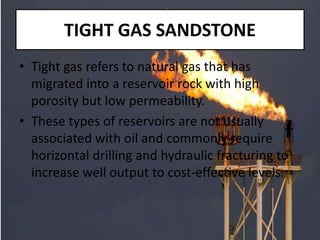
TIGHT GAS SANDSTONE
• Tight gas refers to natural gas that has
migrated into a reservoir rock with high
porosity but low permeability.
• These types of reservoirs are not usually
associated with oil and commonly require
horizontal drilling and hydraulic fracturing to
increase well output to cost-effective levels.
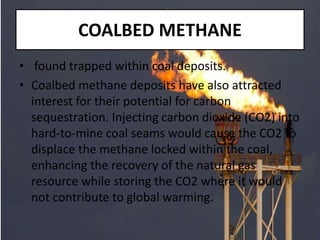
COALBED METHANE
• found trapped within coal deposits.
• Coalbed methane deposits have also attracted
interest for their potential for carbon
sequestration. Injecting carbon dioxide (CO2) into
hard-to-mine coal seams would cause the CO2 to
displace the methane locked within the coal,
enhancing the recovery of the natural gas
resource while storing the CO2 where it would
not contribute to global warming.
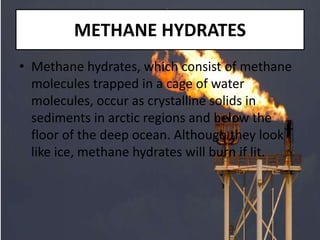
METHANE HYDRATES
• Methane hydrates, which consist of methane
molecules trapped in a cage of water
molecules, occur as crystalline solids in
sediments in arctic regions and below the
floor of the deep ocean. Although they look
like ice, methane hydrates will burn if lit.
Environmental Effect
GLOBAL WARMING EMISSION
Natural gas is made up mostly of
methane, which is a potent
greenhouse gas. These gas leaks
into the atmosphere from oil and
natural gas wells, storage tanks,
pipelines, and processing plants
AIR POLLUTION
Cleaner burning than other
fossil fuels, the combustion of
natural gas produces negligible
amounts of sulfur, mercury,
and particulates..
Exposure to elevated levels of
these air pollutants can lead to
adverse health outcomes,
including respiratory
symptoms, cardiovascular
disease, and cancer
WATER USE AND
POLLUTION
-contamination of drinking
water sources with
hazardous chemicals
used in -drilling the
wellbore, -hydraulically
fracturing the well
- processing and refining
the oil or gas,
- disposing of wastewater
Strict Safety Regulations And Standards Are Required For
Natural Gas Production, Transportation, Distribution, And
Storage
• Because a natural gas leak can cause an
explosion, there are strict government
regulations and industry standards in place to
ensure the safe transportation, storing,
distribution, and use of natural gas. Because
natural gas has no odor, natural gas companies
add a strong-smelling substance called
mercaptan to the natural gas so that people will
know if there is a leak. They may smell the rotten
egg scent of natural gas when the pilot light goes
out.
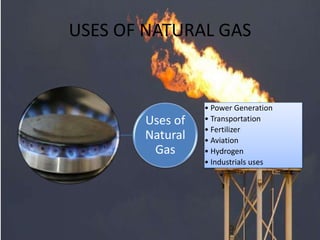
USES OF NATURAL GAS
Uses of
Natural
Gas
• Power Generation
• Transportation
• Fertilizer
• Aviation
• Hydrogen
• Industrials uses
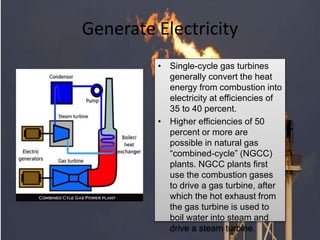
Generate Electricity
• Single-cycle gas turbines
generally convert the heat
energy from combustion into
electricity at efficiencies of
35 to 40 percent.
• Higher efficiencies of 50
percent or more are
possible in natural gas
“combined-cycle” (NGCC)
plants. NGCC plants first
use the combustion gases
to drive a gas turbine, after
which the hot exhaust from
the gas turbine is used to
boil water into steam and
drive a steam turbine.

Natural Gas

  • 1.
  • 2.
    DEFINITION OF NATURALGAS • Natural gas is a hydrocarbon, which means it is made up of compounds of hydrogen and carbon. • The simplest hydrocarbon is methane; it contains one carbon atom and four hydrogen atoms. • Water, oil, sulphur, carbon dioxide, nitrogen, and other impurities may be mixed with the gas when it comes out of the ground
  • 3.
    There are twogeneral categories of natural gas deposits; conventional and unconventional. 1. Conventional natural gas deposits are commonly found in association with oil reservoirs, with the gas either mixed with the oil or buoyantly floating on top. 2. unconventional deposits include sources like shale gas, tight gas sandstone, and coalbed methane, methane hydrates and biogenic gas.
  • 5.
    SHALE GAS • Whichtrapped in its original source rock, the organic-rich shale that formed from the sedimentary deposition of mud, silt, clay, and organic matter on the floors of shallow seas.
  • 6.
    TIGHT GAS SANDSTONE •Tight gas refers to natural gas that has migrated into a reservoir rock with high porosity but low permeability. • These types of reservoirs are not usually associated with oil and commonly require horizontal drilling and hydraulic fracturing to increase well output to cost-effective levels.
  • 7.
    COALBED METHANE • foundtrapped within coal deposits. • Coalbed methane deposits have also attracted interest for their potential for carbon sequestration. Injecting carbon dioxide (CO2) into hard-to-mine coal seams would cause the CO2 to displace the methane locked within the coal, enhancing the recovery of the natural gas resource while storing the CO2 where it would not contribute to global warming.
  • 8.
    METHANE HYDRATES • Methanehydrates, which consist of methane molecules trapped in a cage of water molecules, occur as crystalline solids in sediments in arctic regions and below the floor of the deep ocean. Although they look like ice, methane hydrates will burn if lit.
  • 10.
  • 11.
    GLOBAL WARMING EMISSION Naturalgas is made up mostly of methane, which is a potent greenhouse gas. These gas leaks into the atmosphere from oil and natural gas wells, storage tanks, pipelines, and processing plants AIR POLLUTION Cleaner burning than other fossil fuels, the combustion of natural gas produces negligible amounts of sulfur, mercury, and particulates.. Exposure to elevated levels of these air pollutants can lead to adverse health outcomes, including respiratory symptoms, cardiovascular disease, and cancer WATER USE AND POLLUTION -contamination of drinking water sources with hazardous chemicals used in -drilling the wellbore, -hydraulically fracturing the well - processing and refining the oil or gas, - disposing of wastewater
  • 12.
    Strict Safety RegulationsAnd Standards Are Required For Natural Gas Production, Transportation, Distribution, And Storage • Because a natural gas leak can cause an explosion, there are strict government regulations and industry standards in place to ensure the safe transportation, storing, distribution, and use of natural gas. Because natural gas has no odor, natural gas companies add a strong-smelling substance called mercaptan to the natural gas so that people will know if there is a leak. They may smell the rotten egg scent of natural gas when the pilot light goes out.
  • 13.
    USES OF NATURALGAS Uses of Natural Gas • Power Generation • Transportation • Fertilizer • Aviation • Hydrogen • Industrials uses
  • 14.
    Generate Electricity • Single-cyclegas turbines generally convert the heat energy from combustion into electricity at efficiencies of 35 to 40 percent. • Higher efficiencies of 50 percent or more are possible in natural gas “combined-cycle” (NGCC) plants. NGCC plants first use the combustion gases to drive a gas turbine, after which the hot exhaust from the gas turbine is used to boil water into steam and drive a steam turbine.

Editor's Notes

  • #13 Due to the effect on the environment we need…