Dr. Abdul Jabbar
Sr. Headmaster
Structure of Presentation
 Structure of National Curriculum 2006
 National Curriculum 2006 & textbooks
 National Curriculum 2006 & Taleemi calender
 National Curriculum 2006 & Teacher’s Guides
 National Curriculum 2006 & Lesson Planning
 National Curriculum 2006 & Resources
 National Curriculum 2006 & Examinations
Basic Factors behind Changing
National Curriculum in 2006
The Curriculum was changed to:
Ensure shift of emphasis from
Teacher centered to Student
centered
To know to do
To know and to become
Important concepts/ terms
Developmental levels
Competencies
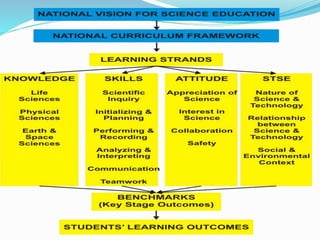
Standards
Benchmarks
Student learning outcomes (SLOs)
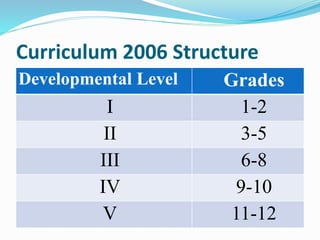
Curriculum 2006 Structure
Developmental Level Grades
I 1-2
II 3-5
III 6-8
IV 9-10
V 11-12
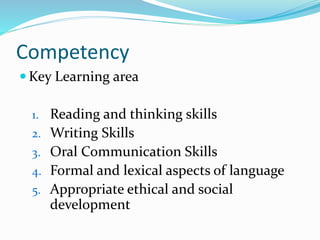
Competency
 Key Learning area
1. Reading and thinking skills
2. Writing Skills
3. Oral Communication Skills
4. Formal and lexical aspects of language
5. Appropriate ethical and social
development
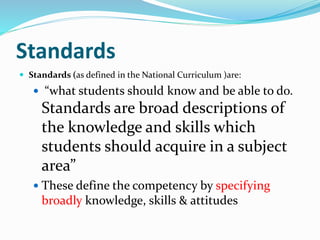
Standards
 Standards (as defined in the National Curriculum )are:
 “what students should know and be able to do.
Standards are broad descriptions of
the knowledge and skills which
students should acquire in a subject
area”
 These define the competency by specifying
broadly knowledge, skills & attitudes
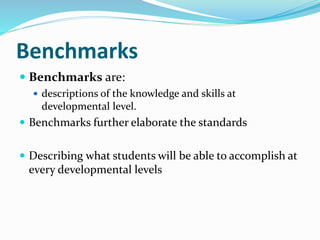
Benchmarks
 Benchmarks are:
 descriptions of the knowledge and skills at
developmental level.
 Benchmarks further elaborate the standards
 Describing what students will be able to accomplish at
every developmental levels
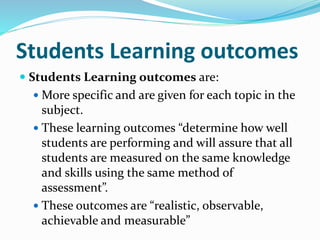
Students Learning outcomes
 Students Learning outcomes are:
 More specific and are given for each topic in the
subject.
 These learning outcomes “determine how well
students are performing and will assure that all
students are measured on the same knowledge
and skills using the same method of
assessment”.
 These outcomes are “realistic, observable,
achievable and measurable”
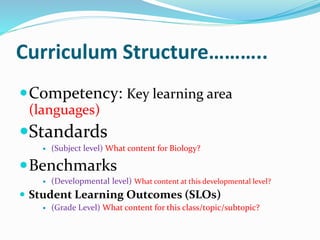
Curriculum Structure………..
Competency: Key learning area
(languages)
Standards
 (Subject level) What content for Biology?
Benchmarks
 (Developmental level) What content at this developmental level?
 Student Learning Outcomes (SLOs)
 (Grade Level) What content for this class/topic/subtopic?
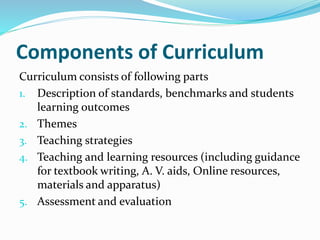
Components of Curriculum
Curriculum consists of following parts
1. Description of standards, benchmarks and students
learning outcomes
2. Themes
3. Teaching strategies
4. Teaching and learning resources (including guidance
for textbook writing, A. V. aids, Online resources,
materials and apparatus)
5. Assessment and evaluation
National Curriculum 2006 &
textbooks
 Curriculum specifies/dictates the nature of content
and style of textbooks
 It gives complete guidelines for developing textbooks
 Textbooks in Punjab completely adhere to the content
suggested in the curriculum
 Every textbook endeavours to achieve the SLOs
suggested in National curriculum
National curriculum and teaching
strategies
 Making lessons interactive
 Discussion
 Interactive demonstration
 Role Play
 Cooperative learning
 Inquiry based learning
National Curriculum 2006 &
Resources
 Human Resources
 Teachers’ qualification
 Teachers’ Training
 Material resources
 Textbooks
 Instructional aids
 Online resources
National Curriculum 2006 &
Teacher’s Guides/ Lesson Planning
 Activity
 Develop a lesson plan for SLO
“Use textbook pictures to aid comprehension and for
development of vocabulary” (Grade: III, p 120)
 Revised teacher’s guides have been prepared strictly to
help achieve SlOs suggested in National Curriculum
National Curriculum 2006 &
Examinations
 Curriculum coherance
 Examinations are based on National Curriculum
 Particularly PEC exams take SLOs rather than
textbooks
 Internal examinations must be based on curriculm
National Curriculum 2006 &
Taleemi calendar
Competency Standard Benchmark SLOs Month
Writing Skills
Standard 1:
All students
will produce
with
developing
fluency and
accuracy, academic,
transactional and
creative
writing, which is
focused, purposeful
and shows an insight
into the writing
process.
Identify and
use
techniques
for
writing
effective and
unified
sentences
and a
paragraph.
Write multi-
syllable
words with
correct
spellings.
April
Your Role with respect Curriculum
 Thorough awareness with curriculum of all subjects
 Be able to guide teachers in:
 Developing lesson plans according to SLOs in
curriculum
 Adopting teaching strategies as mentioned in
curriculum
Questions????????
THANKS

National curriculum 2006 classroom teaching

  • 1.
  • 2.
    Structure of Presentation Structure of National Curriculum 2006  National Curriculum 2006 & textbooks  National Curriculum 2006 & Taleemi calender  National Curriculum 2006 & Teacher’s Guides  National Curriculum 2006 & Lesson Planning  National Curriculum 2006 & Resources  National Curriculum 2006 & Examinations
  • 3.
    Basic Factors behindChanging National Curriculum in 2006 The Curriculum was changed to: Ensure shift of emphasis from Teacher centered to Student centered To know to do To know and to become
  • 4.
    Important concepts/ terms Developmentallevels Competencies Standards Benchmarks Student learning outcomes (SLOs)
  • 5.
    Curriculum 2006 Structure DevelopmentalLevel Grades I 1-2 II 3-5 III 6-8 IV 9-10 V 11-12
  • 6.
    Competency  Key Learningarea 1. Reading and thinking skills 2. Writing Skills 3. Oral Communication Skills 4. Formal and lexical aspects of language 5. Appropriate ethical and social development
  • 7.
    Standards  Standards (asdefined in the National Curriculum )are:  “what students should know and be able to do. Standards are broad descriptions of the knowledge and skills which students should acquire in a subject area”  These define the competency by specifying broadly knowledge, skills & attitudes
  • 8.
    Benchmarks  Benchmarks are: descriptions of the knowledge and skills at developmental level.  Benchmarks further elaborate the standards  Describing what students will be able to accomplish at every developmental levels
  • 9.
    Students Learning outcomes Students Learning outcomes are:  More specific and are given for each topic in the subject.  These learning outcomes “determine how well students are performing and will assure that all students are measured on the same knowledge and skills using the same method of assessment”.  These outcomes are “realistic, observable, achievable and measurable”
  • 10.
    Curriculum Structure……….. Competency: Keylearning area (languages) Standards  (Subject level) What content for Biology? Benchmarks  (Developmental level) What content at this developmental level?  Student Learning Outcomes (SLOs)  (Grade Level) What content for this class/topic/subtopic?
  • 11.
    Components of Curriculum Curriculumconsists of following parts 1. Description of standards, benchmarks and students learning outcomes 2. Themes 3. Teaching strategies 4. Teaching and learning resources (including guidance for textbook writing, A. V. aids, Online resources, materials and apparatus) 5. Assessment and evaluation
  • 13.
    National Curriculum 2006& textbooks  Curriculum specifies/dictates the nature of content and style of textbooks  It gives complete guidelines for developing textbooks  Textbooks in Punjab completely adhere to the content suggested in the curriculum  Every textbook endeavours to achieve the SLOs suggested in National curriculum
  • 14.
    National curriculum andteaching strategies  Making lessons interactive  Discussion  Interactive demonstration  Role Play  Cooperative learning  Inquiry based learning
  • 15.
    National Curriculum 2006& Resources  Human Resources  Teachers’ qualification  Teachers’ Training  Material resources  Textbooks  Instructional aids  Online resources
  • 16.
    National Curriculum 2006& Teacher’s Guides/ Lesson Planning  Activity  Develop a lesson plan for SLO “Use textbook pictures to aid comprehension and for development of vocabulary” (Grade: III, p 120)  Revised teacher’s guides have been prepared strictly to help achieve SlOs suggested in National Curriculum
  • 17.
    National Curriculum 2006& Examinations  Curriculum coherance  Examinations are based on National Curriculum  Particularly PEC exams take SLOs rather than textbooks  Internal examinations must be based on curriculm
  • 18.
    National Curriculum 2006& Taleemi calendar Competency Standard Benchmark SLOs Month Writing Skills Standard 1: All students will produce with developing fluency and accuracy, academic, transactional and creative writing, which is focused, purposeful and shows an insight into the writing process. Identify and use techniques for writing effective and unified sentences and a paragraph. Write multi- syllable words with correct spellings. April
  • 19.
    Your Role withrespect Curriculum  Thorough awareness with curriculum of all subjects  Be able to guide teachers in:  Developing lesson plans according to SLOs in curriculum  Adopting teaching strategies as mentioned in curriculum
  • 20.
  • 21.