Semantic approach
      of horror.
‘what is typically expected in a certain genre of film’

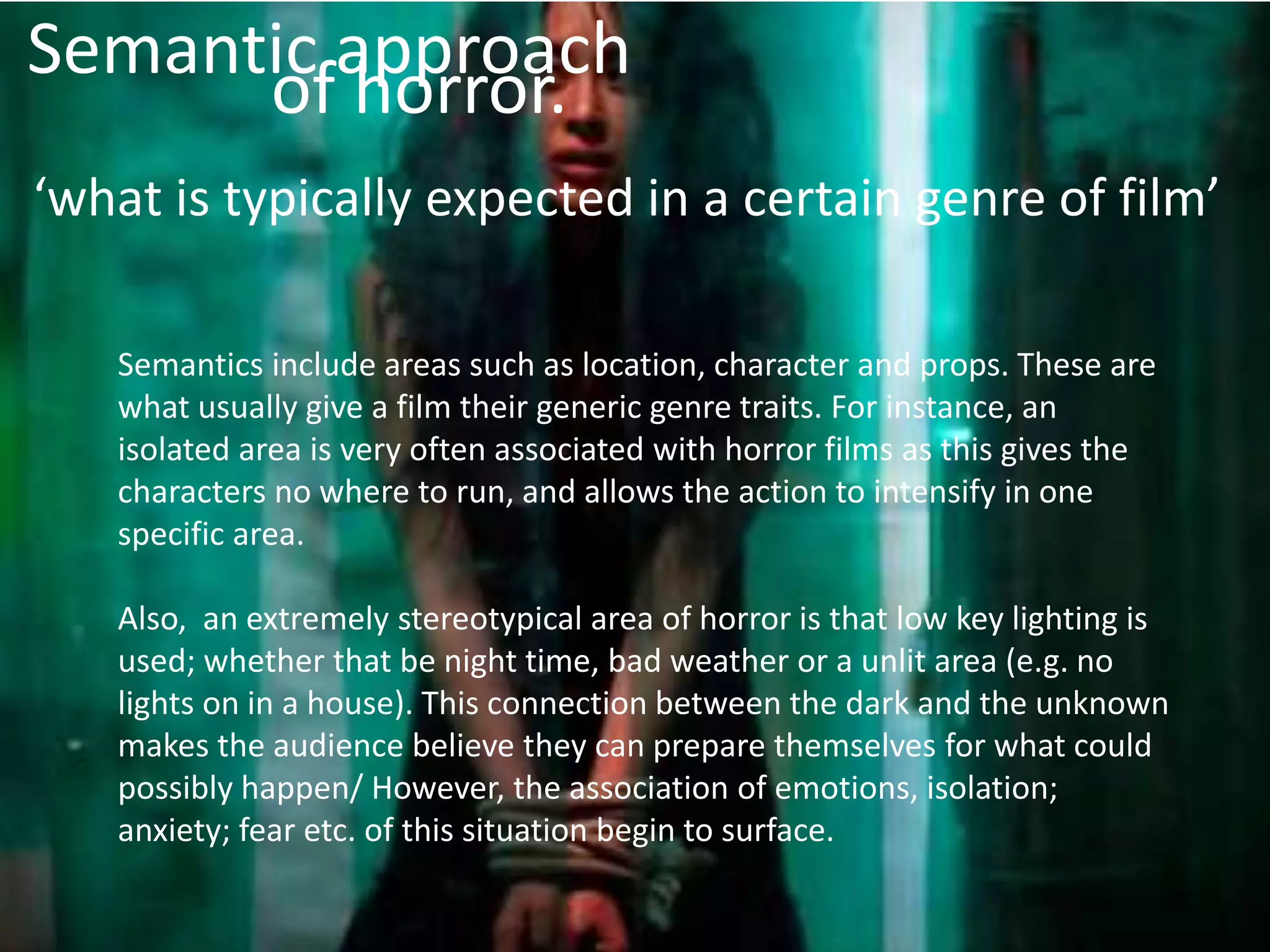
   Semantics include areas such as location, character and props. These are
   what usually give a film their generic genre traits. For instance, an
   isolated area is very often associated with horror films as this gives the
   characters no where to run, and allows the action to intensify in one
   specific area.

   Also, an extremely stereotypical area of horror is that low key lighting is
   used; whether that be night time, bad weather or a unlit area (e.g. no
   lights on in a house). This connection between the dark and the unknown
   makes the audience believe they can prepare themselves for what could
   possibly happen/ However, the association of emotions, isolation;
   anxiety; fear etc. of this situation begin to surface.
Syntactic approach
        of horror.
‘elements in the narrative or ideology of the genre’

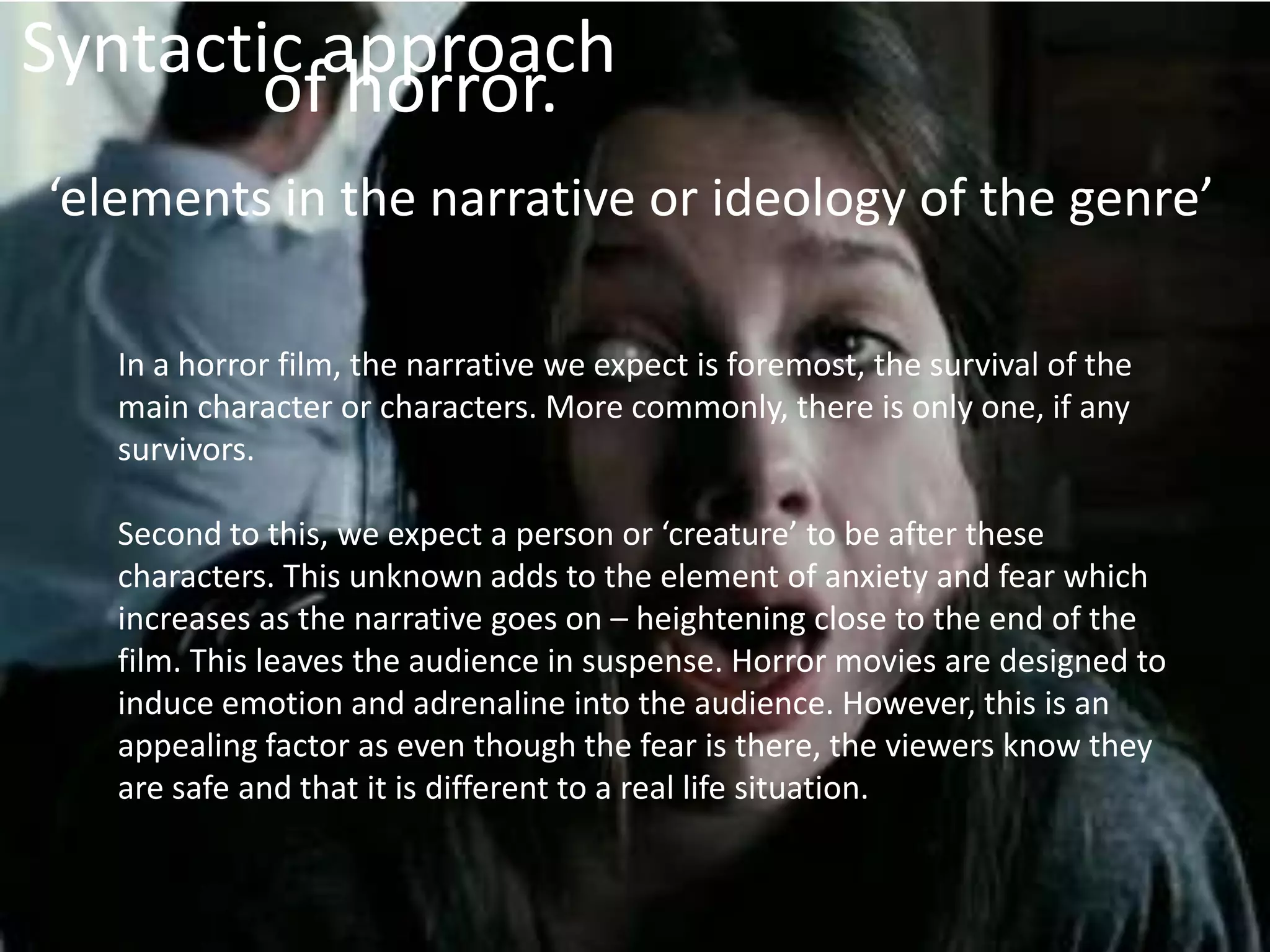
   In a horror film, the narrative we expect is foremost, the survival of the
   main character or characters. More commonly, there is only one, if any
   survivors.

   Second to this, we expect a person or ‘creature’ to be after these
   characters. This unknown adds to the element of anxiety and fear which
   increases as the narrative goes on – heightening close to the end of the
   film. This leaves the audience in suspense. Horror movies are designed to
   induce emotion and adrenaline into the audience. However, this is an
   appealing factor as even though the fear is there, the viewers know they
   are safe and that it is different to a real life situation.

Semantic and syntactic

  • 2.
    Semantic approach of horror. ‘what is typically expected in a certain genre of film’ Semantics include areas such as location, character and props. These are what usually give a film their generic genre traits. For instance, an isolated area is very often associated with horror films as this gives the characters no where to run, and allows the action to intensify in one specific area. Also, an extremely stereotypical area of horror is that low key lighting is used; whether that be night time, bad weather or a unlit area (e.g. no lights on in a house). This connection between the dark and the unknown makes the audience believe they can prepare themselves for what could possibly happen/ However, the association of emotions, isolation; anxiety; fear etc. of this situation begin to surface.
  • 3.
    Syntactic approach of horror. ‘elements in the narrative or ideology of the genre’ In a horror film, the narrative we expect is foremost, the survival of the main character or characters. More commonly, there is only one, if any survivors. Second to this, we expect a person or ‘creature’ to be after these characters. This unknown adds to the element of anxiety and fear which increases as the narrative goes on – heightening close to the end of the film. This leaves the audience in suspense. Horror movies are designed to induce emotion and adrenaline into the audience. However, this is an appealing factor as even though the fear is there, the viewers know they are safe and that it is different to a real life situation.