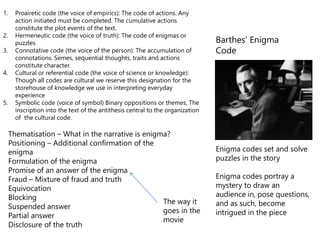
Barthes’ Enigma 
Code 
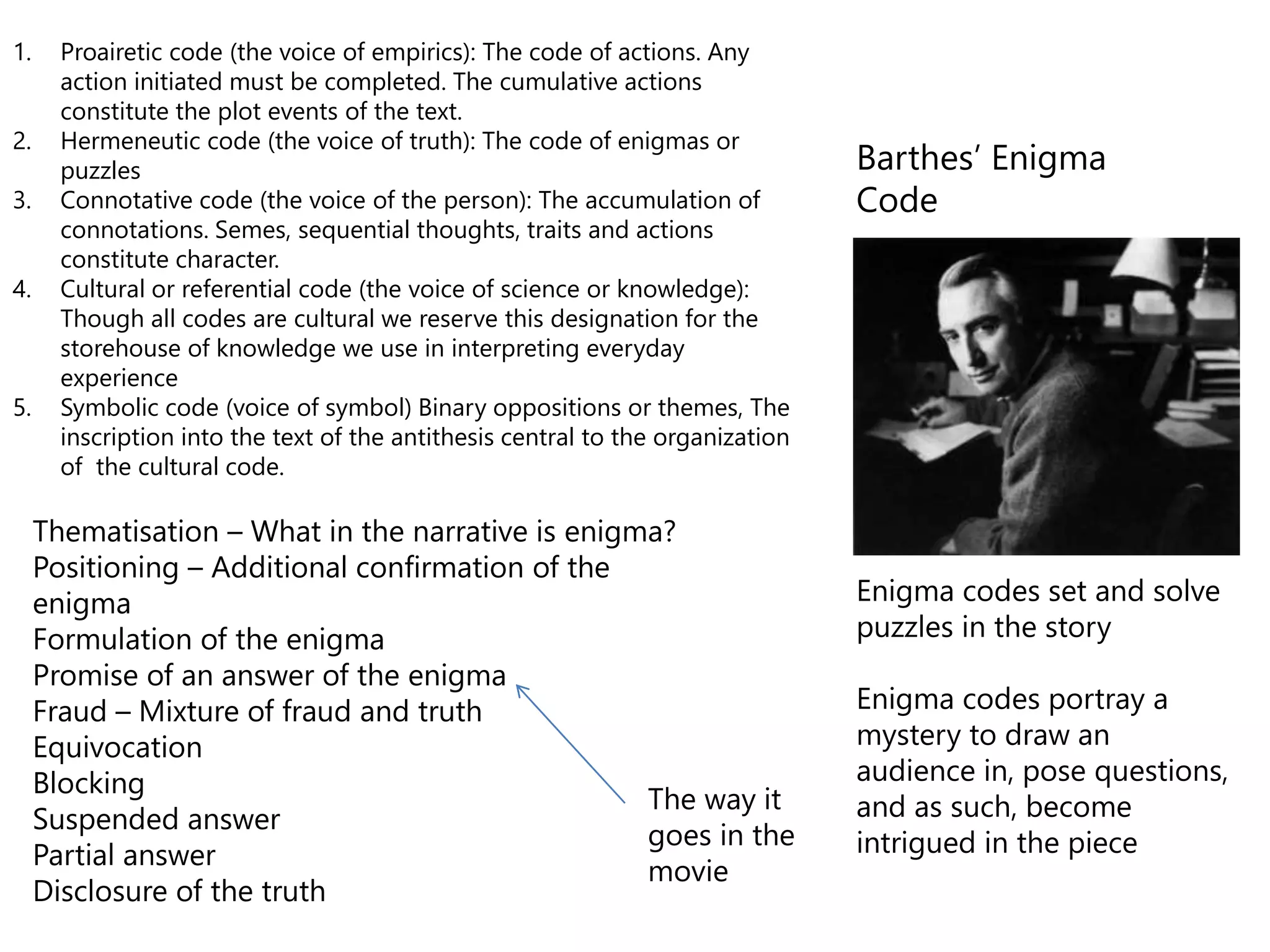
1. Proairetic code (the voice of empirics): The code of actions. Any 
action initiated must be completed. The cumulative actions 
constitute the plot events of the text. 
2. Hermeneutic code (the voice of truth): The code of enigmas or 
puzzles 
3. Connotative code (the voice of the person): The accumulation of 
connotations. Semes, sequential thoughts, traits and actions 
constitute character. 
4. Cultural or referential code (the voice of science or knowledge): 
Though all codes are cultural we reserve this designation for the 
storehouse of knowledge we use in interpreting everyday 
experience 
5. Symbolic code (voice of symbol) Binary oppositions or themes, The 
inscription into the text of the antithesis central to the organization 
of the cultural code. 
Enigma codes set and solve 
puzzles in the story 
Enigma codes portray a 
mystery to draw an 
audience in, pose questions, 
and as such, become 
intrigued in the piece 
Thematisation – What in the narrative is enigma? 
Positioning – Additional confirmation of the 
enigma 
Formulation of the enigma 
Promise of an answer of the enigma 
Fraud – Mixture of fraud and truth 
Equivocation 
Blocking 
Suspended answer 
Partial answer 
Disclosure of the truth 
The way it 
goes in the 
movie
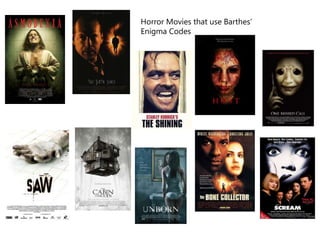
Horror Movies that use Barthes’ 
Enigma Codes
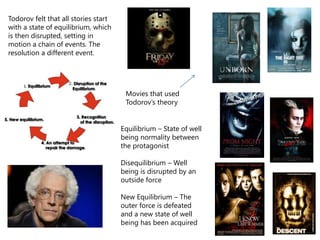
Todorov felt that all stories start 
with a state of equilibrium, which 
is then disrupted, setting in 
motion a chain of events. The 
resolution a different event. 
Movies that used 
Todorov’s theory 
Equilibrium – State of well 
being normality between 
the protagonist 
Disequilibrium – Well 
being is disrupted by an 
outside force 
New Equilibrium – The 
outer force is defeated 
and a new state of well 
being has been acquired
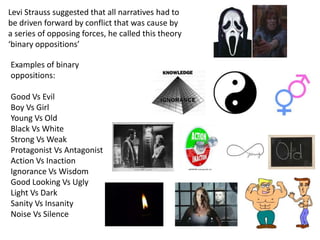
Levi Strauss suggested that all narratives had to 
be driven forward by conflict that was cause by 
a series of opposing forces, he called this theory 
‘binary oppositions’ 
Examples of binary 
oppositions: 
Good Vs Evil 
Boy Vs Girl 
Young Vs Old 
Black Vs White 
Strong Vs Weak 
Protagonist Vs Antagonist 
Action Vs Inaction 
Ignorance Vs Wisdom 
Good Looking Vs Ugly 
Light Vs Dark 
Sanity Vs Insanity 
Noise Vs Silence

Barthes' Enigma Code, Binary Oppositions and Equilibrium

  • 1.
    Barthes’ Enigma Code 1. Proairetic code (the voice of empirics): The code of actions. Any action initiated must be completed. The cumulative actions constitute the plot events of the text. 2. Hermeneutic code (the voice of truth): The code of enigmas or puzzles 3. Connotative code (the voice of the person): The accumulation of connotations. Semes, sequential thoughts, traits and actions constitute character. 4. Cultural or referential code (the voice of science or knowledge): Though all codes are cultural we reserve this designation for the storehouse of knowledge we use in interpreting everyday experience 5. Symbolic code (voice of symbol) Binary oppositions or themes, The inscription into the text of the antithesis central to the organization of the cultural code. Enigma codes set and solve puzzles in the story Enigma codes portray a mystery to draw an audience in, pose questions, and as such, become intrigued in the piece Thematisation – What in the narrative is enigma? Positioning – Additional confirmation of the enigma Formulation of the enigma Promise of an answer of the enigma Fraud – Mixture of fraud and truth Equivocation Blocking Suspended answer Partial answer Disclosure of the truth The way it goes in the movie
  • 2.
    Horror Movies thatuse Barthes’ Enigma Codes
  • 3.
    Todorov felt thatall stories start with a state of equilibrium, which is then disrupted, setting in motion a chain of events. The resolution a different event. Movies that used Todorov’s theory Equilibrium – State of well being normality between the protagonist Disequilibrium – Well being is disrupted by an outside force New Equilibrium – The outer force is defeated and a new state of well being has been acquired
  • 4.
    Levi Strauss suggestedthat all narratives had to be driven forward by conflict that was cause by a series of opposing forces, he called this theory ‘binary oppositions’ Examples of binary oppositions: Good Vs Evil Boy Vs Girl Young Vs Old Black Vs White Strong Vs Weak Protagonist Vs Antagonist Action Vs Inaction Ignorance Vs Wisdom Good Looking Vs Ugly Light Vs Dark Sanity Vs Insanity Noise Vs Silence