TzvetanTodorov
What is a story?
A form of text, regardless of medium, describing a sequence of events,
caused and experienced by characters, conveniently structured into a time
sequence in order to make sense.
What is the plot of a story?
Elements and generic conventions from which the story will be made.
What is a narrative?
The way in which the story is actually told.The formal aspects of the
storytelling.
To be able to apply Todorov’s narrative theory to the
analysis of different film genres (fantasy, sci-fi, action
adventure, rom-com, comedy)
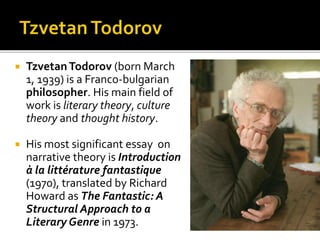
 TzvetanTodorov (born March
1, 1939) is a Franco-bulgarian
philosopher. His main field of
work is literary theory, culture
theory and thought history.
 His most significant essay on
narrative theory is Introduction
à la littérature fantastique
(1970), translated by Richard
Howard as The Fantastic: A
Structural Approach to a
Literary Genre in 1973.
The terms used by Todorov to define the three main parts of a
conventional narrative structure (the beginning, middle and end)
are:
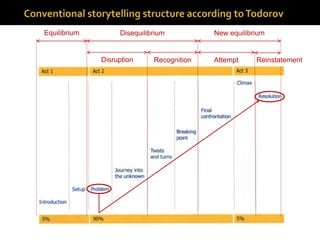
 Equilibrium – the balanced normality of the world previous
to the story (Beginning: Introduction/Set up).
 Disequilibrium – Disruption/Recognition of disruption.
(Middle:The unbalanced world between the problem and
the climax)
 New Equilibrium – Attempt to repair/Reinstatement. A
return to normality at the end – returning the world to
balanced state (End: Closed ending)
Equilibrium Disequilibrium New equilibrium
Disruption Recognition Attempt Reinstatement
Think of a conventional story (fairy tale, film, novel or tale)
 Identify every stage in the story with Todorov’s narrative
theory.
Remember to break down the Disequilibrium and the New
equilibrium stages in their respective stages:
Disequilibrium – Disruption/Recognition of disruption
New Equilibrium – Attempt to repair/ Reinstatement.
Answer the questions in the following slide:
1. What is the initial equilibrium (introduction/set up)?
2. What is the cause of the disruption of the equilibrium
(problem/conflict) in the story?
1. When does the recognition of the disruption (plot twists and
turns/breaking point) take place?
2. What is the attempt to restore (final confrontation/climax)?
3. When does the reinstatement of the equilibrium take place
(resolution)?
4. What is this new equilibrium? Is it different to the initial
equilibrium?
Watch the opening credits of EastEnders?
How does it help to set the place and period of
the plot?
 Imagine you are planning the opening shot of an episode of
Eastenders in which they tell you how was the life of the oldest
characters in the 1980’s.
1. How could you show that the scene was taking place early
in the morning? (time)
2. How would you show your film was set in London? (place)
3.What methods could you use to make it clear the text is set
in the 1980s? (period)
4. How could you make it clear one of the characters is a
married policeman? (character)
5.What could you do to show the audience they are watching
a thriller? (genre)
One way to achieve all this would be to show a sunrise (1)
over the Thames (2) with a panning shot to Big Ben (2)
and then down to policeman in uniform (2, 3 and 4) outside the houses
of parliament (2).
People nearby could be wearing 1980s fashions and the models of
cars and double decker buses that pass would be from the same era
(3).
A policeman could speak on his radio using his left hand so the
wedding ring was visible (4)
and he could be talking about the murder victim (5) he has just
discovered.
Tense music could accompany these images to help set the tone (5).
 Conventional narratives present linear, chronological storylines that are easy to
understand.This is the first requirement to engage the interest of the audience.
 Conventional narratives present stories with closed endings which provides
closure and a sense of satisfaction in the audience.
 Conventional narratives are engaging because they present a problem/conflict
for the characters (and therefore the audience) to resolve.This is what engages the
interest of the audience.
 Todorov calls this problem/conflict disruption of the initial equilibrium.
 This conflicts are conventionally based on binary oppositions (hero/villain in Action
films; man/woman in rom-coms; humans/robot or human/aliens in Sci-Fi films; etc.)
 Archetypical characters help the audience to identify with recognisable
characters, which engages them in the narrative.
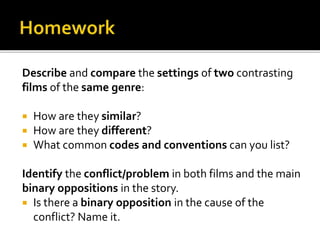
Describe and compare the settings of two contrasting
films of the same genre:
 How are they similar?
 How are they different?
 What common codes and conventions can you list?
Identify the conflict/problem in both films and the main
binary oppositions in the story.
 Is there a binary opposition in the cause of the
conflict? Name it.
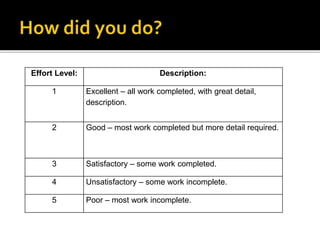
Effort Level: Description:
1 Excellent – all work completed, with great detail,
description.
2 Good – most work completed but more detail required.
3 Satisfactory – some work completed.
4 Unsatisfactory – some work incomplete.
5 Poor – most work incomplete.
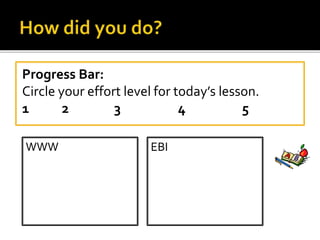
Progress Bar:
Circle your effort level for today’s lesson.
1 2 3 4 5
Progress Bar:
• Circle your effort level for today’s lesson.
1 2 3 4 5
WWW EBI
EBI:

GCSE Narrative theories 2

  • 1.
  • 2.
    What is astory? A form of text, regardless of medium, describing a sequence of events, caused and experienced by characters, conveniently structured into a time sequence in order to make sense. What is the plot of a story? Elements and generic conventions from which the story will be made. What is a narrative? The way in which the story is actually told.The formal aspects of the storytelling.
  • 3.
    To be ableto apply Todorov’s narrative theory to the analysis of different film genres (fantasy, sci-fi, action adventure, rom-com, comedy)
  • 4.
     TzvetanTodorov (bornMarch 1, 1939) is a Franco-bulgarian philosopher. His main field of work is literary theory, culture theory and thought history.  His most significant essay on narrative theory is Introduction à la littérature fantastique (1970), translated by Richard Howard as The Fantastic: A Structural Approach to a Literary Genre in 1973.
  • 5.
    The terms usedby Todorov to define the three main parts of a conventional narrative structure (the beginning, middle and end) are:  Equilibrium – the balanced normality of the world previous to the story (Beginning: Introduction/Set up).  Disequilibrium – Disruption/Recognition of disruption. (Middle:The unbalanced world between the problem and the climax)  New Equilibrium – Attempt to repair/Reinstatement. A return to normality at the end – returning the world to balanced state (End: Closed ending)
  • 6.
    Equilibrium Disequilibrium Newequilibrium Disruption Recognition Attempt Reinstatement
  • 7.
    Think of aconventional story (fairy tale, film, novel or tale)  Identify every stage in the story with Todorov’s narrative theory. Remember to break down the Disequilibrium and the New equilibrium stages in their respective stages: Disequilibrium – Disruption/Recognition of disruption New Equilibrium – Attempt to repair/ Reinstatement. Answer the questions in the following slide:
  • 8.
    1. What isthe initial equilibrium (introduction/set up)? 2. What is the cause of the disruption of the equilibrium (problem/conflict) in the story? 1. When does the recognition of the disruption (plot twists and turns/breaking point) take place? 2. What is the attempt to restore (final confrontation/climax)? 3. When does the reinstatement of the equilibrium take place (resolution)? 4. What is this new equilibrium? Is it different to the initial equilibrium?
  • 9.
    Watch the openingcredits of EastEnders? How does it help to set the place and period of the plot?
  • 10.
     Imagine youare planning the opening shot of an episode of Eastenders in which they tell you how was the life of the oldest characters in the 1980’s. 1. How could you show that the scene was taking place early in the morning? (time) 2. How would you show your film was set in London? (place) 3.What methods could you use to make it clear the text is set in the 1980s? (period) 4. How could you make it clear one of the characters is a married policeman? (character) 5.What could you do to show the audience they are watching a thriller? (genre)
  • 11.
    One way toachieve all this would be to show a sunrise (1) over the Thames (2) with a panning shot to Big Ben (2) and then down to policeman in uniform (2, 3 and 4) outside the houses of parliament (2). People nearby could be wearing 1980s fashions and the models of cars and double decker buses that pass would be from the same era (3). A policeman could speak on his radio using his left hand so the wedding ring was visible (4) and he could be talking about the murder victim (5) he has just discovered. Tense music could accompany these images to help set the tone (5).
  • 12.
     Conventional narrativespresent linear, chronological storylines that are easy to understand.This is the first requirement to engage the interest of the audience.  Conventional narratives present stories with closed endings which provides closure and a sense of satisfaction in the audience.  Conventional narratives are engaging because they present a problem/conflict for the characters (and therefore the audience) to resolve.This is what engages the interest of the audience.  Todorov calls this problem/conflict disruption of the initial equilibrium.  This conflicts are conventionally based on binary oppositions (hero/villain in Action films; man/woman in rom-coms; humans/robot or human/aliens in Sci-Fi films; etc.)  Archetypical characters help the audience to identify with recognisable characters, which engages them in the narrative.
  • 13.
    Describe and comparethe settings of two contrasting films of the same genre:  How are they similar?  How are they different?  What common codes and conventions can you list? Identify the conflict/problem in both films and the main binary oppositions in the story.  Is there a binary opposition in the cause of the conflict? Name it.
  • 14.
    Effort Level: Description: 1Excellent – all work completed, with great detail, description. 2 Good – most work completed but more detail required. 3 Satisfactory – some work completed. 4 Unsatisfactory – some work incomplete. 5 Poor – most work incomplete.
  • 15.
    Progress Bar: Circle youreffort level for today’s lesson. 1 2 3 4 5 Progress Bar: • Circle your effort level for today’s lesson. 1 2 3 4 5 WWW EBI EBI: