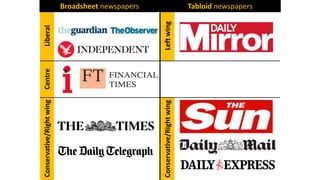
Broadsheets andTabloids’ political bias.
Daily Mail and The Guardian ownership
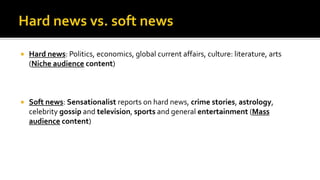
 Hard news: Politics, economics, global current affairs, culture: literature, arts
(Niche audience content)
 Soft news: Sensationalist reports on hard news, crime stories, astrology,
celebrity gossip and television, sports and general entertainment (Mass
audience content)
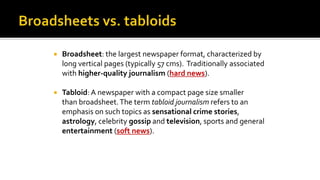
 Broadsheet: the largest newspaper format, characterized by
long vertical pages (typically 57 cms). Traditionally associated
with higher-quality journalism (hard news).
 Tabloid: A newspaper with a compact page size smaller
than broadsheet.The term tabloid journalism refers to an
emphasis on such topics as sensational crime stories,
astrology, celebrity gossip and television, sports and general
entertainment (soft news).
 A system of ideas and ideals (values and beliefs), which forms
the basis of an economic or political theory and policy, and
which are therefore characteristic of a social group or individual.
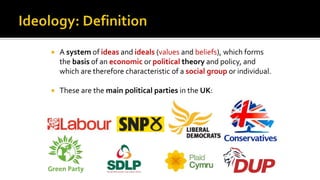
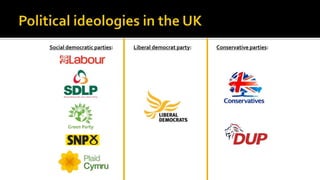
 These are the main political parties in the UK:
Centre
Left
wing
Liberal
Broadsheet newspapers Tabloid newspapers
Conservative/Right
wing
Conservative/Right
wing
Social democratic parties: Liberal democrat party: Conservative parties:
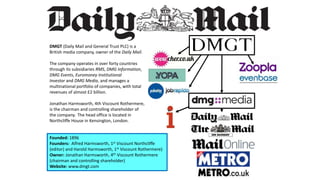
DMGT (Daily Mail and General Trust PLC) is a
British media company, owner of the Daily Mail.
The company operates in over forty countries
through its subsidiaries RMS, DMG Information,
DMG Events, Euromoney Institutional
Investor and DMG Media, and manages a
multinational portfolio of companies, with total
revenues of almost £2 billion.
Jonathan Harmsworth, 4th Viscount Rothermere,
is the chairman and controlling shareholder of
the company. The head office is located in
Northcliffe House in Kensington, London.
Founded: 1896
Founders: Alfred Harmsworth, 1st Viscount Northcliffe
(editor) and Harold Harmsworth, 1st Viscount Rothermere)
Owner: Jonathan Harmsworth, 4th Viscount Rothermere
(chairman and controlling shareholder)
Website: www.dmgt.com
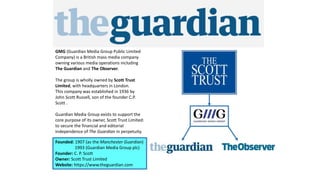
Founded: 1907 (as the Manchester Guardian)
1993 (Guardian Media Group plc)
Founder: C. P. Scott
Owner: Scott Trust Limited
Website: https://www.theguardian.com
GMG (Guardian Media Group Public Limited
Company) is a British mass media company
owning various media operations including
The Guardian and The Observer.
The group is wholly owned by Scott Trust
Limited, with headquarters in London.
This company was established in 1936 by
John Scott Russell, son of the founder C.P.
Scott .
Guardian Media Group exists to support the
core purpose of its owner, Scott Trust Limited:
to secure the financial and editorial
independence of The Guardian in perpetuity.
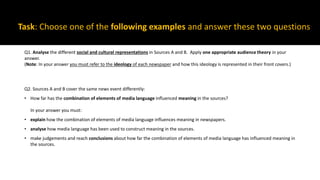
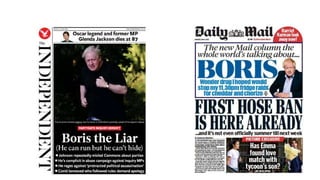
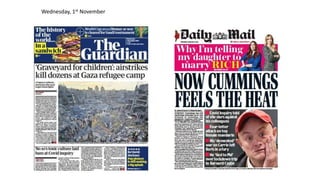
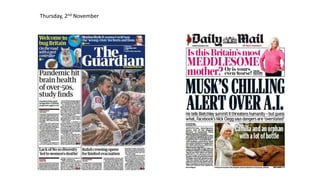
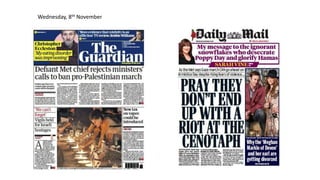
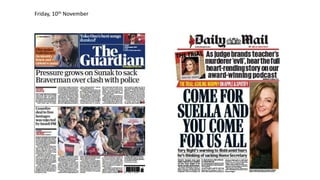
Task: Choose one of the following examples and answer these two questions
Q1. Analyse the different social and cultural representations in Sources A and B. Apply one appropriate audience theory in your
answer.
(Note: In your answer you must refer to the ideology of each newspaper and how this ideology is represented in their front covers.)
Q2. Sources A and B cover the same news event differently:
• How far has the combination of elements of media language influenced meaning in the sources?
In your answer you must:
• explain how the combination of elements of media language influences meaning in newspapers.
• analyse how media language has been used to construct meaning in the sources.
• make judgements and reach conclusions about how far the combination of elements of media language has influenced meaning in
the sources.
Wednesday, 1st November
Thursday, 2nd November
Wednesday, 8th November
Friday, 10th November

Newspapers revision task.pptx

  • 1.
    Broadsheets andTabloids’ politicalbias. Daily Mail and The Guardian ownership
  • 2.
     Hard news:Politics, economics, global current affairs, culture: literature, arts (Niche audience content)  Soft news: Sensationalist reports on hard news, crime stories, astrology, celebrity gossip and television, sports and general entertainment (Mass audience content)
  • 3.
     Broadsheet: thelargest newspaper format, characterized by long vertical pages (typically 57 cms). Traditionally associated with higher-quality journalism (hard news).  Tabloid: A newspaper with a compact page size smaller than broadsheet.The term tabloid journalism refers to an emphasis on such topics as sensational crime stories, astrology, celebrity gossip and television, sports and general entertainment (soft news).
  • 4.
     A systemof ideas and ideals (values and beliefs), which forms the basis of an economic or political theory and policy, and which are therefore characteristic of a social group or individual.  These are the main political parties in the UK:
  • 5.
    Centre Left wing Liberal Broadsheet newspapers Tabloidnewspapers Conservative/Right wing Conservative/Right wing
  • 6.
    Social democratic parties:Liberal democrat party: Conservative parties:
  • 7.
    DMGT (Daily Mailand General Trust PLC) is a British media company, owner of the Daily Mail. The company operates in over forty countries through its subsidiaries RMS, DMG Information, DMG Events, Euromoney Institutional Investor and DMG Media, and manages a multinational portfolio of companies, with total revenues of almost £2 billion. Jonathan Harmsworth, 4th Viscount Rothermere, is the chairman and controlling shareholder of the company. The head office is located in Northcliffe House in Kensington, London. Founded: 1896 Founders: Alfred Harmsworth, 1st Viscount Northcliffe (editor) and Harold Harmsworth, 1st Viscount Rothermere) Owner: Jonathan Harmsworth, 4th Viscount Rothermere (chairman and controlling shareholder) Website: www.dmgt.com
  • 8.
    Founded: 1907 (asthe Manchester Guardian) 1993 (Guardian Media Group plc) Founder: C. P. Scott Owner: Scott Trust Limited Website: https://www.theguardian.com GMG (Guardian Media Group Public Limited Company) is a British mass media company owning various media operations including The Guardian and The Observer. The group is wholly owned by Scott Trust Limited, with headquarters in London. This company was established in 1936 by John Scott Russell, son of the founder C.P. Scott . Guardian Media Group exists to support the core purpose of its owner, Scott Trust Limited: to secure the financial and editorial independence of The Guardian in perpetuity.
  • 9.
    Task: Choose oneof the following examples and answer these two questions Q1. Analyse the different social and cultural representations in Sources A and B. Apply one appropriate audience theory in your answer. (Note: In your answer you must refer to the ideology of each newspaper and how this ideology is represented in their front covers.) Q2. Sources A and B cover the same news event differently: • How far has the combination of elements of media language influenced meaning in the sources? In your answer you must: • explain how the combination of elements of media language influences meaning in newspapers. • analyse how media language has been used to construct meaning in the sources. • make judgements and reach conclusions about how far the combination of elements of media language has influenced meaning in the sources.
  • 11.
  • 12.
  • 13.
  • 14.