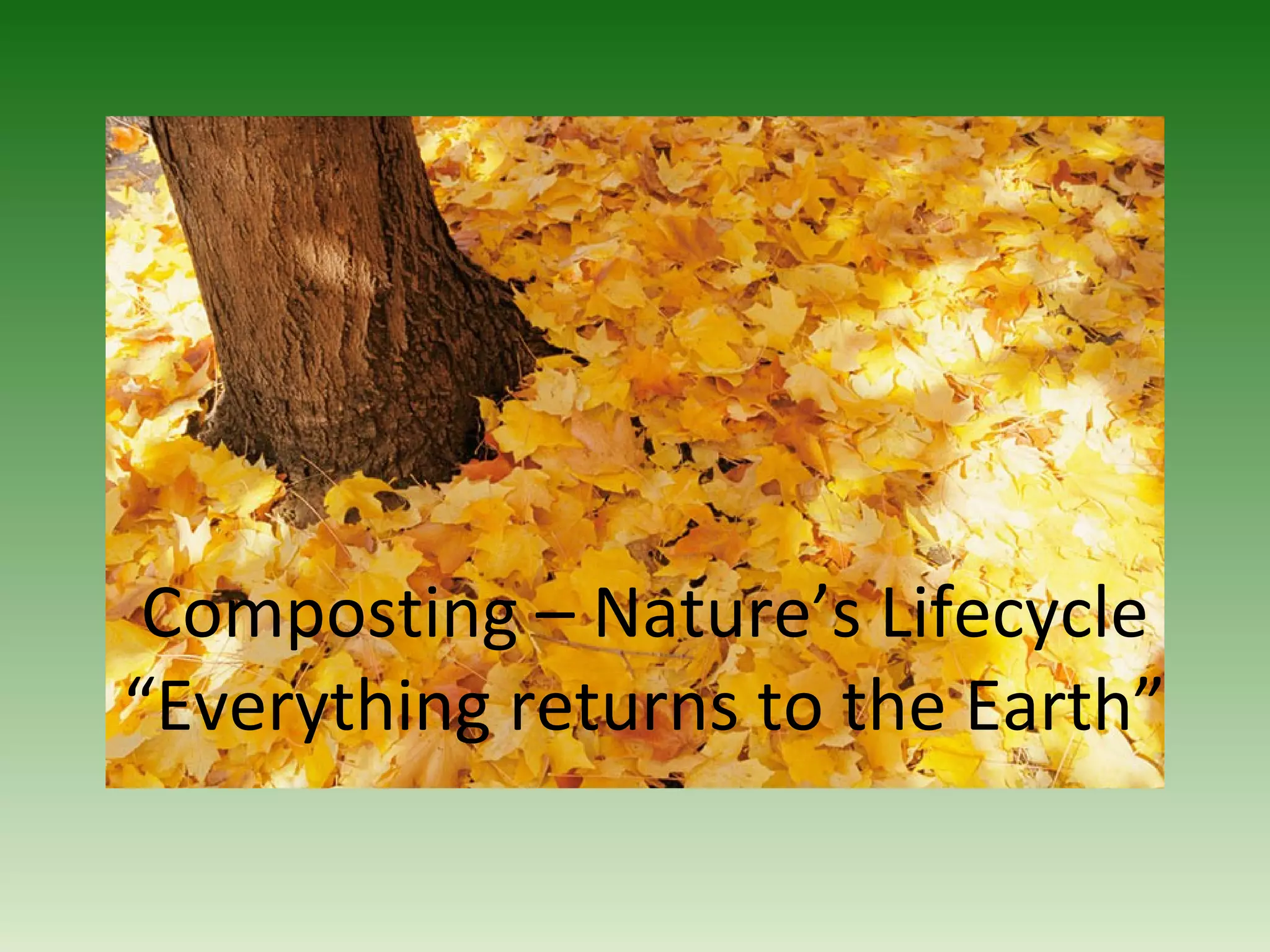
Composting – Nature’s Lifecycle
“Everything returns to the Earth”
What is Compost?
Compost is organic material that over time
has been consumed by animals of all sizes,
from larger mammals, birds and rodents to
worms, insects, and microscopic organisms.
The result of this natural lifecycle is compost,
a combination of digested and
undigested food that is left
on the forest floor to create
rich, soft, sweet-smelling soil.
Why Compost Our Food Waste?
• Return nutrients to the soil
• Create the best mulch/fertilizer for free
• Reduce the amount of trash that you send to the
landfill, where it creates
CO2, does not break down
and becomes toxic
• Feed your plants
• Think about the impact on the next 7
generations, as Native Americans do
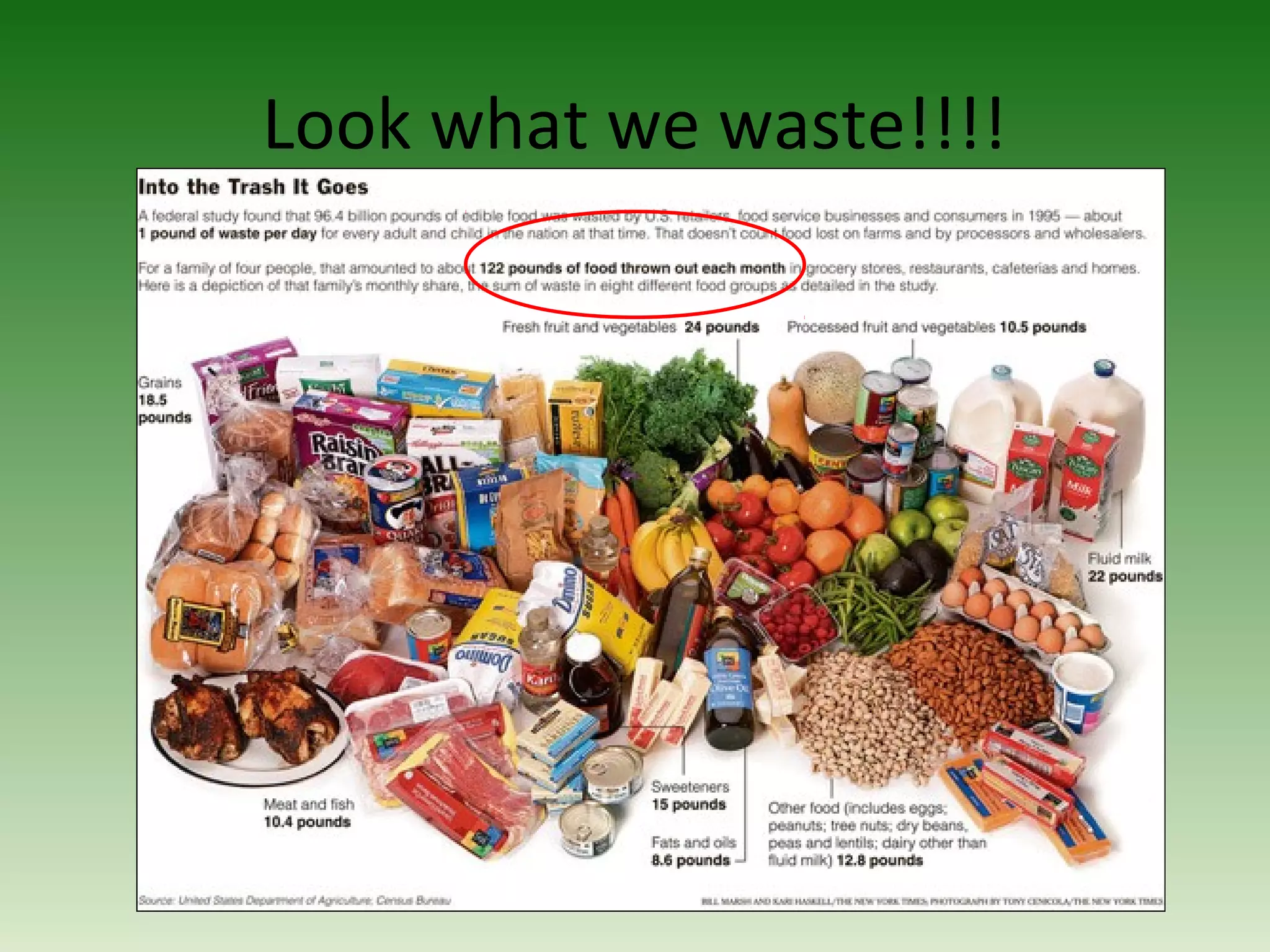
Look what we waste!!!!
Anyone Can Compost
• Home dwellers – locate compost bin next to
trashcans for convenience, or near backdoor.
• Apartment dwellers – talk to landlord about
having a compost bin by the trashcans, and/or
set up your own vermicomposting system
• It doesn’t cost anything to set up a compost
system and it’s a simple thing to do, yet has a
large result!
• What is your level of courage?
Why is Compost So Good?
• Adds nutrients to the soil, which in turn supports
healthier and more productive plants. Compost
provides virtually all of the essential nutrients for plant
growth, and more importantly, it releases these
nutrients over time to give a slow, steady consistent
intake of essential elements needed for growth.
• Improves the structure of soil, making it able to hold
water, yet it creates pockets of air that plant roots
need as well.
• Eliminates the need for synthetic fertilizers which
leach chemicals into the groundwater and pollute our
streams and lakes.
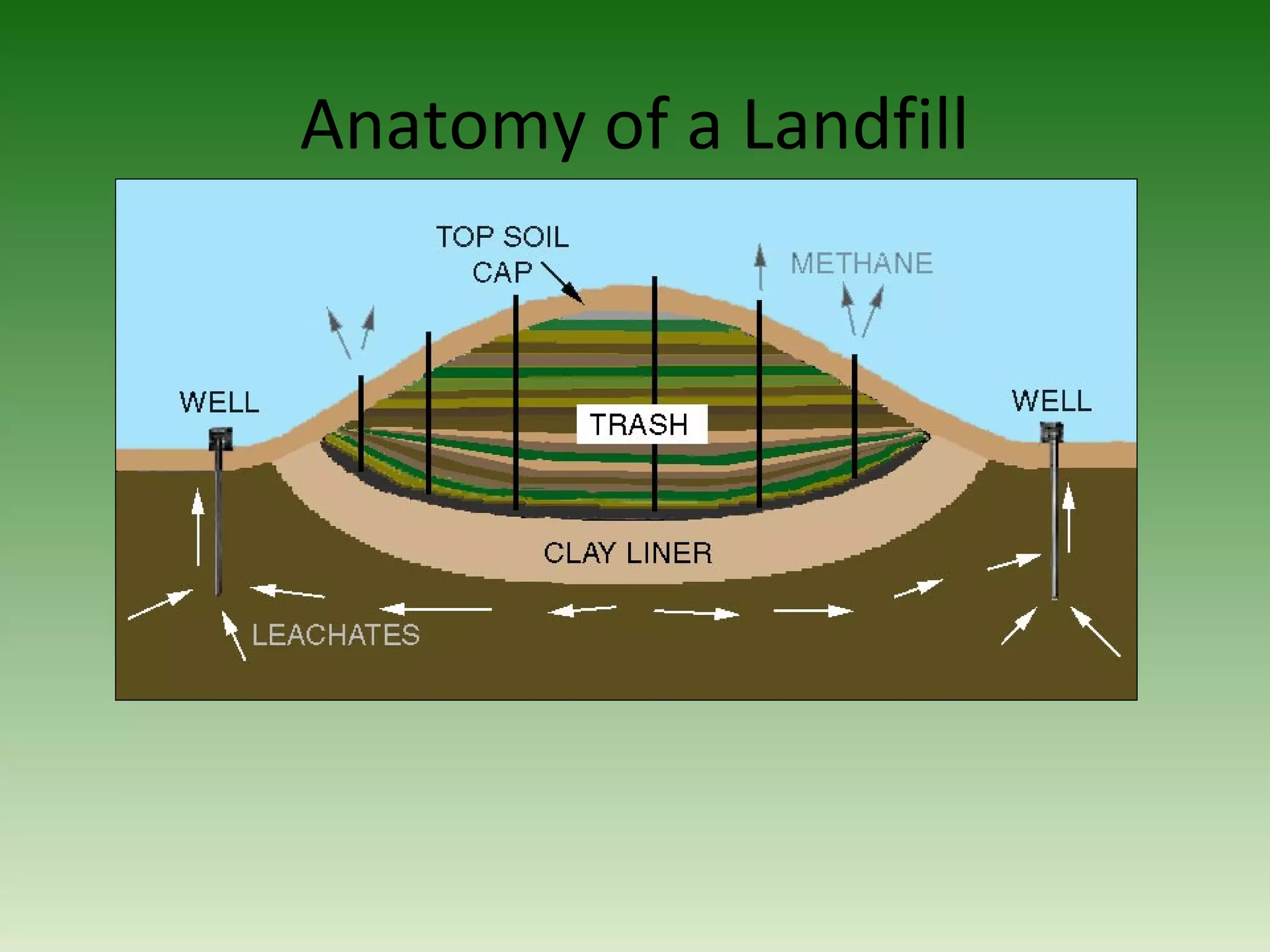
Anatomy of a Landfill
Why doesn’t food compost
in the landfill?
• No oxygen – mummifies waste
• Mixed with non-organic plastics and waste
• Built to encapsulate waste, no breakdown
• Monitored for 30 years to watch for toxins
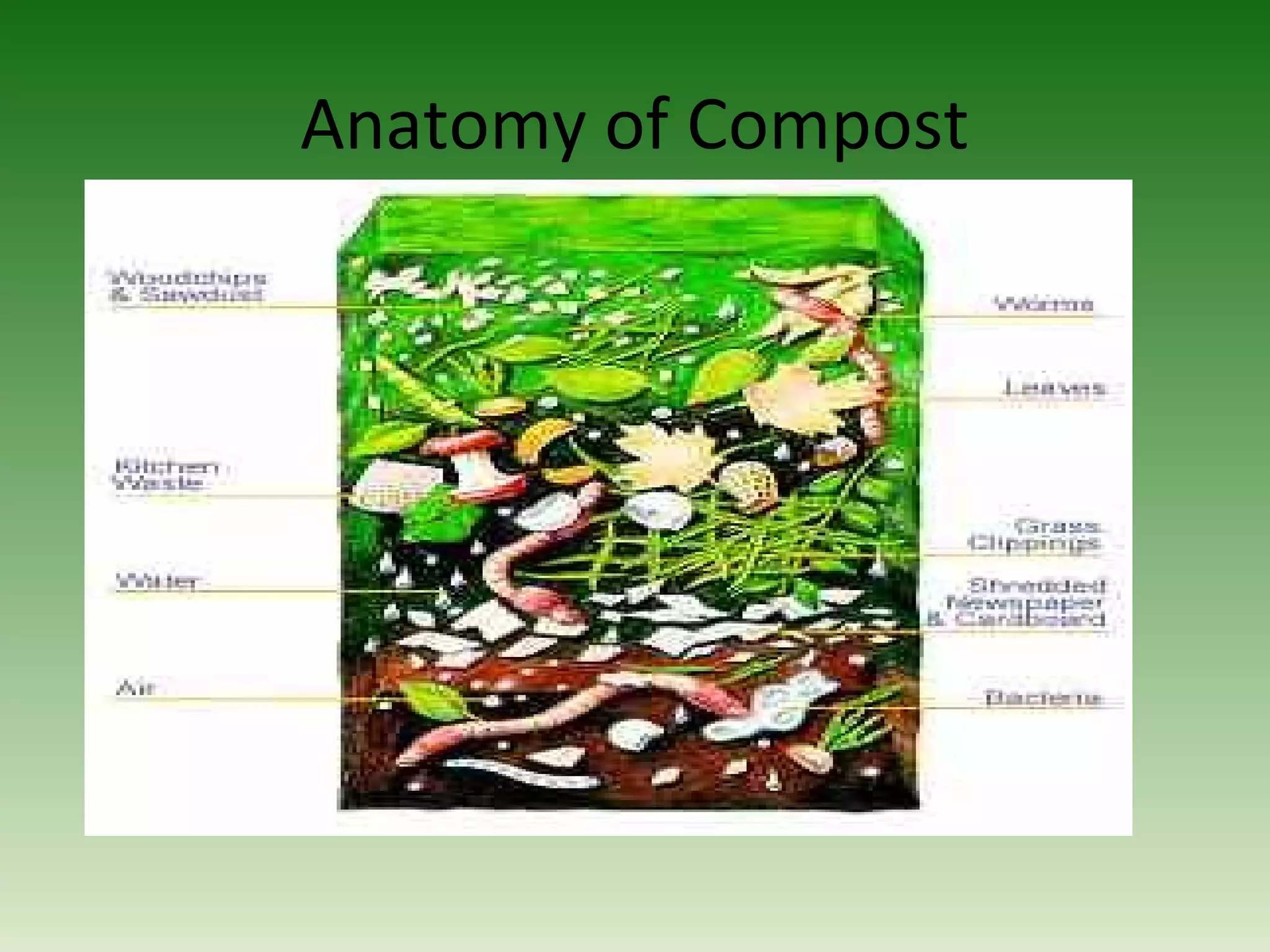
Anatomy of Compost
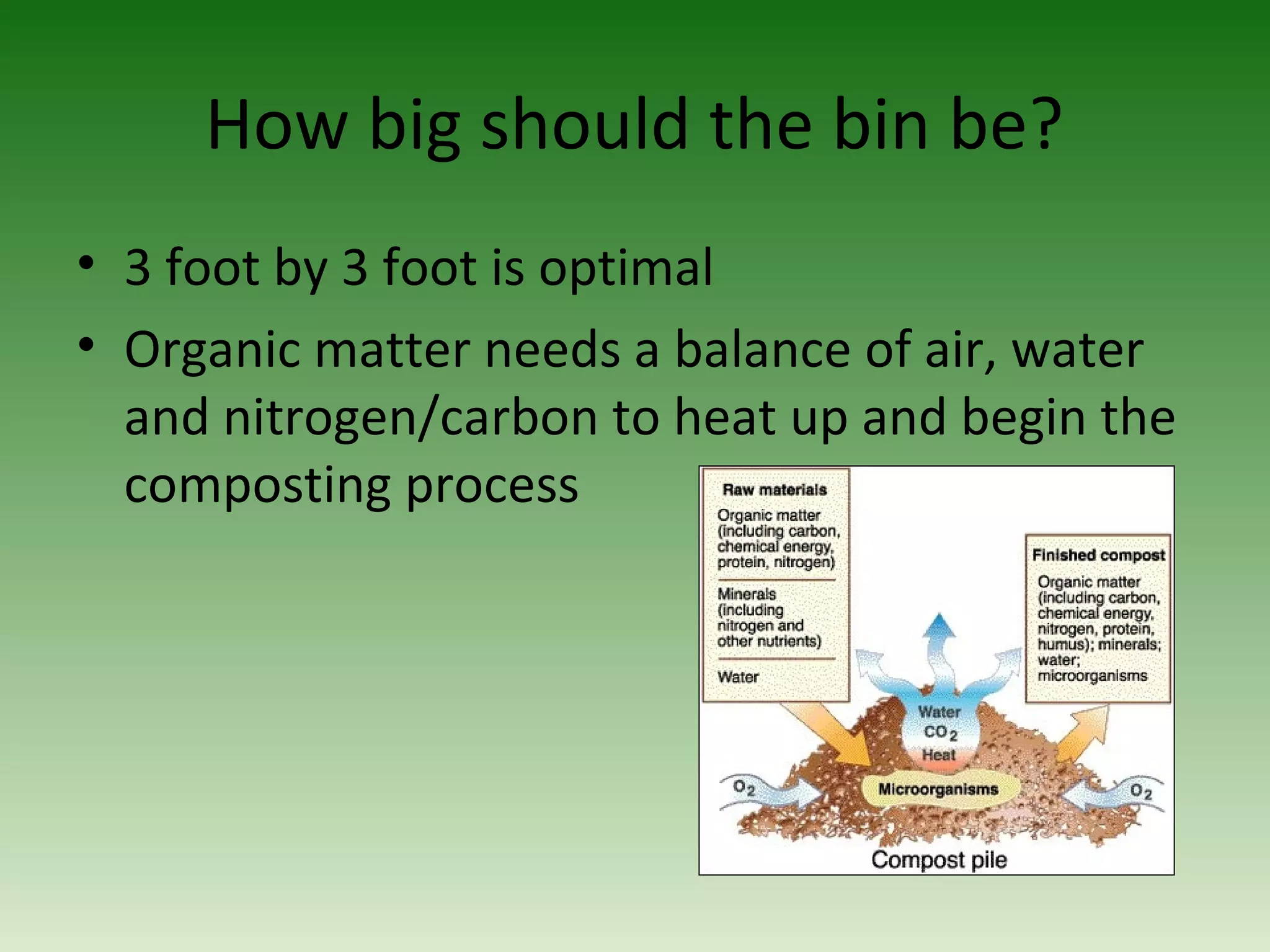
How big should the bin be?
• 3 foot by 3 foot is optimal
• Organic matter needs a balance of air, water
and nitrogen/carbon to heat up and begin the
composting process
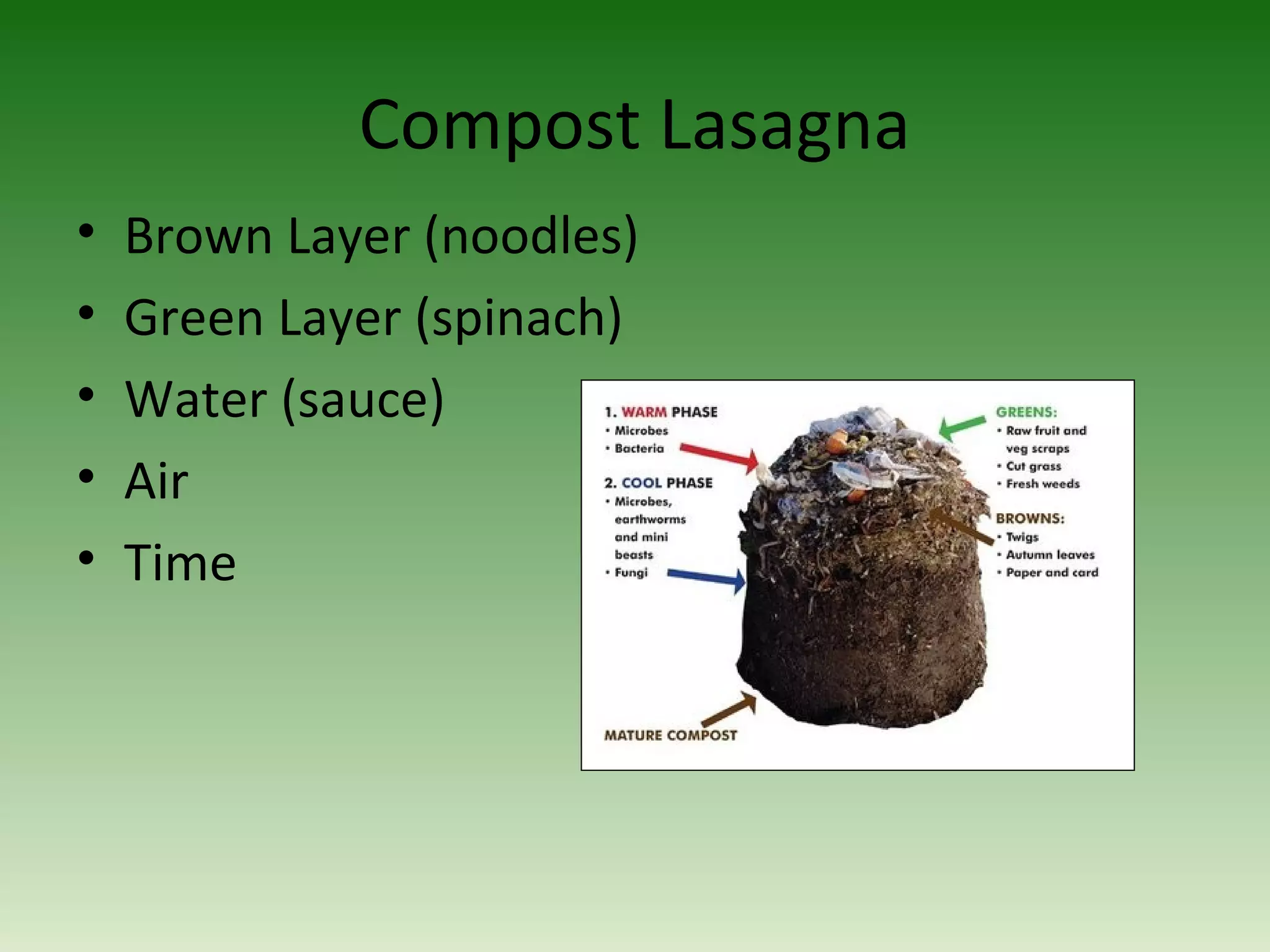
Compost Lasagna
• Brown Layer (noodles)
• Green Layer (spinach)
• Water (sauce)
• Air
• Time
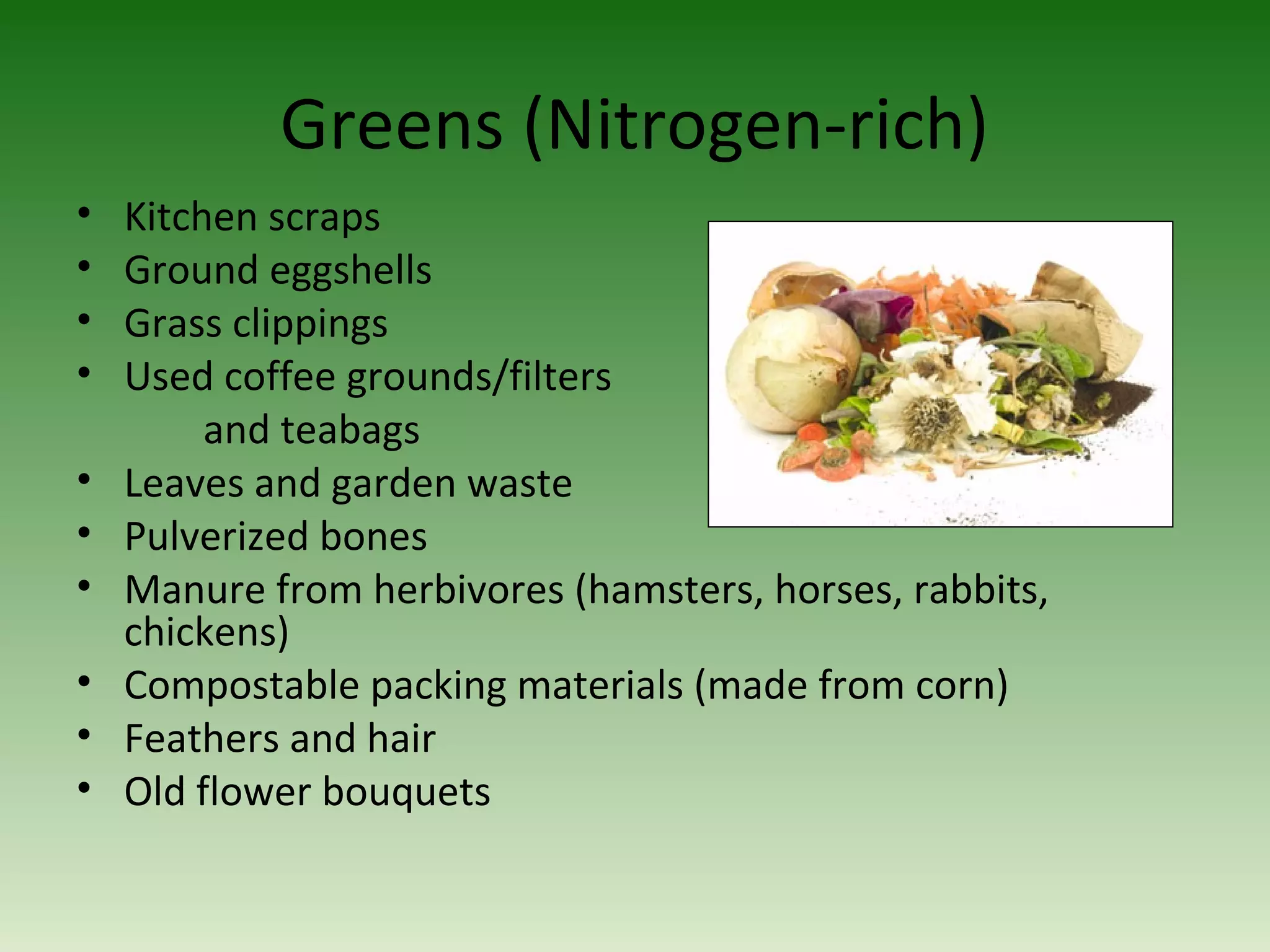
Greens (Nitrogen-rich)
• Kitchen scraps
• Ground eggshells
• Grass clippings
• Used coffee grounds/filters
and teabags
• Leaves and garden waste
• Pulverized bones
• Manure from herbivores (hamsters, horses, rabbits,
chickens)
• Compostable packing materials (made from corn)
• Feathers and hair
• Old flower bouquets
Browns (Carbon-rich)
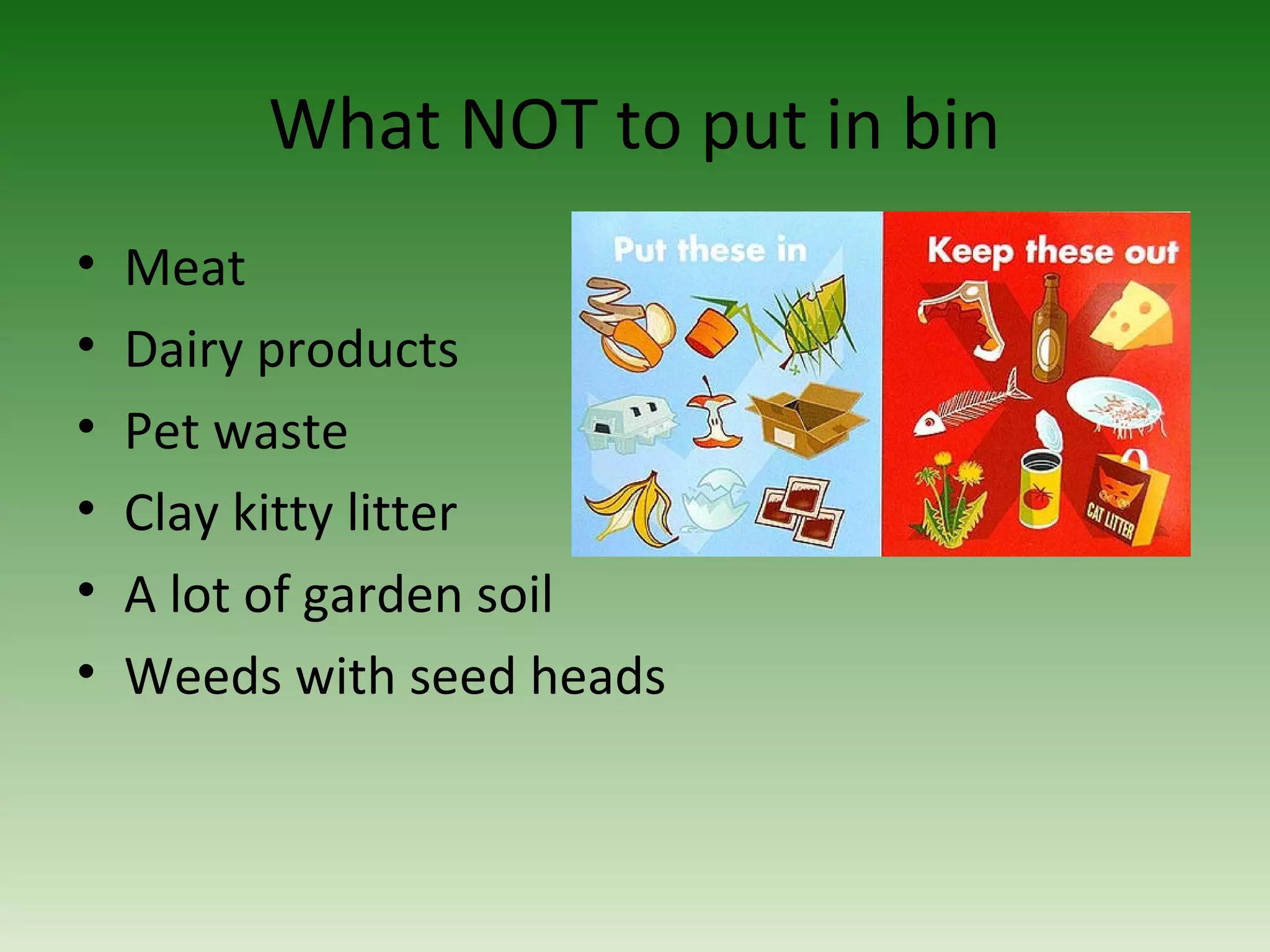
Fall leaves (shredded preferably)
Spent plants
Dry grass clippings
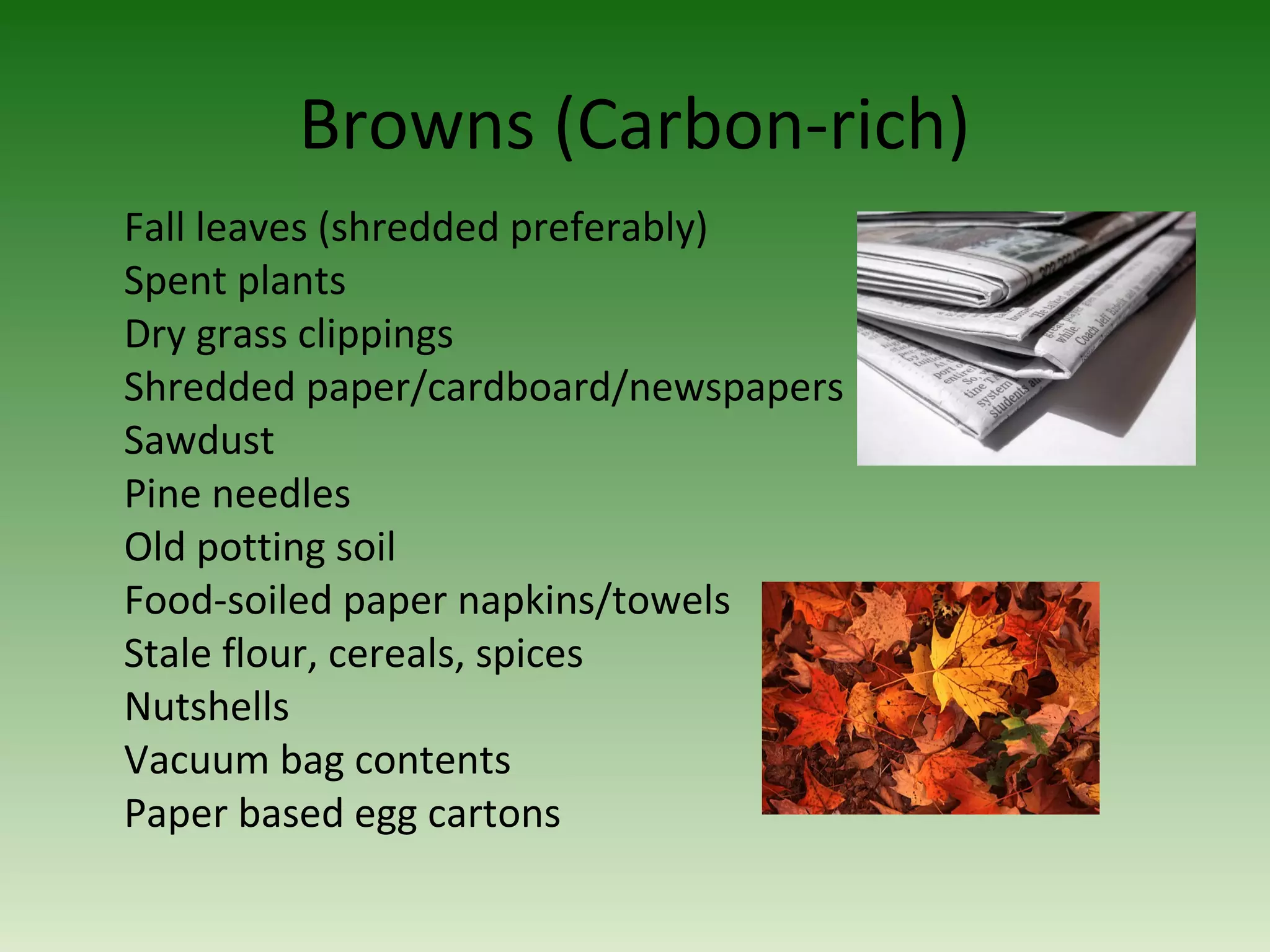
Shredded paper/cardboard/newspapers
Sawdust
Pine needles
Old potting soil
Food-soiled paper napkins/towels
Stale flour, cereals, spices
Nutshells
Vacuum bag contents
Paper based egg cartons
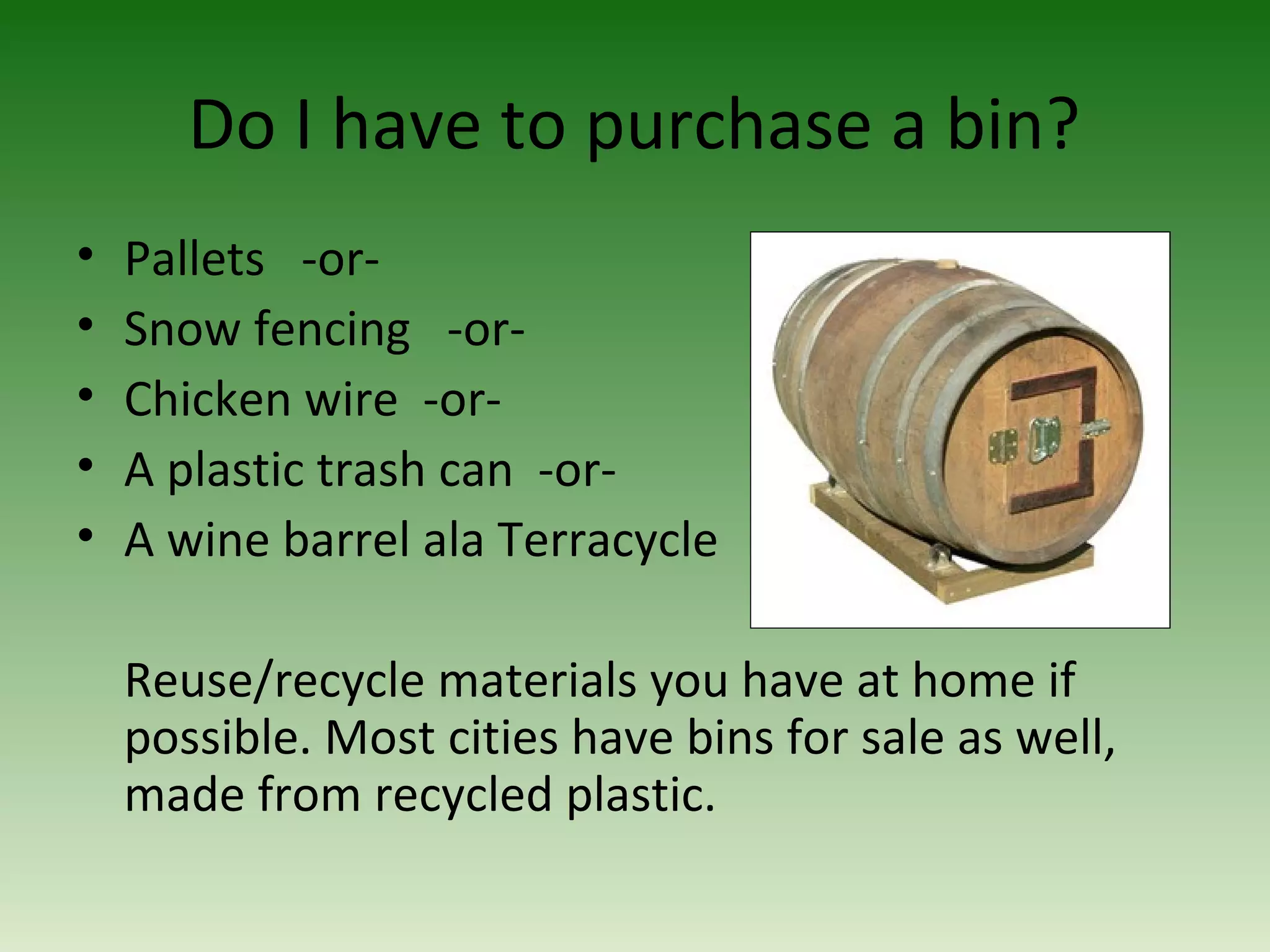
What NOT to put in bin
• Meat
• Dairy products
• Pet waste
• Clay kitty litter
• A lot of garden soil
• Weeds with seed heads
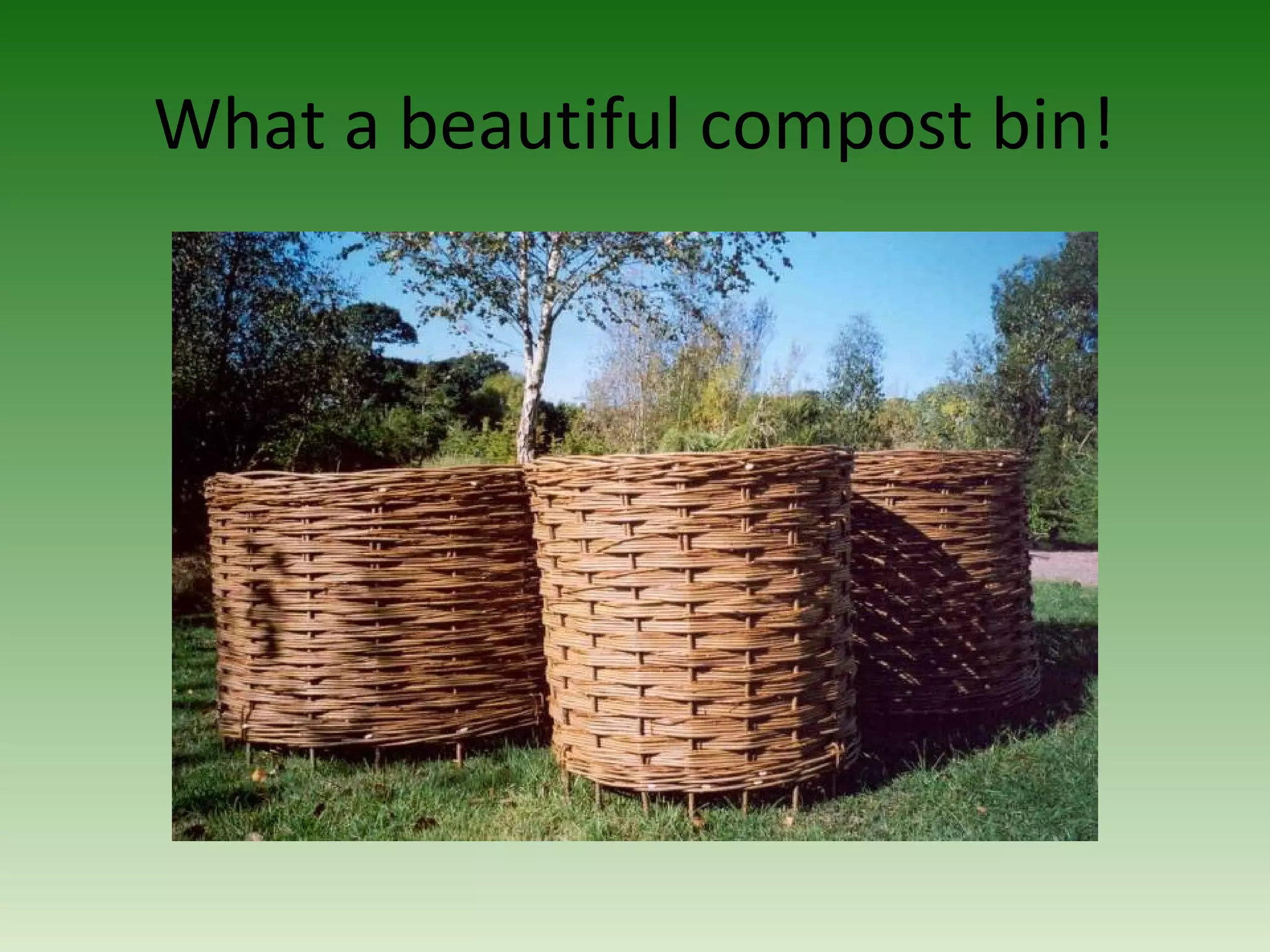
Do I have to purchase a bin?
• Pallets -or-
• Snow fencing -or-
• Chicken wire -or-
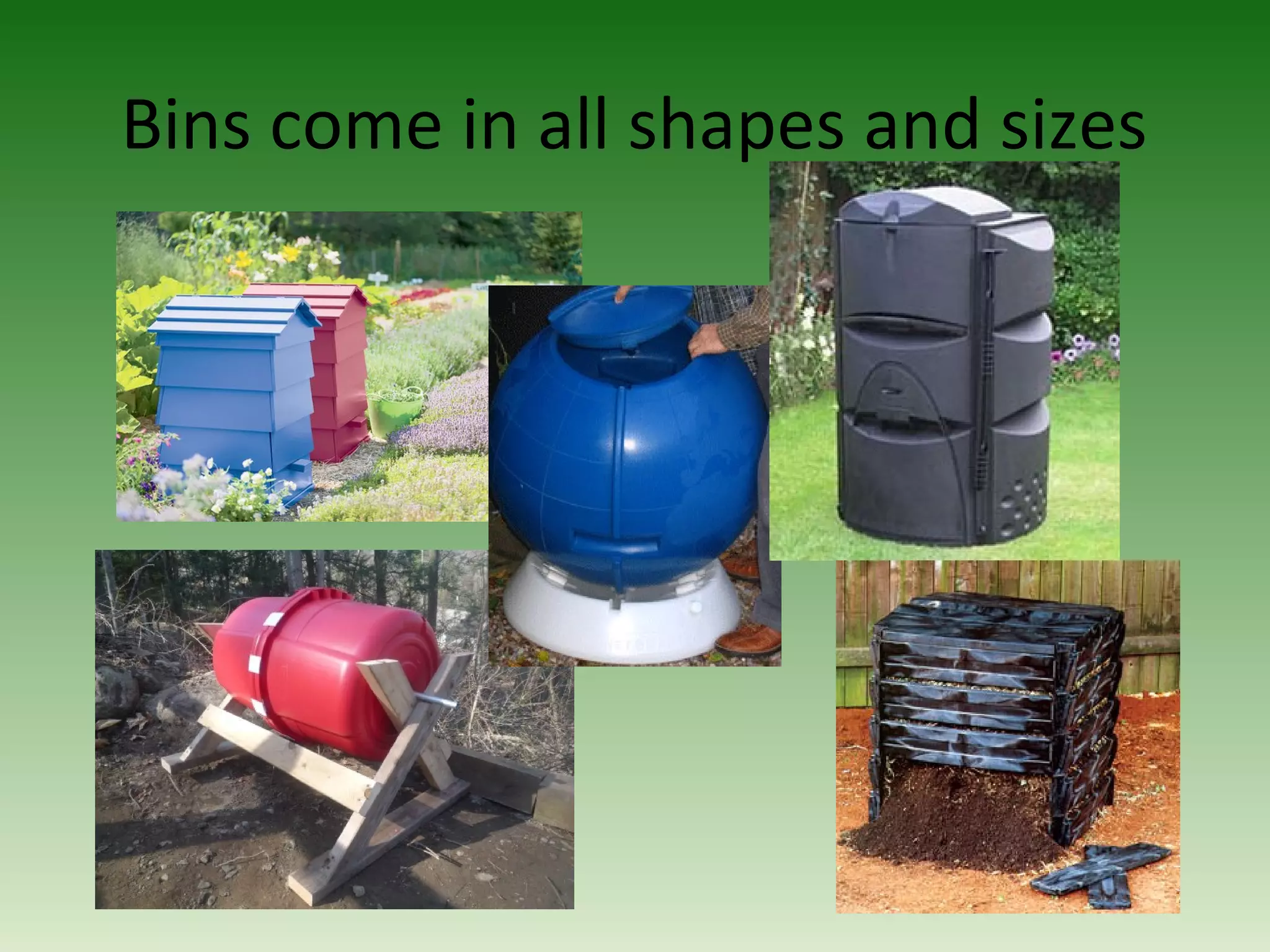
• A plastic trash can -or-
• A wine barrel ala Terracycle
Reuse/recycle materials you have at home if
possible. Most cities have bins for sale as well,
made from recycled plastic.
What a beautiful compost bin!
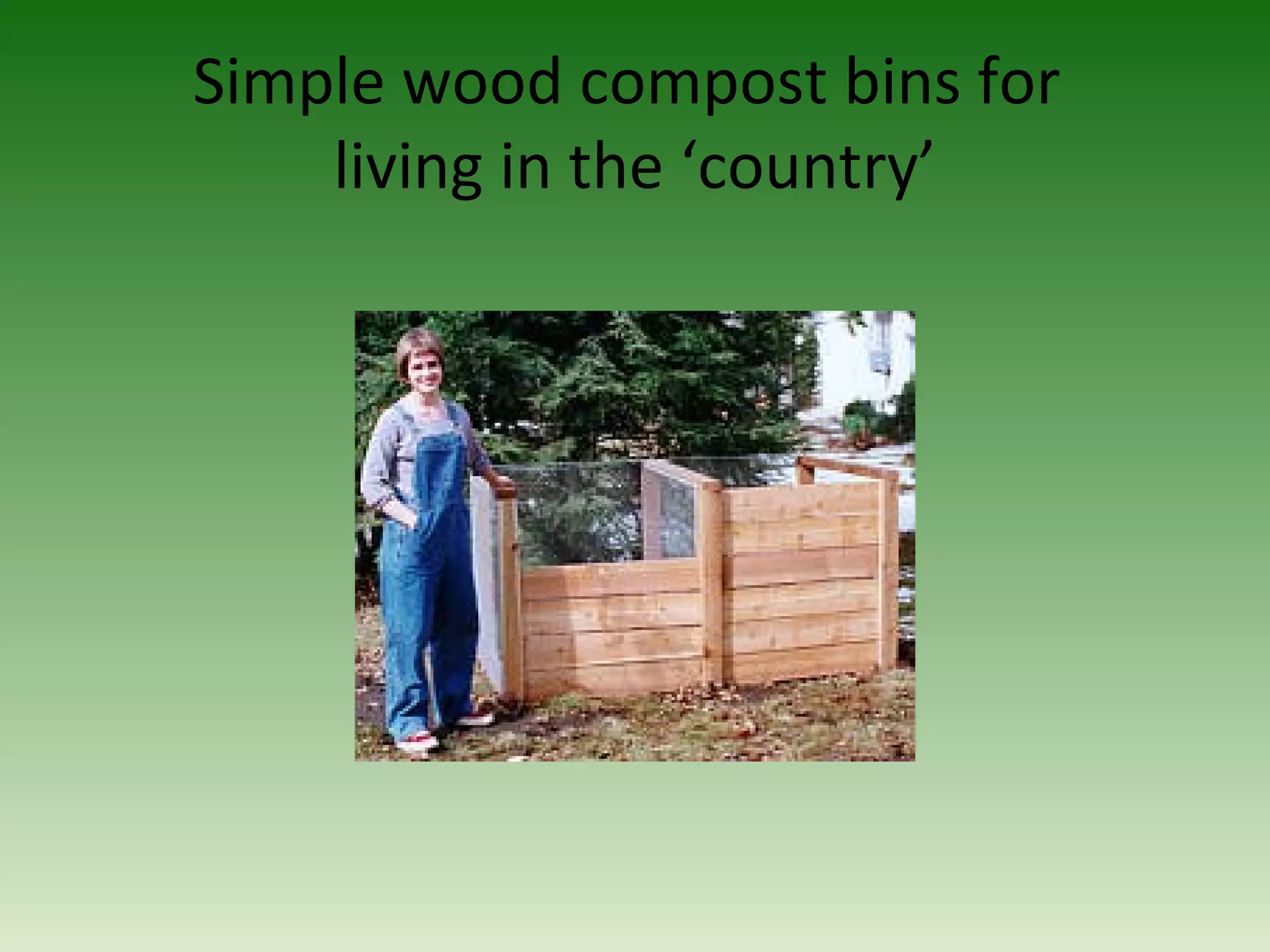
Simple wood compost bins for
living in the ‘country’
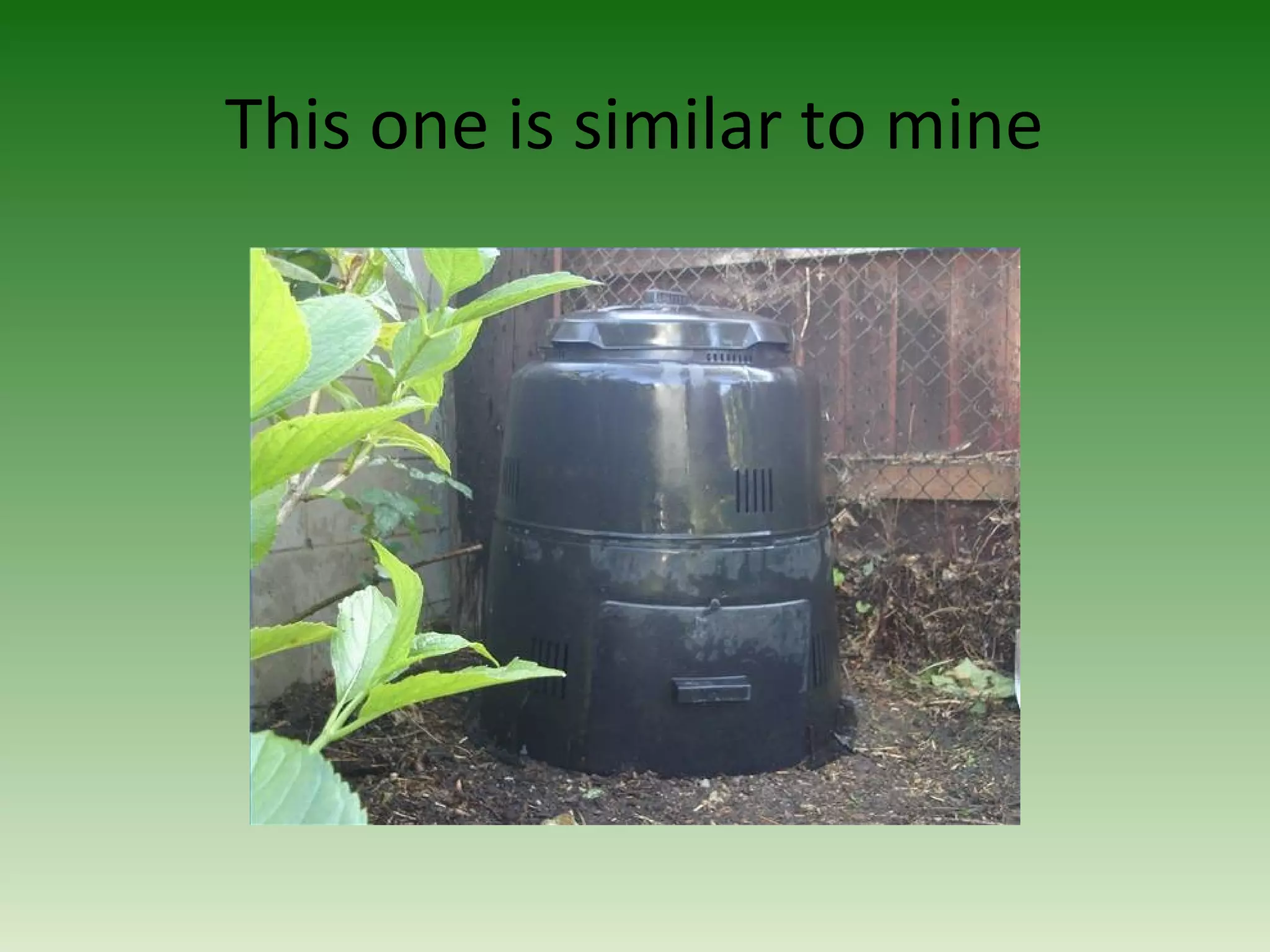
This one is similar to mine
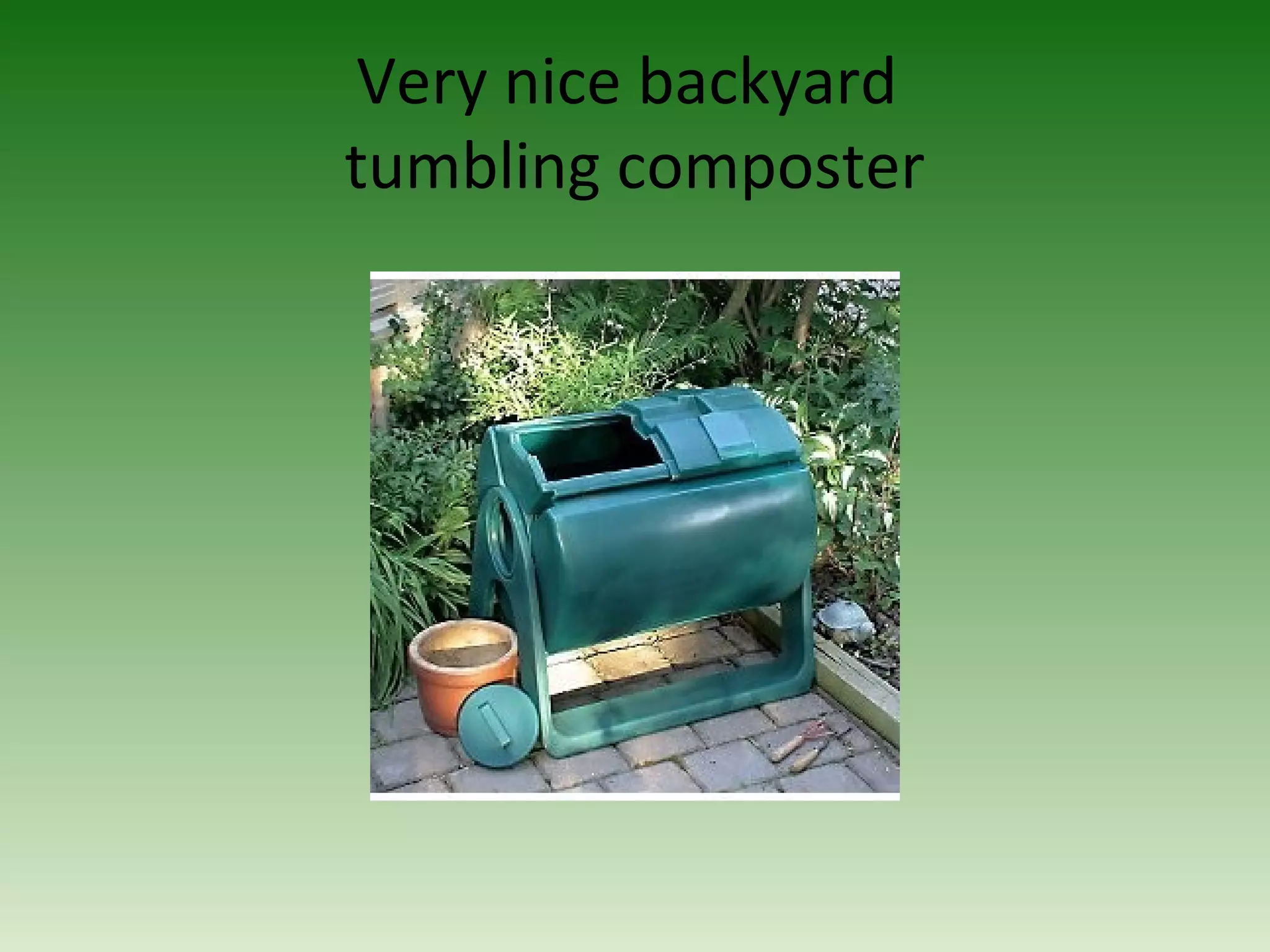
Very nice backyard
tumbling composter
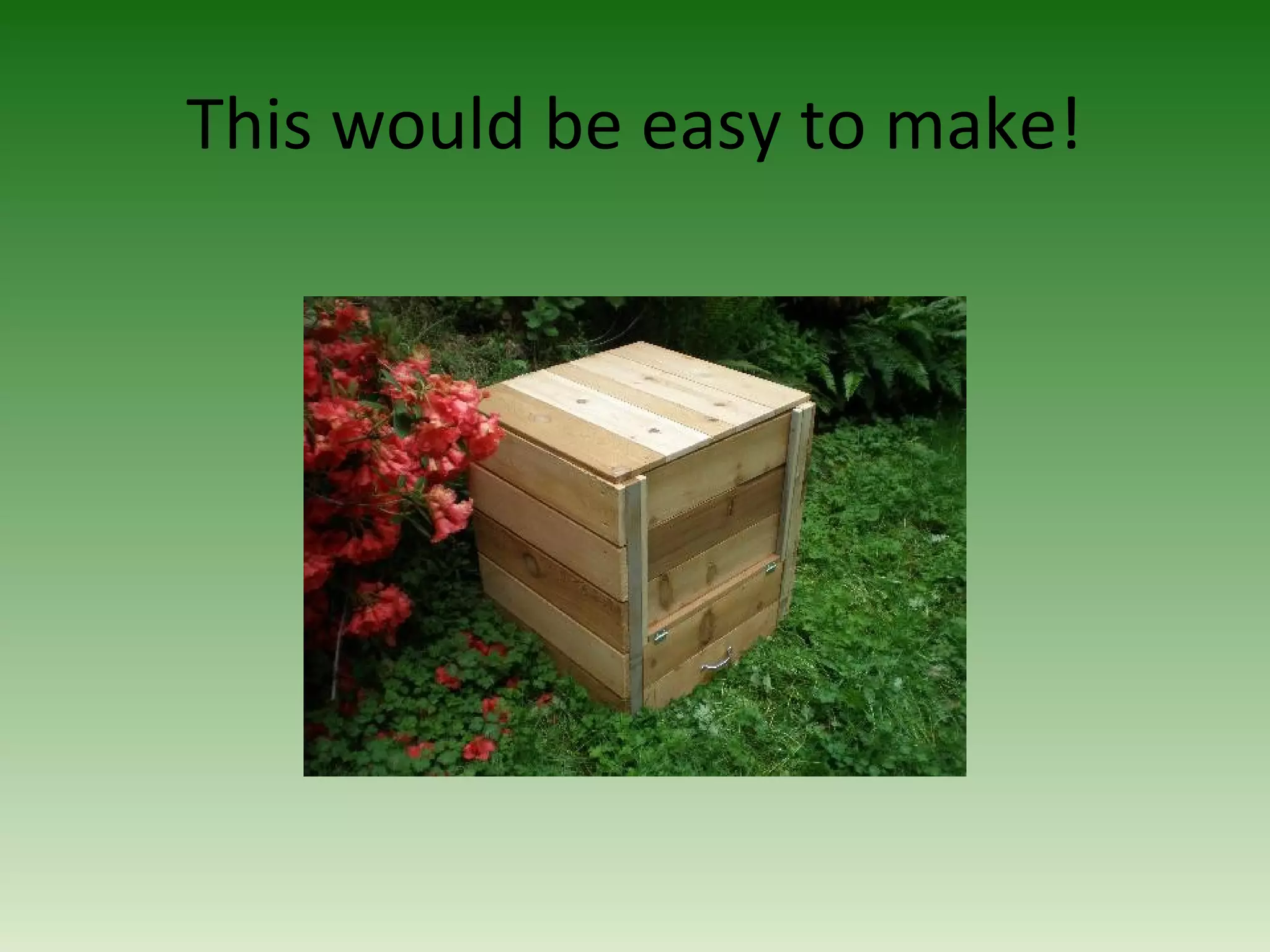
This would be easy to make!
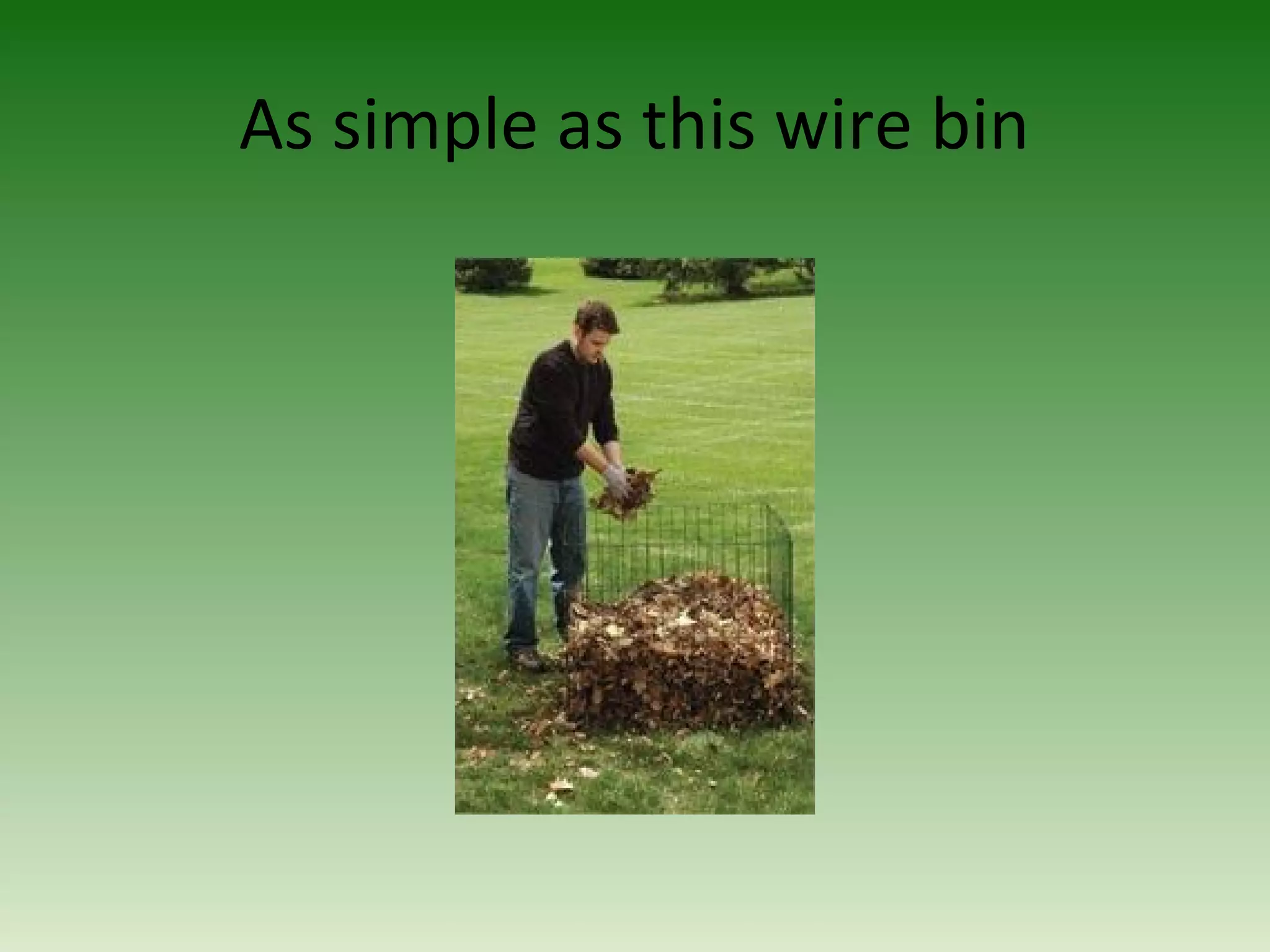
As simple as this wire bin
Bins come in all shapes and sizes
Other Forms of Composting
• Vermicomposting
• Bokashi
• Windrow composting (commercial)
• Sheet composting
• Pet Waste composter
• Indoor composter
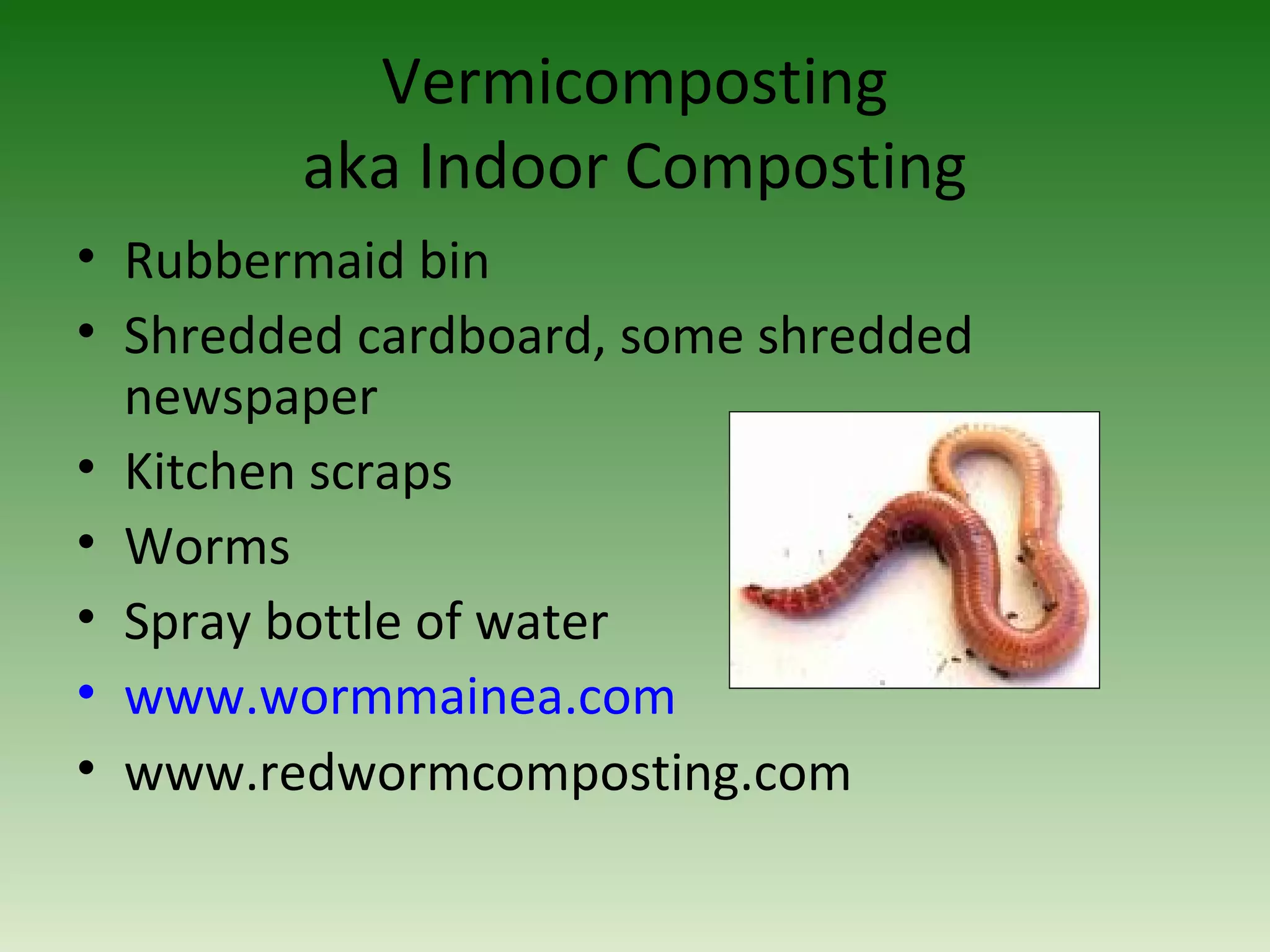
Vermicomposting
aka Indoor Composting
• Rubbermaid bin
• Shredded cardboard, some shredded
newspaper
• Kitchen scraps
• Worms
• Spray bottle of water
• www.wormmainea.com
• www.redwormcomposting.com
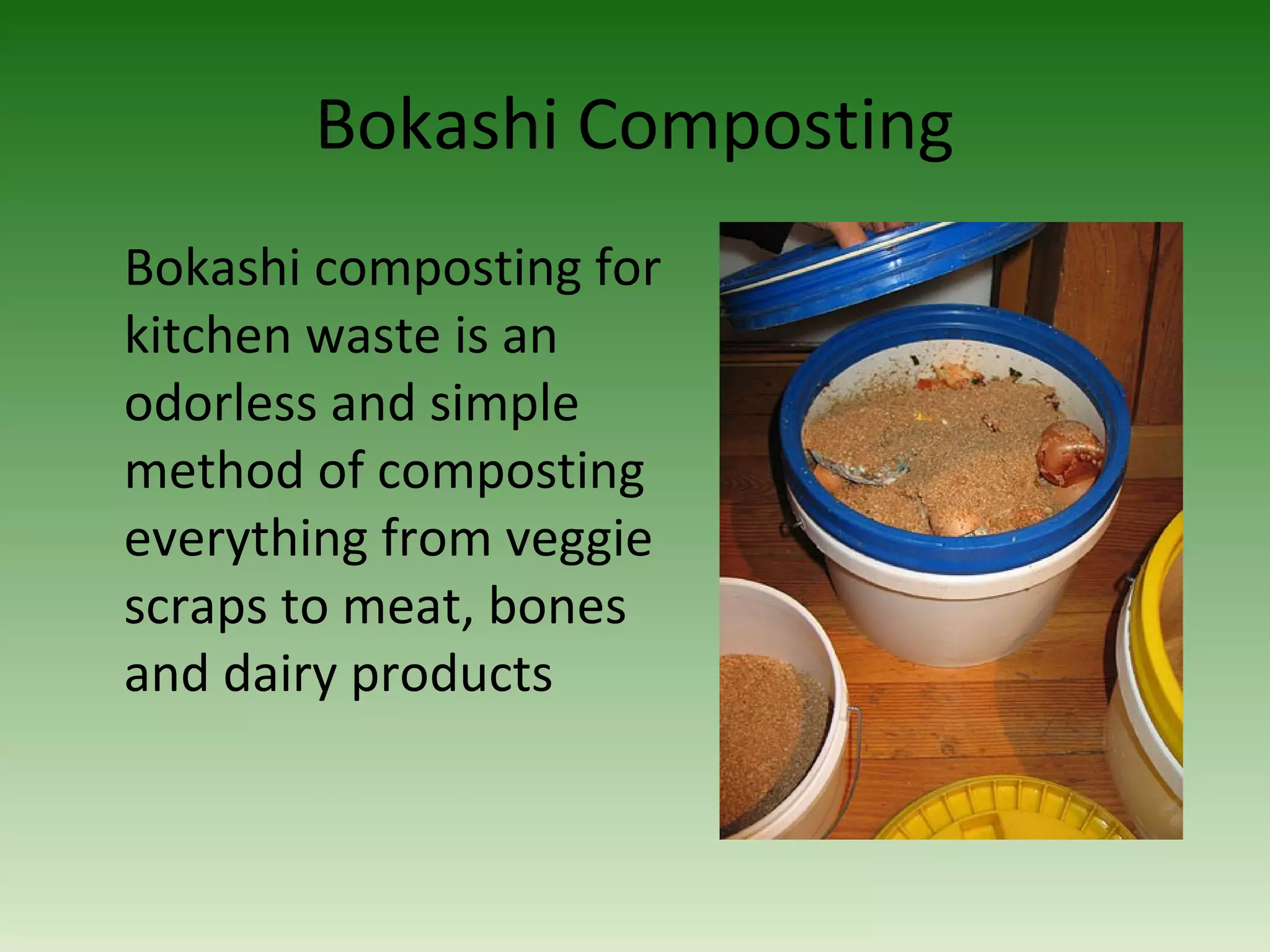
Bokashi Composting
Bokashi composting for
kitchen waste is an
odorless and simple
method of composting
everything from veggie
scraps to meat, bones
and dairy products
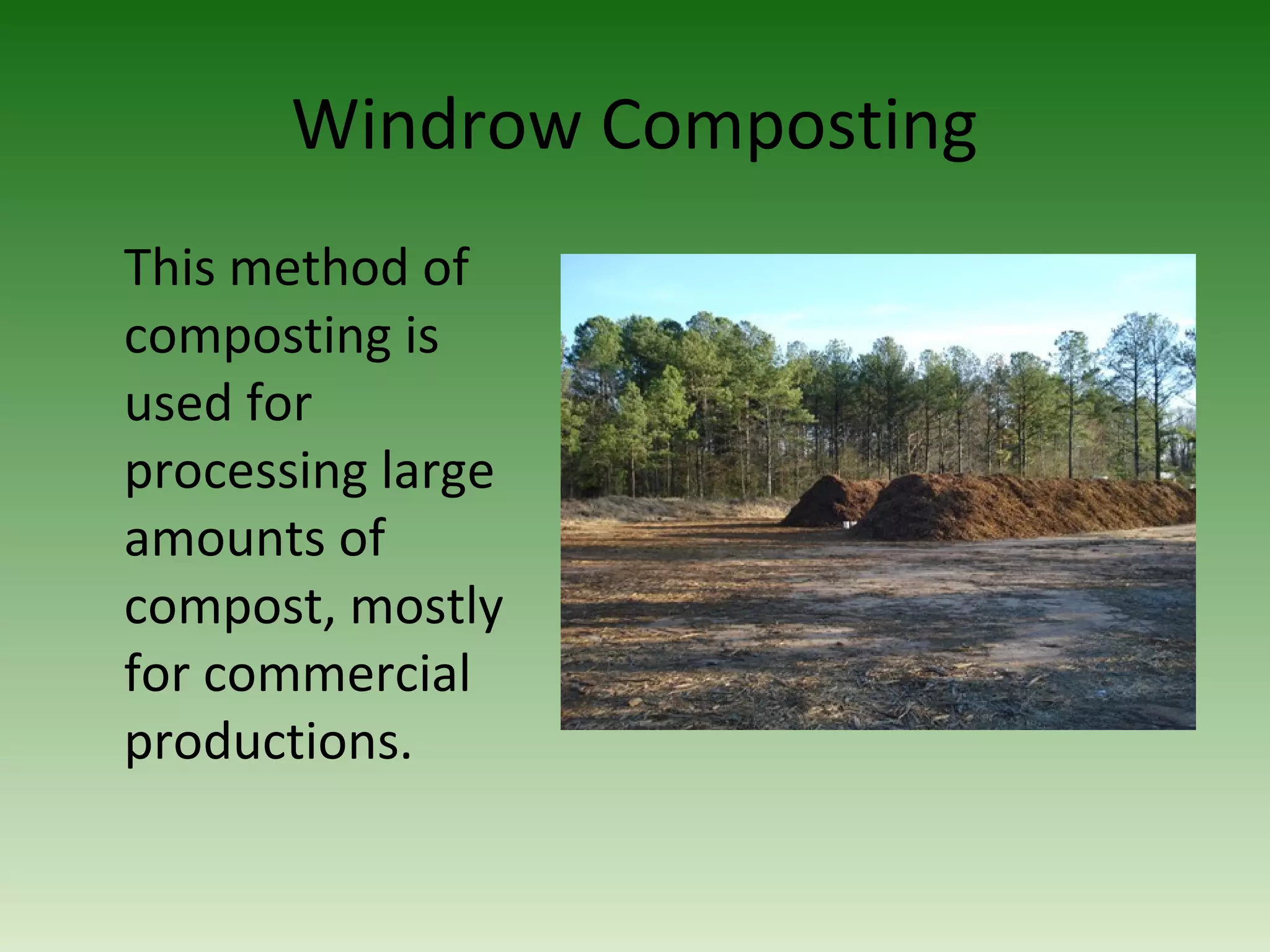
Windrow Composting
This method of
composting is
used for
processing large
amounts of
compost, mostly
for commercial
productions.
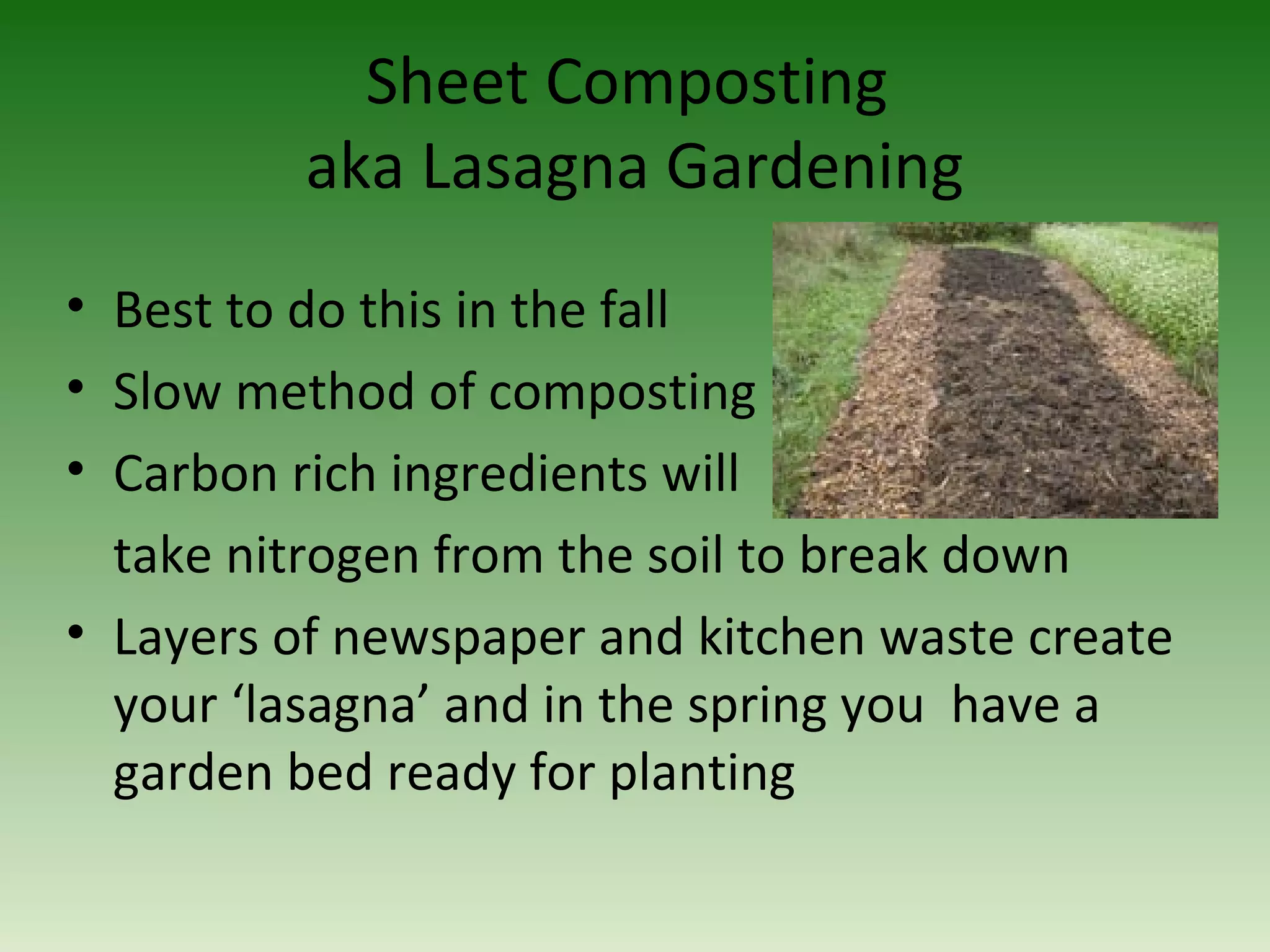
Sheet Composting
aka Lasagna Gardening
• Best to do this in the fall
• Slow method of composting
• Carbon rich ingredients will
take nitrogen from the soil to break down
• Layers of newspaper and kitchen waste create
your ‘lasagna’ and in the spring you have a
garden bed ready for planting
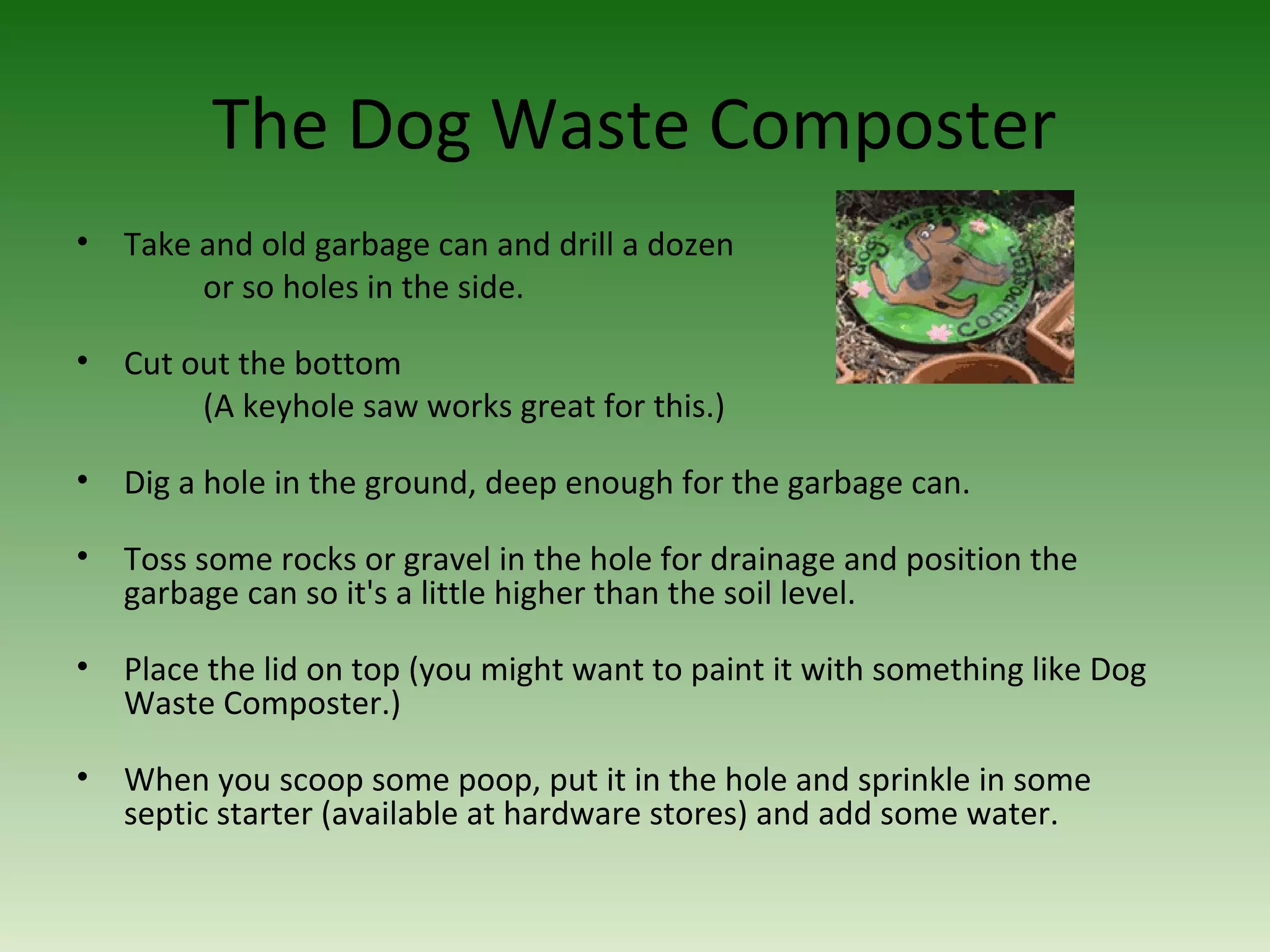
The Dog Waste Composter
• Take and old garbage can and drill a dozen
or so holes in the side.
• Cut out the bottom
(A keyhole saw works great for this.)
• Dig a hole in the ground, deep enough for the garbage can.
• Toss some rocks or gravel in the hole for drainage and position the
garbage can so it's a little higher than the soil level.
• Place the lid on top (you might want to paint it with something like Dog
Waste Composter.)
• When you scoop some poop, put it in the hole and sprinkle in some
septic starter (available at hardware stores) and add some water.
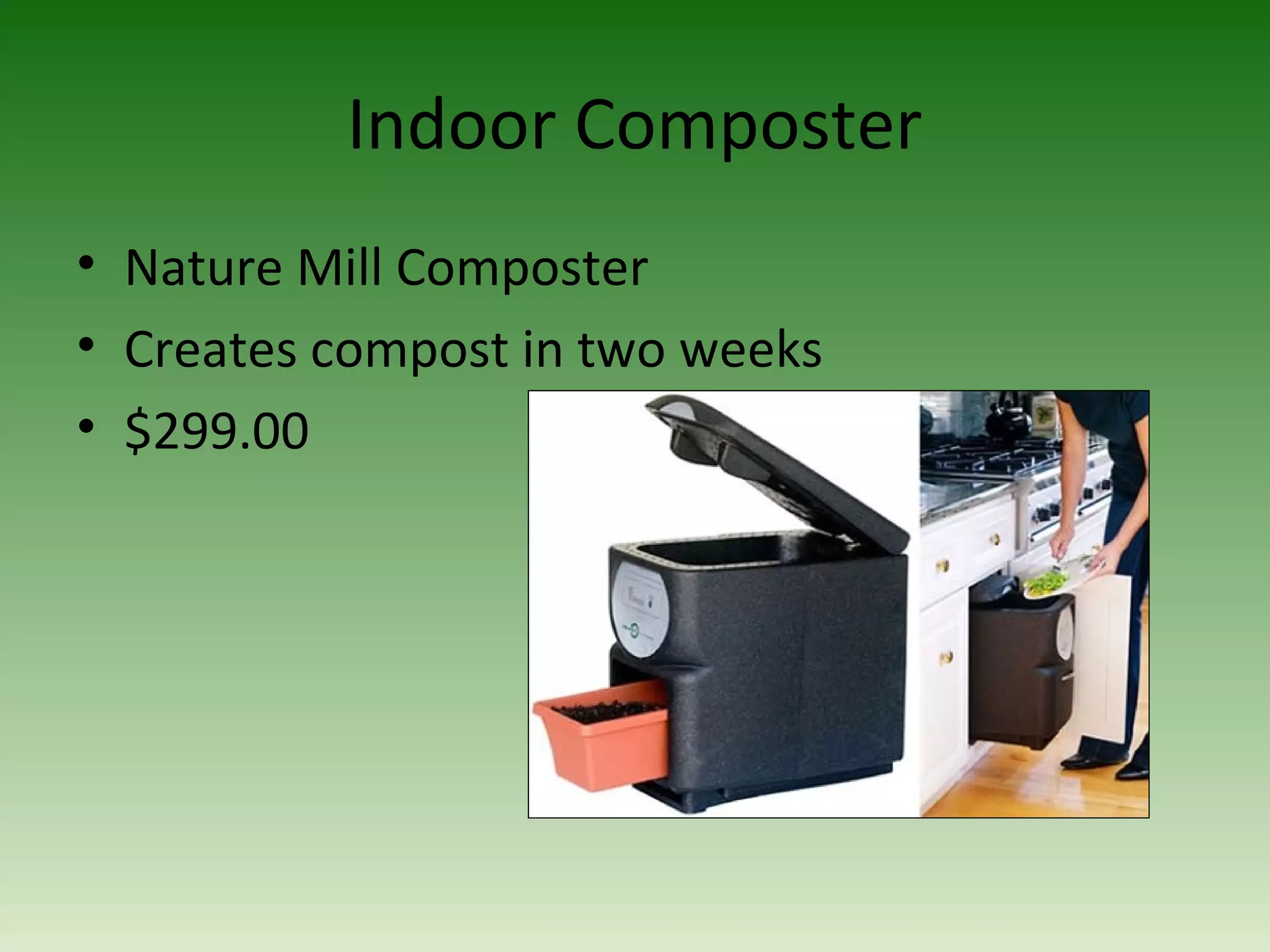
Indoor Composter
• Nature Mill Composter
• Creates compost in two weeks
• $299.00
Do I need a compost accelerator?
• You may add:
septic tank enzymes
old beer or wine
graywater
urine (it’s aseptic and will not smell up the
pile, I promise)
old fruit juice or sour milk
cooking water
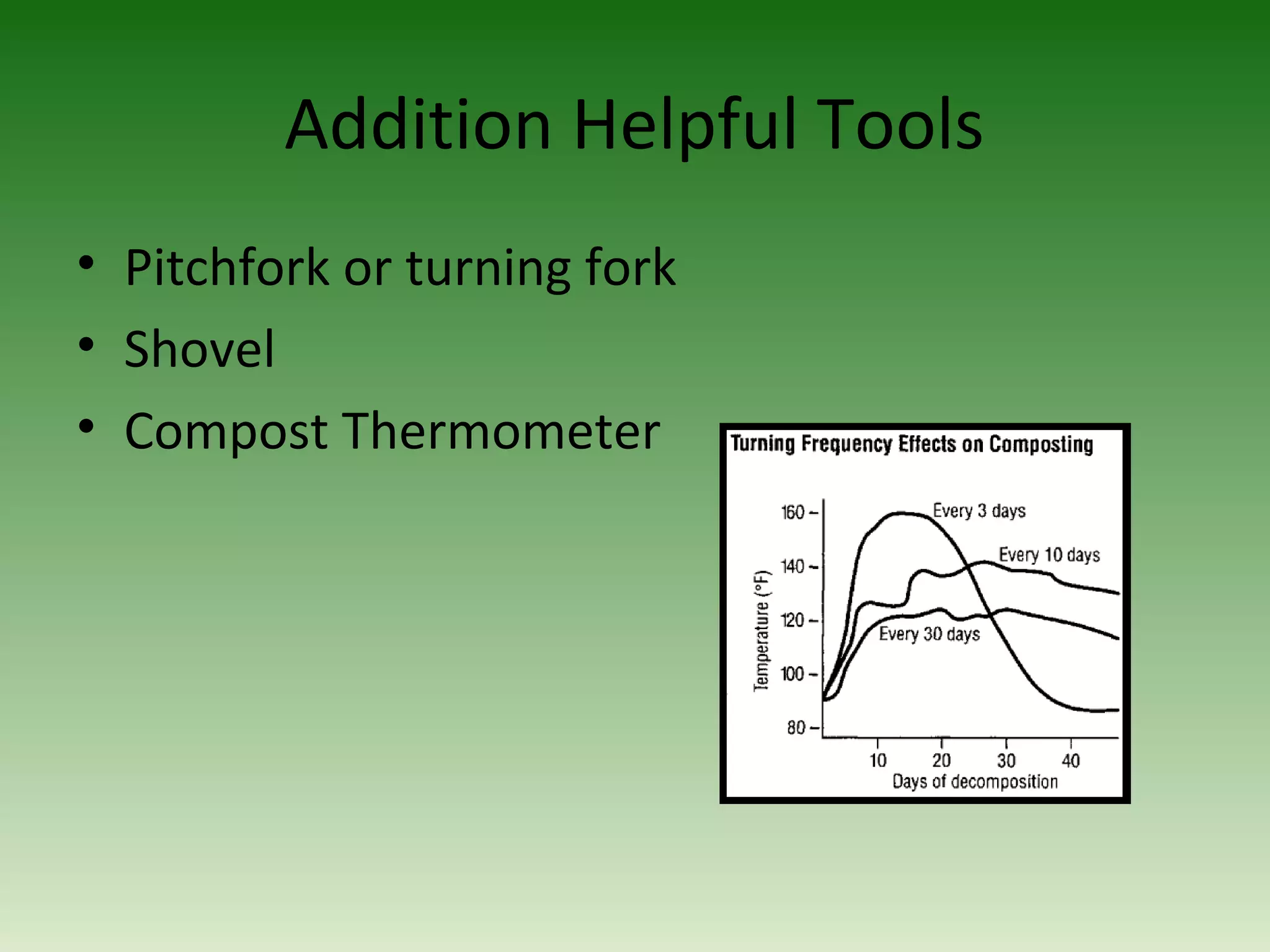
Addition Helpful Tools
• Pitchfork or turning fork
• Shovel
• Compost Thermometer
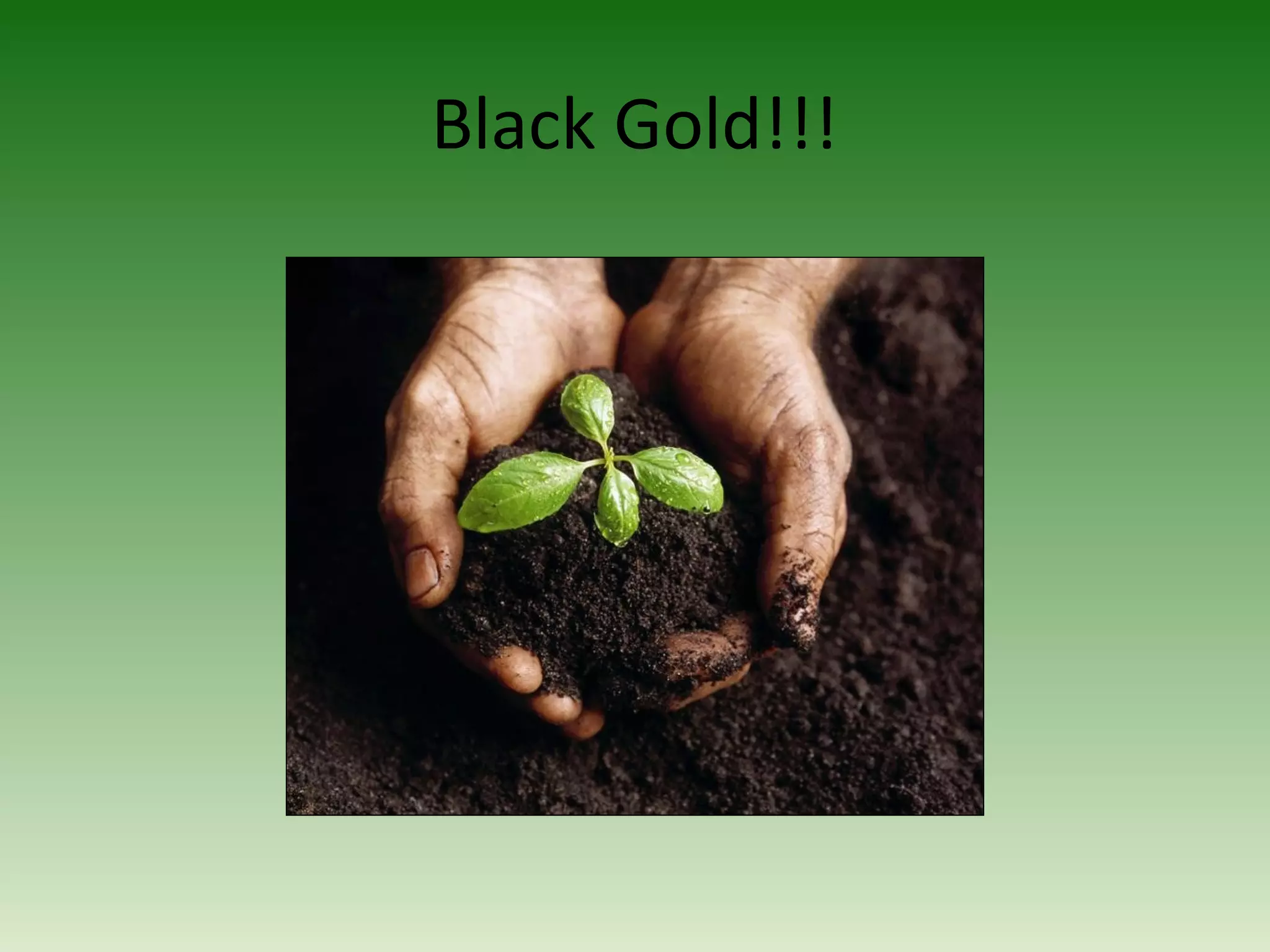
Black Gold!!!
What can I do with my compost?
• Seed starting. It’s light and airy, and allows quick
growth. You can add it to commercial potting mix,
which is primary made up of peat moss, which has
virtually no nutrients, so compost gives it a great
boost.
• Mulch, to hold in moisture for established plants, and
nourish them as the compost continues to break
down.
• Lawn food, as it’s a slow release food that will help
your lawn resist diseases. You’ll have no chemical run-
off and you’ll save money, as well as make your lawn
come alive with earthworms and beneficial microbes.
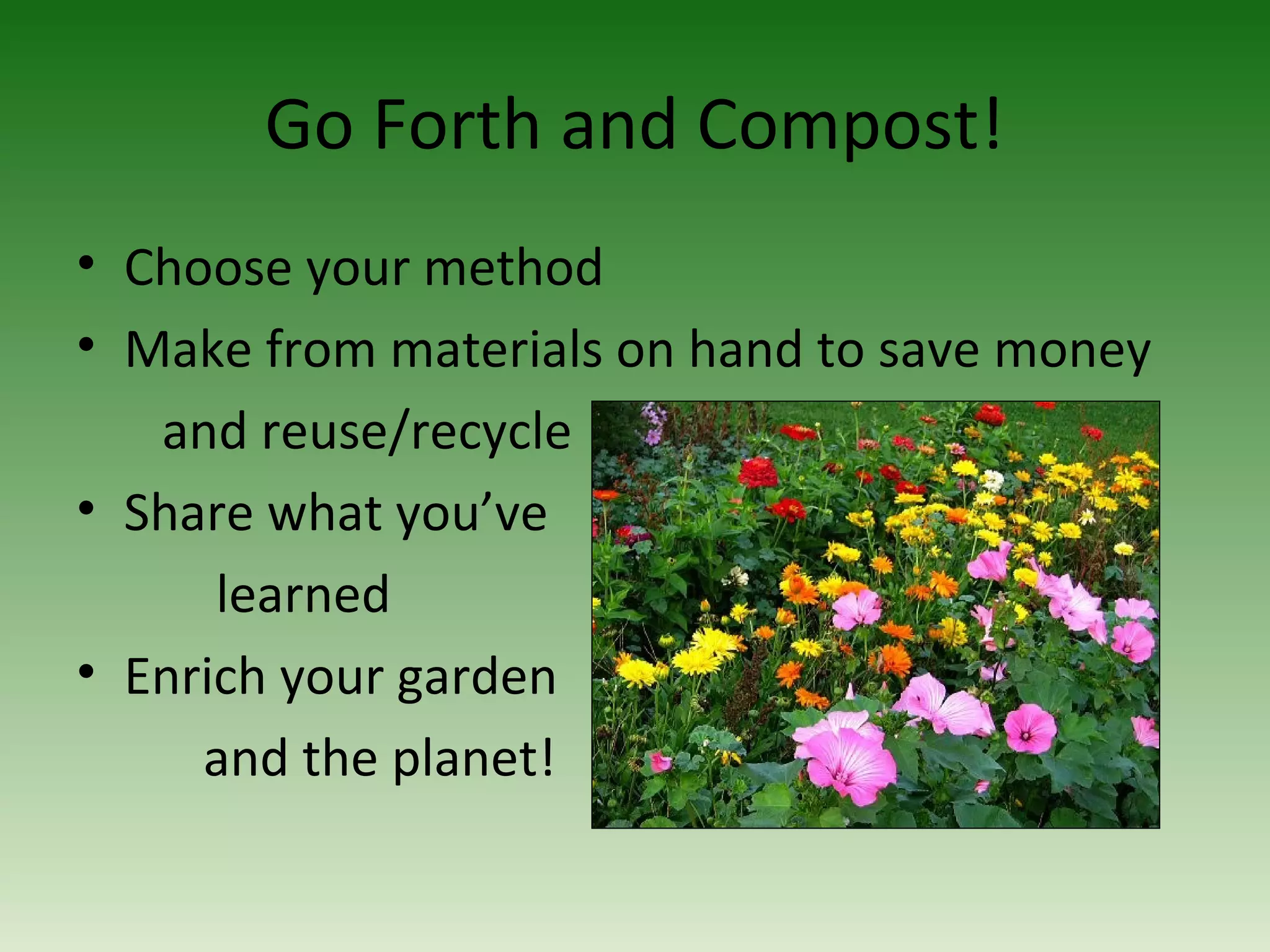
Go Forth and Compost!
• Choose your method
• Make from materials on hand to save money
and reuse/recycle
• Share what you’ve
learned
• Enrich your garden
and the planet!

Composting – nature’s lifecycle

  • 1.
    Composting – Nature’sLifecycle “Everything returns to the Earth”
  • 2.
    What is Compost? Compostis organic material that over time has been consumed by animals of all sizes, from larger mammals, birds and rodents to worms, insects, and microscopic organisms. The result of this natural lifecycle is compost, a combination of digested and undigested food that is left on the forest floor to create rich, soft, sweet-smelling soil.
  • 3.
    Why Compost OurFood Waste? • Return nutrients to the soil • Create the best mulch/fertilizer for free • Reduce the amount of trash that you send to the landfill, where it creates CO2, does not break down and becomes toxic • Feed your plants • Think about the impact on the next 7 generations, as Native Americans do
  • 4.
    Look what wewaste!!!!
  • 5.
    Anyone Can Compost •Home dwellers – locate compost bin next to trashcans for convenience, or near backdoor. • Apartment dwellers – talk to landlord about having a compost bin by the trashcans, and/or set up your own vermicomposting system • It doesn’t cost anything to set up a compost system and it’s a simple thing to do, yet has a large result! • What is your level of courage?
  • 6.
    Why is CompostSo Good? • Adds nutrients to the soil, which in turn supports healthier and more productive plants. Compost provides virtually all of the essential nutrients for plant growth, and more importantly, it releases these nutrients over time to give a slow, steady consistent intake of essential elements needed for growth. • Improves the structure of soil, making it able to hold water, yet it creates pockets of air that plant roots need as well. • Eliminates the need for synthetic fertilizers which leach chemicals into the groundwater and pollute our streams and lakes.
  • 7.
    Anatomy of aLandfill
  • 8.
    Why doesn’t foodcompost in the landfill? • No oxygen – mummifies waste • Mixed with non-organic plastics and waste • Built to encapsulate waste, no breakdown • Monitored for 30 years to watch for toxins
  • 9.
  • 10.
    How big shouldthe bin be? • 3 foot by 3 foot is optimal • Organic matter needs a balance of air, water and nitrogen/carbon to heat up and begin the composting process
  • 11.
    Compost Lasagna • BrownLayer (noodles) • Green Layer (spinach) • Water (sauce) • Air • Time
  • 12.
    Greens (Nitrogen-rich) • Kitchenscraps • Ground eggshells • Grass clippings • Used coffee grounds/filters and teabags • Leaves and garden waste • Pulverized bones • Manure from herbivores (hamsters, horses, rabbits, chickens) • Compostable packing materials (made from corn) • Feathers and hair • Old flower bouquets
  • 13.
    Browns (Carbon-rich) Fall leaves(shredded preferably) Spent plants Dry grass clippings Shredded paper/cardboard/newspapers Sawdust Pine needles Old potting soil Food-soiled paper napkins/towels Stale flour, cereals, spices Nutshells Vacuum bag contents Paper based egg cartons
  • 14.
    What NOT toput in bin • Meat • Dairy products • Pet waste • Clay kitty litter • A lot of garden soil • Weeds with seed heads
  • 15.
    Do I haveto purchase a bin? • Pallets -or- • Snow fencing -or- • Chicken wire -or- • A plastic trash can -or- • A wine barrel ala Terracycle Reuse/recycle materials you have at home if possible. Most cities have bins for sale as well, made from recycled plastic.
  • 16.
    What a beautifulcompost bin!
  • 17.
    Simple wood compostbins for living in the ‘country’
  • 18.
    This one issimilar to mine
  • 19.
  • 20.
    This would beeasy to make!
  • 21.
    As simple asthis wire bin
  • 22.
    Bins come inall shapes and sizes
  • 23.
    Other Forms ofComposting • Vermicomposting • Bokashi • Windrow composting (commercial) • Sheet composting • Pet Waste composter • Indoor composter
  • 24.
    Vermicomposting aka Indoor Composting •Rubbermaid bin • Shredded cardboard, some shredded newspaper • Kitchen scraps • Worms • Spray bottle of water • www.wormmainea.com • www.redwormcomposting.com
  • 25.
    Bokashi Composting Bokashi compostingfor kitchen waste is an odorless and simple method of composting everything from veggie scraps to meat, bones and dairy products
  • 26.
    Windrow Composting This methodof composting is used for processing large amounts of compost, mostly for commercial productions.
  • 27.
    Sheet Composting aka LasagnaGardening • Best to do this in the fall • Slow method of composting • Carbon rich ingredients will take nitrogen from the soil to break down • Layers of newspaper and kitchen waste create your ‘lasagna’ and in the spring you have a garden bed ready for planting
  • 28.
    The Dog WasteComposter • Take and old garbage can and drill a dozen or so holes in the side. • Cut out the bottom (A keyhole saw works great for this.) • Dig a hole in the ground, deep enough for the garbage can. • Toss some rocks or gravel in the hole for drainage and position the garbage can so it's a little higher than the soil level. • Place the lid on top (you might want to paint it with something like Dog Waste Composter.) • When you scoop some poop, put it in the hole and sprinkle in some septic starter (available at hardware stores) and add some water.
  • 29.
    Indoor Composter • NatureMill Composter • Creates compost in two weeks • $299.00
  • 30.
    Do I needa compost accelerator? • You may add: septic tank enzymes old beer or wine graywater urine (it’s aseptic and will not smell up the pile, I promise) old fruit juice or sour milk cooking water
  • 31.
    Addition Helpful Tools •Pitchfork or turning fork • Shovel • Compost Thermometer
  • 32.
  • 33.
    What can Ido with my compost? • Seed starting. It’s light and airy, and allows quick growth. You can add it to commercial potting mix, which is primary made up of peat moss, which has virtually no nutrients, so compost gives it a great boost. • Mulch, to hold in moisture for established plants, and nourish them as the compost continues to break down. • Lawn food, as it’s a slow release food that will help your lawn resist diseases. You’ll have no chemical run- off and you’ll save money, as well as make your lawn come alive with earthworms and beneficial microbes.
  • 34.
    Go Forth andCompost! • Choose your method • Make from materials on hand to save money and reuse/recycle • Share what you’ve learned • Enrich your garden and the planet!

Editor's Notes

  • #2 Please write down a question you have about composting.
  • #4 In countries like Sweden composting is MANDATORY. Our topsoil needs to be replenished to grow our crops and sustainably feed everyone in our country. We won’t need to take supplements for our vitamins, veggies grown in compost will supply our needs. As a kid, my dad would tell me to throw out an apple core onto the ground, not the concrete.
  • #5 122 LBS of food is thrown out each month by a family of four!
  • #6 Just adding spent coffee ground or loose tea to your plants as mulch will create compost and make them flourish!!!
  • #7 You save money AND benefit the environment when you compost!
  • #8 Imagine being a homeowner when a landfill goes in near your house. The smell keeps your friends and family from visiting, your home’s value goes down so you can’t sell, and you’re assaulted with fumes every day which put your health at risk. Let’s compost and love our neighbors as ourselves!
  • #9 The anatomy of a landfill is such that the layers created by piles of plastic, yard waste, construction waste, etc keep oxygen out and essentially mummify everything in the pile. Air and microbes cannot get in to break down the organic waste. Landfills are not designed to break down trash, just bury it. Newspapers dating from forty years ago have been found. The groundwater from landfills are monitored for 30 years to make sure toxins are not seeping into the surrounding water table.
  • #11 To utilize the thermal energy of the sun to ‘bake’ the bin ingredients, the bin should be at least 3’ x 3’. A smaller bin will work, but it will take longer to convert the ingredients to compost. If bin is too small, it won’t heat up, so the process will be slow.
  • #13 Brewery waste is composted in Milwaukee.
  • #14 Can you think of anything else?
  • #15 A little meat or dairy is ok in an established bin. Bury deep into the middle of the pile to keep varmints from smelling it and making a mess of your compost. Clay litter can be reused/recycled. Rinse in water and allow to dry in the sun to ‘recharge’. A little soil is ok, but don’t pile in shovelsful because it’s too heavy and will compact the compost, keeping air out.
  • #16 I’ll be showing you a lot of different types of compost bins.
  • #17 A company in the UK makes these attractive bins.
  • #18 They can be put together with pallets or scrap wood. Advantages of open bin system – gets enough water from rain, easy to turn with a pitchfork, large capacity. Disadvantages – can attract rodents, flies, bees and bears, can become too wet, may be an eyesore for neighbors.
  • #19 Call your city to see if they have a compost bin program. Advantages – more aesthetically pleasing, closed off from possibility of pests.
  • #20 Very inconspicuous in the city. Advantages – easy to turn, creating compost in a shorter period of time (aeration), easy to unload. Disadvantages - I can’t see any!
  • #21 This can be made from pallets as well, which can be found behind stores, normally free for the taking.
  • #22 A circle of chicken wire would work, too! Three feet around is best. This one would need a cover to protect from animals.
  • #25 You can find worms at your local bait shop. Online prices are high. Redworms are different from earthworms.
  • #26 Originated in Japan http://bokashicomposting.com/ free bokashi recipe
  • #30 www.naturemill.com Coupons for $30 off
  • #31 If you do not add an accelerator, your pile will still be active if you keep it lightly watered and turn it once a month.
  • #32 Turning your pile increases the thermogenic effect and breaks down the composts quicker. If left alone, the pile will be ready in about one year. I use a shovel to mix my compost, and when the bin gets full, I take my bin apart and remix the compost with a shovel and sift the finished compost out if I need it.
  • #33 Teeming with microorganisms that make plants thrive!
  • #34 Boiling the compost first for potting mix is best. Put in a large flower pot and soak it with boiling water to sterilize it. Please pull out your questions at this time.
  • #35 Go forth and compost!