MOOCS
• M- Massive
• O- Open
• O- Online
• C- Courses
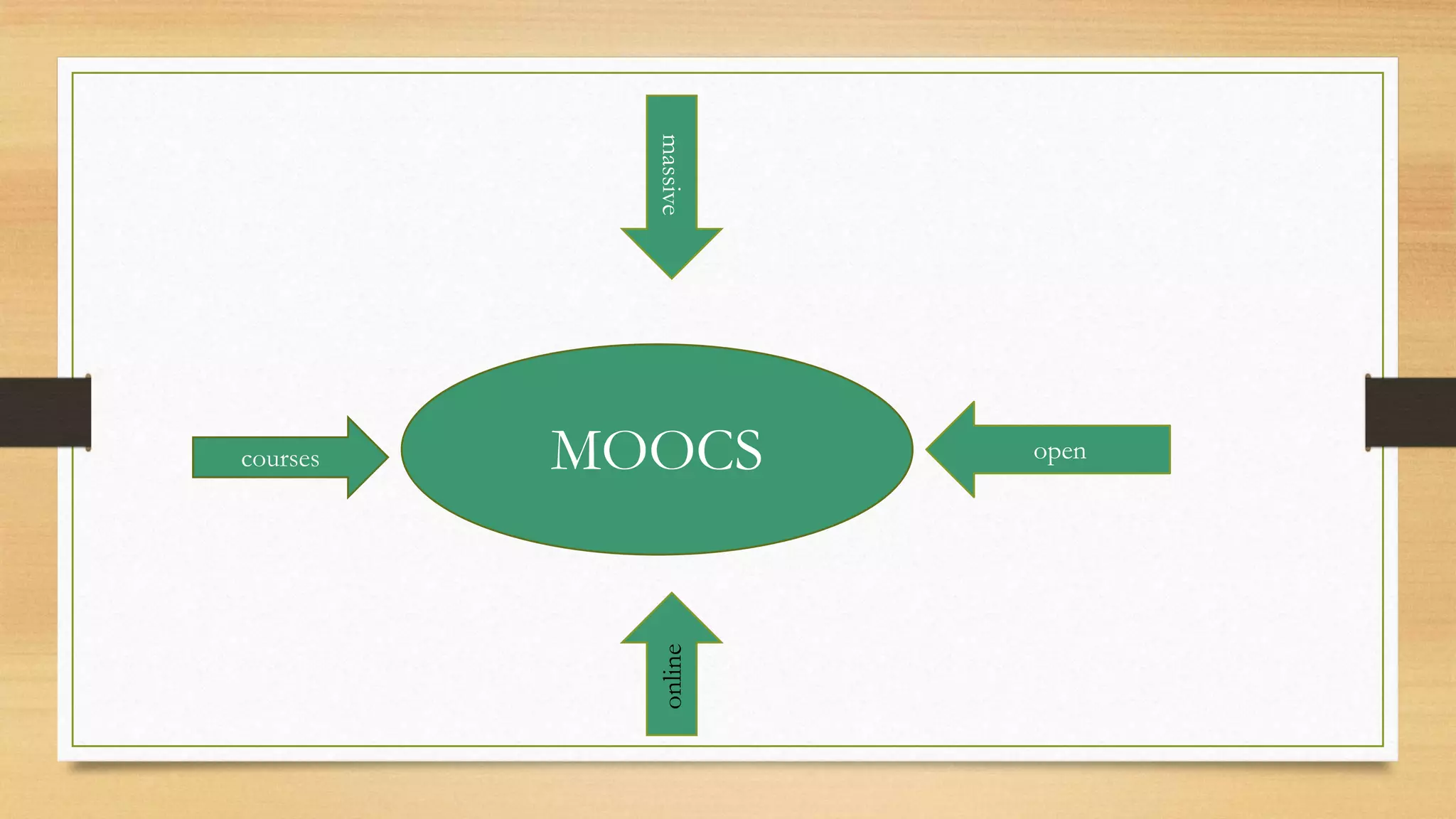
massive

MOOCS

online

courses

open
TABLE OF CONTENT
•
•
•
•
•
•

What are Moocs?
History of Moocs
Aims of Moocs
Types of Moocs
Xmoocs vs Cmoocs
Conclusion
What are Moocs?
Moocs are online courses which are opened unlimited to everyone who is
willing to learn.

Moocs are free of charge education.
Moocs shape what learners can do in and outside the school.
Moocs has no age description.
Moocs are about openness.
Easier to commit to Moocs.
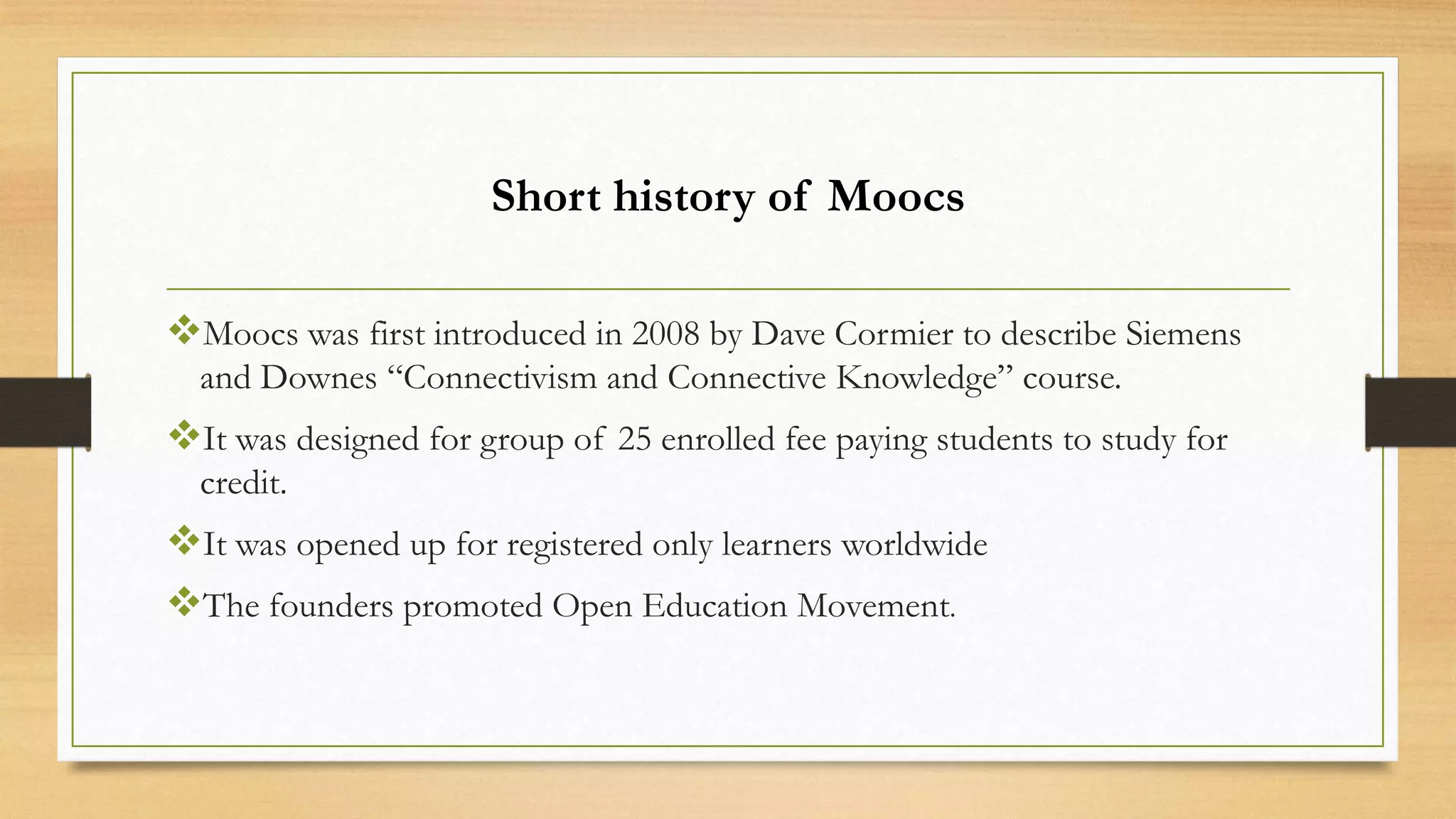
Short history of Moocs
Moocs was first introduced in 2008 by Dave Cormier to describe Siemens
and Downes “Connectivism and Connective Knowledge” course.

It was designed for group of 25 enrolled fee paying students to study for
credit.

It was opened up for registered only learners worldwide
The founders promoted Open Education Movement.
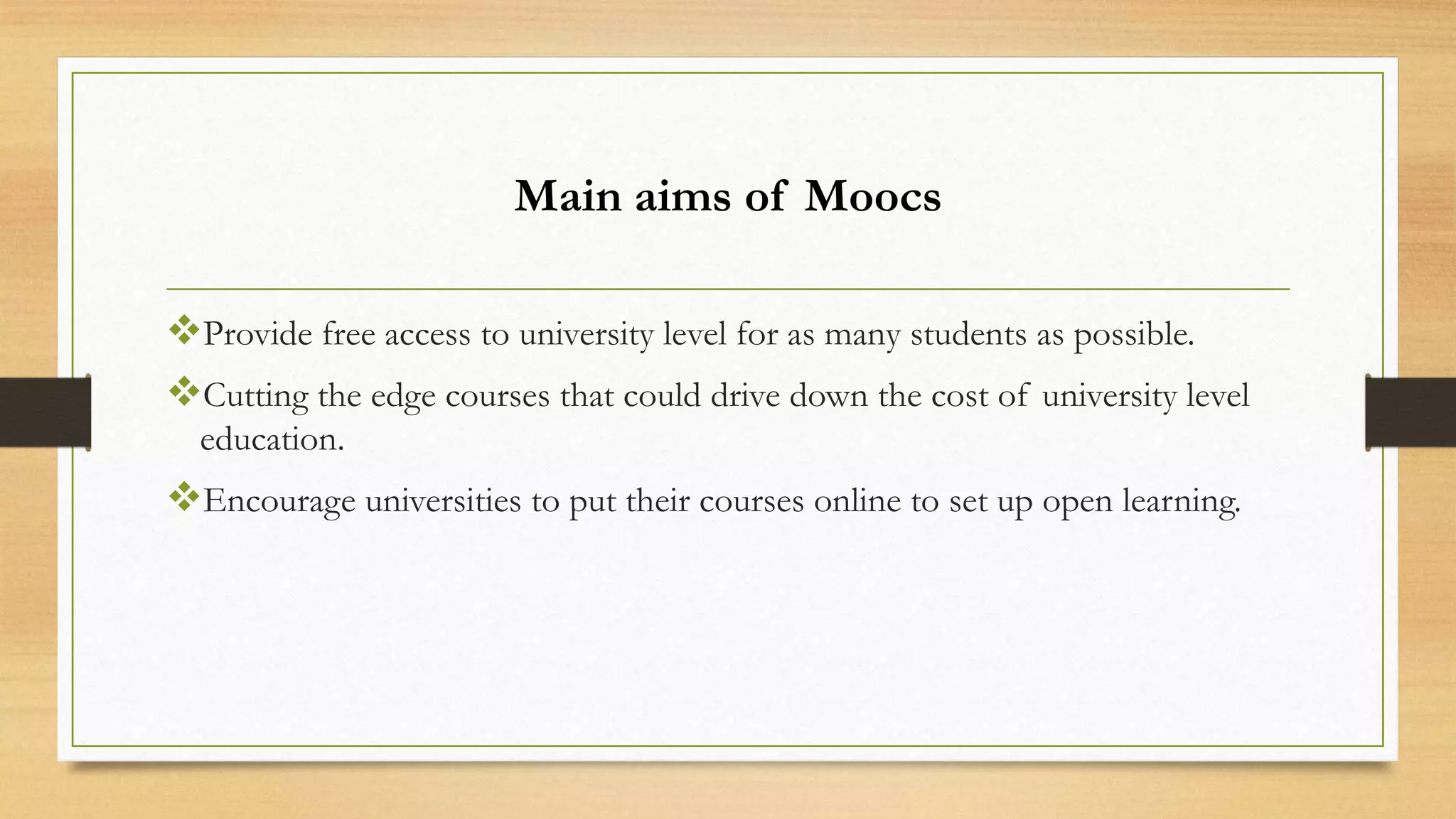
Main aims of Moocs
Provide free access to university level for as many students as possible.
Cutting the edge courses that could drive down the cost of university level
education.

Encourage universities to put their courses online to set up open learning.
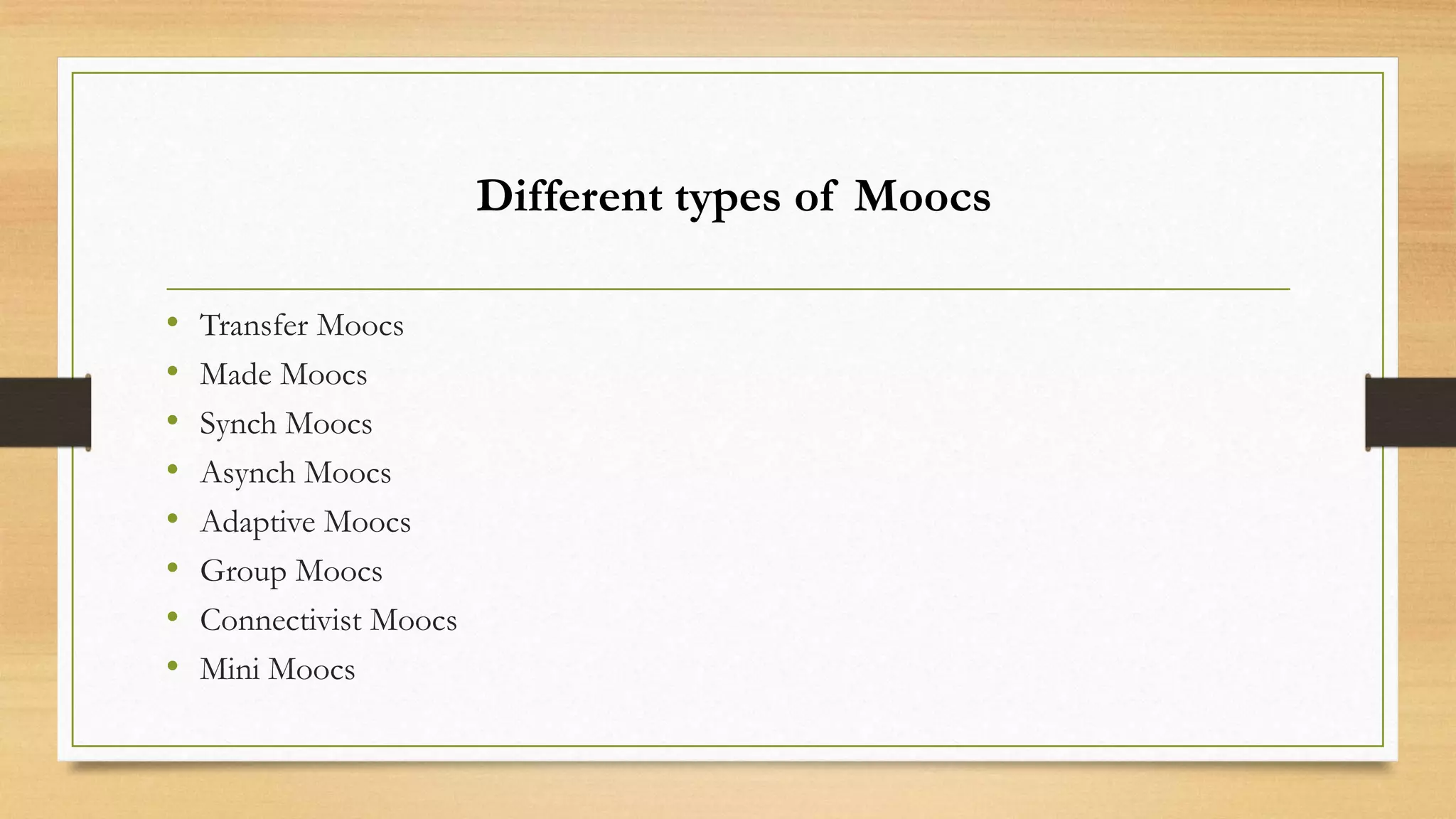
Different types of Moocs
•
•
•
•
•
•
•
•

Transfer Moocs
Made Moocs
Synch Moocs
Asynch Moocs
Adaptive Moocs
Group Moocs
Connectivist Moocs
Mini Moocs
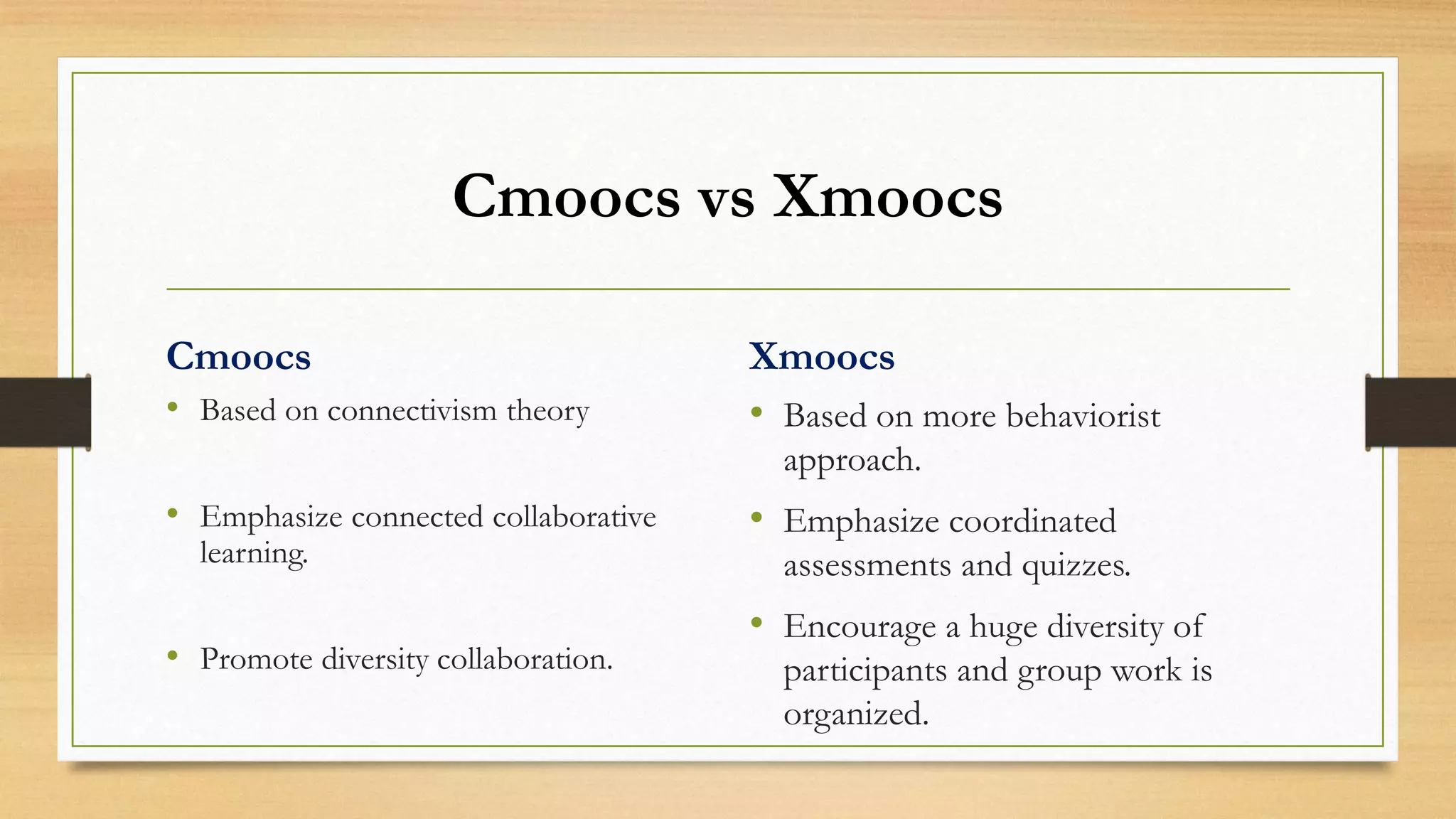
Cmoocs vs Xmoocs
Cmoocs
• Based on connectivism theory

Xmoocs
• Based on more behaviorist
approach.

• Emphasize connected collaborative
learning.

• Promote diversity collaboration.

• Emphasize coordinated
assessments and quizzes.

• Encourage a huge diversity of
participants and group work is
organized.
Conclusion
• I understand what Moocs are and I think it is a better and easy way for
teaching and learning because it can happen anywhere at any time and it is
free of charge to join Moocs, either students nor teachers can join Moocs to
participate and share ideas about a lesson.
Conclusion continued…
• As a future teacher of mathematics my interests it to teach online and I like
to pursue Algebra, Calculus and Geometry. I would like to share these topic
with another teachers and students because it seems that learners experience
problems with these topics and because Moocs are free I think most leaners
will comment and share their opinions online rather than in class.

• Moocs will help me as a future teacher to approach and support students
who struggling with mathematics because I can access Moocs at anytime at
anywhere.
References
• https://www.google.co.za/?gws_rd=cr&ei=jYMEU82LB8SJ7AaBzIA4#q=moocs&tbm=b
ks

My powerpoint presantation moocs

  • 1.
    MOOCS • M- Massive •O- Open • O- Online • C- Courses
  • 2.
  • 3.
    TABLE OF CONTENT • • • • • • Whatare Moocs? History of Moocs Aims of Moocs Types of Moocs Xmoocs vs Cmoocs Conclusion
  • 4.
    What are Moocs? Moocsare online courses which are opened unlimited to everyone who is willing to learn. Moocs are free of charge education. Moocs shape what learners can do in and outside the school. Moocs has no age description. Moocs are about openness. Easier to commit to Moocs.
  • 5.
    Short history ofMoocs Moocs was first introduced in 2008 by Dave Cormier to describe Siemens and Downes “Connectivism and Connective Knowledge” course. It was designed for group of 25 enrolled fee paying students to study for credit. It was opened up for registered only learners worldwide The founders promoted Open Education Movement.
  • 6.
    Main aims ofMoocs Provide free access to university level for as many students as possible. Cutting the edge courses that could drive down the cost of university level education. Encourage universities to put their courses online to set up open learning.
  • 7.
    Different types ofMoocs • • • • • • • • Transfer Moocs Made Moocs Synch Moocs Asynch Moocs Adaptive Moocs Group Moocs Connectivist Moocs Mini Moocs
  • 8.
    Cmoocs vs Xmoocs Cmoocs •Based on connectivism theory Xmoocs • Based on more behaviorist approach. • Emphasize connected collaborative learning. • Promote diversity collaboration. • Emphasize coordinated assessments and quizzes. • Encourage a huge diversity of participants and group work is organized.
  • 9.
    Conclusion • I understandwhat Moocs are and I think it is a better and easy way for teaching and learning because it can happen anywhere at any time and it is free of charge to join Moocs, either students nor teachers can join Moocs to participate and share ideas about a lesson.
  • 10.
    Conclusion continued… • Asa future teacher of mathematics my interests it to teach online and I like to pursue Algebra, Calculus and Geometry. I would like to share these topic with another teachers and students because it seems that learners experience problems with these topics and because Moocs are free I think most leaners will comment and share their opinions online rather than in class. • Moocs will help me as a future teacher to approach and support students who struggling with mathematics because I can access Moocs at anytime at anywhere.
  • 11.