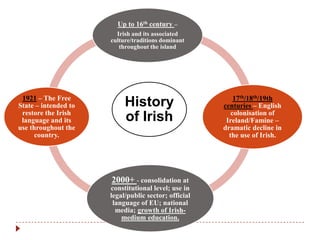
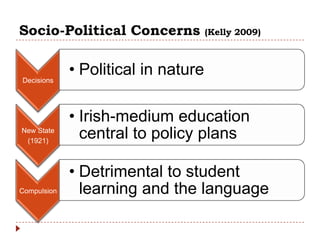
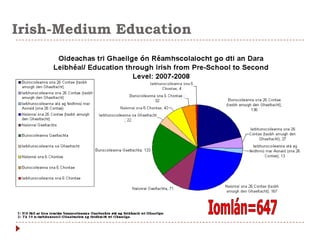
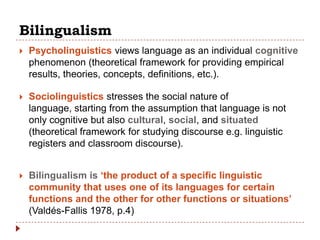
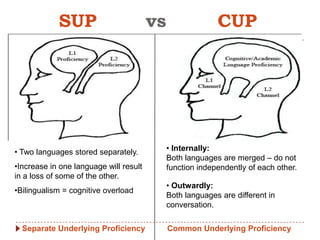
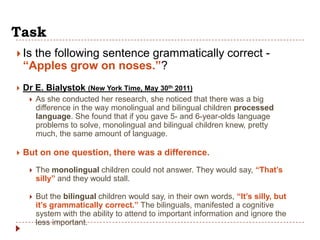
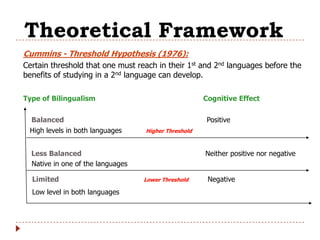
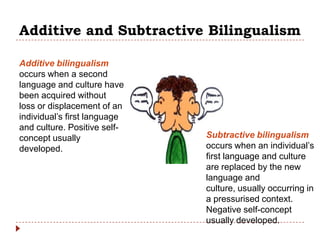
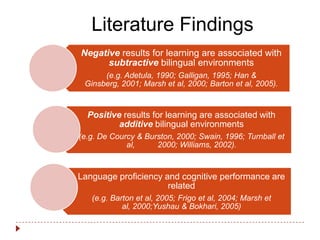
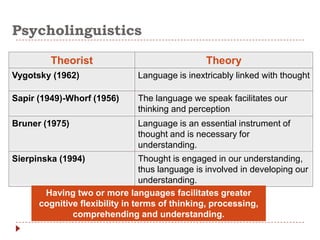
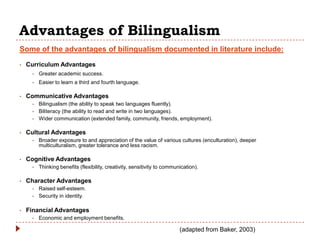
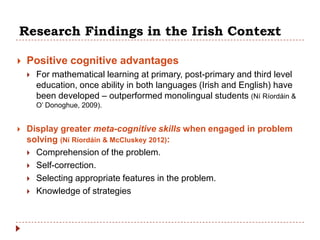
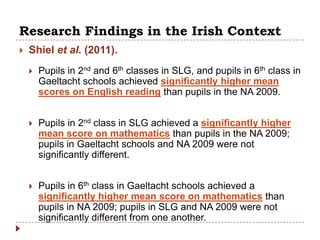
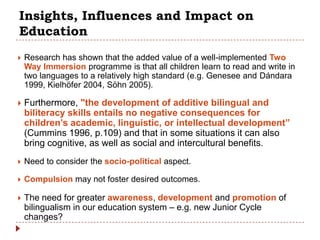
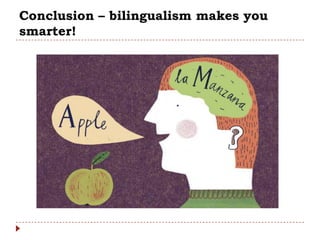
This document discusses the impact of bilingualism on education from historical, socio-political, and research perspectives. It traces the history of the Irish language in Ireland from dominance pre-16th century to decline during colonization. Research shows cognitive advantages for bilingual students, like greater flexibility, if both languages meet a threshold level. Additive bilingual models correlate with positive outcomes, while subtractive models correlate with negative outcomes. Irish research mirrors international findings, with bilingual students outperforming monolingual peers in math and other subjects. The conclusion is that bilingualism can make you smarter when implemented well through additive programs versus compulsory subtractive models.






![Theories Of Language Acquisition[1]](https://cdn.slidesharecdn.com/ss_thumbnails/theories-of-language-acquisition1-1225480010904742-8-thumbnail.jpg?width=640&height=640&fit=bounds)


