Ergonomics

WRULD and musculoskeletal disorders


              Loisa Sessman, Halmstad University
Health and safety
   Accidents
        Unsafe behavior
        Unsafe systems

   Everyday accidents
        Slipping, tripping & falling
        Machinery – safety distance


   Ergonomic injuries
      Lifting and handling injuries
      Work-related upper limb disorders
      Musculoskeletal pain resulting from unsatisfactory
     working posture

                     Loisa Sessman, Halmstad University
Ergonomic injuries
   Mismatch
       Over-use injury
       “Creep” effect (fatigue)
       Mechanical strength
       Co-ordination
       Range of motion


   Foreseeable, injuries can be predicted!

   Back pain
       Occupational
       Personal risk factors

                    Loisa Sessman, Halmstad University
Lifting and handling
   Lift close to the body
       Reduce the lever arm
       Control


   Symmetric
       Avoid asymmetric lifting
       Foot placement


   Weight limits
       Different limits for different countries
       Sweden, 7 kg = ok, 7-25 kg = risky 25 kg = very
        high risk

                    Loisa Sessman, Halmstad University
Work-related upper limb disorders

   WRULD
       Umbrella term for CTD and RSI


   Repetitive strain injury (RSI)

   Cumulative trauma disorders CTD

   Mainly affects:
       Industrial assembly workers
       Workers at supermarket checkouts
       Musicians
       Keyboard users
                  Loisa Sessman, Halmstad University
RSI & CTD
   Often occurs in the upper limb
   Injuries in nerves, muscles, ligaments, tendons
    and joints etc
   Causes pain
   Related to work intensity and duration
   Weeks, months or years
   Diffuse symptoms
   Often unreported
   Several reasons (work and/or leisure time)


                 Loisa Sessman, Halmstad University
RSI & CTD

   CTD & RSI increases
       Increased awareness and reporting
       Increased specialization
       Computer work
       Mental stress


   Posture

   Force

   Repetition

                  Loisa Sessman, Halmstad University
Postures
   Extreme flexion and extension, ulnar and radial
    deviation of the hand
       Carpal Tunnel Syndrome
       Tenosynovitis


   Extreme flexion of the elbow
       Cubital Tunnel Syndrome


   Extreme rotation of the forearm
       Epicondylitis


   Work above shoulder level
       Thoracic Outlet Syndrome

                    Loisa Sessman, Halmstad University
Carpal Tunnel Syndrome
   Results from high repetitive work in extreme
    positions, often in combinations with force

   Median nerve get squeezed

   Numbness, tingling pain and clumsiness


                 Loisa Sessman, Halmstad University
Tenosynovitis
   Tendon sheath swells

   Occurs at wrists and ankles where tendons cross
    ligaments

   Pain, burning sensation and swelling


                 Loisa Sessman, Halmstad University
Cubital Tunnel Syndrome
   Compression of the ulnar nerve in the elbow

   Tingling and numbness occurs at the little finger
    and the ulnar side of the ring finger

   Causes when resting the elbow on a hard surface
    or sharp edge


                 Loisa Sessman, Halmstad University
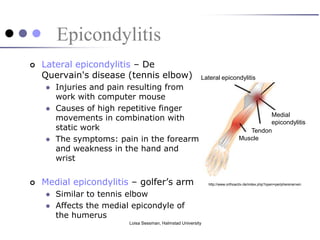
Epicondylitis
   Lateral epicondylitis – De
    Quervain's disease (tennis elbow)                      Lateral epicondylitis
       Injuries and pain resulting from
        work with computer mouse
       Causes of high repetitive finger
                                                                                          Medial
        movements in combination with                                                     epicondylitis
        static work                                                                 Tendon
       The symptoms: pain in the forearm                                        Muscle
        and weakness in the hand and
        wrist


   Medial epicondylitis – golfer’s arm                        http://www.orthoactiv.de/index.php?open=peripherenerven


       Similar to tennis elbow
       Affects the medial epicondyle of
        the humerus
                          Loisa Sessman, Halmstad University
Tendonitis or tendinitis
   Inflammation of a tendon
       Pain, swelling, burning sensation


   Tendonitis or bursitis at the rotator cuff
       Unnatural static positions
       Heavy work
       External load
       Repetitive arm movements
       Work above shoulder height


                   Loisa Sessman, Halmstad University
Thoracic outlet syndrome
   Compression of three nerves of the arm and blood
    vessels
       Numbness
       Difficult to move the arm


                   Loisa Sessman, Halmstad University
Contact stress
   Mechanical stress (contact stress) on nerves and
    tendons
       Handhold objects with sharp edges and hard objects
       Vibrating tools - Raynauds syndrom (white fingers)


   Reducing contact stress
       Change posture
       Use gloves
       Use design-friendly tools
       Use grip surfaces that are smooth, non conductive
        of cold or heat and anti-slip


                   Loisa Sessman, Halmstad University
Repetition
   High repetitive work require more muscle effort
       The muscles need more time to recover


   Vary postures can reduce repetitive movements


                  Loisa Sessman, Halmstad University
Other causes
   Temperature
       Cold
         • Blood circulation
         • Time for recovery
       Heat
         • Sweat – slip


   Vibration
       Blood circulation
       Require greater grip force
       Try to isolate the vibrations!


                    Loisa Sessman, Halmstad University
Conclusion

There are several musculoskeletal disorders caused
  by extreme postures, forces, high repetitive work.
        Also hand-tools and environmenment
                  can cause injuries.


                Loisa Sessman, Halmstad University

Musculoskeletal disorders

  • 1.
    Ergonomics WRULD and musculoskeletaldisorders Loisa Sessman, Halmstad University
  • 2.
    Health and safety  Accidents  Unsafe behavior  Unsafe systems  Everyday accidents  Slipping, tripping & falling  Machinery – safety distance  Ergonomic injuries  Lifting and handling injuries  Work-related upper limb disorders  Musculoskeletal pain resulting from unsatisfactory working posture Loisa Sessman, Halmstad University
  • 3.
    Ergonomic injuries  Mismatch  Over-use injury  “Creep” effect (fatigue)  Mechanical strength  Co-ordination  Range of motion  Foreseeable, injuries can be predicted!  Back pain  Occupational  Personal risk factors Loisa Sessman, Halmstad University
  • 4.
    Lifting and handling  Lift close to the body  Reduce the lever arm  Control  Symmetric  Avoid asymmetric lifting  Foot placement  Weight limits  Different limits for different countries  Sweden, 7 kg = ok, 7-25 kg = risky 25 kg = very high risk Loisa Sessman, Halmstad University
  • 5.
    Work-related upper limbdisorders  WRULD  Umbrella term for CTD and RSI  Repetitive strain injury (RSI)  Cumulative trauma disorders CTD  Mainly affects:  Industrial assembly workers  Workers at supermarket checkouts  Musicians  Keyboard users Loisa Sessman, Halmstad University
  • 6.
    RSI & CTD  Often occurs in the upper limb  Injuries in nerves, muscles, ligaments, tendons and joints etc  Causes pain  Related to work intensity and duration  Weeks, months or years  Diffuse symptoms  Often unreported  Several reasons (work and/or leisure time) Loisa Sessman, Halmstad University
  • 7.
    RSI & CTD  CTD & RSI increases  Increased awareness and reporting  Increased specialization  Computer work  Mental stress  Posture  Force  Repetition Loisa Sessman, Halmstad University
  • 8.
    Postures  Extreme flexion and extension, ulnar and radial deviation of the hand  Carpal Tunnel Syndrome  Tenosynovitis  Extreme flexion of the elbow  Cubital Tunnel Syndrome  Extreme rotation of the forearm  Epicondylitis  Work above shoulder level  Thoracic Outlet Syndrome Loisa Sessman, Halmstad University
  • 9.
    Carpal Tunnel Syndrome  Results from high repetitive work in extreme positions, often in combinations with force  Median nerve get squeezed  Numbness, tingling pain and clumsiness Loisa Sessman, Halmstad University
  • 10.
    Tenosynovitis  Tendon sheath swells  Occurs at wrists and ankles where tendons cross ligaments  Pain, burning sensation and swelling Loisa Sessman, Halmstad University
  • 11.
    Cubital Tunnel Syndrome  Compression of the ulnar nerve in the elbow  Tingling and numbness occurs at the little finger and the ulnar side of the ring finger  Causes when resting the elbow on a hard surface or sharp edge Loisa Sessman, Halmstad University
  • 12.
    Epicondylitis  Lateral epicondylitis – De Quervain's disease (tennis elbow) Lateral epicondylitis  Injuries and pain resulting from work with computer mouse  Causes of high repetitive finger Medial movements in combination with epicondylitis static work Tendon  The symptoms: pain in the forearm Muscle and weakness in the hand and wrist  Medial epicondylitis – golfer’s arm http://www.orthoactiv.de/index.php?open=peripherenerven  Similar to tennis elbow  Affects the medial epicondyle of the humerus Loisa Sessman, Halmstad University
  • 13.
    Tendonitis or tendinitis  Inflammation of a tendon  Pain, swelling, burning sensation  Tendonitis or bursitis at the rotator cuff  Unnatural static positions  Heavy work  External load  Repetitive arm movements  Work above shoulder height Loisa Sessman, Halmstad University
  • 14.
    Thoracic outlet syndrome  Compression of three nerves of the arm and blood vessels  Numbness  Difficult to move the arm Loisa Sessman, Halmstad University
  • 15.
    Contact stress  Mechanical stress (contact stress) on nerves and tendons  Handhold objects with sharp edges and hard objects  Vibrating tools - Raynauds syndrom (white fingers)  Reducing contact stress  Change posture  Use gloves  Use design-friendly tools  Use grip surfaces that are smooth, non conductive of cold or heat and anti-slip Loisa Sessman, Halmstad University
  • 16.
    Repetition  High repetitive work require more muscle effort  The muscles need more time to recover  Vary postures can reduce repetitive movements Loisa Sessman, Halmstad University
  • 17.
    Other causes  Temperature  Cold • Blood circulation • Time for recovery  Heat • Sweat – slip  Vibration  Blood circulation  Require greater grip force  Try to isolate the vibrations! Loisa Sessman, Halmstad University
  • 18.
    Conclusion There are severalmusculoskeletal disorders caused by extreme postures, forces, high repetitive work. Also hand-tools and environmenment can cause injuries. Loisa Sessman, Halmstad University