Anthropometrics

        Loisa Sessman, Högskolan i Halmstad
Anthropometrics
Anthropometrics
-   Anthropos = human
-   Metons = measurement

Anthropometry observes human dimensions and proportions, bodypostures,
reach, space for movement etc.

Useful when designing workplaces and tools

Useful when designing furniture and clothes

The anthropometric data describes the human limitations and biomechanical
problems


                           Loisa Sessman, Högskolan i Halmstad
Anthropometrics
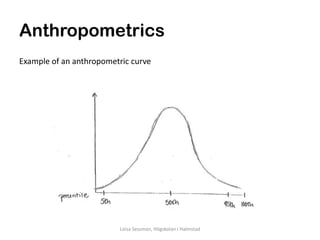
Dimensions are statistically and normal distributed across a population for
the majority of dimensions in the human body (mean value and standard
deviation).

Body weight and muscle strength are not included

Anthropometric measurement
    – Standardization
    – Reliability
    – Validity

Data
    – Pheasant & Haslegrave, 2005
    – Self-collected data


                              Loisa Sessman, Högskolan i Halmstad
Anthropometrics
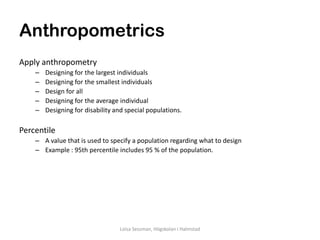
Apply anthropometry
    –   Designing for the largest individuals
    –   Designing for the smallest individuals
    –   Design for all
    –   Designing for the average individual
    –   Designing for disability and special populations.

Percentile
    – A value that is used to specify a population regarding what to design
    – Example : 95th percentile includes 95 % of the population.


                                  Loisa Sessman, Högskolan i Halmstad
Anthropometrics
Example of an anthropometric curve


                         Loisa Sessman, Högskolan i Halmstad
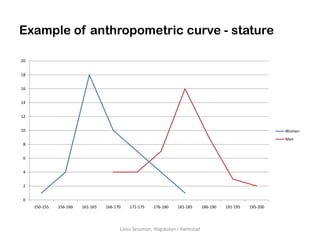
Example of anthropometric curve - stature

20


18


16


14


12


10                                                                                                           Women
                                                                                                             Men
 8


 6


 4


 2


 0
     150-155   156-160   161-165   166-170   171-175   176-180    181-185      186-190   191-195   195-200


                                         Loisa Sessman, Högskolan i Halmstad

Anthropometrics

  • 1.
    Anthropometrics Loisa Sessman, Högskolan i Halmstad
  • 2.
    Anthropometrics Anthropometrics - Anthropos = human - Metons = measurement Anthropometry observes human dimensions and proportions, bodypostures, reach, space for movement etc. Useful when designing workplaces and tools Useful when designing furniture and clothes The anthropometric data describes the human limitations and biomechanical problems Loisa Sessman, Högskolan i Halmstad
  • 3.
    Anthropometrics Dimensions are statisticallyand normal distributed across a population for the majority of dimensions in the human body (mean value and standard deviation). Body weight and muscle strength are not included Anthropometric measurement – Standardization – Reliability – Validity Data – Pheasant & Haslegrave, 2005 – Self-collected data Loisa Sessman, Högskolan i Halmstad
  • 4.
    Anthropometrics Apply anthropometry – Designing for the largest individuals – Designing for the smallest individuals – Design for all – Designing for the average individual – Designing for disability and special populations. Percentile – A value that is used to specify a population regarding what to design – Example : 95th percentile includes 95 % of the population. Loisa Sessman, Högskolan i Halmstad
  • 5.
    Anthropometrics Example of ananthropometric curve Loisa Sessman, Högskolan i Halmstad
  • 6.
    Example of anthropometriccurve - stature 20 18 16 14 12 10 Women Men 8 6 4 2 0 150-155 156-160 161-165 166-170 171-175 176-180 181-185 186-190 191-195 195-200 Loisa Sessman, Högskolan i Halmstad