MUSCLE HYPERTROPHY
RAJINEESHWARAN G
1st - M.Sc
Exercise Physiology & Nutrition
DEFINITION
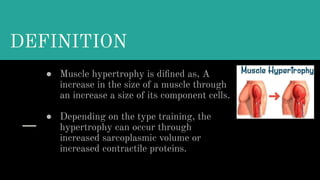
● Muscle hypertrophy is difined as, A
increase in the size of a muscle through
an increase a size of its component cells.
● Depending on the type training, the
hypertrophy can occur through
increased sarcoplasmic volume or
increased contractile proteins.
Types of hypertrophy
● Myofibrillar
● Sarcoplasmic
Myofibrillar
● Actins and myosin contractile proteins increase in
number and add to muscle strength as well as a small
increase in the size of the muscle.
● Myofibrillar hypertrophy is charecteristic of
“Powerlifters”.
● Denser and stronger muscles.
Sarcoplasmic
● The volume of sarcoplasmic fluid in the muscle cells
increases with no accompanying increase a muscular
strength.
● Sarcoplasmic hypertrophy is charecteristic of the
muscles of certain “Bodybuilders”.
● Bloted, soft and useless muscles.
Myofibrillar Sarcoplasmic
Causes of hypertrophy
● Age
● Microtrauma
● Muscle recruitment
● Muscular nutrition
● No of mitochondria
● Myoglobin protein
● Gender
● Contraction in contractile proteins
● Genetic responses
Microtrauma
● More the microtrauma more the increase in the size of
the muscle.
● It is the small injury in the muscle fibres.
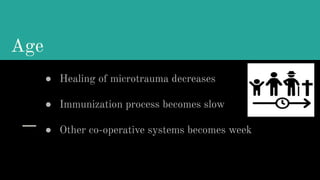
Age
● Healing of microtrauma decreases
● Immunization process becomes slow
● Other co-operative systems becomes week
Muscle recruitment
● It may also be trimed as the neural recruitment.
● More the muscles are co-ordinated with the nervous
system more the will involve in the exercise which will
increase their size.
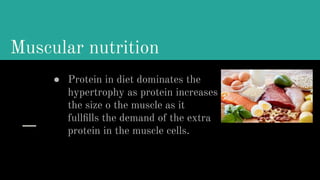
Muscular nutrition
● Protein in diet dominates the
hypertrophy as protein increases
the size o the muscle as it
fullfills the demand of the extra
protein in the muscle cells.
No.of mitochondria
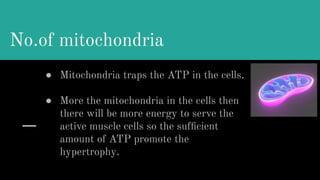
● Mitochondria traps the ATP in the cells.
● More the mitochondria in the cells then
there will be more energy to serve the
active muscle cells so the sufficient
amount of ATP promote the
hypertrophy.
Myoglobin protein
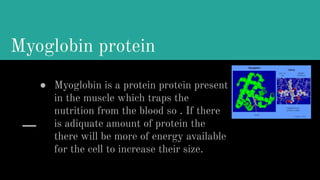
● Myoglobin is a protein protein present
in the muscle which traps the
nutrition from the blood so . If there
is adiquate amount of protein the
there will be more of energy available
for the cell to increase their size.
Gender
● Males are tends to have more
hypertrophy then female because of
following reasons :
○ No of muscle fibres
○ Size of muscle fibres
○ Growth hormone
Growth hormone
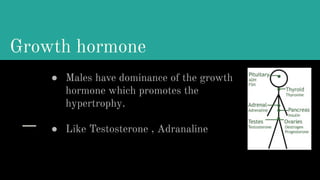
● Males have dominance of the growth
hormone which promotes the
hypertrophy.
● Like Testosterone , Adranaline
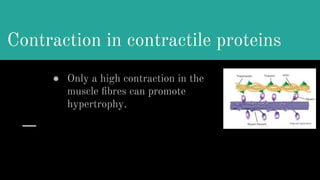
Contraction in contractile proteins
● Only a high contraction in the
muscle fibres can promote
hypertrophy.
Genetic responses
● It is a still a controversial issue
and it's steps are not yet clear.
● In hypertrophy of the muscles
sone of the family the genes are
activated like C-FOS , C-JUN
and MYC.
Thankyou 😉

Muscle hypertrophy

  • 1.
    MUSCLE HYPERTROPHY RAJINEESHWARAN G 1st- M.Sc Exercise Physiology & Nutrition
  • 2.
    DEFINITION ● Muscle hypertrophyis difined as, A increase in the size of a muscle through an increase a size of its component cells. ● Depending on the type training, the hypertrophy can occur through increased sarcoplasmic volume or increased contractile proteins.
  • 3.
    Types of hypertrophy ●Myofibrillar ● Sarcoplasmic
  • 4.
    Myofibrillar ● Actins andmyosin contractile proteins increase in number and add to muscle strength as well as a small increase in the size of the muscle. ● Myofibrillar hypertrophy is charecteristic of “Powerlifters”. ● Denser and stronger muscles.
  • 5.
    Sarcoplasmic ● The volumeof sarcoplasmic fluid in the muscle cells increases with no accompanying increase a muscular strength. ● Sarcoplasmic hypertrophy is charecteristic of the muscles of certain “Bodybuilders”. ● Bloted, soft and useless muscles.
  • 6.
  • 7.
    Causes of hypertrophy ●Age ● Microtrauma ● Muscle recruitment ● Muscular nutrition ● No of mitochondria ● Myoglobin protein ● Gender ● Contraction in contractile proteins ● Genetic responses
  • 8.
    Microtrauma ● More themicrotrauma more the increase in the size of the muscle. ● It is the small injury in the muscle fibres.
  • 9.
    Age ● Healing ofmicrotrauma decreases ● Immunization process becomes slow ● Other co-operative systems becomes week
  • 10.
    Muscle recruitment ● Itmay also be trimed as the neural recruitment. ● More the muscles are co-ordinated with the nervous system more the will involve in the exercise which will increase their size.
  • 11.
    Muscular nutrition ● Proteinin diet dominates the hypertrophy as protein increases the size o the muscle as it fullfills the demand of the extra protein in the muscle cells.
  • 12.
    No.of mitochondria ● Mitochondriatraps the ATP in the cells. ● More the mitochondria in the cells then there will be more energy to serve the active muscle cells so the sufficient amount of ATP promote the hypertrophy.
  • 13.
    Myoglobin protein ● Myoglobinis a protein protein present in the muscle which traps the nutrition from the blood so . If there is adiquate amount of protein the there will be more of energy available for the cell to increase their size.
  • 14.
    Gender ● Males aretends to have more hypertrophy then female because of following reasons : ○ No of muscle fibres ○ Size of muscle fibres ○ Growth hormone
  • 15.
    Growth hormone ● Maleshave dominance of the growth hormone which promotes the hypertrophy. ● Like Testosterone , Adranaline
  • 16.
    Contraction in contractileproteins ● Only a high contraction in the muscle fibres can promote hypertrophy.
  • 17.
    Genetic responses ● Itis a still a controversial issue and it's steps are not yet clear. ● In hypertrophy of the muscles sone of the family the genes are activated like C-FOS , C-JUN and MYC.
  • 18.