MUSCLE BIOPSY
PRESENTER : DR VIBHA NAIR
MODERATOR : DR DEEPAK P J
OVERVIEW
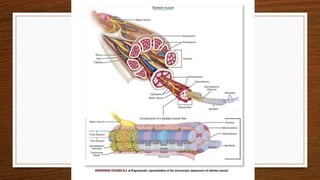
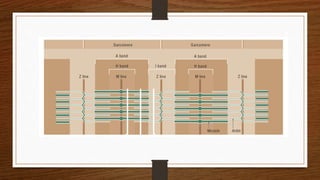
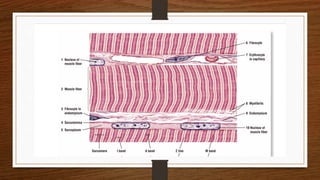
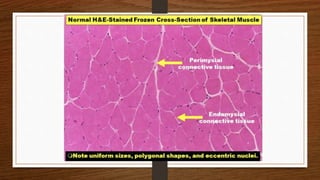
• Histology
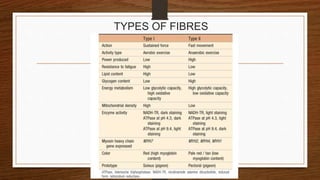
• Types of muscle fibres
• Indications of muscle biopsy
• Procedure
• Stains
• General abnormalities in response to injury
• Diseases
• Biochemical investigations
• Pitfalls
TYPES OF FIBRES
INDICATIONS FOR MUSCLE BIOPSY
• General reasons
• Weakness of uncertain cause
• Generalized, proximal, floppy infant syndrome
• Muscle pain , cramps ,stiffness
• Persistently elevated muscle enzymes (CK)
• Specific reasons
• Hereditary muscle disease in other family members
• Carrier detection
• Systemic connective tissue disease and vasculitis
• Certain metabolic diseases such as storage disease
• Suspicion of steroid myopathy in treated myositis
• Conflicting clinical ,EMG or laboratory findings
• Confirm/ reinforce clinical diagnosis
CONTRAINDICATIONS
• Electrolyte disturbance
• Malignant hyperthermia
• Periodic paralysis ,endocrine myopathies
• Myasthenia syndromes
• Poor nutrition ,prior trauma
• Coagulation disorder
BIOPSY-PROCEDURE
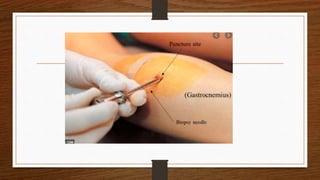
BIOPSY SITE
Clinical history is important
• Representative of disease
• Muscle with active disease process
• Severely affected or previously traumatized muscle is avoided
• From belly of muscle , away from tendon
• Deltoid, biceps ,quadriceps
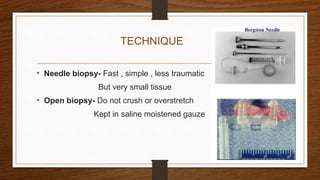
TECHNIQUE
• Needle biopsy- Fast , simple , less traumatic
But very small tissue
• Open biopsy- Do not crush or overstretch
Kept in saline moistened gauze
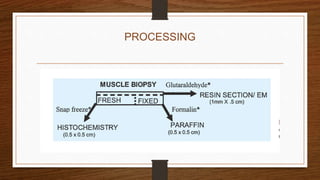
PROCESSING
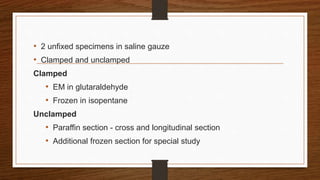
• 2 unfixed specimens in saline gauze
• Clamped and unclamped
Clamped
• EM in glutaraldehyde
• Frozen in isopentane
Unclamped
• Paraffin section - cross and longitudinal section
• Additional frozen section for special study
Do not…
• Do not directly immerse in ice
• Do not directly immerse on saline
• Do nor crush
• Do not stretch
PROCESSING
• Isometric state
• Muscle clamp -isometric state
• Fixed in 10 % buffered formalin
• 1 x 0.5 cm
• Resin ,EM or paraffin
• Fresh sample
• 1 x 0.5 x 0.5 cm
• Frozen section
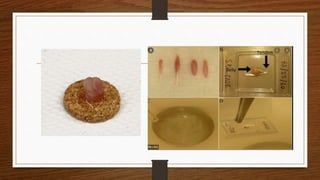
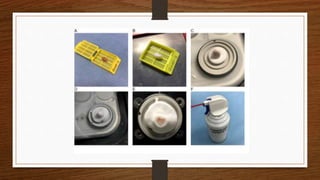
FREEZING MUSCLE BIOPSIES
• Label and place in cryostat to cool
• Pour liquid nitrogen into Dewar flask kept in freezer
• Pour cold isopentane
• White drops form on bottom of cup
• Cut 5 -7 mm long sections
• Powder the muscle with baby powder
• Place the tissue for freezing on a stiff paper
• Vput a drop of freezing medium
• Immerse in isopentane for 10 seconds
• Store in -70 degree freezer
• For biochemical studies –frozen en bloc in liquid nitrogen
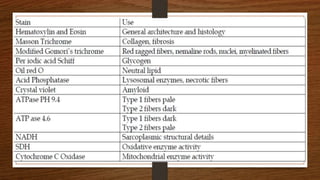
STAINS
Non enzymatic stains
• Hematoxyline and eosin
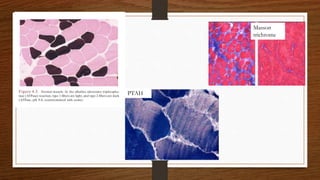
• Phospho tungstic acid hematoxylin (PTAH) – cross striations
• Masson trichrome
• Modified Gomori trichrome
• Van gieson
• PAS for glycogen
• Fat stains – Oil red O
Enzymatic stains
• Phosphorylase
• Adenosine tri phosphatase at pH 9.4
• NADH – TR - mitochondria
• SDH
PTAH
Masson
trichrome
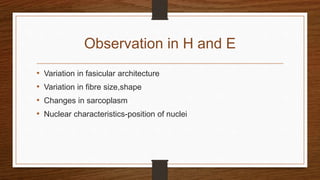
Observation in H and E
• Variation in fasicular architecture
• Variation in fibre size,shape
• Changes in sarcoplasm
• Nuclear characteristics-position of nuclei
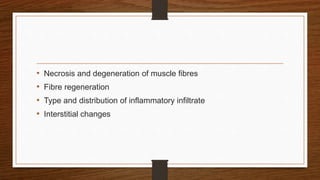
• Necrosis and degeneration of muscle fibres
• Fibre regeneration
• Type and distribution of inflammatory infiltrate
• Interstitial changes
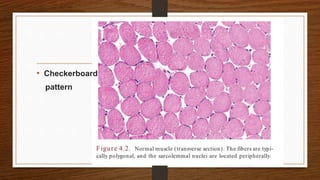
• Checkerboard
pattern
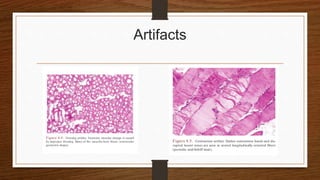
Artifacts
Common pathological
reactions
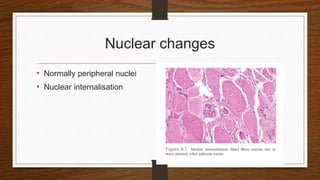
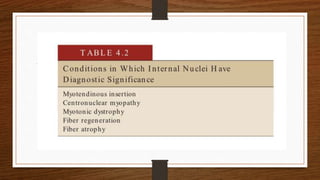
Nuclear changes
• Normally peripheral nuclei
• Nuclear internalisation
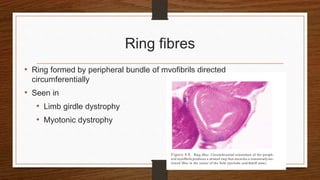
Ring fibres
• Ring formed by peripheral bundle of myofibrils directed
circumferentially
• Seen in
• Limb girdle dystrophy
• Myotonic dystrophy
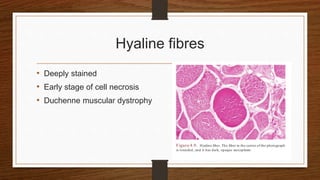
Hyaline fibres
• Deeply stained
• Early stage of cell necrosis
• Duchenne muscular dystrophy
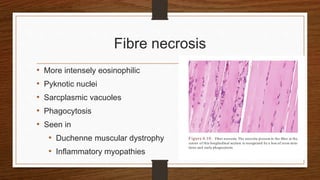
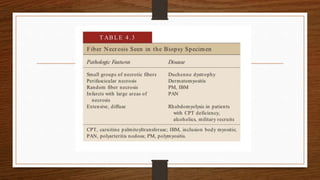
Fibre necrosis
• More intensely eosinophilic
• Pyknotic nuclei
• Sarcplasmic vacuoles
• Phagocytosis
• Seen in
• Duchenne muscular dystrophy
• Inflammatory myopathies
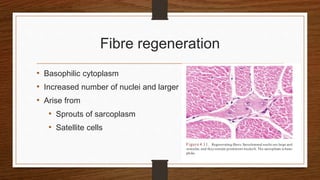
Fibre regeneration
• Basophilic cytoplasm
• Increased number of nuclei and larger
• Arise from
• Sprouts of sarcoplasm
• Satellite cells
Inclusions
• Seen in
• Inclusion body myositis
• Oculopharyngeal dystrophy
• Inclusion is eosinophilic , smudged
• EM-bundles of filaments
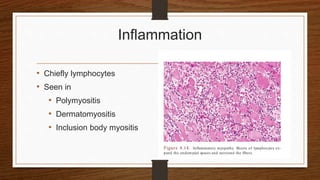
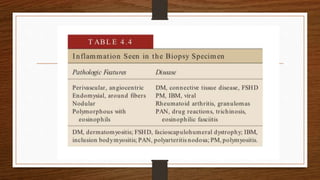
Inflammation
• Chiefly lymphocytes
• Seen in
• Polymyositis
• Dermatomyositis
• Inclusion body myositis
Fibrosis and fatty infiltration
• Chronic Neuromuscular Disease
Observation in frozen section
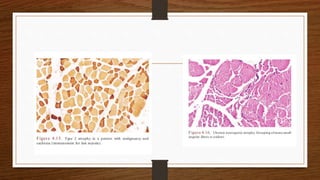
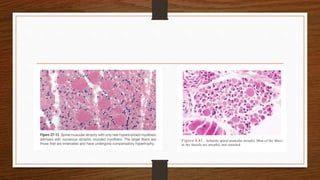
Atrophy and hypertrophy
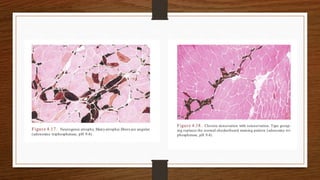
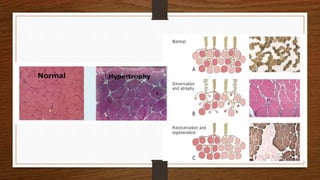
Atrophy
• MC-denervation atrophy
• Disuse , ageing, ischemia, poor nutrition
Hypertrophy
• Exercise ,compensatory reaction
Atrophy
• Selective process
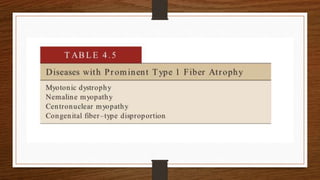
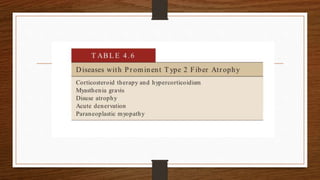
• Affects only one fibre type
• Grouped atrophy –c/c neurogenic disorder
• Pan fasicular atrophy – ISMA
• Perifasicular atrophy – Dermatomyositis
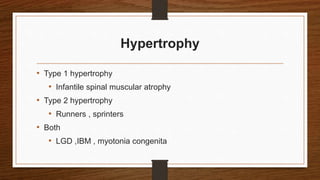
Hypertrophy
• Type 1 hypertrophy
• Infantile spinal muscular atrophy
• Type 2 hypertrophy
• Runners , sprinters
• Both
• LGD ,IBM , myotonia congenita
Fibre shape
• Normal – polygonal
• Muscular dystrophy – rounded fibres
• Denervating diseases - angular fibres
Changes in histochemical
profile
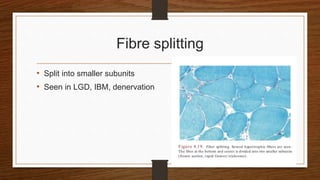
Fibre splitting
• Split into smaller subunits
• Seen in LGD, IBM, denervation
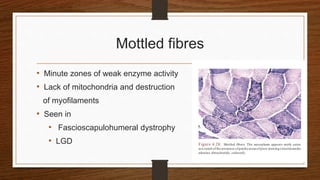
Mottled fibres
• Minute zones of weak enzyme activity
• Lack of mitochondria and destruction
of myofilaments
• Seen in
• Fascioscapulohumeral dystrophy
• LGD
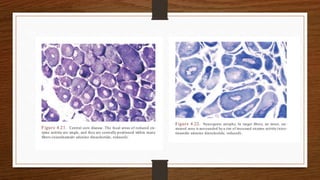
Cores and Targets
• Cores are
• regions of depleted enzyme activity
• Seen in neurogenic atrophy
• Targets are
• 3 zone structure
• Seen in neurogenic atrophy
• Greater diameter than cores,Only in few sarcomeres
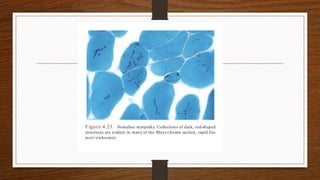
Nemaline rods
• Threads or rods tend to cluster beneath sarcolemma
• Visualised in RTC on frozen section
• Oblong or rectangular structures with a greatest dimension 6-7
micrometre
• Seen in
• Nemaline myopathy
• Muscular dystrophy
• Polymyositis
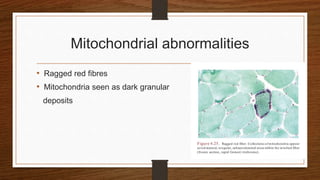
Mitochondrial abnormalities
• Ragged red fibres
• Mitochondria seen as dark granular
deposits
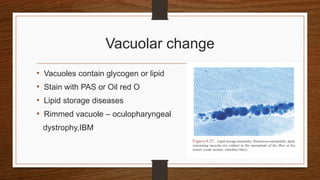
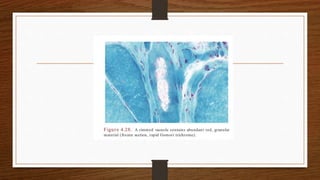
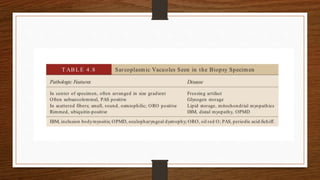
Vacuolar change
• Vacuoles contain glycogen or lipid
• Stain with PAS or Oil red O
• Lipid storage diseases
• Rimmed vacuole – oculopharyngeal
dystrophy,IBM
NEUROMUSCULAR DISEASES
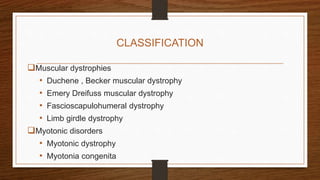
CLASSIFICATION
Muscular dystrophies
• Duchene , Becker muscular dystrophy
• Emery Dreifuss muscular dystrophy
• Fascioscapulohumeral dystrophy
• Limb girdle dystrophy
Myotonic disorders
• Myotonic dystrophy
• Myotonia congenita
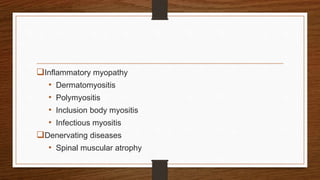
Inflammatory myopathy
• Dermatomyositis
• Polymyositis
• Inclusion body myositis
• Infectious myositis
Denervating diseases
• Spinal muscular atrophy
Congenital myopathies
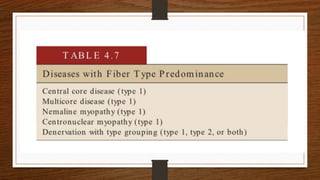
• Central core disease
• Nemaline rod myopathy
• Centronuclear myopathy
Storage diseases
• Glycogen storage diseases
• Lipid storage diseases
Mitochondrial myopathies
Toxic myopathies
Neuromuscular diseases
• Myasthenia gravis
• Lambert Eaton syndrome
DUCHENE MUSCULAR DYSTROPHY
• X linked recessive inherited disorder
• DMD gene located on Xp21.
• Dystrophin gene mutation
• Affects boys,difficulty to stand or walk
• Pseudohypertrophy of muscles-calves, buttocks
• Cardiomyopathy
• Raised CK
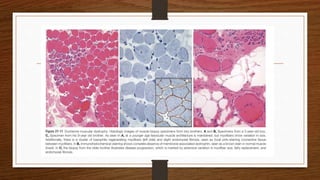
• Fibre necrosis, regeneration
• Atrophic myofibres
• Hyaline fibres
• Fatty infiltration
BECKER MUSCULAR DYSTROPHY
• Milder form of X linked dystrophy
EMERY DREIFUSS MUSCULAR DYSTROPHY
• Mutations in genes that encode lamina proteins – emerin and lamin
• Humeroperoneal weakness , cardiomyopathy
FASCIOSCAPULOHUMERAL DYSTROPHY
• AD inheritance
• Overexpression of DUX4
• Face , shoulder , upper extremity
• Atrophic muscle fibres, clustered or grouped together
• Moth eaten fibres
• Perivascular lymphocytes
LIMB GIRDLE DYSTROPHY
• Collection of myopathies
• Proximal muscle groups ,shoulder ,pelvic girdle
• AD and AR inheritance
• Mutations in genes encoding sarcoglycans
• Young adults
• Pseudohypertrophy
MYOTONIC DYSTROPHY
• Autosomal dominant multisystem disorder
• Expansion of CTG triple repeat in non coding region of DMPK
• Facial muscle weakness, ptosis, dysphagia
• Inability to relax after contraction
• Cataract, testicular atrophy, diabetes mellitus ,cardiomyopathy
• Pyknotic internal nuclei
• Type 1 fibre atrophy
• Ring fibres
• Reactive fibrosis
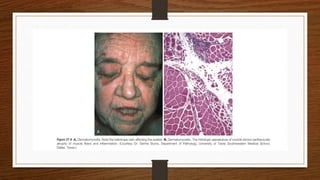
DERMATOMYOSITIS
• Autoimmune disease,autoantibodies
• Children and adults
• Damage to small blood vessels cause muscle injury
• C5b-9
• Heliotrope rash,gottron papule
• Inflammatory infiltrate-lymphocytes and plasma cells
• Anti Mi2,Anti Jo 1,Anti P155/P140
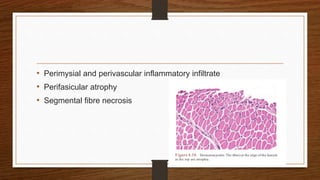
• Perimysial and perivascular inflammatory infiltrate
• Perifasicular atrophy
• Segmental fibre necrosis
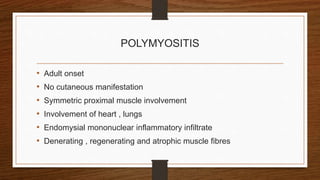
POLYMYOSITIS
• Adult onset
• No cutaneous manifestation
• Symmetric proximal muscle involvement
• Involvement of heart , lungs
• Endomysial mononuclear inflammatory infiltrate
• Denerating , regenerating and atrophic muscle fibres
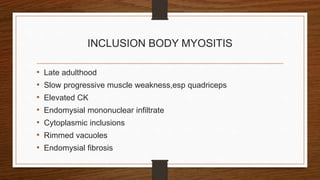
INCLUSION BODY MYOSITIS
• Late adulthood
• Slow progressive muscle weakness,esp quadriceps
• Elevated CK
• Endomysial mononuclear infiltrate
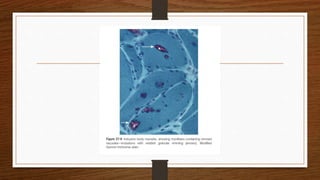
• Cytoplasmic inclusions
• Rimmed vacuoles
• Endomysial fibrosis
INFECTIOUS MYOSITIS
• Bacterial – Staph aureus
• Viral
• Influenza
• Cox sackie
• HIV
• Parasitic
• Trichinella spiralis
• Cysticercosis
• Toxoplasma
Parasitic myopathy
• Most common parasites
• Trichinella spiralis
• Cysticercosis
• Undercooked pork
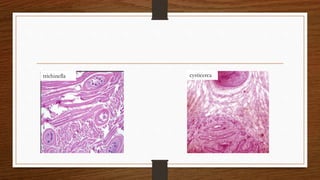
• Encapsulated cyst
• Calcification
• Granulomatous reaction
trichinella cysticerca
TOXIC MYOPATHIES
• Statins
• Chloroquine
• Alcohol
• Thyrotoxic myopathy
• ICU Myopathy
• Hypothyroidism
DISEASES OF LIPID/GLYCOGEN METABOLISM
• Inborn errors of metabolism
• Carnitine palmitoyl transferase 2 deficiency
• Lipid metabolism
• Episodic muscle damage with exercise or fasting
• Mc Ardle disease-Myophosphorylase deficiency
• Glycogen storage disease
• Episodic muscle damage with exercise
• Acid maltase deficiency
• Glycogen storage deficiency
• Impaired lysosomal conversion of glycogen to glucose
• Phosphofructokinase deficiency
• Glycogen storage deficiency
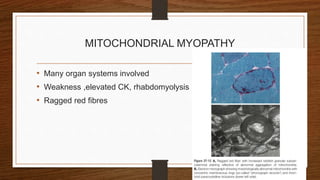
MITOCHONDRIAL MYOPATHY
• Many organ systems involved
• Weakness ,elevated CK, rhabdomyolysis
• Ragged red fibres
SPINAL MUSCULAR ATROPHY
• Neuropathic disorder in which loss of motor neurons leads to
muscle weakness
• FLOPPY INFANT - Generalized hypotonia in infants with neurologic
disease .D/D are
• Congenital myasthenic syndrome
• Congenital myotonia
• Congenital muscular dystrophies
ION CHANNEL
MYOPATHIES(CHANNELOPATHIES)
• Group of inherited diseases caused by mutations affecting the
function of ion channel proeins
• Hypo / hypertonia
• Hypo / hyperkalemia
• Cerebellar dysfunction
• KCNJ2 ,SCN4A , CACNA1S ,CLC1 ,RYR1 mutation
CONGENITAL MYOPATHIES
• Central core disease
• Nemaline myopathy
• Centronuclear myopathy
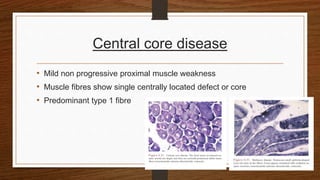
Central core disease
• Mild non progressive proximal muscle weakness
• Muscle fibres show single centrally located defect or core
• Predominant type 1 fibre
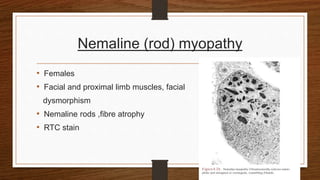
Nemaline (rod) myopathy
• Females
• Facial and proximal limb muscles, facial
dysmorphism
• Nemaline rods ,fibre atrophy
• RTC stain
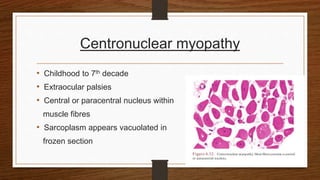
Centronuclear myopathy
• Childhood to 7th decade
• Extraocular palsies
• Central or paracentral nucleus within
muscle fibres
• Sarcoplasm appears vacuolated in
frozen section
MYASTHENIA GRAVIS
• Chronic autoimmune disease
• Circulating antibodies against postsynaptic acetyl choline receptors
• Females
• Extraocular , facial muscles
• Type 2 fibre atrophy
IMMUNOHISTOCHEMISTRY
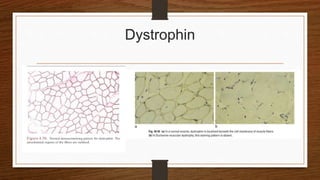
• Dystrophin – DMD
• Emerin , laminin A/C – EDMD
• Caveolin ,dysferlin ,calpain – LGMD
• CD 4,CD8 –Dermatomyositis, polymyositis
• Ubiquitin – IBM
• Desmin – central core disease
Dystrophin
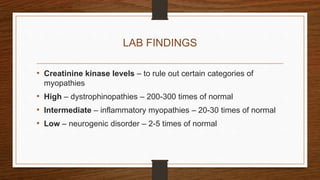
LAB FINDINGS
• Creatinine kinase levels – to rule out certain categories of
myopathies
• High – dystrophinopathies – 200-300 times of normal
• Intermediate – inflammatory myopathies – 20-30 times of normal
• Low – neurogenic disorder – 2-5 times of normal
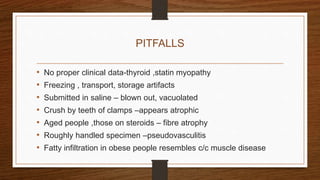
PITFALLS
• No proper clinical data-thyroid ,statin myopathy
• Freezing , transport, storage artifacts
• Submitted in saline – blown out, vacuolated
• Crush by teeth of clamps –appears atrophic
• Aged people ,those on steroids – fibre atrophy
• Roughly handled specimen –pseudovasculitis
• Fatty infiltration in obese people resembles c/c muscle disease
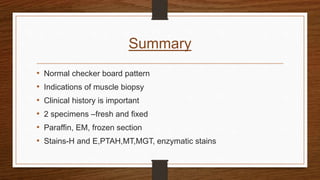
Summary
• Normal checker board pattern
• Indications of muscle biopsy
• Clinical history is important
• 2 specimens –fresh and fixed
• Paraffin, EM, frozen section
• Stains-H and E,PTAH,MT,MGT, enzymatic stains
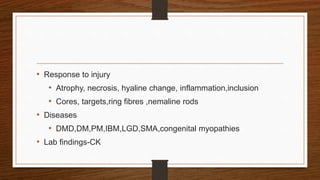
• Response to injury
• Atrophy, necrosis, hyaline change, inflammation,inclusion
• Cores, targets,ring fibres ,nemaline rods
• Diseases
• DMD,DM,PM,IBM,LGD,SMA,congenital myopathies
• Lab findings-CK
REFERENCES
• Sternberg’s Diagnostic Surgical Pathology,5 th Edition
• Anderson’s Pathology,10th Edition
• Pathologic Basis of Disease, Robbins and Cotran, South Asia
Edition
• Rosai and Ackerman’s Surgical Pathology,11th Edition
• Bancroft’s Histological Techniques,8th edition
• Manual of Surgical Pathology, Susan C Lester,3rd Edition
• Di Fiore’s Atlas of Histology,12th Edition
MUSCLE BIOPSY.pptx

MUSCLE BIOPSY.pptx

  • 1.
    MUSCLE BIOPSY PRESENTER :DR VIBHA NAIR MODERATOR : DR DEEPAK P J
  • 2.
    OVERVIEW • Histology • Typesof muscle fibres • Indications of muscle biopsy • Procedure • Stains
  • 3.
    • General abnormalitiesin response to injury • Diseases • Biochemical investigations • Pitfalls
  • 9.
  • 10.
    INDICATIONS FOR MUSCLEBIOPSY • General reasons • Weakness of uncertain cause • Generalized, proximal, floppy infant syndrome • Muscle pain , cramps ,stiffness • Persistently elevated muscle enzymes (CK) • Specific reasons • Hereditary muscle disease in other family members • Carrier detection
  • 11.
    • Systemic connectivetissue disease and vasculitis • Certain metabolic diseases such as storage disease • Suspicion of steroid myopathy in treated myositis • Conflicting clinical ,EMG or laboratory findings • Confirm/ reinforce clinical diagnosis
  • 12.
    CONTRAINDICATIONS • Electrolyte disturbance •Malignant hyperthermia • Periodic paralysis ,endocrine myopathies • Myasthenia syndromes • Poor nutrition ,prior trauma • Coagulation disorder
  • 13.
    BIOPSY-PROCEDURE BIOPSY SITE Clinical historyis important • Representative of disease • Muscle with active disease process • Severely affected or previously traumatized muscle is avoided • From belly of muscle , away from tendon • Deltoid, biceps ,quadriceps
  • 15.
    TECHNIQUE • Needle biopsy-Fast , simple , less traumatic But very small tissue • Open biopsy- Do not crush or overstretch Kept in saline moistened gauze
  • 16.
  • 17.
    • 2 unfixedspecimens in saline gauze • Clamped and unclamped Clamped • EM in glutaraldehyde • Frozen in isopentane Unclamped • Paraffin section - cross and longitudinal section • Additional frozen section for special study
  • 18.
    Do not… • Donot directly immerse in ice • Do not directly immerse on saline • Do nor crush • Do not stretch
  • 19.
    PROCESSING • Isometric state •Muscle clamp -isometric state • Fixed in 10 % buffered formalin • 1 x 0.5 cm • Resin ,EM or paraffin • Fresh sample • 1 x 0.5 x 0.5 cm • Frozen section
  • 22.
    FREEZING MUSCLE BIOPSIES •Label and place in cryostat to cool • Pour liquid nitrogen into Dewar flask kept in freezer • Pour cold isopentane • White drops form on bottom of cup • Cut 5 -7 mm long sections • Powder the muscle with baby powder
  • 23.
    • Place thetissue for freezing on a stiff paper • Vput a drop of freezing medium • Immerse in isopentane for 10 seconds • Store in -70 degree freezer • For biochemical studies –frozen en bloc in liquid nitrogen
  • 24.
    STAINS Non enzymatic stains •Hematoxyline and eosin • Phospho tungstic acid hematoxylin (PTAH) – cross striations • Masson trichrome • Modified Gomori trichrome • Van gieson • PAS for glycogen • Fat stains – Oil red O
  • 25.
    Enzymatic stains • Phosphorylase •Adenosine tri phosphatase at pH 9.4 • NADH – TR - mitochondria • SDH
  • 27.
  • 28.
    Observation in Hand E • Variation in fasicular architecture • Variation in fibre size,shape • Changes in sarcoplasm • Nuclear characteristics-position of nuclei
  • 29.
    • Necrosis anddegeneration of muscle fibres • Fibre regeneration • Type and distribution of inflammatory infiltrate • Interstitial changes
  • 30.
  • 31.
  • 32.
  • 33.
    Nuclear changes • Normallyperipheral nuclei • Nuclear internalisation
  • 35.
    Ring fibres • Ringformed by peripheral bundle of myofibrils directed circumferentially • Seen in • Limb girdle dystrophy • Myotonic dystrophy
  • 36.
    Hyaline fibres • Deeplystained • Early stage of cell necrosis • Duchenne muscular dystrophy
  • 37.
    Fibre necrosis • Moreintensely eosinophilic • Pyknotic nuclei • Sarcplasmic vacuoles • Phagocytosis • Seen in • Duchenne muscular dystrophy • Inflammatory myopathies
  • 39.
    Fibre regeneration • Basophiliccytoplasm • Increased number of nuclei and larger • Arise from • Sprouts of sarcoplasm • Satellite cells
  • 40.
    Inclusions • Seen in •Inclusion body myositis • Oculopharyngeal dystrophy • Inclusion is eosinophilic , smudged • EM-bundles of filaments
  • 41.
    Inflammation • Chiefly lymphocytes •Seen in • Polymyositis • Dermatomyositis • Inclusion body myositis
  • 43.
    Fibrosis and fattyinfiltration • Chronic Neuromuscular Disease
  • 44.
  • 45.
    Atrophy and hypertrophy Atrophy •MC-denervation atrophy • Disuse , ageing, ischemia, poor nutrition Hypertrophy • Exercise ,compensatory reaction
  • 46.
    Atrophy • Selective process •Affects only one fibre type • Grouped atrophy –c/c neurogenic disorder • Pan fasicular atrophy – ISMA • Perifasicular atrophy – Dermatomyositis
  • 51.
    Hypertrophy • Type 1hypertrophy • Infantile spinal muscular atrophy • Type 2 hypertrophy • Runners , sprinters • Both • LGD ,IBM , myotonia congenita
  • 54.
    Fibre shape • Normal– polygonal • Muscular dystrophy – rounded fibres • Denervating diseases - angular fibres
  • 55.
  • 56.
    Fibre splitting • Splitinto smaller subunits • Seen in LGD, IBM, denervation
  • 57.
    Mottled fibres • Minutezones of weak enzyme activity • Lack of mitochondria and destruction of myofilaments • Seen in • Fascioscapulohumeral dystrophy • LGD
  • 58.
    Cores and Targets •Cores are • regions of depleted enzyme activity • Seen in neurogenic atrophy • Targets are • 3 zone structure • Seen in neurogenic atrophy • Greater diameter than cores,Only in few sarcomeres
  • 60.
    Nemaline rods • Threadsor rods tend to cluster beneath sarcolemma • Visualised in RTC on frozen section • Oblong or rectangular structures with a greatest dimension 6-7 micrometre • Seen in • Nemaline myopathy • Muscular dystrophy • Polymyositis
  • 62.
    Mitochondrial abnormalities • Raggedred fibres • Mitochondria seen as dark granular deposits
  • 63.
    Vacuolar change • Vacuolescontain glycogen or lipid • Stain with PAS or Oil red O • Lipid storage diseases • Rimmed vacuole – oculopharyngeal dystrophy,IBM
  • 66.
  • 67.
    CLASSIFICATION Muscular dystrophies • Duchene, Becker muscular dystrophy • Emery Dreifuss muscular dystrophy • Fascioscapulohumeral dystrophy • Limb girdle dystrophy Myotonic disorders • Myotonic dystrophy • Myotonia congenita
  • 68.
    Inflammatory myopathy • Dermatomyositis •Polymyositis • Inclusion body myositis • Infectious myositis Denervating diseases • Spinal muscular atrophy
  • 69.
    Congenital myopathies • Centralcore disease • Nemaline rod myopathy • Centronuclear myopathy Storage diseases • Glycogen storage diseases • Lipid storage diseases
  • 70.
    Mitochondrial myopathies Toxic myopathies Neuromusculardiseases • Myasthenia gravis • Lambert Eaton syndrome
  • 71.
    DUCHENE MUSCULAR DYSTROPHY •X linked recessive inherited disorder • DMD gene located on Xp21. • Dystrophin gene mutation • Affects boys,difficulty to stand or walk • Pseudohypertrophy of muscles-calves, buttocks • Cardiomyopathy • Raised CK
  • 72.
    • Fibre necrosis,regeneration • Atrophic myofibres • Hyaline fibres • Fatty infiltration BECKER MUSCULAR DYSTROPHY • Milder form of X linked dystrophy
  • 74.
    EMERY DREIFUSS MUSCULARDYSTROPHY • Mutations in genes that encode lamina proteins – emerin and lamin • Humeroperoneal weakness , cardiomyopathy
  • 75.
    FASCIOSCAPULOHUMERAL DYSTROPHY • ADinheritance • Overexpression of DUX4 • Face , shoulder , upper extremity • Atrophic muscle fibres, clustered or grouped together • Moth eaten fibres • Perivascular lymphocytes
  • 76.
    LIMB GIRDLE DYSTROPHY •Collection of myopathies • Proximal muscle groups ,shoulder ,pelvic girdle • AD and AR inheritance • Mutations in genes encoding sarcoglycans • Young adults • Pseudohypertrophy
  • 77.
    MYOTONIC DYSTROPHY • Autosomaldominant multisystem disorder • Expansion of CTG triple repeat in non coding region of DMPK • Facial muscle weakness, ptosis, dysphagia • Inability to relax after contraction • Cataract, testicular atrophy, diabetes mellitus ,cardiomyopathy
  • 78.
    • Pyknotic internalnuclei • Type 1 fibre atrophy • Ring fibres • Reactive fibrosis
  • 79.
    DERMATOMYOSITIS • Autoimmune disease,autoantibodies •Children and adults • Damage to small blood vessels cause muscle injury • C5b-9 • Heliotrope rash,gottron papule • Inflammatory infiltrate-lymphocytes and plasma cells • Anti Mi2,Anti Jo 1,Anti P155/P140
  • 80.
    • Perimysial andperivascular inflammatory infiltrate • Perifasicular atrophy • Segmental fibre necrosis
  • 82.
    POLYMYOSITIS • Adult onset •No cutaneous manifestation • Symmetric proximal muscle involvement • Involvement of heart , lungs • Endomysial mononuclear inflammatory infiltrate • Denerating , regenerating and atrophic muscle fibres
  • 83.
    INCLUSION BODY MYOSITIS •Late adulthood • Slow progressive muscle weakness,esp quadriceps • Elevated CK • Endomysial mononuclear infiltrate • Cytoplasmic inclusions • Rimmed vacuoles • Endomysial fibrosis
  • 85.
    INFECTIOUS MYOSITIS • Bacterial– Staph aureus • Viral • Influenza • Cox sackie • HIV • Parasitic • Trichinella spiralis • Cysticercosis • Toxoplasma
  • 86.
    Parasitic myopathy • Mostcommon parasites • Trichinella spiralis • Cysticercosis • Undercooked pork • Encapsulated cyst • Calcification • Granulomatous reaction
  • 87.
  • 88.
    TOXIC MYOPATHIES • Statins •Chloroquine • Alcohol • Thyrotoxic myopathy • ICU Myopathy • Hypothyroidism
  • 89.
    DISEASES OF LIPID/GLYCOGENMETABOLISM • Inborn errors of metabolism • Carnitine palmitoyl transferase 2 deficiency • Lipid metabolism • Episodic muscle damage with exercise or fasting • Mc Ardle disease-Myophosphorylase deficiency • Glycogen storage disease • Episodic muscle damage with exercise
  • 90.
    • Acid maltasedeficiency • Glycogen storage deficiency • Impaired lysosomal conversion of glycogen to glucose • Phosphofructokinase deficiency • Glycogen storage deficiency
  • 91.
    MITOCHONDRIAL MYOPATHY • Manyorgan systems involved • Weakness ,elevated CK, rhabdomyolysis • Ragged red fibres
  • 92.
    SPINAL MUSCULAR ATROPHY •Neuropathic disorder in which loss of motor neurons leads to muscle weakness • FLOPPY INFANT - Generalized hypotonia in infants with neurologic disease .D/D are • Congenital myasthenic syndrome • Congenital myotonia • Congenital muscular dystrophies
  • 94.
    ION CHANNEL MYOPATHIES(CHANNELOPATHIES) • Groupof inherited diseases caused by mutations affecting the function of ion channel proeins • Hypo / hypertonia • Hypo / hyperkalemia • Cerebellar dysfunction • KCNJ2 ,SCN4A , CACNA1S ,CLC1 ,RYR1 mutation
  • 95.
    CONGENITAL MYOPATHIES • Centralcore disease • Nemaline myopathy • Centronuclear myopathy
  • 96.
    Central core disease •Mild non progressive proximal muscle weakness • Muscle fibres show single centrally located defect or core • Predominant type 1 fibre
  • 97.
    Nemaline (rod) myopathy •Females • Facial and proximal limb muscles, facial dysmorphism • Nemaline rods ,fibre atrophy • RTC stain
  • 98.
    Centronuclear myopathy • Childhoodto 7th decade • Extraocular palsies • Central or paracentral nucleus within muscle fibres • Sarcoplasm appears vacuolated in frozen section
  • 99.
    MYASTHENIA GRAVIS • Chronicautoimmune disease • Circulating antibodies against postsynaptic acetyl choline receptors • Females • Extraocular , facial muscles • Type 2 fibre atrophy
  • 100.
    IMMUNOHISTOCHEMISTRY • Dystrophin –DMD • Emerin , laminin A/C – EDMD • Caveolin ,dysferlin ,calpain – LGMD • CD 4,CD8 –Dermatomyositis, polymyositis • Ubiquitin – IBM • Desmin – central core disease
  • 101.
  • 102.
    LAB FINDINGS • Creatininekinase levels – to rule out certain categories of myopathies • High – dystrophinopathies – 200-300 times of normal • Intermediate – inflammatory myopathies – 20-30 times of normal • Low – neurogenic disorder – 2-5 times of normal
  • 103.
    PITFALLS • No properclinical data-thyroid ,statin myopathy • Freezing , transport, storage artifacts • Submitted in saline – blown out, vacuolated • Crush by teeth of clamps –appears atrophic • Aged people ,those on steroids – fibre atrophy • Roughly handled specimen –pseudovasculitis • Fatty infiltration in obese people resembles c/c muscle disease
  • 104.
    Summary • Normal checkerboard pattern • Indications of muscle biopsy • Clinical history is important • 2 specimens –fresh and fixed • Paraffin, EM, frozen section • Stains-H and E,PTAH,MT,MGT, enzymatic stains
  • 105.
    • Response toinjury • Atrophy, necrosis, hyaline change, inflammation,inclusion • Cores, targets,ring fibres ,nemaline rods • Diseases • DMD,DM,PM,IBM,LGD,SMA,congenital myopathies • Lab findings-CK
  • 106.
    REFERENCES • Sternberg’s DiagnosticSurgical Pathology,5 th Edition • Anderson’s Pathology,10th Edition • Pathologic Basis of Disease, Robbins and Cotran, South Asia Edition • Rosai and Ackerman’s Surgical Pathology,11th Edition • Bancroft’s Histological Techniques,8th edition • Manual of Surgical Pathology, Susan C Lester,3rd Edition • Di Fiore’s Atlas of Histology,12th Edition