Multi-stakeholder platforms strengthening the selection and use of fodder options in Ethiopia: Some lessons Presentation by Ergano, K., A. Duncan, A. Adie, A. Tedla, G. Woldewahid, Z. Ayele, G. Berhanu and N. Alemayehu (ILRI) to the Ethiopian Fodder Roundtable on Effective Delivery of Input Services to Livestock Development Addis Ababa, 22 June 2010
Outline Context Premises Approaches  Institutional learning and innovation Critical issues for effective stakeholder platforms Conclusion  Recommendations
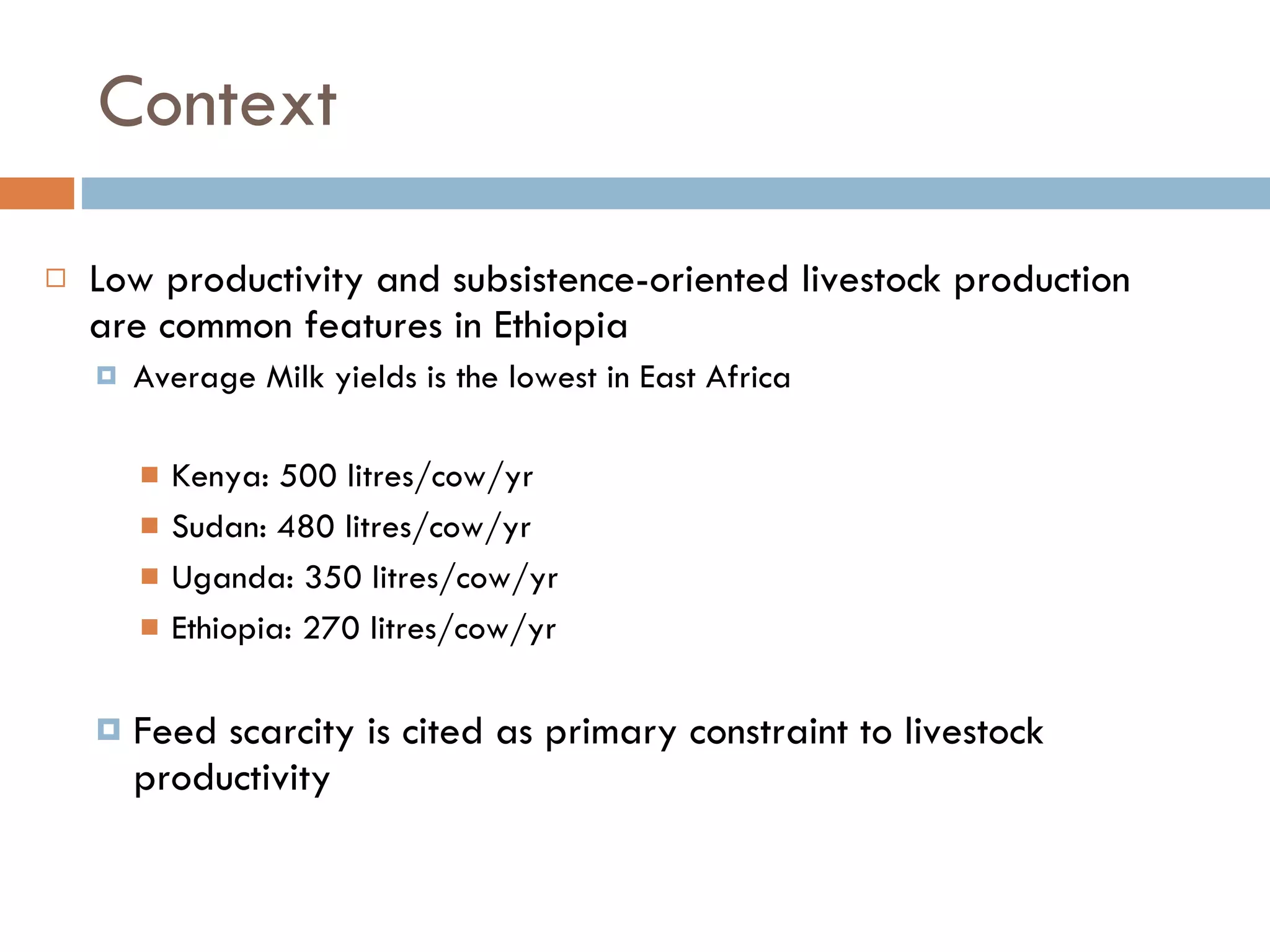
Context Low productivity and subsistence-oriented livestock production are common features in Ethiopia  Average Milk yields is the lowest in East Africa  Kenya: 500 litres/cow/yr  Sudan: 480 litres/cow/yr  Uganda: 350 litres/cow/yr  Ethiopia: 270 litres/cow/yr Feed scarcity is cited as primary constraint to livestock productivity
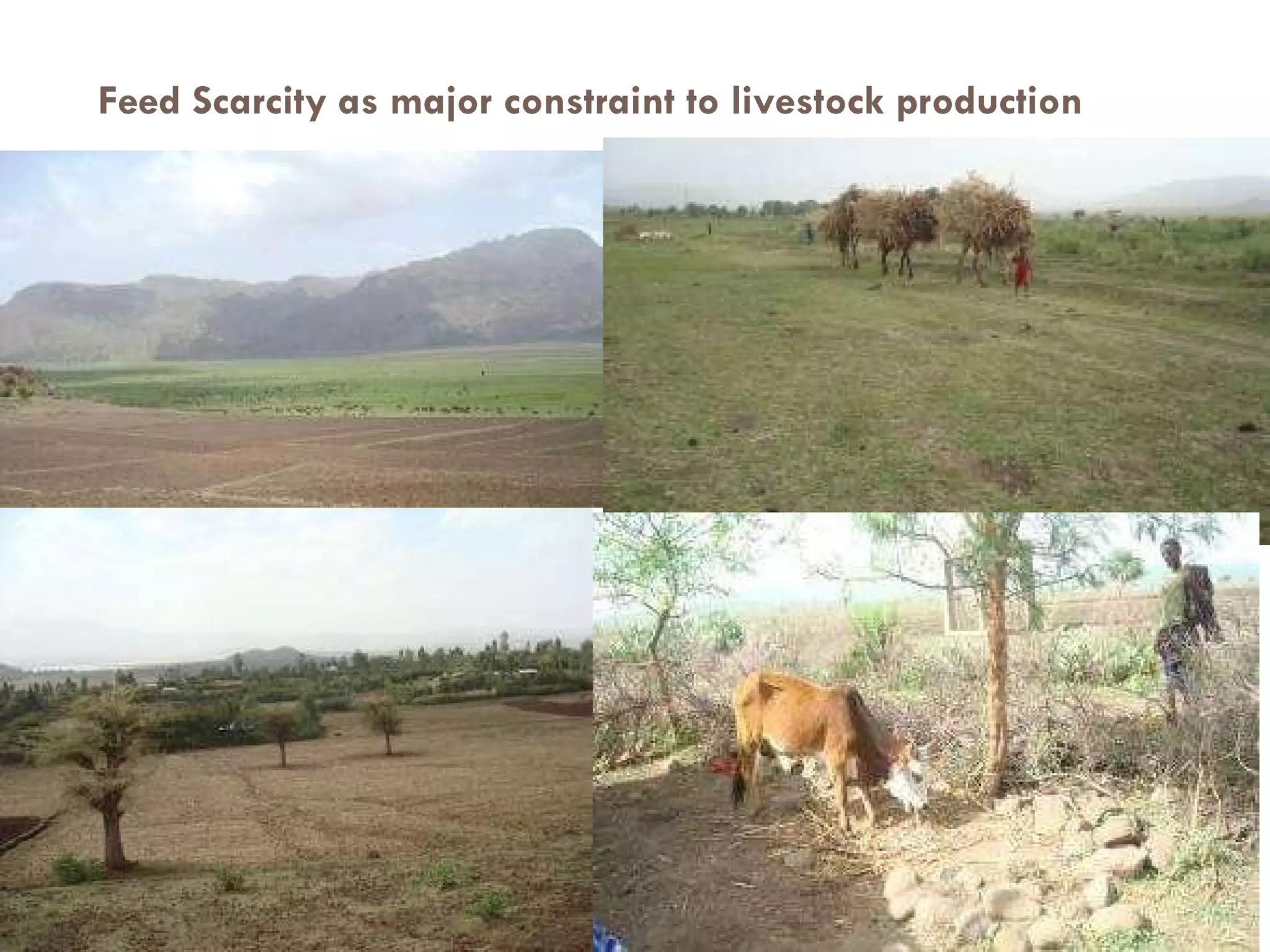
Feed Scarcity as major constraint to livestock production
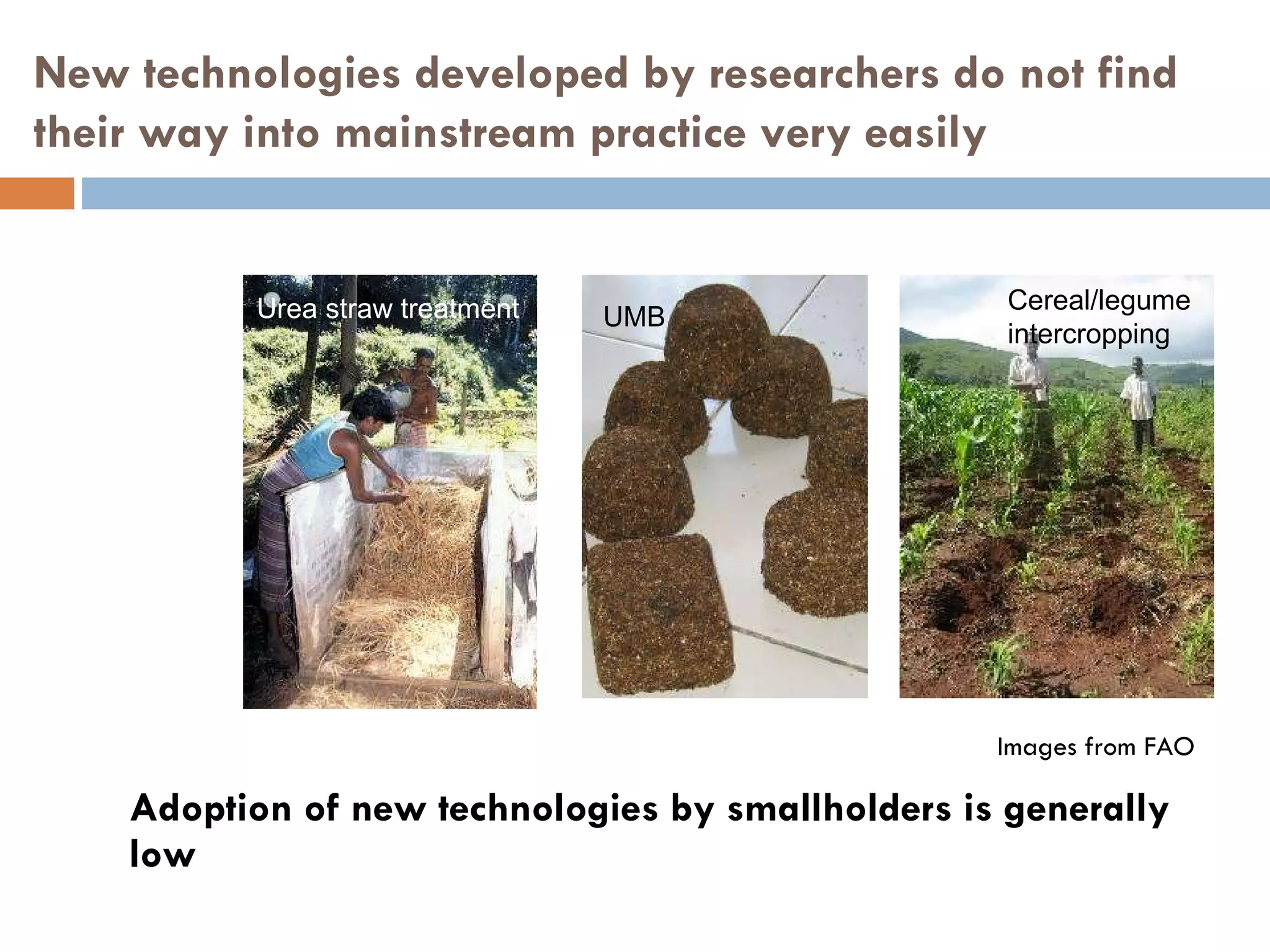
Adoption of new technologies by smallholders is generally low New technologies developed by researchers do not find their way into mainstream practice very easily Picture of UMB Picture of maize lablab Urea straw treatment UMB Images from FAO Cereal/legume  intercropping
Premises of FAP Hypothesis:  Fodder scarcity is not just about technologies but also about the collective capacity of a network of individuals and organizations  FAP uses an innovation system framework for engagement of multiple actors along livestock commodity value chain and for promotion of the process of innovation in fodder. FAP recognizes  innovation evolves  through  continuous interaction among stakeholders , utilization of feedback, analysis and incorporation of lessons learned between different processes. Focus:  generating innovation rather than mere research products or technologies
Approaches Action research combining technical fodder interventions with establishment of multi-stakeholder platforms  Technical fodder interventions were used as an entry point Actors directly or indirectly involved in livestock value chain were included in the platform
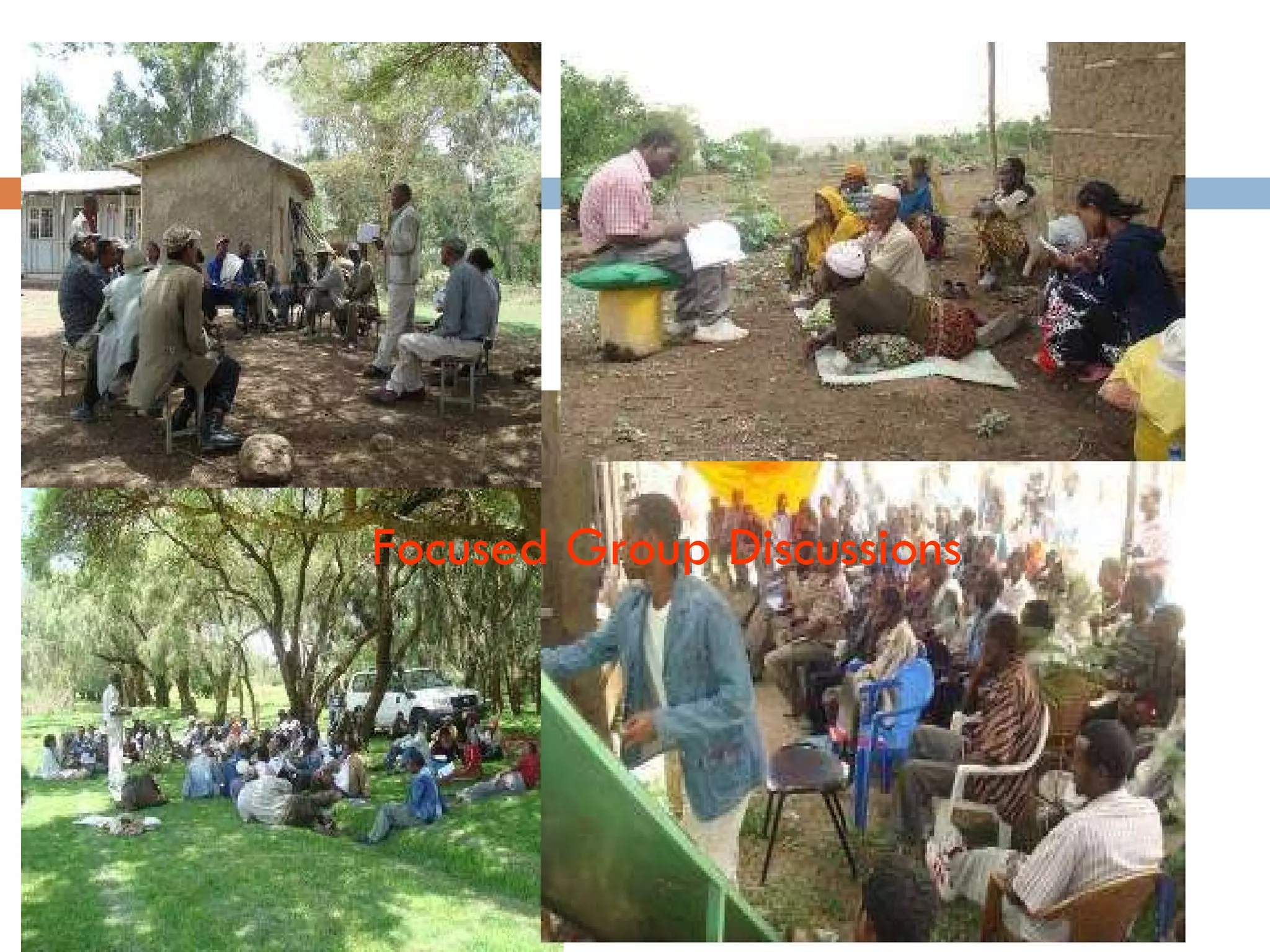
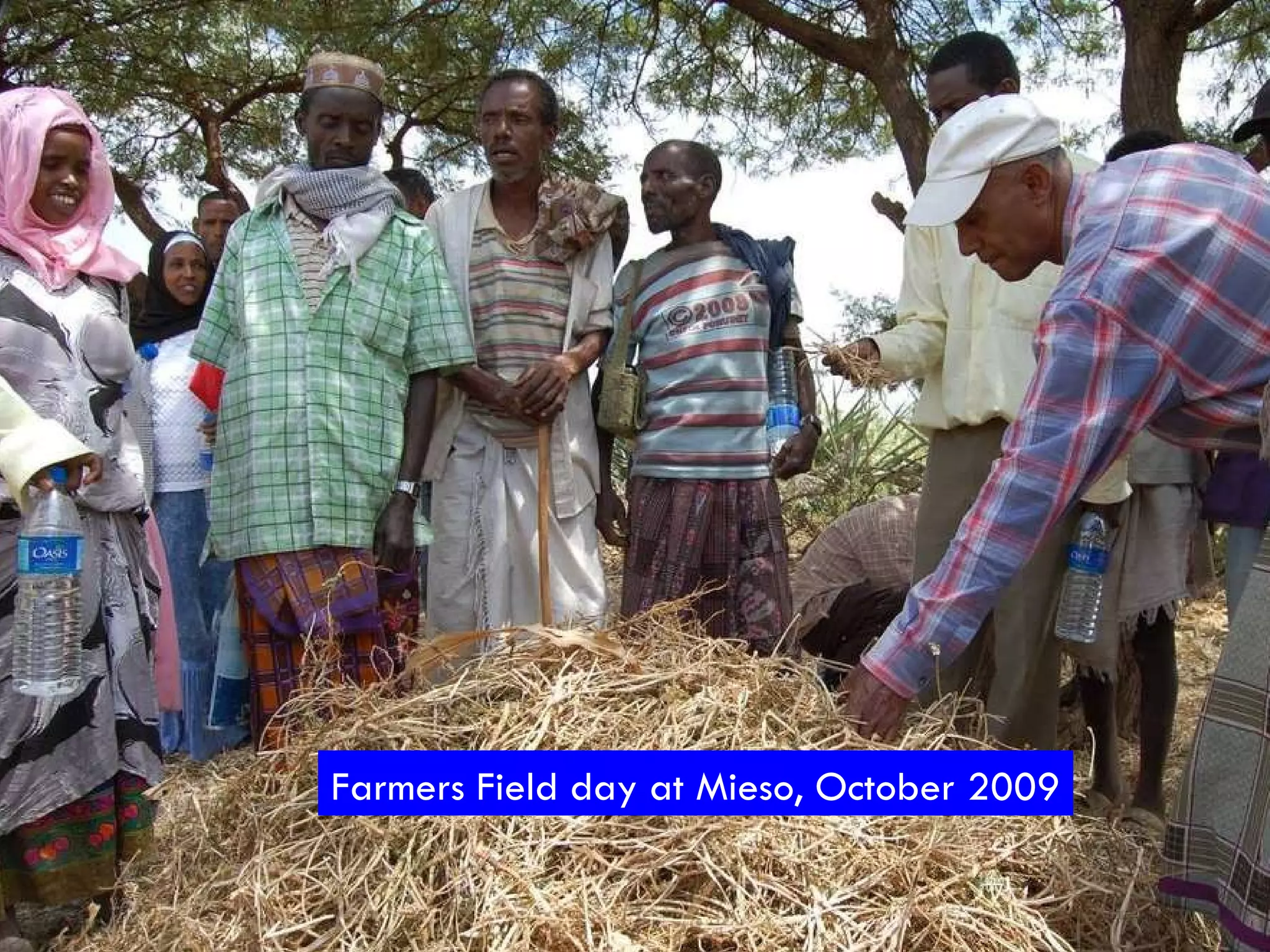
Setting up stakeholder platforms FAP followed a social learning process with stakeholders learning from the experience of working together. Setting up stakeholder platforms involved focused group discussion farmer field days formal and informal meetings and contacts over the course of the project implementation
Focused Group Discussions
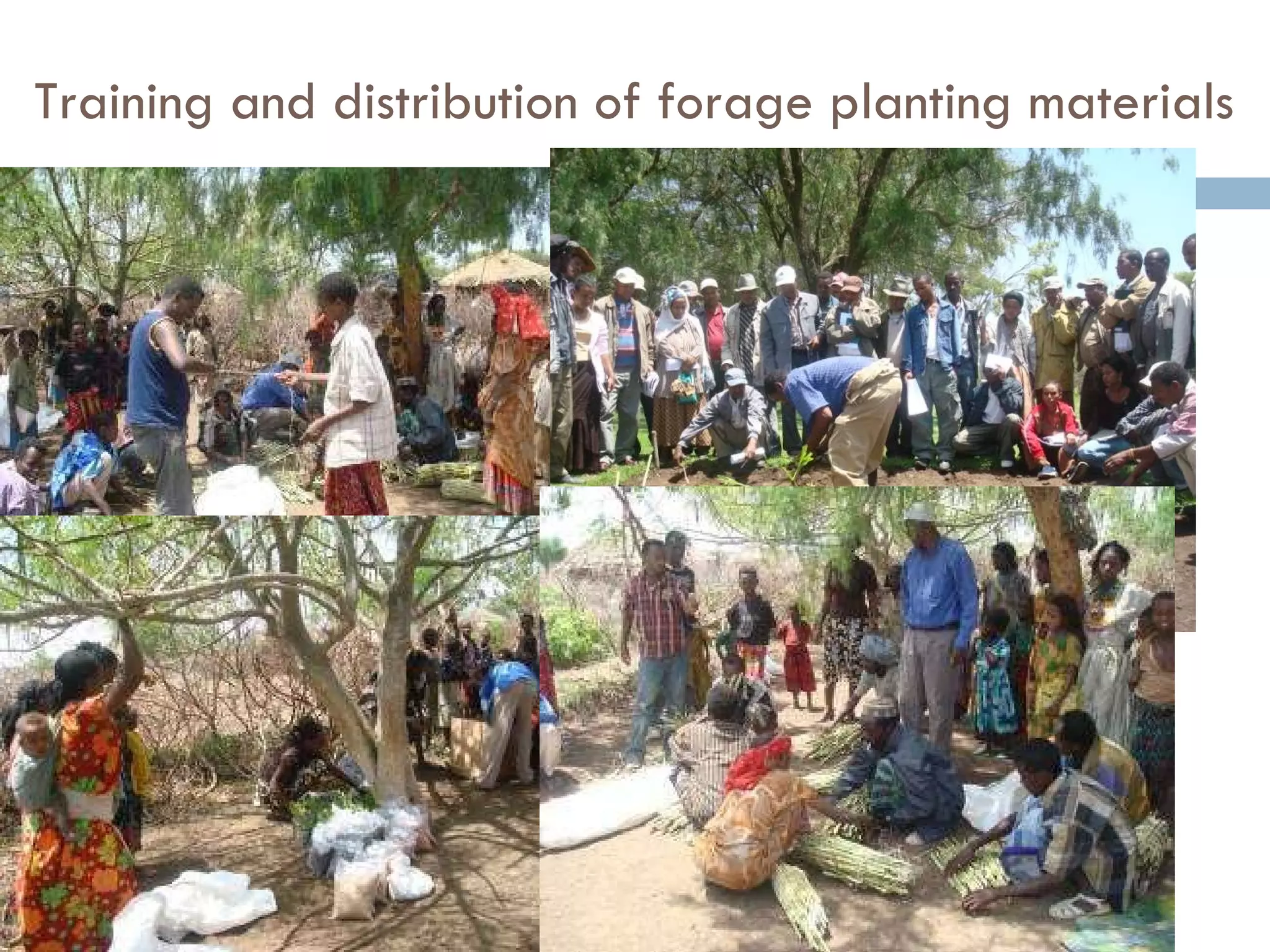
Training and distribution of forage planting materials
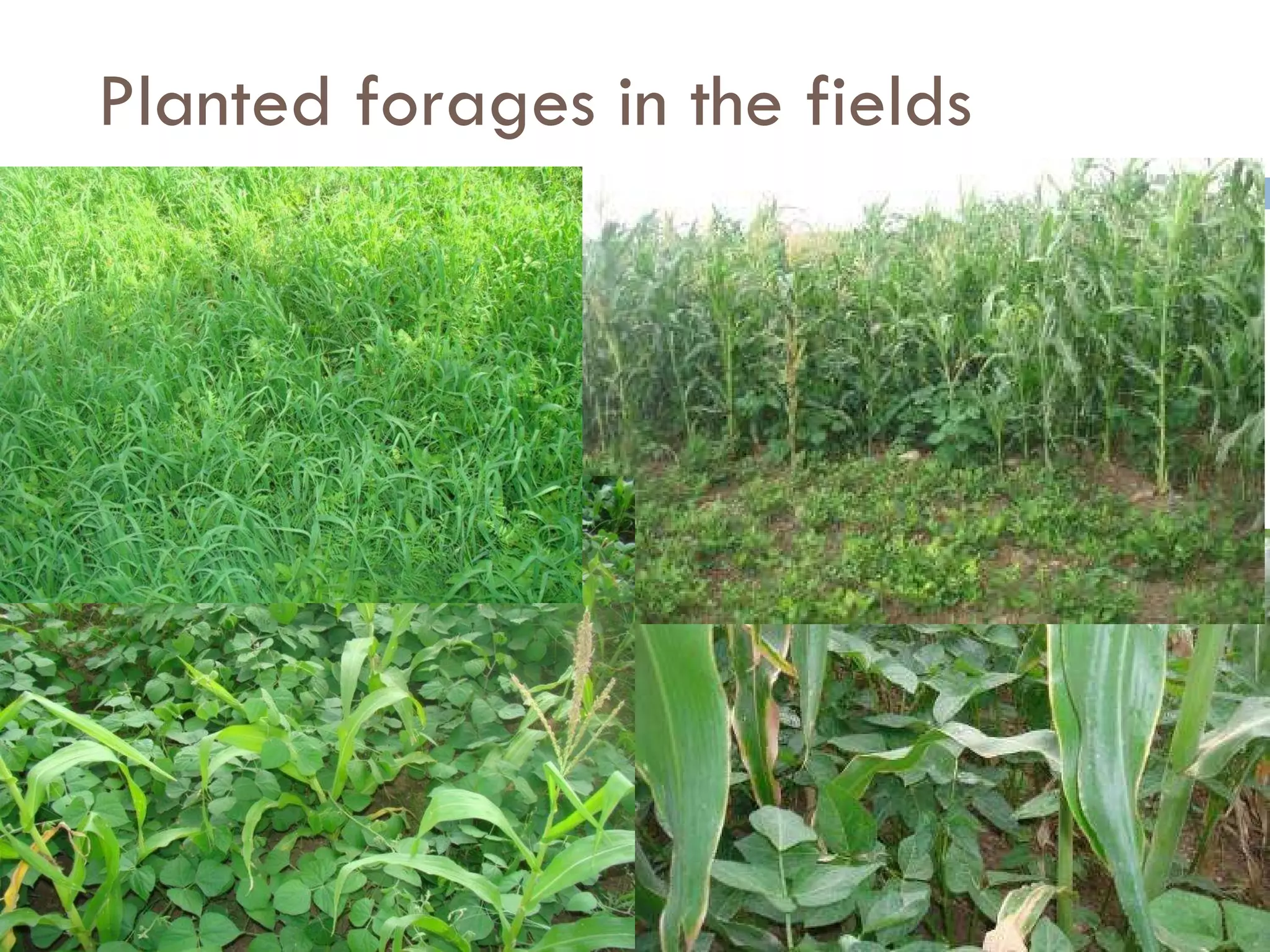
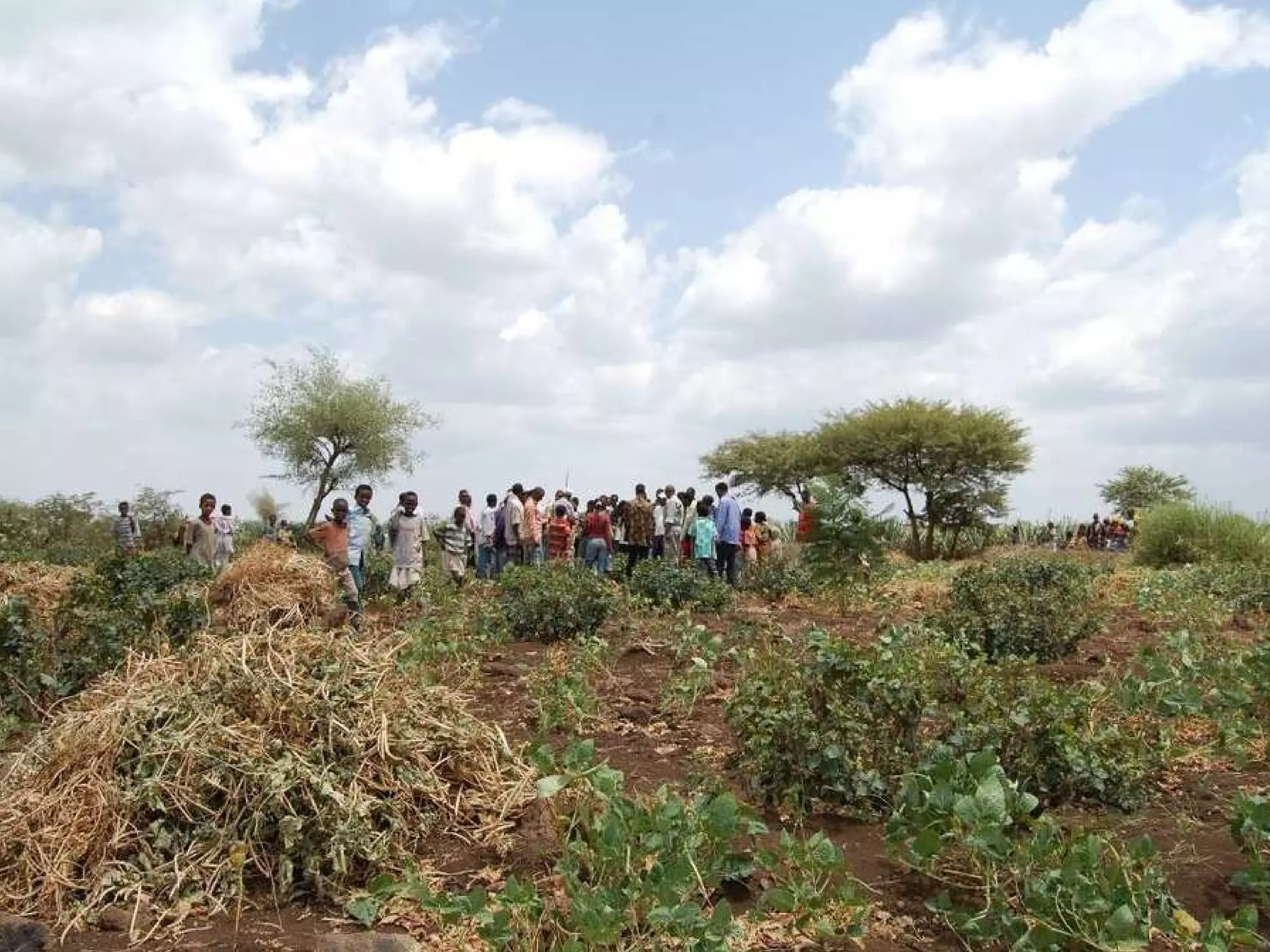
Planted forages in the fields
Farmers Field day at Mieso, October 2009
 
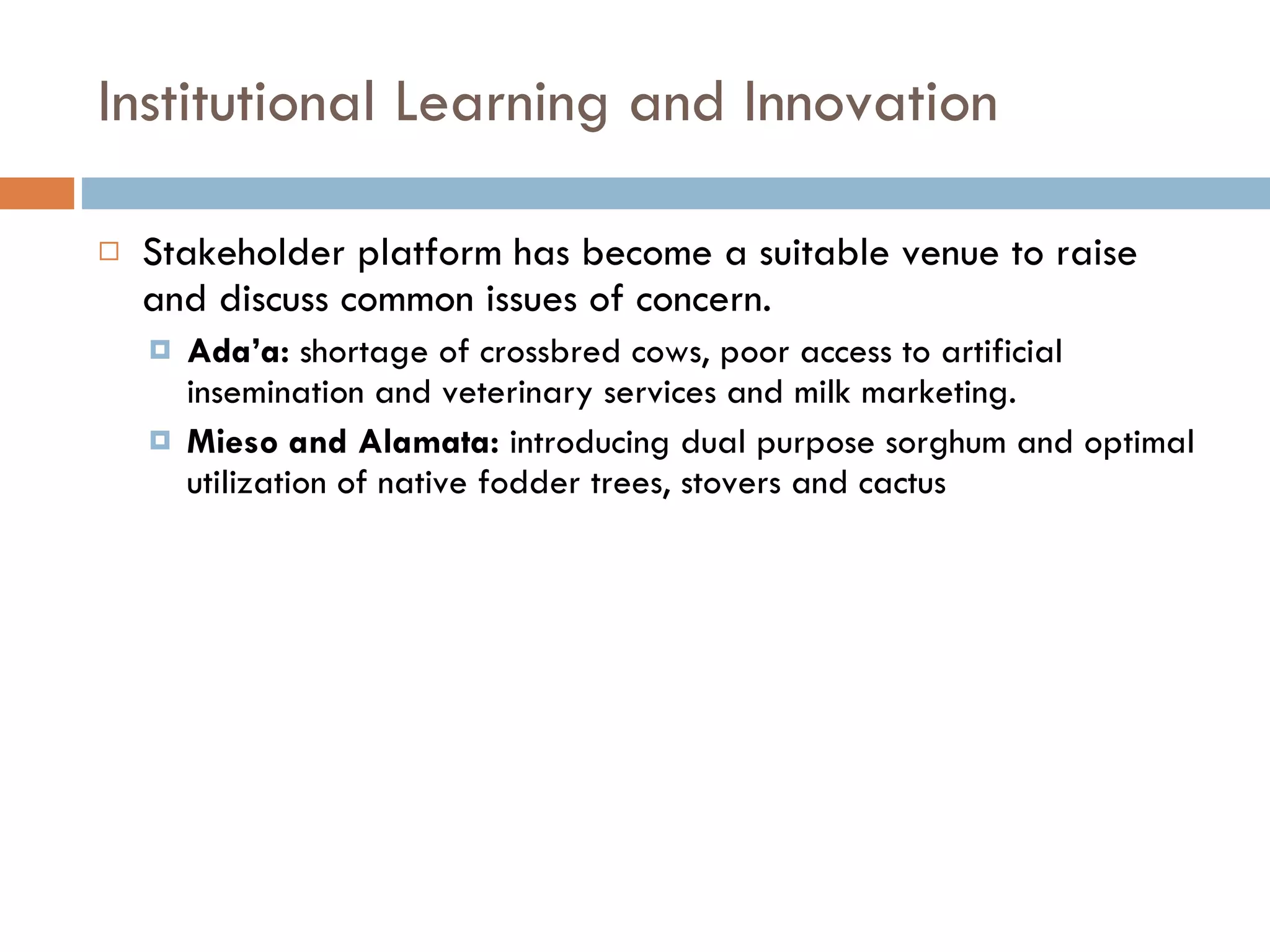
Institutional Learning and Innovation Stakeholder platform has become a suitable venue to raise and discuss common issues of concern.  Ada’a:  shortage of crossbred cows, poor access to artificial insemination and veterinary services and milk marketing. Mieso and Alamata:  introducing dual purpose sorghum and optimal utilization of native fodder trees, stovers and cactus
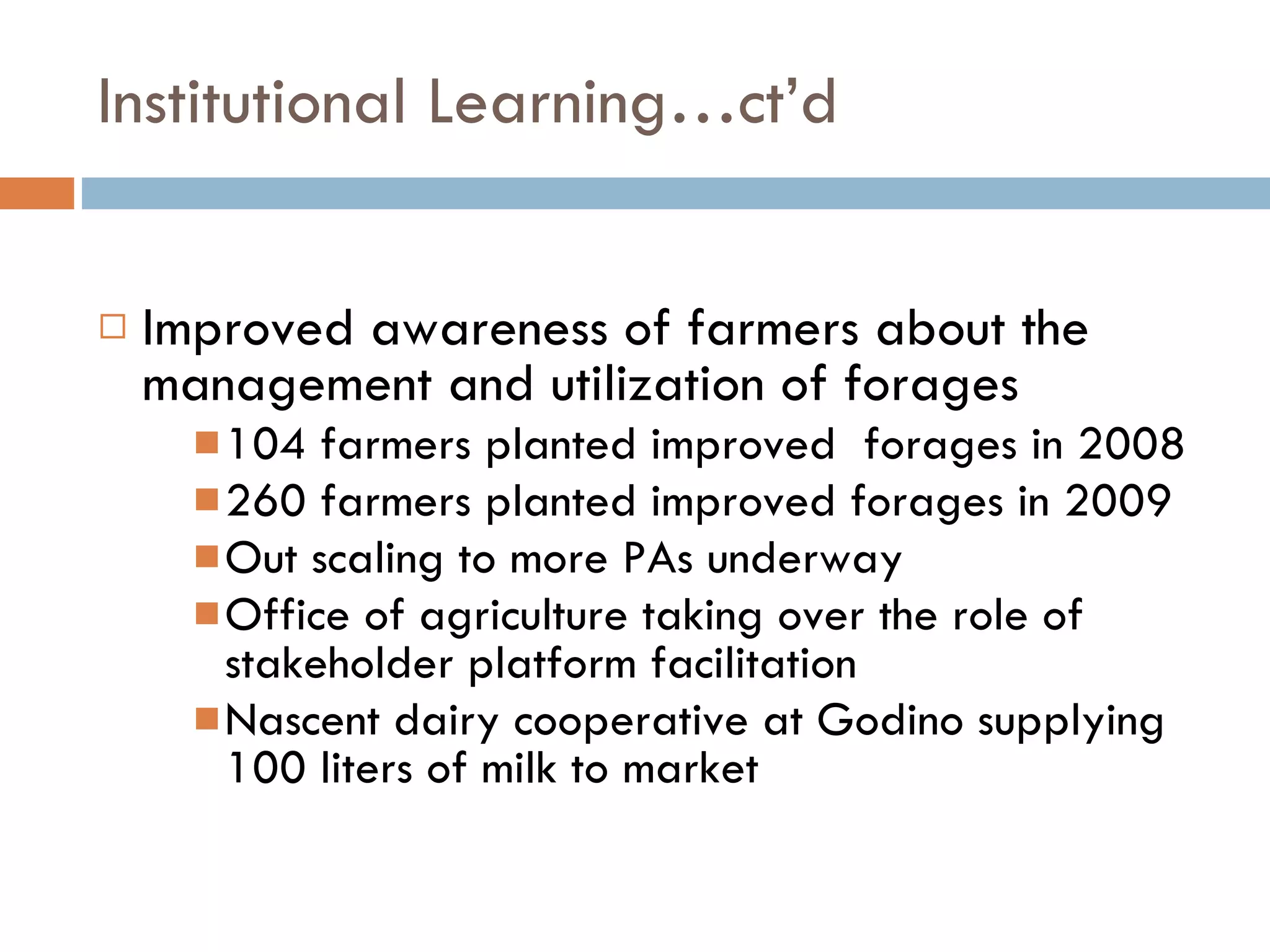
Institutional Learning…ct’d Improved awareness of farmers about the management and utilization of forages 104 farmers planted improved  forages in 2008 260 farmers planted improved forages in 2009 Out scaling to more PAs underway Office of agriculture taking over the role of stakeholder platform facilitation  Nascent dairy cooperative at Godino supplying 100 liters of milk to market
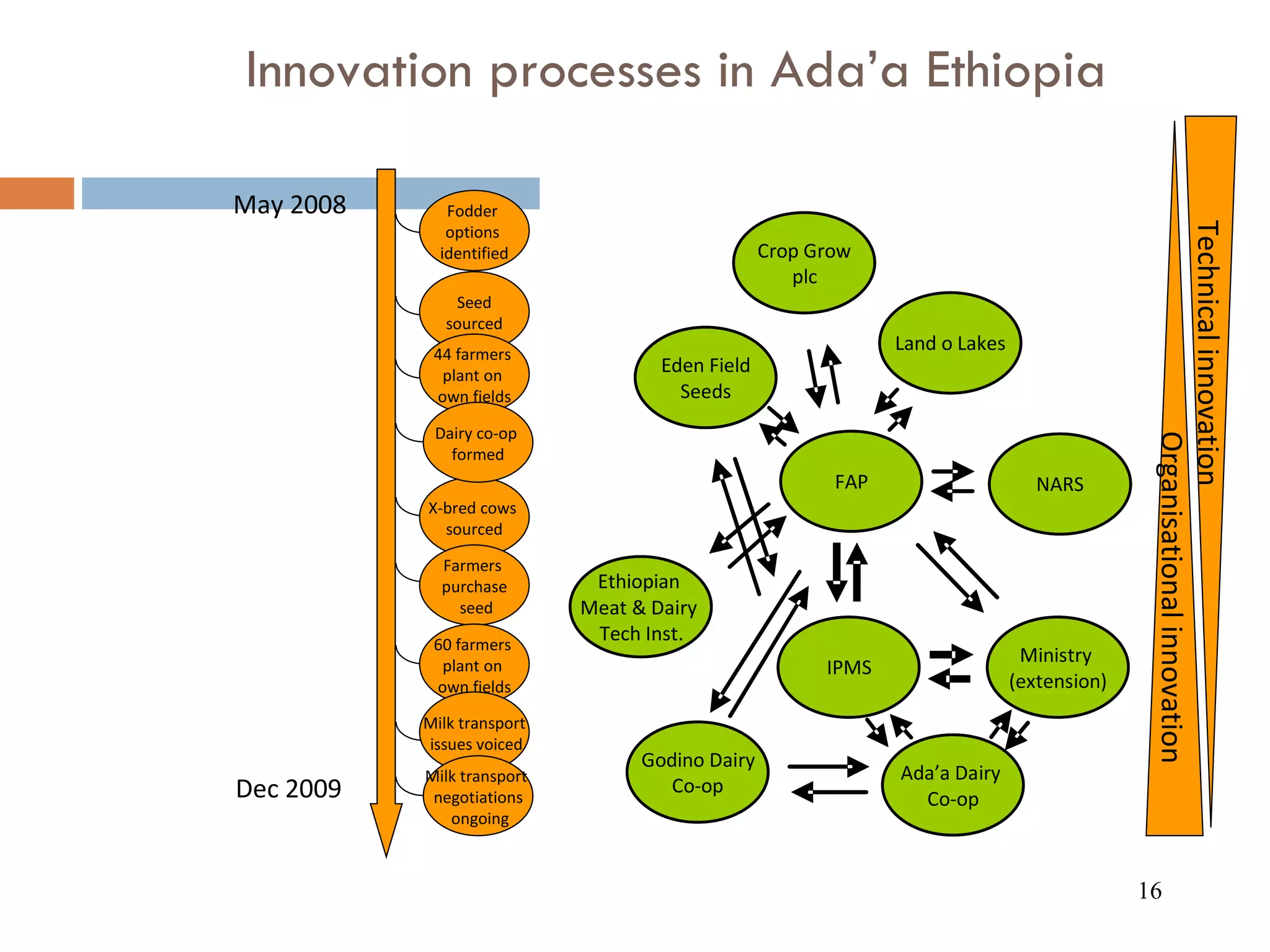
Innovation processes in Ada’a Ethiopia Seed sourced 44 farmers  plant on  own fields X-bred cows  sourced Farmers  purchase seed 60 farmers  plant on  own fields Milk transport issues voiced May 2008 Dec 2009 Fodder  options  identified Dairy co-op  formed Milk transport  negotiations ongoing Organisational innovation Technical innovation
Institutional Learning …ctn’d Farmers producing forage seeds jointly with private seed company (Eden Field seed Enterprise)  Commercial fodder production emerging as a business opportunity  The stakeholder platform is functioning in the three sites Devolution of stakeholder platform facilitation to local partners underway
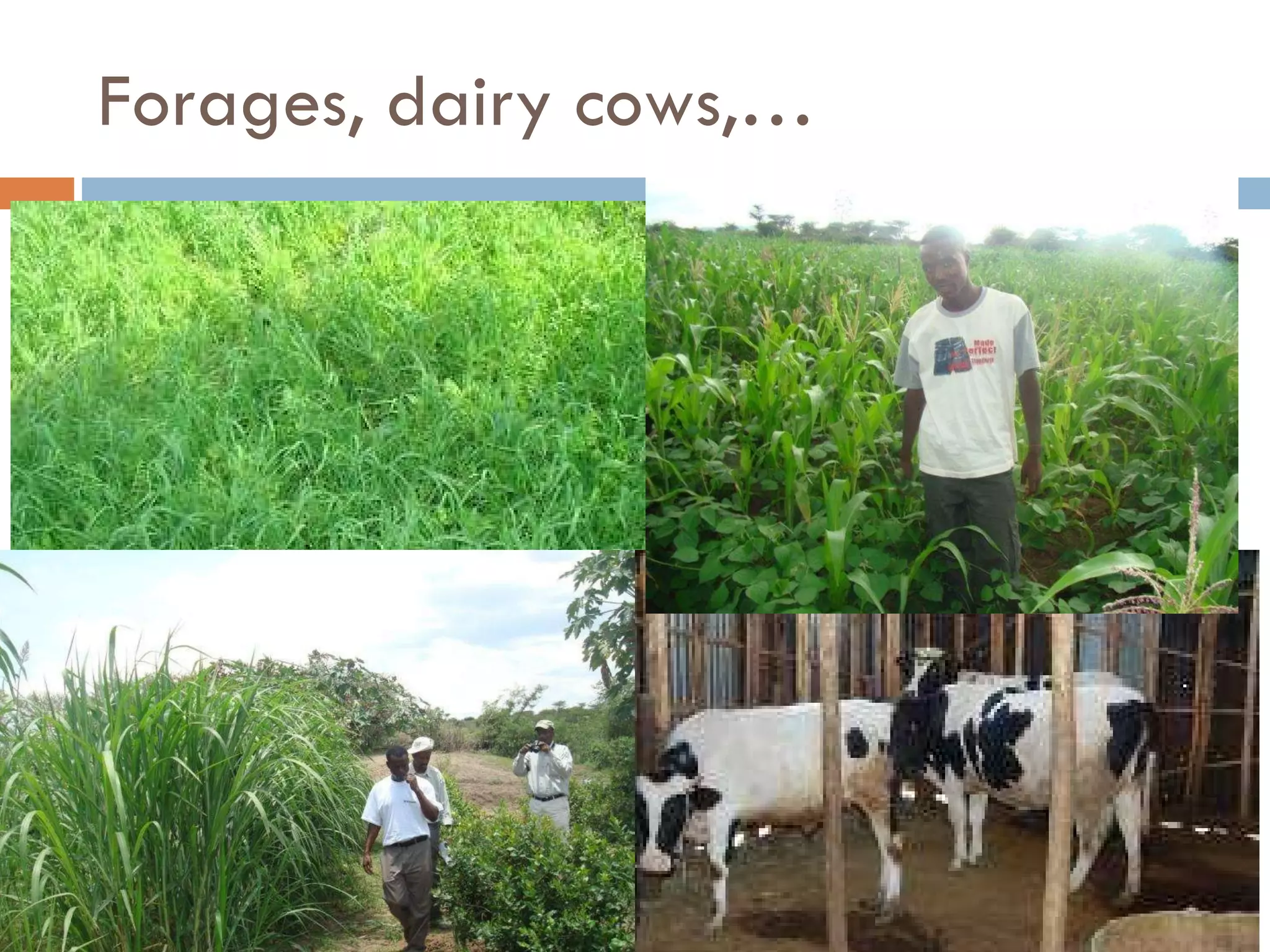
Forages, dairy cows,…
Lessons Participatory selection of technologies that address farmers’ priority problems and demonstrating tangible economic benefits is key Linking forage technologies with value chain issues in livestock enterprises  is critical for successful adoption of forage technologies .  Functioning markets  (such as for inputs, credit, and output) and  basic development infrastructure  (road, electricity, ICT, etc) are key to technology uptake and agricultural transformation Selecting stakeholders and understanding their needs and positions is important.
Lessons…ctn’d The process should be well planned with clarity about the aims, expected results, roles, responsibilities and time frame. Stakeholder platforms should not be simply a ‘talk shop ’ and they must support tangible outcomes.  Strong convening agency for stakeholder platforms is a must Presence of a local facilitator with adequate training to facilitate the process is essential.  Regular formal and informal communication that creates transparency is critical to the process
Lessons…ctn’d Willingness to adapt to changing circumstances and uncertainty must be recognized. Trust, mutual respect and patience, especially in the face of frustration and slow progress, are key ingredients.  Monitoring and (self-) evaluation throughout the process by stakeholders will result in improved learning and better outcomes.
Conclusion There is a promise in the use of stakeholder platforms to foster innovation in livestock production, particularly where market access is good and the range of actors is reasonably broad and diverse  Forage development is largely driven by urbanization and markets rather than by availability of forage technologies. The success of this emerging paradigm relies much on its acceptance, premised on a reasonable understanding and a willingness to change. Large scale institutional and policy change need an evidence base through piloting the approach in different contexts, documenting and sharing experiences, building on successes and stimulating policy dialogue.
Recommendation Need for enhancing learning throughout the broad innovation system at all levels of organization (individual, organization and system wide) Individual level  : Need for strengthening competencies in   systems thinking, planning, use of information and communications technology, knowledge management, teamwork, communication, networking, facilitation, self-motivation, social awareness, etc.
Recommendation…ctn’d Organizational level: Structures and processes need to provide the performance and incentives systems that encourage inter-disciplinary teamwork, partnerships with other stakeholders and effective knowledge management that promotes changes. System-wide level: Capacity needs to be developed to allow different stakeholders— individuals and organizations, from public and private sectors—to come together on a ‘level playing field.’ Need for public research and development organizations to re-skill, and the need for the reform of university curricula to include innovation systems principles

Multi-stakeholder platforms strengthening the selection and use of fodder options in Ethiopia: Some lessons

  • 1.
    Multi-stakeholder platforms strengtheningthe selection and use of fodder options in Ethiopia: Some lessons Presentation by Ergano, K., A. Duncan, A. Adie, A. Tedla, G. Woldewahid, Z. Ayele, G. Berhanu and N. Alemayehu (ILRI) to the Ethiopian Fodder Roundtable on Effective Delivery of Input Services to Livestock Development Addis Ababa, 22 June 2010
  • 2.
    Outline Context PremisesApproaches Institutional learning and innovation Critical issues for effective stakeholder platforms Conclusion Recommendations
  • 3.
    Context Low productivityand subsistence-oriented livestock production are common features in Ethiopia Average Milk yields is the lowest in East Africa Kenya: 500 litres/cow/yr Sudan: 480 litres/cow/yr Uganda: 350 litres/cow/yr Ethiopia: 270 litres/cow/yr Feed scarcity is cited as primary constraint to livestock productivity
  • 4.
    Feed Scarcity asmajor constraint to livestock production
  • 5.
    Adoption of newtechnologies by smallholders is generally low New technologies developed by researchers do not find their way into mainstream practice very easily Picture of UMB Picture of maize lablab Urea straw treatment UMB Images from FAO Cereal/legume intercropping
  • 6.
    Premises of FAPHypothesis: Fodder scarcity is not just about technologies but also about the collective capacity of a network of individuals and organizations FAP uses an innovation system framework for engagement of multiple actors along livestock commodity value chain and for promotion of the process of innovation in fodder. FAP recognizes innovation evolves through continuous interaction among stakeholders , utilization of feedback, analysis and incorporation of lessons learned between different processes. Focus: generating innovation rather than mere research products or technologies
  • 7.
    Approaches Action researchcombining technical fodder interventions with establishment of multi-stakeholder platforms Technical fodder interventions were used as an entry point Actors directly or indirectly involved in livestock value chain were included in the platform
  • 8.
    Setting up stakeholderplatforms FAP followed a social learning process with stakeholders learning from the experience of working together. Setting up stakeholder platforms involved focused group discussion farmer field days formal and informal meetings and contacts over the course of the project implementation
  • 9.
  • 10.
    Training and distributionof forage planting materials
  • 11.
  • 12.
    Farmers Field dayat Mieso, October 2009
  • 13.
  • 14.
    Institutional Learning andInnovation Stakeholder platform has become a suitable venue to raise and discuss common issues of concern. Ada’a: shortage of crossbred cows, poor access to artificial insemination and veterinary services and milk marketing. Mieso and Alamata: introducing dual purpose sorghum and optimal utilization of native fodder trees, stovers and cactus
  • 15.
    Institutional Learning…ct’d Improvedawareness of farmers about the management and utilization of forages 104 farmers planted improved forages in 2008 260 farmers planted improved forages in 2009 Out scaling to more PAs underway Office of agriculture taking over the role of stakeholder platform facilitation Nascent dairy cooperative at Godino supplying 100 liters of milk to market
  • 16.
    Innovation processes inAda’a Ethiopia Seed sourced 44 farmers plant on own fields X-bred cows sourced Farmers purchase seed 60 farmers plant on own fields Milk transport issues voiced May 2008 Dec 2009 Fodder options identified Dairy co-op formed Milk transport negotiations ongoing Organisational innovation Technical innovation
  • 17.
    Institutional Learning …ctn’dFarmers producing forage seeds jointly with private seed company (Eden Field seed Enterprise) Commercial fodder production emerging as a business opportunity The stakeholder platform is functioning in the three sites Devolution of stakeholder platform facilitation to local partners underway
  • 18.
  • 19.
    Lessons Participatory selectionof technologies that address farmers’ priority problems and demonstrating tangible economic benefits is key Linking forage technologies with value chain issues in livestock enterprises is critical for successful adoption of forage technologies . Functioning markets (such as for inputs, credit, and output) and basic development infrastructure (road, electricity, ICT, etc) are key to technology uptake and agricultural transformation Selecting stakeholders and understanding their needs and positions is important.
  • 20.
    Lessons…ctn’d The processshould be well planned with clarity about the aims, expected results, roles, responsibilities and time frame. Stakeholder platforms should not be simply a ‘talk shop ’ and they must support tangible outcomes. Strong convening agency for stakeholder platforms is a must Presence of a local facilitator with adequate training to facilitate the process is essential. Regular formal and informal communication that creates transparency is critical to the process
  • 21.
    Lessons…ctn’d Willingness toadapt to changing circumstances and uncertainty must be recognized. Trust, mutual respect and patience, especially in the face of frustration and slow progress, are key ingredients. Monitoring and (self-) evaluation throughout the process by stakeholders will result in improved learning and better outcomes.
  • 22.
    Conclusion There isa promise in the use of stakeholder platforms to foster innovation in livestock production, particularly where market access is good and the range of actors is reasonably broad and diverse Forage development is largely driven by urbanization and markets rather than by availability of forage technologies. The success of this emerging paradigm relies much on its acceptance, premised on a reasonable understanding and a willingness to change. Large scale institutional and policy change need an evidence base through piloting the approach in different contexts, documenting and sharing experiences, building on successes and stimulating policy dialogue.
  • 23.
    Recommendation Need forenhancing learning throughout the broad innovation system at all levels of organization (individual, organization and system wide) Individual level : Need for strengthening competencies in systems thinking, planning, use of information and communications technology, knowledge management, teamwork, communication, networking, facilitation, self-motivation, social awareness, etc.
  • 24.
    Recommendation…ctn’d Organizational level:Structures and processes need to provide the performance and incentives systems that encourage inter-disciplinary teamwork, partnerships with other stakeholders and effective knowledge management that promotes changes. System-wide level: Capacity needs to be developed to allow different stakeholders— individuals and organizations, from public and private sectors—to come together on a ‘level playing field.’ Need for public research and development organizations to re-skill, and the need for the reform of university curricula to include innovation systems principles