AEX 601
Advances in Agricultural Extension
Kungumaselvan T
I-Ph.D
Agricultural Extension & Communication
2019607011 1
1. Research-Extension-Farmer-Market Linkage
• Need
• Importance
• Example
2. Market Led Extension
• Need
• Importance
• Innovations in MLE
2
Synopsis
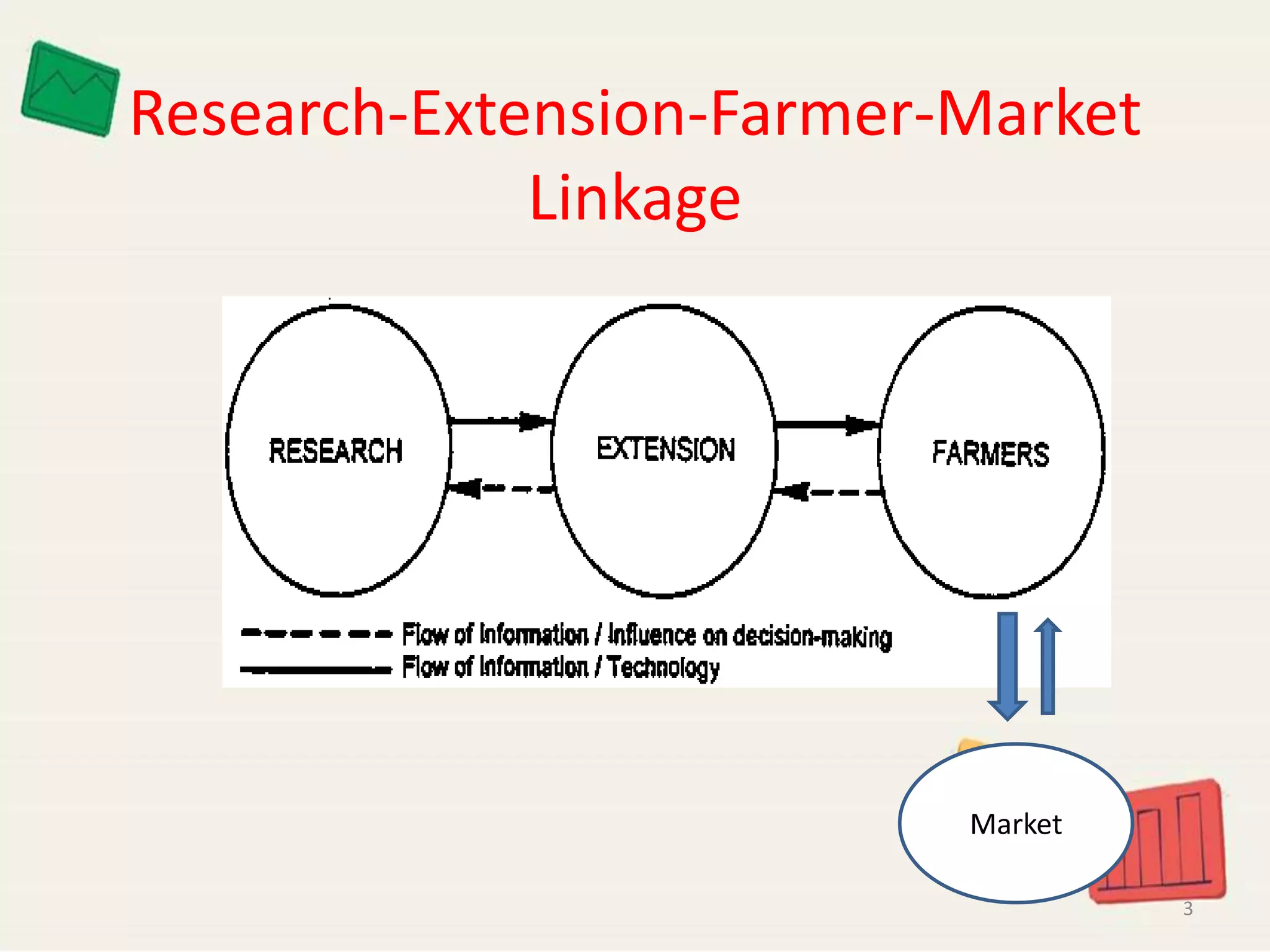
Research-Extension-Farmer-Market
Linkage
Market
3
Need
Research
problems – not
farmer centred
Ineffective
transfer of
knowledge
Low adoption of
technology
Low utilization of
research for agri
production system
Small & marginal
farmers were
affected
4
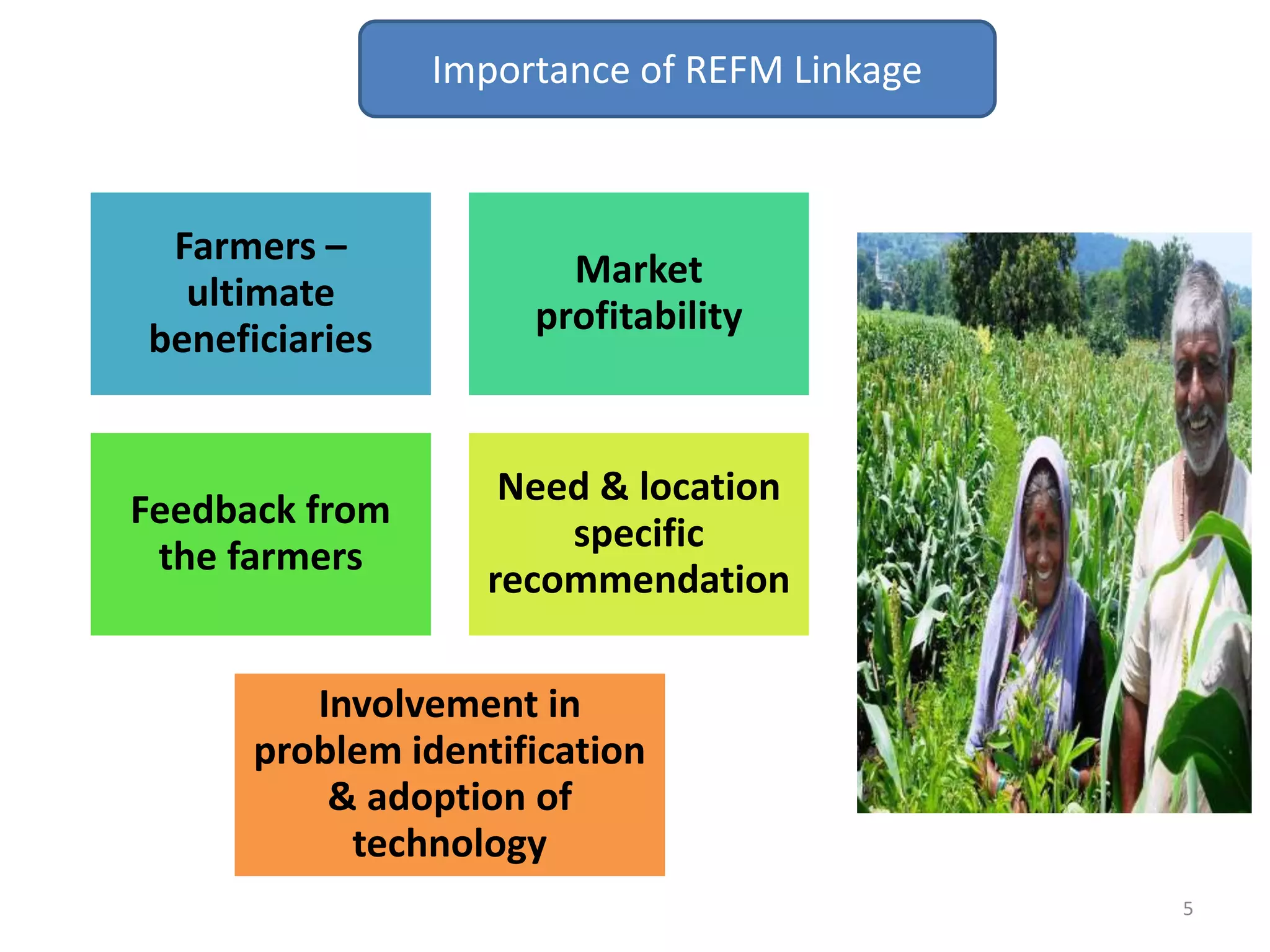
Importance of REFM Linkage
Farmers –
ultimate
beneficiaries
Market
profitability
Feedback from
the farmers
Need & location
specific
recommendation
Involvement in
problem identification
& adoption of
technology
5
Study on existing R-E-F-M Linkage in
Punjab - 2013
• Done by PAU – Dr. Manmeet and Dr. Ravinder
• 700 farmers from 3 districts
• Adopted and non-adopted villages of KVK were
selected.
• In all 3 districts – majority of the non- adopted
villages had low linkage.
6
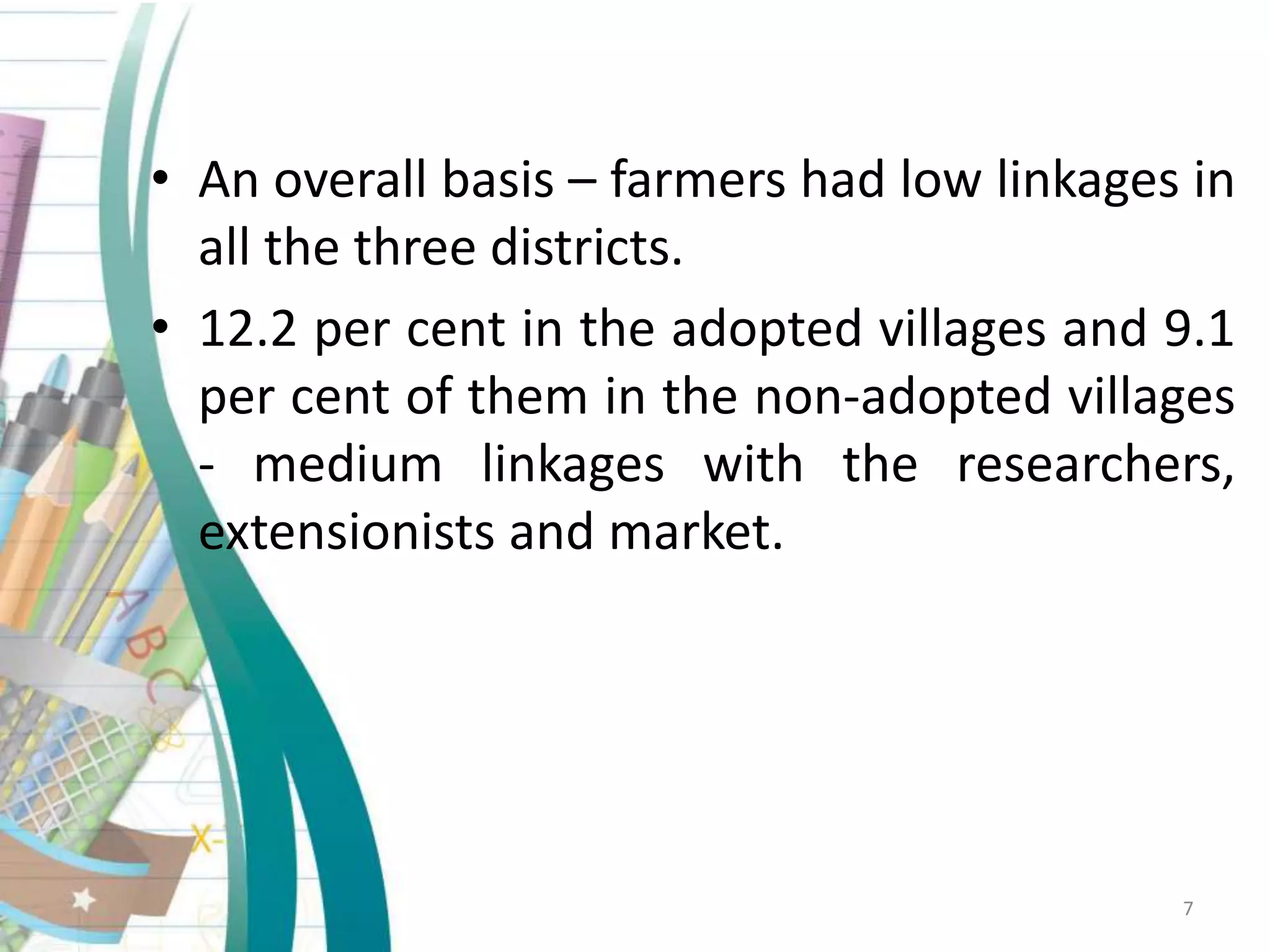
• An overall basis – farmers had low linkages in
all the three districts.
• 12.2 per cent in the adopted villages and 9.1
per cent of them in the non-adopted villages
- medium linkages with the researchers,
extensionists and market.
7
Reasons for low linkage
• Researchers from PAU –research & teaching – not in
extension activities.
• Extension specialists –– due to teaching and partially
involved in research mandates too.
• Had contact with farmers coming for trainings,
demonstrations and phone call.
• Vacancy of ADO posts
• Poor transport facilities
• Target oriented subsidies
8
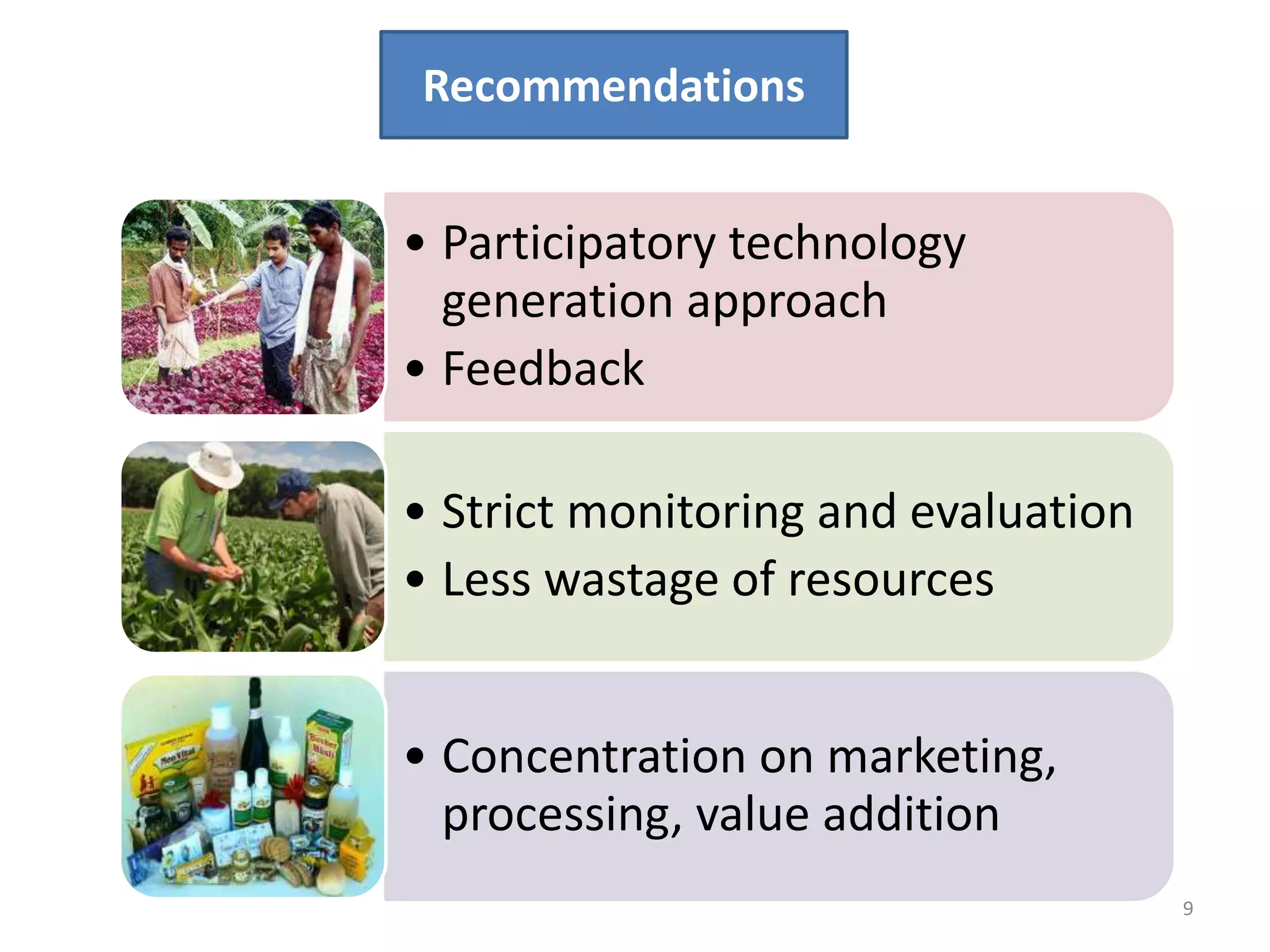
Recommendations
• Participatory technology
generation approach
• Feedback
• Strict monitoring and evaluation
• Less wastage of resources
• Concentration on marketing,
processing, value addition
9
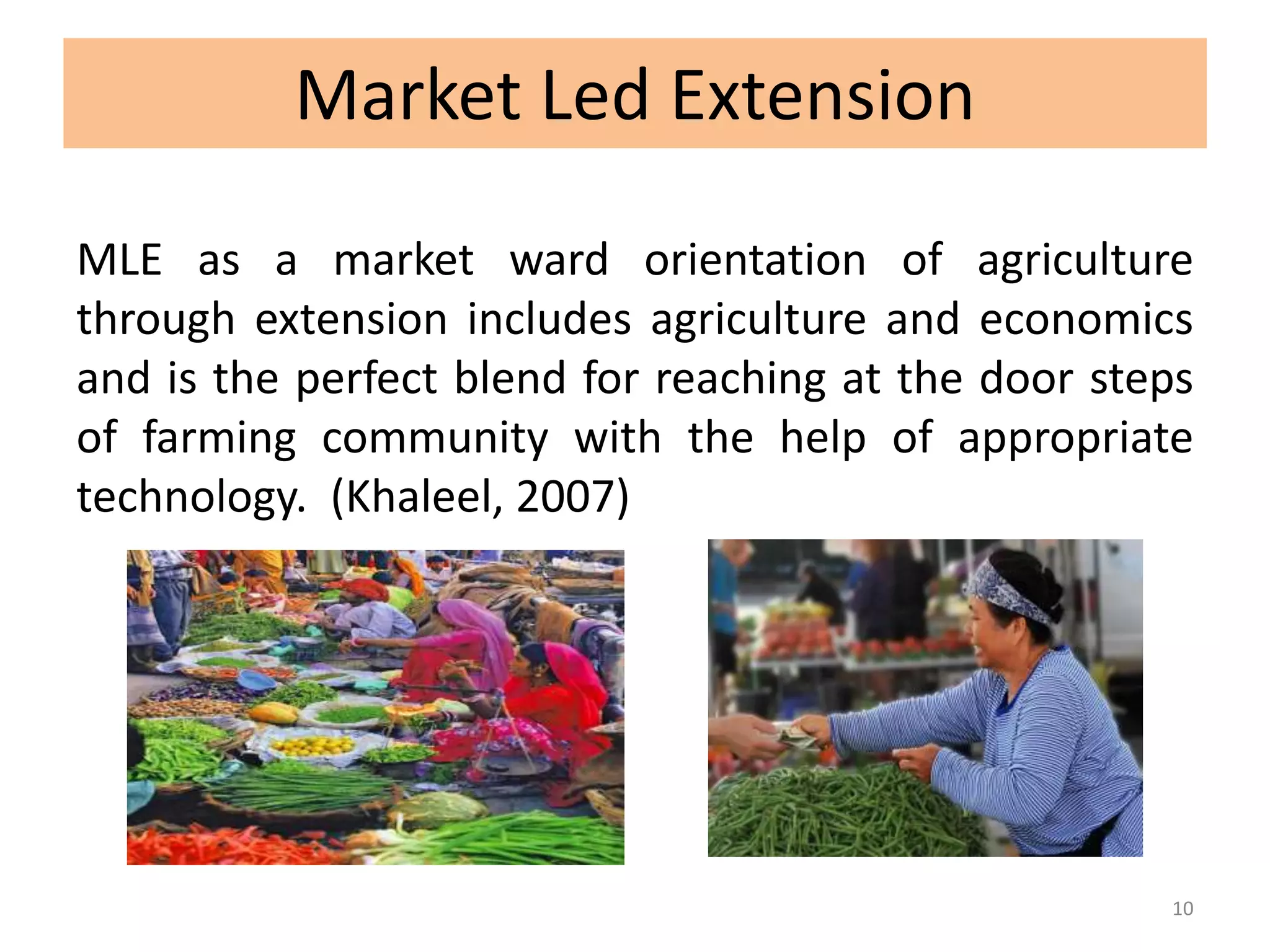
Market Led Extension
MLE as a market ward orientation of agriculture
through extension includes agriculture and economics
and is the perfect blend for reaching at the door steps
of farming community with the help of appropriate
technology. (Khaleel, 2007)
10
Need for MLE
11
Conversion of agriculture production
sector to profit- oriented business
Food produce loss – 32% during 2009
due to lack of post-harvest management
Minimization of production cost
GDP loss - Existence of more middleman
12
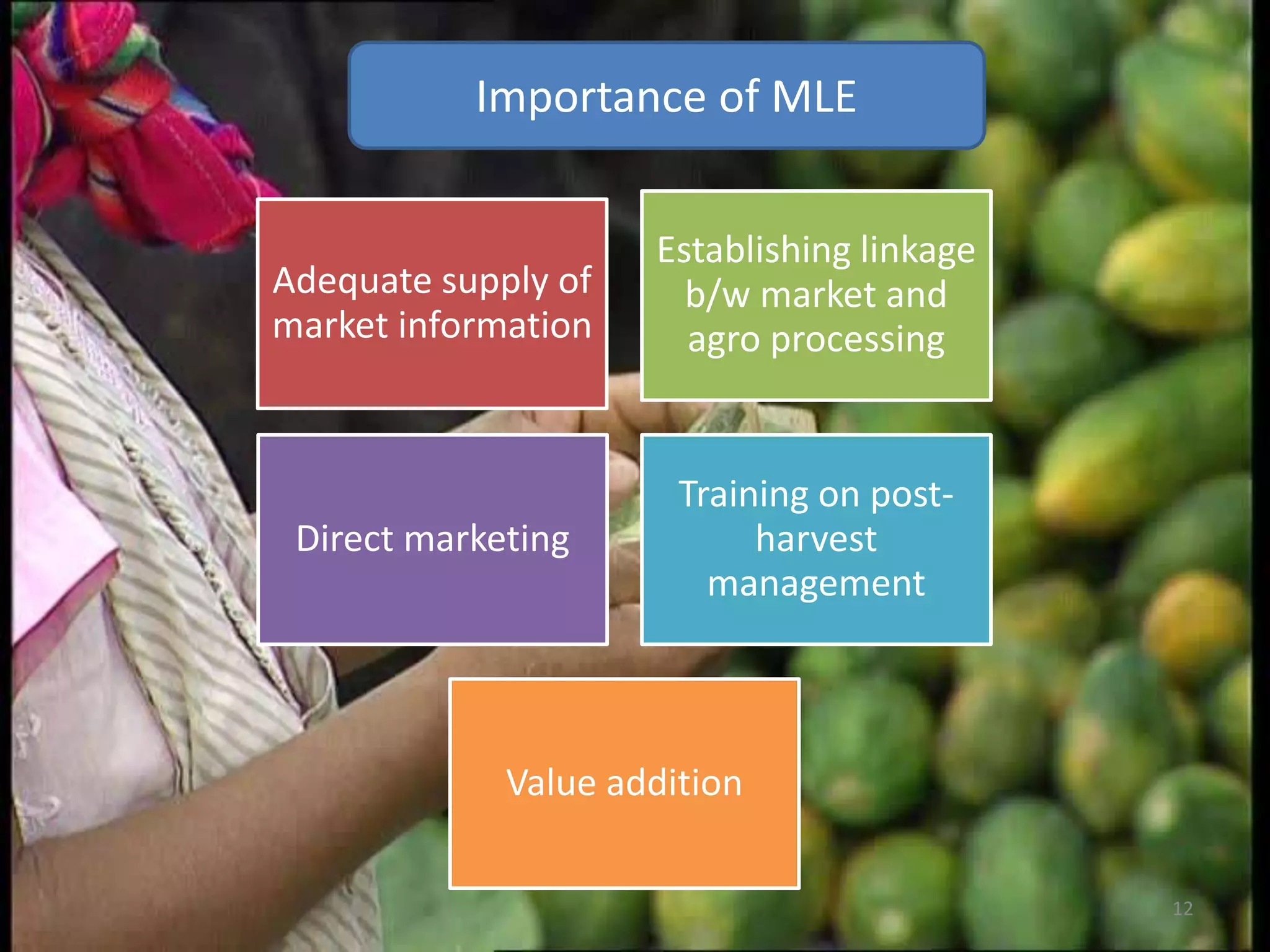
Importance of MLE
Adequate supply of
market information
Establishing linkage
b/w market and
agro processing
Direct marketing
Training on post-
harvest
management
Value addition
13
Innovations in market
information
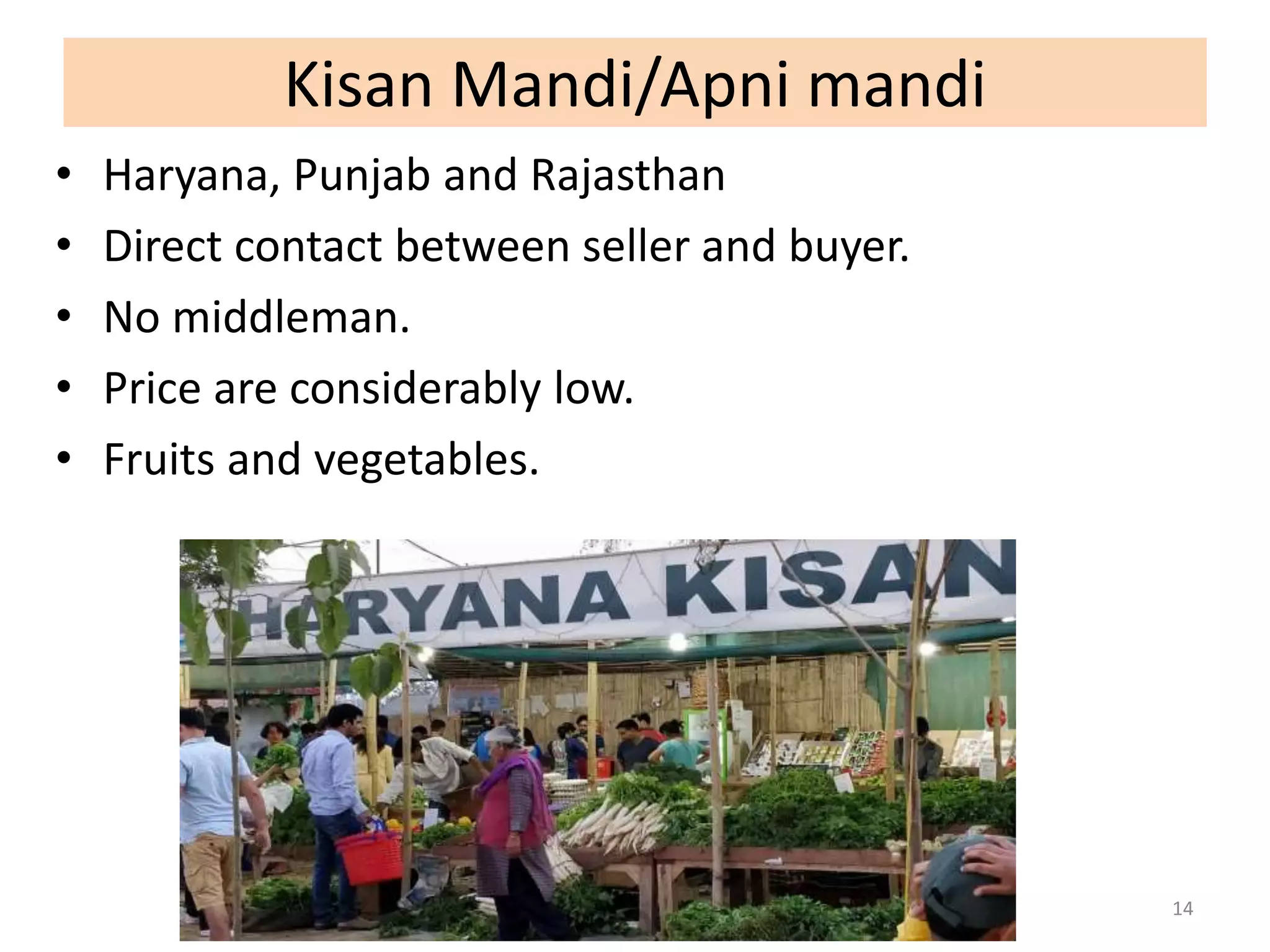
Kisan Mandi/Apni mandi
• Haryana, Punjab and Rajasthan
• Direct contact between seller and buyer.
• No middleman.
• Price are considerably low.
• Fruits and vegetables.
14
Hadaspar vegetables market
• Direct marketing of vegetables.
• Pune, Maharashtra
• Maintained by Pune municipal corporation.
• Market space is given in rent for farmers.
• No commission agents.
15
Rythu Bazars
• Andra pradesh
• Fruits, vegetables and other essential food items.
• Price of the produce is 20% less than other nearby
markets.
• 95 Rythu Bazars are operating in AP.
• Maintained by APMC.
16
Shetkari Bazars
• Maharashtra
• Fruits and vegetables
• No intermediaries
• Facebook page
17
Krishak Bazars
• Odisha
• Empower farmer-producer and products at
affordable price to the consumers.
• Govt. provides 1 to 2 acres of land at suitable
place free of cost for establishing the bazar.
• Beneficiaries were allowed to use marketing
facilities.
18
19
Production based problems
Seasonality
No uniform
supply
Perishability
Lack of
storage
Bulkiness
Transport
problem
20
Non availability of market information
Middleman existence is high
Inability to attain export quality
Market based problems
21
Extension based problems
Lack of
communication
skills
Lack of
credibility
Less
information
sources
Role of extension agent in MLE
22
SWOT analysis
Farmer Interest Groups
Improving communication
skills
Establishing linkages for
marketing and processing
Consultation on product
planning
• Farmers has to participate in problem identifying
process to get appropriate technology.
• Extension agents also updated in new innovations
and information.
• Researches has to create innovations based on
farmer needs.
• Good R-E-F linkage creates market profitability.
23
Conclusion
Reference
• Kaur, M and Kaur, R. (2013). Linkage mechanism of R-E-F with market in
Punjab. Indian Res. J. Ext.Edu. 13(3): 19-24.
• Krishna, D.K., Kumbhare, N.V., Prabhakar, I., Swetha, B.S and Ashoka, N.
(2019). Innovations in Market-Led Extension. Int.J.Curr.Microbiol.App.Sci.
8(2):3256-3263.
• Market–Led Extension (2008). Post Graduate Diploma in Agricultural
Extension Management (PGDAEM) published by National Institute of
Agricultural Extension Management (MANAGE), Rajendranagar,
Hyderabad – 500 030, Andhra Pradesh, India.
• Nafees,A and Slathia, P.S. (2011). Market Led Extension for Promoting
Rural Entrepreneurship in India. Journal of Global Communication. 4(2):
143-147.
24

Research-Extension-Farmer-Market Linkage

  • 1.
    AEX 601 Advances inAgricultural Extension Kungumaselvan T I-Ph.D Agricultural Extension & Communication 2019607011 1
  • 2.
    1. Research-Extension-Farmer-Market Linkage •Need • Importance • Example 2. Market Led Extension • Need • Importance • Innovations in MLE 2 Synopsis
  • 3.
  • 4.
    Need Research problems – not farmercentred Ineffective transfer of knowledge Low adoption of technology Low utilization of research for agri production system Small & marginal farmers were affected 4
  • 5.
    Importance of REFMLinkage Farmers – ultimate beneficiaries Market profitability Feedback from the farmers Need & location specific recommendation Involvement in problem identification & adoption of technology 5
  • 6.
    Study on existingR-E-F-M Linkage in Punjab - 2013 • Done by PAU – Dr. Manmeet and Dr. Ravinder • 700 farmers from 3 districts • Adopted and non-adopted villages of KVK were selected. • In all 3 districts – majority of the non- adopted villages had low linkage. 6
  • 7.
    • An overallbasis – farmers had low linkages in all the three districts. • 12.2 per cent in the adopted villages and 9.1 per cent of them in the non-adopted villages - medium linkages with the researchers, extensionists and market. 7
  • 8.
    Reasons for lowlinkage • Researchers from PAU –research & teaching – not in extension activities. • Extension specialists –– due to teaching and partially involved in research mandates too. • Had contact with farmers coming for trainings, demonstrations and phone call. • Vacancy of ADO posts • Poor transport facilities • Target oriented subsidies 8
  • 9.
    Recommendations • Participatory technology generationapproach • Feedback • Strict monitoring and evaluation • Less wastage of resources • Concentration on marketing, processing, value addition 9
  • 10.
    Market Led Extension MLEas a market ward orientation of agriculture through extension includes agriculture and economics and is the perfect blend for reaching at the door steps of farming community with the help of appropriate technology. (Khaleel, 2007) 10
  • 11.
    Need for MLE 11 Conversionof agriculture production sector to profit- oriented business Food produce loss – 32% during 2009 due to lack of post-harvest management Minimization of production cost GDP loss - Existence of more middleman
  • 12.
    12 Importance of MLE Adequatesupply of market information Establishing linkage b/w market and agro processing Direct marketing Training on post- harvest management Value addition
  • 13.
  • 14.
    Kisan Mandi/Apni mandi •Haryana, Punjab and Rajasthan • Direct contact between seller and buyer. • No middleman. • Price are considerably low. • Fruits and vegetables. 14
  • 15.
    Hadaspar vegetables market •Direct marketing of vegetables. • Pune, Maharashtra • Maintained by Pune municipal corporation. • Market space is given in rent for farmers. • No commission agents. 15
  • 16.
    Rythu Bazars • Andrapradesh • Fruits, vegetables and other essential food items. • Price of the produce is 20% less than other nearby markets. • 95 Rythu Bazars are operating in AP. • Maintained by APMC. 16
  • 17.
    Shetkari Bazars • Maharashtra •Fruits and vegetables • No intermediaries • Facebook page 17
  • 18.
    Krishak Bazars • Odisha •Empower farmer-producer and products at affordable price to the consumers. • Govt. provides 1 to 2 acres of land at suitable place free of cost for establishing the bazar. • Beneficiaries were allowed to use marketing facilities. 18
  • 19.
    19 Production based problems Seasonality Nouniform supply Perishability Lack of storage Bulkiness Transport problem
  • 20.
    20 Non availability ofmarket information Middleman existence is high Inability to attain export quality Market based problems
  • 21.
    21 Extension based problems Lackof communication skills Lack of credibility Less information sources
  • 22.
    Role of extensionagent in MLE 22 SWOT analysis Farmer Interest Groups Improving communication skills Establishing linkages for marketing and processing Consultation on product planning
  • 23.
    • Farmers hasto participate in problem identifying process to get appropriate technology. • Extension agents also updated in new innovations and information. • Researches has to create innovations based on farmer needs. • Good R-E-F linkage creates market profitability. 23 Conclusion
  • 24.
    Reference • Kaur, Mand Kaur, R. (2013). Linkage mechanism of R-E-F with market in Punjab. Indian Res. J. Ext.Edu. 13(3): 19-24. • Krishna, D.K., Kumbhare, N.V., Prabhakar, I., Swetha, B.S and Ashoka, N. (2019). Innovations in Market-Led Extension. Int.J.Curr.Microbiol.App.Sci. 8(2):3256-3263. • Market–Led Extension (2008). Post Graduate Diploma in Agricultural Extension Management (PGDAEM) published by National Institute of Agricultural Extension Management (MANAGE), Rajendranagar, Hyderabad – 500 030, Andhra Pradesh, India. • Nafees,A and Slathia, P.S. (2011). Market Led Extension for Promoting Rural Entrepreneurship in India. Journal of Global Communication. 4(2): 143-147. 24