Multiple Sclerosis
(MS)
By
Isma’il Abdullahi
Contents
• Introduction
• Clinical Features
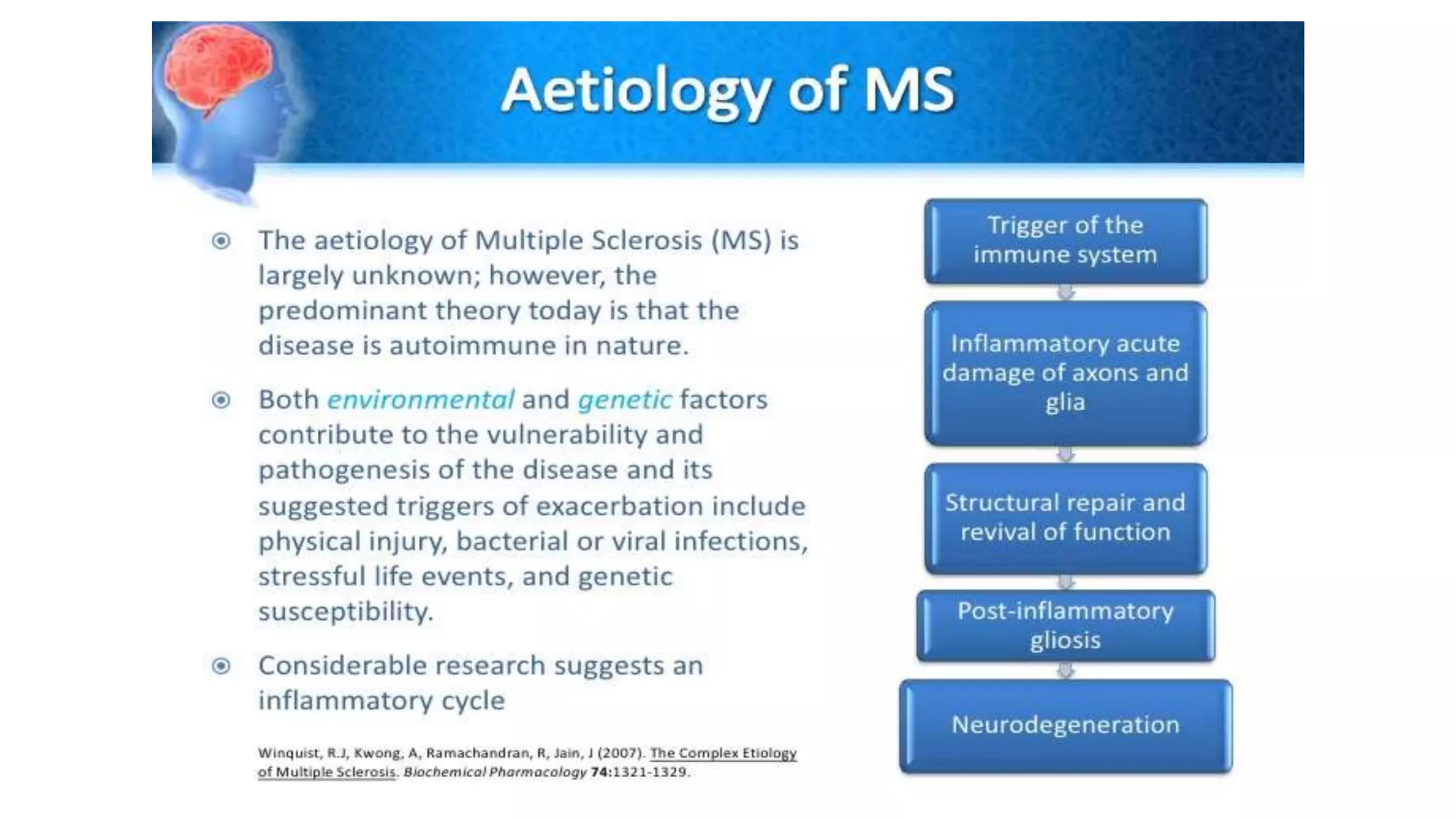
• Etiology
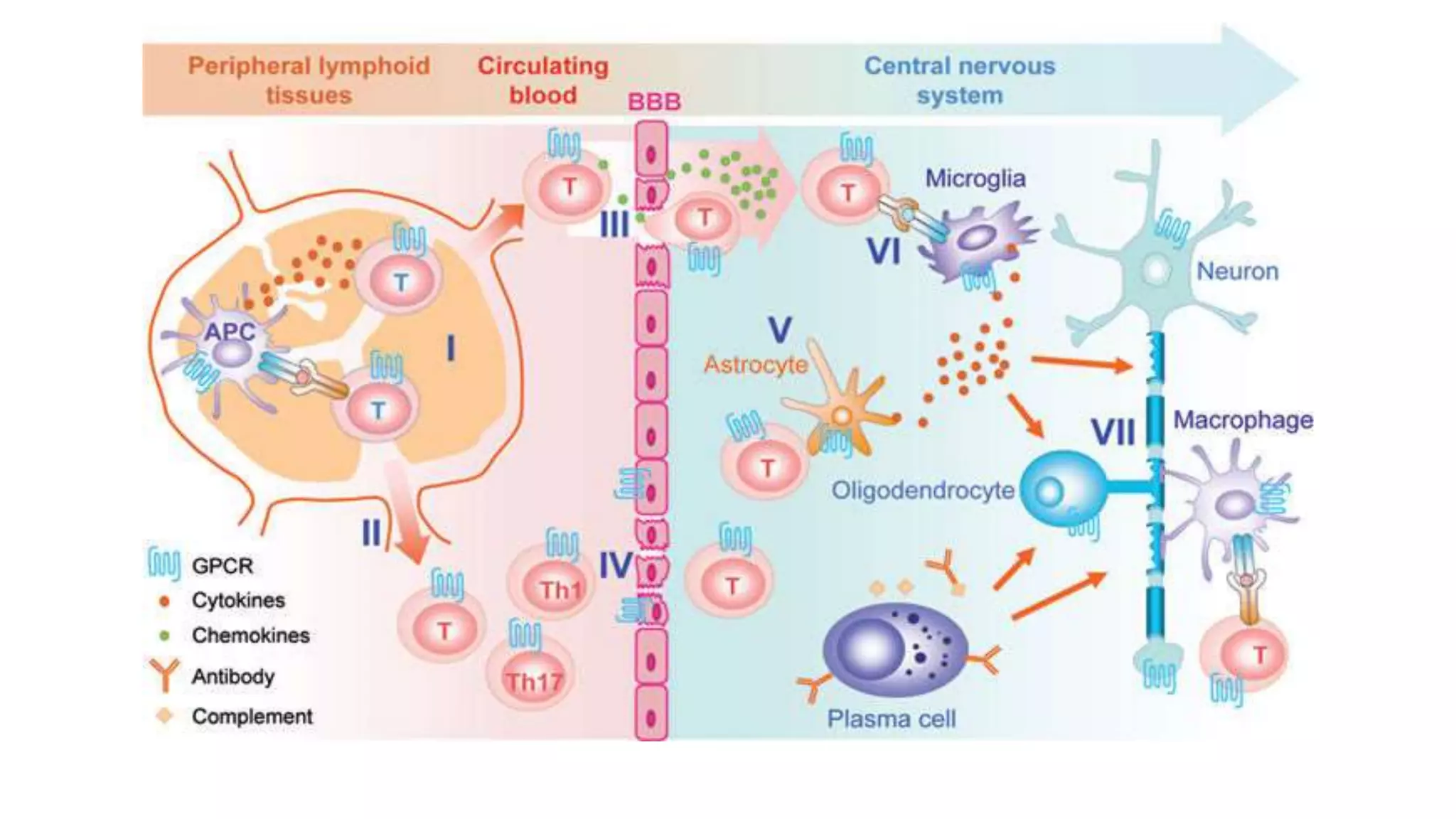
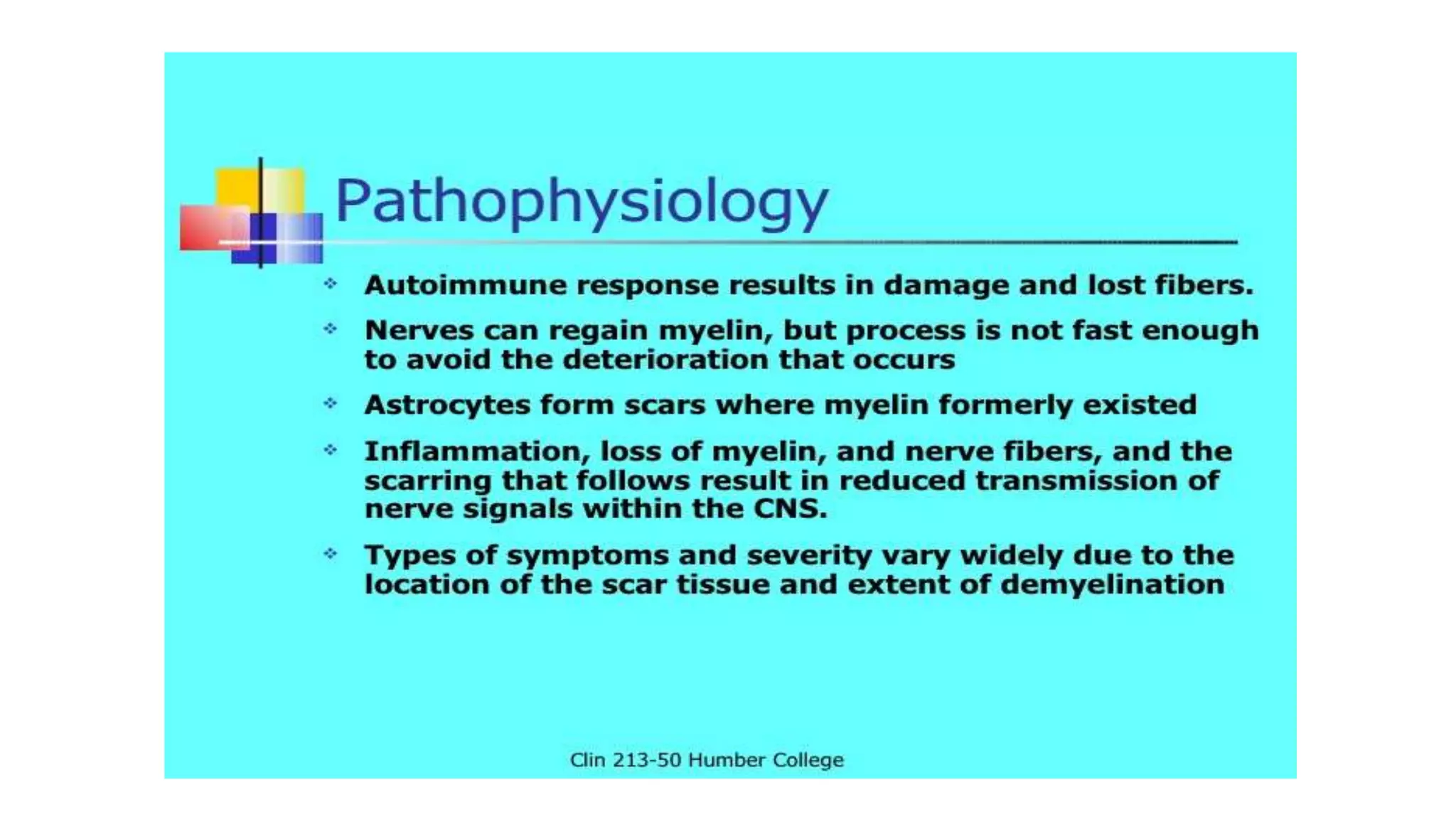
• Pathophysiology
• Morphology
• Types
• Treatment
• Summary
Multiple Sclerosis
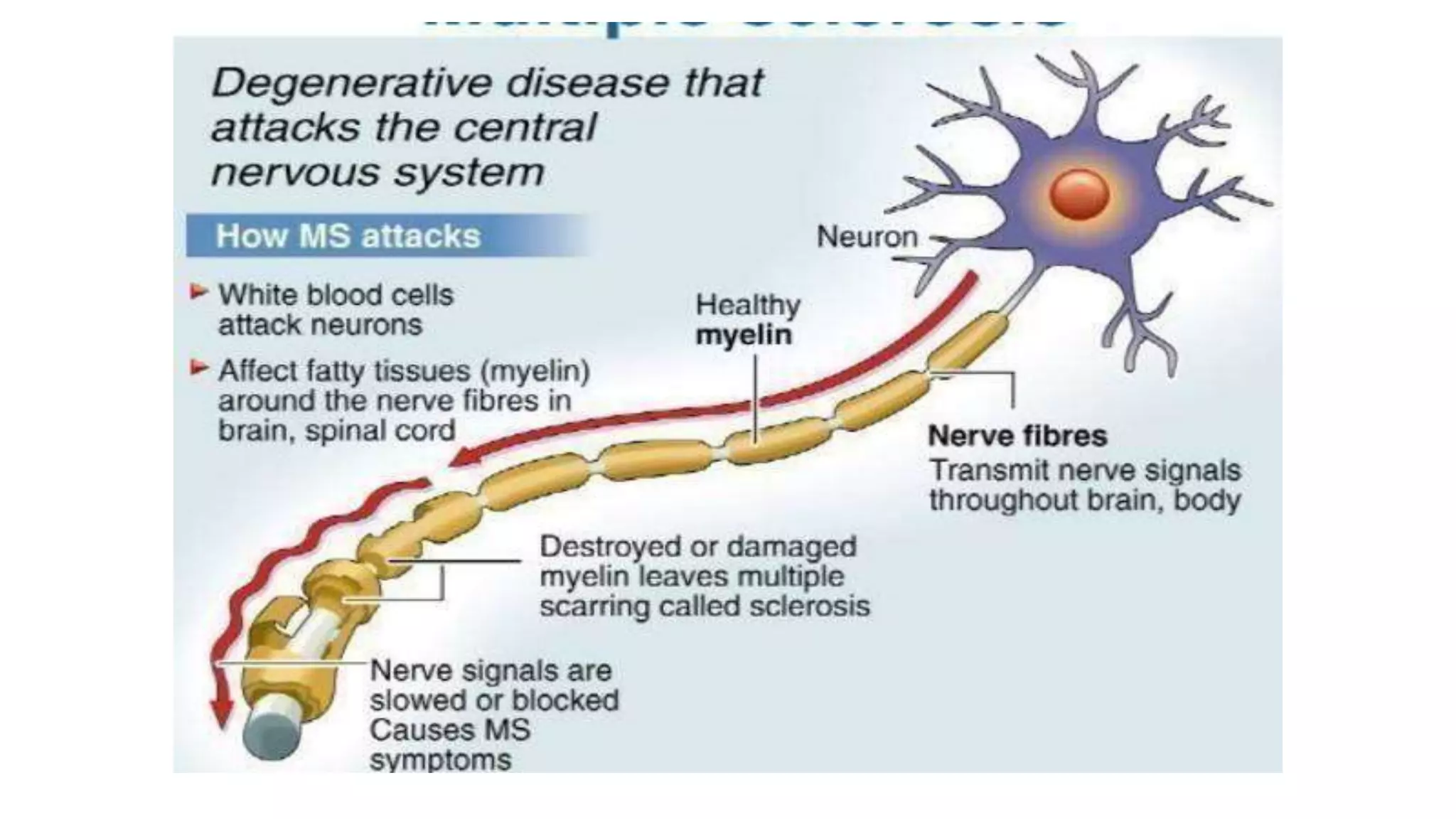
• Multiple sclerosis (MS) is a chronic inflammatory autoimmune demyelinating disease of the central
nervous system characterized by distinct episodes of neurologic deficits, separated in time,
attributable to white matter lesions that are separated in space.
• Women = 2X males
• Relapse followed by episode of remission
Clinical Features
Optic neuritis – Blurred vision, Blindness
Difficulty in walking, urination
Sexual impairment
Paresthesia – Numbness, tingling sensation.
Depression
Etc
Types of MS
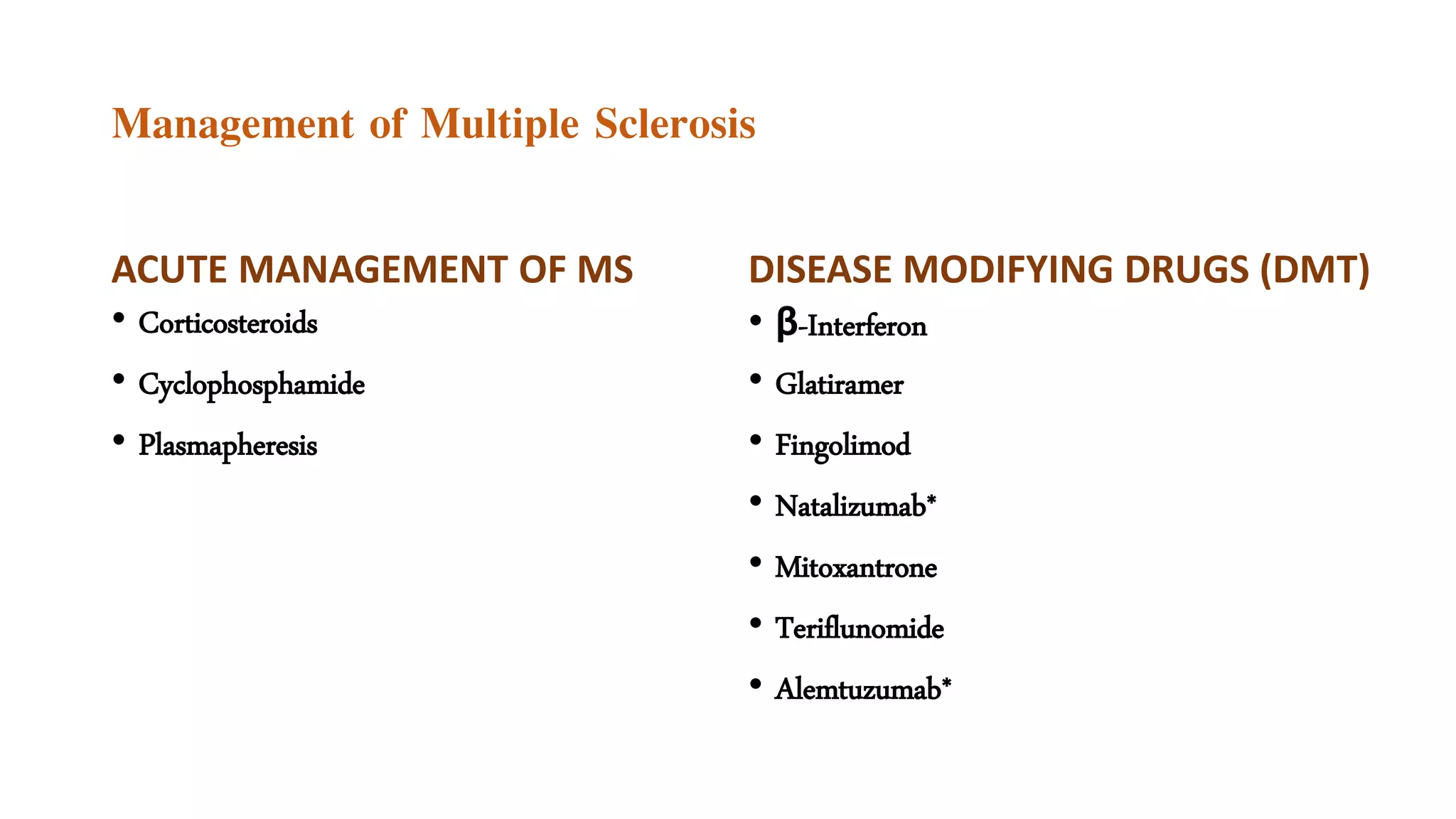
Management of Multiple Sclerosis
ACUTE MANAGEMENT OF MS
• Corticosteroids
• Cyclophosphamide
• Plasmapheresis
DISEASE MODIFYING DRUGS (DMT)
• β-Interferon
• Glatiramer
• Fingolimod
• Natalizumab*
• Mitoxantrone
• Teriflunomide
• Alemtuzumab*
Progressive forms of multiple sclerosis (MS).
Cyclophosphamide
MOA:
• It is converted to active metabolites in liver (aldophosphamide, phosphoramide mustard) which cross-
links DNA to prevent cell replication.
• It suppresses T cell and B cell function by 30-40%
SEs:
• Hemorrhagic cystitis – acrolein (metabolite)
• Alopecia – kills fast growing normal cells (hair cells)
• Leukopenia – myelosuppression
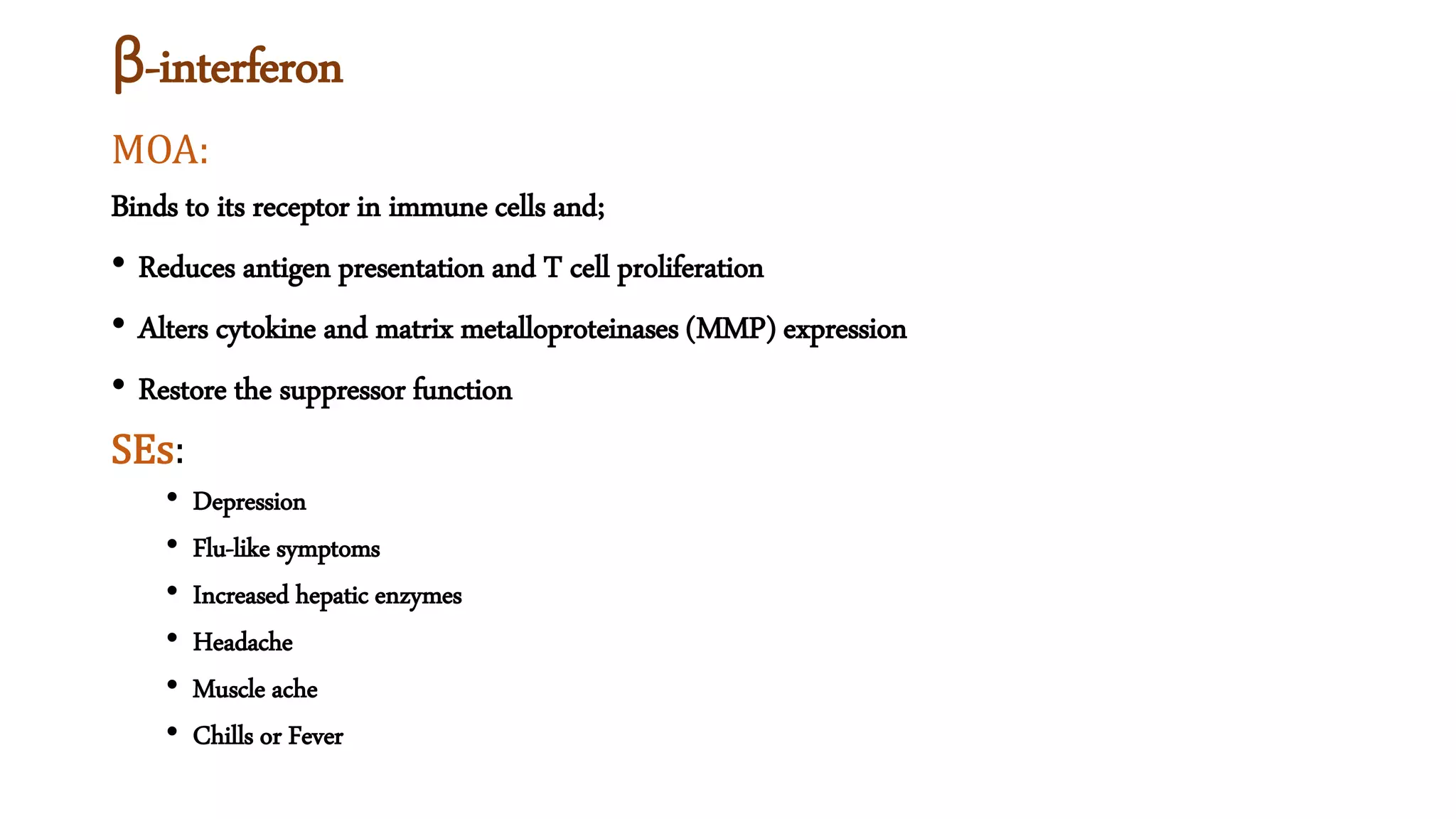
β-interferon
MOA:
Binds to its receptor in immune cells and;
• Reduces antigen presentation and T cell proliferation
• Alters cytokine and matrix metalloproteinases (MMP) expression
• Restore the suppressor function
SEs:
• Depression
• Flu-like symptoms
• Increased hepatic enzymes
• Headache
• Muscle ache
• Chills or Fever
Glatiramer
MOA:
• It have similar structure as myelin-sheath and thus blocks myelin-damaging T cells (attaches to and
kill the immune cells)
• It also reduces inflammation
SEs:
• Flushing
• Anxiety
• Chest pain
• Palpitation
• Skin rash
• Arthralgia
Fingolimod
MOA:
• It sticks to B and T cells and stops them from leaving lymph nodes where they are made.
• It might directly stops nerves from being damaged or help repair them.
SEs:
Common
• Increase susceptibility to infections: Flu, sinusitis
• Diarrhea
• Back pain
Serious
• Heart – Irregular heart beat
• Infections – Cold sores or Shingles
• Eye – Macular edema
• Brain – Progressive Multifocal Leukoencephalopathy (PML)
Natalizumab (ANTI-INTEGRIN THERAPHY)
- It is humanized IgG4 monoclonal antibody
MOA:
It blocks several integrins on circulating inflammatory cells and thus prevents binding to the vascular
adhesion molecule and subsequent sequestration into surrounding tissues.
SEs:
• Increase susceptibility to infections
• Progressive Multifocal Leukoencephalopathy (PML) – JC virus
• Dysmenorrhea
• Hypersensitivity reaction
USES:
-Crohn’s disease
-Multiple Sclerosis
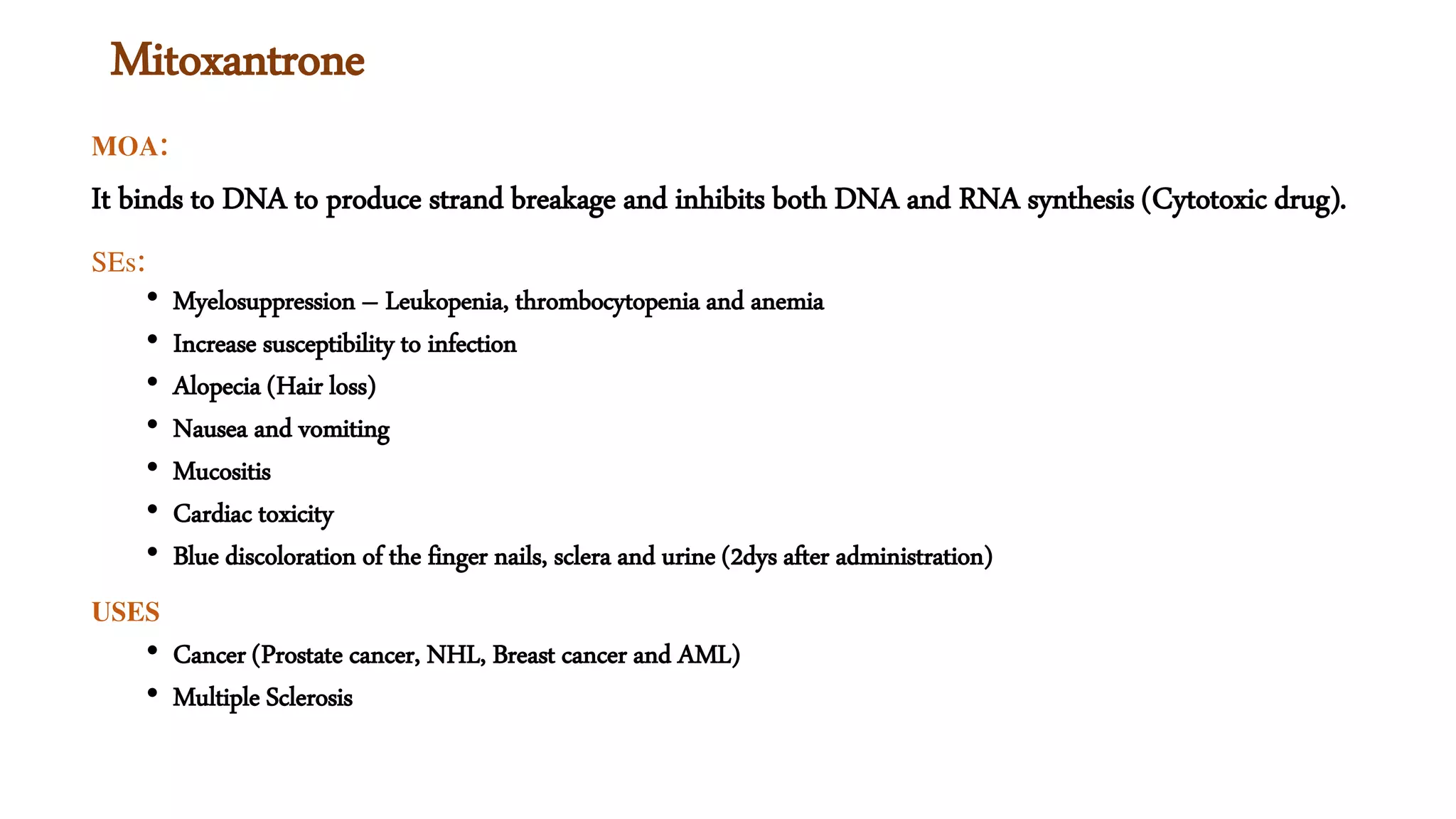
Mitoxantrone
MOA:
It binds to DNA to produce strand breakage and inhibits both DNA and RNA synthesis (Cytotoxic drug).
SEs:
• Myelosuppression – Leukopenia, thrombocytopenia and anemia
• Increase susceptibility to infection
• Alopecia (Hair loss)
• Nausea and vomiting
• Mucositis
• Cardiac toxicity
• Blue discoloration of the finger nails, sclera and urine (2dys after administration)
USES
• Cancer (Prostate cancer, NHL, Breast cancer and AML)
• Multiple Sclerosis
Teriflunomide (Effectiveness – moderate)
MOA:
It inhibits the proliferation of T cells and reduce inflammation.
SEs:
• Increase susceptibility to infections (viral)
• Hair thinning
• Flu (Flu-like symptoms)
• UTIs or cystitis
• Bronchitis
• Diarrhea
• Tooth infection
• Fungal infections
Alemtuzumab
MOA:
It kills immune cells before they get to the brain and spinal cord and reset immune system for good.
SEs:
Common side effects
• Less serious infections: throat, UT and sinuses.
• Leukopenia
Serious Infections
• VZV infections: shingles, chickenpox, encephalitis
• Pneumonia
• Genital warts: HPV
• Tuberculosis
• Appendicitis
• Increase risk of thyroid, blood or skin cancer.
Summary:
Reactivation of JC virus – Present in latent form in 80% of adults.
Multiple sclerosis, Types and Treatment

Multiple sclerosis, Types and Treatment

  • 1.
  • 2.
    Contents • Introduction • ClinicalFeatures • Etiology • Pathophysiology • Morphology • Types • Treatment • Summary
  • 3.
    Multiple Sclerosis • Multiplesclerosis (MS) is a chronic inflammatory autoimmune demyelinating disease of the central nervous system characterized by distinct episodes of neurologic deficits, separated in time, attributable to white matter lesions that are separated in space. • Women = 2X males • Relapse followed by episode of remission Clinical Features Optic neuritis – Blurred vision, Blindness Difficulty in walking, urination Sexual impairment Paresthesia – Numbness, tingling sensation. Depression Etc
  • 9.
  • 10.
    Management of MultipleSclerosis ACUTE MANAGEMENT OF MS • Corticosteroids • Cyclophosphamide • Plasmapheresis DISEASE MODIFYING DRUGS (DMT) • β-Interferon • Glatiramer • Fingolimod • Natalizumab* • Mitoxantrone • Teriflunomide • Alemtuzumab*
  • 11.
    Progressive forms ofmultiple sclerosis (MS).
  • 12.
    Cyclophosphamide MOA: • It isconverted to active metabolites in liver (aldophosphamide, phosphoramide mustard) which cross- links DNA to prevent cell replication. • It suppresses T cell and B cell function by 30-40% SEs: • Hemorrhagic cystitis – acrolein (metabolite) • Alopecia – kills fast growing normal cells (hair cells) • Leukopenia – myelosuppression
  • 13.
    β-interferon MOA: Binds to itsreceptor in immune cells and; • Reduces antigen presentation and T cell proliferation • Alters cytokine and matrix metalloproteinases (MMP) expression • Restore the suppressor function SEs: • Depression • Flu-like symptoms • Increased hepatic enzymes • Headache • Muscle ache • Chills or Fever
  • 14.
    Glatiramer MOA: • It havesimilar structure as myelin-sheath and thus blocks myelin-damaging T cells (attaches to and kill the immune cells) • It also reduces inflammation SEs: • Flushing • Anxiety • Chest pain • Palpitation • Skin rash • Arthralgia
  • 15.
    Fingolimod MOA: • It sticksto B and T cells and stops them from leaving lymph nodes where they are made. • It might directly stops nerves from being damaged or help repair them. SEs: Common • Increase susceptibility to infections: Flu, sinusitis • Diarrhea • Back pain Serious • Heart – Irregular heart beat • Infections – Cold sores or Shingles • Eye – Macular edema • Brain – Progressive Multifocal Leukoencephalopathy (PML)
  • 16.
    Natalizumab (ANTI-INTEGRIN THERAPHY) -It is humanized IgG4 monoclonal antibody MOA: It blocks several integrins on circulating inflammatory cells and thus prevents binding to the vascular adhesion molecule and subsequent sequestration into surrounding tissues. SEs: • Increase susceptibility to infections • Progressive Multifocal Leukoencephalopathy (PML) – JC virus • Dysmenorrhea • Hypersensitivity reaction USES: -Crohn’s disease -Multiple Sclerosis
  • 17.
    Mitoxantrone MOA: It binds toDNA to produce strand breakage and inhibits both DNA and RNA synthesis (Cytotoxic drug). SEs: • Myelosuppression – Leukopenia, thrombocytopenia and anemia • Increase susceptibility to infection • Alopecia (Hair loss) • Nausea and vomiting • Mucositis • Cardiac toxicity • Blue discoloration of the finger nails, sclera and urine (2dys after administration) USES • Cancer (Prostate cancer, NHL, Breast cancer and AML) • Multiple Sclerosis
  • 18.
    Teriflunomide (Effectiveness –moderate) MOA: It inhibits the proliferation of T cells and reduce inflammation. SEs: • Increase susceptibility to infections (viral) • Hair thinning • Flu (Flu-like symptoms) • UTIs or cystitis • Bronchitis • Diarrhea • Tooth infection • Fungal infections
  • 19.
    Alemtuzumab MOA: It kills immunecells before they get to the brain and spinal cord and reset immune system for good. SEs: Common side effects • Less serious infections: throat, UT and sinuses. • Leukopenia Serious Infections • VZV infections: shingles, chickenpox, encephalitis • Pneumonia • Genital warts: HPV • Tuberculosis • Appendicitis • Increase risk of thyroid, blood or skin cancer.
  • 20.
  • 21.
    Reactivation of JCvirus – Present in latent form in 80% of adults.