Presented by
vichithra
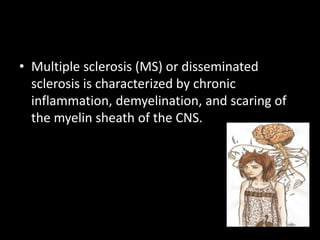
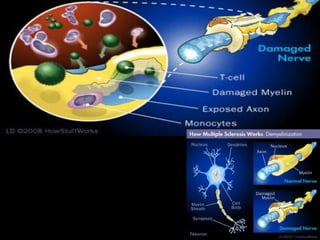
• Multiple sclerosis (MS) or disseminated
sclerosis is characterized by chronic
inflammation, demyelination, and scaring of
the myelin sheath of the CNS.
• The cause of multiple sclerosis is unknown. It
is believed to be an autoimmune disease, in
which the body's immune system attacks its
own tissues.
• Age : 20- 40 years
• Gender : women
• Certain infections
• Geographic regions
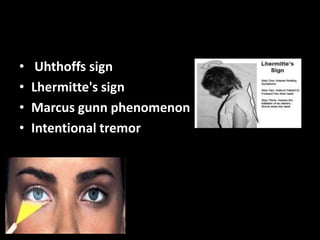
• Uhthoffs sign
• Lhermitte's sign
• Marcus gunn phenomenon
• Intentional tremor
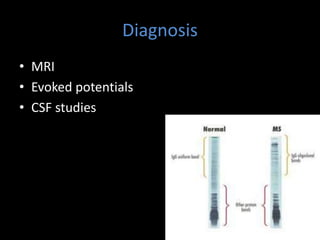
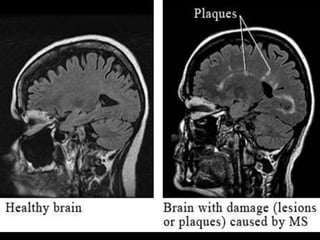
Diagnosis
• MRI
• Evoked potentials
• CSF studies
Treatment
There is presently no cure for MS. However, many
treatment options are available that can help
manage the course and symptoms of this chronic
disease.
Treatment can help:
• slow the progression of MS
• minimize symptoms during exacerbations or flares
• improve physical and mental function
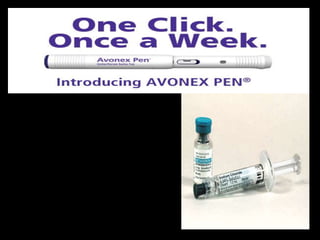
Interferons
• Interferons are a group of immune system proteins -
- alpha, beta, and gamma produced by the body.
They act in different ways to control the activity of
the immune system. They also have antiviral
properties.
• Avonex (interferon beta 1a)
• Betaseron (interferon beta 1b)
• Extavia
• Rebif ( high dose interferon beta 1a)
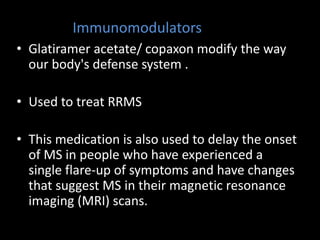
• Glatiramer acetate/ copaxon modify the way
our body's defense system .
• Used to treat RRMS
• This medication is also used to delay the onset
of MS in people who have experienced a
single flare-up of symptoms and have changes
that suggest MS in their magnetic resonance
imaging (MRI) scans.
Immunomodulators
Immunosuppressants
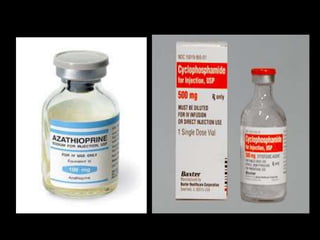
• Cytoxan is a therapy that may be given to people
with multiple sclerosis. It works by suppressing
the immune system.
• Imuran is an immune system-suppressing drug.
That means that it can theoretically halt the
attack of the immune system on your nerves if
you have multiple sclerosis. The drug can be used
to slow the progression of MS in people who are
not responding well to other treatments.
Corticosteroids
• Medications such as Solu- medrol and Decadron are
potent steroids that ease inflammation and are
often used to treat an acute attack of multiple
sclerosis.
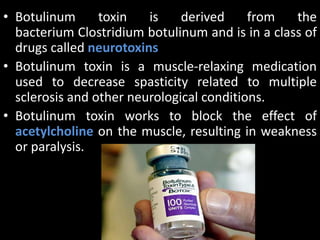
• Botulinum toxin is derived from the
bacterium Clostridium botulinum and is in a class of
drugs called neurotoxins
• Botulinum toxin is a muscle-relaxing medication
used to decrease spasticity related to multiple
sclerosis and other neurological conditions.
• Botulinum toxin works to block the effect of
acetylcholine on the muscle, resulting in weakness
or paralysis.
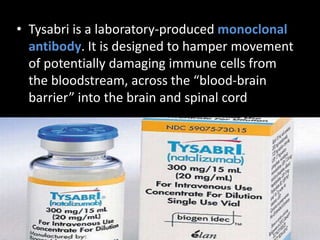
• Tysabri is a laboratory-produced monoclonal
antibody. It is designed to hamper movement
of potentially damaging immune cells from
the bloodstream, across the “blood-brain
barrier” into the brain and spinal cord
• Progressive multifocal leukoencephalopathy (PML),
also known as progressive
multifocal leukoencephalitis, is a rare and usually
fatal viral disease characterized by progressive
damage or inflammation of the white matter of
the brain at multiple locations.
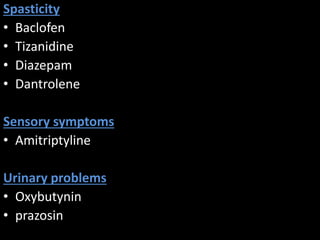
Spasticity
• Baclofen
• Tizanidine
• Diazepam
• Dantrolene
Sensory symptoms
• Amitriptyline
Urinary problems
• Oxybutynin
• prazosin
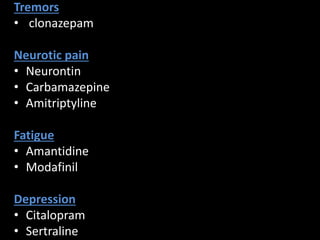
Tremors
• clonazepam
Neurotic pain
• Neurontin
• Carbamazepine
• Amitriptyline
Fatigue
• Amantidine
• Modafinil
Depression
• Citalopram
• Sertraline
Multiple sclerosis

Multiple sclerosis

  • 1.
  • 2.
    • Multiple sclerosis(MS) or disseminated sclerosis is characterized by chronic inflammation, demyelination, and scaring of the myelin sheath of the CNS.
  • 3.
    • The causeof multiple sclerosis is unknown. It is believed to be an autoimmune disease, in which the body's immune system attacks its own tissues.
  • 4.
    • Age :20- 40 years • Gender : women • Certain infections • Geographic regions
  • 9.
    • Uhthoffs sign •Lhermitte's sign • Marcus gunn phenomenon • Intentional tremor
  • 10.
    Diagnosis • MRI • Evokedpotentials • CSF studies
  • 12.
    Treatment There is presentlyno cure for MS. However, many treatment options are available that can help manage the course and symptoms of this chronic disease. Treatment can help: • slow the progression of MS • minimize symptoms during exacerbations or flares • improve physical and mental function
  • 13.
    Interferons • Interferons area group of immune system proteins - - alpha, beta, and gamma produced by the body. They act in different ways to control the activity of the immune system. They also have antiviral properties. • Avonex (interferon beta 1a) • Betaseron (interferon beta 1b) • Extavia • Rebif ( high dose interferon beta 1a)
  • 15.
    • Glatiramer acetate/copaxon modify the way our body's defense system . • Used to treat RRMS • This medication is also used to delay the onset of MS in people who have experienced a single flare-up of symptoms and have changes that suggest MS in their magnetic resonance imaging (MRI) scans. Immunomodulators
  • 16.
    Immunosuppressants • Cytoxan isa therapy that may be given to people with multiple sclerosis. It works by suppressing the immune system. • Imuran is an immune system-suppressing drug. That means that it can theoretically halt the attack of the immune system on your nerves if you have multiple sclerosis. The drug can be used to slow the progression of MS in people who are not responding well to other treatments.
  • 18.
    Corticosteroids • Medications suchas Solu- medrol and Decadron are potent steroids that ease inflammation and are often used to treat an acute attack of multiple sclerosis.
  • 19.
    • Botulinum toxinis derived from the bacterium Clostridium botulinum and is in a class of drugs called neurotoxins • Botulinum toxin is a muscle-relaxing medication used to decrease spasticity related to multiple sclerosis and other neurological conditions. • Botulinum toxin works to block the effect of acetylcholine on the muscle, resulting in weakness or paralysis.
  • 20.
    • Tysabri isa laboratory-produced monoclonal antibody. It is designed to hamper movement of potentially damaging immune cells from the bloodstream, across the “blood-brain barrier” into the brain and spinal cord
  • 21.
    • Progressive multifocalleukoencephalopathy (PML), also known as progressive multifocal leukoencephalitis, is a rare and usually fatal viral disease characterized by progressive damage or inflammation of the white matter of the brain at multiple locations.
  • 22.
    Spasticity • Baclofen • Tizanidine •Diazepam • Dantrolene Sensory symptoms • Amitriptyline Urinary problems • Oxybutynin • prazosin
  • 23.
    Tremors • clonazepam Neurotic pain •Neurontin • Carbamazepine • Amitriptyline Fatigue • Amantidine • Modafinil Depression • Citalopram • Sertraline