



Multiple Sclerosis
Marnelle Joy S. Pulmano, BSN, RN
OVERVIEW OF MS
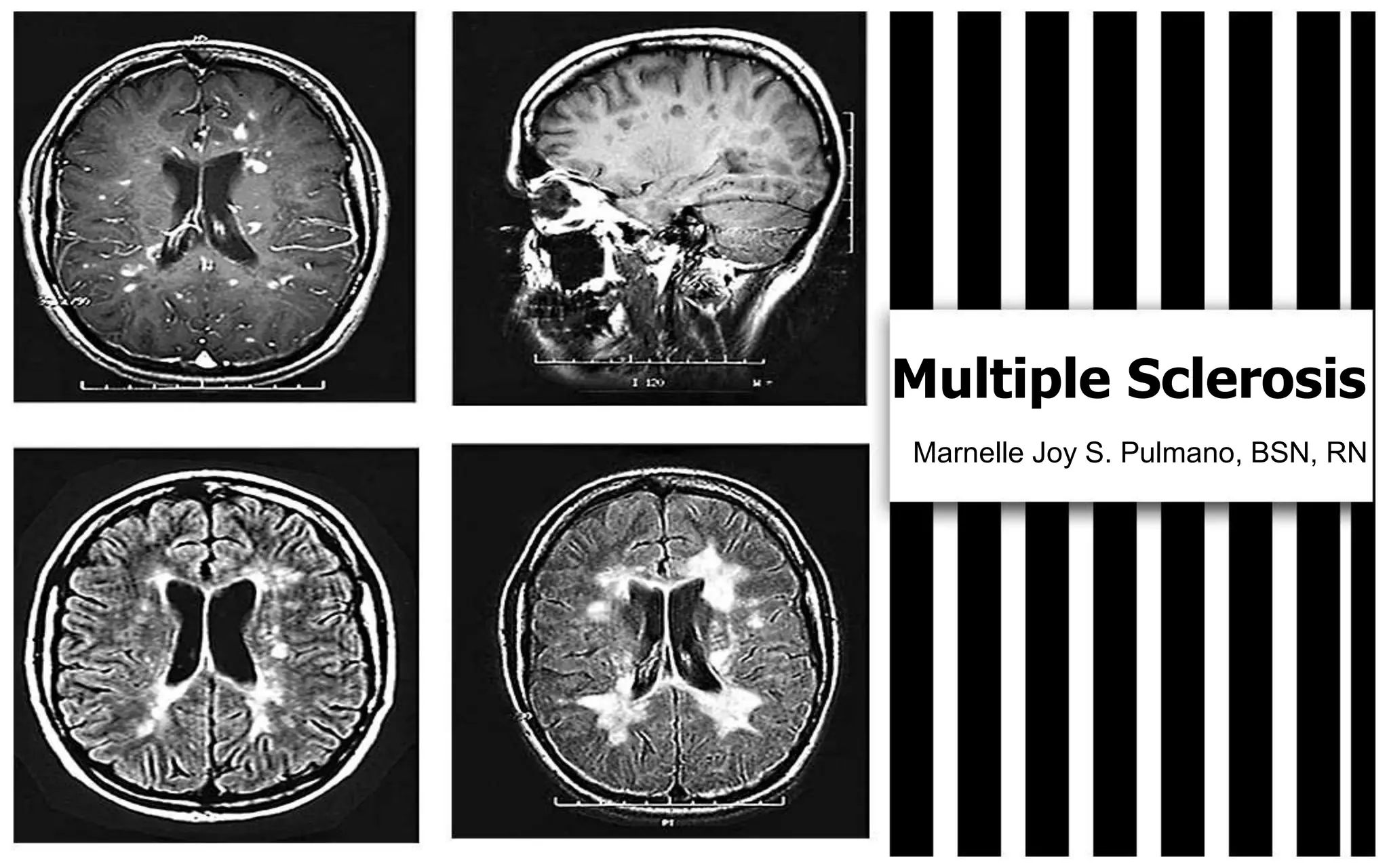
Definition

• A chronic and progressive disorder of the
  brain and spinal cord
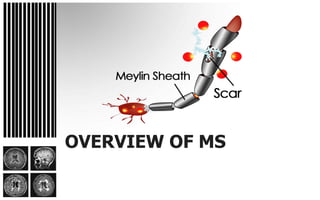
• Caused by damage to the myelin sheath
  (white matter)
• Destruction of the myelin sheath leads to
  scarring (sclerosis), which decreases and
  eventually blocks nerve conduction
Incidence

• Affects 1 out of 1000 people
• Occurs more often in women
Onset

• Most commonly between 20 and 40 years old
Etiology

• Unknown
• Possibly an autoimmune disorder or exposure
  to a virus
Clinical
              Findings
• Weakness
• Paresis or paralysis of one or more limbs
• Myoclonus
   – Involuntary muscle jerks
• Impaired or double vision
• Eye and facial pain
Clinical
               Findings
•   Fatigue
•   Dizziness
•   Decreased coordination
•   Loss of balance
NURSING FOCUS
• Goal of Therapy:
  – To control symptoms
  – Preserve function
  – Maximize quality of life
• Perform or arrange for ROM exercises to be
  done 2x a day
• Assess skin for breakdown
• Perform routine skin care
PATIENT TEACHING
• Provide patient and family with literature on
  MS
• Encourage a healthy lifestyle:
   – Exercise to maintain good muscle tone
   – Good nutrition
   – Plenty of rest and relaxation
• Stress the importance of avoiding stress and
  fatigue
• Depending on progression of MS, arrange for
  occupational, physical, and speech therapy
• Explain the actions, dosages, side effects, and
  adverse reaction of all meds
  – Steroids
  – Immunosuppressant therapy
  – Antiviral agents
  – Muscle relaxants
  – Antidepressants
Multiple sclerosis

Multiple sclerosis

  • 1.
  • 2.
  • 3.
    Definition • A chronicand progressive disorder of the brain and spinal cord • Caused by damage to the myelin sheath (white matter) • Destruction of the myelin sheath leads to scarring (sclerosis), which decreases and eventually blocks nerve conduction
  • 4.
    Incidence • Affects 1out of 1000 people • Occurs more often in women
  • 5.
    Onset • Most commonlybetween 20 and 40 years old
  • 6.
    Etiology • Unknown • Possiblyan autoimmune disorder or exposure to a virus
  • 7.
    Clinical Findings • Weakness • Paresis or paralysis of one or more limbs • Myoclonus – Involuntary muscle jerks • Impaired or double vision • Eye and facial pain
  • 8.
    Clinical Findings • Fatigue • Dizziness • Decreased coordination • Loss of balance
  • 9.
  • 10.
    • Goal ofTherapy: – To control symptoms – Preserve function – Maximize quality of life
  • 11.
    • Perform orarrange for ROM exercises to be done 2x a day • Assess skin for breakdown • Perform routine skin care
  • 12.
  • 13.
    • Provide patientand family with literature on MS • Encourage a healthy lifestyle: – Exercise to maintain good muscle tone – Good nutrition – Plenty of rest and relaxation
  • 14.
    • Stress theimportance of avoiding stress and fatigue • Depending on progression of MS, arrange for occupational, physical, and speech therapy
  • 15.
    • Explain theactions, dosages, side effects, and adverse reaction of all meds – Steroids – Immunosuppressant therapy – Antiviral agents – Muscle relaxants – Antidepressants