Transpiration
               Lesson objectives
• All will be able to describe transpiration

• Most will be able to explain differences in
  transpiration speed

• Some will suggest reasons why plants
  compromise between gas exchange and water
  loss
How do tall trees get enough water?
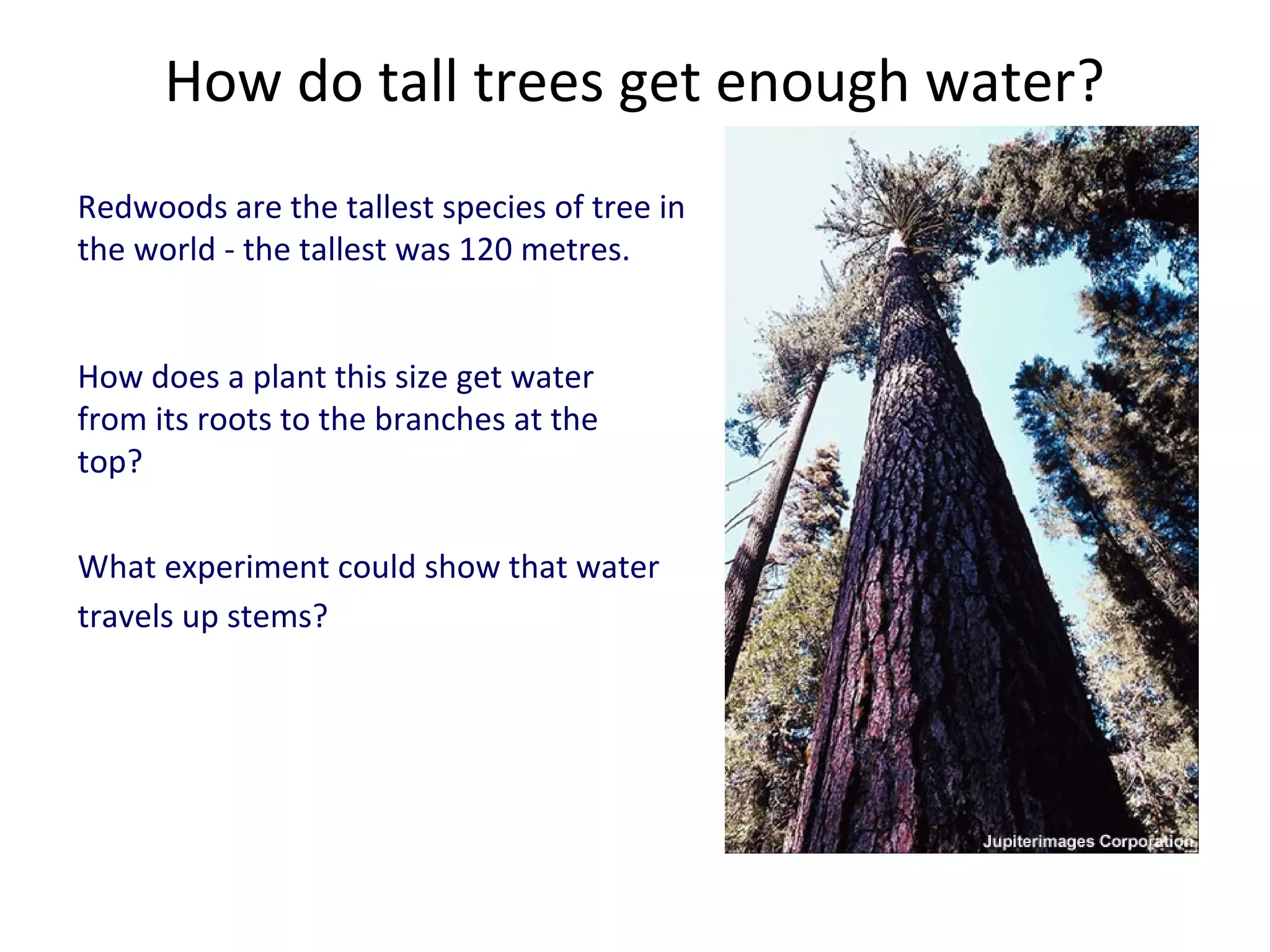
Redwoods are the tallest species of tree in
the world - the tallest was 120 metres.


How does a plant this size get water
from its roots to the branches at the
top?

What experiment could show that water
travels up stems?
Transpiration
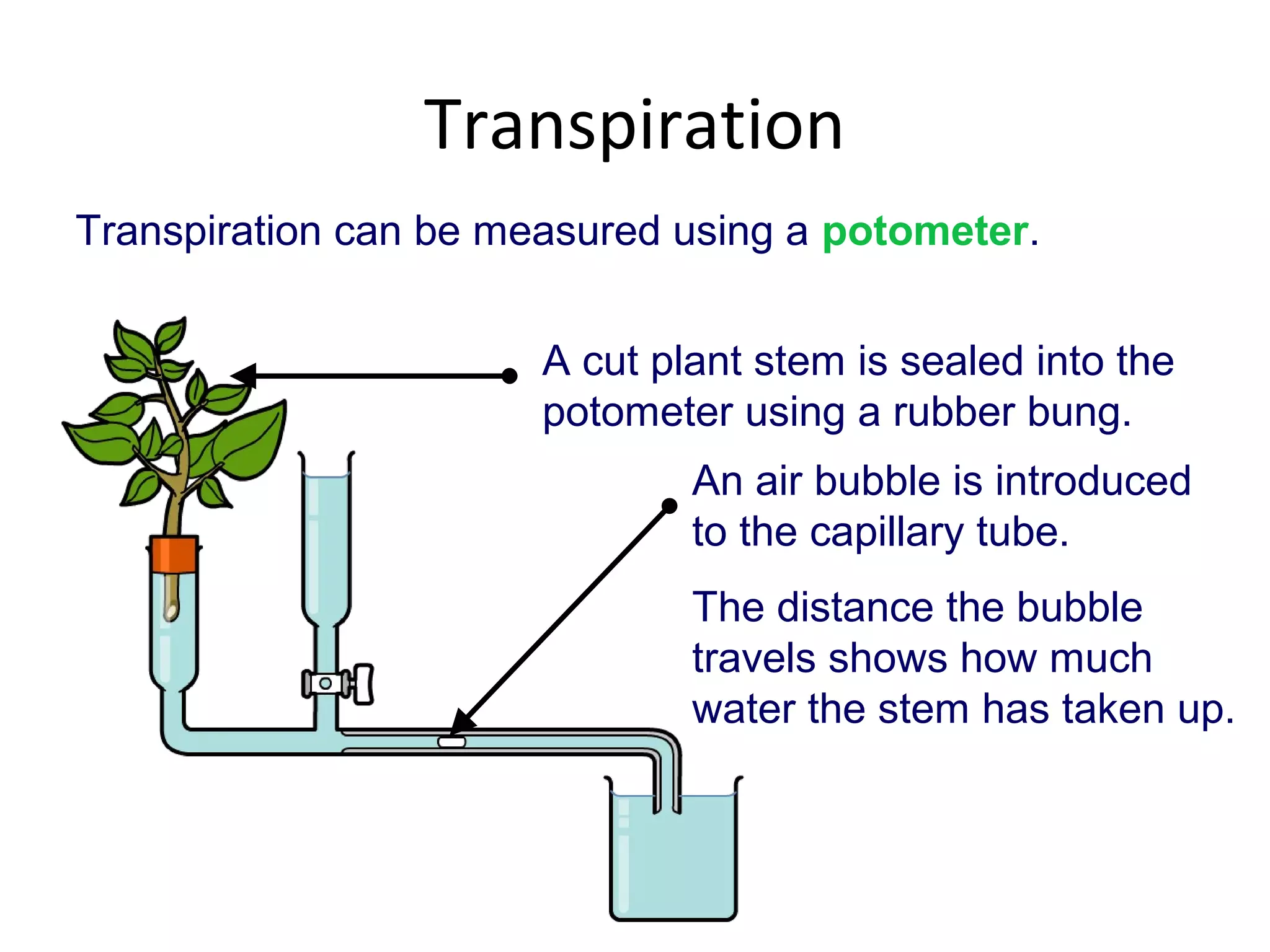
Transpiration can be measured using a potometer.


                       A cut plant stem is sealed into the
                       potometer using a rubber bung.
                               An air bubble is introduced
                               to the capillary tube.
                               The distance the bubble
                               travels shows how much
                               water the stem has taken up.
1. Record a definition of transpiration

2. Where do plants lose water?

3. Transpiration will often lead to water loss by the plant so
   what is its purpose and what is the major advantage?
Transpiration
• Sort the statements out into the correct order
  to show how water moves to the top of the
  plant
Transpiration
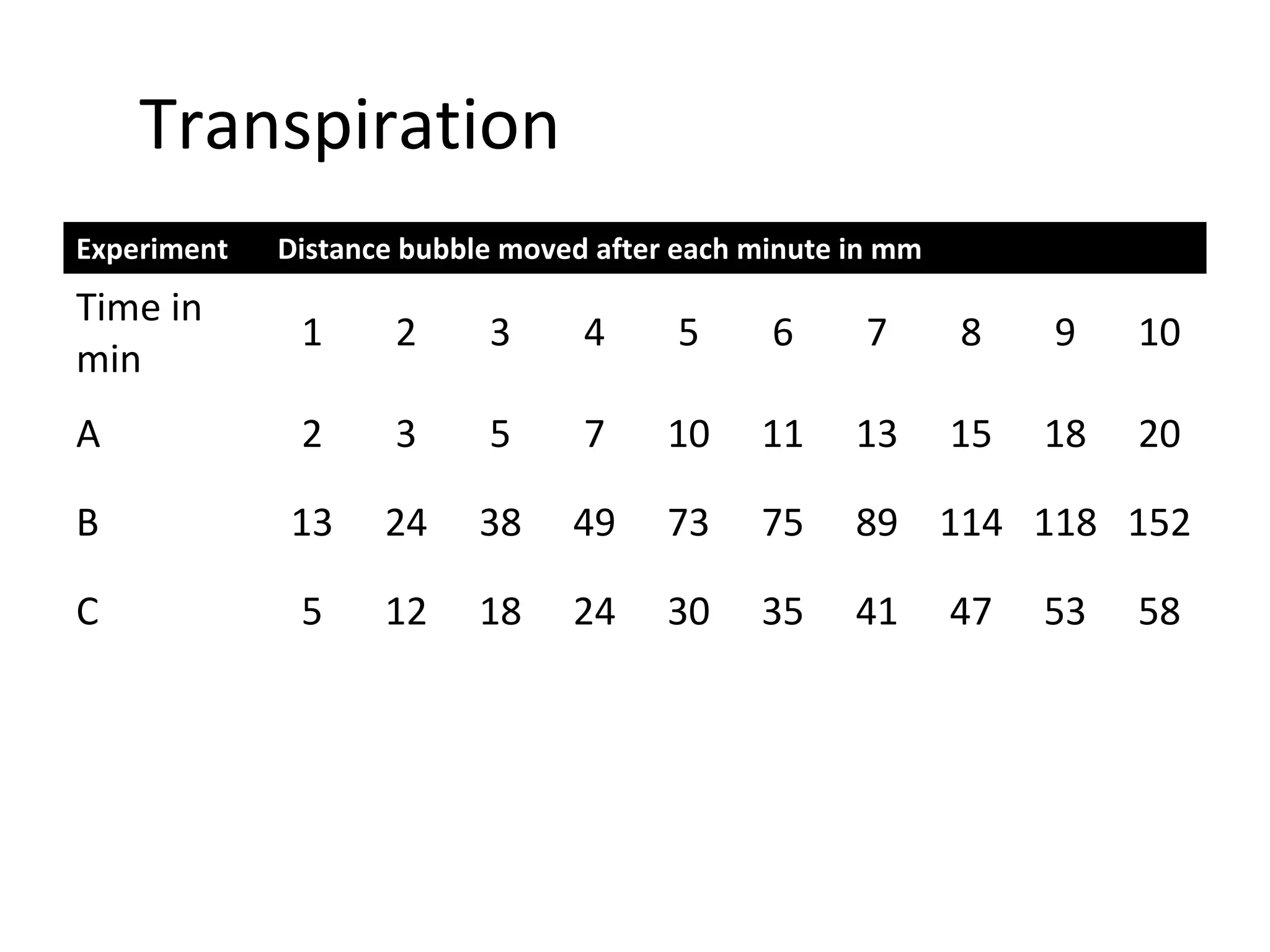
Experiment   Distance bubble moved after each minute in mm
Time in
              1      2     3      4     5      6      7      8    9    10
min
A             2      3     5      7     10    11     13      15   18   20

B            13     24     38    49     73    75     89 114 118 152

C             5     12     18    24     30    35     41      47   53   58
Is the rate of transpiration constant?
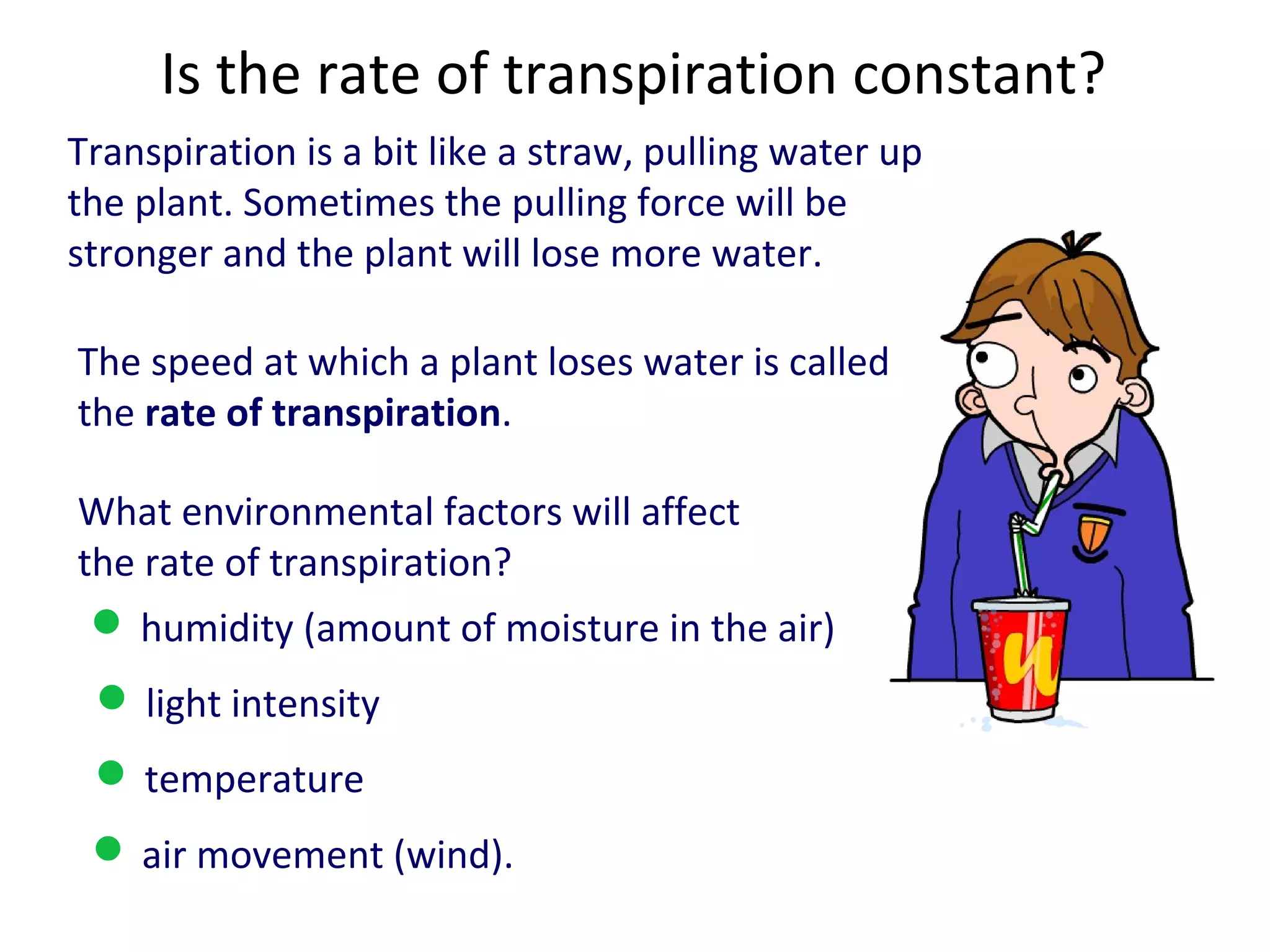
Transpiration is a bit like a straw, pulling water up
the plant. Sometimes the pulling force will be
stronger and the plant will lose more water.

The speed at which a plant loses water is called
the rate of transpiration.

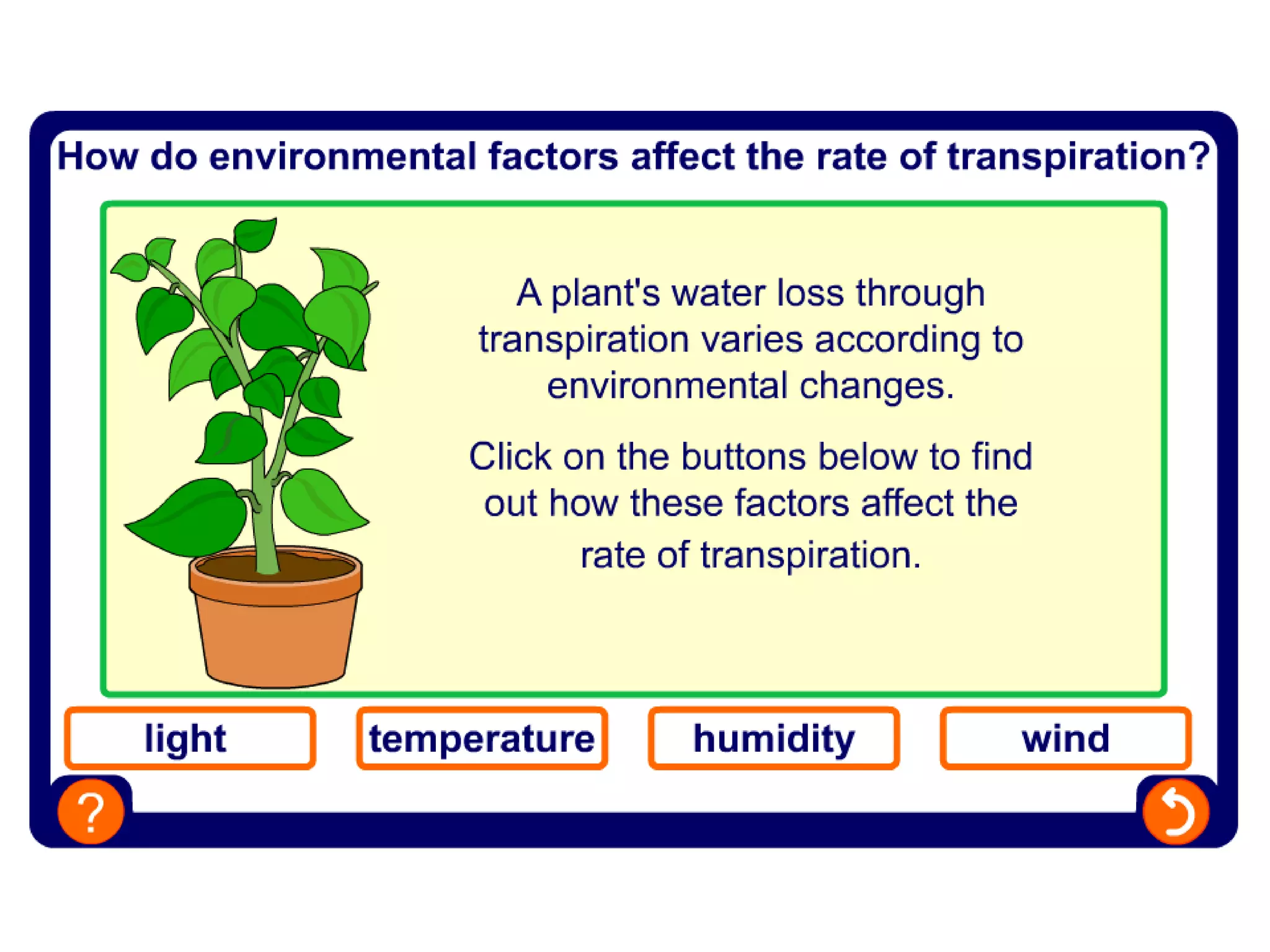
What environmental factors will affect
the rate of transpiration?
  humidity (amount of moisture in the air)
  light intensity
  temperature
  air movement (wind).
How does a plant control water loss?

1. Waxy waterproof layer (cuticle)
2. Stomata on the underside of the leaf (not
   expose to sun)
3. Wilting. Leaves collapse reducing surface
   area
4. Stomata close

Mrs Abrey Lesson 5 transpiration

  • 1.
    Transpiration Lesson objectives • All will be able to describe transpiration • Most will be able to explain differences in transpiration speed • Some will suggest reasons why plants compromise between gas exchange and water loss
  • 2.
    How do talltrees get enough water? Redwoods are the tallest species of tree in the world - the tallest was 120 metres. How does a plant this size get water from its roots to the branches at the top? What experiment could show that water travels up stems?
  • 3.
    Transpiration Transpiration can bemeasured using a potometer. A cut plant stem is sealed into the potometer using a rubber bung. An air bubble is introduced to the capillary tube. The distance the bubble travels shows how much water the stem has taken up.
  • 5.
    1. Record adefinition of transpiration 2. Where do plants lose water? 3. Transpiration will often lead to water loss by the plant so what is its purpose and what is the major advantage?
  • 6.
    Transpiration • Sort thestatements out into the correct order to show how water moves to the top of the plant
  • 7.
    Transpiration Experiment Distance bubble moved after each minute in mm Time in 1 2 3 4 5 6 7 8 9 10 min A 2 3 5 7 10 11 13 15 18 20 B 13 24 38 49 73 75 89 114 118 152 C 5 12 18 24 30 35 41 47 53 58
  • 8.
    Is the rateof transpiration constant? Transpiration is a bit like a straw, pulling water up the plant. Sometimes the pulling force will be stronger and the plant will lose more water. The speed at which a plant loses water is called the rate of transpiration. What environmental factors will affect the rate of transpiration?  humidity (amount of moisture in the air)  light intensity  temperature  air movement (wind).
  • 10.
    How does aplant control water loss? 1. Waxy waterproof layer (cuticle) 2. Stomata on the underside of the leaf (not expose to sun) 3. Wilting. Leaves collapse reducing surface area 4. Stomata close

Editor's Notes

  • #3 Photo credit: © 2007 Jupiterimages Corporation
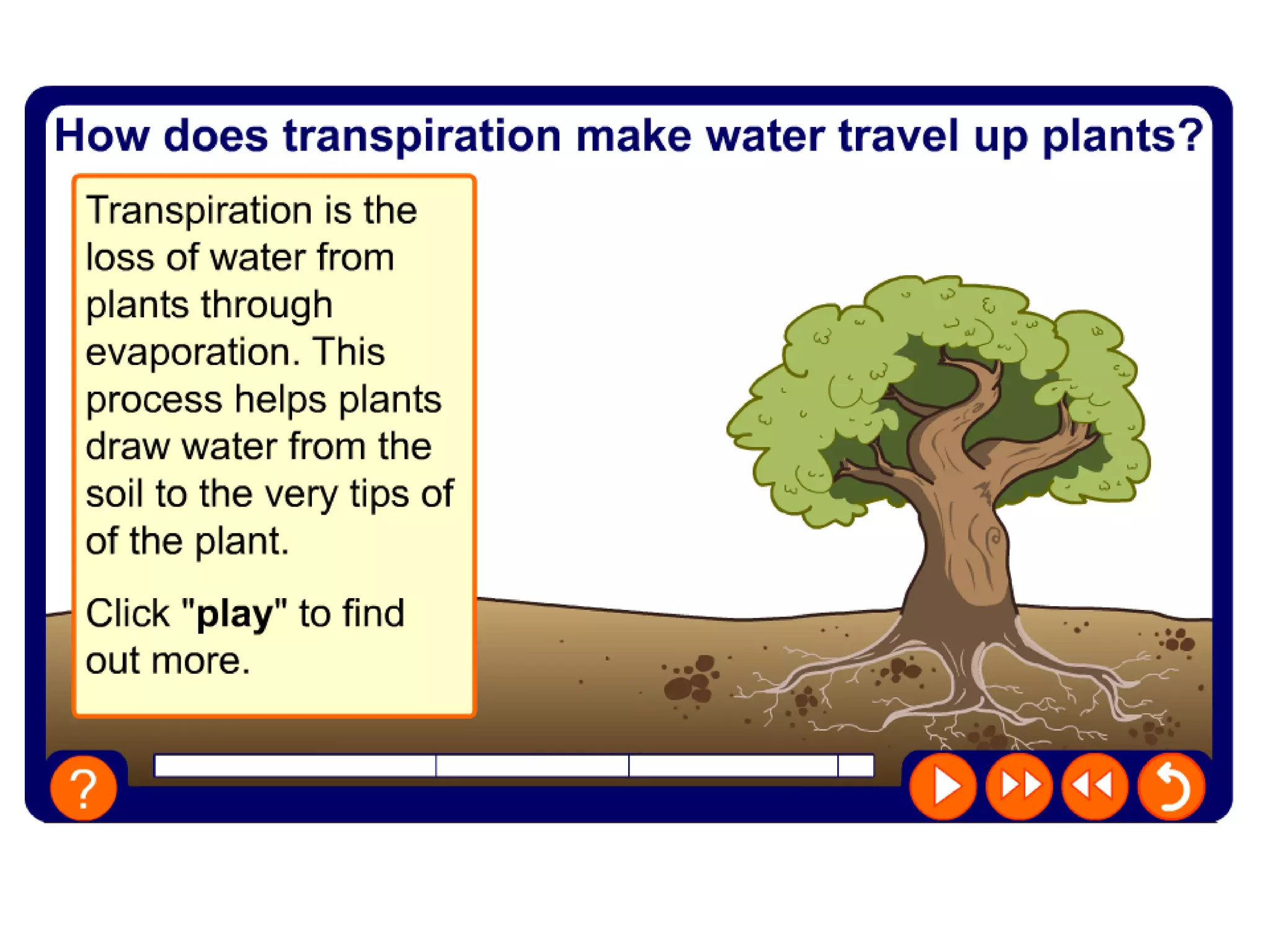
  • #5 Teacher notes This four-stage animation uses close-up illustrations of the roots, stem and leaves to show what happens in the different part of a plant during transpiration. Suitable prompts include: Start: What is transpiration? Stage 1: How do root hair cells increase the diffusion of water? Stage 2: Which plant tissue transports water? Stage 3: Through what part of the leaf does water evaporats? Stage 4: What will happen to the water after it has evaporated into the air? See the ‘ Movement In and Out of Cells ’ presentation for more information about osmosis and concentration gradients.
  • #10 Teacher notes This activity provides illustrated explanations about why certain environmental factors influence the rate of transpiration. It could be used to introduce the topic or for revision purposes.