

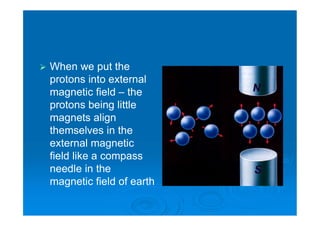
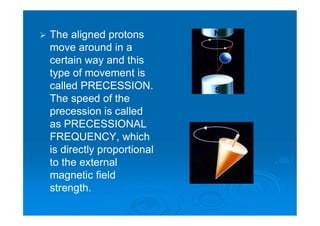
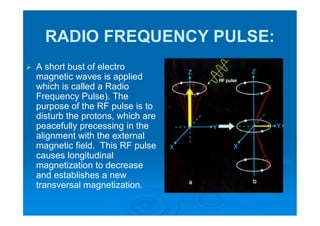
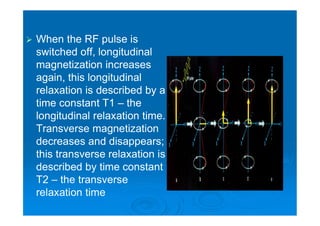
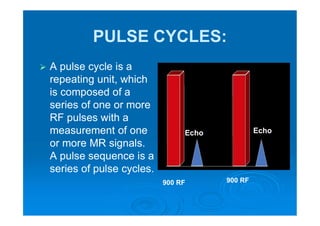
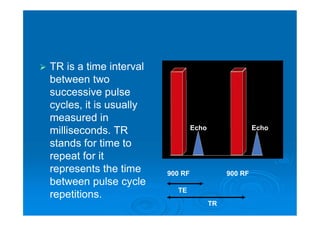
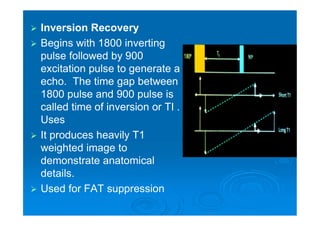
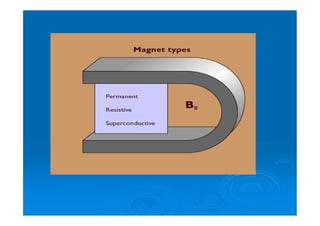
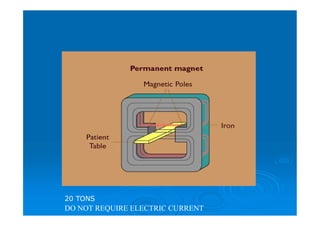
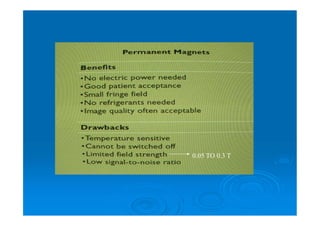
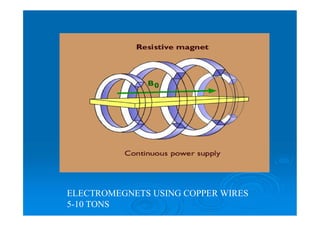

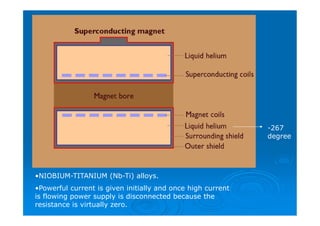
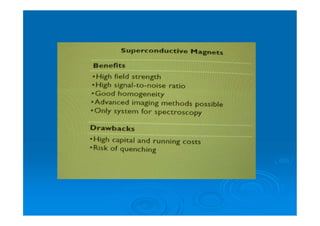
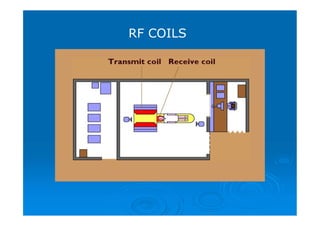
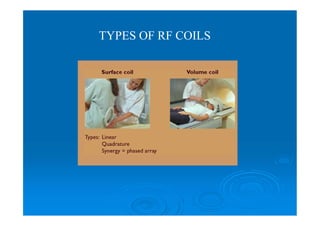



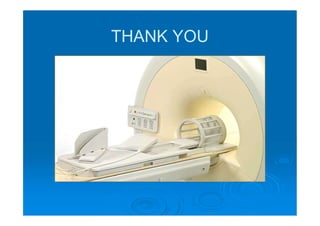

MRI uses strong magnetic fields and radio waves to produce detailed images of organs and tissues in the body. Protons in the body align with the magnetic field, and a radio pulse causes them to resonate. Their signals are detected to form images. Different pulse sequences and parameters produce T1-weighted, T2-weighted, or proton density images. Safety concerns include the strong magnetic field and certain implants. Advantages are no radiation, good soft tissue contrast, and multiplanar imaging. Disadvantages include long scan times and high costs.


![MAGNETIC_RESONANCE.._IMAGING[MRI][1].pptx](https://cdn.slidesharecdn.com/ss_thumbnails/magneticresonanceimagingmri1-240903182728-4f857936-thumbnail.jpg?width=640&height=640&fit=bounds)


