Energy-Efficient
        Cloud Computing
Walking towards a more energy-efficient computing world.


Roger Rafanell
18/6/2012
MRI
Outline
Energy-Efficient Cloud Computing

  Part 1: Introduction

  Part 2: Current state of Energy-Efficiency

  Part 3: Towards Energy-Efficient Cloud Computing

  Part 4: Conclusions
Introduction
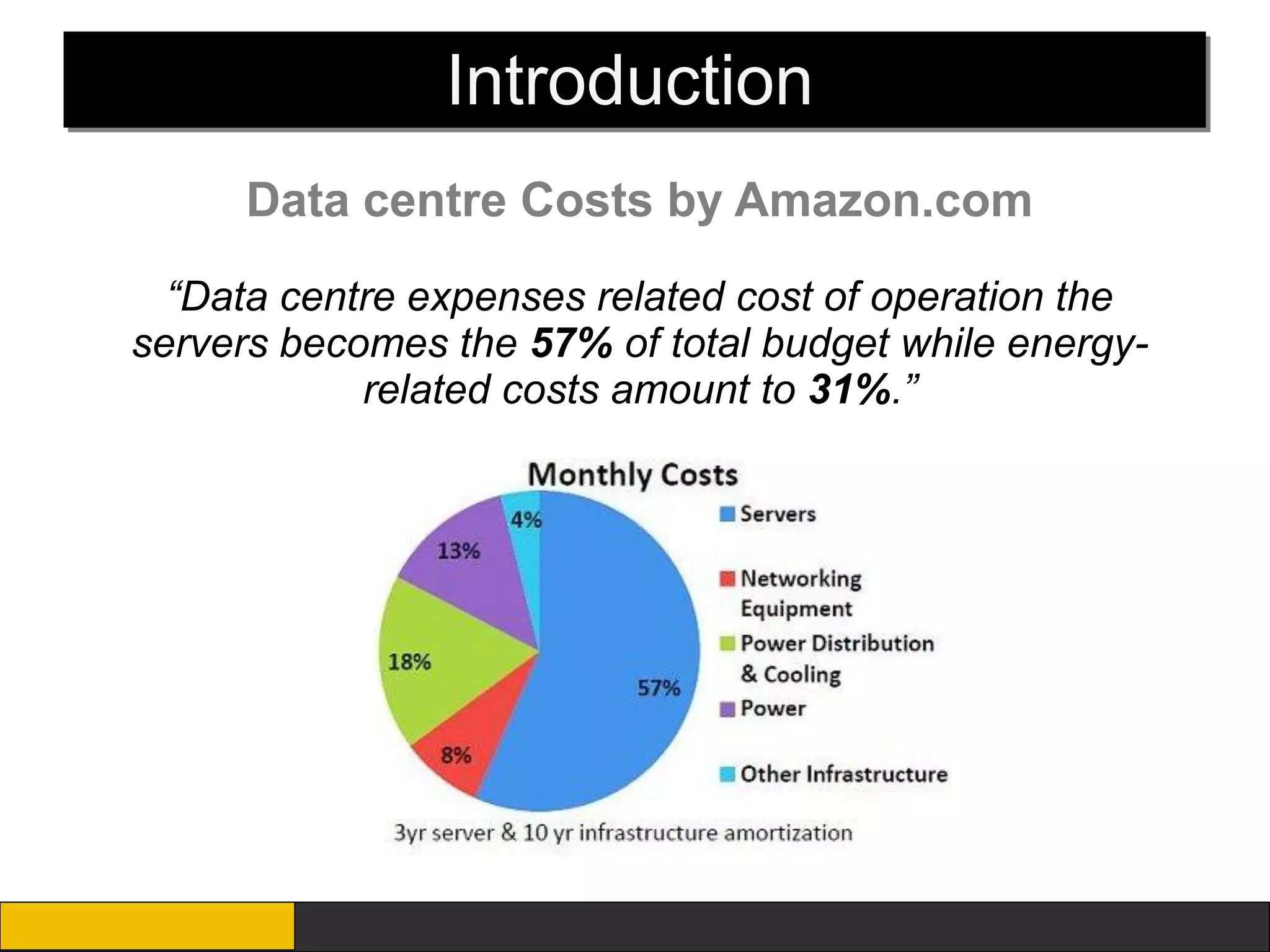
     Data centre Costs by Amazon.com
  “Data centre expenses related cost of operation the
servers becomes the 57% of total budget while energy-
            related costs amount to 31%.”
Introduction

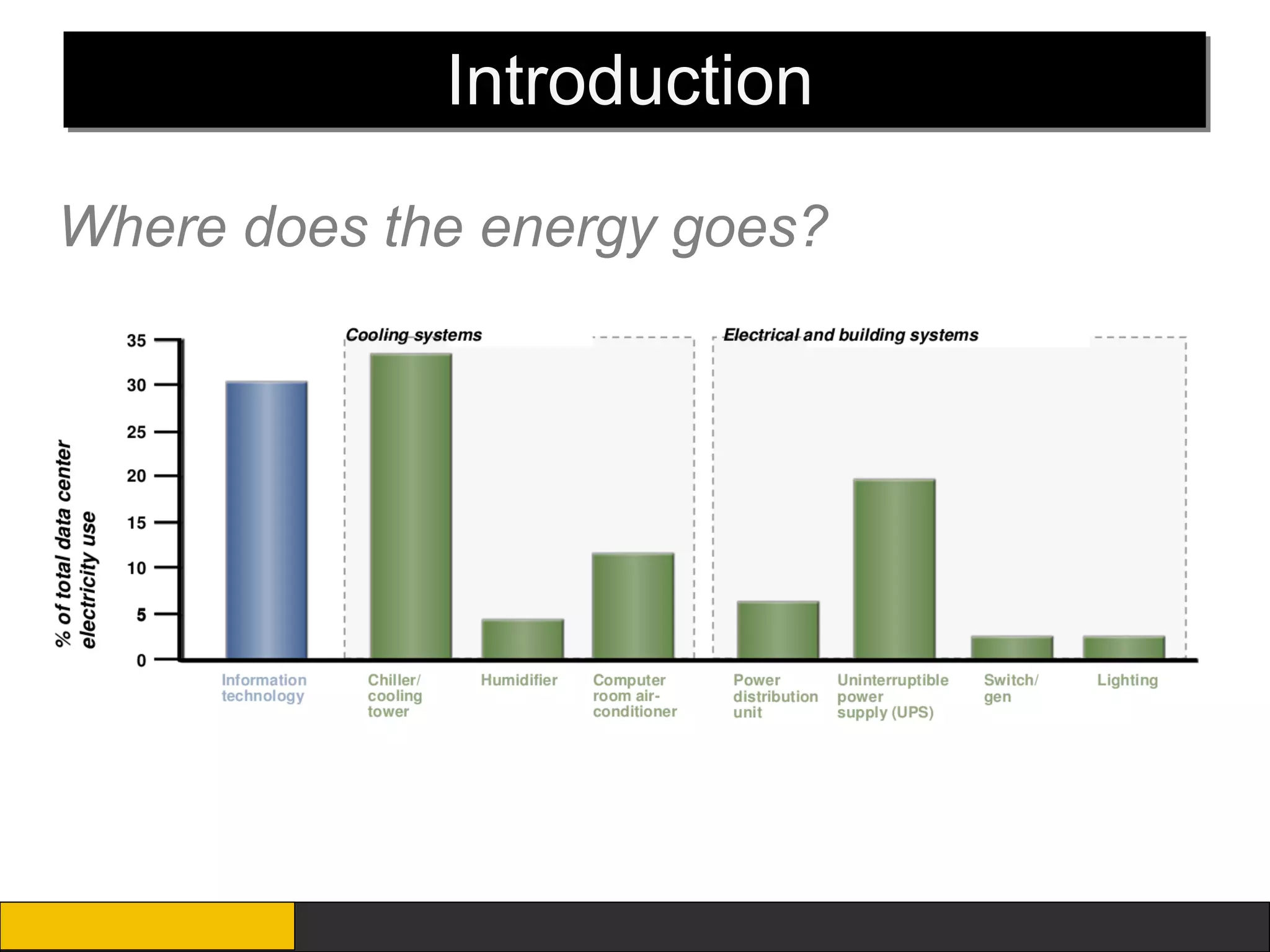
Where does the energy goes?
Outline
Energy-Efficient Cloud Computing

  Part 1: Introduction

  Part 2: Current state of Energy-Efficiency

  Part 3: Towards Energy-Efficient Cloud Computing

  Part 4: Conclusions
Current State
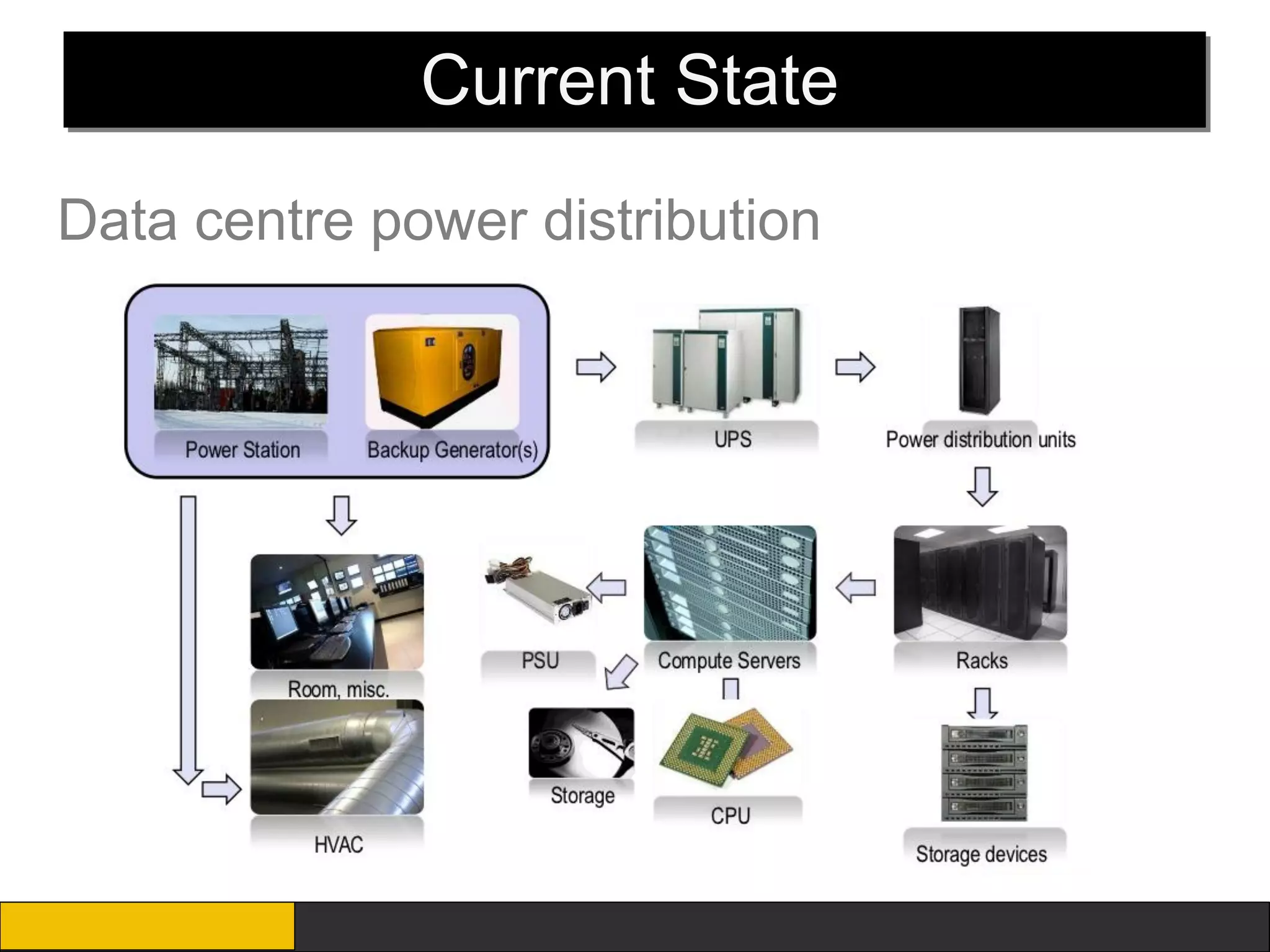
Data centre power distribution
Current State
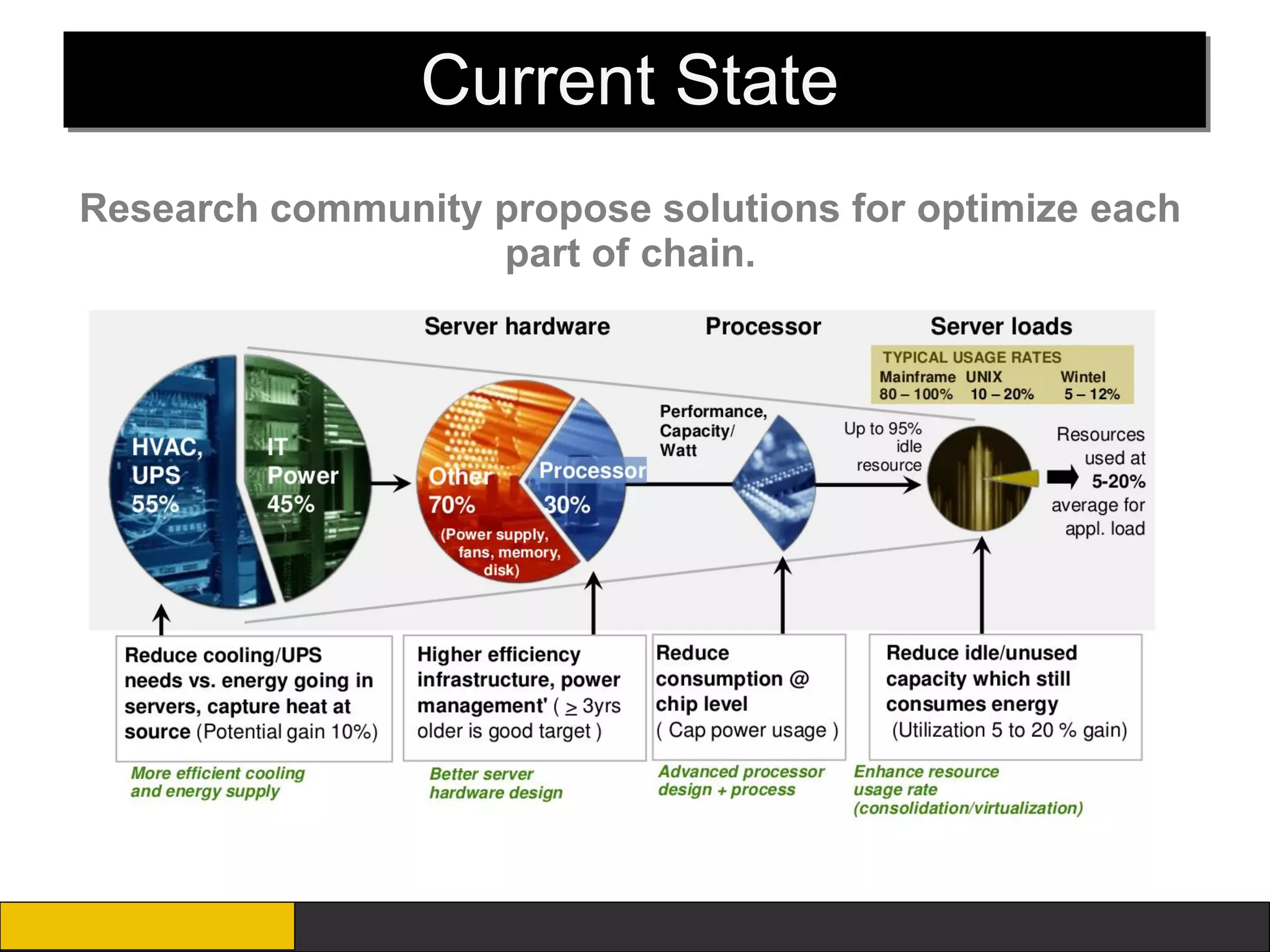
Research community propose solutions for optimize each
                   part of chain.
Current State
How DC can cut energy consumptions?
 • Energy-efficient opportunities for power consumption:
    – Energy-efficient hardware
    – Power minimization in Cluster & Networks
    – Distributed Energy-Efficient Schedulers (DEES)
 • Cooling consumptions can be cut by:
    – Better air management
    – Move to liquid cooling
    – Use of free cooling (Green)!
Current State
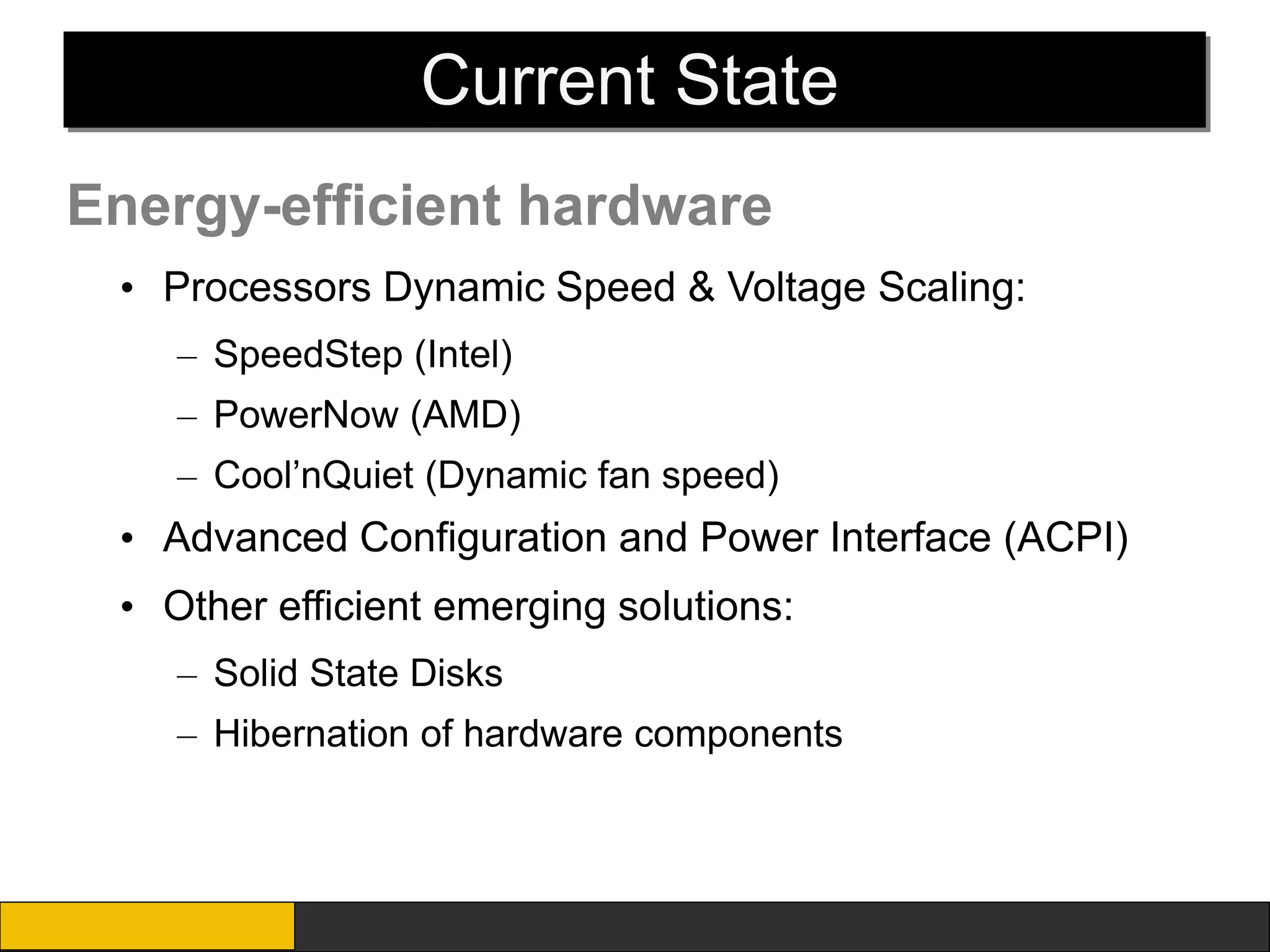
Energy-efficient hardware
 • Processors Dynamic Speed & Voltage Scaling:
    – SpeedStep (Intel)
    – PowerNow (AMD)
    – Cool’nQuiet (Dynamic fan speed)
 • Advanced Configuration and Power Interface (ACPI)
 • Other efficient emerging solutions:
    – Solid State Disks
    – Hibernation of hardware components
Current State
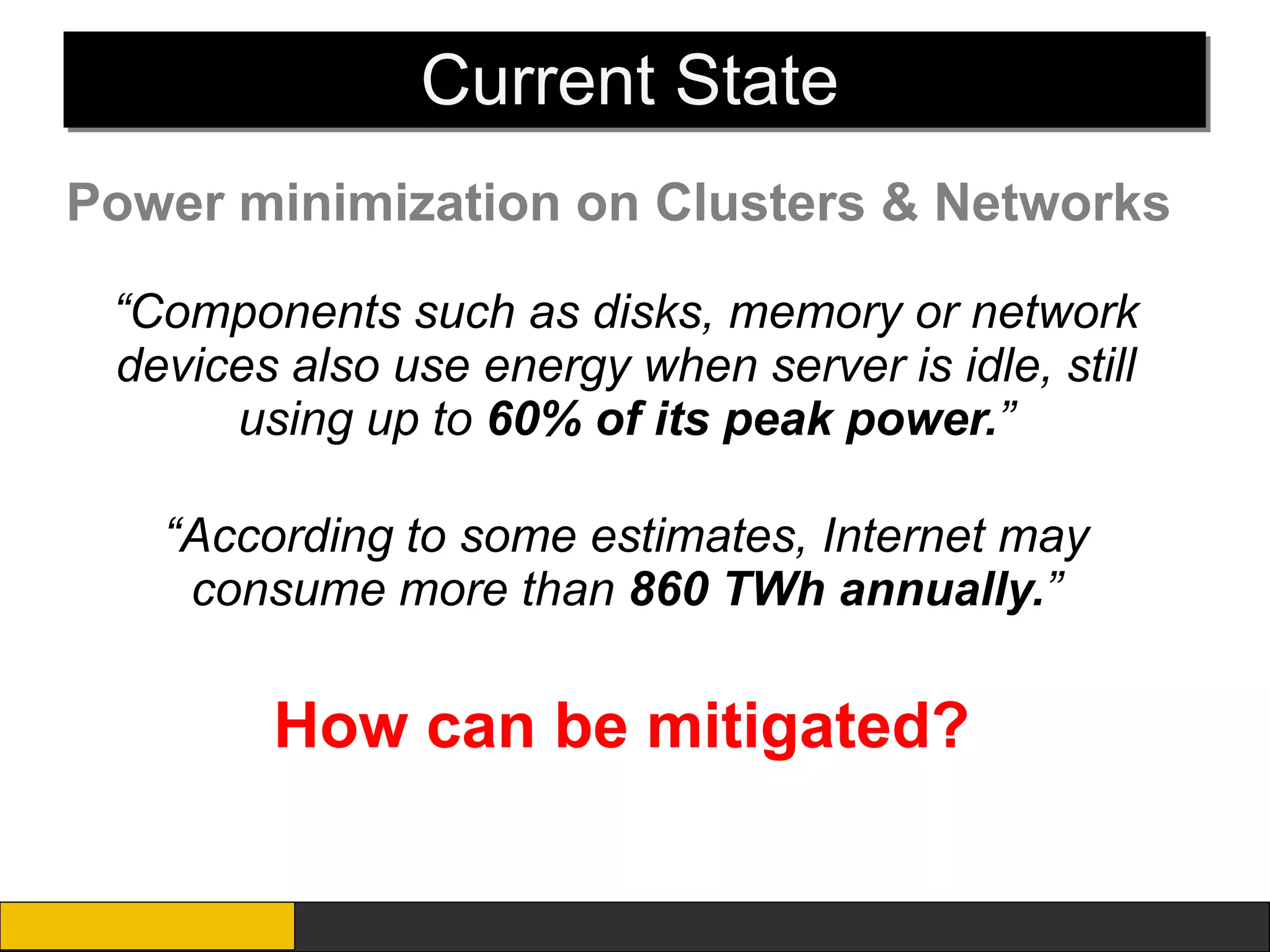
Power minimization on Clusters & Networks

 “Components such as disks, memory or network
 devices also use energy when server is idle, still
      using up to 60% of its peak power.”

   “According to some estimates, Internet may
    consume more than 860 TWh annually.”

        How can be mitigated?
Current State
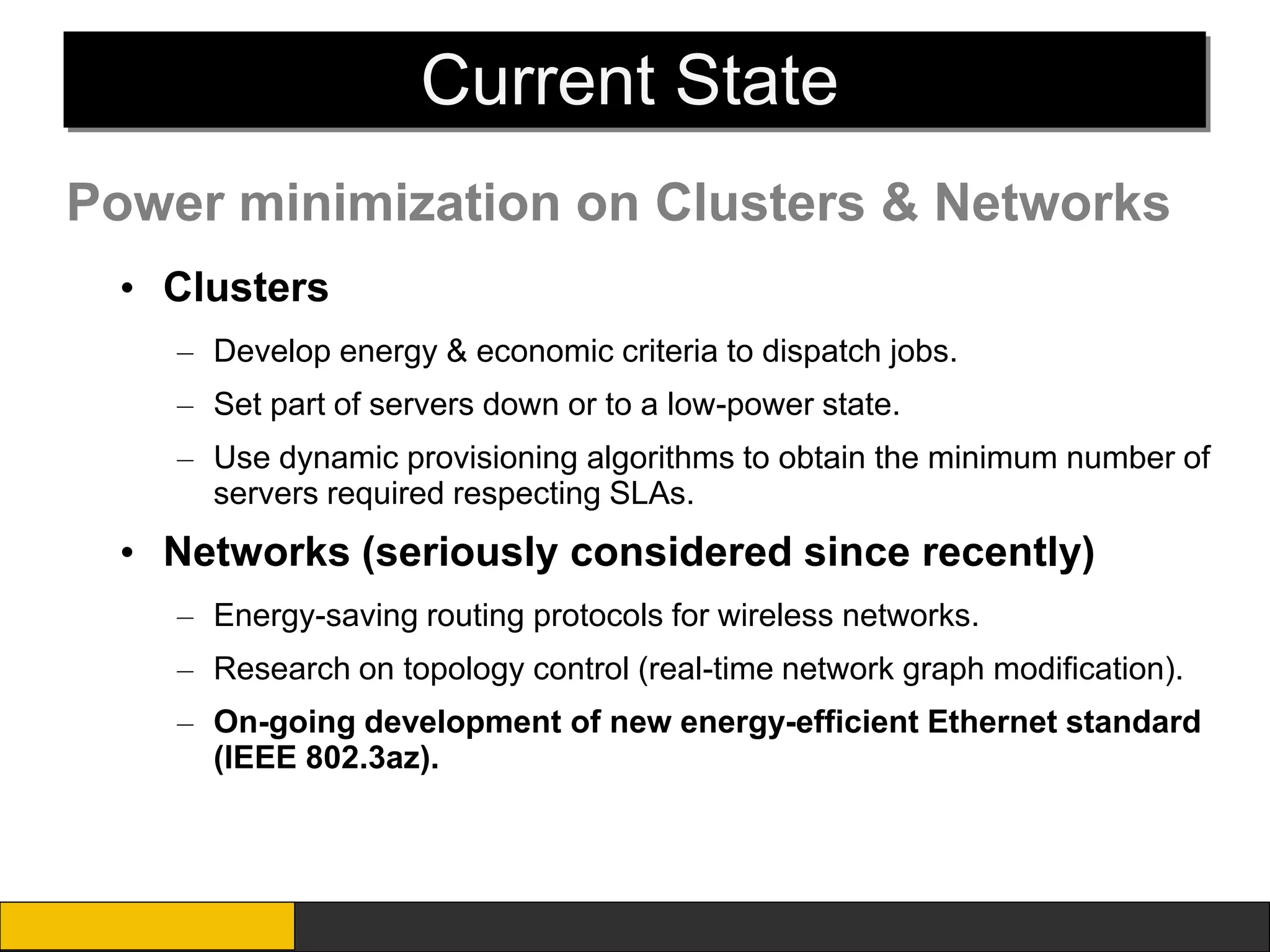
Power minimization on Clusters & Networks
 • Clusters
    – Develop energy & economic criteria to dispatch jobs.
    – Set part of servers down or to a low-power state.
    – Use dynamic provisioning algorithms to obtain the minimum number of
      servers required respecting SLAs.
 • Networks (seriously considered since recently)
    – Energy-saving routing protocols for wireless networks.
    – Research on topology control (real-time network graph modification).
    – On-going development of new energy-efficient Ethernet standard
      (IEEE 802.3az).
Outline
Energy-Efficient Cloud Computing

  Part 1: Introduction

  Part 2: Current state of Energy-Efficiency

  Part 3: Towards Energy-Efficient Cloud Computing

  Part 4: Conclusions
Efficient Cloud Computing
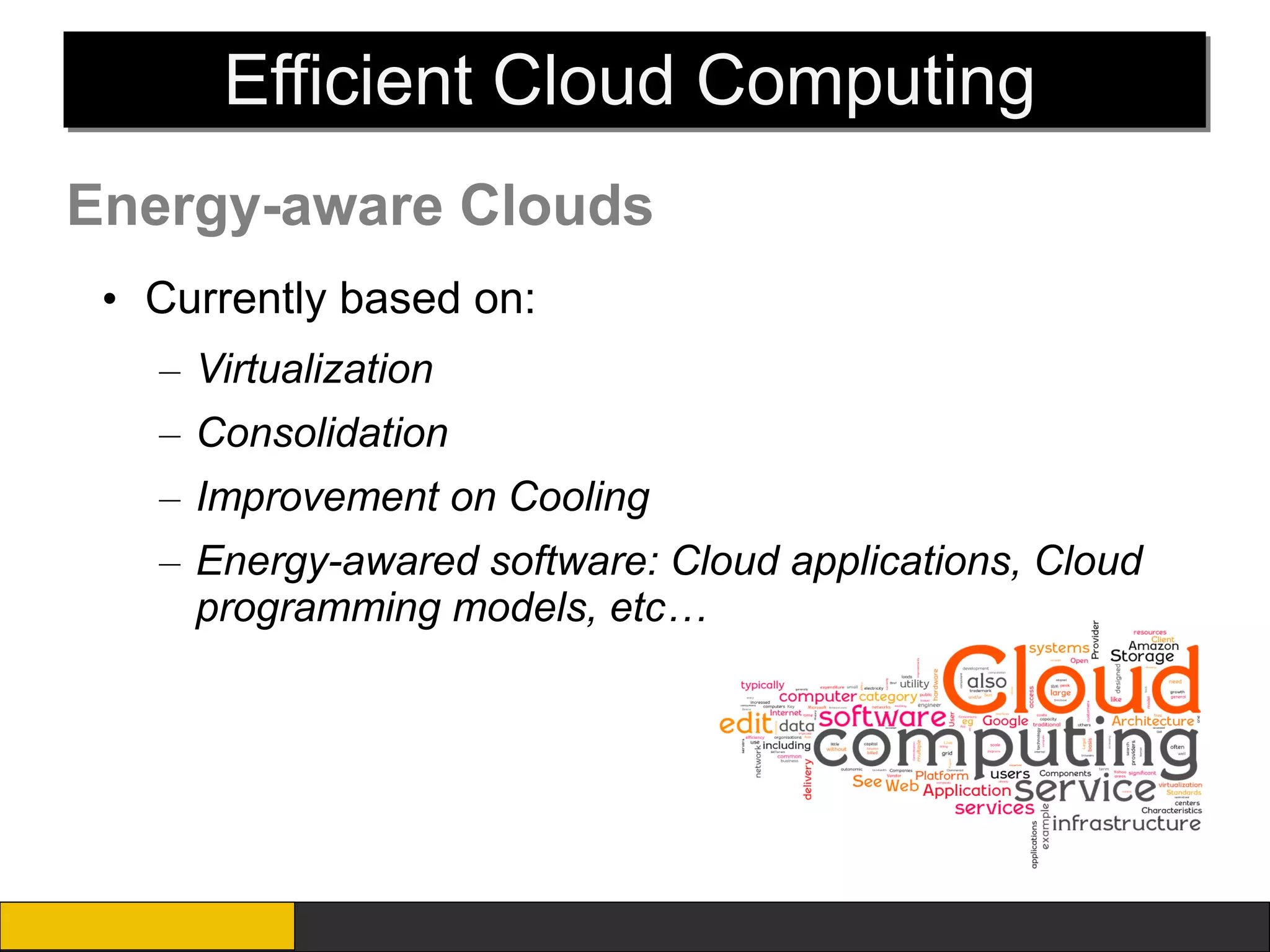
Energy-aware Clouds
 • Currently based on:
   – Virtualization
   – Consolidation
   – Improvement on Cooling
   – Energy-awared software: Cloud applications, Cloud
     programming models, etc…
Efficient Cloud Computing
Virtualization
  • Allows partition computational resources and share
    the hardware:
    – Many services often needs only small fraction of
      computational resource.
    – Low server utilization consumes non-less than 60% of
      peak power.
    – This services can be virtualized running on a virtual
      machine.
    – Virtual machines can be: created, terminated, cloned or
      moved from host to host.
Efficient Cloud Computing
Consolidation techniques
  • Resource optimization:
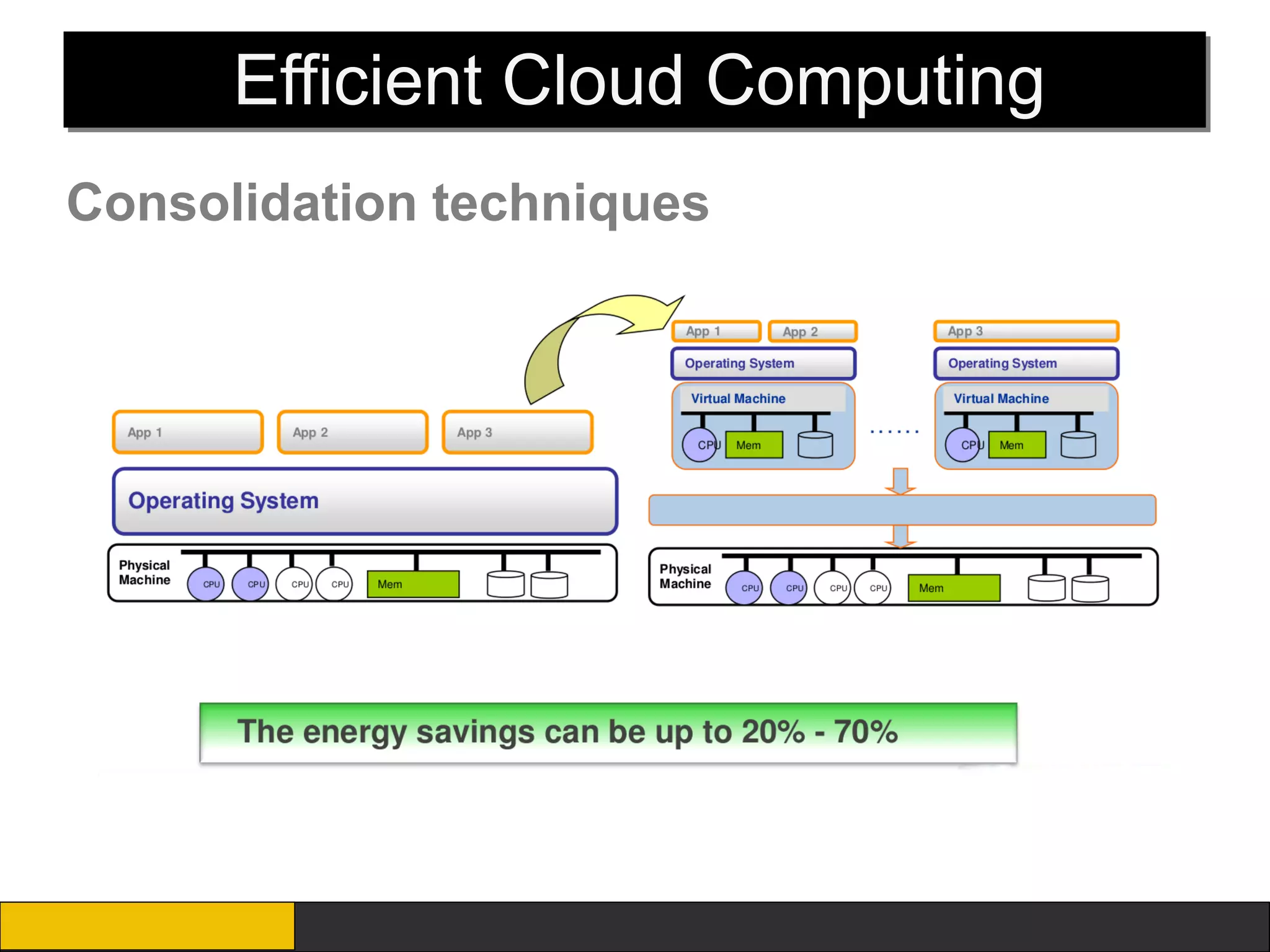
    – Many virtual machines can run on a single hardware unit
      (consolidation).
    – Live-Migration: VM host-to-host migration while running in
      nanoseconds.
    – Reduction on cooling due distributing properly the VMs over physical
      resources avoiding thermal hotspots.
Efficient Cloud Computing
Consolidation techniques
Efficient Cloud Computing
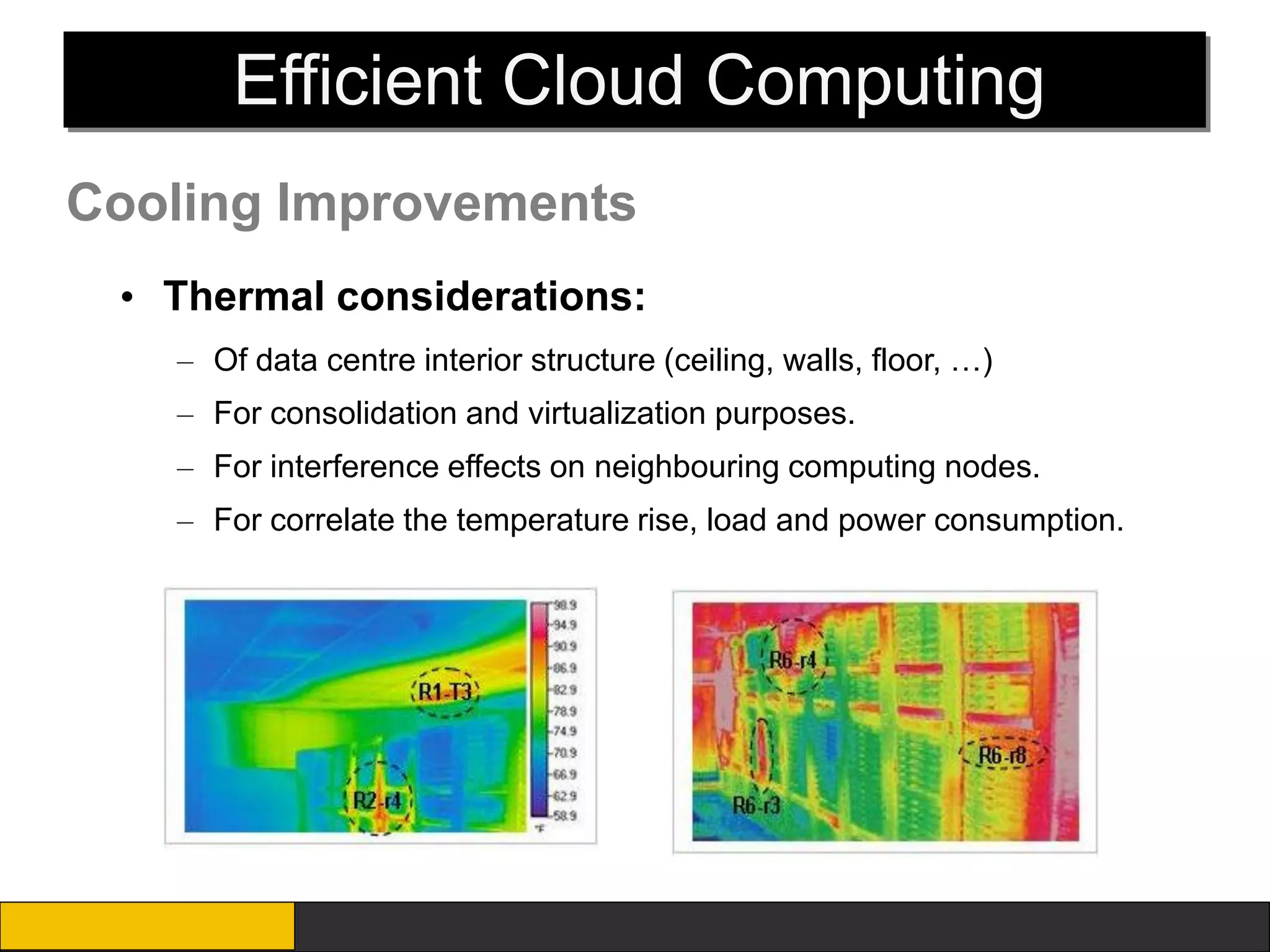
Cooling Improvements
 • Thermal considerations:
   – Of data centre interior structure (ceiling, walls, floor, …)
   – For consolidation and virtualization purposes.
   – For interference effects on neighbouring computing nodes.
   – For correlate the temperature rise, load and power consumption.
Conclusions
 The IT business future is going to Energy-awared Data
  centers and Green Computing.


 Nowadays, one can leverage a lot of available energy-
  awared technologies and techniques at different levels.


 Researchers comunity is currently starting to tackle energy-
  efficiency problems.


 Savings on Green House Gas and CO2 emissions!!!
Doubts?
 rogerrafanell@gmail.com

MRI Energy-Efficient Cloud Computing

  • 1.
    Energy-Efficient Cloud Computing Walking towards a more energy-efficient computing world. Roger Rafanell 18/6/2012 MRI
  • 2.
    Outline Energy-Efficient Cloud Computing Part 1: Introduction Part 2: Current state of Energy-Efficiency Part 3: Towards Energy-Efficient Cloud Computing Part 4: Conclusions
  • 3.
    Introduction Data centre Costs by Amazon.com “Data centre expenses related cost of operation the servers becomes the 57% of total budget while energy- related costs amount to 31%.”
  • 4.
  • 5.
    Outline Energy-Efficient Cloud Computing Part 1: Introduction Part 2: Current state of Energy-Efficiency Part 3: Towards Energy-Efficient Cloud Computing Part 4: Conclusions
  • 6.
    Current State Data centrepower distribution
  • 7.
    Current State Research communitypropose solutions for optimize each part of chain.
  • 8.
    Current State How DCcan cut energy consumptions? • Energy-efficient opportunities for power consumption: – Energy-efficient hardware – Power minimization in Cluster & Networks – Distributed Energy-Efficient Schedulers (DEES) • Cooling consumptions can be cut by: – Better air management – Move to liquid cooling – Use of free cooling (Green)!
  • 9.
    Current State Energy-efficient hardware • Processors Dynamic Speed & Voltage Scaling: – SpeedStep (Intel) – PowerNow (AMD) – Cool’nQuiet (Dynamic fan speed) • Advanced Configuration and Power Interface (ACPI) • Other efficient emerging solutions: – Solid State Disks – Hibernation of hardware components
  • 10.
    Current State Power minimizationon Clusters & Networks “Components such as disks, memory or network devices also use energy when server is idle, still using up to 60% of its peak power.” “According to some estimates, Internet may consume more than 860 TWh annually.” How can be mitigated?
  • 11.
    Current State Power minimizationon Clusters & Networks • Clusters – Develop energy & economic criteria to dispatch jobs. – Set part of servers down or to a low-power state. – Use dynamic provisioning algorithms to obtain the minimum number of servers required respecting SLAs. • Networks (seriously considered since recently) – Energy-saving routing protocols for wireless networks. – Research on topology control (real-time network graph modification). – On-going development of new energy-efficient Ethernet standard (IEEE 802.3az).
  • 12.
    Outline Energy-Efficient Cloud Computing Part 1: Introduction Part 2: Current state of Energy-Efficiency Part 3: Towards Energy-Efficient Cloud Computing Part 4: Conclusions
  • 13.
    Efficient Cloud Computing Energy-awareClouds • Currently based on: – Virtualization – Consolidation – Improvement on Cooling – Energy-awared software: Cloud applications, Cloud programming models, etc…
  • 14.
    Efficient Cloud Computing Virtualization • Allows partition computational resources and share the hardware: – Many services often needs only small fraction of computational resource. – Low server utilization consumes non-less than 60% of peak power. – This services can be virtualized running on a virtual machine. – Virtual machines can be: created, terminated, cloned or moved from host to host.
  • 15.
    Efficient Cloud Computing Consolidationtechniques • Resource optimization: – Many virtual machines can run on a single hardware unit (consolidation). – Live-Migration: VM host-to-host migration while running in nanoseconds. – Reduction on cooling due distributing properly the VMs over physical resources avoiding thermal hotspots.
  • 16.
  • 17.
    Efficient Cloud Computing CoolingImprovements • Thermal considerations: – Of data centre interior structure (ceiling, walls, floor, …) – For consolidation and virtualization purposes. – For interference effects on neighbouring computing nodes. – For correlate the temperature rise, load and power consumption.
  • 18.
    Conclusions  The ITbusiness future is going to Energy-awared Data centers and Green Computing.  Nowadays, one can leverage a lot of available energy- awared technologies and techniques at different levels.  Researchers comunity is currently starting to tackle energy- efficiency problems.  Savings on Green House Gas and CO2 emissions!!!
  • 19.