What is Green Computing ?
 Green Computing is the term used to
donate efficient use of resources in
computing.
 It is also Known as Green IT.
 Green Computing is “ Where
organizations adopt a policy of ensuring
that the setup and operations of
Information Technology produces the
minimal carbon footprint” .
What is Green Computing ?
(cntd.)
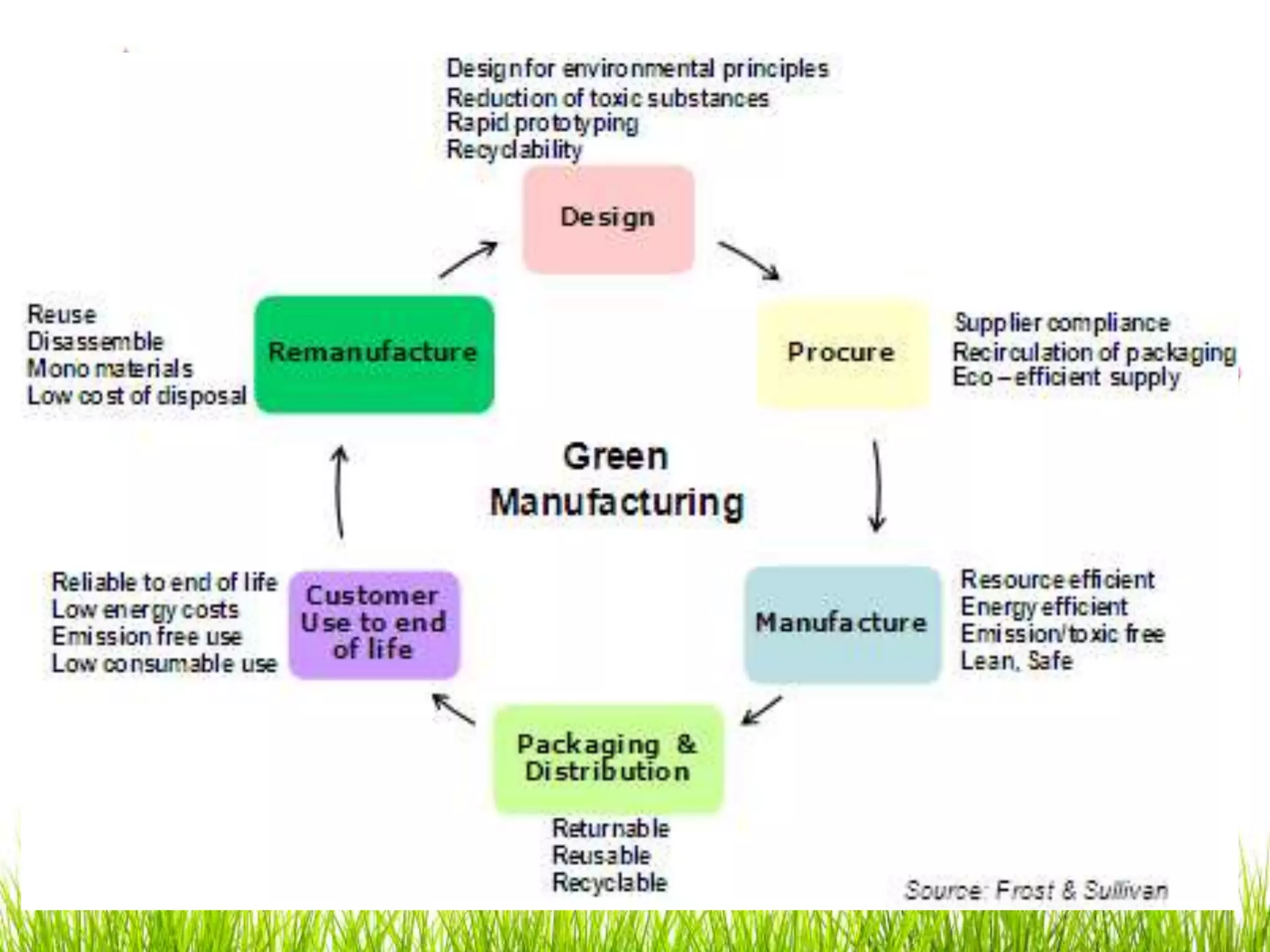
 Green Cloud is “ the study and practice of
designing, manufacturing , using and
disposing of computers , servers and
associated subsystems .
 Key issues are energy efficiency in computing
and promoting environmentally friendly
computer technologies .
Goal of Green Computing –
• The goals of green computing are similar
to green chemistry.
• Minimize energy consumption.
• Purchasing green energy.
• Reducing travel requirements for
employees/costumers .
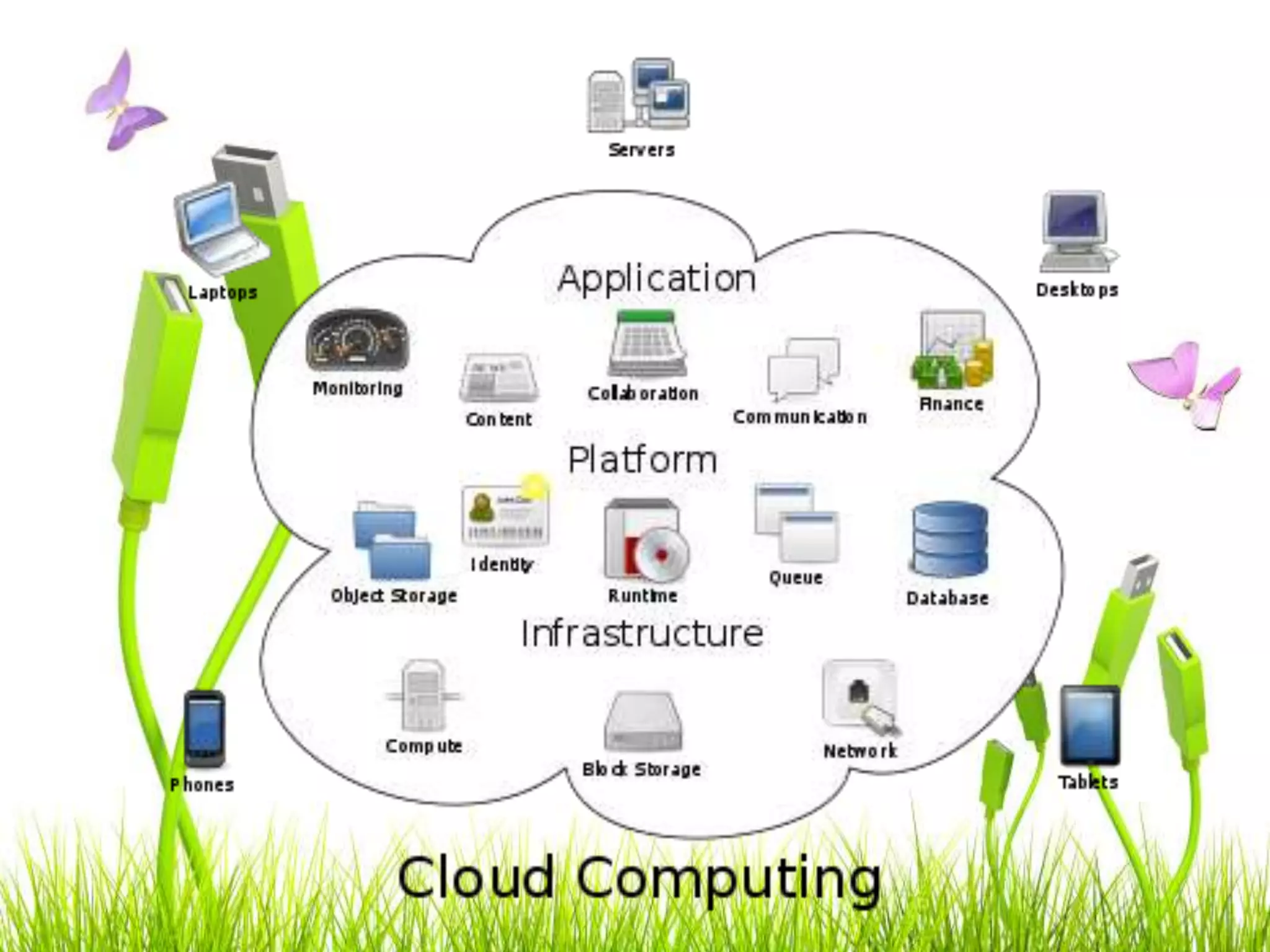
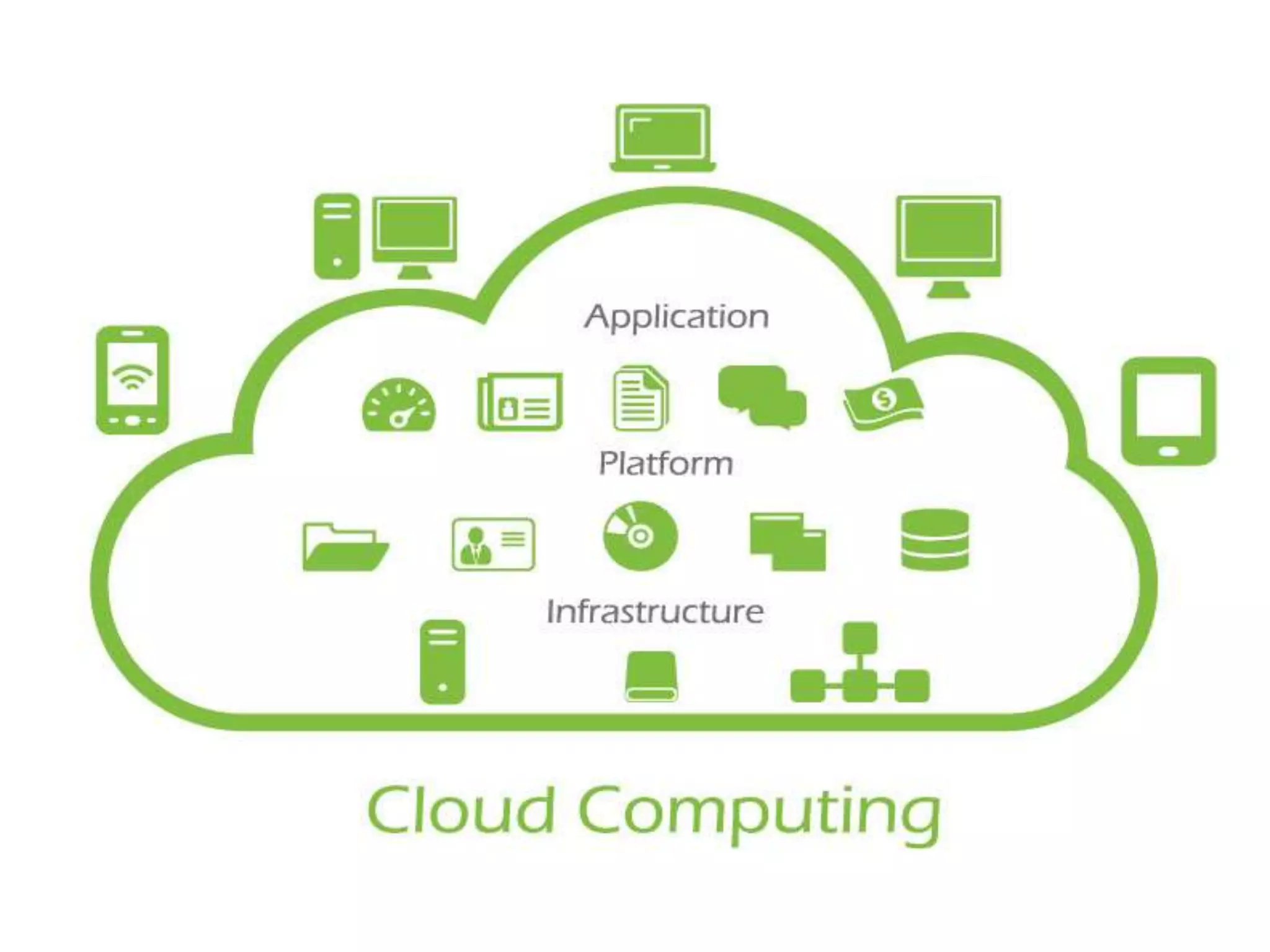
What is Cloud Computing ?
• Cloud computing is a metaphor used by
Technology or IT Services companies for the
delivery of computing requirements as
a service to a heterogeneous community of
end-recipients.
• It is a Virtualized Computing Platform .
• Scalable use of computing resources .
CLOUD SERVICE MODELS
1.Software as a Service:
The software is present on
clouds and all type processing
is done on cloud only. This
feature allows users to access
the software from any
computer which is connected
to the internet.
2.Storage as a Service:
This service allow user to
outsource their data storage
needs to the cloud. The user
store all his/her files on cloud
but the all kind of processing
is done on user’s PC
3.Processing as a Service:
This model provides user
the functionality to
process complex
computation on cloud
which consists of powerful
servers. Tasks which
demand less processing
power are carried on
user’s PC only.
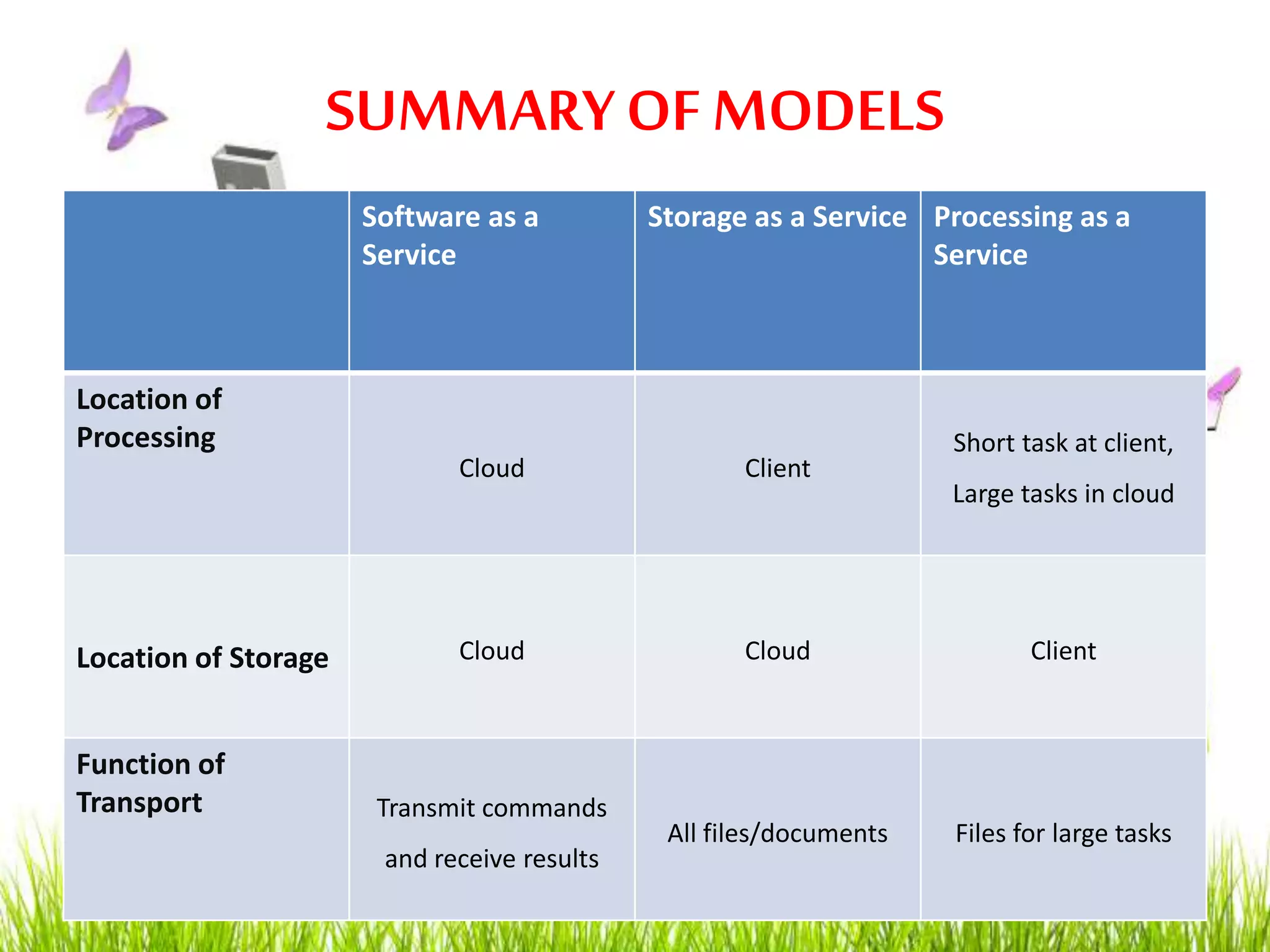
SUMMARYOF MODELS
Software as a
Service
Storage as a Service Processing as a
Service
Location of
Processing
Cloud Client
Short task at client,
Large tasks in cloud
Location of Storage Cloud Cloud Client
Function of
Transport Transmit commands
and receive results
All files/documents Files for large tasks
Green Cloud Computing
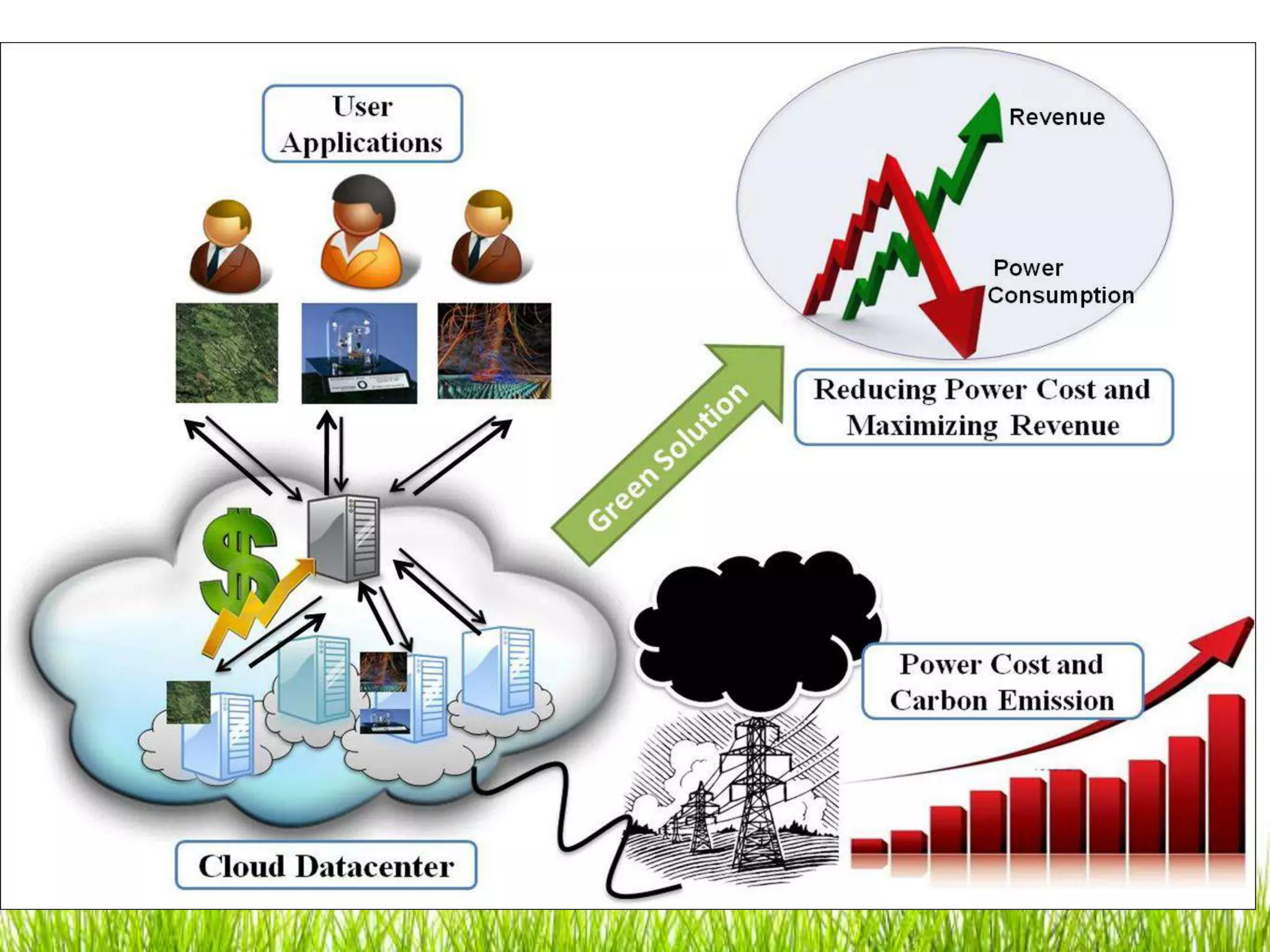
• Green Cloud computing is used to achieve not
only efficient processing and utilization of
computing infrastructure, but also minimize
energy consumption .
• It is also called as GREEN IT.
• Practice of using computer products
efficiently.
Goals Of Green Cloud Computing:
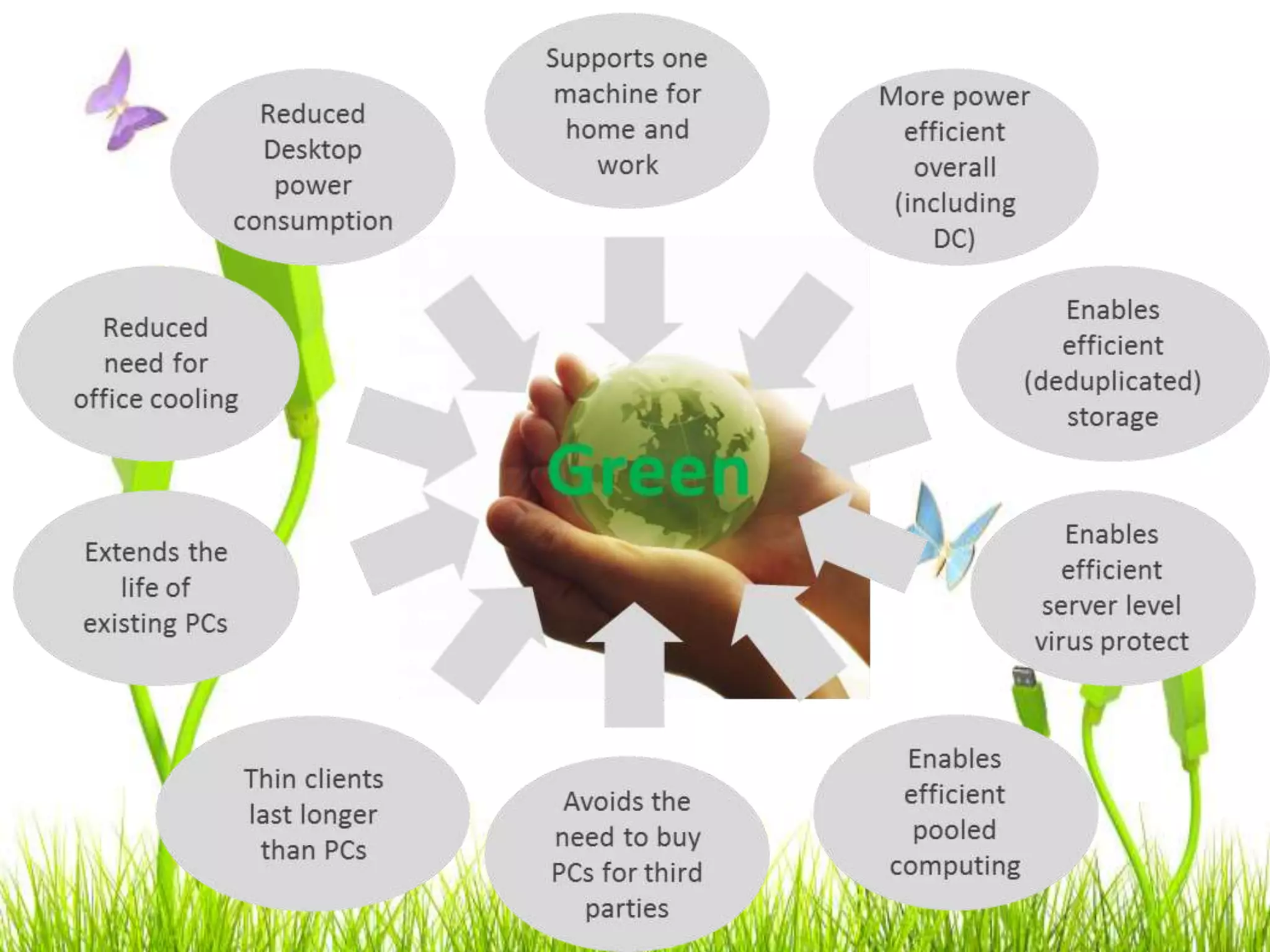
• Reduce the use of hazardous material , it
causes harm to environment .
• “Green” Data Centers.
• Using recycle materials.
• Supply Chain Energy Usage.
ADVANTAGESOF GREEN CLOUD
COMPUTING
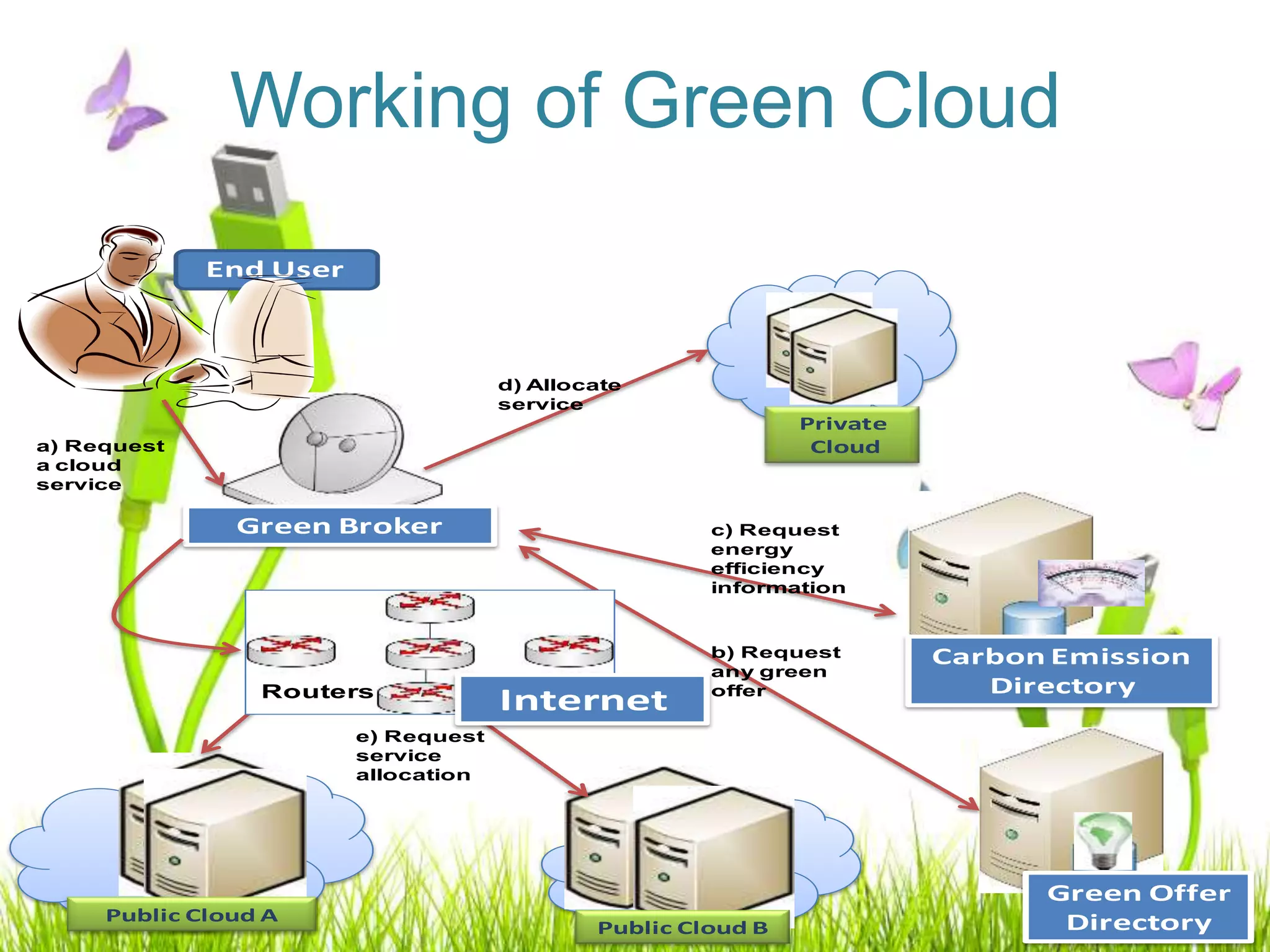
Working of Green Cloud
Public Cloud B
Private
Cloud
End User
Carbon Emission
Directory
Public Cloud A
a) Request
a cloud
service
d) Allocate
service
e) Request
service
allocation
c) Request
energy
efficiency
information
Green Offer
Directory
b) Request
any green
offerRouters
Internet
Green Broker
Green IT in developing regions
• Development of ICT
• Moving Processor and Data closer to the User
• Public Policy measures-Germany example, PPP
• Locating Data Centers in the developing world
• Economic Growth
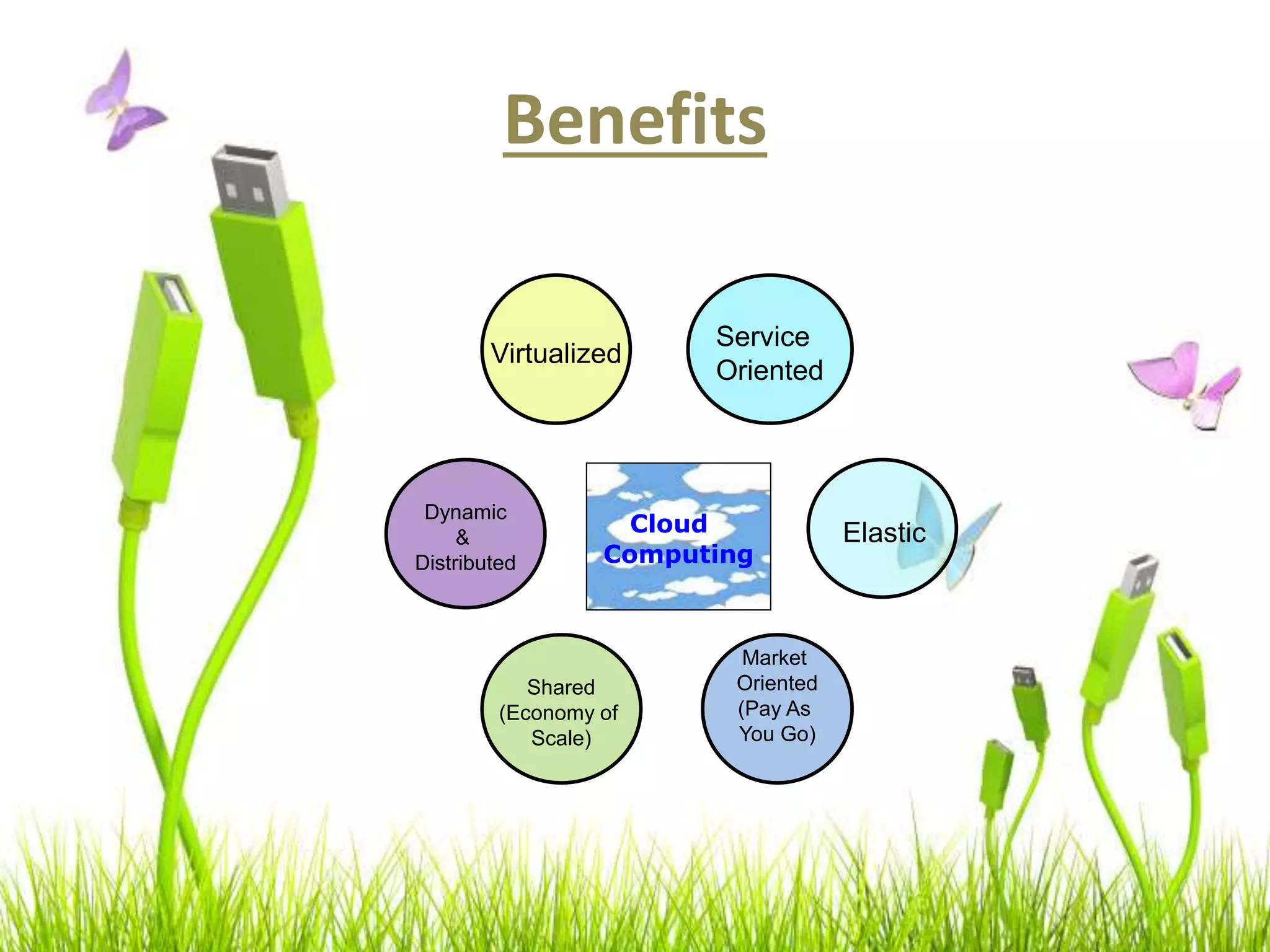
Benefits
Elastic
Market
Oriented
(Pay As
You Go)
Virtualized
Service
Oriented
Dynamic
&
Distributed
Shared
(Economy of
Scale)
Cloud
Computing
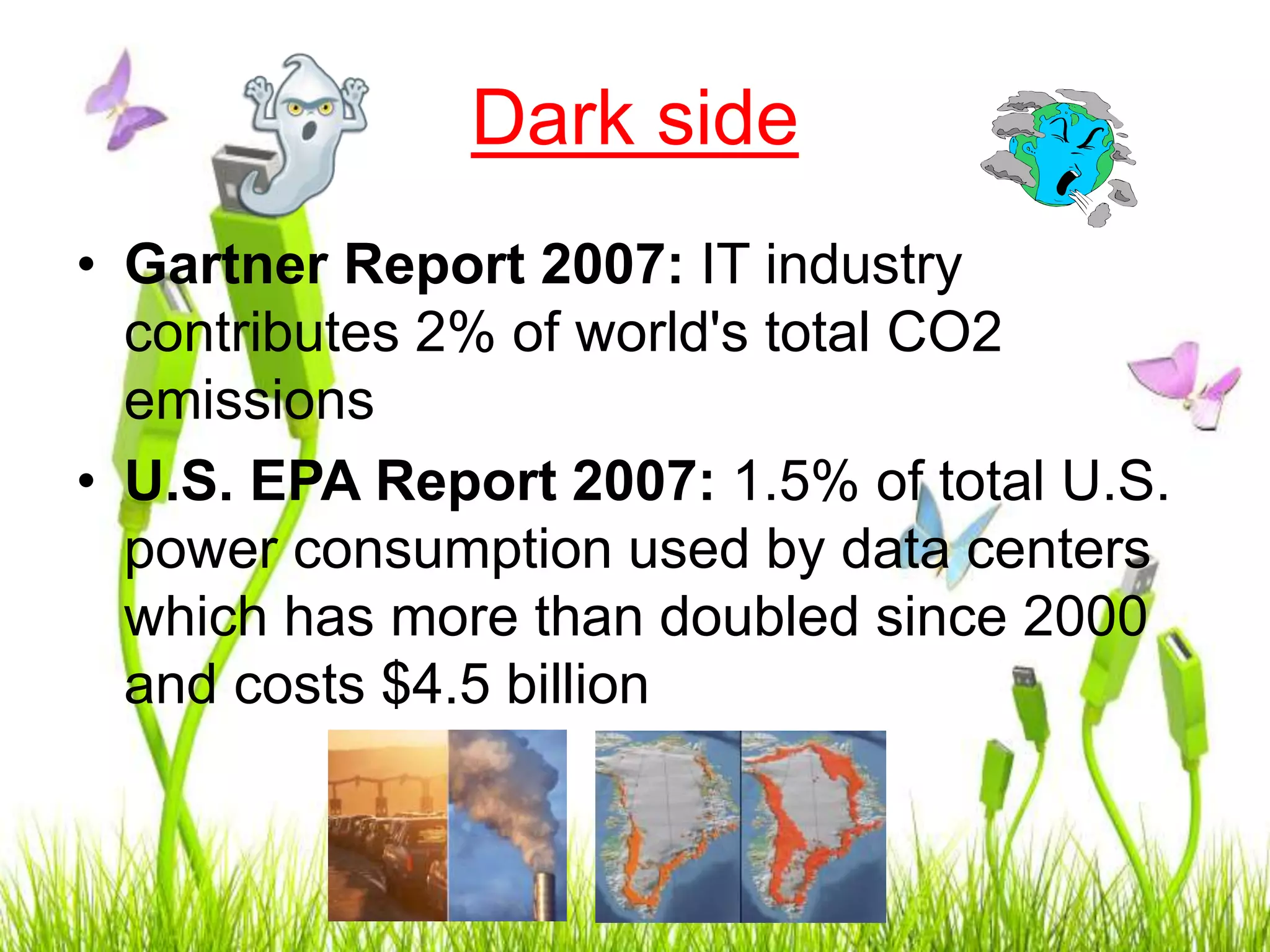
Dark side
• Gartner Report 2007: IT industry
contributes 2% of world's total CO2
emissions
• U.S. EPA Report 2007: 1.5% of total U.S.
power consumption used by data centers
which has more than doubled since 2000
and costs $4.5 billion
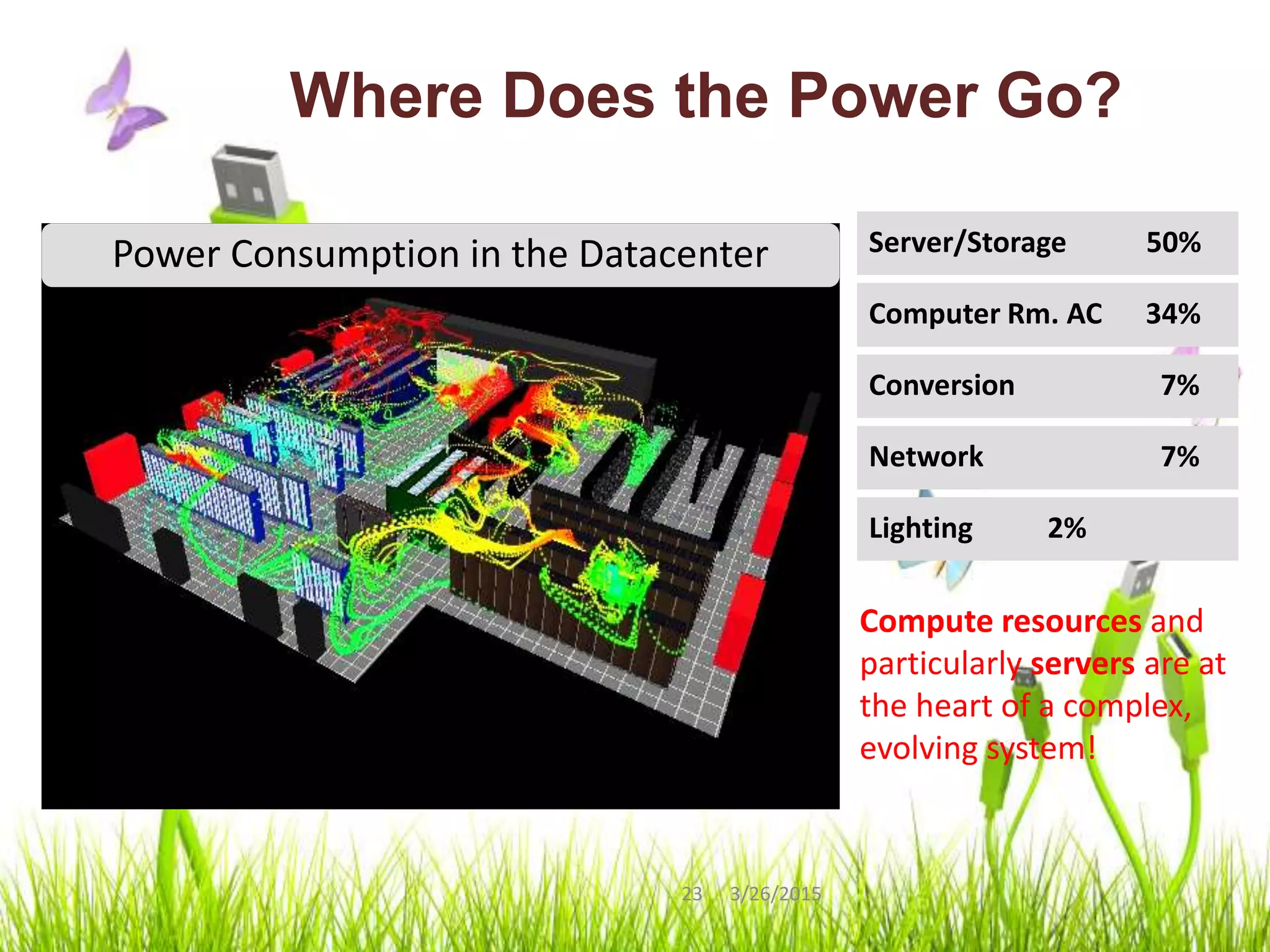
Computer Rm. AC 34%
Server/Storage 50%
Conversion 7%
Network 7%
Lighting 2%
Compute resources and
particularly servers are at
the heart of a complex,
evolving system!
Where Does the Power Go?
Power Consumption in the Datacenter
3/26/201523
Green Cloud Computing
Architecture
1. Consumers/Brokers:
• Cloud consumers or their brokers submit
service requests from anywhere in the world
to the Cloud. It is important to notice that
there can be a difference between Cloud
consumers and users of deployed services. For
instance, a consumer can be a company
deploying a Web application, which presents
varying workload according to the number of
users accessing it.
2. Green Resource Allocator:
• Acts as the interface between the Cloud
infrastructure and consumers. It requires the
interaction to support energy-efficient
resource management.
3.Virtual Machines (VMs)
• Multiple VMs can be dynamically started and
stopped on a single physical machine to meet
accepted requests, hence providing maximum
flexibility to configure various partitions of
resources on the same physical machine to
different specific requirements of service
requests.
4. Physical Machines:
• The underlying physical computing servers
provide hardware infrastructure for creating
virtualized resources to meet service
demands.
Go Green!!!
• Presented a Carbon Aware Green Cloud
Framework to improve the carbon footprint of
Cloud computing
• Lots of research to be carried out
• Maximizing Efficiency of Green Data Centers
• Developing Regions to benefit the most
Green cloud computing

Green cloud computing

  • 2.
    What is GreenComputing ?  Green Computing is the term used to donate efficient use of resources in computing.  It is also Known as Green IT.  Green Computing is “ Where organizations adopt a policy of ensuring that the setup and operations of Information Technology produces the minimal carbon footprint” .
  • 3.
    What is GreenComputing ? (cntd.)  Green Cloud is “ the study and practice of designing, manufacturing , using and disposing of computers , servers and associated subsystems .  Key issues are energy efficiency in computing and promoting environmentally friendly computer technologies .
  • 5.
    Goal of GreenComputing – • The goals of green computing are similar to green chemistry. • Minimize energy consumption. • Purchasing green energy. • Reducing travel requirements for employees/costumers .
  • 6.
    What is CloudComputing ? • Cloud computing is a metaphor used by Technology or IT Services companies for the delivery of computing requirements as a service to a heterogeneous community of end-recipients. • It is a Virtualized Computing Platform . • Scalable use of computing resources .
  • 8.
  • 9.
    1.Software as aService: The software is present on clouds and all type processing is done on cloud only. This feature allows users to access the software from any computer which is connected to the internet.
  • 10.
    2.Storage as aService: This service allow user to outsource their data storage needs to the cloud. The user store all his/her files on cloud but the all kind of processing is done on user’s PC
  • 11.
    3.Processing as aService: This model provides user the functionality to process complex computation on cloud which consists of powerful servers. Tasks which demand less processing power are carried on user’s PC only.
  • 12.
    SUMMARYOF MODELS Software asa Service Storage as a Service Processing as a Service Location of Processing Cloud Client Short task at client, Large tasks in cloud Location of Storage Cloud Cloud Client Function of Transport Transmit commands and receive results All files/documents Files for large tasks
  • 13.
    Green Cloud Computing •Green Cloud computing is used to achieve not only efficient processing and utilization of computing infrastructure, but also minimize energy consumption . • It is also called as GREEN IT. • Practice of using computer products efficiently.
  • 15.
    Goals Of GreenCloud Computing: • Reduce the use of hazardous material , it causes harm to environment . • “Green” Data Centers. • Using recycle materials. • Supply Chain Energy Usage.
  • 17.
  • 19.
    Working of GreenCloud Public Cloud B Private Cloud End User Carbon Emission Directory Public Cloud A a) Request a cloud service d) Allocate service e) Request service allocation c) Request energy efficiency information Green Offer Directory b) Request any green offerRouters Internet Green Broker
  • 20.
    Green IT indeveloping regions • Development of ICT • Moving Processor and Data closer to the User • Public Policy measures-Germany example, PPP • Locating Data Centers in the developing world • Economic Growth
  • 21.
  • 22.
    Dark side • GartnerReport 2007: IT industry contributes 2% of world's total CO2 emissions • U.S. EPA Report 2007: 1.5% of total U.S. power consumption used by data centers which has more than doubled since 2000 and costs $4.5 billion
  • 23.
    Computer Rm. AC34% Server/Storage 50% Conversion 7% Network 7% Lighting 2% Compute resources and particularly servers are at the heart of a complex, evolving system! Where Does the Power Go? Power Consumption in the Datacenter 3/26/201523
  • 24.
  • 25.
    1. Consumers/Brokers: • Cloudconsumers or their brokers submit service requests from anywhere in the world to the Cloud. It is important to notice that there can be a difference between Cloud consumers and users of deployed services. For instance, a consumer can be a company deploying a Web application, which presents varying workload according to the number of users accessing it.
  • 26.
    2. Green ResourceAllocator: • Acts as the interface between the Cloud infrastructure and consumers. It requires the interaction to support energy-efficient resource management.
  • 27.
    3.Virtual Machines (VMs) •Multiple VMs can be dynamically started and stopped on a single physical machine to meet accepted requests, hence providing maximum flexibility to configure various partitions of resources on the same physical machine to different specific requirements of service requests.
  • 28.
    4. Physical Machines: •The underlying physical computing servers provide hardware infrastructure for creating virtualized resources to meet service demands.
  • 29.
    Go Green!!! • Presenteda Carbon Aware Green Cloud Framework to improve the carbon footprint of Cloud computing • Lots of research to be carried out • Maximizing Efficiency of Green Data Centers • Developing Regions to benefit the most

Editor's Notes

  • #7 Cloud Computing- When talking about a cloud computing system, it's helpful to divide it into two sections: the front end and the back end. They connect to each other through a network, usually the Internet. The front end is the side the computer user, or client, sees. The back end is the "cloud" section of the system.
  • #21 Moving processing and data closer to the user in the developing region plays an import role on three fronts; Keeps needed jobs and systems ICT (Information and Communication technology) people in region, 2. Sidesteps high telecommunication bandwidth costs and network latency issues in and out of the region and 3. Quality of service: in region computing can remove a major points of network failure and potential bandwidth bottlenecks PPP-Public Private Partnerships Germany Example : Germany serves as an excellent example, as the country has become the world leader in solar power, with half the world’s installations within its borders, thanks to policies including aggressive renewable energy subsidies and large sums of money devoted to research.
  • #23 Everyone is now aware of increasing contribution of IT industry to environmental pollution.
  • #24 With the improvement of technology, the power consumption of datacenters is also increasing. Most of the power actually goes in the IT applications running on the servers. Even in cooling, the energy consumption is due to server heat.