MOTIVATION
GROUP 2
TEAM MEMBERS
TANRAJ SINGH ARORA 203006
PRABAL NEGI 203012
AVNI JAIN 203048
TANISHA JAIN 203096
TANISHA PATNAIK 203105
ISHAAN KAINTURA 203109
VANSH KOHLI 203131
TABLE OF CONTENTS
05
06
07
08
PORTER AND LAWLER’S
THEORY
EQUITY THEORY
FINANCIAL AND NON
FINANCIAL INCENTIVES
CASE STUDY: KELLOGG’S
01
02
03
04
INTRODUCTION:
MOTIVATION
MASLOW’S NEED
HIERARCHY THEORY
HERZBERG’S
MOTIVATION-HYGIENE
MODEL
INTRINSIC AND
EXTRINSIC REWARDS
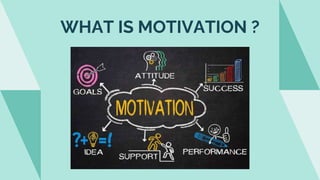
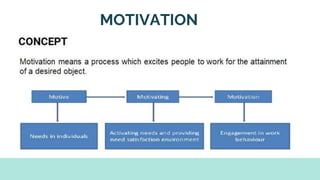
WHAT IS MOTIVATION ?
01
MOTIVATION
MOTIVATION
NATURE & SIGNIFICANCE OF MOTIVATION
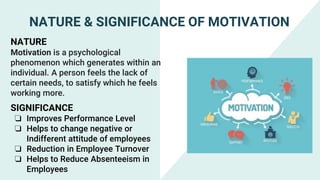
NATURE
Motivation is a psychological
phenomenon which generates within an
individual. A person feels the lack of
certain needs, to satisfy which he feels
working more.
SIGNIFICANCE
❏ Improves Performance Level
❏ Helps to change negative or
Indifferent attitude of employees
❏ Reduction in Employee Turnover
❏ Helps to Reduce Absenteeism in
Employees
02
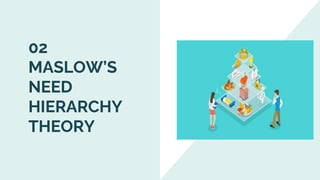
MASLOW’S
NEED
HIERARCHY
THEORY
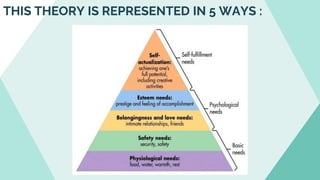
MASLOW’S NEED HIERARCHY THEORY
➢ Motivation is a highly complex, many
researchers have studied about
motivation from several dimensions and
developed some theories.
➢ Maslow’s Need of Hierarchy Theory is
considered fundamental to
understanding a motivation.
➢ Abraham Maslow, a well known
Psychologist in a classic paper
published in 1943, outlined the elements
of an overall theory of motivation.
➢ His theory was based on human needs.
THIS THEORY IS REPRESENTED IN 5 WAYS :
➢ Researchers have proved that there is lack of
hierarchical structure of needs as suggested by
Maslow.
➢ Need and satisfaction of needs is a psychological
feeling. Sometimes even the person may not be
aware about his own needs.
➢ Another problem with Maslow’s theory of motivation
is the Operationalisation of some of his concepts
which makes it difficult for the researchers to test
his theory. For instance, how does one measure self
actualisation?
CRITICISMS OF MASLOW’S THEORY
03
HERZBERG’S
MOTIVATION
-
HYGIENE
MODEL
FREDRICK
HERZBERG’S
RESEARCH
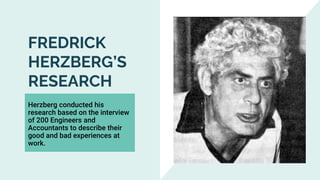
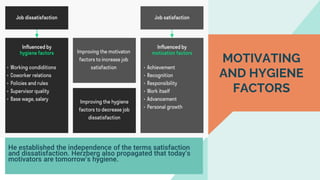
Herzberg conducted his
research based on the interview
of 200 Engineers and
Accountants to describe their
good and bad experiences at
work.
MOTIVATING
AND HYGIENE
FACTORS
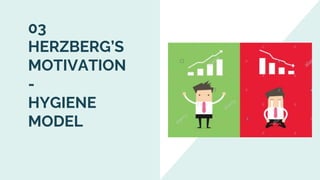
He established the independence of the terms satisfaction
and dissatisfaction. Herzberg also propagated that today’s
motivators are tomorrow’s hygiene.
CRITICISMS
OF
HERZBERG’S
MODEL
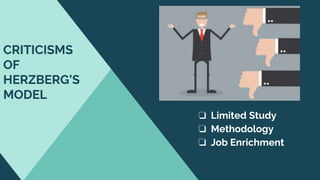
❏ Limited Study
❏ Methodology
❏ Job Enrichment
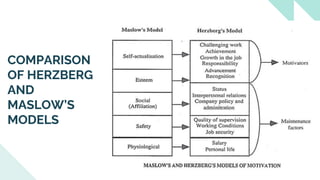
COMPARISON
OF HERZBERG
AND
MASLOW’S
MODELS
04
INTRINSIC
AND
EXTRINSIC
REWARDS
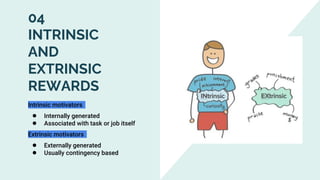
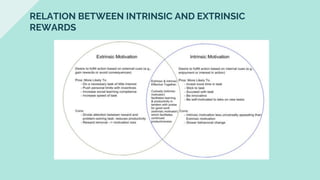
Intrinsic motivators
● Internally generated
● Associated with task or job itself
Extrinsic motivators
● Externally generated
● Usually contingency based
RELATION BETWEEN INTRINSIC AND EXTRINSIC
REWARDS
05
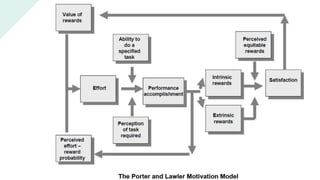
PORTER
AND
LAWLER’S
MOTIVATION
MODEL
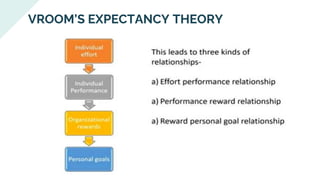
VROOM’S EXPECTANCY THEORY
06
EQUITY
MODEL
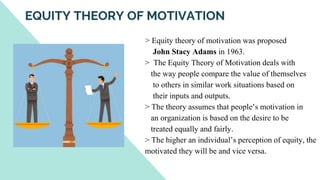
> Equity theory of motivation was proposed
John Stacy Adams in 1963.
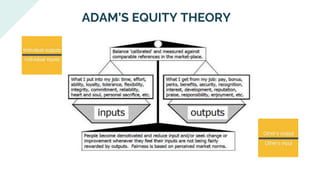
> The Equity Theory of Motivation deals with
the way people compare the value of themselves
to others in similar work situations based on
their inputs and outputs.
> The theory assumes that people’s motivation in
an organization is based on the desire to be
treated equally and fairly.
> The higher an individual’s perception of equity, the
motivated they will be and vice versa.
EQUITY THEORY OF MOTIVATION
ADAM’S EQUITY THEORY
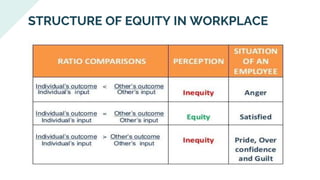
STRUCTURE OF EQUITY IN WORKPLACE
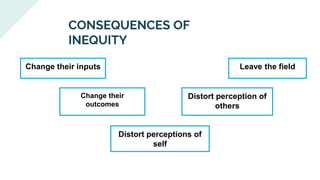
CONSEQUENCES OF
INEQUITY
Change their inputs
Change their
outcomes
Distort perceptions of
self
Distort perception of
others
Leave the field
07
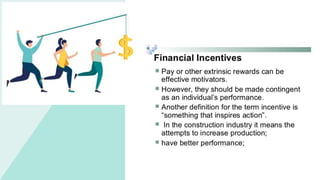
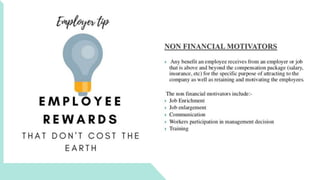
FINANCIAL
AND NON
FINANCIAL
INCENTIVES
—STEVE JOBS
“The only way to do great work is to
love what you do. If you haven’t
found it yet, keep looking. Don’t
settle.”
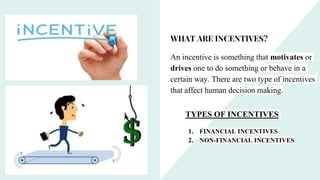
WHAT ARE INCENTIVES?
An incentive is something that motivates or
drives one to do something or behave in a
certain way. There are two type of incentives
that affect human decision making.
TYPES OF INCENTIVES
1. FINANCIAL INCENTIVES
2. NON-FINANCIAL INCENTIVES
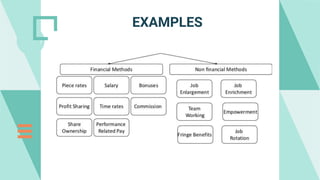
EXAMPLES
CASE
STUDY
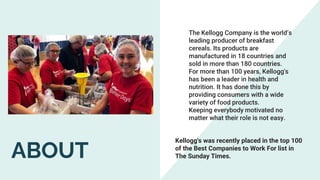
The Kellogg Company is the world’s
leading producer of breakfast
cereals. Its products are
manufactured in 18 countries and
sold in more than 180 countries.
For more than 100 years, Kellogg's
has been a leader in health and
nutrition. It has done this by
providing consumers with a wide
variety of food products.
Keeping everybody motivated no
matter what their role is not easy.
Kellogg's was recently placed in the top 100
of the Best Companies to Work For list in
The Sunday Times.
ABOUT
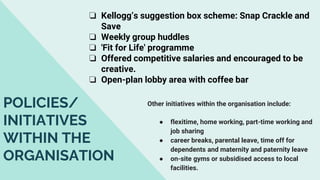
❏ Kellogg’s suggestion box scheme: Snap Crackle and
Save
❏ Weekly group huddles
❏ 'Fit for Life' programme
❏ Offered competitive salaries and encouraged to be
creative.
❏ Open-plan lobby area with coffee bar
Other initiatives within the organisation include:
● flexitime, home working, part-time working and
job sharing
● career breaks, parental leave, time off for
dependents and maternity and paternity leave
● on-site gyms or subsidised access to local
facilities.
POLICIES/
INITIATIVES
WITHIN THE
ORGANISATION
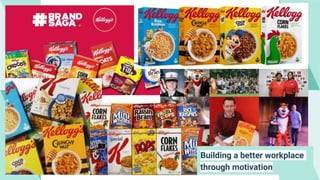
Building a better workplace
through motivation
CREDITS: This presentation template was created by Slidesgo, including
icons by Flaticon, and infographics & images by Freepik.
THANK YOU GROUP 2
TEAM MEMBERS
TANRAJ SINGH ARORA 203006
PRABAL NEGI 203012
AVNI JAIN 203048
TANISHA JAIN 203096
TANISHA PATNAIK 203105
ISHAAN KAINTURA 203109
VANSH KOHLI 203131

MOTIVATION: THEORIES AND CASE STUDY

  • 1.
    MOTIVATION GROUP 2 TEAM MEMBERS TANRAJSINGH ARORA 203006 PRABAL NEGI 203012 AVNI JAIN 203048 TANISHA JAIN 203096 TANISHA PATNAIK 203105 ISHAAN KAINTURA 203109 VANSH KOHLI 203131
  • 2.
    TABLE OF CONTENTS 05 06 07 08 PORTERAND LAWLER’S THEORY EQUITY THEORY FINANCIAL AND NON FINANCIAL INCENTIVES CASE STUDY: KELLOGG’S 01 02 03 04 INTRODUCTION: MOTIVATION MASLOW’S NEED HIERARCHY THEORY HERZBERG’S MOTIVATION-HYGIENE MODEL INTRINSIC AND EXTRINSIC REWARDS
  • 3.
  • 4.
  • 5.
    NATURE & SIGNIFICANCEOF MOTIVATION NATURE Motivation is a psychological phenomenon which generates within an individual. A person feels the lack of certain needs, to satisfy which he feels working more. SIGNIFICANCE ❏ Improves Performance Level ❏ Helps to change negative or Indifferent attitude of employees ❏ Reduction in Employee Turnover ❏ Helps to Reduce Absenteeism in Employees
  • 6.
  • 7.
    MASLOW’S NEED HIERARCHYTHEORY ➢ Motivation is a highly complex, many researchers have studied about motivation from several dimensions and developed some theories. ➢ Maslow’s Need of Hierarchy Theory is considered fundamental to understanding a motivation. ➢ Abraham Maslow, a well known Psychologist in a classic paper published in 1943, outlined the elements of an overall theory of motivation. ➢ His theory was based on human needs.
  • 8.
    THIS THEORY ISREPRESENTED IN 5 WAYS :
  • 9.
    ➢ Researchers haveproved that there is lack of hierarchical structure of needs as suggested by Maslow. ➢ Need and satisfaction of needs is a psychological feeling. Sometimes even the person may not be aware about his own needs. ➢ Another problem with Maslow’s theory of motivation is the Operationalisation of some of his concepts which makes it difficult for the researchers to test his theory. For instance, how does one measure self actualisation? CRITICISMS OF MASLOW’S THEORY
  • 10.
  • 11.
    FREDRICK HERZBERG’S RESEARCH Herzberg conducted his researchbased on the interview of 200 Engineers and Accountants to describe their good and bad experiences at work.
  • 12.
    MOTIVATING AND HYGIENE FACTORS He establishedthe independence of the terms satisfaction and dissatisfaction. Herzberg also propagated that today’s motivators are tomorrow’s hygiene.
  • 13.
  • 14.
  • 15.
    04 INTRINSIC AND EXTRINSIC REWARDS Intrinsic motivators ● Internallygenerated ● Associated with task or job itself Extrinsic motivators ● Externally generated ● Usually contingency based
  • 16.
    RELATION BETWEEN INTRINSICAND EXTRINSIC REWARDS
  • 17.
  • 18.
  • 20.
  • 21.
    > Equity theoryof motivation was proposed John Stacy Adams in 1963. > The Equity Theory of Motivation deals with the way people compare the value of themselves to others in similar work situations based on their inputs and outputs. > The theory assumes that people’s motivation in an organization is based on the desire to be treated equally and fairly. > The higher an individual’s perception of equity, the motivated they will be and vice versa. EQUITY THEORY OF MOTIVATION
  • 22.
  • 23.
    STRUCTURE OF EQUITYIN WORKPLACE
  • 24.
    CONSEQUENCES OF INEQUITY Change theirinputs Change their outcomes Distort perceptions of self Distort perception of others Leave the field
  • 25.
  • 26.
    —STEVE JOBS “The onlyway to do great work is to love what you do. If you haven’t found it yet, keep looking. Don’t settle.”
  • 27.
    WHAT ARE INCENTIVES? Anincentive is something that motivates or drives one to do something or behave in a certain way. There are two type of incentives that affect human decision making. TYPES OF INCENTIVES 1. FINANCIAL INCENTIVES 2. NON-FINANCIAL INCENTIVES
  • 30.
  • 31.
  • 32.
    The Kellogg Companyis the world’s leading producer of breakfast cereals. Its products are manufactured in 18 countries and sold in more than 180 countries. For more than 100 years, Kellogg's has been a leader in health and nutrition. It has done this by providing consumers with a wide variety of food products. Keeping everybody motivated no matter what their role is not easy. Kellogg's was recently placed in the top 100 of the Best Companies to Work For list in The Sunday Times. ABOUT
  • 33.
    ❏ Kellogg’s suggestionbox scheme: Snap Crackle and Save ❏ Weekly group huddles ❏ 'Fit for Life' programme ❏ Offered competitive salaries and encouraged to be creative. ❏ Open-plan lobby area with coffee bar Other initiatives within the organisation include: ● flexitime, home working, part-time working and job sharing ● career breaks, parental leave, time off for dependents and maternity and paternity leave ● on-site gyms or subsidised access to local facilities. POLICIES/ INITIATIVES WITHIN THE ORGANISATION
  • 34.
    Building a betterworkplace through motivation
  • 35.
    CREDITS: This presentationtemplate was created by Slidesgo, including icons by Flaticon, and infographics & images by Freepik. THANK YOU GROUP 2 TEAM MEMBERS TANRAJ SINGH ARORA 203006 PRABAL NEGI 203012 AVNI JAIN 203048 TANISHA JAIN 203096 TANISHA PATNAIK 203105 ISHAAN KAINTURA 203109 VANSH KOHLI 203131

Editor's Notes

  • #13 Hygiene factors are essential job factors which operate to prevent dissatisfaction among the employees. Motivational factors yield positive satisfaction. These factors are inherent to work