OCTAPACE
Organization Culture
Presented by-
Mayank Singhal
(Management Trainee at GLBIMR)
22-11-2016 1
CULTURE
• Culture can be defined in numerous ways. In the words of
anthropologist E.B. Taylor, it is “that complex whole which
includes knowledge , belief, art, morals, law, custom and any other
capabilities and habits acquired by man as a member of society.
22-11-2016 2
ORGANIZATION CULTURE
• Organization culture is a system of shared assumptions, values, and beliefs which
governs how people behave in organizations. These shared values have a strong
influence on the people in the organization and dictate how they dress, act, and
perform their job.
• According to NEEDLE (2004),
Organizational culture represents the collective values, beliefs and principles of
organizational members and is a product of such factors as history, product, market,
technology, strategy, type of employees, management style, and national culture.
22-11-2016 3
Organizational culture at NOKIA
• Nokia’s culture ascribes to the nokia employee proposition which the firm describes as “a
concrete employment offering for each employee from the very first NOKIA day onwards.”
• Elements of this proposition
 The nokia way and values: structure of the company provides speed and flexibility in
decision making. Importance is given to customer satisfaction., achievement orientation ,
fostering change and employee participation.
 Performance-based rewards: provides annual based salary, incentives, bonuses, possible
participation in equity plan, and other local benefits. It offers rewards to employees on the
basis of both individual and team achievements.
22-11-2016 4
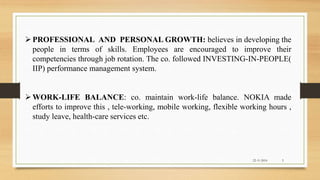
PROFESSIONAL AND PERSONAL GROWTH: believes in developing the
people in terms of skills. Employees are encouraged to improve their
competencies through job rotation. The co. followed INVESTING-IN-PEOPLE(
IIP) performance management system.
WORK-LIFE BALANCE: co. maintain work-life balance. NOKIA made
efforts to improve this , tele-working, mobile working, flexible working hours ,
study leave, health-care services etc.
22-11-2016 5
Elements of culture
There are seven elements of culture :-
Social Organization
Customs and Traditions
Religion
Language
Arts and Literature
Forms of Government
Economic systems
22-11-2016 6
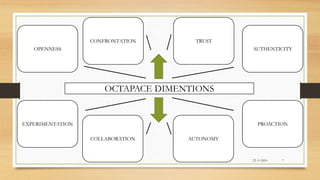
OCTAPACE DIMENTIONS
OPENNESS
TRUSTCONFRONTATION
PROACTION
AUTONOMYCOLLABORATION
EXPERIMENTATION
AUTHENTICITY
22-11-2016 7
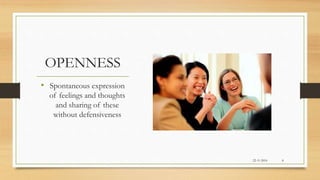
OPENNESS
• Spontaneous expression
of feelings and thoughts
and sharing of these
without defensiveness
22-11-2016 8
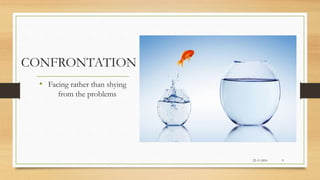
CONFRONTATION
• Facing rather than shying
from the problems
22-11-2016 9
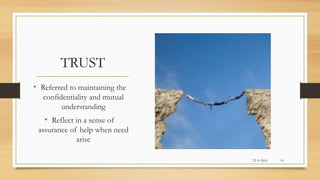
TRUST
• Referred to maintaining the
confidentiality and mutual
understanding
• Reflect in a sense of
assurance of help when need
arise
22-11-2016 10
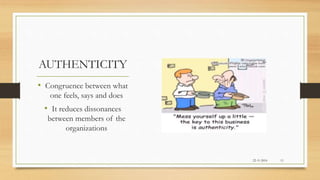
AUTHENTICITY
• Congruence between what
one feels, says and does
• It reduces dissonances
between members of the
organizations
22-11-2016 11
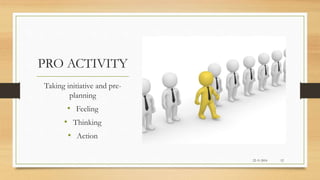
PRO ACTIVITY
Taking initiative and pre-
planning
• Feeling
• Thinking
• Action
22-11-2016 12
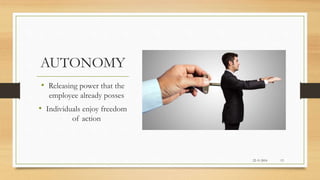
AUTONOMY
• Releasing power that the
employee already posses
• Individuals enjoy freedom
of action
22-11-2016 13
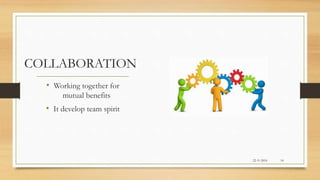
COLLABORATION
• Working together for
mutual benefits
• It develop team spirit
22-11-2016 14
EXPERIMENTATION
• Promoting creative and
innovation in the
organization
22-11-2016 15
Thank
You 22-11-2016 16

Organization Culture (OCTAPACE)

  • 1.
    OCTAPACE Organization Culture Presented by- MayankSinghal (Management Trainee at GLBIMR) 22-11-2016 1
  • 2.
    CULTURE • Culture canbe defined in numerous ways. In the words of anthropologist E.B. Taylor, it is “that complex whole which includes knowledge , belief, art, morals, law, custom and any other capabilities and habits acquired by man as a member of society. 22-11-2016 2
  • 3.
    ORGANIZATION CULTURE • Organizationculture is a system of shared assumptions, values, and beliefs which governs how people behave in organizations. These shared values have a strong influence on the people in the organization and dictate how they dress, act, and perform their job. • According to NEEDLE (2004), Organizational culture represents the collective values, beliefs and principles of organizational members and is a product of such factors as history, product, market, technology, strategy, type of employees, management style, and national culture. 22-11-2016 3
  • 4.
    Organizational culture atNOKIA • Nokia’s culture ascribes to the nokia employee proposition which the firm describes as “a concrete employment offering for each employee from the very first NOKIA day onwards.” • Elements of this proposition  The nokia way and values: structure of the company provides speed and flexibility in decision making. Importance is given to customer satisfaction., achievement orientation , fostering change and employee participation.  Performance-based rewards: provides annual based salary, incentives, bonuses, possible participation in equity plan, and other local benefits. It offers rewards to employees on the basis of both individual and team achievements. 22-11-2016 4
  • 5.
    PROFESSIONAL AND PERSONALGROWTH: believes in developing the people in terms of skills. Employees are encouraged to improve their competencies through job rotation. The co. followed INVESTING-IN-PEOPLE( IIP) performance management system. WORK-LIFE BALANCE: co. maintain work-life balance. NOKIA made efforts to improve this , tele-working, mobile working, flexible working hours , study leave, health-care services etc. 22-11-2016 5
  • 6.
    Elements of culture Thereare seven elements of culture :- Social Organization Customs and Traditions Religion Language Arts and Literature Forms of Government Economic systems 22-11-2016 6
  • 7.
  • 8.
    OPENNESS • Spontaneous expression offeelings and thoughts and sharing of these without defensiveness 22-11-2016 8
  • 9.
    CONFRONTATION • Facing ratherthan shying from the problems 22-11-2016 9
  • 10.
    TRUST • Referred tomaintaining the confidentiality and mutual understanding • Reflect in a sense of assurance of help when need arise 22-11-2016 10
  • 11.
    AUTHENTICITY • Congruence betweenwhat one feels, says and does • It reduces dissonances between members of the organizations 22-11-2016 11
  • 12.
    PRO ACTIVITY Taking initiativeand pre- planning • Feeling • Thinking • Action 22-11-2016 12
  • 13.
    AUTONOMY • Releasing powerthat the employee already posses • Individuals enjoy freedom of action 22-11-2016 13
  • 14.
    COLLABORATION • Working togetherfor mutual benefits • It develop team spirit 22-11-2016 14
  • 15.
    EXPERIMENTATION • Promoting creativeand innovation in the organization 22-11-2016 15
  • 16.