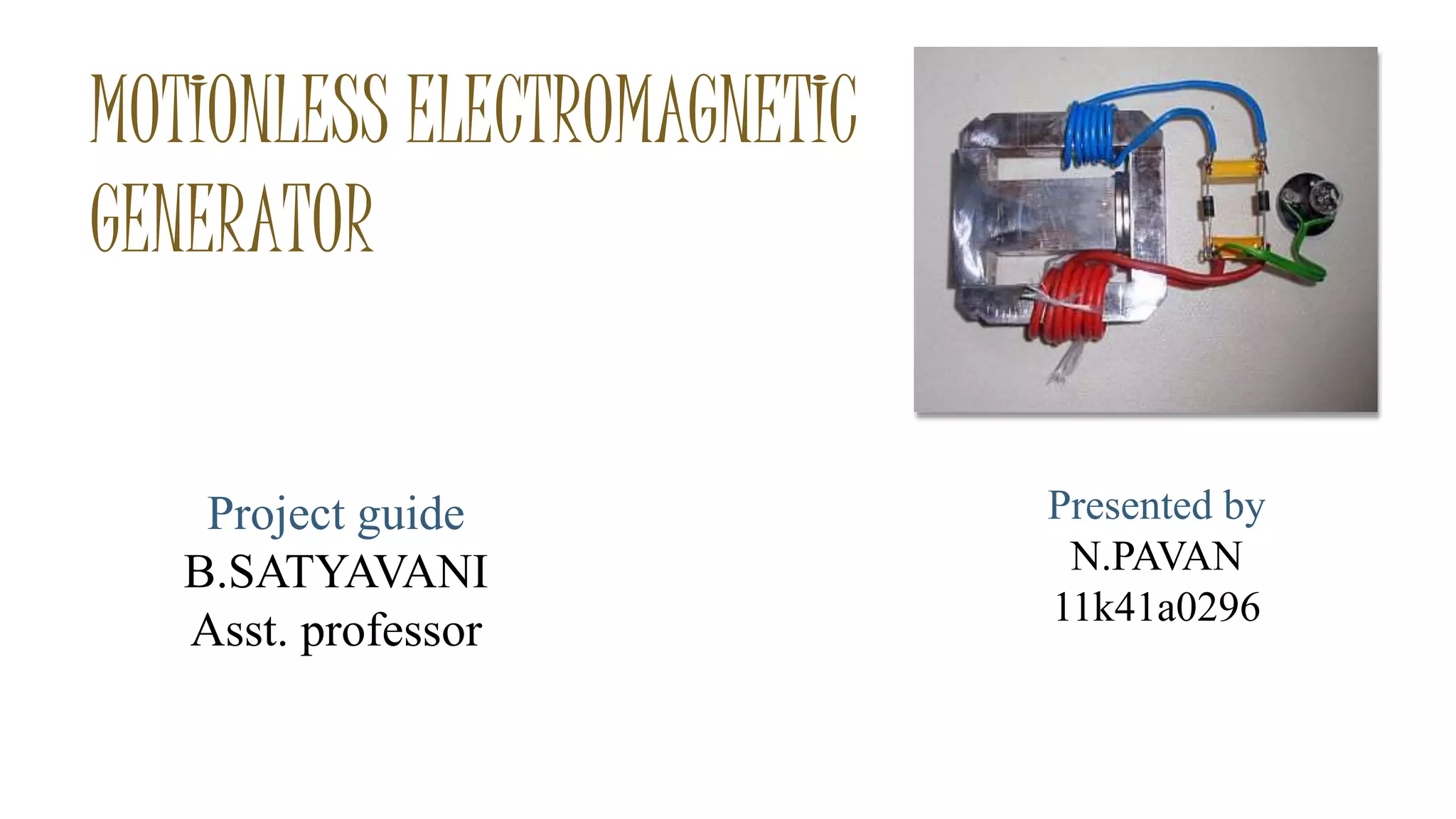
MOTIONLESS ELECTROMAGNETIC
GENERATOR
Project guide
B.SATYAVANI
Asst. professor
Presented by
N.PAVAN
11k41a0296
Contents
1. INTRODUCTION
2. OBJECTIVE
3. CONSTRUCTION
4. PRINCIPLES
5. ADVANTAGES
6. APPLICATIONS
7. CONCLUSION
INTRODUCTION
 THOMAS E.BEARDEN has invented and patented in
2002 by a group led by Bearden a free energy device
called “MEG” (“Motionless Electromagnetic Generator”).
 This device transforms the magnetic force of a permanent
magnet into electricity and achieves over unity.
Objectives
• To design a magnetic generator in which generation of
electricity is accomplished without moving parts
• To eliminate need of external power source during
operation
• Coefficient of performance (COP) > 1
• Output power > input power
PRINCIPLES OF MEG
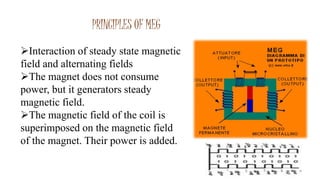
Interaction of steady state magnetic
field and alternating fields
The magnet does not consume
power, but it generators steady
magnetic field.
The magnetic field of the coil is
superimposed on the magnetic field
of the magnet. Their power is added.
CONSTRUCTION
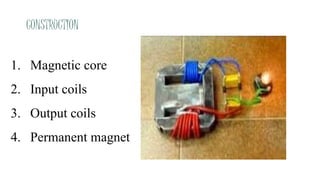
1. Magnetic core
2. Input coils
3. Output coils
4. Permanent magnet
operation
operation
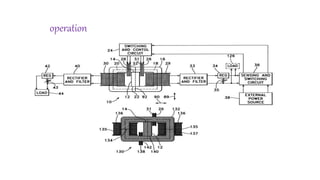
The input coils are alternatively pulsed to provide
induced current pulses in the output coils with
external supply.
Due to interaction of stationary magnetic field,
alternating magnetic field the magnetic field of the
coil is superimposed on the magnetic field of the
magnet. Their power is added.
As the coil generates alternating field, the
strength of the field is changing. The sum of those
two fields is thus also changing and so it can induce
current in the output coil.
After current induced in the output coil, by
sensing device it disables the external supply and
the output is given to the input coils.
operation
Advantages of meg
 Works at all types of weather conditions.
 Easy in construction and safer to use.
 Fits in small place.
 Ability to reduce the power bill.
APPLICATIONS
• Automobiles
• Tractors
• Aircraft
• Ships
• Submarines
• Trains
DISADVANTAGES
Strength of the permanent magnet will decrease
with respect to time.
Cost increases with increase in strength of the
magnet.
Due to hysteresis loss in the core heat will be
evolved due to this heat, efficiency of the
permanent magnet will decreases.
FUTURE SCOPE
By increasing the output level, it will be
useful for commercial and industrial
purposes.
By using high grade of core material, we
can increase the efficiency.
CONCLUSIONs
 MEG is a proposed device which is most notable for claims of
over unity operation.
 In the current situation, the cost of electricity continues to rise and
thus, we should now be willing to be inclined towards MEG.
 By learning to use a magnetic generator, you can be assured of
free and a life long generation of electricity.
THANK YOU

motionless electromagnetic generator

  • 1.
  • 2.
    Contents 1. INTRODUCTION 2. OBJECTIVE 3.CONSTRUCTION 4. PRINCIPLES 5. ADVANTAGES 6. APPLICATIONS 7. CONCLUSION
  • 3.
    INTRODUCTION  THOMAS E.BEARDENhas invented and patented in 2002 by a group led by Bearden a free energy device called “MEG” (“Motionless Electromagnetic Generator”).  This device transforms the magnetic force of a permanent magnet into electricity and achieves over unity.
  • 4.
    Objectives • To designa magnetic generator in which generation of electricity is accomplished without moving parts • To eliminate need of external power source during operation • Coefficient of performance (COP) > 1 • Output power > input power
  • 5.
    PRINCIPLES OF MEG Interactionof steady state magnetic field and alternating fields The magnet does not consume power, but it generators steady magnetic field. The magnetic field of the coil is superimposed on the magnetic field of the magnet. Their power is added.
  • 6.
    CONSTRUCTION 1. Magnetic core 2.Input coils 3. Output coils 4. Permanent magnet
  • 7.
  • 8.
    operation The input coilsare alternatively pulsed to provide induced current pulses in the output coils with external supply. Due to interaction of stationary magnetic field, alternating magnetic field the magnetic field of the coil is superimposed on the magnetic field of the magnet. Their power is added.
  • 9.
    As the coilgenerates alternating field, the strength of the field is changing. The sum of those two fields is thus also changing and so it can induce current in the output coil. After current induced in the output coil, by sensing device it disables the external supply and the output is given to the input coils. operation
  • 10.
    Advantages of meg Works at all types of weather conditions.  Easy in construction and safer to use.  Fits in small place.  Ability to reduce the power bill.
  • 11.
    APPLICATIONS • Automobiles • Tractors •Aircraft • Ships • Submarines • Trains
  • 12.
    DISADVANTAGES Strength of thepermanent magnet will decrease with respect to time. Cost increases with increase in strength of the magnet. Due to hysteresis loss in the core heat will be evolved due to this heat, efficiency of the permanent magnet will decreases.
  • 13.
    FUTURE SCOPE By increasingthe output level, it will be useful for commercial and industrial purposes. By using high grade of core material, we can increase the efficiency.
  • 14.
    CONCLUSIONs  MEG isa proposed device which is most notable for claims of over unity operation.  In the current situation, the cost of electricity continues to rise and thus, we should now be willing to be inclined towards MEG.  By learning to use a magnetic generator, you can be assured of free and a life long generation of electricity.
  • 15.