MOTION
CHAPTER 03
Prepared by Syeda Fatima Rizvi
MOTION
 Rest and motion.
 Velocity and its types.
 Acceleration and its types.
 Laws of Motion.
 Motion of bodies connected by a string.
 Linear Momentum
 Elastic Collision in one dimension.
 Friction and inclined plane.
MOTION REST
Velocity
Uniform Velocity
When a body covers equal
displacement in equal interval of
time, then the body is said to move
with uniform velocity.
Variable Velocity
When a body covers different
displacement in equal intervals of
time, then the body is said to move
with variable velocity.
Instantaneous
Velocity
The velocity of a body, at any instant
of time, is called instantaneous
velocity.
Acceleration
Positive Acceleration
If the velocity of a body increasing,
then acceleration is positive.
Negative Acceleration
If the velocity of a body decreasing,
then acceleration is negative.
Instantaneous
Acceleration
The acceleration of a body at any
instant of time is called instantaneous
acceleration.
Newton’s First law of Motion
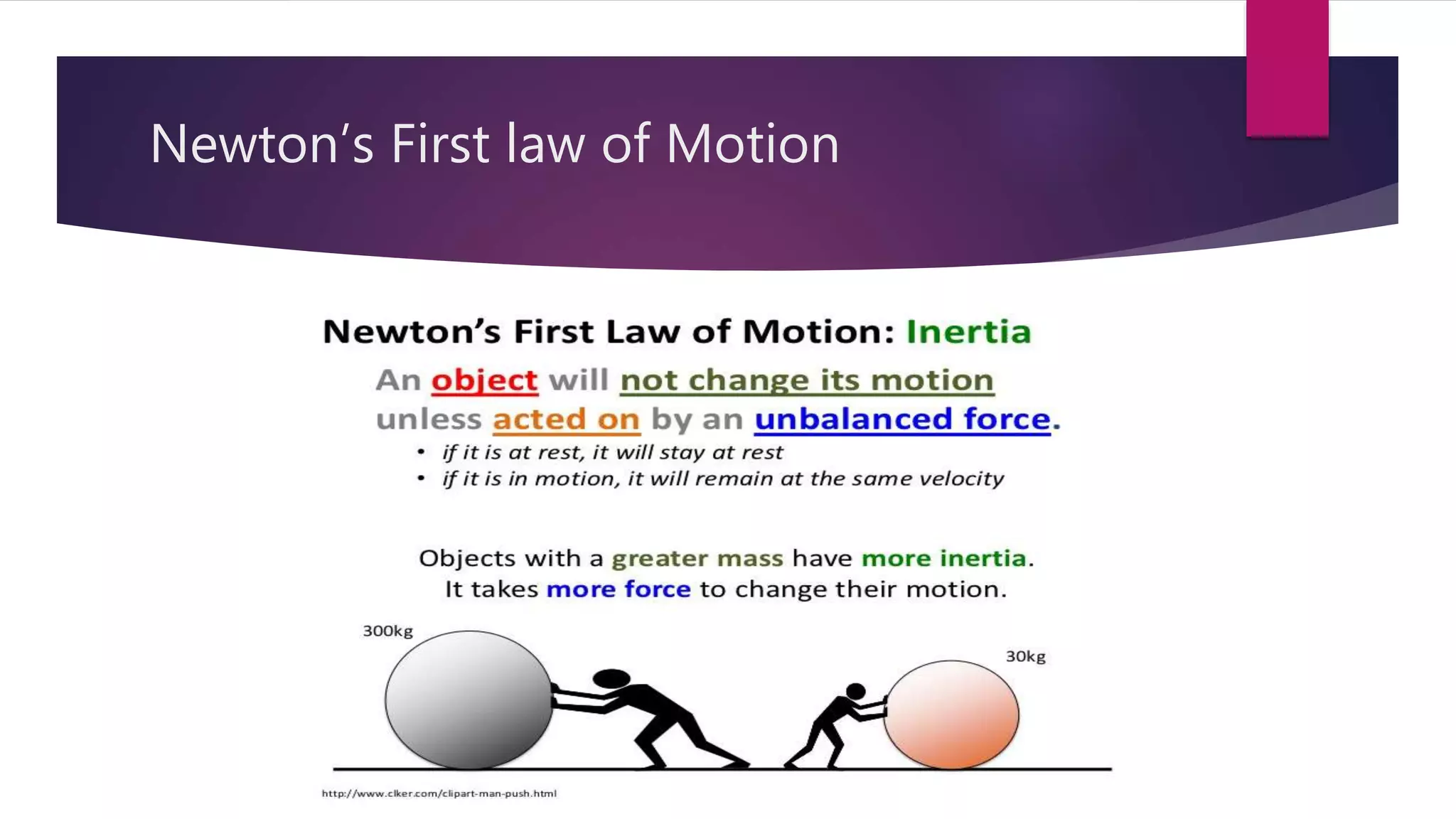
STATEMENT:
‘ A body remains at rest, or continues to move
to move with uniform velocity in a straight line,
straight line, unless acted upon by an external
external unbalanced force’
INERTIA:
Inertia is that property of matter by virtue of
which it tries to remains in it existing state.
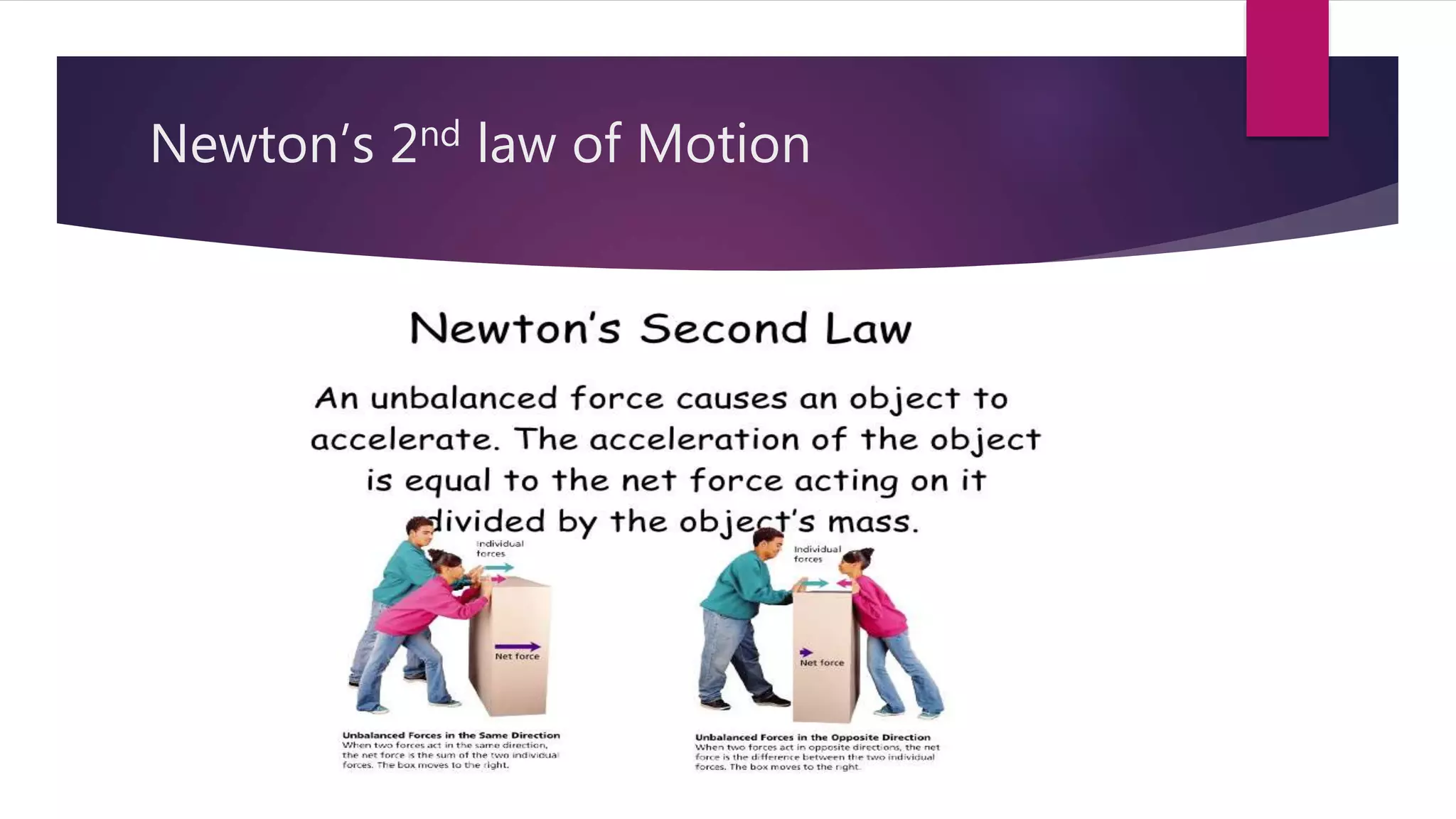
Newton’s 2nd law of Motion
“
”
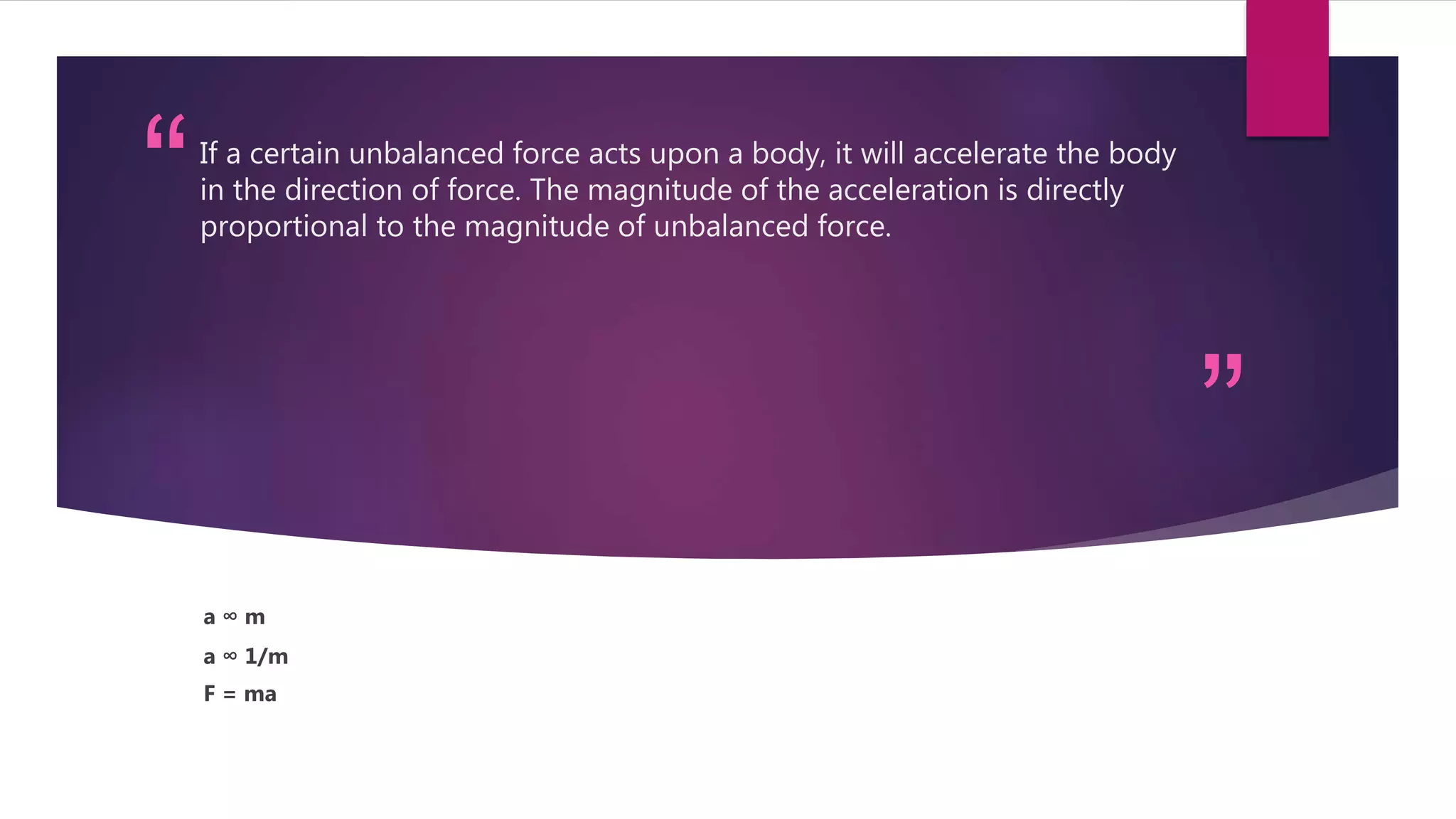
If a certain unbalanced force acts upon a body, it will accelerate the body
in the direction of force. The magnitude of the acceleration is directly
proportional to the magnitude of unbalanced force.
a ∞ m
a ∞ 1/m
F = ma
Newton’s 3rd law of Motion
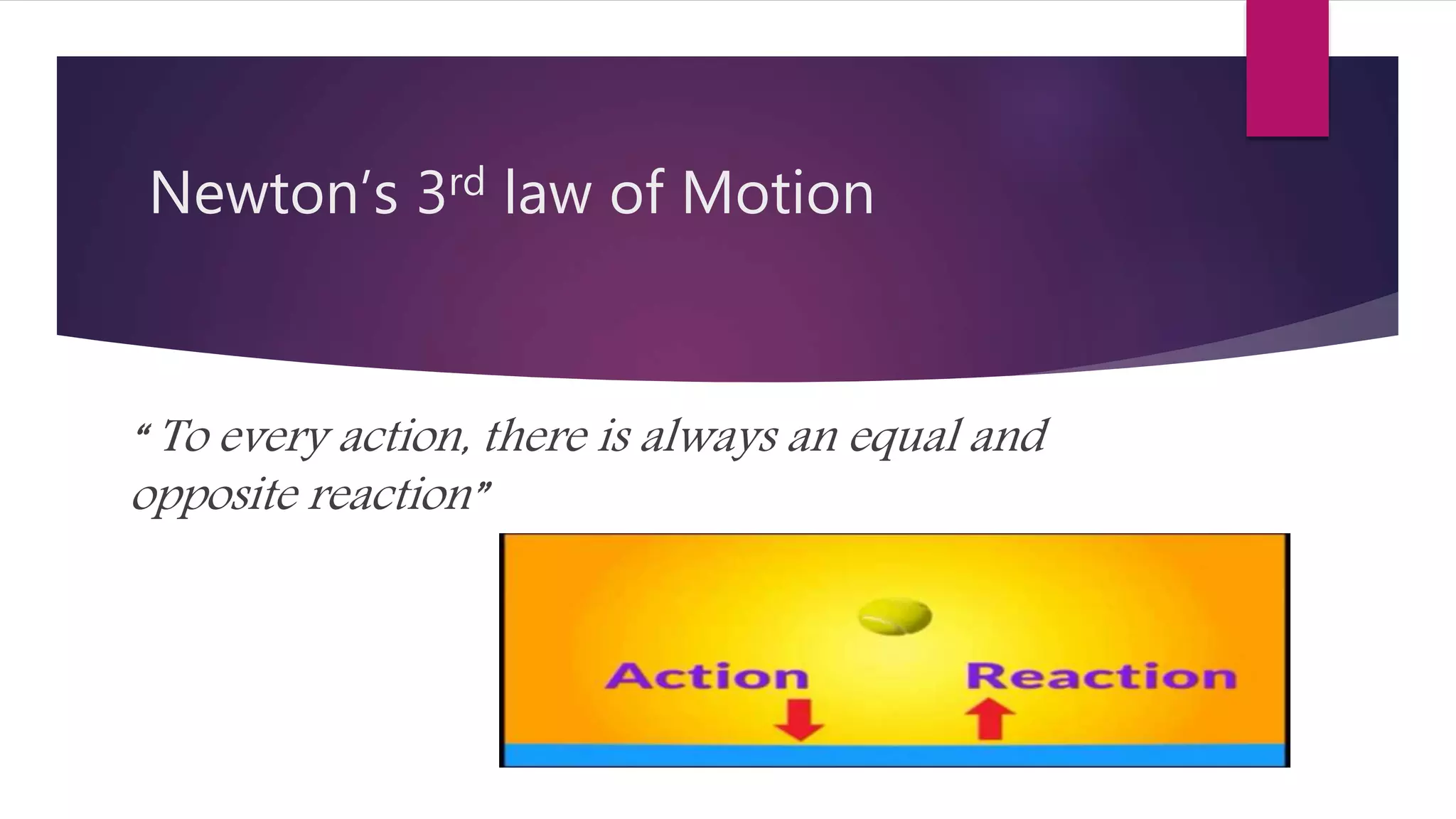
“ To every action, there is always an equal and
opposite reaction”
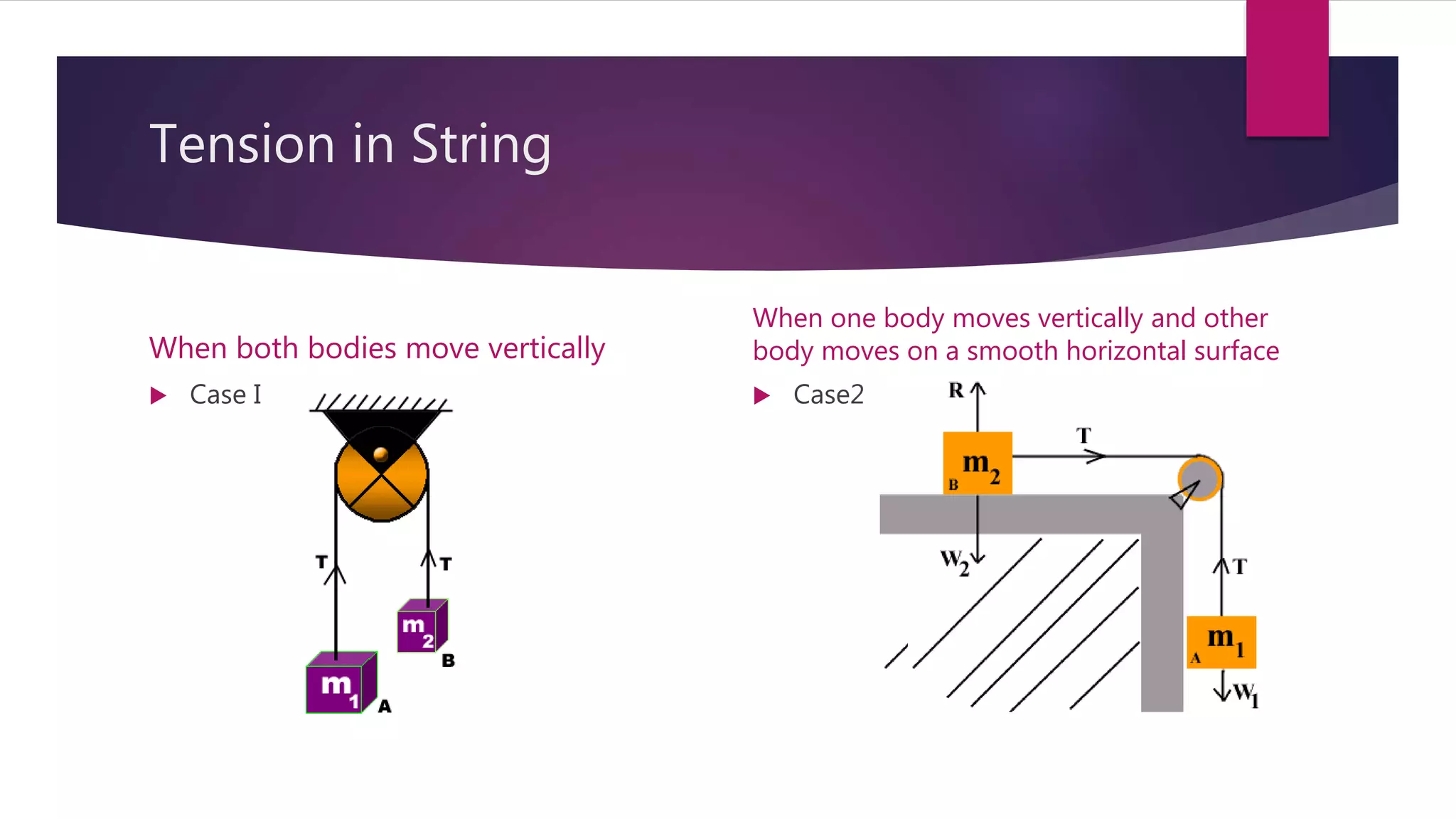
Tension in String
When both bodies move vertically
 Case I
When one body moves vertically and other
body moves on a smooth horizontal surface
 Case2
Linear Momentum
Definition:
Total motion present in a body is
called momentum.
Mathematical definition:
The product of pass and velocity is
called momentum.
Formula:
P = mv
Unit:
The S.I unit of momentum is Ns or kg
m/s
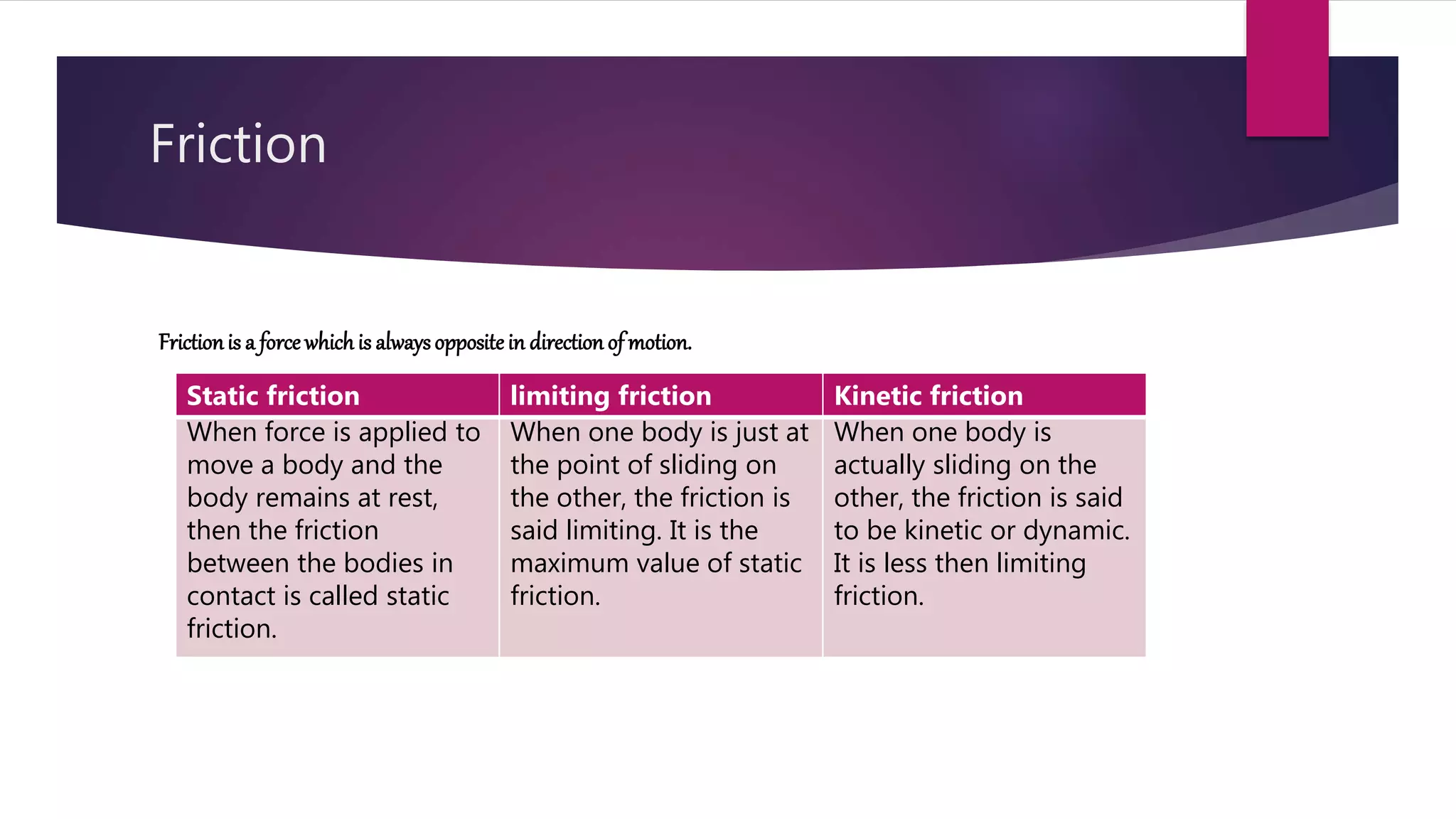
Friction
Frictionis a force which is alwaysoppositein direction of motion.
Static friction limiting friction Kinetic friction
When force is applied to
move a body and the
body remains at rest,
then the friction
between the bodies in
contact is called static
friction.
When one body is just at
the point of sliding on
the other, the friction is
said limiting. It is the
maximum value of static
friction.
When one body is
actually sliding on the
other, the friction is said
to be kinetic or dynamic.
It is less then limiting
friction.
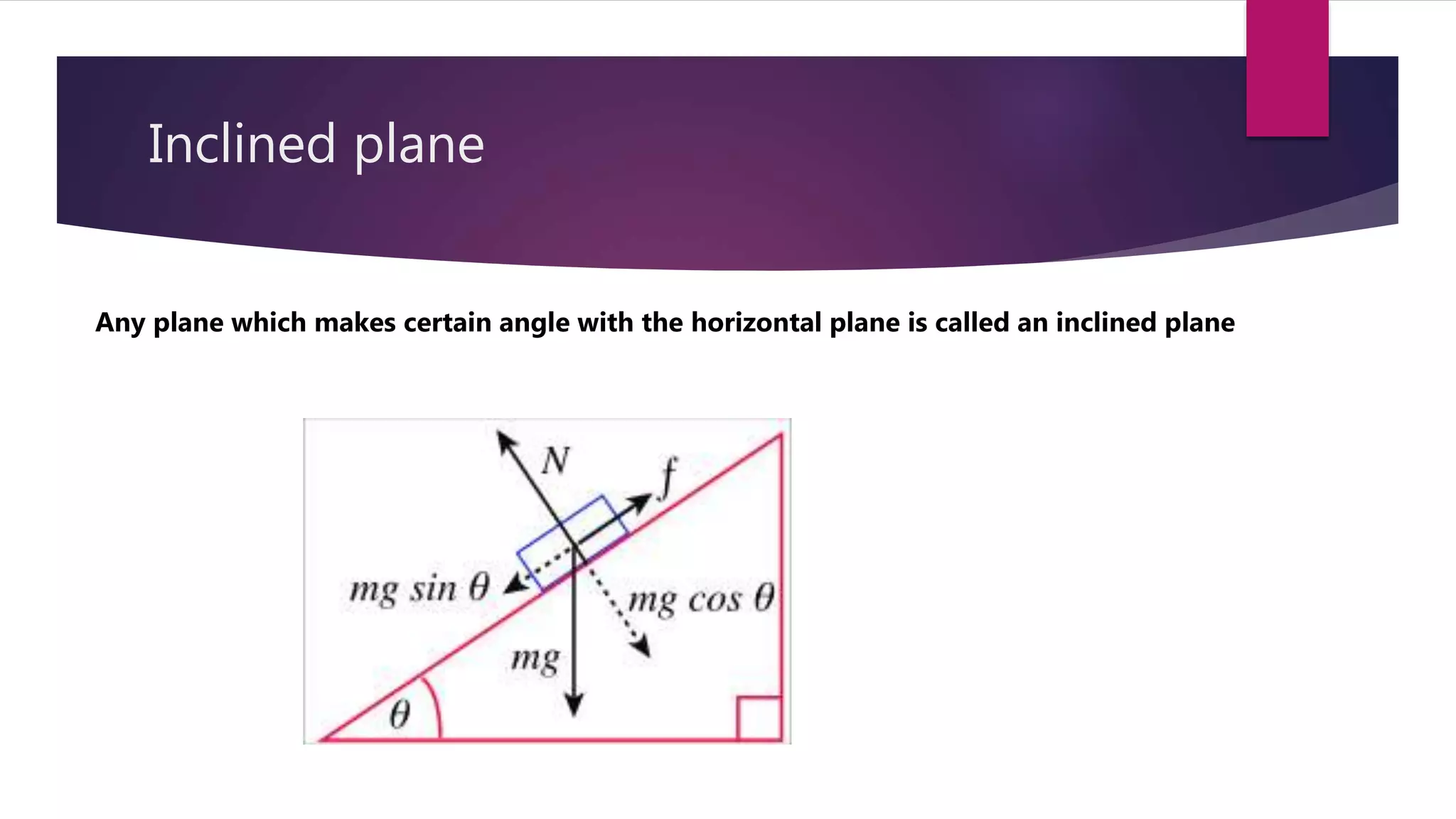
Inclined plane
Any plane which makes certain angle with the horizontal plane is called an inclined plane
THE
END

Motion in one Dimension

  • 1.
  • 2.
    MOTION  Rest andmotion.  Velocity and its types.  Acceleration and its types.  Laws of Motion.  Motion of bodies connected by a string.  Linear Momentum  Elastic Collision in one dimension.  Friction and inclined plane.
  • 3.
  • 4.
    Velocity Uniform Velocity When abody covers equal displacement in equal interval of time, then the body is said to move with uniform velocity. Variable Velocity When a body covers different displacement in equal intervals of time, then the body is said to move with variable velocity. Instantaneous Velocity The velocity of a body, at any instant of time, is called instantaneous velocity.
  • 5.
    Acceleration Positive Acceleration If thevelocity of a body increasing, then acceleration is positive. Negative Acceleration If the velocity of a body decreasing, then acceleration is negative. Instantaneous Acceleration The acceleration of a body at any instant of time is called instantaneous acceleration.
  • 6.
  • 7.
    STATEMENT: ‘ A bodyremains at rest, or continues to move to move with uniform velocity in a straight line, straight line, unless acted upon by an external external unbalanced force’ INERTIA: Inertia is that property of matter by virtue of which it tries to remains in it existing state.
  • 8.
  • 9.
    “ ” If a certainunbalanced force acts upon a body, it will accelerate the body in the direction of force. The magnitude of the acceleration is directly proportional to the magnitude of unbalanced force. a ∞ m a ∞ 1/m F = ma
  • 10.
    Newton’s 3rd lawof Motion “ To every action, there is always an equal and opposite reaction”
  • 11.
    Tension in String Whenboth bodies move vertically  Case I When one body moves vertically and other body moves on a smooth horizontal surface  Case2
  • 12.
    Linear Momentum Definition: Total motionpresent in a body is called momentum. Mathematical definition: The product of pass and velocity is called momentum. Formula: P = mv Unit: The S.I unit of momentum is Ns or kg m/s
  • 13.
    Friction Frictionis a forcewhich is alwaysoppositein direction of motion. Static friction limiting friction Kinetic friction When force is applied to move a body and the body remains at rest, then the friction between the bodies in contact is called static friction. When one body is just at the point of sliding on the other, the friction is said limiting. It is the maximum value of static friction. When one body is actually sliding on the other, the friction is said to be kinetic or dynamic. It is less then limiting friction.
  • 14.
    Inclined plane Any planewhich makes certain angle with the horizontal plane is called an inclined plane
  • 15.