MOST NETWORK
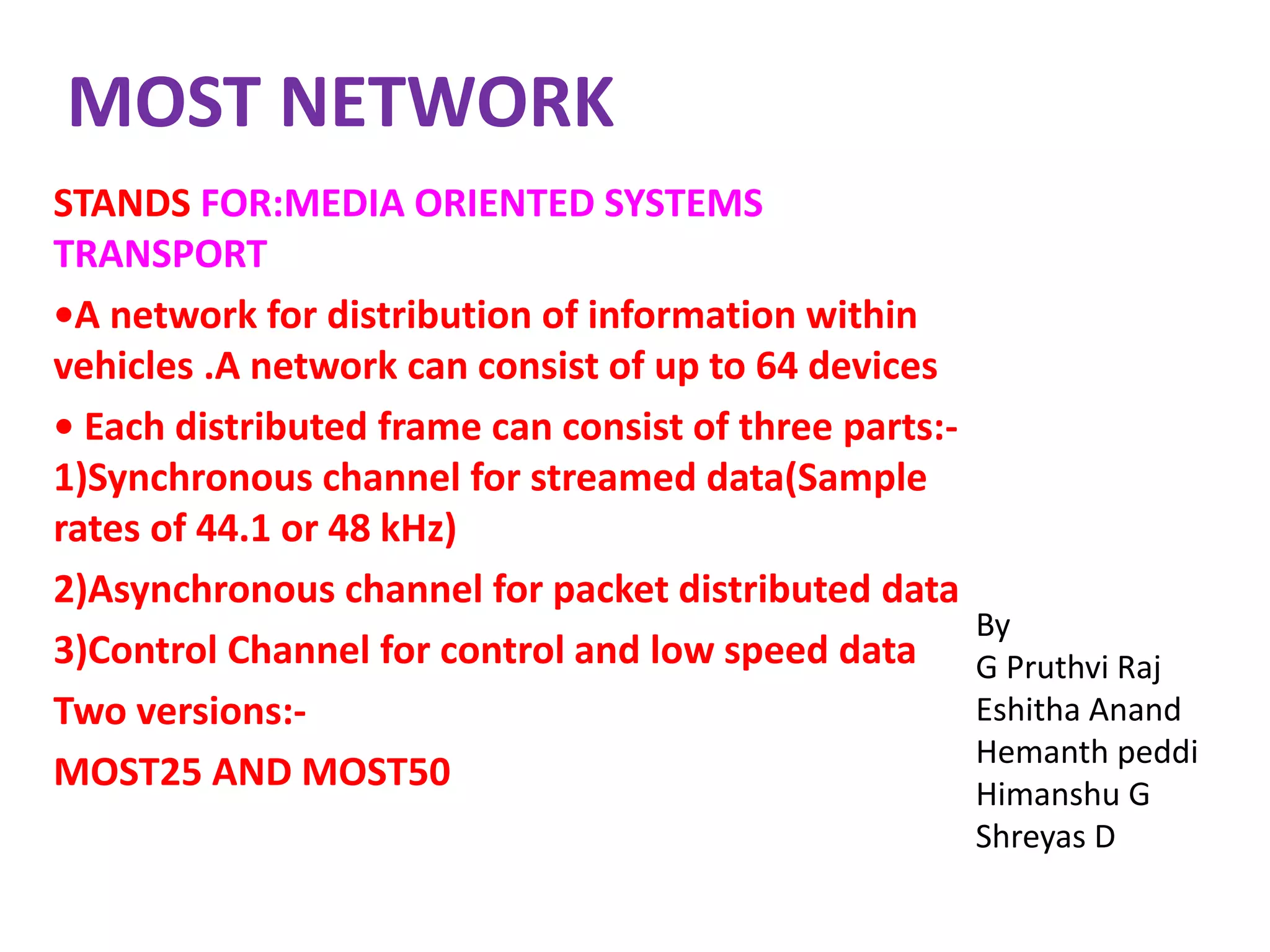
STANDS FOR:MEDIA ORIENTED SYSTEMS
TRANSPORT
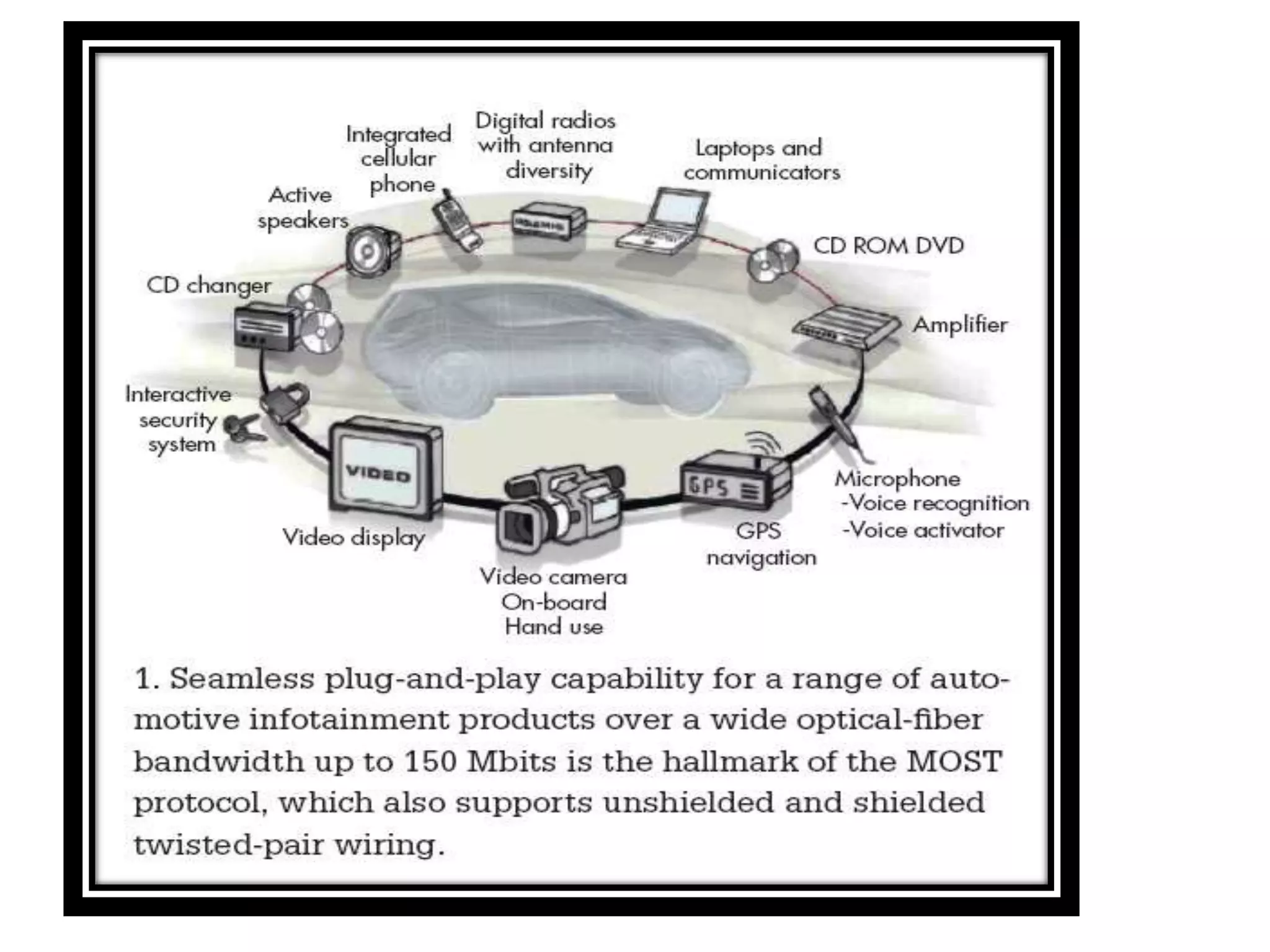
•A network for distribution of information within
vehicles .A network can consist of up to 64 devices
• Each distributed frame can consist of three parts:-
1)Synchronous channel for streamed data(Sample
rates of 44.1 or 48 kHz)
2)Asynchronous channel for packet distributed data
3)Control Channel for control and low speed data
Two versions:-
MOST25 AND MOST50
By
G Pruthvi Raj
Eshitha Anand
Hemanth peddi
Himanshu G
Shreyas D
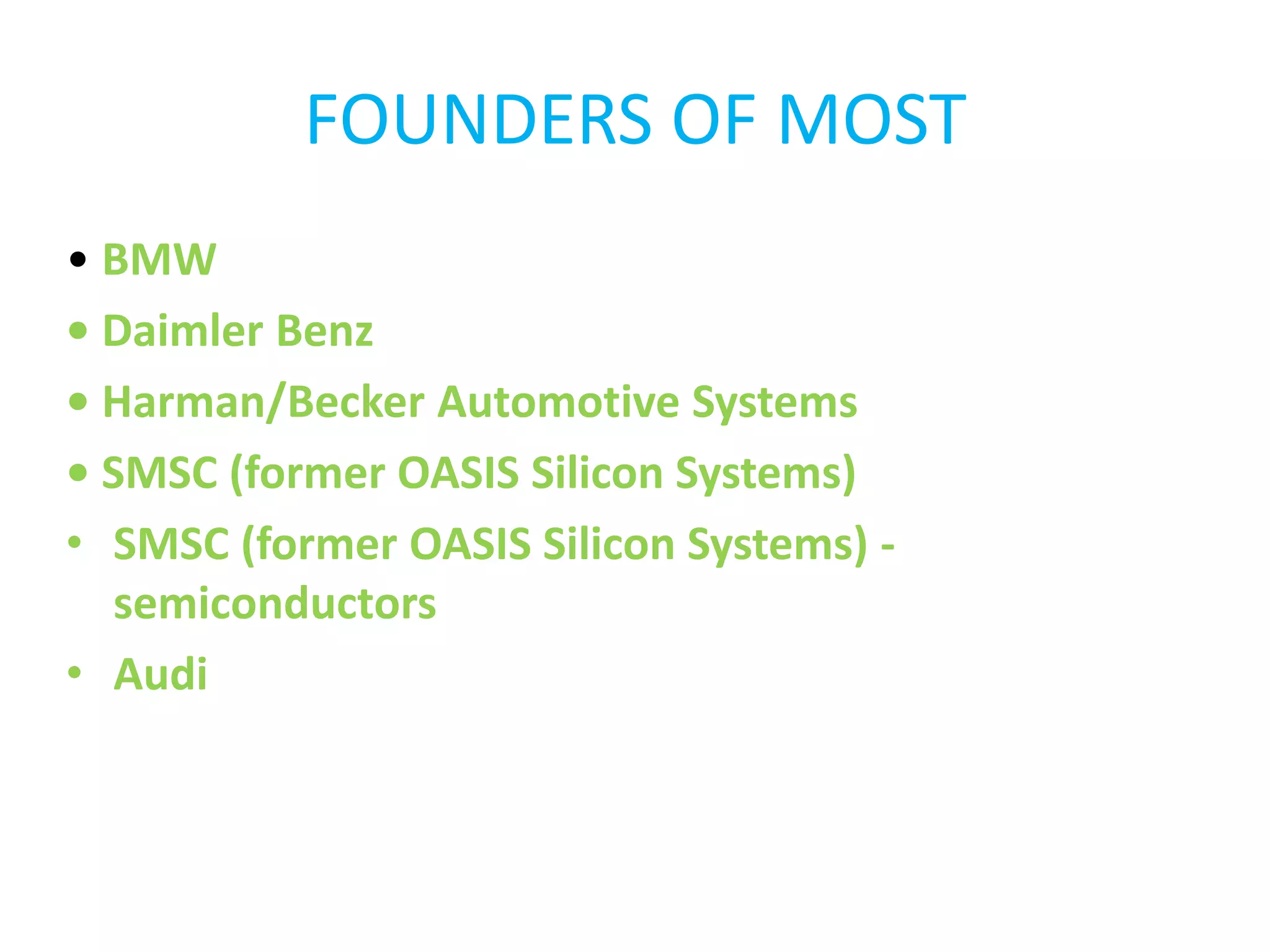
FOUNDERS OF MOST
• BMW
• Daimler Benz
• Harman/Becker Automotive Systems
• SMSC (former OASIS Silicon Systems)
• SMSC (former OASIS Silicon Systems) -
semiconductors
• Audi
MOST NETWORK
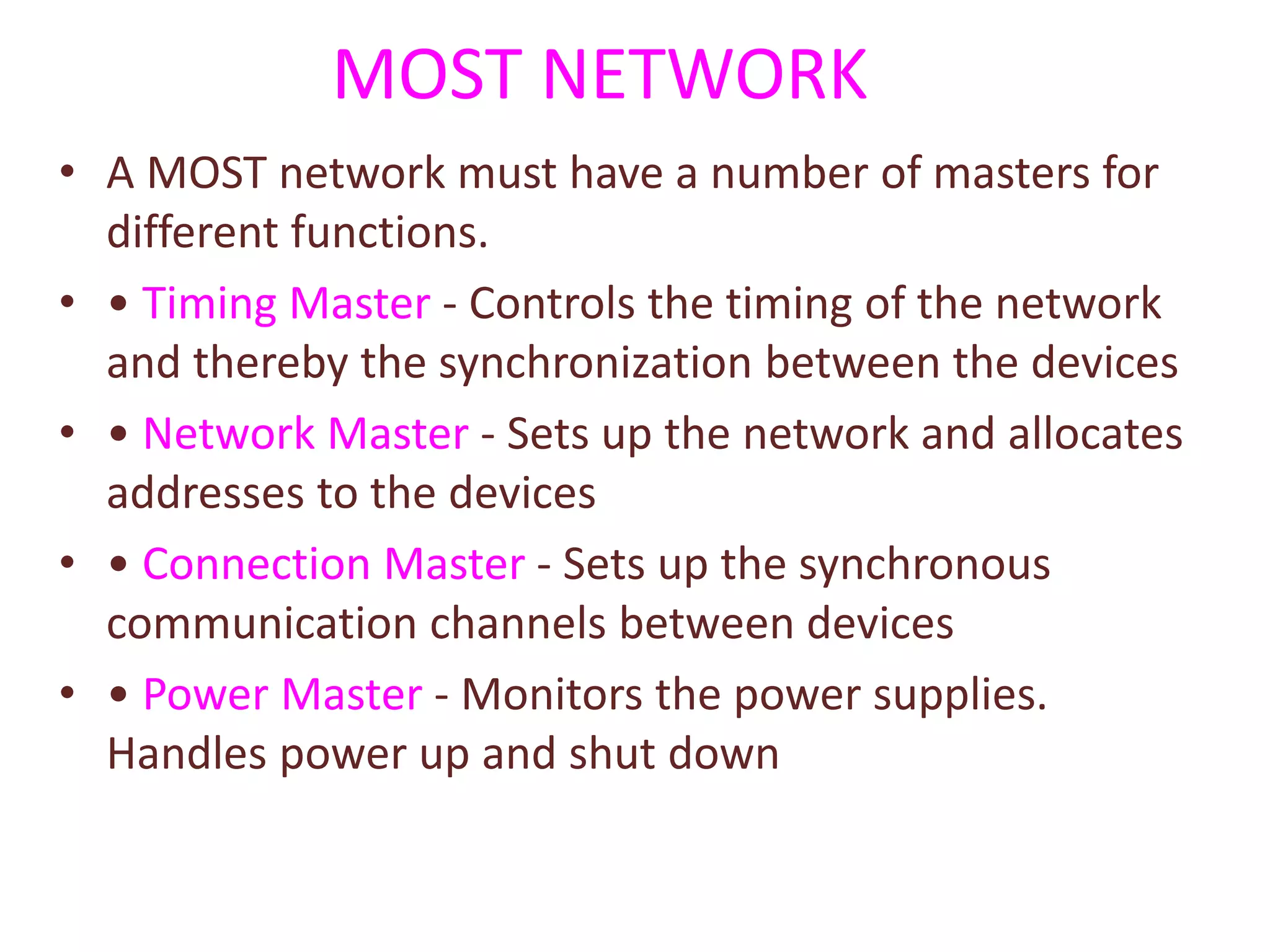
• A MOST network must have a number of masters for
different functions.
• • Timing Master - Controls the timing of the network
and thereby the synchronization between the devices
• • Network Master - Sets up the network and allocates
addresses to the devices
• • Connection Master - Sets up the synchronous
communication channels between devices
• • Power Master - Monitors the power supplies.
Handles power up and shut down
COMMUNICATION CHANNELS
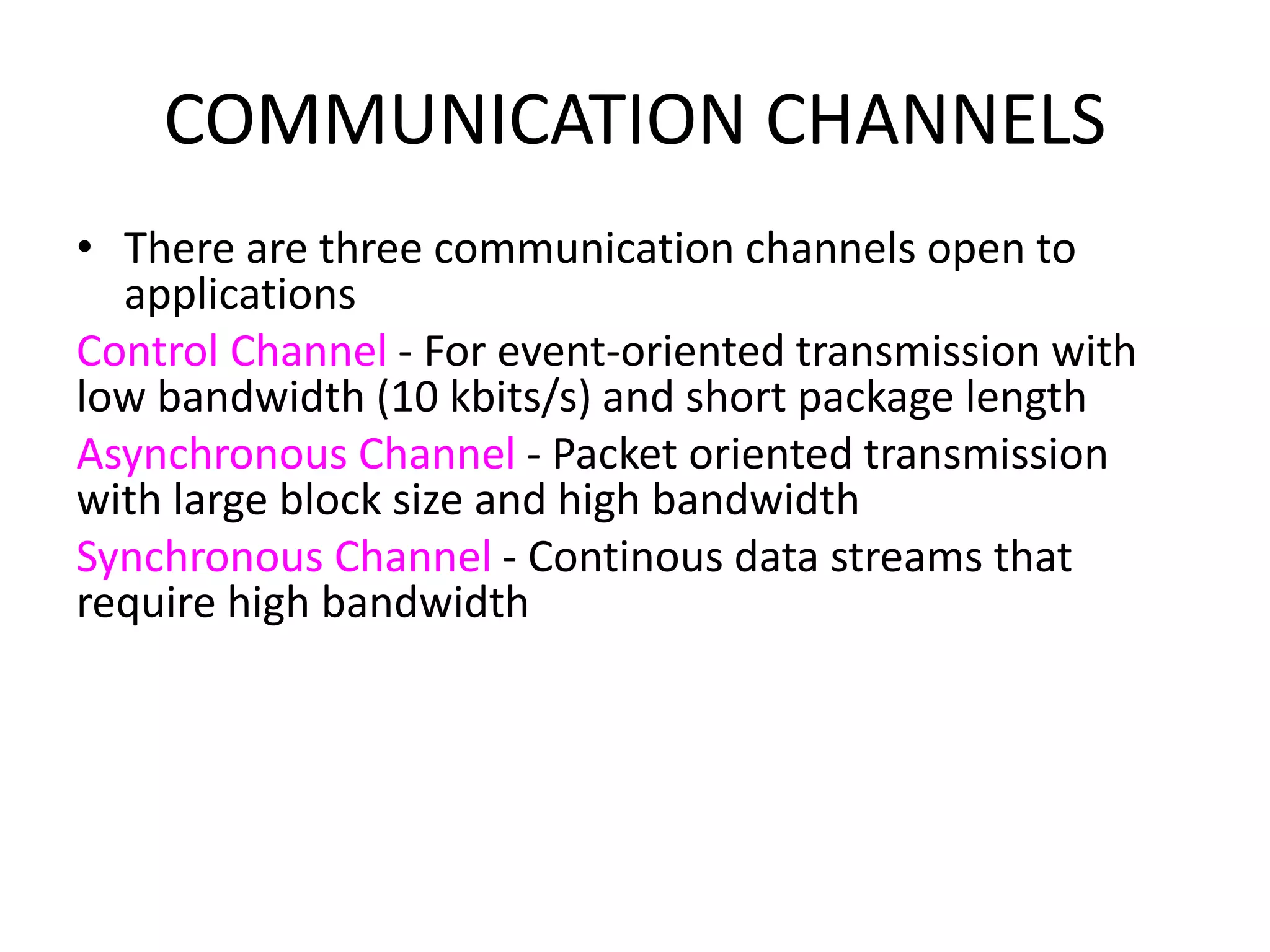
• There are three communication channels open to
applications
Control Channel - For event-oriented transmission with
low bandwidth (10 kbits/s) and short package length
Asynchronous Channel - Packet oriented transmission
with large block size and high bandwidth
Synchronous Channel - Continous data streams that
require high bandwidth
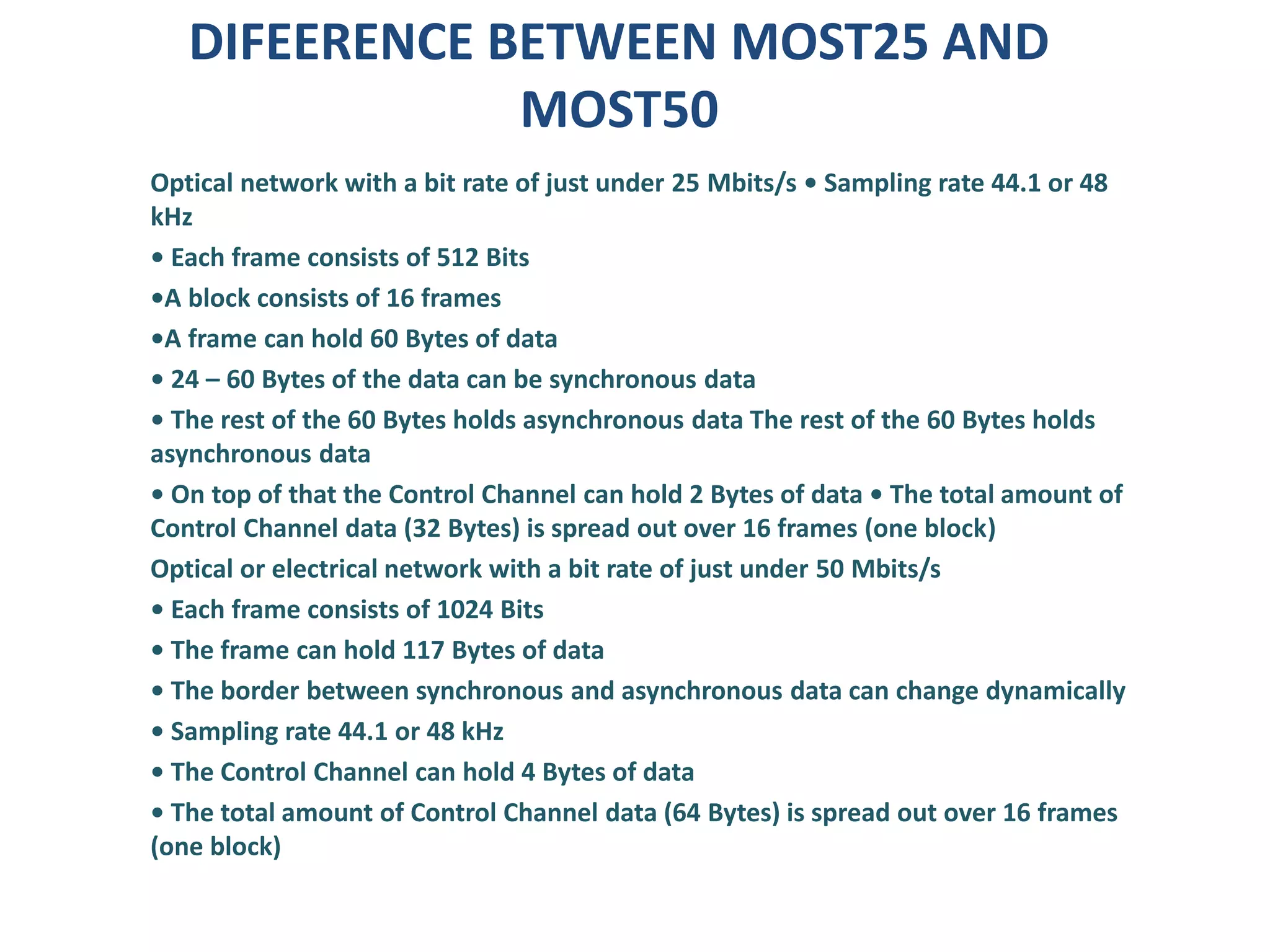
DIFEERENCE BETWEEN MOST25 AND
MOST50
Optical network with a bit rate of just under 25 Mbits/s • Sampling rate 44.1 or 48
kHz
• Each frame consists of 512 Bits
•A block consists of 16 frames
•A frame can hold 60 Bytes of data
• 24 – 60 Bytes of the data can be synchronous data
• The rest of the 60 Bytes holds asynchronous data The rest of the 60 Bytes holds
asynchronous data
• On top of that the Control Channel can hold 2 Bytes of data • The total amount of
Control Channel data (32 Bytes) is spread out over 16 frames (one block)
Optical or electrical network with a bit rate of just under 50 Mbits/s
• Each frame consists of 1024 Bits
• The frame can hold 117 Bytes of data
• The border between synchronous and asynchronous data can change dynamically
• Sampling rate 44.1 or 48 kHz
• The Control Channel can hold 4 Bytes of data
• The total amount of Control Channel data (64 Bytes) is spread out over 16 frames
(one block)

Most Media Oriented System Transport

  • 1.
    MOST NETWORK STANDS FOR:MEDIAORIENTED SYSTEMS TRANSPORT •A network for distribution of information within vehicles .A network can consist of up to 64 devices • Each distributed frame can consist of three parts:- 1)Synchronous channel for streamed data(Sample rates of 44.1 or 48 kHz) 2)Asynchronous channel for packet distributed data 3)Control Channel for control and low speed data Two versions:- MOST25 AND MOST50 By G Pruthvi Raj Eshitha Anand Hemanth peddi Himanshu G Shreyas D
  • 2.
    FOUNDERS OF MOST •BMW • Daimler Benz • Harman/Becker Automotive Systems • SMSC (former OASIS Silicon Systems) • SMSC (former OASIS Silicon Systems) - semiconductors • Audi
  • 3.
    MOST NETWORK • AMOST network must have a number of masters for different functions. • • Timing Master - Controls the timing of the network and thereby the synchronization between the devices • • Network Master - Sets up the network and allocates addresses to the devices • • Connection Master - Sets up the synchronous communication channels between devices • • Power Master - Monitors the power supplies. Handles power up and shut down
  • 4.
    COMMUNICATION CHANNELS • Thereare three communication channels open to applications Control Channel - For event-oriented transmission with low bandwidth (10 kbits/s) and short package length Asynchronous Channel - Packet oriented transmission with large block size and high bandwidth Synchronous Channel - Continous data streams that require high bandwidth
  • 6.
    DIFEERENCE BETWEEN MOST25AND MOST50 Optical network with a bit rate of just under 25 Mbits/s • Sampling rate 44.1 or 48 kHz • Each frame consists of 512 Bits •A block consists of 16 frames •A frame can hold 60 Bytes of data • 24 – 60 Bytes of the data can be synchronous data • The rest of the 60 Bytes holds asynchronous data The rest of the 60 Bytes holds asynchronous data • On top of that the Control Channel can hold 2 Bytes of data • The total amount of Control Channel data (32 Bytes) is spread out over 16 frames (one block) Optical or electrical network with a bit rate of just under 50 Mbits/s • Each frame consists of 1024 Bits • The frame can hold 117 Bytes of data • The border between synchronous and asynchronous data can change dynamically • Sampling rate 44.1 or 48 kHz • The Control Channel can hold 4 Bytes of data • The total amount of Control Channel data (64 Bytes) is spread out over 16 frames (one block)