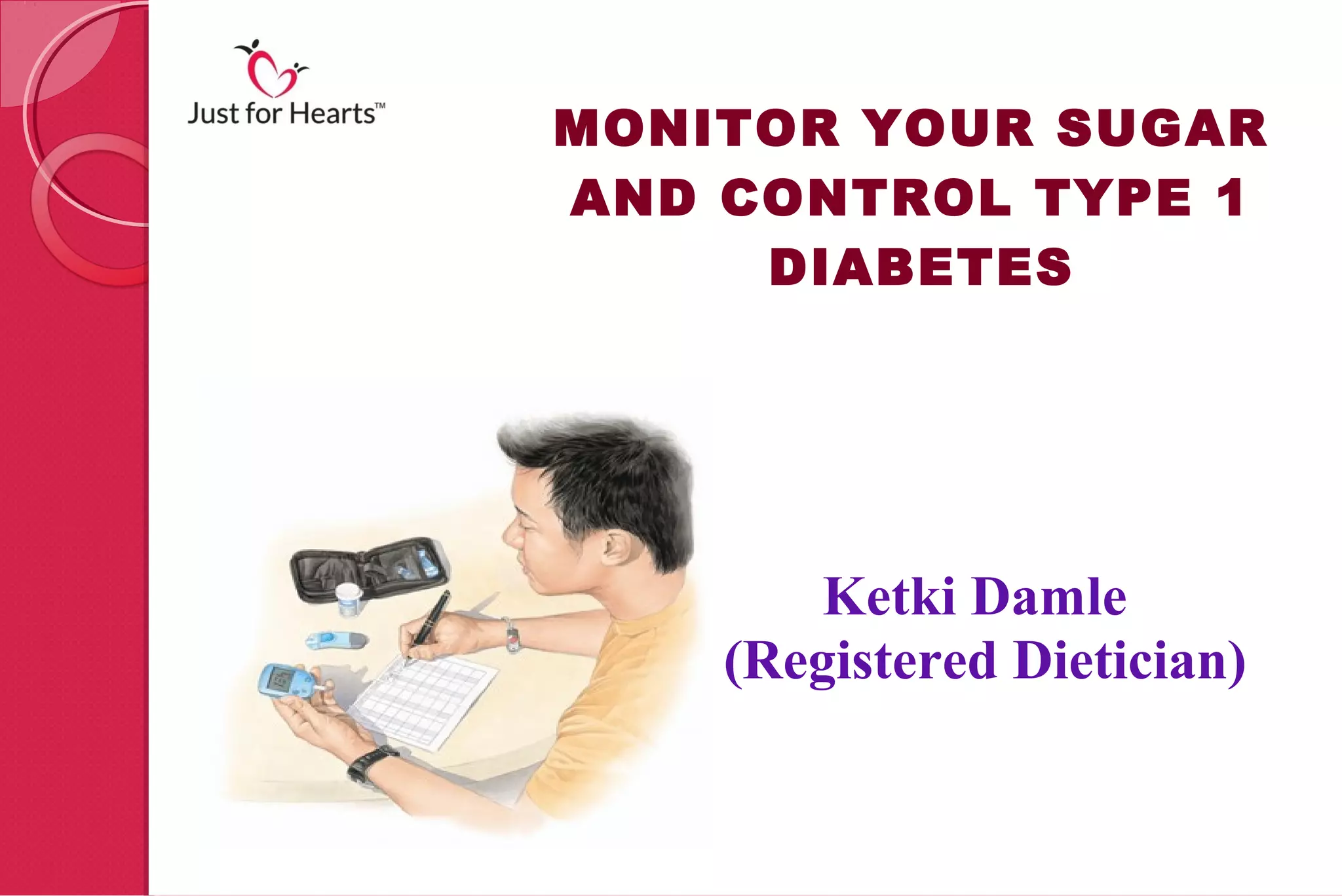

MONITOR YOUR SUGAR
AND CONTROL TYPE 1
     DIABETES


        Ketki Damle
    (Registered Dietician)
TYPE 1 DIABETES MELLITUS

 Also known as Juvenile or insulin dependent
diabetes.
 Usually diagnosed in children and young adults.
 It results from body's failure to produce insulin, a
hormone which controls
 blood sugar.
 This leads to high blood sugar levels and requires
the person to inject insulin.
 Common symptoms are frequent urination, increased
thirst, increased hunger and weight loss.
WHAT IS BLOOD SUGAR
MONITORING?


•Blood sugar/glucose monitoring is a
way of testing
  the amount of glucose in your blood.

•Besides lab tests, monitoring blood
sugar levels on a day to day basis is
also important.

•For type 1 patients, frequent
monitoring helps improve blood sugar
control.
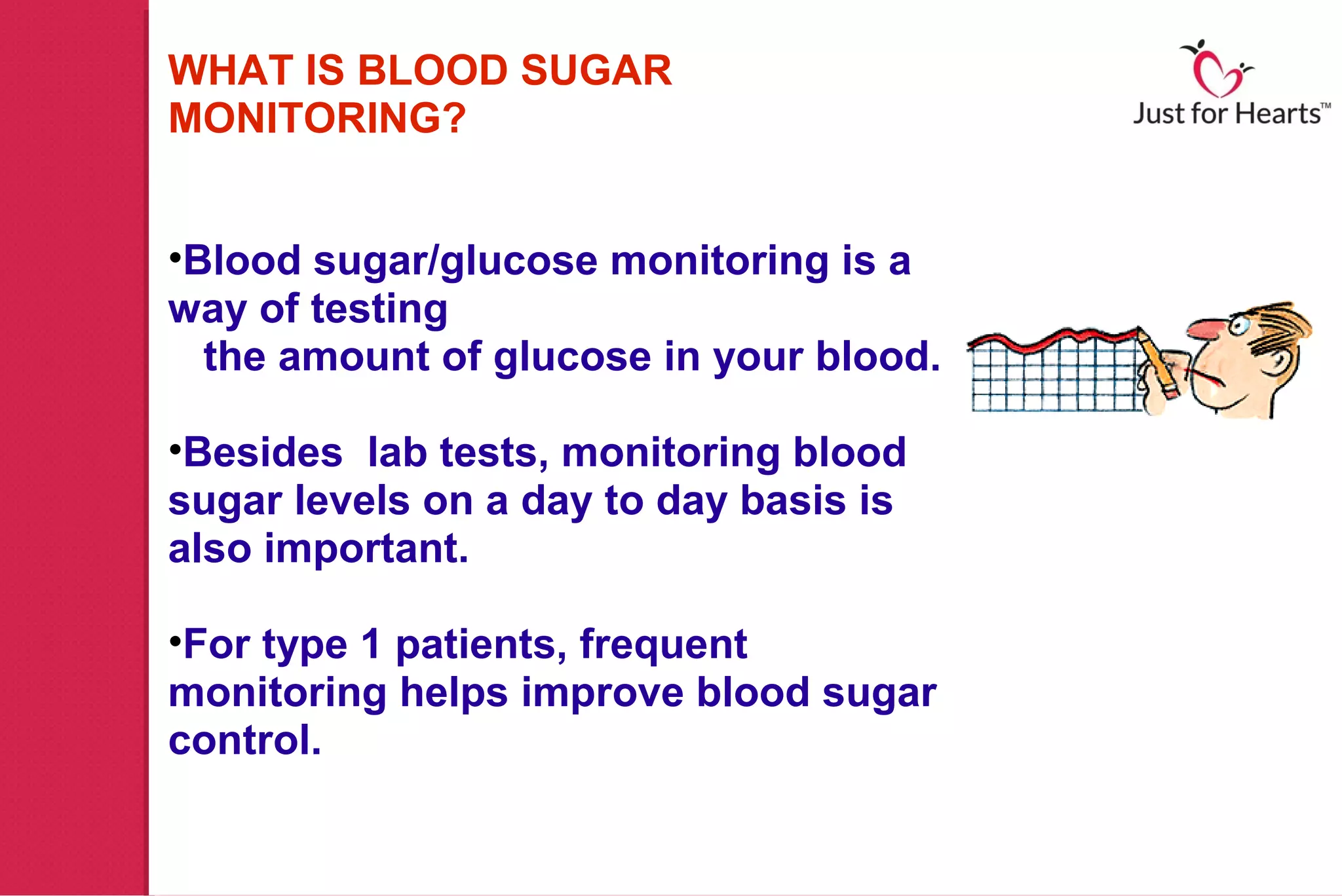
METHODS OF BLOOD SUGAR
    MONITORING FOR TYPE 1 PATIENTS

 Laboratory method

 Self monitoring of blood glucose (SMBG)

 Continuous glucose monitoring system (CGMS)

 Newer methods - Insulin pump & artificial
pancreas
LABORATORY METHOD

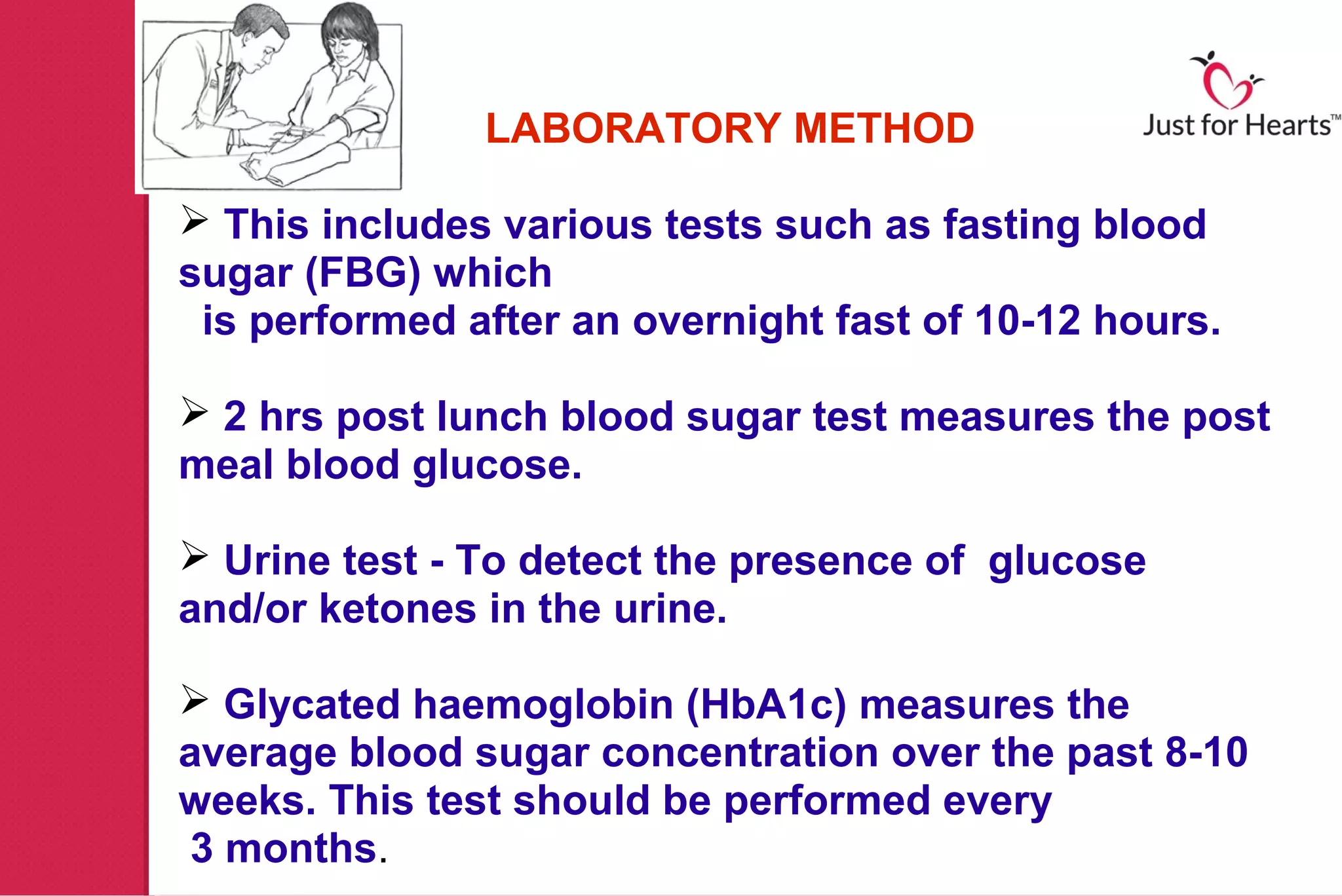
 This includes various tests such as fasting blood
sugar (FBG) which
 is performed after an overnight fast of 10-12 hours.

 2 hrs post lunch blood sugar test measures the post
meal blood glucose.

 Urine test - To detect the presence of glucose
and/or ketones in the urine.

 Glycated haemoglobin (HbA1c) measures the
average blood sugar concentration over the past 8-10
weeks. This test should be performed every
 3 months.
SELF MONITORING OF BLOOD GLUCOSE

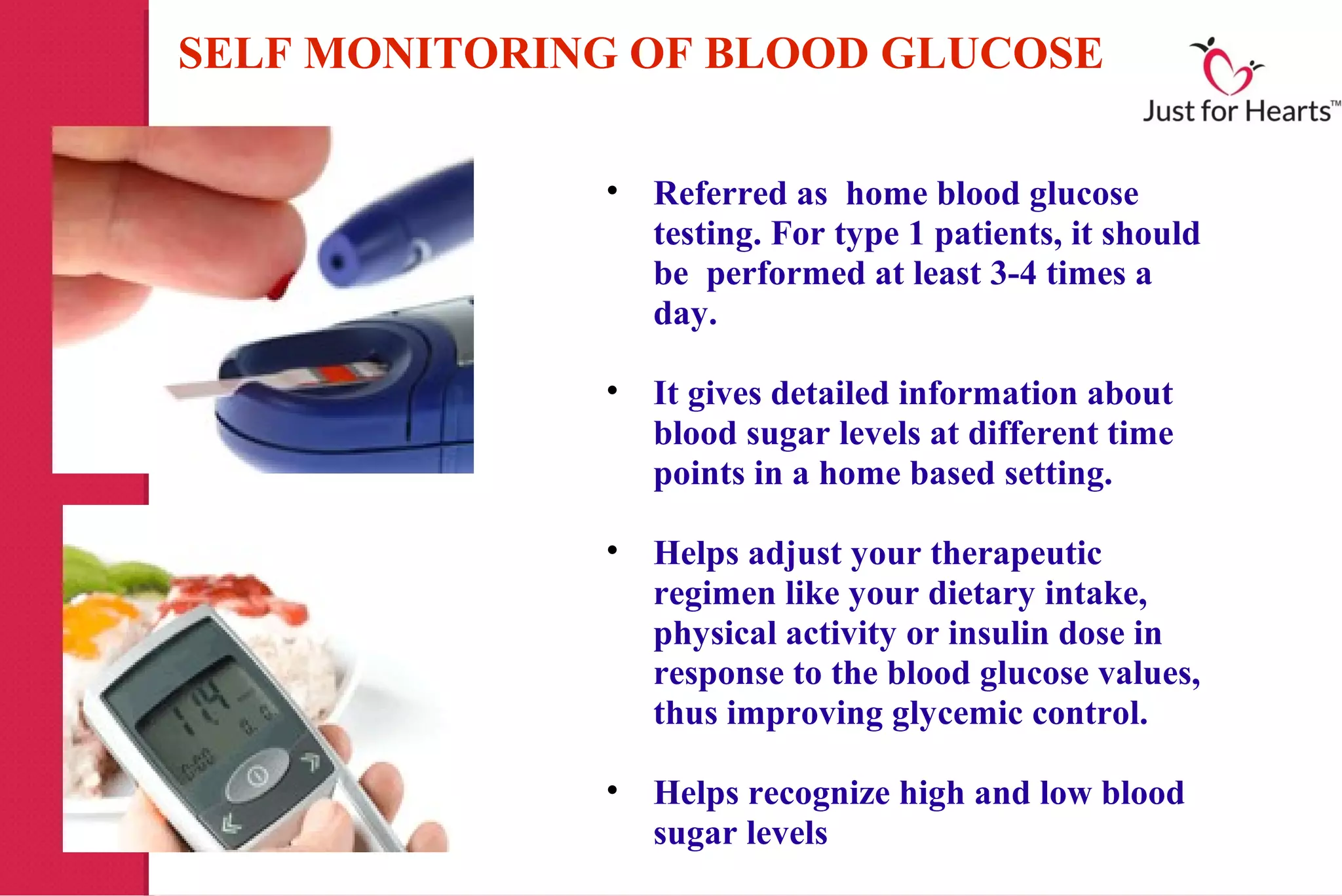
              • Referred as home blood glucose
                testing. For type 1 patients, it should
                be performed at least 3-4 times a
                day.

              • It gives detailed information about
                blood sugar levels at different time
                points in a home based setting.

              • Helps adjust your therapeutic
                regimen like your dietary intake,
                physical activity or insulin dose in
                response to the blood glucose values,
                thus improving glycemic control.

              • Helps recognize high and low blood
                sugar levels
ADVANTAGES OF
       SMBG
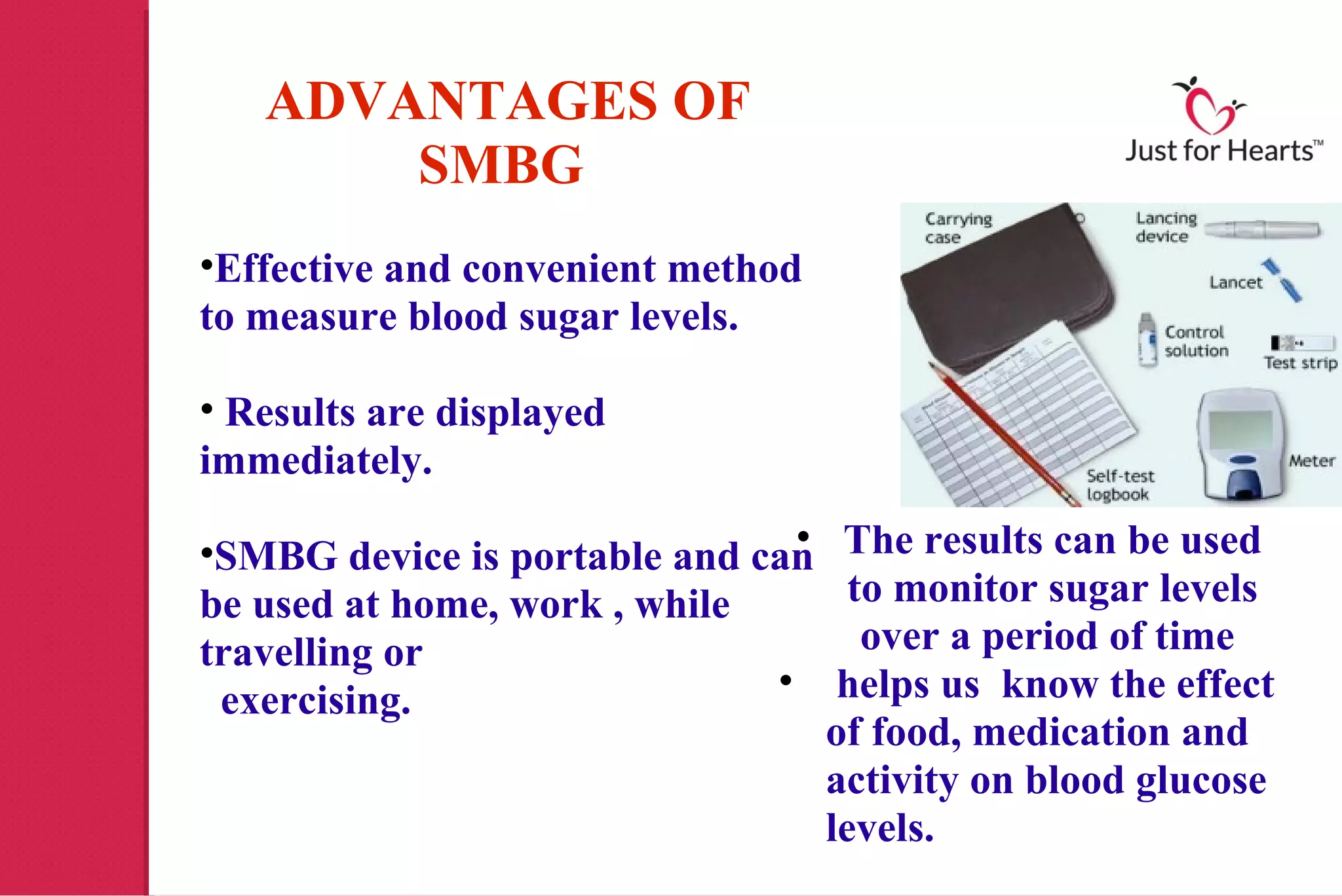
•Effective and convenient method
to measure blood sugar levels.

• Results are displayed
immediately.
                               •
•SMBG device is portable and can The results can be used
be used at home, work , while      to monitor sugar levels
travelling or                       over a period of time
 exercising.                  • helps us know the effect
                                 of food, medication and
                                 activity on blood glucose
                                 levels.
DISADVATAGES OF SMBG
•Blood glucose levels cannot be monitored
continuously.

•The patient needs to be pricked several times in a
day to obtain results which can be quite painful
and lead to psychological burden on the patient
especially small children with type 1
 diabetes.
•The test can be demoralizing, if the results are
outside the target
  range.
CONTINUOUS GLUCOSE MONITORING
                SYSTEM (CGMS)

Continuous glucose monitors measures glucose continuously
and updates glucose levels every 1-5 minutes over a 72 hour
period.
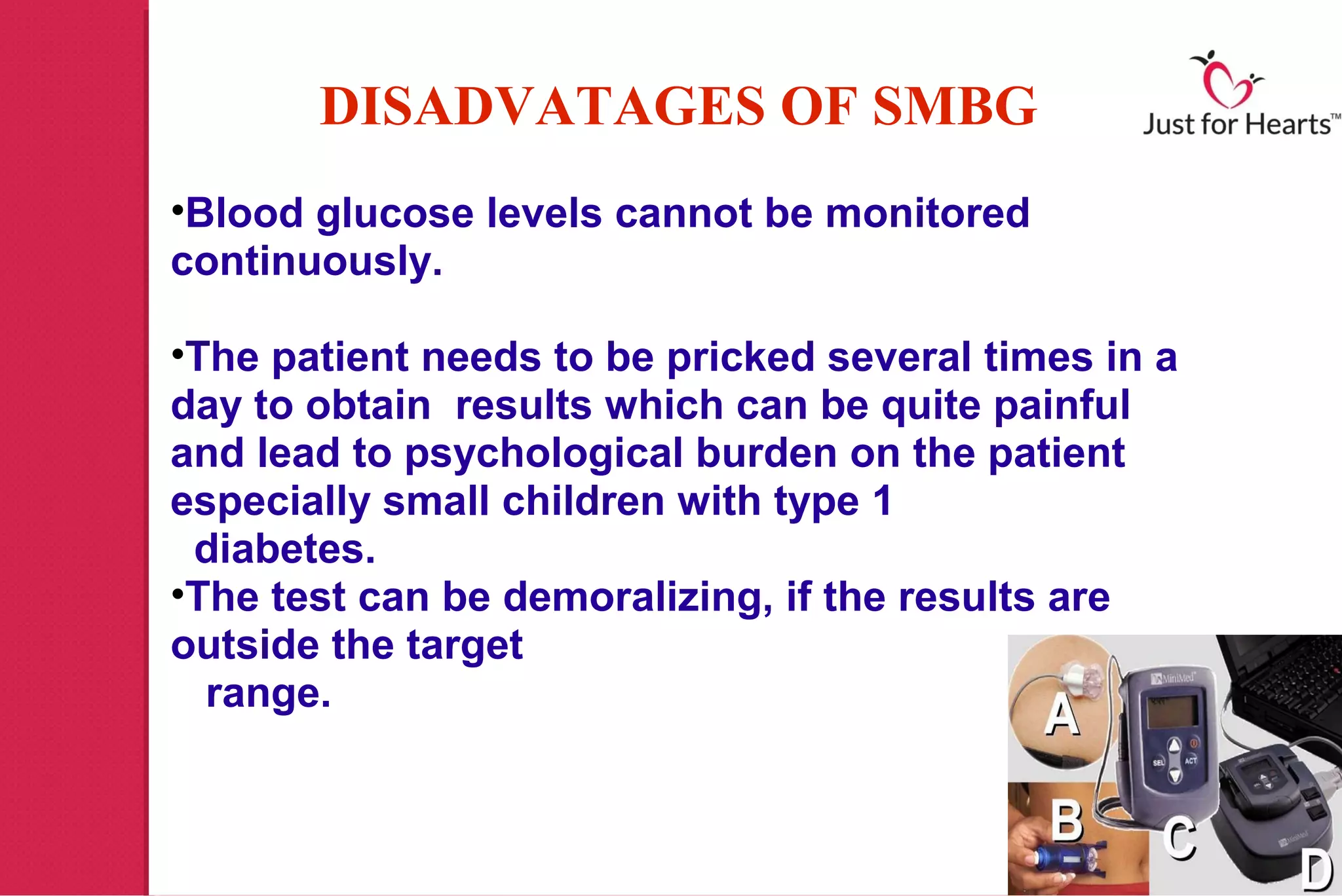
A CGMS device consists of -
 A sensor that is inserted in the body tissue (A&B)
 A monitor to display information (C)
 A transmitter that transmits the sensor data
 to the monitor (D)

The sensor inserted in the skin stays in place
for several days and the transmitter sends information about
glucose levels via radio waves from the sensor to the monitor.
ADVANTAGES OF CGMS

- It is more reliable and accurate and provides
continuous glucose
  readings.

- Helps to identify fluctuations and trends in
blood sugar levels
  which often go undetected.

- It helps identify periods of high and low blood
sugars.

- It also studies the impact of lifestyle
modifications on blood
  glucose levels.
DISADVANTAGES OF CGMS

- It is expensive.

- It can be painful.

- There are chances of dislodging of the
sensor.

- The sensor adhesive can cause skin
irritation.

- Calibration errors are possible.
INSULIN PUMPS
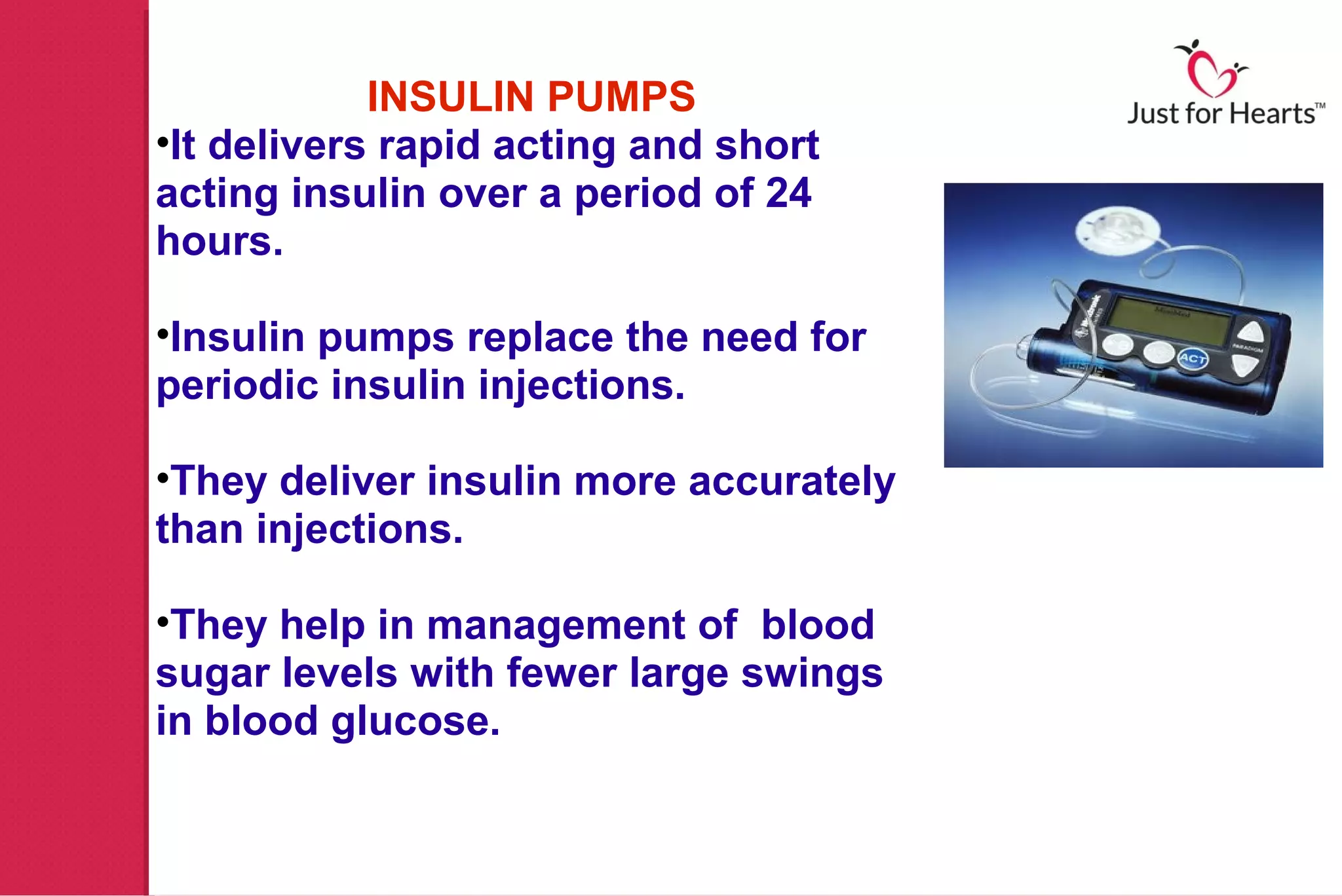
•It delivers rapid acting and short
acting insulin over a period of 24
hours.

•Insulin pumps replace the need for
periodic insulin injections.

•They deliver insulin more accurately
than injections.

•They help in management of blood
sugar levels with fewer large swings
in blood glucose.
ARTIFICIAL PANCREAS

•The artificial pancreas uses a continuous automatic
glucose monitor that continuously measures sugar
and an insulin pump that delivers insulin.

•This device allows you to modify insulin delivery in a
way that mimics natural pattern of pancreatic insulin
re lease.

•The problem in developing artificial pancreas is with
the continuous sensor that measures the blood sugar
and the implanted insulin
IMPORTANCE OF BLOOD SUGAR MONITORING IN
             TYPE 1 DIABETES


•Helps in identifying and responding to high and low
blood sugar levels and enables better sugar control.
•Helps in making appropriate treatment choices
(insulin, diet, exercise) on a daily basis.
•Reduces the risk of future diabetic complications.
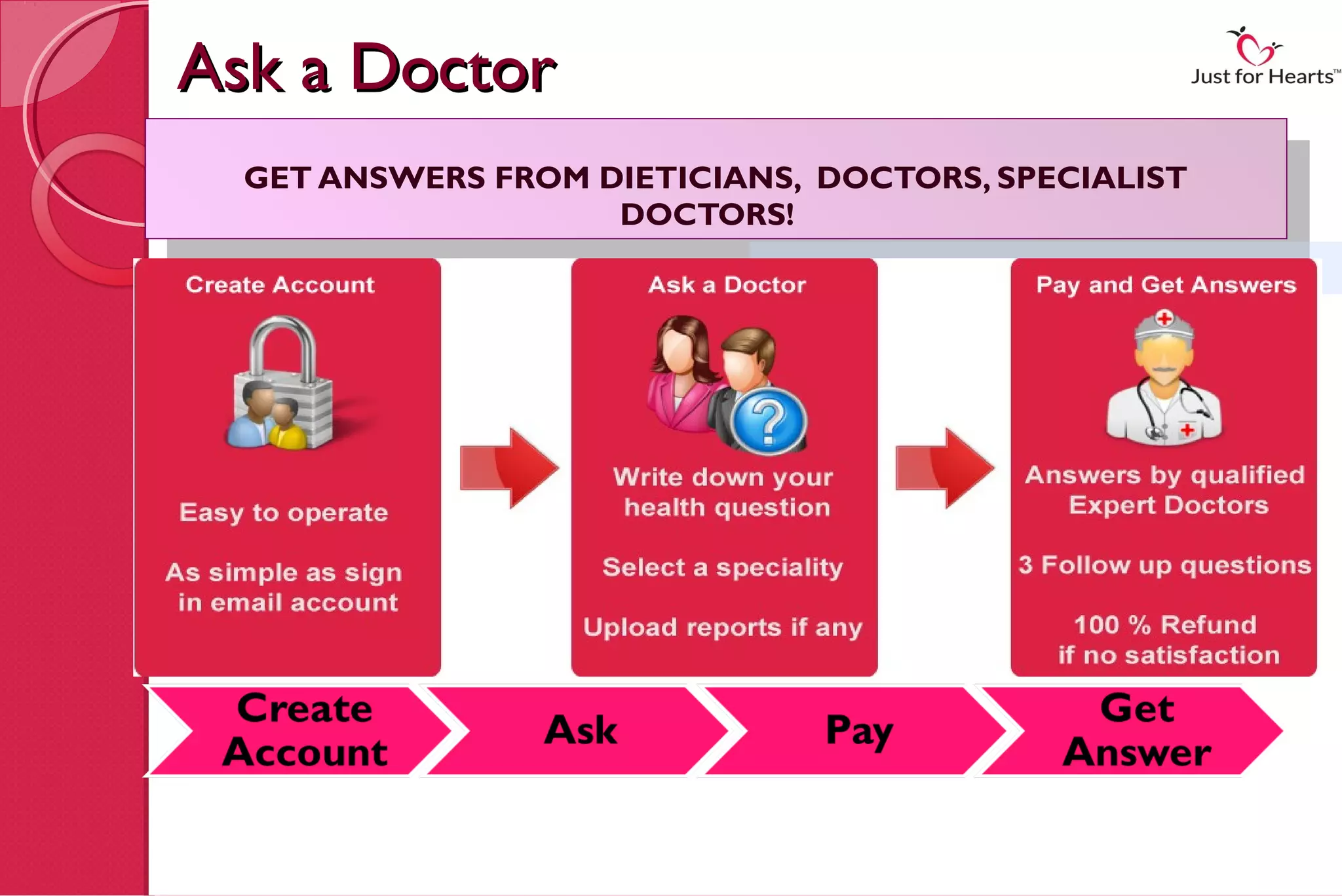
Ask a Doctor
  GET ANSWERS FROM DIETICIANS, DOCTORS, SPECIALIST
   GET ANSWERS FROM DOCTORS! DOCTORS, SPECIALIST
                    DIETICIANS,
                     DOCTORS!
                           THREE EASY STEPS TO GET ANSWER FOR YOUR HEALTH CONCERN..

Monitoring Type 1 Diabetes

  • 1.
    MONITOR YOUR SUGAR ANDCONTROL TYPE 1 DIABETES Ketki Damle (Registered Dietician)
  • 2.
    TYPE 1 DIABETESMELLITUS  Also known as Juvenile or insulin dependent diabetes.  Usually diagnosed in children and young adults.  It results from body's failure to produce insulin, a hormone which controls blood sugar.  This leads to high blood sugar levels and requires the person to inject insulin.  Common symptoms are frequent urination, increased thirst, increased hunger and weight loss.
  • 3.
    WHAT IS BLOODSUGAR MONITORING? •Blood sugar/glucose monitoring is a way of testing the amount of glucose in your blood. •Besides lab tests, monitoring blood sugar levels on a day to day basis is also important. •For type 1 patients, frequent monitoring helps improve blood sugar control.
  • 4.
    METHODS OF BLOODSUGAR MONITORING FOR TYPE 1 PATIENTS  Laboratory method  Self monitoring of blood glucose (SMBG)  Continuous glucose monitoring system (CGMS)  Newer methods - Insulin pump & artificial pancreas
  • 5.
    LABORATORY METHOD  Thisincludes various tests such as fasting blood sugar (FBG) which is performed after an overnight fast of 10-12 hours.  2 hrs post lunch blood sugar test measures the post meal blood glucose.  Urine test - To detect the presence of glucose and/or ketones in the urine.  Glycated haemoglobin (HbA1c) measures the average blood sugar concentration over the past 8-10 weeks. This test should be performed every 3 months.
  • 6.
    SELF MONITORING OFBLOOD GLUCOSE • Referred as home blood glucose testing. For type 1 patients, it should be performed at least 3-4 times a day. • It gives detailed information about blood sugar levels at different time points in a home based setting. • Helps adjust your therapeutic regimen like your dietary intake, physical activity or insulin dose in response to the blood glucose values, thus improving glycemic control. • Helps recognize high and low blood sugar levels
  • 7.
    ADVANTAGES OF SMBG •Effective and convenient method to measure blood sugar levels. • Results are displayed immediately. • •SMBG device is portable and can The results can be used be used at home, work , while to monitor sugar levels travelling or over a period of time exercising. • helps us know the effect of food, medication and activity on blood glucose levels.
  • 8.
    DISADVATAGES OF SMBG •Bloodglucose levels cannot be monitored continuously. •The patient needs to be pricked several times in a day to obtain results which can be quite painful and lead to psychological burden on the patient especially small children with type 1 diabetes. •The test can be demoralizing, if the results are outside the target range.
  • 9.
    CONTINUOUS GLUCOSE MONITORING SYSTEM (CGMS) Continuous glucose monitors measures glucose continuously and updates glucose levels every 1-5 minutes over a 72 hour period. A CGMS device consists of -  A sensor that is inserted in the body tissue (A&B)  A monitor to display information (C)  A transmitter that transmits the sensor data to the monitor (D) The sensor inserted in the skin stays in place for several days and the transmitter sends information about glucose levels via radio waves from the sensor to the monitor.
  • 10.
    ADVANTAGES OF CGMS -It is more reliable and accurate and provides continuous glucose readings. - Helps to identify fluctuations and trends in blood sugar levels which often go undetected. - It helps identify periods of high and low blood sugars. - It also studies the impact of lifestyle modifications on blood glucose levels.
  • 11.
    DISADVANTAGES OF CGMS -It is expensive. - It can be painful. - There are chances of dislodging of the sensor. - The sensor adhesive can cause skin irritation. - Calibration errors are possible.
  • 12.
    INSULIN PUMPS •It deliversrapid acting and short acting insulin over a period of 24 hours. •Insulin pumps replace the need for periodic insulin injections. •They deliver insulin more accurately than injections. •They help in management of blood sugar levels with fewer large swings in blood glucose.
  • 13.
    ARTIFICIAL PANCREAS •The artificialpancreas uses a continuous automatic glucose monitor that continuously measures sugar and an insulin pump that delivers insulin. •This device allows you to modify insulin delivery in a way that mimics natural pattern of pancreatic insulin re lease. •The problem in developing artificial pancreas is with the continuous sensor that measures the blood sugar and the implanted insulin
  • 14.
    IMPORTANCE OF BLOODSUGAR MONITORING IN TYPE 1 DIABETES •Helps in identifying and responding to high and low blood sugar levels and enables better sugar control. •Helps in making appropriate treatment choices (insulin, diet, exercise) on a daily basis. •Reduces the risk of future diabetic complications.
  • 15.
    Ask a Doctor GET ANSWERS FROM DIETICIANS, DOCTORS, SPECIALIST GET ANSWERS FROM DOCTORS! DOCTORS, SPECIALIST DIETICIANS, DOCTORS! THREE EASY STEPS TO GET ANSWER FOR YOUR HEALTH CONCERN..