Learning outcomes
The learning objectives of this lesson is to:
• Understand the definition of Diabetes.
• Understand the pathogenesis of Diabetes.
• Identify the types of Diabetes.
• Understand the general symptoms of Diabetes?
• Understand the definition of pre-diabetes.
• Understand the causes of Diabetes.
What is diabetes?
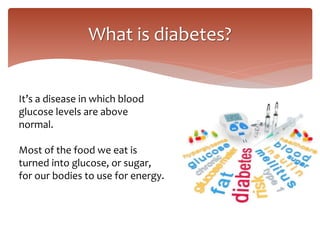
It’s a disease in which blood
glucose levels are above
normal.
Most of the food we eat is
turned into glucose, or sugar,
for our bodies to use for energy.
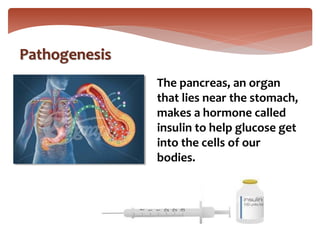
The pancreas, an organ
that lies near the stomach,
makes a hormone called
insulin to help glucose get
into the cells of our
bodies.
Pathogenesis
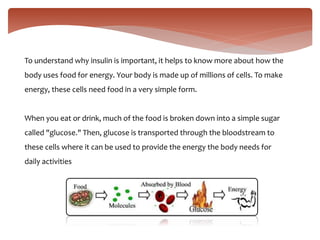
To understand why insulin is important, it helps to know more about how the
body uses food for energy. Your body is made up of millions of cells. To make
energy, these cells need food in a very simple form.
When you eat or drink, much of the food is broken down into a simple sugar
called "glucose." Then, glucose is transported through the bloodstream to
these cells where it can be used to provide the energy the body needs for
daily activities
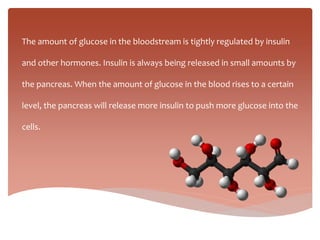
The amount of glucose in the bloodstream is tightly regulated by insulin
and other hormones. Insulin is always being released in small amounts by
the pancreas. When the amount of glucose in the blood rises to a certain
level, the pancreas will release more insulin to push more glucose into the
cells.
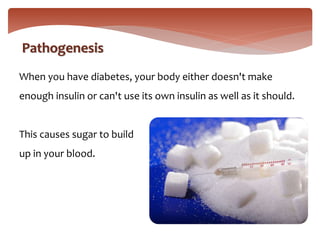
When you have diabetes, your body either doesn't make
enough insulin or can't use its own insulin as well as it should.
This causes sugar to build
up in your blood.
Pathogenesis
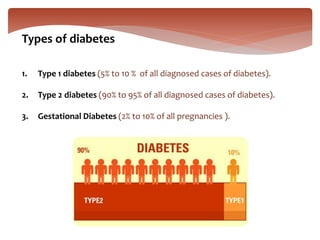
Types of diabetes
1. Type 1 diabetes (5% to 10 % of all diagnosed cases of diabetes).
2. Type 2 diabetes (90% to 95% of all diagnosed cases of diabetes).
3. Gestational Diabetes (2% to 10% of all pregnancies ).
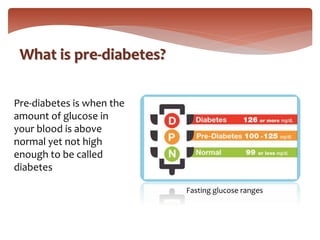
What is pre-diabetes?
Fasting glucose ranges
Pre-diabetes is when the
amount of glucose in
your blood is above
normal yet not high
enough to be called
diabetes
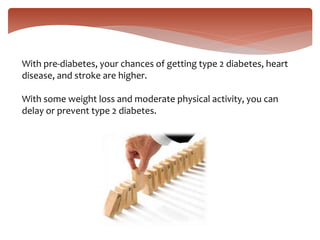
With pre-diabetes, your chances of getting type 2 diabetes, heart
disease, and stroke are higher.
With some weight loss and moderate physical activity, you can
delay or prevent type 2 diabetes.
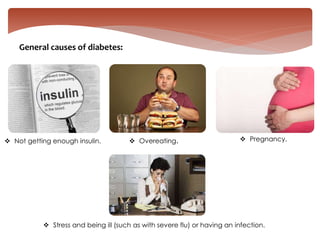
 Stress and being ill (such as with severe flu) or having an infection.
 Not getting enough insulin.  Overeating.  Pregnancy.
General causes of diabetes:
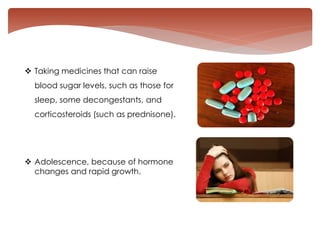
 Taking medicines that can raise
blood sugar levels, such as those for
sleep, some decongestants, and
corticosteroids (such as prednisone).
 Adolescence, because of hormone
changes and rapid growth.
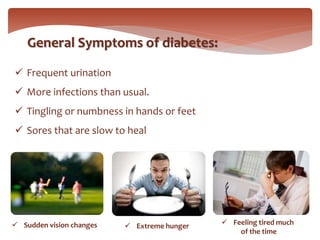
General Symptoms of diabetes:
 Frequent urination
 More infections than usual.
 Tingling or numbness in hands or feet
 Sores that are slow to heal
 Sudden vision changes  Extreme hunger  Feeling tired much
of the time
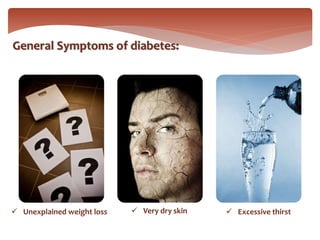
 Very dry skin Unexplained weight loss  Excessive thirst
General Symptoms of diabetes:
Summary questions
1. What is diabetes?
2. what are the types of diabetes?
3. What is the hormone that helps glucose get into the cells of our bodies?
4. What is pre-diabetes?
5. What causes diabetes?
6. What are the symptoms of diabetes?

Diabetes

  • 2.
    Learning outcomes The learningobjectives of this lesson is to: • Understand the definition of Diabetes. • Understand the pathogenesis of Diabetes. • Identify the types of Diabetes. • Understand the general symptoms of Diabetes? • Understand the definition of pre-diabetes. • Understand the causes of Diabetes.
  • 3.
    What is diabetes? It’sa disease in which blood glucose levels are above normal. Most of the food we eat is turned into glucose, or sugar, for our bodies to use for energy.
  • 4.
    The pancreas, anorgan that lies near the stomach, makes a hormone called insulin to help glucose get into the cells of our bodies. Pathogenesis
  • 5.
    To understand whyinsulin is important, it helps to know more about how the body uses food for energy. Your body is made up of millions of cells. To make energy, these cells need food in a very simple form. When you eat or drink, much of the food is broken down into a simple sugar called "glucose." Then, glucose is transported through the bloodstream to these cells where it can be used to provide the energy the body needs for daily activities
  • 6.
    The amount ofglucose in the bloodstream is tightly regulated by insulin and other hormones. Insulin is always being released in small amounts by the pancreas. When the amount of glucose in the blood rises to a certain level, the pancreas will release more insulin to push more glucose into the cells.
  • 7.
    When you havediabetes, your body either doesn't make enough insulin or can't use its own insulin as well as it should. This causes sugar to build up in your blood. Pathogenesis
  • 8.
    Types of diabetes 1.Type 1 diabetes (5% to 10 % of all diagnosed cases of diabetes). 2. Type 2 diabetes (90% to 95% of all diagnosed cases of diabetes). 3. Gestational Diabetes (2% to 10% of all pregnancies ).
  • 9.
    What is pre-diabetes? Fastingglucose ranges Pre-diabetes is when the amount of glucose in your blood is above normal yet not high enough to be called diabetes
  • 10.
    With pre-diabetes, yourchances of getting type 2 diabetes, heart disease, and stroke are higher. With some weight loss and moderate physical activity, you can delay or prevent type 2 diabetes.
  • 11.
     Stress andbeing ill (such as with severe flu) or having an infection.  Not getting enough insulin.  Overeating.  Pregnancy. General causes of diabetes:
  • 12.
     Taking medicinesthat can raise blood sugar levels, such as those for sleep, some decongestants, and corticosteroids (such as prednisone).  Adolescence, because of hormone changes and rapid growth.
  • 13.
    General Symptoms ofdiabetes:  Frequent urination  More infections than usual.  Tingling or numbness in hands or feet  Sores that are slow to heal  Sudden vision changes  Extreme hunger  Feeling tired much of the time
  • 14.
     Very dryskin Unexplained weight loss  Excessive thirst General Symptoms of diabetes:
  • 15.
    Summary questions 1. Whatis diabetes? 2. what are the types of diabetes? 3. What is the hormone that helps glucose get into the cells of our bodies? 4. What is pre-diabetes? 5. What causes diabetes? 6. What are the symptoms of diabetes?

Editor's Notes

  • #4 http://www.cdc.gov/diabetes/basics/diabetes.html
  • #5 http://comps.gograph.com/diabetes_gg61985868.jpg http://www.cdc.gov/diabetes/basics/diabetes.html
  • #8 http://www.mzaaj.com/wp-content/uploads/2015/04/1341677487.jpg
  • #9 http://www.diabetes.org.uk/Guide-to-diabetes/What-is-diabetes/What-is-Type-1-diabetes/
  • #10 http://www.heart.org/idc/groups/heart-public/@wcm/@hcm/documents/image/ucm_461555.png http://www.diabetes.niddk.nih.gov/dm/pubs/type1and2/index.aspx#what
  • #14 http://www.t48fitness.com/wp-content/uploads/2014/05/thirsty.jpg