MAGAZINE
ANALYSIS
FRONT COVER
Main Image
The main image – Jack White, Is placed centrally in the magazine and is using direct
address to create a bond and entice them into the magazine. Jack is dressed in a
dark blue suit which matches with the colour scheme yet blends in with the
background, although they are the same colour jack is presented with a white light
framing him and his suit is slightly darker and the background seems blurred and as
he is presented in front of the masthead he looks more present in the magazine. He is
dressed smartly and sophisticatedly which specifies to an older, more mature
audience and specifies the magazine to be a little more upper class than others yet
at a reasonable price. A blue light is shone on the models face to match with the
colour scheme and to add a mysterious effect to the model and the magazine as a
whole, it makes the model look supernatural which makes the magazine look unique.
A number of more information circles are
situated on the page indicating that it’s a vinyl
issue and specials inside the magazine to
advertise to the audience that this magazine
is better than other magazines as it is a special
edition. The largest circle is situated in yellow
just above the anchorage text and stands out
most to the reader rather than the other puffs
on the front cover. The puffs are a vital part as
they make the magazine more unique rather
than other magazines and make it a unique
selling point for those who like vinyl more. The
puffs provide extra information for the reader
and sell the magazine.
Two other images situated with the
skyline at the top of the magazine,
these link with the artists presented in
the skyline to advertise the musicians
and to add more creativity on the
page otherwise it may look plain and
boring and may not look appealing to
the audience. using more than one
photo in the cover makes the page
more exiting to the viewer and gives
them more content to look at making
them more interested in the magazine.
Cover lines
The cover lines are situated in yellow and white
which contrast against the dark blue and are
placed around the cover model to almost
frame him. No cover lines overlap the cover
model which gives him more authority over the
magazine and his story over the other stories in
the magazine. They are all in capital letters and
are all in the same font. They are placed all over
the magazine and create a symmetrical
balance with each other and the other features
on the magazine. The cover lines are a big
impact on the magazine as it ensures the viewer
purchases the magazine.
Masthead
The masthead is covered by the cover model to
show that the magazine is popular, or the
magazine value the cover model and article is .
The masthead matches with the colour
scheme, as it is white. Its also white as it’s a
bright colour against the dark blue background.
It is also the largest word on the page and the
boldest on the page. The masthead also has a
grey and black shadow to make it look 3D and
to stand out against the rest of the magazine. It
has these effects as it would be the first thing
that catches the readers attention, which this
magazine has successfully used. The masthead
doesn’t have a specific target audience yet
doesn’t look childish so seems to specify with an
older more mature audience.
Colour scheme
The colour scheme consists of blue, yellow, red, black, white and grey. The main colours used are blue and yellow
which are complimentary colours and go well together. Blue has connotations of power and tranquillity and is usually
associated with rock magazines and the yellow has connotations of happiness, positivity and energy and together
are a great mix for the magazine. The colour yellow is also a bright colour therefore it stands out to the reader and
draws them in to the article presented. The black and white are used mainly for the writing as they are suitable for
the writing. The red is used to advertise the free cd as red catches the readers attention and offering freebies makes
the viewer want to buy the magazine more and the grey is used for the sky line which adds difference to the
magazine. Most magazines use a three colour rule yet this magazine has used many colours in the magazine.
Typography
The typography in this magazine is all fairly
similar, the cover lines, anchorage text and
other items on the magazine yet they are all
similar and can hardly tell any of them apart.
They are all presented in capital letters and
have a retro type style to them to make the
magazine look more old a sophisticated and
to advertise it to the more mature
audiences.. The sentence ‘music magazine’
situated over the masthead is in a swirly font
to make it look more sophisticated and posh.
The magazines font sells the magazine to the
correct target audience.
The barcode, price and issue number are situated in the bottom right corner of the
magazine out the way as this is the least interesting thing about the magazine and is
only needed for retail. The barcode is needed to scan the so needs to be out the way
and smaller than other information. The issue number is needed to inform the viewer id
they are buying the correct issue, if they’ve missed an issue out or if they already have
the issue with a varied front covers. The price is in small print next to the barcode as then
the viewer can find it easier, the price is needed to inform the reader how much the
magazine is yet if it is at a large expense the viewer may get put of buying the
magazine yet as they are intrigued with the rest of the magazine the price may not put
them off as it’s the last thing they see on the magazine. The barcode, price and issue
number are needed on the magazine yet don’t sell it to the reader just informs them.
Tagline
The tagline is situated on the
masthead and states ‘music
magazine’ it doesn’t specify too
much information yet tells the
audience the type of magazine as
people may not realise it’s a music
magazine, the tagline is also in grey
matching with the skyline which adds
to the house style of the magazine.
The tagline is the most unique font on
the magazine front cover and adds
style to the magazine and elegance. A free CD is advertised at the top of the
page in the skyline. It is presented in a red
box with white writing to alert the reader
about the freebie. The free CD may be used
if the magazine isn’t that popular or if it’s a
usual thing the magazine does to sell itself.
The CD isn’t a usual CD as it links to the cover
model as these are songs he has chosen to
be on the CD as it states on the CD ‘Jack
White presents the best of third man
records’. This means that this CD is only sold
with the magazine and fans of Jack White
may want to hear his favourite songs or what
influences him.
Anchorage text
The anchorage text is the second largest font on
the page just smaller than the masthead. The
anchorage text links with it cover model. The
name of the cover model, Jack White, is
presented in large white latters across the middle
of the page and then followed by the sentence
‘dares you to enter his house of wax…’ which is
also anchorage text yet looks like a cover line. This
intrigues the reader into the buying the magazine
as they are curious about the article inside. Also
the white stands out against the blue.
CONTENTS PAGE
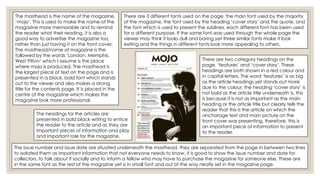
The main image is presenting Bert Jansch
holding a guitar using direct address, he is
using direct address to try and create a
bond with the reader to tempt them to read
the magazine more. The main image is in
black and white to blend with the rest of the
colour scheme and has an older effect on it.
He is holding a guitar to demonstrate he is a
talented musician. The main image takes up
nearly half of the page and the text is
spread out around him almost acting as a
frame for the image. The image does not
overlap the line separating the main
information and the date and issue number.
The image is framed into the page almost
perfectly.
The layout of the contents page is fairly symmetrical, as the writing is placed on the left,
main image on the right. The masthead is situated at the top of the page and placed in
the centre to make the magazine seem more sophisticated and professional.
Sublines are used to present more specific detail about what the article is
about. This is a good detail as it tells the reader what they should be
expecting in the articles and if they like the sound of it they will purchase
the magazine. It is a good feature for selling magazines and a unique
selling point for Mojo as many other magazine companies do not do this
in there magazines which may lose the interest of buyers.
The colour scheme of this magazine contents
page is white, black and a brown-ish red. There is
a small amount of colour on this page to make
the page look professional and more mature, the
main colours black and white may make the
contents look plain where as it contrasts well
against each other and as there is a large
quantity of text it suits the style of magazine. The
main titles, page numbers and the mention of a
quote are presented in the red colour where
other text is written in black while the
background stays white. The colour scheme sets
the target audience as older adults of more a
mature age.
A quote is situated at the bottom of the page,
segregated from the rest of the page next to the
picture. This quote links to the picture and shows a
page number at the end of it so the reader can
get full coverage on the story about the quote.
The quote is used to entice viewers in and question
what is going on, therefore they will have to buy
the magazine to find out.
There are 3 different fonts used on the page, the main font used by the majority
of the magazine, the font used by the heading ‘cover story’ and the quote, and
the font which is used to present the sublines, each different font has been used
for a different purpose. If the same font was used through the whole page the
viewer may think it looks dull and boring yet three similar fonts make it look
exiting and the things in different fonts look more appealing to others.
There are two category headings on the
page, ‘features’ and ‘cover story’. These
headings are both shown in a red colour and
in capital letters. The word ‘features’ is as big
as the article headings yet stands out more
due to the colour, the heading ‘cover story’ is
not bold as the article title underneath is, this
is because it is not as important as the main
heading or the article title but clearly tells the
reader that this is the article on which the
anchorage text and main picture on the
front cover was presenting, therefore, this is
an important piece of information to present
to the reader.
The issue number and issue date are situated underneath the masthead, they are separated from the page in between two lines
to isolated them as important information that not everyone needs to know, it is good to show the issue number and date for
collectors, to talk about it socially and to inform a fellow who may have to purchase the magazine for someone else. These are
in the same font as the rest of the magazine yet is in small font and out of the way neatly set in the magazine page.
The masthead is the name of the magazine,
‘mojo’. This is used to make the name of the
magazine more memorable and to remind
the reader what their reading, it is also a
good way to advertise the magazine too,
rather than just having it on the front cover.
The masthead/name of magazine is the
followed by the words ‘London. Memphis.
West Pilton’ which I assume is the place
where mojo is produced. The masthead is
the largest piece of text on the page and is
presented in a black, bold font which stands
out to the viewer and also makes a strong
title for the contents page. It is placed in the
centre of the magazine which makes the
magazine look more professional.
The headings for the articles are
presented in bold black writing to entice
the reader to the article and as they are
important pieces of information and play
and important role for the magazine.
DOUBLE PAGE SPREAD
The header, ‘The 50 greatest Neil
Young songs’ which would entice
any reader who is a Neil Young fan
or anyone interested in his ‘50
greatest songs’. Yet this is at the top
of the page the header could be
the quote ‘Be there, be there now,
be in it’ which makes the reader
question the quote and more
intrigued to find out what the
article is about.
Main Image
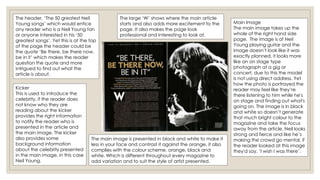
The main image takes up the
whole of the right hand side
page. The image is of Neil
Young playing guitar and the
image doesn’t look like it was
exactly planned, it looks more
like an on stage type
photograph at a gig or
concert, due to this the model
is not using direct address. Yet
how the photo is portrayed the
reader may feel like they’re
there listening to him while he's
on stage and finding out what's
going on. The image is in black
and white so doesn’t generate
that much bright colour to the
magazine and take the focus
away from the article. Neil looks
strong and fierce and like he’s
making the crowd go mental, if
the reader looked at this image
they'd say, ‘I wish I was there’.
The large ‘W’ shows where the main article
starts and also adds more excitement to the
page. It also makes the page look
professional and interesting to look at.
The main image is presented in black and white to make it
less in your face and contrast it against the orange, it also
complies with the colour scheme, orange, black and
white. Which is different throughout every magazine to
add variation and to suit the style of artist presented.
Kicker
This is used to introduce the
celebrity, if the reader does
not know who they are
reading about the kicker
provides the right information
to notify the reader who is
presented in the article and
the main image. The kicker
also provides some
background information
about the celebrity presented
in the main image, in this case
Neil Young.
The artists name is outlined in the kicker by being highlighted orange, other
celebrity names are also highlighted orange to give them more importance
and to outline them as celebrities. Also the artists name is presented at the
top of the page in the line ‘The 50 greatest Neil Young songs’.
Quote
The quote is the largest piece of
text on the double page spread
and acts as a header, the quote
‘Be there, be there now, be in it’
doesn’t really give anything
away to the reader and adds
slight mysteriousness to the quote
and may make the reader want
to find out what the quote
means and to do so will have to
read the article, this is why the
quote is the biggest piece of text
in the page.
Also a number of quotes can be
found throughout the double
page including in the kicker,
main article and the by-line.
The first sentence of the paragraph is
presented in capital letters this makes it
more powerful and makes it a good
opening sentence.
A caption is presented at the
corner of the page near the
main photograph, which
contains information on where
the photograph was taken,
when and a quote stated by
the main model on that day.
Most magazine double spreads use 2-4 columns yet this double page only
has one blocked paragraph, usually this could make it look messy and
unorganised, however it gives the main image some more recognition
and doesn’t look messy at all, the paragraph is split into 4 sub-paragraphs
therefore it is placed neatly on the page.
An action picture has been
used to create emphasis
and to make the reader
feel more in connection
with the model and to feel
as if they are watching his
greatest hits live as the
article suggests. .

MOJO

  • 1.
  • 2.
  • 3.
    Main Image The mainimage – Jack White, Is placed centrally in the magazine and is using direct address to create a bond and entice them into the magazine. Jack is dressed in a dark blue suit which matches with the colour scheme yet blends in with the background, although they are the same colour jack is presented with a white light framing him and his suit is slightly darker and the background seems blurred and as he is presented in front of the masthead he looks more present in the magazine. He is dressed smartly and sophisticatedly which specifies to an older, more mature audience and specifies the magazine to be a little more upper class than others yet at a reasonable price. A blue light is shone on the models face to match with the colour scheme and to add a mysterious effect to the model and the magazine as a whole, it makes the model look supernatural which makes the magazine look unique. A number of more information circles are situated on the page indicating that it’s a vinyl issue and specials inside the magazine to advertise to the audience that this magazine is better than other magazines as it is a special edition. The largest circle is situated in yellow just above the anchorage text and stands out most to the reader rather than the other puffs on the front cover. The puffs are a vital part as they make the magazine more unique rather than other magazines and make it a unique selling point for those who like vinyl more. The puffs provide extra information for the reader and sell the magazine. Two other images situated with the skyline at the top of the magazine, these link with the artists presented in the skyline to advertise the musicians and to add more creativity on the page otherwise it may look plain and boring and may not look appealing to the audience. using more than one photo in the cover makes the page more exiting to the viewer and gives them more content to look at making them more interested in the magazine. Cover lines The cover lines are situated in yellow and white which contrast against the dark blue and are placed around the cover model to almost frame him. No cover lines overlap the cover model which gives him more authority over the magazine and his story over the other stories in the magazine. They are all in capital letters and are all in the same font. They are placed all over the magazine and create a symmetrical balance with each other and the other features on the magazine. The cover lines are a big impact on the magazine as it ensures the viewer purchases the magazine.
  • 4.
    Masthead The masthead iscovered by the cover model to show that the magazine is popular, or the magazine value the cover model and article is . The masthead matches with the colour scheme, as it is white. Its also white as it’s a bright colour against the dark blue background. It is also the largest word on the page and the boldest on the page. The masthead also has a grey and black shadow to make it look 3D and to stand out against the rest of the magazine. It has these effects as it would be the first thing that catches the readers attention, which this magazine has successfully used. The masthead doesn’t have a specific target audience yet doesn’t look childish so seems to specify with an older more mature audience. Colour scheme The colour scheme consists of blue, yellow, red, black, white and grey. The main colours used are blue and yellow which are complimentary colours and go well together. Blue has connotations of power and tranquillity and is usually associated with rock magazines and the yellow has connotations of happiness, positivity and energy and together are a great mix for the magazine. The colour yellow is also a bright colour therefore it stands out to the reader and draws them in to the article presented. The black and white are used mainly for the writing as they are suitable for the writing. The red is used to advertise the free cd as red catches the readers attention and offering freebies makes the viewer want to buy the magazine more and the grey is used for the sky line which adds difference to the magazine. Most magazines use a three colour rule yet this magazine has used many colours in the magazine. Typography The typography in this magazine is all fairly similar, the cover lines, anchorage text and other items on the magazine yet they are all similar and can hardly tell any of them apart. They are all presented in capital letters and have a retro type style to them to make the magazine look more old a sophisticated and to advertise it to the more mature audiences.. The sentence ‘music magazine’ situated over the masthead is in a swirly font to make it look more sophisticated and posh. The magazines font sells the magazine to the correct target audience.
  • 5.
    The barcode, priceand issue number are situated in the bottom right corner of the magazine out the way as this is the least interesting thing about the magazine and is only needed for retail. The barcode is needed to scan the so needs to be out the way and smaller than other information. The issue number is needed to inform the viewer id they are buying the correct issue, if they’ve missed an issue out or if they already have the issue with a varied front covers. The price is in small print next to the barcode as then the viewer can find it easier, the price is needed to inform the reader how much the magazine is yet if it is at a large expense the viewer may get put of buying the magazine yet as they are intrigued with the rest of the magazine the price may not put them off as it’s the last thing they see on the magazine. The barcode, price and issue number are needed on the magazine yet don’t sell it to the reader just informs them. Tagline The tagline is situated on the masthead and states ‘music magazine’ it doesn’t specify too much information yet tells the audience the type of magazine as people may not realise it’s a music magazine, the tagline is also in grey matching with the skyline which adds to the house style of the magazine. The tagline is the most unique font on the magazine front cover and adds style to the magazine and elegance. A free CD is advertised at the top of the page in the skyline. It is presented in a red box with white writing to alert the reader about the freebie. The free CD may be used if the magazine isn’t that popular or if it’s a usual thing the magazine does to sell itself. The CD isn’t a usual CD as it links to the cover model as these are songs he has chosen to be on the CD as it states on the CD ‘Jack White presents the best of third man records’. This means that this CD is only sold with the magazine and fans of Jack White may want to hear his favourite songs or what influences him. Anchorage text The anchorage text is the second largest font on the page just smaller than the masthead. The anchorage text links with it cover model. The name of the cover model, Jack White, is presented in large white latters across the middle of the page and then followed by the sentence ‘dares you to enter his house of wax…’ which is also anchorage text yet looks like a cover line. This intrigues the reader into the buying the magazine as they are curious about the article inside. Also the white stands out against the blue.
  • 6.
  • 7.
    The main imageis presenting Bert Jansch holding a guitar using direct address, he is using direct address to try and create a bond with the reader to tempt them to read the magazine more. The main image is in black and white to blend with the rest of the colour scheme and has an older effect on it. He is holding a guitar to demonstrate he is a talented musician. The main image takes up nearly half of the page and the text is spread out around him almost acting as a frame for the image. The image does not overlap the line separating the main information and the date and issue number. The image is framed into the page almost perfectly. The layout of the contents page is fairly symmetrical, as the writing is placed on the left, main image on the right. The masthead is situated at the top of the page and placed in the centre to make the magazine seem more sophisticated and professional. Sublines are used to present more specific detail about what the article is about. This is a good detail as it tells the reader what they should be expecting in the articles and if they like the sound of it they will purchase the magazine. It is a good feature for selling magazines and a unique selling point for Mojo as many other magazine companies do not do this in there magazines which may lose the interest of buyers. The colour scheme of this magazine contents page is white, black and a brown-ish red. There is a small amount of colour on this page to make the page look professional and more mature, the main colours black and white may make the contents look plain where as it contrasts well against each other and as there is a large quantity of text it suits the style of magazine. The main titles, page numbers and the mention of a quote are presented in the red colour where other text is written in black while the background stays white. The colour scheme sets the target audience as older adults of more a mature age. A quote is situated at the bottom of the page, segregated from the rest of the page next to the picture. This quote links to the picture and shows a page number at the end of it so the reader can get full coverage on the story about the quote. The quote is used to entice viewers in and question what is going on, therefore they will have to buy the magazine to find out.
  • 8.
    There are 3different fonts used on the page, the main font used by the majority of the magazine, the font used by the heading ‘cover story’ and the quote, and the font which is used to present the sublines, each different font has been used for a different purpose. If the same font was used through the whole page the viewer may think it looks dull and boring yet three similar fonts make it look exiting and the things in different fonts look more appealing to others. There are two category headings on the page, ‘features’ and ‘cover story’. These headings are both shown in a red colour and in capital letters. The word ‘features’ is as big as the article headings yet stands out more due to the colour, the heading ‘cover story’ is not bold as the article title underneath is, this is because it is not as important as the main heading or the article title but clearly tells the reader that this is the article on which the anchorage text and main picture on the front cover was presenting, therefore, this is an important piece of information to present to the reader. The issue number and issue date are situated underneath the masthead, they are separated from the page in between two lines to isolated them as important information that not everyone needs to know, it is good to show the issue number and date for collectors, to talk about it socially and to inform a fellow who may have to purchase the magazine for someone else. These are in the same font as the rest of the magazine yet is in small font and out of the way neatly set in the magazine page. The masthead is the name of the magazine, ‘mojo’. This is used to make the name of the magazine more memorable and to remind the reader what their reading, it is also a good way to advertise the magazine too, rather than just having it on the front cover. The masthead/name of magazine is the followed by the words ‘London. Memphis. West Pilton’ which I assume is the place where mojo is produced. The masthead is the largest piece of text on the page and is presented in a black, bold font which stands out to the viewer and also makes a strong title for the contents page. It is placed in the centre of the magazine which makes the magazine look more professional. The headings for the articles are presented in bold black writing to entice the reader to the article and as they are important pieces of information and play and important role for the magazine.
  • 9.
  • 10.
    The header, ‘The50 greatest Neil Young songs’ which would entice any reader who is a Neil Young fan or anyone interested in his ‘50 greatest songs’. Yet this is at the top of the page the header could be the quote ‘Be there, be there now, be in it’ which makes the reader question the quote and more intrigued to find out what the article is about. Main Image The main image takes up the whole of the right hand side page. The image is of Neil Young playing guitar and the image doesn’t look like it was exactly planned, it looks more like an on stage type photograph at a gig or concert, due to this the model is not using direct address. Yet how the photo is portrayed the reader may feel like they’re there listening to him while he's on stage and finding out what's going on. The image is in black and white so doesn’t generate that much bright colour to the magazine and take the focus away from the article. Neil looks strong and fierce and like he’s making the crowd go mental, if the reader looked at this image they'd say, ‘I wish I was there’. The large ‘W’ shows where the main article starts and also adds more excitement to the page. It also makes the page look professional and interesting to look at. The main image is presented in black and white to make it less in your face and contrast it against the orange, it also complies with the colour scheme, orange, black and white. Which is different throughout every magazine to add variation and to suit the style of artist presented. Kicker This is used to introduce the celebrity, if the reader does not know who they are reading about the kicker provides the right information to notify the reader who is presented in the article and the main image. The kicker also provides some background information about the celebrity presented in the main image, in this case Neil Young.
  • 11.
    The artists nameis outlined in the kicker by being highlighted orange, other celebrity names are also highlighted orange to give them more importance and to outline them as celebrities. Also the artists name is presented at the top of the page in the line ‘The 50 greatest Neil Young songs’. Quote The quote is the largest piece of text on the double page spread and acts as a header, the quote ‘Be there, be there now, be in it’ doesn’t really give anything away to the reader and adds slight mysteriousness to the quote and may make the reader want to find out what the quote means and to do so will have to read the article, this is why the quote is the biggest piece of text in the page. Also a number of quotes can be found throughout the double page including in the kicker, main article and the by-line. The first sentence of the paragraph is presented in capital letters this makes it more powerful and makes it a good opening sentence. A caption is presented at the corner of the page near the main photograph, which contains information on where the photograph was taken, when and a quote stated by the main model on that day. Most magazine double spreads use 2-4 columns yet this double page only has one blocked paragraph, usually this could make it look messy and unorganised, however it gives the main image some more recognition and doesn’t look messy at all, the paragraph is split into 4 sub-paragraphs therefore it is placed neatly on the page. An action picture has been used to create emphasis and to make the reader feel more in connection with the model and to feel as if they are watching his greatest hits live as the article suggests. .