Flammable materials by Jasmine Rivera & Amanda Warren Module 4
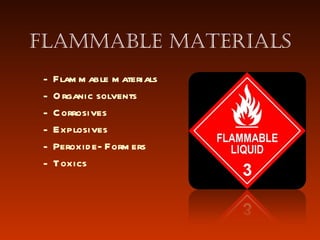
Flammable Materials Flammable materials Organic solvents Corrosives Explosives Peroxide- Formers Toxics
Flammable Materials Can include combustible and flammable liquids, such as: Ethers Esters Ketones Alcohol Materials need to be stored in air-tight containers in a cool, dry and dark place. White/yellow phosphorus should be cut and stored under water. Flammable solids can include organic and inorganic solids.
Organic solvents These can include freons, ethers, alcohols, aliphatic hydrocarbons, ketones, and aromatic hydrocarbons.  If repeatedly in contact with skin, pain, itching, reddening, and blistering can happen.  Mucous membranes and the respiratory tract can be damaged. A less toxic solvent should be substituted when at all possible.
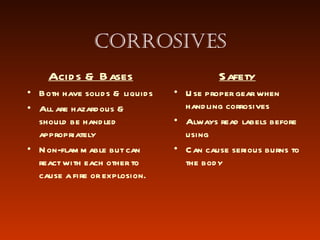
Corrosives Acids & Bases Both have solids & liquids All are hazardous & should be handled appropriately Non-flammable but can react with each other to cause a fire or explosion. Safety Use proper gear when handling corrosives Always read labels before using Can cause serious burns to the body
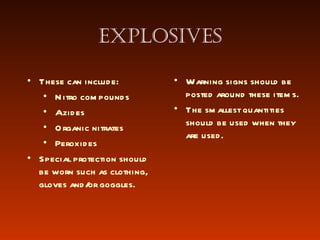
Explosives These can include: Nitro compounds Azides Organic nitrates Peroxides Warning signs should be posted around these items. The smallest quantities should be used when they are used. Special protection should be worn such as clothing, gloves and/or goggles.
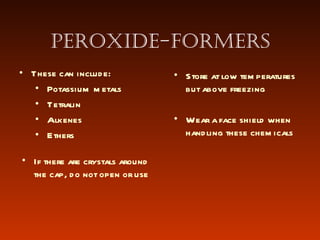
Peroxide-formers These can include: Potassium metals Tetralin Alkenes Ethers Store at low temperatures but above freezing Wear a face shield when handling these chemicals If there are crystals around the cap, do not open or use
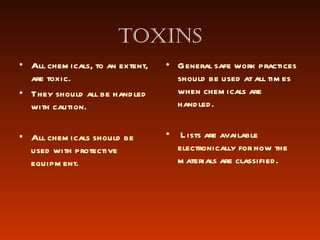
Toxins All chemicals, to an extent, are toxic. They should all be handled with caution.  All chemicals should be used with protective equipment. General safe work practices should be used at all times when chemicals are handled. Lists are available electronically for how the materials are classified.

Module4 - Flammable Materials

  • 1.
    Flammable materials byJasmine Rivera & Amanda Warren Module 4
  • 2.
    Flammable Materials Flammablematerials Organic solvents Corrosives Explosives Peroxide- Formers Toxics
  • 3.
    Flammable Materials Caninclude combustible and flammable liquids, such as: Ethers Esters Ketones Alcohol Materials need to be stored in air-tight containers in a cool, dry and dark place. White/yellow phosphorus should be cut and stored under water. Flammable solids can include organic and inorganic solids.
  • 4.
    Organic solvents Thesecan include freons, ethers, alcohols, aliphatic hydrocarbons, ketones, and aromatic hydrocarbons. If repeatedly in contact with skin, pain, itching, reddening, and blistering can happen. Mucous membranes and the respiratory tract can be damaged. A less toxic solvent should be substituted when at all possible.
  • 5.
    Corrosives Acids &Bases Both have solids & liquids All are hazardous & should be handled appropriately Non-flammable but can react with each other to cause a fire or explosion. Safety Use proper gear when handling corrosives Always read labels before using Can cause serious burns to the body
  • 6.
    Explosives These caninclude: Nitro compounds Azides Organic nitrates Peroxides Warning signs should be posted around these items. The smallest quantities should be used when they are used. Special protection should be worn such as clothing, gloves and/or goggles.
  • 7.
    Peroxide-formers These caninclude: Potassium metals Tetralin Alkenes Ethers Store at low temperatures but above freezing Wear a face shield when handling these chemicals If there are crystals around the cap, do not open or use
  • 8.
    Toxins All chemicals,to an extent, are toxic. They should all be handled with caution. All chemicals should be used with protective equipment. General safe work practices should be used at all times when chemicals are handled. Lists are available electronically for how the materials are classified.