Group 6
Elvera Marliani
M Faisal Juliansyah
Surti
 Definition
 Example and Properties
 Storage
 Hazardous
 Handling Materials
 Waste disposal
 Safety equipment
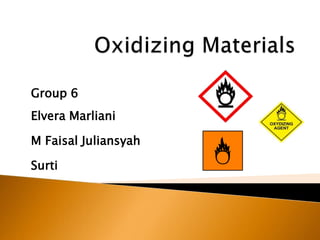
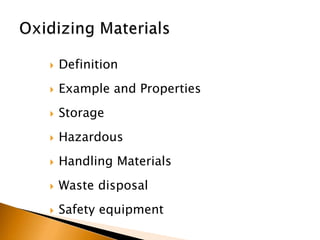
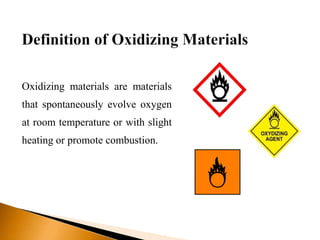
Oxidizing materials are materials
that spontaneously evolve oxygen
at room temperature or with slight
heating or promote combustion.
 Oxidizing materials produces oxygen.
 Oxidizing agents can react violently with active
metals, cyanides, esters, and thiocyanates
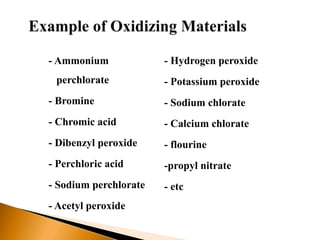
- Ammonium
perchlorate
- Bromine
- Chromic acid
- Dibenzyl peroxide
- Perchloric acid
- Sodium perchlorate
- Acetyl peroxide
- Hydrogen peroxide
- Potassium peroxide
- Sodium chlorate
- Calcium chlorate
- flourine
-propyl nitrate
- etc
1. Stored must be cool and dry location.
2. Stored must be fire-resistant.
3. Do not store beside each other
4. Storage areas must be labeled
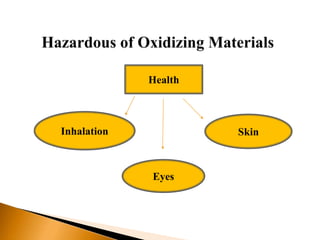
Health
Eyes
Inhalation Skin
The Rules Of
Handling Oxidizing
Materials
Equipment
maintenance
oxidizing materials
Personal Cleanliness
Procedures
Spill responses
Decontamination
Procedures
Emergencies
Involving Oxidizing
Materials
The Rules Of Handling Oxidizing Materials
1. Make sure that all areas are free of combustible materials.
2. Don’t smoking in this area.
3. Ensure that temperatures in these areas do not become
high
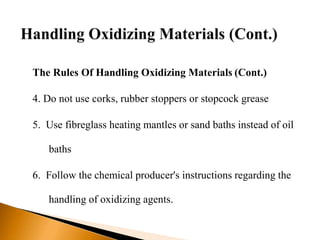
The Rules Of Handling Oxidizing Materials (Cont.)
4. Do not use corks, rubber stoppers or stopcock grease
5. Use fibreglass heating mantles or sand baths instead of oil
baths
6. Follow the chemical producer's instructions regarding the
handling of oxidizing agents.
Spill responses
1. Anticipate spills
2. Never use paper towels
3. Do not attempt to handle a large spill of
oxidizing materials.
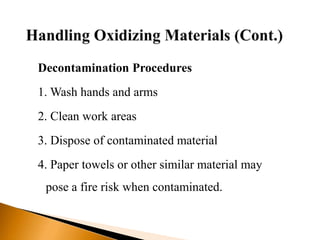
Decontamination Procedures
1. Wash hands and arms
2. Clean work areas
3. Dispose of contaminated material
4. Paper towels or other similar material may
pose a fire risk when contaminated.
Personal Cleanliness Procedures
1. Wash hands before eating, drinking, smoking or going to
the toilet.
2. Remove contaminated clothing and leather shoes or boots
3. Do not wear or carry contaminated clothing or footwear
4. Avoid touching yourself with contaminated hands.
5. Wash thoroughly at the end of the workday
Equipment maintenance oxidizing materials
1. Ensure maintenance personnel know the hazards
2. Prevent leaks of grease or other lubricants from
equipment
3. Do not allow materials to contact oxidizers.
4. Be very careful when doing hot work
5. Comply with applicable regulations
Emergencies Involving Oxidizing Materials
1. Turn off all ignition sources
2. Do a blackout with fire extinguisher.
3. Turn off the power source / primary substations
4. Vacate the laboratory immediately and call for assistance.
Emergencies Involving Oxidizing Materials (Cont.)
5. Evacuate the area
6. Call the fire department immediately.
7. Report the problem to the people responsible
8. Obtain first aid
9. Be calm in handle fire
 Add reducing solution
 Oxidizing on liquids or solids phase
 Careful when dispensing oxidizers
 Avoid spilling material
 Dispense one container at a time.
 Keep containers closed.
 Never dispose of oxidizers in ordinary garbage
 According to the supplier's directions.
1. Personal Protection equipment
Hands Protection
Gloves
Eyes protection
Googles/safety glasses
Face Protection
Safety shielding
Clothes Protection
Lab Coat
Respiratory protections
Safety Mask
2. Emergency Handling Oxidizing Safety Equipment
Safety showerEyewash
3. Practices Safety Equipment
Special ventilation
Fume hood
Oxidizing materials

Oxidizing materials

  • 1.
    Group 6 Elvera Marliani MFaisal Juliansyah Surti
  • 2.
     Definition  Exampleand Properties  Storage  Hazardous  Handling Materials  Waste disposal  Safety equipment
  • 3.
    Oxidizing materials arematerials that spontaneously evolve oxygen at room temperature or with slight heating or promote combustion.
  • 4.
     Oxidizing materialsproduces oxygen.  Oxidizing agents can react violently with active metals, cyanides, esters, and thiocyanates
  • 5.
    - Ammonium perchlorate - Bromine -Chromic acid - Dibenzyl peroxide - Perchloric acid - Sodium perchlorate - Acetyl peroxide - Hydrogen peroxide - Potassium peroxide - Sodium chlorate - Calcium chlorate - flourine -propyl nitrate - etc
  • 6.
    1. Stored mustbe cool and dry location. 2. Stored must be fire-resistant. 3. Do not store beside each other 4. Storage areas must be labeled
  • 7.
  • 8.
    The Rules Of HandlingOxidizing Materials Equipment maintenance oxidizing materials Personal Cleanliness Procedures Spill responses Decontamination Procedures Emergencies Involving Oxidizing Materials
  • 9.
    The Rules OfHandling Oxidizing Materials 1. Make sure that all areas are free of combustible materials. 2. Don’t smoking in this area. 3. Ensure that temperatures in these areas do not become high
  • 10.
    The Rules OfHandling Oxidizing Materials (Cont.) 4. Do not use corks, rubber stoppers or stopcock grease 5. Use fibreglass heating mantles or sand baths instead of oil baths 6. Follow the chemical producer's instructions regarding the handling of oxidizing agents.
  • 11.
    Spill responses 1. Anticipatespills 2. Never use paper towels 3. Do not attempt to handle a large spill of oxidizing materials.
  • 12.
    Decontamination Procedures 1. Washhands and arms 2. Clean work areas 3. Dispose of contaminated material 4. Paper towels or other similar material may pose a fire risk when contaminated.
  • 13.
    Personal Cleanliness Procedures 1.Wash hands before eating, drinking, smoking or going to the toilet. 2. Remove contaminated clothing and leather shoes or boots 3. Do not wear or carry contaminated clothing or footwear 4. Avoid touching yourself with contaminated hands. 5. Wash thoroughly at the end of the workday
  • 14.
    Equipment maintenance oxidizingmaterials 1. Ensure maintenance personnel know the hazards 2. Prevent leaks of grease or other lubricants from equipment 3. Do not allow materials to contact oxidizers. 4. Be very careful when doing hot work 5. Comply with applicable regulations
  • 15.
    Emergencies Involving OxidizingMaterials 1. Turn off all ignition sources 2. Do a blackout with fire extinguisher. 3. Turn off the power source / primary substations 4. Vacate the laboratory immediately and call for assistance.
  • 16.
    Emergencies Involving OxidizingMaterials (Cont.) 5. Evacuate the area 6. Call the fire department immediately. 7. Report the problem to the people responsible 8. Obtain first aid 9. Be calm in handle fire
  • 17.
     Add reducingsolution  Oxidizing on liquids or solids phase  Careful when dispensing oxidizers  Avoid spilling material  Dispense one container at a time.  Keep containers closed.  Never dispose of oxidizers in ordinary garbage  According to the supplier's directions.
  • 18.
    1. Personal Protectionequipment Hands Protection Gloves Eyes protection Googles/safety glasses
  • 19.
  • 20.
  • 21.
    2. Emergency HandlingOxidizing Safety Equipment Safety showerEyewash
  • 22.
    3. Practices SafetyEquipment Special ventilation Fume hood