Sitti Sauda binti kuyong 201301-00024
Faridah Donna
201301-0020
Fresnah binti Ompiduk 201301-00017
Chemical hazard
• A chemical accident is the unintentional release of one or
more hazardous substances which could harm human
health or the environment. Chemical hazards are
systems where chemical accidents could occur under
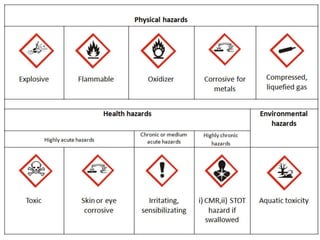
certain circumstances. Have two type Physical and
Health
• An element or mixture of elements or synthetic
substances that are considered harmful to employees.
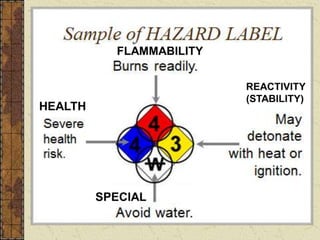
• Chemical hazards may be described under three broad
headings - flammability, reactivity and health.
Chemical hazards

• Chemicals can affect the skin by contact or the body
either through the digestive system or through the lungs
if air is contaminated with chemicals, vapors, mist or
dust. There can be an acute (immediate) effect, or a
chronic (medium to long-term) effect from the
accumulation of chemicals or substances in or on the
body.
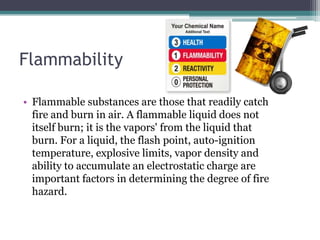
Flammability
• Flammable substances are those that readily catch
fire and burn in air. A flammable liquid does not
itself burn; it is the vapors' from the liquid that
burn. For a liquid, the flash point, auto-ignition
temperature, explosive limits, vapor density and
ability to accumulate an electrostatic charge are
important factors in determining the degree of fire
hazard.
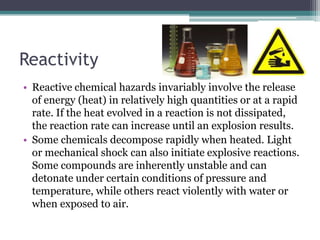
Reactivity
• Reactive chemical hazards invariably involve the release
of energy (heat) in relatively high quantities or at a rapid
rate. If the heat evolved in a reaction is not dissipated,
the reaction rate can increase until an explosion results.
• Some chemicals decompose rapidly when heated. Light
or mechanical shock can also initiate explosive reactions.
Some compounds are inherently unstable and can
detonate under certain conditions of pressure and
temperature, while others react violently with water or
when exposed to air.
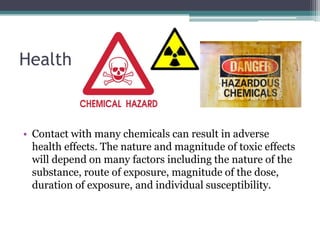
Health

• Contact with many chemicals can result in adverse
health effects. The nature and magnitude of toxic effects
will depend on many factors including the nature of the
substance, route of exposure, magnitude of the dose,
duration of exposure, and individual susceptibility.
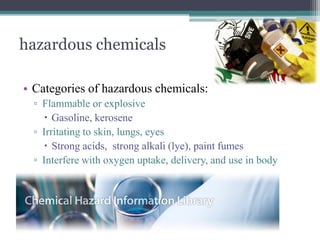
hazardous chemicals
• Categories of hazardous chemicals:
▫ Flammable or explosive
 Gasoline, kerosene
▫ Irritating to skin, lungs, eyes
 Strong acids, strong alkali (lye), paint fumes
▫ Interfere with oxygen uptake, delivery, and use in body
 Carbon monoxide, Hydrogen sulfide, cyanide
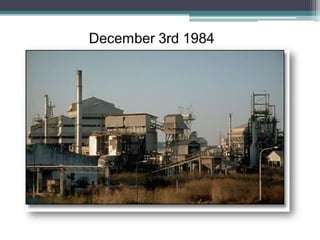
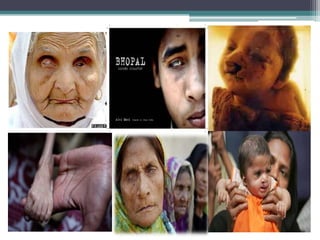
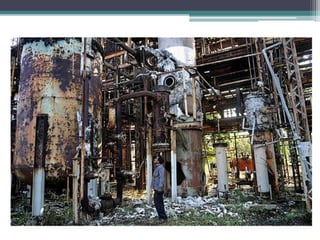
Bhopal Gas Disaster
• The Union Carbide Pesticide Plant in Bhopal, released 40 tons of Methyl
Isocyanides (MIC) gas, killing between 2,500 to 5,000 people in the early
hours of the morning.
• The World’s worst Industrial Disaster. The gas being heavier than air,
started entering into the homes of the unwary population. Many who
panicked and ran out also got crushed in stampedes.
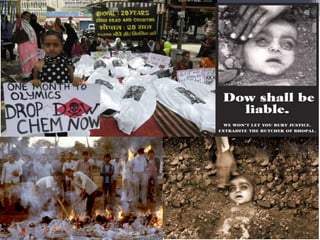
• Around 500,000 were estimated to be exposed to the gas & around 20,000
have died as a result. Over 120,000 continue to suffer from the from the
effects of the disaster.
• The Bhopal disaster brought into sharp focus the unprecedented potential
of hazardous chemical release in terms of loss of life, health, injury and
evacuation.
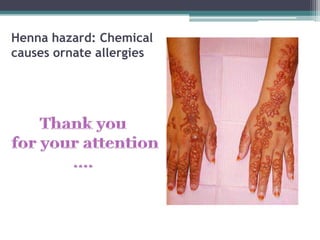
Henna hazard: Chemical
causes ornate allergies

Chemical hazard CHAPTER 8

  • 1.
    Sitti Sauda bintikuyong 201301-00024 Faridah Donna 201301-0020 Fresnah binti Ompiduk 201301-00017
  • 2.
    Chemical hazard • Achemical accident is the unintentional release of one or more hazardous substances which could harm human health or the environment. Chemical hazards are systems where chemical accidents could occur under certain circumstances. Have two type Physical and Health • An element or mixture of elements or synthetic substances that are considered harmful to employees. • Chemical hazards may be described under three broad headings - flammability, reactivity and health.
  • 3.
    Chemical hazards • Chemicalscan affect the skin by contact or the body either through the digestive system or through the lungs if air is contaminated with chemicals, vapors, mist or dust. There can be an acute (immediate) effect, or a chronic (medium to long-term) effect from the accumulation of chemicals or substances in or on the body.
  • 5.
    Flammability • Flammable substancesare those that readily catch fire and burn in air. A flammable liquid does not itself burn; it is the vapors' from the liquid that burn. For a liquid, the flash point, auto-ignition temperature, explosive limits, vapor density and ability to accumulate an electrostatic charge are important factors in determining the degree of fire hazard.
  • 6.
    Reactivity • Reactive chemicalhazards invariably involve the release of energy (heat) in relatively high quantities or at a rapid rate. If the heat evolved in a reaction is not dissipated, the reaction rate can increase until an explosion results. • Some chemicals decompose rapidly when heated. Light or mechanical shock can also initiate explosive reactions. Some compounds are inherently unstable and can detonate under certain conditions of pressure and temperature, while others react violently with water or when exposed to air.
  • 7.
    Health • Contact withmany chemicals can result in adverse health effects. The nature and magnitude of toxic effects will depend on many factors including the nature of the substance, route of exposure, magnitude of the dose, duration of exposure, and individual susceptibility.
  • 8.
    hazardous chemicals • Categoriesof hazardous chemicals: ▫ Flammable or explosive  Gasoline, kerosene ▫ Irritating to skin, lungs, eyes  Strong acids, strong alkali (lye), paint fumes ▫ Interfere with oxygen uptake, delivery, and use in body  Carbon monoxide, Hydrogen sulfide, cyanide
  • 13.
    Bhopal Gas Disaster •The Union Carbide Pesticide Plant in Bhopal, released 40 tons of Methyl Isocyanides (MIC) gas, killing between 2,500 to 5,000 people in the early hours of the morning. • The World’s worst Industrial Disaster. The gas being heavier than air, started entering into the homes of the unwary population. Many who panicked and ran out also got crushed in stampedes. • Around 500,000 were estimated to be exposed to the gas & around 20,000 have died as a result. Over 120,000 continue to suffer from the from the effects of the disaster. • The Bhopal disaster brought into sharp focus the unprecedented potential of hazardous chemical release in terms of loss of life, health, injury and evacuation.
  • 19.