WATERCYCLE
Run and get a glass of water and put it on the table next to
you. Take a good long look at the water. Now -- can you
guess how old it is?
When the first fish crawled out of the ocean onto the
land, your glass of water was part of that
ocean. When the Brontosaurus walked through lakes
feeding on plants, your glass of water was part of
those lakes. When kings and princesses, knights and
squires took a drink from their wells, your glass of
water was part of those wells.
Water cycle, also
called hydrologic cycle, cycle
that involves the continuous
circulation of water in the Earth-
atmosphere system
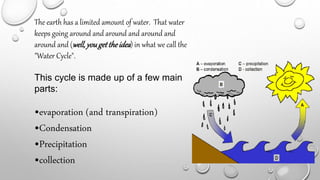
The earth has a limited amount of water. That water
keeps going around and around and around and
around and (well,yougettheidea) in what we call the
"Water Cycle".
This cycle is made up of a few main
parts:
•evaporation (and transpiration)
•Condensation
•Precipitation
•collection
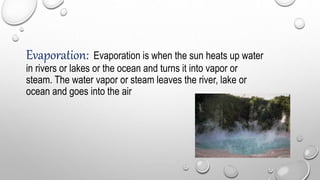
Evaporation: Evaporation is when the sun heats up water
in rivers or lakes or the ocean and turns it into vapor or
steam. The water vapor or steam leaves the river, lake or
ocean and goes into the air
Do plants sweat?
Well, sort of.... People perspire (sweat) and plants
transpire. Transpiration is the process by which
plants lose water out of their leaves. Transpiration
gives evaporation a bit of a hand in getting the water
vapor back up into the air
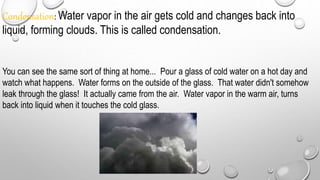
Condensation: Water vapor in the air gets cold and changes back into
liquid, forming clouds. This is called condensation.
You can see the same sort of thing at home... Pour a glass of cold water on a hot day and
watch what happens. Water forms on the outside of the glass. That water didn't somehow
leak through the glass! It actually came from the air. Water vapor in the warm air, turns
back into liquid when it touches the cold glass.
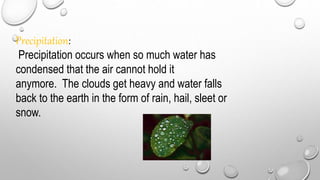
Precipitation:
Precipitation occurs when so much water has
condensed that the air cannot hold it
anymore. The clouds get heavy and water falls
back to the earth in the form of rain, hail, sleet or
snow.
Collection: When water falls back to earth as precipitation, it may fall
back in the oceans, lakes or rivers or it may end up on land. When it
ends up on land, it will either soak into the earth and become part of
the “ground water” that plants and animals use to drink or it may run
over the soil and collect in the oceans, lakes or rivers where the cycle
starts
all over again.
THANK YOU

watercycle

  • 1.
  • 2.
    Run and geta glass of water and put it on the table next to you. Take a good long look at the water. Now -- can you guess how old it is?
  • 3.
    When the firstfish crawled out of the ocean onto the land, your glass of water was part of that ocean. When the Brontosaurus walked through lakes feeding on plants, your glass of water was part of those lakes. When kings and princesses, knights and squires took a drink from their wells, your glass of water was part of those wells.
  • 4.
    Water cycle, also calledhydrologic cycle, cycle that involves the continuous circulation of water in the Earth- atmosphere system
  • 5.
    The earth hasa limited amount of water. That water keeps going around and around and around and around and (well,yougettheidea) in what we call the "Water Cycle". This cycle is made up of a few main parts: •evaporation (and transpiration) •Condensation •Precipitation •collection
  • 6.
    Evaporation: Evaporation iswhen the sun heats up water in rivers or lakes or the ocean and turns it into vapor or steam. The water vapor or steam leaves the river, lake or ocean and goes into the air
  • 7.
    Do plants sweat? Well,sort of.... People perspire (sweat) and plants transpire. Transpiration is the process by which plants lose water out of their leaves. Transpiration gives evaporation a bit of a hand in getting the water vapor back up into the air
  • 8.
    Condensation: Water vaporin the air gets cold and changes back into liquid, forming clouds. This is called condensation. You can see the same sort of thing at home... Pour a glass of cold water on a hot day and watch what happens. Water forms on the outside of the glass. That water didn't somehow leak through the glass! It actually came from the air. Water vapor in the warm air, turns back into liquid when it touches the cold glass.
  • 9.
    Precipitation: Precipitation occurs whenso much water has condensed that the air cannot hold it anymore. The clouds get heavy and water falls back to the earth in the form of rain, hail, sleet or snow.
  • 10.
    Collection: When waterfalls back to earth as precipitation, it may fall back in the oceans, lakes or rivers or it may end up on land. When it ends up on land, it will either soak into the earth and become part of the “ground water” that plants and animals use to drink or it may run over the soil and collect in the oceans, lakes or rivers where the cycle starts all over again.
  • 11.