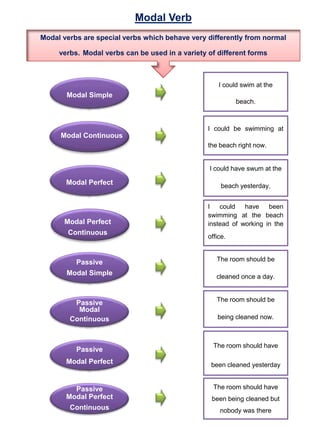
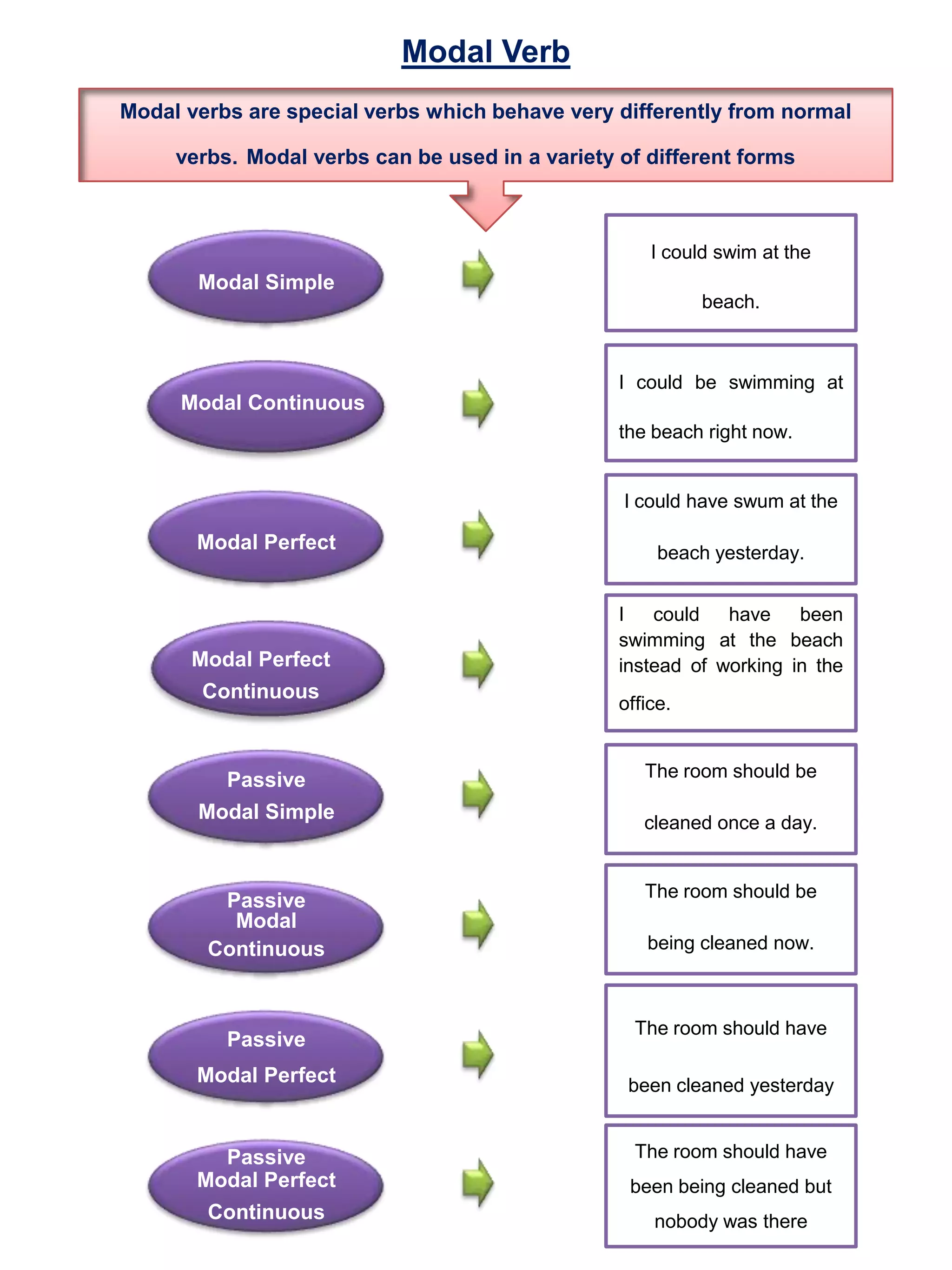
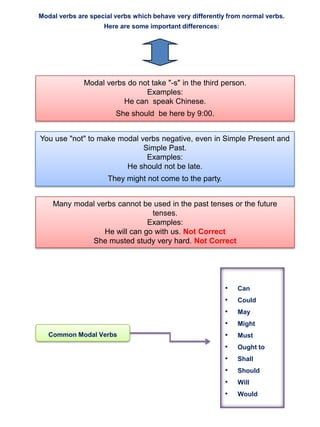
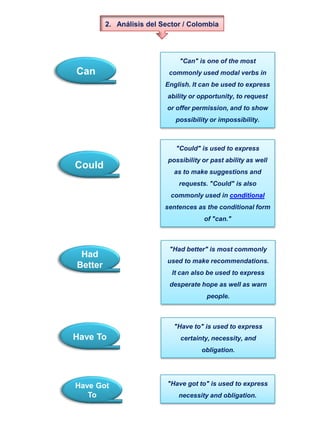
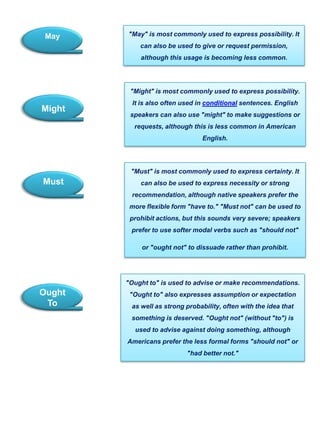
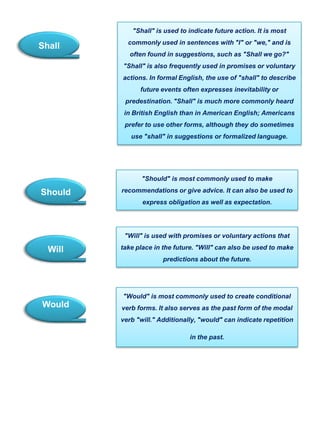
Modal verbs are special verbs that behave differently than regular verbs. Some key differences are that modal verbs don't take -s in the third person, use "not" for negatives rather than past/present forms, and many can't be used in past/future tenses. Common modal verbs include can, could, have to, may, might, must, ought to, shall, should, will, and would. Each modal verb has specific meanings and uses around ability, permission, possibility, necessity, recommendations, and future/conditional forms.