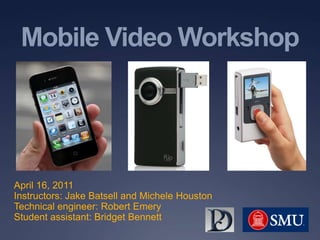
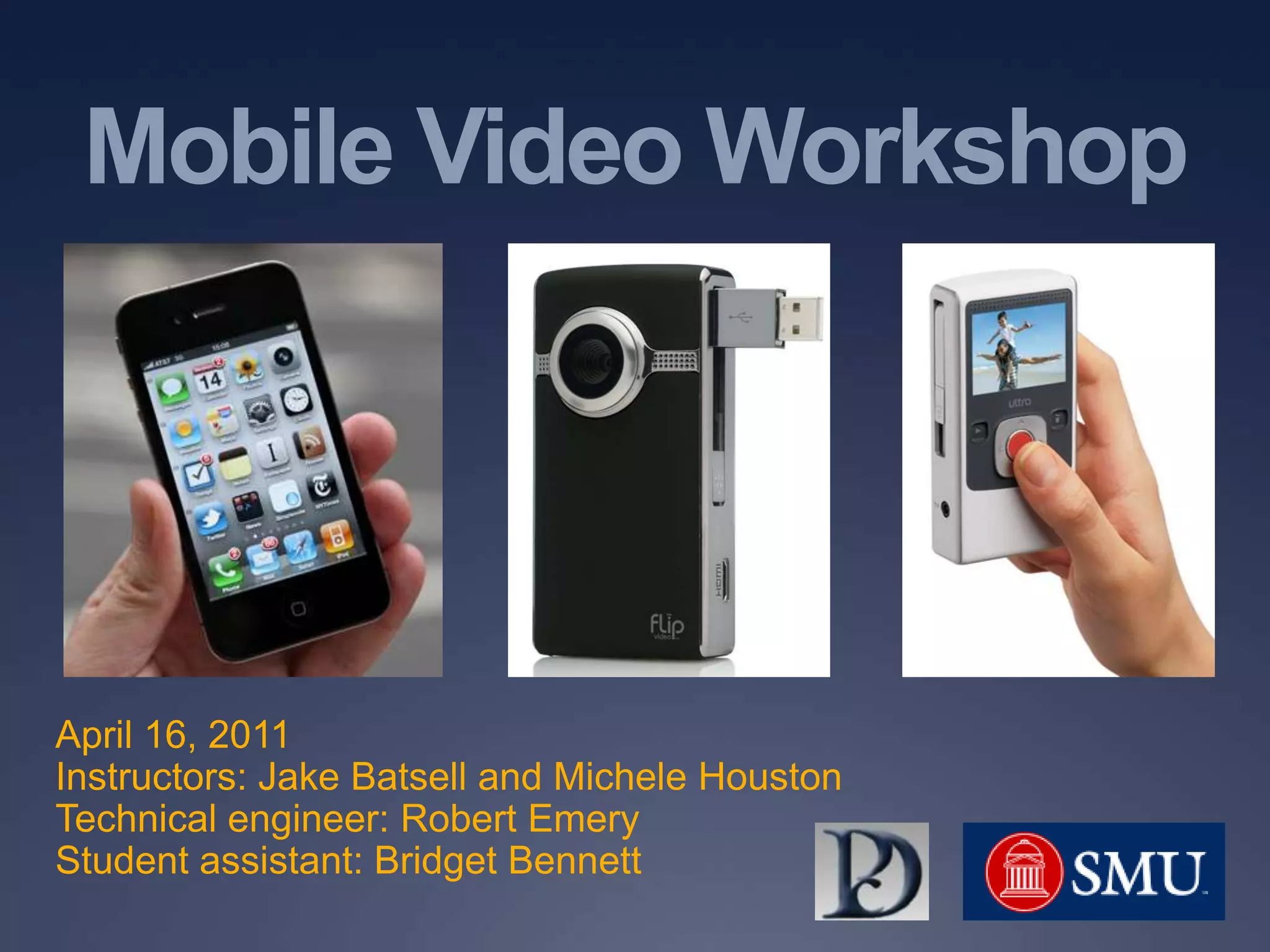

Mobile Video WorkshopApril 16, 2011Instructors: Jake Batsell and Michele HoustonTechnical engineer: Robert EmeryStudent assistant: Bridget Bennett
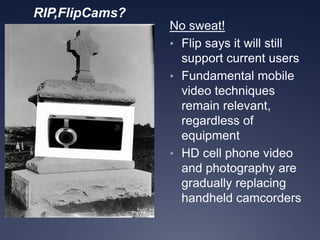
RIP,FlipCams?No sweat!Flip says it will still support current users
Fundamental mobile video techniques remain relevant, regardless of equipment
HD cell phone video and photography are gradually replacing handheld camcordersShooting TipsShoot wide, medium and tight – but GET CLOSE as much as possible.Keep the camera steady – limit zooming and panning.Use a mini-tripod if possible.Allow subjects to enter and exit the frame.         (Helps create sequences)Frame your interview subject using the rule of thirds.Shoot action in tight, 3-to-5 second sequences.Reaction shots are just as important as action shots.BBC’s 5-shot rule: 1) close-up of hands, 2) close-up of face, 3) wide shot, 4) over-the-shoulder, 5) cutaway
Gather crisp, compelling AUDIOAudio is your A roll – consider audio more important than the video.A roll – Gather vivid nat sound and find your narrator.SHUT UP! (But we mean that in a nice way.)Keep your ear out for audio distractions – if too noisy, move to a new room for your primary interview.Ask open-ended questions: What’s going on here? Why is this important? How does it make you feel?B roll – Get supporting video that matches your primary audio/interviews.When you arrive, keep your ear out for vivid, evocative sounds that define the scene.Voiceover or no? Decide early. Here are standup/VO tips.
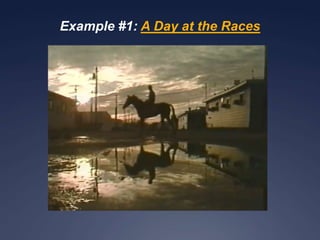
Example #1: A Day at the Races
What techniquesdid you spot?
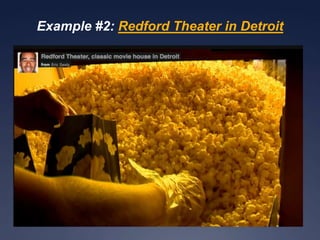
Example #2: Redford Theater in Detroit
What techniquesdid you spot?
Think with your eyes and earsTake your viewer to the scene.Short Web videos are impressionistic – they evoke a sense of place without including every detail.Still, the video must stand on its own as a story. Don’t assume your viewer has any context whatsoever.Web video viewers don’t expect technical perfection, but they do expect your video to be worth their time and have little patience for major distractions such as extreme shakiness, poor audio quality, etc.Storyboarding, Part I: Before you head out to shoot, form a mental outline/checklist of the shots and sounds you know you’ll need.
Equipmentpractice
Field shooting;Lunch on your own
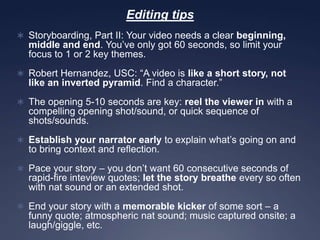
Editing tipsStoryboarding, Part II: Your video needs a clear beginning, middle and end. You’ve only got 60 seconds, so limit your focus to 1 or 2 key themes.Robert Hernandez, USC: “A video is like a short story, not like an inverted pyramid. Find a character.”The opening 5-10 seconds are key: reel the viewer in with a compelling opening shot/sound, or quick sequence of shots/sounds.Establish your narrator early to explain what’s going on and to bring context and reflection.Pace your story – you don’t want 60 consecutive seconds of rapid-fire inteview quotes; let the story breathe every so often with nat sound or an extended shot.End your story with a memorable kicker of some sort – a funny quote; atmospheric nat sound; music captured onsite; a laugh/giggle, etc.
Hands-on editing session

Mobile Video Workshop

  • 1.
    Mobile Video WorkshopApril16, 2011Instructors: Jake Batsell and Michele HoustonTechnical engineer: Robert EmeryStudent assistant: Bridget Bennett
  • 2.
    RIP,FlipCams?No sweat!Flip saysit will still support current users
  • 3.
    Fundamental mobile videotechniques remain relevant, regardless of equipment
  • 4.
    HD cell phonevideo and photography are gradually replacing handheld camcordersShooting TipsShoot wide, medium and tight – but GET CLOSE as much as possible.Keep the camera steady – limit zooming and panning.Use a mini-tripod if possible.Allow subjects to enter and exit the frame. (Helps create sequences)Frame your interview subject using the rule of thirds.Shoot action in tight, 3-to-5 second sequences.Reaction shots are just as important as action shots.BBC’s 5-shot rule: 1) close-up of hands, 2) close-up of face, 3) wide shot, 4) over-the-shoulder, 5) cutaway
  • 5.
    Gather crisp, compellingAUDIOAudio is your A roll – consider audio more important than the video.A roll – Gather vivid nat sound and find your narrator.SHUT UP! (But we mean that in a nice way.)Keep your ear out for audio distractions – if too noisy, move to a new room for your primary interview.Ask open-ended questions: What’s going on here? Why is this important? How does it make you feel?B roll – Get supporting video that matches your primary audio/interviews.When you arrive, keep your ear out for vivid, evocative sounds that define the scene.Voiceover or no? Decide early. Here are standup/VO tips.
  • 6.
    Example #1: ADay at the Races
  • 7.
  • 8.
    Example #2: RedfordTheater in Detroit
  • 9.
  • 10.
    Think with youreyes and earsTake your viewer to the scene.Short Web videos are impressionistic – they evoke a sense of place without including every detail.Still, the video must stand on its own as a story. Don’t assume your viewer has any context whatsoever.Web video viewers don’t expect technical perfection, but they do expect your video to be worth their time and have little patience for major distractions such as extreme shakiness, poor audio quality, etc.Storyboarding, Part I: Before you head out to shoot, form a mental outline/checklist of the shots and sounds you know you’ll need.
  • 11.
  • 12.
  • 13.
    Editing tipsStoryboarding, PartII: Your video needs a clear beginning, middle and end. You’ve only got 60 seconds, so limit your focus to 1 or 2 key themes.Robert Hernandez, USC: “A video is like a short story, not like an inverted pyramid. Find a character.”The opening 5-10 seconds are key: reel the viewer in with a compelling opening shot/sound, or quick sequence of shots/sounds.Establish your narrator early to explain what’s going on and to bring context and reflection.Pace your story – you don’t want 60 consecutive seconds of rapid-fire inteview quotes; let the story breathe every so often with nat sound or an extended shot.End your story with a memorable kicker of some sort – a funny quote; atmospheric nat sound; music captured onsite; a laugh/giggle, etc.
  • 14.