Think Fast! Rapid eLearning Design through
Content Mapping
KELLY POOLE
MARCH 28, 2009
Liquent – Regulatory Solutions for Life Sciences
Agenda
• Session Goal
• Design Approaches
• Analyze Phase
• Mock Course
• Objective Creation
• Course Interactivity
• Discussion
• Conclusion
Liquent – Regulatory Solutions for Life Sciences
Session Goal
• Create Designer worksheet
• Apply proven design methodologies
• Classify mock course content objectives
Microsoft Word
Document
Liquent – Regulatory Solutions for Life Sciences
Design Approaches
• ADDIE Model
• Donald Kirkpatrick Evaluation Theory
– Blending Formative and Summative Evaluation Methods
Liquent – Regulatory Solutions for Life Sciences
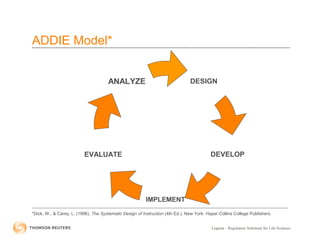
ADDIE Model*
DESIGN
IMPLEMENT
ANALYZE
DEVELOPEVALUATE
*Dick, W., & Carey, L. (1996). The Systematic Design of Instruction (4th Ed.). New York: Haper Collins College Publishers.
Liquent – Regulatory Solutions for Life Sciences
Analyze Phase
• Designer Worksheet
• Storyboard
Liquent – Regulatory Solutions for Life Sciences
Donald Kirkpatrick Model
• Four levels of Evaluation*
– Reaction
– Learning
– Performance
– Impact
*Kirkpatrick, Donald, (1994). Evaluating Training Programs. San Francisco, CA: Berrett-Koehler Publishers, Inc.
Liquent – Regulatory Solutions for Life Sciences
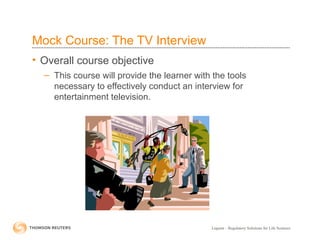
Mock Course: The TV Interview
• Overall course objective
– This course will provide the learner with the tools
necessary to effectively conduct an interview for
entertainment television.
Liquent – Regulatory Solutions for Life Sciences
Design Phase
• Solved the instructional problem
• Target audience
• Learner needs
• Delivery Style (Time + Money)
• Draft content objectives?
Liquent – Regulatory Solutions for Life Sciences
Objective Creation
• Performance-based
• Behavioral
• Addressing topic questions
Liquent – Regulatory Solutions for Life Sciences
Course Interactivity
• Diagnostic Surveys
• Simulations
• Animation
• Engaging Exercises
• Assessments
• Accessibility
Liquent – Regulatory Solutions for Life Sciences
Discussion
• Chapter 1: The TV Interview
– Draft performance-based objectives
– Draft behavioral objectives
– Draft addressed questions
– Draft engagement activities
Liquent – Regulatory Solutions for Life Sciences
Conclusion
• Need for a design methodology
• Supporting objectives appropriately
• Less is more
• Worksheet takeaway
Liquent – Regulatory Solutions for Life Sciences
Thank You
• Kelly Poole
– kelly.poole@thomsonreuters.com
Liquent – Regulatory Solutions for Life Sciences
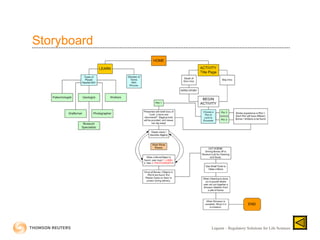
Storyboard

Think Fast! Rapid eLearning Design through Content Mapping

  • 1.
    Think Fast! RapideLearning Design through Content Mapping KELLY POOLE MARCH 28, 2009
  • 2.
    Liquent – RegulatorySolutions for Life Sciences Agenda • Session Goal • Design Approaches • Analyze Phase • Mock Course • Objective Creation • Course Interactivity • Discussion • Conclusion
  • 3.
    Liquent – RegulatorySolutions for Life Sciences Session Goal • Create Designer worksheet • Apply proven design methodologies • Classify mock course content objectives Microsoft Word Document
  • 4.
    Liquent – RegulatorySolutions for Life Sciences Design Approaches • ADDIE Model • Donald Kirkpatrick Evaluation Theory – Blending Formative and Summative Evaluation Methods
  • 5.
    Liquent – RegulatorySolutions for Life Sciences ADDIE Model* DESIGN IMPLEMENT ANALYZE DEVELOPEVALUATE *Dick, W., & Carey, L. (1996). The Systematic Design of Instruction (4th Ed.). New York: Haper Collins College Publishers.
  • 6.
    Liquent – RegulatorySolutions for Life Sciences Analyze Phase • Designer Worksheet • Storyboard
  • 7.
    Liquent – RegulatorySolutions for Life Sciences Donald Kirkpatrick Model • Four levels of Evaluation* – Reaction – Learning – Performance – Impact *Kirkpatrick, Donald, (1994). Evaluating Training Programs. San Francisco, CA: Berrett-Koehler Publishers, Inc.
  • 8.
    Liquent – RegulatorySolutions for Life Sciences Mock Course: The TV Interview • Overall course objective – This course will provide the learner with the tools necessary to effectively conduct an interview for entertainment television.
  • 9.
    Liquent – RegulatorySolutions for Life Sciences Design Phase • Solved the instructional problem • Target audience • Learner needs • Delivery Style (Time + Money) • Draft content objectives?
  • 10.
    Liquent – RegulatorySolutions for Life Sciences Objective Creation • Performance-based • Behavioral • Addressing topic questions
  • 11.
    Liquent – RegulatorySolutions for Life Sciences Course Interactivity • Diagnostic Surveys • Simulations • Animation • Engaging Exercises • Assessments • Accessibility
  • 12.
    Liquent – RegulatorySolutions for Life Sciences Discussion • Chapter 1: The TV Interview – Draft performance-based objectives – Draft behavioral objectives – Draft addressed questions – Draft engagement activities
  • 13.
    Liquent – RegulatorySolutions for Life Sciences Conclusion • Need for a design methodology • Supporting objectives appropriately • Less is more • Worksheet takeaway
  • 14.
    Liquent – RegulatorySolutions for Life Sciences Thank You • Kelly Poole – kelly.poole@thomsonreuters.com
  • 15.
    Liquent – RegulatorySolutions for Life Sciences Storyboard