Mobile Malware 
Martin Čmelík 
www.security-portal.cz 
Hrozby světa mobilních zařízení, Hotel Barceló, Praha - 28.11.2014
What is malware? 
Malware, short for malicious 
software, is any software used 
to disrupt computer operation, 
gather sensitive information, or 
gain access to private computer 
systems. 
'Malware' is a general term used 
to refer to a variety of forms of 
hostile or intrusive software. 
source: wikipedia
Types of malware 
Viruses 
Worms 
Trojan Horses 
Spyware 
Crimeware 
Bankers 
Backdoors 
Exploits 
RAT (Remote Access Toolkit) 
Bootkits 
Rootkits 
Ransomware 
Zombie/Bot, Dropper, … 
Malware classification tree 
source: http://www.kaspersky.com/internet-security-center/malware-tree.jpg
Distribution of operating systems 
Android 
iOS 
Windows Phone 
Blackberry OS 
Others 
Source: IDC World Quarterly Mobile Phone Tracker 2Q2014
Malware detections in 2013 (Kaspersky) 
Android 
J2ME 
Symbian 
Others 
Source: Kaspersky Mobile Cyber Threats 2014
Distribution of attacks by malware types 
Trojan SMS 
RiskTool 
AdWare 
Trojan 
Monitor 
Exploit 
Others 
Source: Kaspersky Mobile Cyber Threats 2014
Few more stats 
15 million mobile devices infected 
worldwide 
18% of homes are infected 
currently 900.000 known malware 
samples for Android 
175.442 unique malicious programs 
for Android just in H1 2014 
4 out of 10 mobile threats are apps 
used to spy on the phone’s owner 
(location, calls, sms, email, browsing, 
…) 
59,06% of malware is capable to 
steal user’s money 
Source: Knidsight Security Labs Malware Report
Sources of infection 
Affiliate programs 
Phishing 
Malware hidden in application/game on 3rd party stores 
Redirection to website serving malware/exploit 
Bluetooth / NFC 
Link to website/app hosting malware via SMS (57,08%) 
old (not upgradeable/patchable) versions of Android
What’s interesting on your phone? 
mail account 
cloud services 
social accounts 
bank account access (53% mobile devices used to pay online) 
personal information 
Always-On device 
private/company data, documents, certificates, knowhow (cyber 
espionage) …
BYOD - Bring Your Own Droid 
source: in a galaxy far, far away…
Mobile device management 
(MDM) 
Mobile device management (MDM) is an industry term for the administration of 
mobile devices, such as smartphones, tablets, laptops and desktop computers. 
MDM is usually implemented with the use of a third party product that has 
management features for particular vendors of mobile devices. 
Key functionalities: 
- Centralized reports on all incidents and policy compliance 
- Easy deployment and management of endpoints 
- Granular and robust policies enforceable on devices 
- Patch management 
- Application management (blacklists, company store, …) 
- Access to various company services and applications 
- Certificate enrollment 
- DLP (Data Loss Prevention) 
- Antivirus/Antimalware protection 
- Protection against tampering 
- Clients for various platforms …
Exchange ActiveSync policy support 
EAS could be taken as a very basic type of MDM supported directly by 
mobile operating systems. In this example are shown just differences across 
platforms. 
iOS Android Windows 
Phone 
Require device 
encryption Yes No Yes 
Disable camera Yes Yes No 
Allow browser Yes No No 
Include past 
email items Yes No No 
Source: InfoWorld
Curiosity corner 
First known mobile malware - CARIBE (2004). Affecting Symbian OS. 
Spread by bluetooth and just shows message “Caribe-V2/29A” 
First iOS malware - IOS_IKEE (2009). Infect jailbroken devices by SSH 
connection and default credentials. Changes wallpaper of the device to 
Rick Astley (80’s pop singer) 
First Android malware - DROIDSMS. Hide itself in video player. Sending 
premium SMS 
First Google Glass malware - MALNOTES. Takes photo every 10 seconds 
without the wearer knowing 
ZeuS-in-the-Mobile (ZitMo, 2010) - first cross-platform mobile malware 
which aim is to forward SMS with mTAN code of hacked bank accounts
Example of latest threats 
Masque Attack (FireEye) - affecting iOS devices using MDM. 
Application signed by enterprise certificate could replace valid 
application with infected if they have same bundle identifier as iOS is 
not enforcing match of certificates (codesign pinning).
Example of latest threats 
WireLurker (Palo Alto) - complex trojan which has been distributed 
by 467 infected applications on 3rd party App Store (Maiyadi). 
Probably 356 104 successful downloads. Malware can be replicated 
from Mac OS X to connected iPhone and iPad via USB.
Example of latest threats 
DoubleDirect (Zimperium) - MitM attack affecting iOS and Android 
devices. Spoofing ICMP Redirect message from gateway in order 
to divert traffic via attackers node. 
In fact for MitM is redirect of DNS IP all what you need :] 
CVE-2014-7911 affecting all Androids versions except 5.0. 
Attacker is able to execute arbitrary code and escalate privileges. 
Other Android versions are not patched and more-likely it will not 
happen. 
Trojan-Banker.AndroidOS.Binv.a 
Published on official Google Play store as banking application of 
two well known Brazilian banks. Because in Brazil are not used 
tokens or OTPs, application just showed phishing website and 
capture credentials.
Example of latest threats 
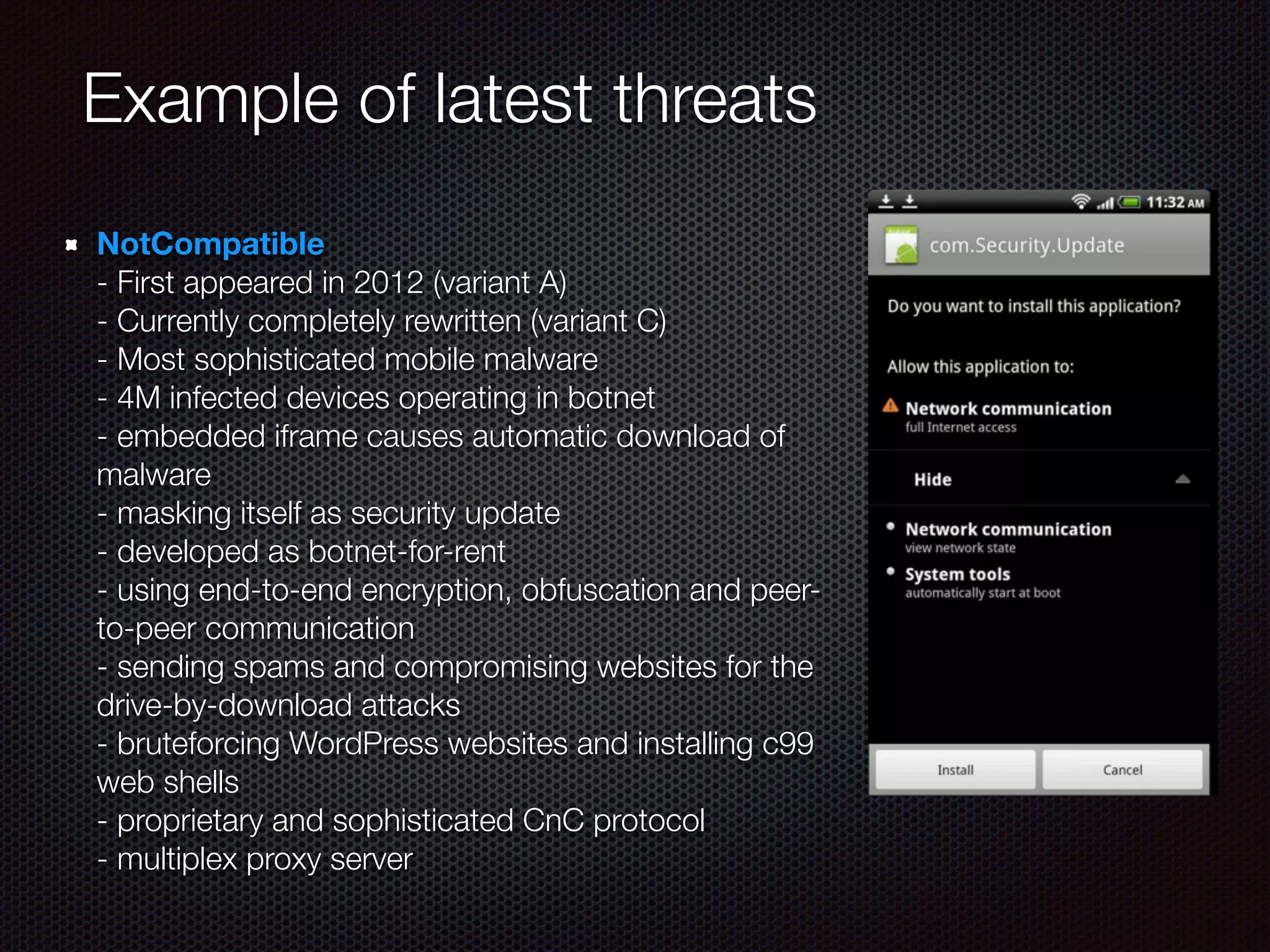
NotCompatible 
- First appeared in 2012 (variant A) 
- Currently completely rewritten (variant C) 
- Most sophisticated mobile malware 
- 4M infected devices operating in botnet 
- embedded iframe causes automatic download of 
malware 
- masking itself as security update 
- developed as botnet-for-rent 
- using end-to-end encryption, obfuscation and peer-to- 
peer communication 
- sending spams and compromising websites for the 
drive-by-download attacks 
- bruteforcing WordPress websites and installing c99 
web shells 
- proprietary and sophisticated CnC protocol 
- multiplex proxy server
How to protect?
Install good antivirus/antimalware on mobile device 
Disable/Deny installation from different sources other than official app stores 
Install applications only from well known developers 
Do not allow application access data which are not essential for functionality 
Prevent device jailbraking/rooting 
Update OS and applications when possible 
Encrypt whole disk 
Consider “always-on VPN” functionality 
Use two-factor authentication for critical applications (tokens, one-time 
passwords, …) 
Strict rules for BYOD enforced via MDM or separated network segment 
Educate users/employees about network and mobile security
Questions?
Thank you! 
Martin Čmelík 
www.linkedin.com/in/martincmelik 
www.security-portal.cz | www.securix.org | www.security-session.cz

Mobile Malware

  • 1.
    Mobile Malware MartinČmelík www.security-portal.cz Hrozby světa mobilních zařízení, Hotel Barceló, Praha - 28.11.2014
  • 2.
    What is malware? Malware, short for malicious software, is any software used to disrupt computer operation, gather sensitive information, or gain access to private computer systems. 'Malware' is a general term used to refer to a variety of forms of hostile or intrusive software. source: wikipedia
  • 3.
    Types of malware Viruses Worms Trojan Horses Spyware Crimeware Bankers Backdoors Exploits RAT (Remote Access Toolkit) Bootkits Rootkits Ransomware Zombie/Bot, Dropper, … Malware classification tree source: http://www.kaspersky.com/internet-security-center/malware-tree.jpg
  • 4.
    Distribution of operatingsystems Android iOS Windows Phone Blackberry OS Others Source: IDC World Quarterly Mobile Phone Tracker 2Q2014
  • 5.
    Malware detections in2013 (Kaspersky) Android J2ME Symbian Others Source: Kaspersky Mobile Cyber Threats 2014
  • 6.
    Distribution of attacksby malware types Trojan SMS RiskTool AdWare Trojan Monitor Exploit Others Source: Kaspersky Mobile Cyber Threats 2014
  • 7.
    Few more stats 15 million mobile devices infected worldwide 18% of homes are infected currently 900.000 known malware samples for Android 175.442 unique malicious programs for Android just in H1 2014 4 out of 10 mobile threats are apps used to spy on the phone’s owner (location, calls, sms, email, browsing, …) 59,06% of malware is capable to steal user’s money Source: Knidsight Security Labs Malware Report
  • 8.
    Sources of infection Affiliate programs Phishing Malware hidden in application/game on 3rd party stores Redirection to website serving malware/exploit Bluetooth / NFC Link to website/app hosting malware via SMS (57,08%) old (not upgradeable/patchable) versions of Android
  • 9.
    What’s interesting onyour phone? mail account cloud services social accounts bank account access (53% mobile devices used to pay online) personal information Always-On device private/company data, documents, certificates, knowhow (cyber espionage) …
  • 10.
    BYOD - BringYour Own Droid source: in a galaxy far, far away…
  • 11.
    Mobile device management (MDM) Mobile device management (MDM) is an industry term for the administration of mobile devices, such as smartphones, tablets, laptops and desktop computers. MDM is usually implemented with the use of a third party product that has management features for particular vendors of mobile devices. Key functionalities: - Centralized reports on all incidents and policy compliance - Easy deployment and management of endpoints - Granular and robust policies enforceable on devices - Patch management - Application management (blacklists, company store, …) - Access to various company services and applications - Certificate enrollment - DLP (Data Loss Prevention) - Antivirus/Antimalware protection - Protection against tampering - Clients for various platforms …
  • 12.
    Exchange ActiveSync policysupport EAS could be taken as a very basic type of MDM supported directly by mobile operating systems. In this example are shown just differences across platforms. iOS Android Windows Phone Require device encryption Yes No Yes Disable camera Yes Yes No Allow browser Yes No No Include past email items Yes No No Source: InfoWorld
  • 13.
    Curiosity corner Firstknown mobile malware - CARIBE (2004). Affecting Symbian OS. Spread by bluetooth and just shows message “Caribe-V2/29A” First iOS malware - IOS_IKEE (2009). Infect jailbroken devices by SSH connection and default credentials. Changes wallpaper of the device to Rick Astley (80’s pop singer) First Android malware - DROIDSMS. Hide itself in video player. Sending premium SMS First Google Glass malware - MALNOTES. Takes photo every 10 seconds without the wearer knowing ZeuS-in-the-Mobile (ZitMo, 2010) - first cross-platform mobile malware which aim is to forward SMS with mTAN code of hacked bank accounts
  • 14.
    Example of latestthreats Masque Attack (FireEye) - affecting iOS devices using MDM. Application signed by enterprise certificate could replace valid application with infected if they have same bundle identifier as iOS is not enforcing match of certificates (codesign pinning).
  • 15.
    Example of latestthreats WireLurker (Palo Alto) - complex trojan which has been distributed by 467 infected applications on 3rd party App Store (Maiyadi). Probably 356 104 successful downloads. Malware can be replicated from Mac OS X to connected iPhone and iPad via USB.
  • 16.
    Example of latestthreats DoubleDirect (Zimperium) - MitM attack affecting iOS and Android devices. Spoofing ICMP Redirect message from gateway in order to divert traffic via attackers node. In fact for MitM is redirect of DNS IP all what you need :] CVE-2014-7911 affecting all Androids versions except 5.0. Attacker is able to execute arbitrary code and escalate privileges. Other Android versions are not patched and more-likely it will not happen. Trojan-Banker.AndroidOS.Binv.a Published on official Google Play store as banking application of two well known Brazilian banks. Because in Brazil are not used tokens or OTPs, application just showed phishing website and capture credentials.
  • 17.
    Example of latestthreats NotCompatible - First appeared in 2012 (variant A) - Currently completely rewritten (variant C) - Most sophisticated mobile malware - 4M infected devices operating in botnet - embedded iframe causes automatic download of malware - masking itself as security update - developed as botnet-for-rent - using end-to-end encryption, obfuscation and peer-to- peer communication - sending spams and compromising websites for the drive-by-download attacks - bruteforcing WordPress websites and installing c99 web shells - proprietary and sophisticated CnC protocol - multiplex proxy server
  • 18.
  • 19.
    Install good antivirus/antimalwareon mobile device Disable/Deny installation from different sources other than official app stores Install applications only from well known developers Do not allow application access data which are not essential for functionality Prevent device jailbraking/rooting Update OS and applications when possible Encrypt whole disk Consider “always-on VPN” functionality Use two-factor authentication for critical applications (tokens, one-time passwords, …) Strict rules for BYOD enforced via MDM or separated network segment Educate users/employees about network and mobile security
  • 20.
  • 21.
    Thank you! MartinČmelík www.linkedin.com/in/martincmelik www.security-portal.cz | www.securix.org | www.security-session.cz