

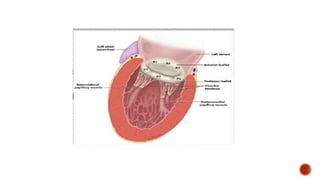
























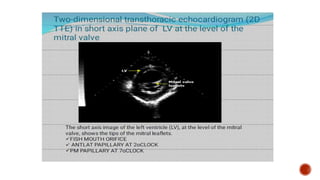














 Resembles the Bishops “mitre”
 Mitral valve apparatus :-
Mitral valve Annulus.
Mitral leaflets with commissures.
Chordae tendinae.
Papillary muscles.
Supporting LV Wall.
 Altogether called as mitral valve complex.
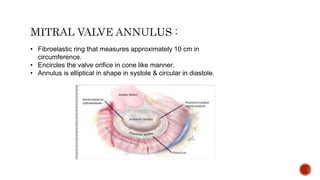
• Fibroelastic ring that measures approximately 10 cm in
circumference.
• Encircles the valve orifice in cone like manner.
• Annulus is elliptical in shape in systole & circular in diastole.
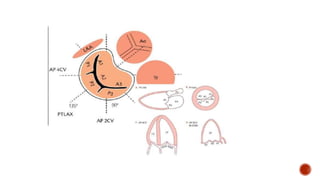
 AML :- Anterior mitral leaflet.
 Thickness about 1mm
 triangular in shape.
 Is in continuity of aortic annulus.
 Encircles on 1/3rd of annulus, but covers 2/3rd of valve orifice area.
 PML :- posterior mitral leaflet.
 Quadrangular in shape.
 Occupies 2/3rd of the annulus, but covers only 1/3rd of the valve area
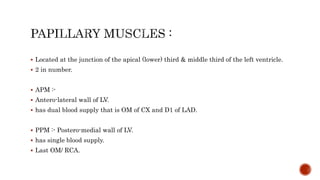
 Located at the junction of the apical (lower) third & middle third of the left ventricle.
 2 in number.
 APM :-
 Antero-lateral wall of LV.
 has dual blood supply that is OM of CX and D1 of LAD.
 PPM :- Postero-medial wall of LV.
 has single blood supply.
 Last OM/ RCA.
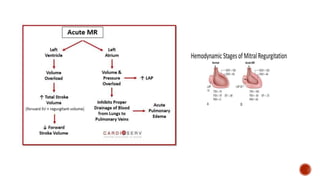
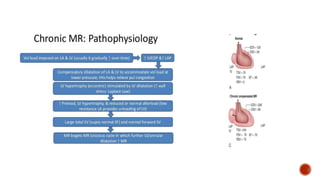
 In MR almost 50 % of regurgitant volume is ejected into left atrium before aortic valve opens .
 The volume of MR flow depends on 1)regurgitant orifice area
2)pressure gradient between LA and LV.
 pressure gradient depends on systemic vascular resistance.
 Regurgitant orifice area depends on mitral annulus size that is
-proportional to preload and afterload
-inversely proportional to contractiblity.
 When LV size is reduced by treatment with positive inotrope,diuretics and vasodilators,the
regurgitant orifice area reduced and volume of regurgitant flow decreases.
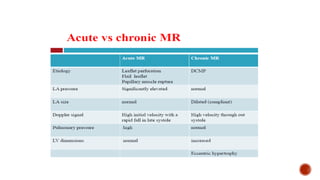
 1)Acute MR
 2)chronic compensated MR
 3)chronic decompensated MR
 Coronary flow rates may be increased in patients with severe MR but increase in
myocardial o2 consumption is only modestly elevated as compared to AS and AR
because LV wall tension may actually be reduced in patients with MR which is
one of the principal determinant of o2 consumption .
 So clinical manifestation of myocardial ischemia is less seen in MR.
 Patients with early MR often exhibit elevation in ejection phase indices of
contractiblity such as ejection fraction ,myocardial fiber shortening and velocity of
circumferential fiber shortening.
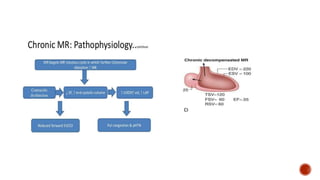
 With development of chronic volume overload ,contractile function deteriorates,
 However even in overt HF secondary to MR, ejection fraction and fractional
shortening may be only modestly reduced.
 Therefore ,values in low normal range may actually reflect impaired myocardial
function.whereas moderately reduced values (EF 40 to 50 % ) generally signifies
severe often irreversible impairment of contractiblity.
 EF of less than 35 % usually represents advanced myocardial dysfunction.
 Effective (forward ) cardiac output Is reduced
 Functional capacity is reduced.
 Total LV output (forward plus regurgitant flow )usually is elevated until late in
course.
 V wave is characteristically taller
 Y descent is rapid
 Normal or reduced compliance :seen in acute MR .
-little enlargement of left atrium but marked increase in LA pressure
-pulmonary congestion present
-usually sinus rhythem present
 Markedly increase compliance :seen in severe longstanding MR
-massive enlargement of LA but normal or slightly elevated LA pressure
-pulmonary vascular resistance may be normal or slightly elevated
-AF and low cardiac output almost invariably present
 Moderately increase compliance :in between above two condition.
-seen In severe chronic MR
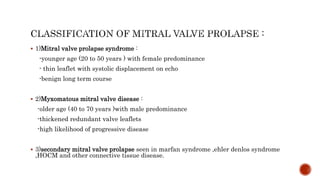
 1)Mitral valve prolapse syndrome :
-younger age (20 to 50 years ) with female predominance
- thin leaflet with systolic displacement on echo
-benign long term course
 2)Myxomatous mitral valve disease :
-older age (40 to 70 years )with male predominance
-thickened redundant valve leaflets
-high likelihood of progressive disease
 3)secondary mitral valve prolapse seen in marfan syndrome ,ehler denlos syndrome
,HOCM and other connective tissue disease.
 myxomatous proliferation of mitral valve leaflet in which spongiosa component is
unusually prominent.
 Secondary effects include fibrosis of surface of leaflets
 Leaflet becomes redundant and prolapsed.
 Thinning and /or elongation of chordae tendineae that sometimes lead to rupture.
 Annular dilation and calcification .
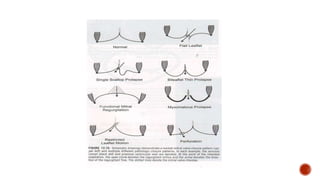
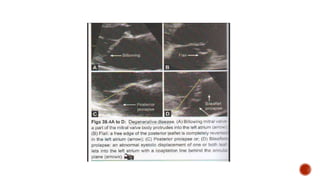
 Due to myxomatous degeneration of valve .
 Abnormal leaflet coaptation with rupture of chordae
 Posterior leaflet more commonly involved with leading to severe MR .
 Degree of MR is directly related to extent of anatomical disruption.
 Eccentric direction of MR with direction opposite to leaflet involved .
 Annular dilation in case of dilated cardiomyopathy.
 Chronic AF can lead to annular enlargement leading to MR
 Primary disease of leaflet such as myxomatous disease are associated with
annular dilation and abnormal annular motion which may aggravate severity of
MR .
 More common in woman
 Associated with coronary and carotid atherosclerosis
 Higher risk of cardiovascular morbidity and mortality
 Calcification of aortic valve cusp is associated in approximately 50 % 0f patients .
 Lenghtening and rupture of chordae tendinea are cardinal feature of MVP syndrome.
 Other causes include congenital ,infective endocarditis,trauma ,rheumatic fever
,osteogenesis imprefecta or relapsing polychindritis .
 Chordae to posterior leaflet rupture is more frequent compared to anterior.
 In idiopathic rupture of chordae ,there is pathognomic fibrosis of papillary muscle.
 Chordae rupture may also occur due to acute LV dilation.
 Depending of chordae and rate of rupturr,the resultant MR will be mild,moderate or
severe.
 Temporary papillary muscle dysfunction during episode of angina due to transient
ischemia leads to transient MR
 When ischemia is severe and prolonged, it causes papillary muscle dysfunction and
scarring leading to chronic MR .
 Ischemia of papillary muscle occur due to coronary atherosclerosis as well as in severe
anemia ,shock, arteritis.
 Rupture of one or two apical heads of papillary muscle can result in flail leaflet with a
lesser degree of MR.
 Other disorder include congenital malposition of muscle ,absence of one papillary
muscle (parachute mitral valve syndrome ),infiltration of papillary muscle in case of
abcesses ,granuloma ,neoplasm,amyloidosis,sarcoidosis.
 M MODE ASSESSMENT
 2D ECHO ASSESSMENT
 DOPPLER ASSESSMENT: COLOUR DOPPLER
CONTINUOUS WAVE
PULSED WAVE
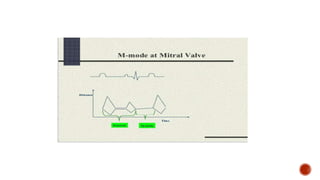
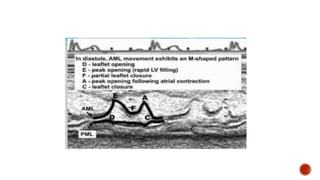
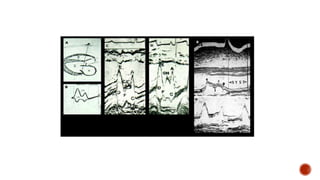
 AML reflects nature of vent filling and has M pattern
 PML has mirror w pattern
 E point is due rapid LV filling
 F point In mid diastole is due to partial closure of av valve due to equalisation of
LA & LV pressures in mid diastole
 EF slope normally is >60mm/sec.
 A point is due to atrial contraction opening the valve second time
 Final closure is due to isovolumic lv contraction and deceleration of atrial inflow
 The recording of the transmitral diastolic inflow is obtained by placing the
Doppler sample volume between the tips of the open mitral valve leaflets.
 The normal peak flow velocity across the mitral valve is usually just under 1 m/sec
and the normal mitral valve area is 4 to 6 cm2.
 The most reliable and relevant measurements are the ratio of the E to A waves,
the isovolemic relaxation time, and the deceleration time. These values give
insight into diastolic function and into the function of the valve
 Structural parameters
 Color flow Doppler
 Pulsed and continuous wave Doppler of mitral inflow
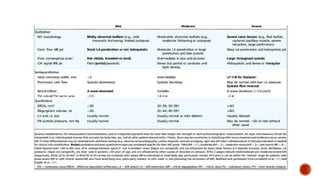
 Quantitative parameters of mitral regurgitation
 Doppler of pulmonary veins
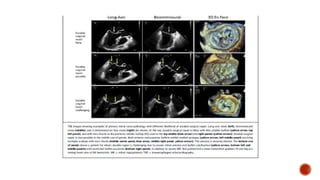
 Left atrial size, left ventricular (LV) size, and appearance of the mitral apparatus.
 Mild mitral regurgitation is usually associated with normal or near-normal left atrial
size, LV size, and intact mitral apparatus.
 Moderate mitral regurgitation is frequently associated with some degree of left atrial
enlargement, normal or mildly dilated LV, and varying degrees of mitral apparatus
abnormalities.
 Severe chronic mitral regurgitation is usually associated with moderate to severe left
atrial enlargement, some degree of LV dilatation, and often associated with flail mitral
leaflet, ruptured papillary muscle, or malcoaptation of the mitral leaflets.
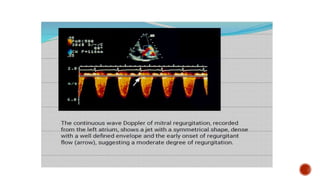
 In current practice, it is common to judge a small jet occupying less than 20
percent of the left atrial area as mild, a middle-sized jet as moderate, and a large
jet (more than 40 percent and extending into the pulmonary veins) as severe
mitral regurgitation.
 However, reliance on these size judgments alone is imprudent .
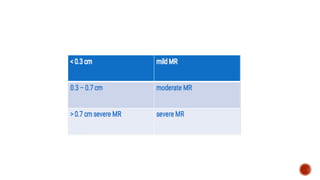
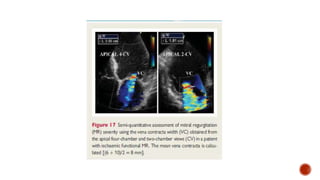
 VC : In the parasternal long-axis view, the narrowest portion of the regurgitant jet
across the valve is defined as the vena contracta
 Easy and quick method
 Relatively independent of hemodynamic factors.
 Limited by its narrow range.
 Image optimization needed
 Zoom mode with narrow sector and plane
 perpendicular to the jet is essential to improve spatial and temporal resolution.
 2 chamber view (commissural view) is parallel to the mitral leaflet coaptation line,
even mild degrees of functional regurgitation can appear to show a wide VC(not
recommended)
 Can be used in eccentric jet.
 Accurate in acute MR.
 LIMITATIONS:
 Not valid for multiple MR Jets.
 The accuracy of vena contracta is based on the assumption that the regurgitant
orifice is circular,which is often the case in organic MR.
 However,regurgitant orifice in functional MR is rather elongated and non
circular,limiting the validity of vena contracta measurement.
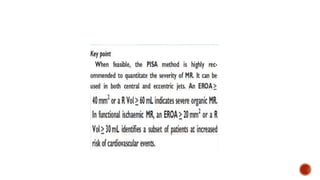
 It is the most recommended quantitative method to evaluate mitral regurgitation in
central jets .
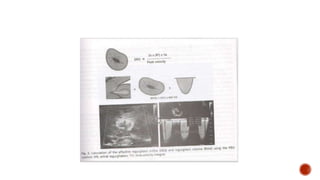
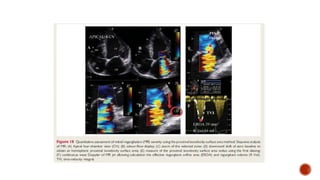
 Regurgitant volume and orifice area are derived from PISA.
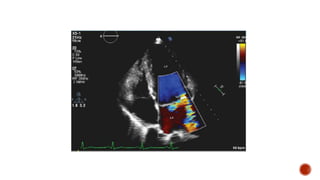
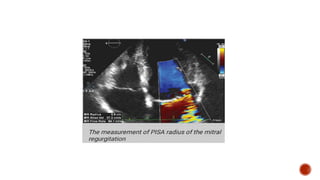
 It is optimally measured in an apical four-chamber view, using narrow sector, minimal
depth and zoom mode.
 On the ventricular side of the valve, proximal flow acceleration (proximal isovelocity
surface area or PISA) is seen as a concentric series of hemispheric shells of alternating
colors, each shell denoting an isovelocity of aliasing .
 The diameter of the ring closest to the regurgitant orifice is measured
 EROA (cm2) = PISA x va / vmax MR
 RVol (ml) = EROA x VTIMR
 PISA method assumes that the ROA is constant through out systole and is
hemispheric in shape.
 PISA based methods tends to be more accurate for organic than for functional MR.
 PISA radius is constant in patients with organic rheumatic MR, increases
progressively along the systole period in patients with mitral valve prolapse.
 In functional MR, an early peak is followed by a progressive midsystolic decrease,
sometimes with another late systolic peak(bimodal pattern).
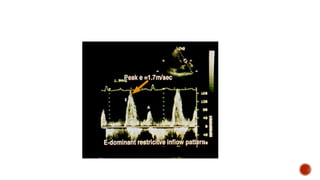
 In severe mitral regurgitation, the early diastolic mitral inflow pulsed-wave
Doppler signal wave (E wave), obtained at the tips of the mitral leaflets, is almost
always increased to greater than 1.4 m/sec.
 In addition to increased peak transmitral inflow E wave velocity, the pattern is
strongly E-wave dominant with a small A-wave (E/A ratio greater than 2.0).
 This pattern is identical to the restrictive inflow pattern and has a similar origin,
in that filling pressures may be elevated in both situations.
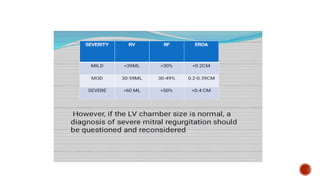
 Regurgitant volume
 Regurgitant fraction
 Effective regurgitation orifice area (EROA)
 Performed correctly, these parameters are considered most accurate because they
are objective.
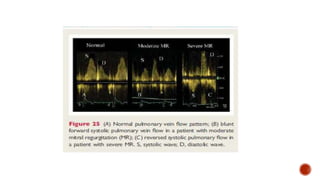
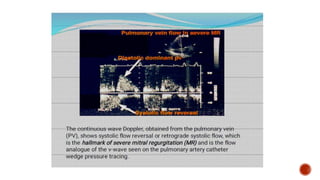
 Doppler interrogation of the pulmonary veins has produced insights into
hemodynamics.
 In mitral regurgitation, this evaluation is a standard part of the examination and
usually includes pulse Doppler of the left and right upper pulmonary veins from
the apical four-chamber view.
 Normal pulmonary venous flow is antegrade during both ventricular systole and
diastole (ventricular systolic component dominates), with slight retrograde flow
during atrial systole
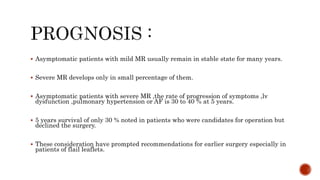
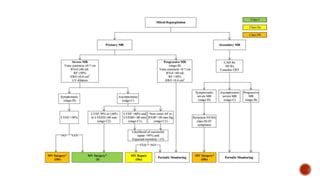
 Asymptomatic patients with mild MR usually remain in stable state for many years.
 Severe MR develops only in small percentage of them.
 Asymptomatic patients with severe MR ,the rate of progression of symptoms ,lv
dysfunction ,pulmonary hypertension or AF is 30 to 40 % at 5 years.
 5 years survival of only 30 % noted in patients who were candidates for operation but
declined the surgery.
 These consideration have prompted recommendations for earlier surgery especially in
patients of flail leaflets.
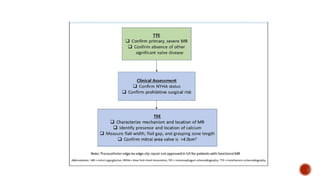
 Decisions regarding the optimal treatment of chronic MR are based on multiple
variables
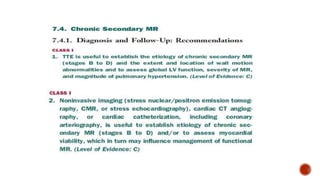
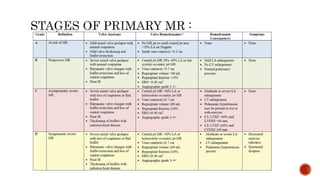
 MR type whether primary or secondary
 Severity
 hemodynamic consequences
 disease stage,
 patient comorbidities
 experience of the heart valve team and its members
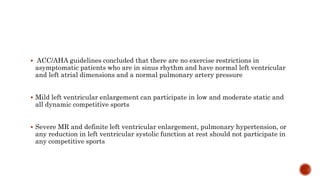
 ACC/AHA guidelines concluded that there are no exercise restrictions in
asymptomatic patients who are in sinus rhythm and have normal left ventricular
and left atrial dimensions and a normal pulmonary artery pressure
 Mild left ventricular enlargement can participate in low and moderate static and
all dynamic competitive sports
 Severe MR and definite left ventricular enlargement, pulmonary hypertension, or
any reduction in left ventricular systolic function at rest should not participate in
any competitive sports
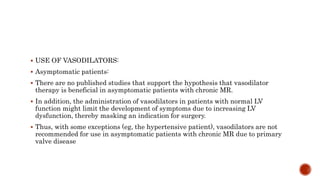
 USE OF VASODILATORS:
 Asymptomatic patients:
 There are no published studies that support the hypothesis that vasodilator
therapy is beneficial in asymptomatic patients with chronic MR.
 In addition, the administration of vasodilators in patients with normal LV
function might limit the development of symptoms due to increasing LV
dysfunction, thereby masking an indication for surgery.
 Thus, with some exceptions (eg, the hypertensive patient), vasodilators are not
recommended for use in asymptomatic patients with chronic MR due to primary
valve disease
 Symptomatic patients:
 In primary MR (eg, myxomatous or rheumatic), the therapeutic goal should be a
reduction in systolic pressure.
 Thus, a beta blocker, diuretic, hydralazine, or calcium channel blocker should be used.
{medical therapy is not a substitute for surgical intervention in patients with chronic
symptomatic MR}.
 Chronic vasodilator therapy is indicated in symptomatic patients who are not
candidates for surgery. The evidence of benefit is best in patients with secondary
(functional) MR due to left ventricular dysfunction
 Several studies confirm a beneficial effect of acute vasodilator therapy in patients with
chronic MR. Intravenous nitroprusside, for example, decreases left ventricular
enddiastolic pressure and volume while increasing forward stroke volume and cardiac
index.
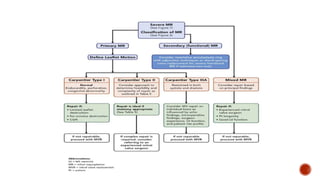
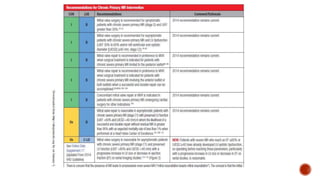
 The principal treatment modality for primary MR is surgery.
 The decision to repair or replace is of critical importance and mitral valve repair is
strongly recommended whenever possible.
 Disadvantage of Replacement :
1)operative risk as well as risk of thromboembolism
2)anticoagulation in patients having mechanical valves
3)late structural deterioration in patients receiving bioprostheses.
4)Lv function deteriorates after mitral valve replacement.
5)chances if IE on prosthetic valves
 Operative mortality rates are 3 to 9 % who undergo elective isolated mitral valve
replacement.
 The combination of surgery with CABG is associated with mortality of 7 to 12 %.
 Pre op LVEF and LVESD are important predictors of outcomes after surgery
 Excellent outcomes if LVEF is more than 60 % and LVESD is less than 40 mm.
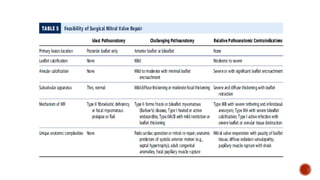
 Mitral valve repair for degenerative MR consist of reconstruction of the valve which is
accompanied by mitral annuloplasty using rigid or flexible prosthetic ring , resection
of prolapsing leaflet with plication and reinforcement of annulus as well as repair of
subvalvular apparatus .
 Disadvantage of mitral valverepair :
1)LVOT obstruction caused by SAM occurs in 5 to 10 % after mitral valve repair of
degenerative MR. It is treated with volume loading and b blocker. The obstruction
usually disappear with time.
2)technically more demanding procedure
3)MR recurrence in subset of patients undergoing repair .
 Preop AF is an independent predictor of reduce long term survival after mitral valve
surgery for chronic mr.
 In patients who have developed AF ,outcomes are improved if maze procedure done
intra op.
 It can be done by edge to edge technique or coronary sinus approach for percutaneous mitral
annuloplasty.
 At present, transcatheter mitral repair using an edge-to-edge clip(Mitraclip) has a very limited
role for the treatment of patients with primaryMR and severe symptoms who are felt to be poor
surgical candidates.
 Surgical treatment for secondary MR is undertaken only after appropriate medical and device
therapies have been instituted.
 Transcatheter repair systems other than the edge-to-edge clip, as well as transcatheter mitral
valve replacement devices, are currently not approved for clinical use but remain the subject of
clinical trial investigation.
 COAPT trial :The COAPT trial showed that transcatheter mitral valve
approximation using the MitraClip on a background of maximally tolerated
GDMT was superior to GDMT alone in reducing HF hospitalization and mortality
in symptomatic HF patients with grade 3-4+ MR
 MAVERIC Trial :MitrAl ValvE RepaIr Clinical Trial. The objective of the study is
to evaluate the safety and feasibility of the ARTO System in patients with mitral
valve regurgitation (MR) associated with congestive heart failure (CHF). The
ARTO System directly reshapes the mitral annulus promoting leaflet coaptation
and amelioration of regurgitation.

Mitral regurgitation

  • 2.
     Resembles theBishops “mitre”  Mitral valve apparatus :- Mitral valve Annulus. Mitral leaflets with commissures. Chordae tendinae. Papillary muscles. Supporting LV Wall.  Altogether called as mitral valve complex.
  • 4.
    • Fibroelastic ringthat measures approximately 10 cm in circumference. • Encircles the valve orifice in cone like manner. • Annulus is elliptical in shape in systole & circular in diastole.
  • 5.
     AML :-Anterior mitral leaflet.  Thickness about 1mm  triangular in shape.  Is in continuity of aortic annulus.  Encircles on 1/3rd of annulus, but covers 2/3rd of valve orifice area.  PML :- posterior mitral leaflet.  Quadrangular in shape.  Occupies 2/3rd of the annulus, but covers only 1/3rd of the valve area
  • 8.
     Located atthe junction of the apical (lower) third & middle third of the left ventricle.  2 in number.  APM :-  Antero-lateral wall of LV.  has dual blood supply that is OM of CX and D1 of LAD.  PPM :- Postero-medial wall of LV.  has single blood supply.  Last OM/ RCA.
  • 9.
     In MRalmost 50 % of regurgitant volume is ejected into left atrium before aortic valve opens .  The volume of MR flow depends on 1)regurgitant orifice area 2)pressure gradient between LA and LV.  pressure gradient depends on systemic vascular resistance.  Regurgitant orifice area depends on mitral annulus size that is -proportional to preload and afterload -inversely proportional to contractiblity.  When LV size is reduced by treatment with positive inotrope,diuretics and vasodilators,the regurgitant orifice area reduced and volume of regurgitant flow decreases.
  • 10.
     1)Acute MR 2)chronic compensated MR  3)chronic decompensated MR
  • 14.
     Coronary flowrates may be increased in patients with severe MR but increase in myocardial o2 consumption is only modestly elevated as compared to AS and AR because LV wall tension may actually be reduced in patients with MR which is one of the principal determinant of o2 consumption .  So clinical manifestation of myocardial ischemia is less seen in MR.
  • 15.
     Patients withearly MR often exhibit elevation in ejection phase indices of contractiblity such as ejection fraction ,myocardial fiber shortening and velocity of circumferential fiber shortening.  With development of chronic volume overload ,contractile function deteriorates,  However even in overt HF secondary to MR, ejection fraction and fractional shortening may be only modestly reduced.  Therefore ,values in low normal range may actually reflect impaired myocardial function.whereas moderately reduced values (EF 40 to 50 % ) generally signifies severe often irreversible impairment of contractiblity.  EF of less than 35 % usually represents advanced myocardial dysfunction.
  • 16.
     Effective (forward) cardiac output Is reduced  Functional capacity is reduced.  Total LV output (forward plus regurgitant flow )usually is elevated until late in course.  V wave is characteristically taller  Y descent is rapid
  • 17.
     Normal orreduced compliance :seen in acute MR . -little enlargement of left atrium but marked increase in LA pressure -pulmonary congestion present -usually sinus rhythem present  Markedly increase compliance :seen in severe longstanding MR -massive enlargement of LA but normal or slightly elevated LA pressure -pulmonary vascular resistance may be normal or slightly elevated -AF and low cardiac output almost invariably present  Moderately increase compliance :in between above two condition. -seen In severe chronic MR
  • 26.
     1)Mitral valveprolapse syndrome : -younger age (20 to 50 years ) with female predominance - thin leaflet with systolic displacement on echo -benign long term course  2)Myxomatous mitral valve disease : -older age (40 to 70 years )with male predominance -thickened redundant valve leaflets -high likelihood of progressive disease  3)secondary mitral valve prolapse seen in marfan syndrome ,ehler denlos syndrome ,HOCM and other connective tissue disease.
  • 27.
     myxomatous proliferationof mitral valve leaflet in which spongiosa component is unusually prominent.  Secondary effects include fibrosis of surface of leaflets  Leaflet becomes redundant and prolapsed.  Thinning and /or elongation of chordae tendineae that sometimes lead to rupture.  Annular dilation and calcification .
  • 28.
     Due tomyxomatous degeneration of valve .  Abnormal leaflet coaptation with rupture of chordae  Posterior leaflet more commonly involved with leading to severe MR .  Degree of MR is directly related to extent of anatomical disruption.  Eccentric direction of MR with direction opposite to leaflet involved .
  • 34.
     Annular dilationin case of dilated cardiomyopathy.  Chronic AF can lead to annular enlargement leading to MR  Primary disease of leaflet such as myxomatous disease are associated with annular dilation and abnormal annular motion which may aggravate severity of MR .
  • 36.
     More commonin woman  Associated with coronary and carotid atherosclerosis  Higher risk of cardiovascular morbidity and mortality  Calcification of aortic valve cusp is associated in approximately 50 % 0f patients .
  • 37.
     Lenghtening andrupture of chordae tendinea are cardinal feature of MVP syndrome.  Other causes include congenital ,infective endocarditis,trauma ,rheumatic fever ,osteogenesis imprefecta or relapsing polychindritis .  Chordae to posterior leaflet rupture is more frequent compared to anterior.  In idiopathic rupture of chordae ,there is pathognomic fibrosis of papillary muscle.  Chordae rupture may also occur due to acute LV dilation.  Depending of chordae and rate of rupturr,the resultant MR will be mild,moderate or severe.
  • 38.
     Temporary papillarymuscle dysfunction during episode of angina due to transient ischemia leads to transient MR  When ischemia is severe and prolonged, it causes papillary muscle dysfunction and scarring leading to chronic MR .  Ischemia of papillary muscle occur due to coronary atherosclerosis as well as in severe anemia ,shock, arteritis.  Rupture of one or two apical heads of papillary muscle can result in flail leaflet with a lesser degree of MR.  Other disorder include congenital malposition of muscle ,absence of one papillary muscle (parachute mitral valve syndrome ),infiltration of papillary muscle in case of abcesses ,granuloma ,neoplasm,amyloidosis,sarcoidosis.
  • 49.
     M MODEASSESSMENT  2D ECHO ASSESSMENT  DOPPLER ASSESSMENT: COLOUR DOPPLER CONTINUOUS WAVE PULSED WAVE
  • 50.
     AML reflectsnature of vent filling and has M pattern  PML has mirror w pattern  E point is due rapid LV filling  F point In mid diastole is due to partial closure of av valve due to equalisation of LA & LV pressures in mid diastole  EF slope normally is >60mm/sec.  A point is due to atrial contraction opening the valve second time  Final closure is due to isovolumic lv contraction and deceleration of atrial inflow
  • 55.
     The recordingof the transmitral diastolic inflow is obtained by placing the Doppler sample volume between the tips of the open mitral valve leaflets.  The normal peak flow velocity across the mitral valve is usually just under 1 m/sec and the normal mitral valve area is 4 to 6 cm2.  The most reliable and relevant measurements are the ratio of the E to A waves, the isovolemic relaxation time, and the deceleration time. These values give insight into diastolic function and into the function of the valve
  • 56.
     Structural parameters Color flow Doppler  Pulsed and continuous wave Doppler of mitral inflow  Quantitative parameters of mitral regurgitation  Doppler of pulmonary veins
  • 57.
     Left atrialsize, left ventricular (LV) size, and appearance of the mitral apparatus.  Mild mitral regurgitation is usually associated with normal or near-normal left atrial size, LV size, and intact mitral apparatus.  Moderate mitral regurgitation is frequently associated with some degree of left atrial enlargement, normal or mildly dilated LV, and varying degrees of mitral apparatus abnormalities.  Severe chronic mitral regurgitation is usually associated with moderate to severe left atrial enlargement, some degree of LV dilatation, and often associated with flail mitral leaflet, ruptured papillary muscle, or malcoaptation of the mitral leaflets.
  • 58.
     In currentpractice, it is common to judge a small jet occupying less than 20 percent of the left atrial area as mild, a middle-sized jet as moderate, and a large jet (more than 40 percent and extending into the pulmonary veins) as severe mitral regurgitation.  However, reliance on these size judgments alone is imprudent .  VC : In the parasternal long-axis view, the narrowest portion of the regurgitant jet across the valve is defined as the vena contracta
  • 59.
     Easy andquick method  Relatively independent of hemodynamic factors.  Limited by its narrow range.  Image optimization needed  Zoom mode with narrow sector and plane  perpendicular to the jet is essential to improve spatial and temporal resolution.  2 chamber view (commissural view) is parallel to the mitral leaflet coaptation line, even mild degrees of functional regurgitation can appear to show a wide VC(not recommended)
  • 60.
     Can beused in eccentric jet.  Accurate in acute MR.  LIMITATIONS:  Not valid for multiple MR Jets.  The accuracy of vena contracta is based on the assumption that the regurgitant orifice is circular,which is often the case in organic MR.  However,regurgitant orifice in functional MR is rather elongated and non circular,limiting the validity of vena contracta measurement.
  • 64.
     It isthe most recommended quantitative method to evaluate mitral regurgitation in central jets .  Regurgitant volume and orifice area are derived from PISA.  It is optimally measured in an apical four-chamber view, using narrow sector, minimal depth and zoom mode.  On the ventricular side of the valve, proximal flow acceleration (proximal isovelocity surface area or PISA) is seen as a concentric series of hemispheric shells of alternating colors, each shell denoting an isovelocity of aliasing .  The diameter of the ring closest to the regurgitant orifice is measured  EROA (cm2) = PISA x va / vmax MR  RVol (ml) = EROA x VTIMR
  • 66.
     PISA methodassumes that the ROA is constant through out systole and is hemispheric in shape.  PISA based methods tends to be more accurate for organic than for functional MR.  PISA radius is constant in patients with organic rheumatic MR, increases progressively along the systole period in patients with mitral valve prolapse.  In functional MR, an early peak is followed by a progressive midsystolic decrease, sometimes with another late systolic peak(bimodal pattern).
  • 70.
     In severemitral regurgitation, the early diastolic mitral inflow pulsed-wave Doppler signal wave (E wave), obtained at the tips of the mitral leaflets, is almost always increased to greater than 1.4 m/sec.  In addition to increased peak transmitral inflow E wave velocity, the pattern is strongly E-wave dominant with a small A-wave (E/A ratio greater than 2.0).  This pattern is identical to the restrictive inflow pattern and has a similar origin, in that filling pressures may be elevated in both situations.
  • 73.
     Regurgitant volume Regurgitant fraction  Effective regurgitation orifice area (EROA)  Performed correctly, these parameters are considered most accurate because they are objective.
  • 75.
     Doppler interrogationof the pulmonary veins has produced insights into hemodynamics.  In mitral regurgitation, this evaluation is a standard part of the examination and usually includes pulse Doppler of the left and right upper pulmonary veins from the apical four-chamber view.  Normal pulmonary venous flow is antegrade during both ventricular systole and diastole (ventricular systolic component dominates), with slight retrograde flow during atrial systole
  • 84.
     Asymptomatic patientswith mild MR usually remain in stable state for many years.  Severe MR develops only in small percentage of them.  Asymptomatic patients with severe MR ,the rate of progression of symptoms ,lv dysfunction ,pulmonary hypertension or AF is 30 to 40 % at 5 years.  5 years survival of only 30 % noted in patients who were candidates for operation but declined the surgery.  These consideration have prompted recommendations for earlier surgery especially in patients of flail leaflets.
  • 85.
     Decisions regardingthe optimal treatment of chronic MR are based on multiple variables  MR type whether primary or secondary  Severity  hemodynamic consequences  disease stage,  patient comorbidities  experience of the heart valve team and its members
  • 86.
     ACC/AHA guidelinesconcluded that there are no exercise restrictions in asymptomatic patients who are in sinus rhythm and have normal left ventricular and left atrial dimensions and a normal pulmonary artery pressure  Mild left ventricular enlargement can participate in low and moderate static and all dynamic competitive sports  Severe MR and definite left ventricular enlargement, pulmonary hypertension, or any reduction in left ventricular systolic function at rest should not participate in any competitive sports
  • 87.
     USE OFVASODILATORS:  Asymptomatic patients:  There are no published studies that support the hypothesis that vasodilator therapy is beneficial in asymptomatic patients with chronic MR.  In addition, the administration of vasodilators in patients with normal LV function might limit the development of symptoms due to increasing LV dysfunction, thereby masking an indication for surgery.  Thus, with some exceptions (eg, the hypertensive patient), vasodilators are not recommended for use in asymptomatic patients with chronic MR due to primary valve disease
  • 88.
     Symptomatic patients: In primary MR (eg, myxomatous or rheumatic), the therapeutic goal should be a reduction in systolic pressure.  Thus, a beta blocker, diuretic, hydralazine, or calcium channel blocker should be used. {medical therapy is not a substitute for surgical intervention in patients with chronic symptomatic MR}.  Chronic vasodilator therapy is indicated in symptomatic patients who are not candidates for surgery. The evidence of benefit is best in patients with secondary (functional) MR due to left ventricular dysfunction  Several studies confirm a beneficial effect of acute vasodilator therapy in patients with chronic MR. Intravenous nitroprusside, for example, decreases left ventricular enddiastolic pressure and volume while increasing forward stroke volume and cardiac index.
  • 89.
     The principaltreatment modality for primary MR is surgery.  The decision to repair or replace is of critical importance and mitral valve repair is strongly recommended whenever possible.  Disadvantage of Replacement : 1)operative risk as well as risk of thromboembolism 2)anticoagulation in patients having mechanical valves 3)late structural deterioration in patients receiving bioprostheses. 4)Lv function deteriorates after mitral valve replacement. 5)chances if IE on prosthetic valves
  • 90.
     Operative mortalityrates are 3 to 9 % who undergo elective isolated mitral valve replacement.  The combination of surgery with CABG is associated with mortality of 7 to 12 %.  Pre op LVEF and LVESD are important predictors of outcomes after surgery  Excellent outcomes if LVEF is more than 60 % and LVESD is less than 40 mm.
  • 91.
     Mitral valverepair for degenerative MR consist of reconstruction of the valve which is accompanied by mitral annuloplasty using rigid or flexible prosthetic ring , resection of prolapsing leaflet with plication and reinforcement of annulus as well as repair of subvalvular apparatus .  Disadvantage of mitral valverepair : 1)LVOT obstruction caused by SAM occurs in 5 to 10 % after mitral valve repair of degenerative MR. It is treated with volume loading and b blocker. The obstruction usually disappear with time. 2)technically more demanding procedure 3)MR recurrence in subset of patients undergoing repair .  Preop AF is an independent predictor of reduce long term survival after mitral valve surgery for chronic mr.  In patients who have developed AF ,outcomes are improved if maze procedure done intra op.
  • 95.
     It canbe done by edge to edge technique or coronary sinus approach for percutaneous mitral annuloplasty.  At present, transcatheter mitral repair using an edge-to-edge clip(Mitraclip) has a very limited role for the treatment of patients with primaryMR and severe symptoms who are felt to be poor surgical candidates.  Surgical treatment for secondary MR is undertaken only after appropriate medical and device therapies have been instituted.  Transcatheter repair systems other than the edge-to-edge clip, as well as transcatheter mitral valve replacement devices, are currently not approved for clinical use but remain the subject of clinical trial investigation.
  • 100.
     COAPT trial:The COAPT trial showed that transcatheter mitral valve approximation using the MitraClip on a background of maximally tolerated GDMT was superior to GDMT alone in reducing HF hospitalization and mortality in symptomatic HF patients with grade 3-4+ MR  MAVERIC Trial :MitrAl ValvE RepaIr Clinical Trial. The objective of the study is to evaluate the safety and feasibility of the ARTO System in patients with mitral valve regurgitation (MR) associated with congestive heart failure (CHF). The ARTO System directly reshapes the mitral annulus promoting leaflet coaptation and amelioration of regurgitation.