Missouri Issues in Workers’ Compensation General Session

Editor's Notes

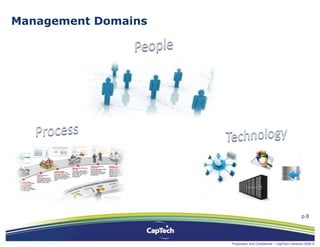
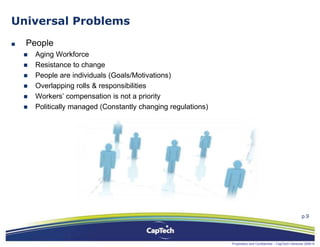
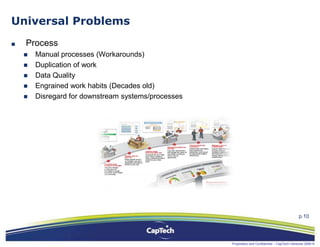
  • #9 The challenges facing workers’ compensation organization fall across the three management domains of People [CLICK TO BUILD]Process [CLICK TO BUILD]And Technology [CLICK TO BUILD]
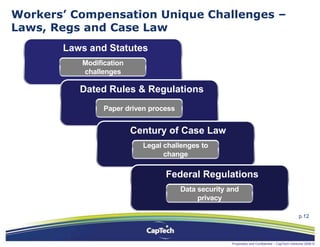
  • #13 [CLICK TO BUILD] Laws and statutes enacted through a legislative process are not easily modified to accommodate different methods to achieve the same goals.  [CLICK TO BUILD] Agency specific rules and regulations may be significantly dated and built to accommodate paper-driven processes.  [CLICK TO BUILD] Ninety-plus years of case law exists within each jurisdiction, creating another body of requirements from which to draw upon.  When change occurs within laws, rules and regulations, it can be reasonably expected that legal challenges to the new methods of accomplishing work will occur.  [CLICK TO BUILD] Certain Federal regulations are also in-play, such as regulations around data security and privacy.
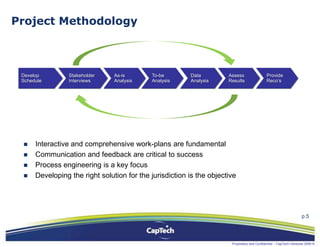
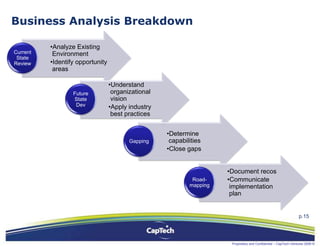
  • #16 Current State ReviewFuture State DevelopmentGapping ExerciseRoadmapping
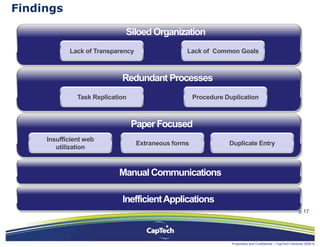
  • #18 Siloed organization [CLICK TO BUILD]Lack of common goals between groups and with stakeholdersLack of transparency when dealing with different unitsRedundant processes [CLICK TO BUILD]Replication of tasks and proceduresPaper focused [CLICK TO BUILD]Insufficient utilization of web based entryExtraneous forms resulting into increased burden on stakeholdersDuplicate entry on these formsManual communications – leading to inefficient processes and increased delay [CLICK TO BUILD]Inefficient applications – resulting in a lack of comprehensive and integrated information system [CLICK TO BUILD]
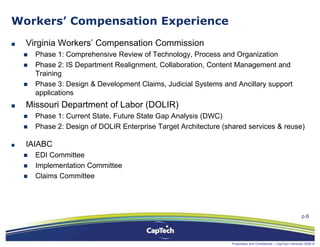
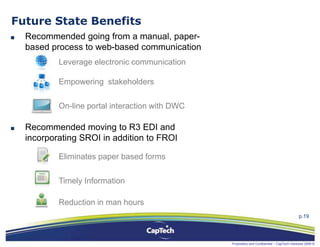
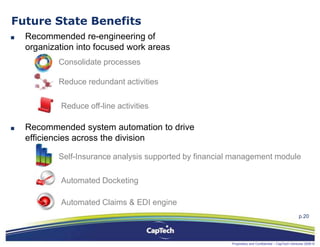
  • #20 Recommended going from a manual, paper-based process to electronic communicationRecommended mandating electronic communication for all commercial (non-Employee) stakeholdersSuggested off-loading activities to the stakeholders better able to manage themRecommended creating on-line portal for stakeholders to manage interactions with the DWCRecommended moving to R3 EDI and incorporating SROI in addition to FROIThis would eliminate the need for several paper-based formsBring information in a consistent format and in a more timely mannerReduce man-hours associated with ad-hoc information requestsRecommended a re-engineering of their organization going from 9 siloed units to 5 integrated and focused work areasReduced processes from 104 to 55Reduced redundant activities by 89%Reduced off-line activities by 94%
  • #21 Recommended a re-engineering of their organization going from 9 siloed units to 5 integrated and focused work areasReduced processes from 104 to 55Reduced redundant activities by 89%Reduced off-line activities by 94%Recommended system automation to drive substantial efficiencies across the divisionDesigned a completely automated financial management module to support Self-Insurance analysisDesigned an automated docketing processDesigned an automated Claims and EDI processing & review engine
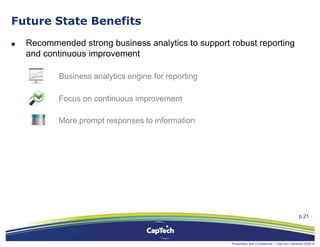
  • #22 Recommended strong business analytics to support robust reporting and continuous improvementSuggested an integrated business analytics engine to provide Divisional reportingDesigned a continuous improvement module to support the flexibility necessary to adapt with environmental changesReduced dependency on the IT organization to run ad-hoc queries against databases
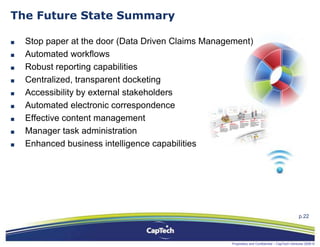
  • #23 Stop paper at the door (Data Driven Claims Management)EDI/XML (FROI, SROI, POC)Structured Internet InputsFront-end ImagingAutomated workflowsEmployee process & rolls definedRobust reporting capabilitiesCentralized, transparent docketingSchedulingCase ManagementAdjudicationAccessibility by external stakeholdersAutomated electronic correspondenceEffective content managementManager task administrationEnhanced business intelligence capabilities
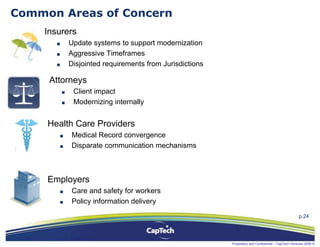
  • #25 InsurersUpdate systems to support modernizationAggressive TimeframesDisjointed requirements from JurisdictionsAttorneysClient impactModernizing internallyHealth Care ProvidersMedical Record convergenceDisparate communication mechanismsEmployersCare and safety for workersPolicy information delivery
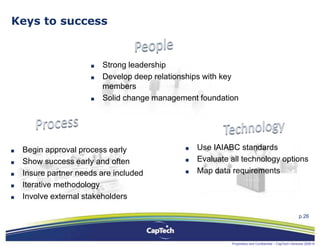
  • #27 The challenges facing workers’ compensation organization fall across the three management domains of People [CLICK TO BUILD]Strong leadership support for any changeMaintained strong relationships with key members of Worker's Comp Industry (IAIABC, SAWCA, Insurers, Vendors, Other States) - strong change management is keyProcess [CLICK TO BUILD]Begin regulatory approval process earlyShow success early and often in the processTake extra care when working with small vendors in niche industriesAn iterative methodology is an important elementExternal stakeholder involvement is imperative And Technology [CLICK TO BUILD]Use IAIABC EDI/XML standardsOpen source technologies increase the amount of time getting the infrastructure right but lower overall cost of ownershipMap data requirements to specific business needs
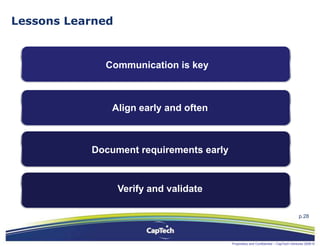
  • #29 [CLICK TO BUILD] Communication is King[CLICK TO BUILD] Align early and often[CLICK TO BUILD] Document requirements and needs early in the process[CLICK TO BUILD] Verify and Validate