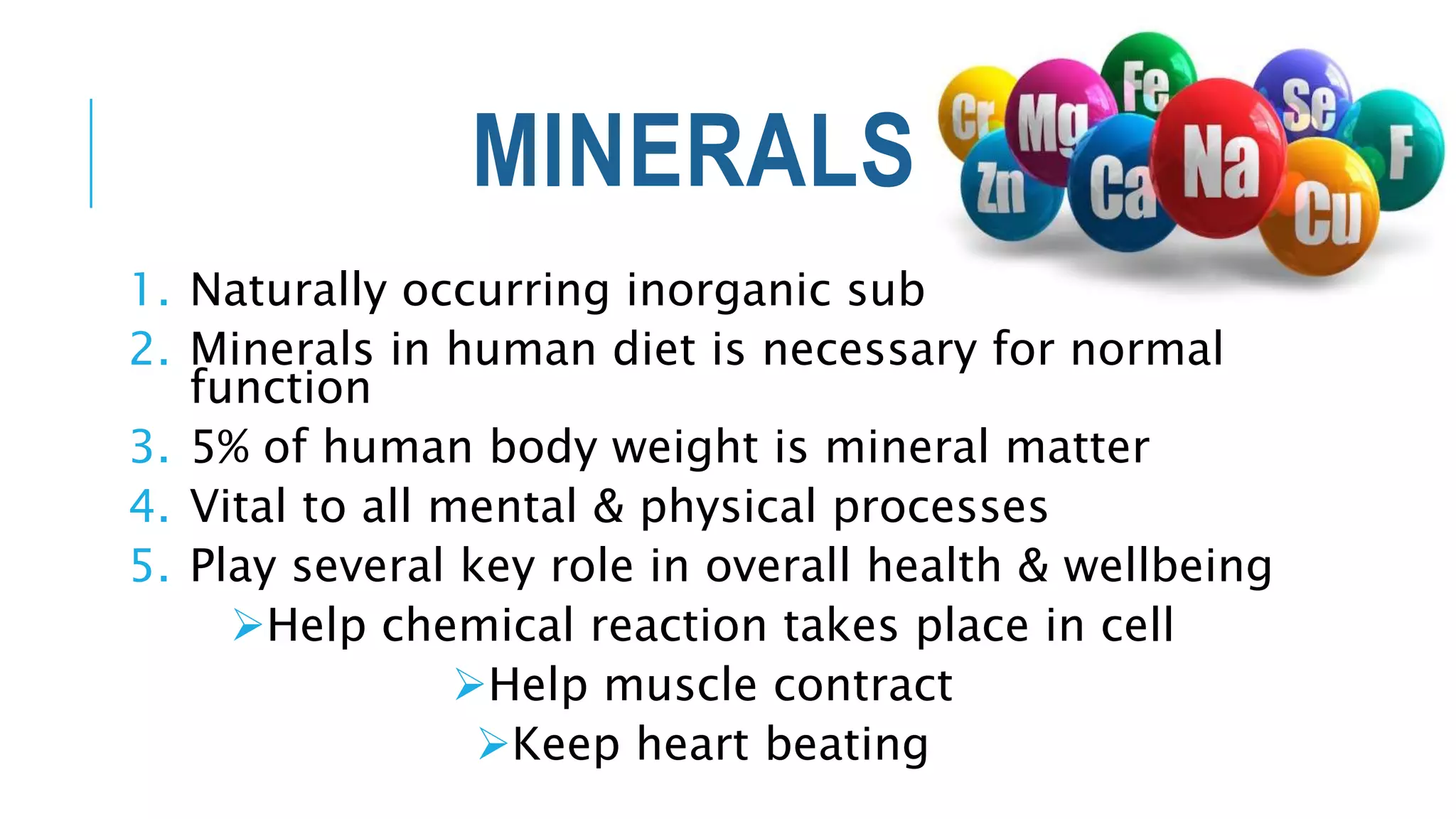
MINERALS
1. Naturally occurring inorganic substances
2. Minerals in human diet is necessary for normal
function
3. 5% of human body weight is mineral matter
4. Vital to all mental & physical processes
5. Play several key role in overall health & wellbeing
Help chemical reaction takes place in cell
Help muscle contract
Keep heart beating
MINERALS ARE
CATEGORIZED AS
Major Minerals
Sodium
Potassium
Chloride
Calcium
Magnesium &
Phosphorus
Trace Minerals
Iron
Zinc
Copper
Chromium
Fluoride
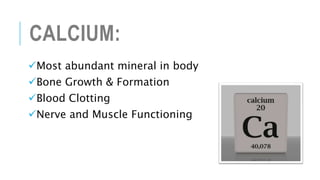
CALCIUM:
Most abundant mineral in body
Bone Growth & Formation
Blood Clotting
Nerve and Muscle Functioning
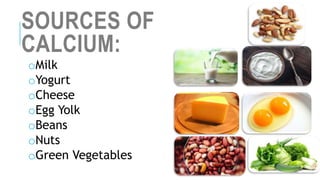
SOURCES OF
CALCIUM:
oMilk
oYogurt
oCheese
oEgg Yolk
oBeans
oNuts
oGreen Vegetables
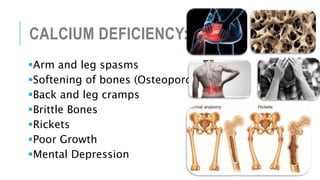
CALCIUM DEFICIENCY:
Arm and leg spasms
Softening of bones (Osteoporosis)
Back and leg cramps
Brittle Bones
Rickets
Poor Growth
Mental Depression
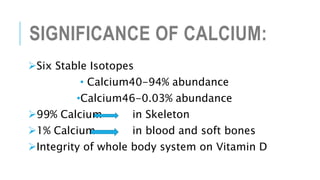
SIGNIFICANCE OF CALCIUM:
Six Stable Isotopes
• Calcium40-94% abundance
•Calcium46-0.03% abundance
99% Calcium in Skeleton
1% Calcium in blood and soft bones
Integrity of whole body system on Vitamin D
FUNCTIONS OF CALCIUM ARE:
Structural Function
oStores in bones & skeleton
Electrophysiological
oCarries charge during action potential through
membrane
Intracellular Regulator
Cofactor for extracellular enzymes and
regulatory proteins
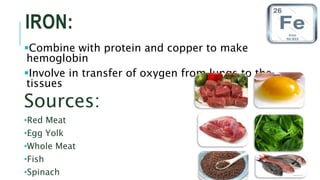
IRON:
Combine with protein and copper to make
hemoglobin
Involve in transfer of oxygen from lungs to the
tissues
Sources:
•Red Meat
•Egg Yolk
•Whole Meat
•Fish
•Spinach
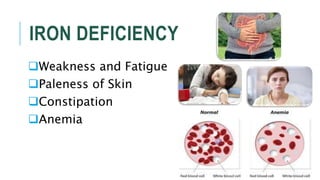
IRON DEFICIENCY
Weakness and Fatigue
Paleness of Skin
Constipation
Anemia
SIGNIFICANCE OF
IRON
Fatigue:
•Fe is needed to make Hemoglobin rich blood, which transport oxygen to the cells
Exercise:
•Fe is lost through sweat and bleeding of the digestive tract from the harsh
motion of exercise
Pregnancy:
•Placenta Development
•Prevention of pre-term and low birth weight babies
Pediatric: Requirement for children
•Essential for Brain development during first 8 months
Role in Metabolic Activities:
•Oxygen transport in blood as hemoglobin
•Enzyme which perform cellular oxidation
•Liver and spleen are iron rich organs
•Iron is also present in bone,medulla,kidneys and intestines
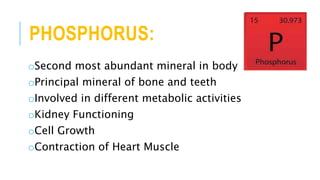
PHOSPHORUS:
oSecond most abundant mineral in body
oPrincipal mineral of bone and teeth
oInvolved in different metabolic activities
oKidney Functioning
oCell Growth
oContraction of Heart Muscle
SOURCES:
Egg Yolk
Milk
Cheese
Spinach
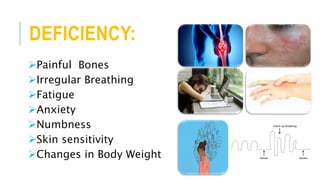
DEFICIENCY:
Painful Bones
Irregular Breathing
Fatigue
Anxiety
Numbness
Skin sensitivity
Changes in Body Weight
SIGNIFICANCE OF
PHOSPHORUS:
Human Body contain 1Ib(454g) of phosphorus
Component of ATP
Found in blood,muscles,nerves and calcium phosphate-bones and teeth's
Functions of Phosphorus:
Formation of bones and teeth's
Utilization of carbohydrates and Fats
Synthesis of protein for growth, maintenance and repair of cells and tissues
Production of ATP- energy source of cells
Work with vitamin B complex
Contraction of muscles
Kidney Function
Maintain regular heart beat
Nerve coordination
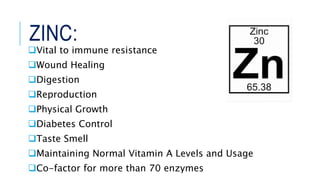
ZINC:
Vital to immune resistance
Wound Healing
Digestion
Reproduction
Physical Growth
Diabetes Control
Taste Smell
Maintaining Normal Vitamin A Levels and Usage
Co-factor for more than 70 enzymes
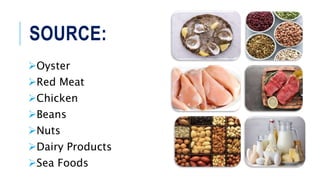
SOURCE:
Oyster
Red Meat
Chicken
Beans
Nuts
Dairy Products
Sea Foods
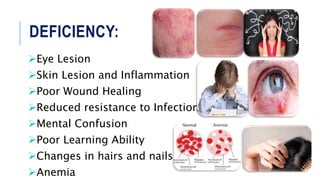
DEFICIENCY:
Eye Lesion
Skin Lesion and Inflammation
Poor Wound Healing
Reduced resistance to Infections
Mental Confusion
Poor Learning Ability
Changes in hairs and nails
Anemia
SIGNIFICANCE OF ZINC
Most Important of all minerals
Work with more than 100 enzymes
Removal of zinc can cause
•Loss of metabolic activity
Acrodermatitis Enteropathica-genetic disorder with zinc
malabsorption
oSevere deficiency of zinc
oImpairment of dermal(skin)
oGastrointestinal
oNeurologic
oImmunologic system
LOSS OF ZINC
Through Gastrointestinal Tract
•Almost half of the total zinc is lost
•Considered amount is secreted through bile
•Most of it is reabsorbed and this process is an
important point of regulation of zinc balance
Through Urine
Through Surfaces
•Desquamated skin
•Hairs
•Sweat

Minerals by Sehrish Ibrar.pptx

  • 1.
    MINERALS 1. Naturally occurringinorganic substances 2. Minerals in human diet is necessary for normal function 3. 5% of human body weight is mineral matter 4. Vital to all mental & physical processes 5. Play several key role in overall health & wellbeing Help chemical reaction takes place in cell Help muscle contract Keep heart beating
  • 2.
    MINERALS ARE CATEGORIZED AS MajorMinerals Sodium Potassium Chloride Calcium Magnesium & Phosphorus Trace Minerals Iron Zinc Copper Chromium Fluoride
  • 3.
    CALCIUM: Most abundant mineralin body Bone Growth & Formation Blood Clotting Nerve and Muscle Functioning
  • 4.
  • 5.
    CALCIUM DEFICIENCY: Arm andleg spasms Softening of bones (Osteoporosis) Back and leg cramps Brittle Bones Rickets Poor Growth Mental Depression
  • 6.
    SIGNIFICANCE OF CALCIUM: SixStable Isotopes • Calcium40-94% abundance •Calcium46-0.03% abundance 99% Calcium in Skeleton 1% Calcium in blood and soft bones Integrity of whole body system on Vitamin D
  • 7.
    FUNCTIONS OF CALCIUMARE: Structural Function oStores in bones & skeleton Electrophysiological oCarries charge during action potential through membrane Intracellular Regulator Cofactor for extracellular enzymes and regulatory proteins
  • 8.
    IRON: Combine with proteinand copper to make hemoglobin Involve in transfer of oxygen from lungs to the tissues Sources: •Red Meat •Egg Yolk •Whole Meat •Fish •Spinach
  • 9.
    IRON DEFICIENCY Weakness andFatigue Paleness of Skin Constipation Anemia
  • 10.
    SIGNIFICANCE OF IRON Fatigue: •Fe isneeded to make Hemoglobin rich blood, which transport oxygen to the cells Exercise: •Fe is lost through sweat and bleeding of the digestive tract from the harsh motion of exercise Pregnancy: •Placenta Development •Prevention of pre-term and low birth weight babies Pediatric: Requirement for children •Essential for Brain development during first 8 months Role in Metabolic Activities: •Oxygen transport in blood as hemoglobin •Enzyme which perform cellular oxidation •Liver and spleen are iron rich organs •Iron is also present in bone,medulla,kidneys and intestines
  • 11.
    PHOSPHORUS: oSecond most abundantmineral in body oPrincipal mineral of bone and teeth oInvolved in different metabolic activities oKidney Functioning oCell Growth oContraction of Heart Muscle
  • 12.
  • 13.
  • 14.
    SIGNIFICANCE OF PHOSPHORUS: Human Bodycontain 1Ib(454g) of phosphorus Component of ATP Found in blood,muscles,nerves and calcium phosphate-bones and teeth's Functions of Phosphorus: Formation of bones and teeth's Utilization of carbohydrates and Fats Synthesis of protein for growth, maintenance and repair of cells and tissues Production of ATP- energy source of cells Work with vitamin B complex Contraction of muscles Kidney Function Maintain regular heart beat Nerve coordination
  • 15.
    ZINC: Vital to immuneresistance Wound Healing Digestion Reproduction Physical Growth Diabetes Control Taste Smell Maintaining Normal Vitamin A Levels and Usage Co-factor for more than 70 enzymes
  • 16.
  • 17.
    DEFICIENCY: Eye Lesion Skin Lesionand Inflammation Poor Wound Healing Reduced resistance to Infections Mental Confusion Poor Learning Ability Changes in hairs and nails Anemia
  • 18.
    SIGNIFICANCE OF ZINC MostImportant of all minerals Work with more than 100 enzymes Removal of zinc can cause •Loss of metabolic activity Acrodermatitis Enteropathica-genetic disorder with zinc malabsorption oSevere deficiency of zinc oImpairment of dermal(skin) oGastrointestinal oNeurologic oImmunologic system
  • 19.
    LOSS OF ZINC ThroughGastrointestinal Tract •Almost half of the total zinc is lost •Considered amount is secreted through bile •Most of it is reabsorbed and this process is an important point of regulation of zinc balance Through Urine Through Surfaces •Desquamated skin •Hairs •Sweat