A
Discussion
on MINAMATA
CONVENTION
-Nabin Lamichhane
Mercury….
• Mercury ore (cinnabar) used as pigment since Neolithic era (found
in 10,000 yr old cave paintings)
• Ancient Romans, Chinese used as rouge makeup
• Pigment mixed with wax for document seals in Middle Ages
• Syphilis Treatment
- 15th Century onward
- abandoned 1940 for penicillin
• Recognized as cause of disease in 19th Century (Hunter-Russell
Syndrome)
• Used in late-19th Century to extract silver from pulverized ore
• Diuretic (used through mid-20th Century)
• Used as a preservative in latex paints until banned by EPA in 1991
2
Mercury
• Hg miners at high risk
• Found today in Chinese medications, skin
lightening creams, hair dyes
• Half from volcanic eruptions and other geological
processes
• Released into air by coal combustion, industrial
processes, mining, and waste disposal
– 4500 tons/yr
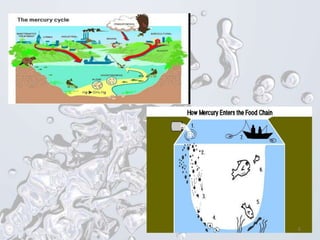
• Travels throughout atmosphere and settles in
oceans and waterways
• Bacteria convert it to toxic methyl-mercury
3
Mercury
• Mercury used to capture gold particles as an
amalgam and used in gold mines.
• Other sources of mercury:
–Deforestation and runoff
–Industrial boilers
–Tooth fillings
–Car batteries
–Cosmetics
4
Toxic Level of Mercury
• Mercury levels in air, blood, urine:
–“Normal” level = 5 mcg/l
–20 mcg/l – 100 mcg/l = subacute
toxicity, consider treatment
–>100 mcg/l in blood and/or urine =
toxic, treat
5
6
7
8
9
10
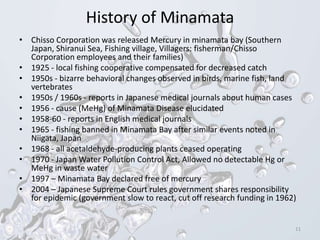
History of Minamata
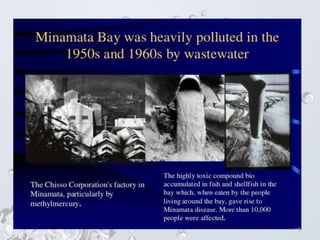
• Chisso Corporation was released Mercury in minamata bay (Southern
Japan, Shiranui Sea, Fishing village, Villagers: fisherman/Chisso
Corporation employees and their families)
• 1925 - local fishing cooperative compensated for decreased catch
• 1950s - bizarre behavioral changes observed in birds, marine fish, land
vertebrates
• 1950s / 1960s - reports in Japanese medical journals about human cases
• 1956 - cause (MeHg) of Minamata Disease elucidated
• 1958-60 - reports in English medical journals
• 1965 - fishing banned in Minamata Bay after similar events noted in
Niigata, Japan
• 1968 - all acetaldehyde-producing plants ceased operating
• 1970 - Japan Water Pollution Control Act, Allowed no detectable Hg or
MeHg in waste water
• 1997 – Minamata Bay declared free of mercury
• 2004 – Japanese Supreme Court rules government shares responsibility
for epidemic (government slow to react, cut off research funding in 1962)
11
12
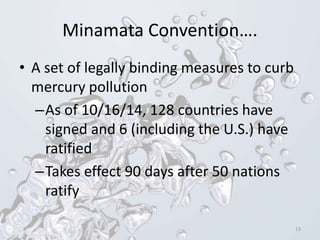
Minamata Convention….
• A set of legally binding measures to curb
mercury pollution
–As of 10/16/14, 128 countries have
signed and 6 (including the U.S.) have
ratified
–Takes effect 90 days after 50 nations
ratify
13
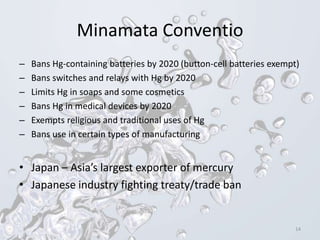
Minamata Conventio
– Bans Hg-containing batteries by 2020 (button-cell batteries exempt)
– Bans switches and relays with Hg by 2020
– Limits Hg in soaps and some cosmetics
– Bans Hg in medical devices by 2020
– Exempts religious and traditional uses of Hg
– Bans use in certain types of manufacturing
• Japan – Asia’s largest exporter of mercury
• Japanese industry fighting treaty/trade ban
14
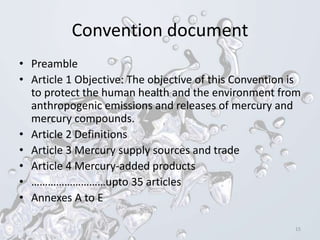
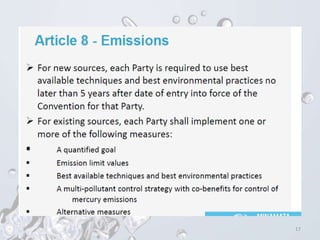
Convention document
• Preamble
• Article 1 Objective: The objective of this Convention is
to protect the human health and the environment from
anthropogenic emissions and releases of mercury and
mercury compounds.
• Article 2 Definitions
• Article 3 Mercury supply sources and trade
• Article 4 Mercury-added products
• ………………………upto 35 articles
• Annexes A to E
15
16
17
Thank You!!

Minamata convention, Mercury law

  • 1.
  • 2.
    Mercury…. • Mercury ore(cinnabar) used as pigment since Neolithic era (found in 10,000 yr old cave paintings) • Ancient Romans, Chinese used as rouge makeup • Pigment mixed with wax for document seals in Middle Ages • Syphilis Treatment - 15th Century onward - abandoned 1940 for penicillin • Recognized as cause of disease in 19th Century (Hunter-Russell Syndrome) • Used in late-19th Century to extract silver from pulverized ore • Diuretic (used through mid-20th Century) • Used as a preservative in latex paints until banned by EPA in 1991 2
  • 3.
    Mercury • Hg minersat high risk • Found today in Chinese medications, skin lightening creams, hair dyes • Half from volcanic eruptions and other geological processes • Released into air by coal combustion, industrial processes, mining, and waste disposal – 4500 tons/yr • Travels throughout atmosphere and settles in oceans and waterways • Bacteria convert it to toxic methyl-mercury 3
  • 4.
    Mercury • Mercury usedto capture gold particles as an amalgam and used in gold mines. • Other sources of mercury: –Deforestation and runoff –Industrial boilers –Tooth fillings –Car batteries –Cosmetics 4
  • 5.
    Toxic Level ofMercury • Mercury levels in air, blood, urine: –“Normal” level = 5 mcg/l –20 mcg/l – 100 mcg/l = subacute toxicity, consider treatment –>100 mcg/l in blood and/or urine = toxic, treat 5
  • 6.
  • 7.
  • 8.
  • 9.
  • 10.
  • 11.
    History of Minamata •Chisso Corporation was released Mercury in minamata bay (Southern Japan, Shiranui Sea, Fishing village, Villagers: fisherman/Chisso Corporation employees and their families) • 1925 - local fishing cooperative compensated for decreased catch • 1950s - bizarre behavioral changes observed in birds, marine fish, land vertebrates • 1950s / 1960s - reports in Japanese medical journals about human cases • 1956 - cause (MeHg) of Minamata Disease elucidated • 1958-60 - reports in English medical journals • 1965 - fishing banned in Minamata Bay after similar events noted in Niigata, Japan • 1968 - all acetaldehyde-producing plants ceased operating • 1970 - Japan Water Pollution Control Act, Allowed no detectable Hg or MeHg in waste water • 1997 – Minamata Bay declared free of mercury • 2004 – Japanese Supreme Court rules government shares responsibility for epidemic (government slow to react, cut off research funding in 1962) 11
  • 12.
  • 13.
    Minamata Convention…. • Aset of legally binding measures to curb mercury pollution –As of 10/16/14, 128 countries have signed and 6 (including the U.S.) have ratified –Takes effect 90 days after 50 nations ratify 13
  • 14.
    Minamata Conventio – BansHg-containing batteries by 2020 (button-cell batteries exempt) – Bans switches and relays with Hg by 2020 – Limits Hg in soaps and some cosmetics – Bans Hg in medical devices by 2020 – Exempts religious and traditional uses of Hg – Bans use in certain types of manufacturing • Japan – Asia’s largest exporter of mercury • Japanese industry fighting treaty/trade ban 14
  • 15.
    Convention document • Preamble •Article 1 Objective: The objective of this Convention is to protect the human health and the environment from anthropogenic emissions and releases of mercury and mercury compounds. • Article 2 Definitions • Article 3 Mercury supply sources and trade • Article 4 Mercury-added products • ………………………upto 35 articles • Annexes A to E 15
  • 16.
  • 17.
  • 18.