The new CQC approach to hospital
inspection
Inspection as a driver for quality
improvement
Professor Sir Mike Richards
Chief Inspector of Hospitals
Quality Watch Conference
9th October 2013

1
Our purpose and role

Our purpose
We make sure health and social care services
provide people with safe, effective,
compassionate, high-quality care and we
encourage care services to improve

Our role
We monitor, inspect and regulate services to
make sure they meet fundamental standards
of quality and safety and we publish what we
find, including performance ratings to help
people choose care
2
Asking the right questions about
quality and safety
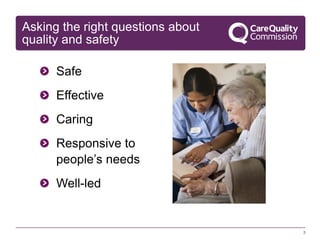
Safe
Effective
Caring
Responsive to
people’s needs
Well-led

3
The new CQC hospital inspection
programme

• We recognise that the previous CQC approach was flawed – but
it had good elements, in particular in relation to rigorous evidence
gathering.

• We will build on the Keogh Reviews process for 14 acute
hospitals with high mortality.

• We are aiming to bring together the best of both approaches (and
more)

• We aim to be robust, fair, transparent and (hopefully) helpful.

4
The Chief Inspector of Hospitals’ task
• To inspect all acute NHS hospital Trusts/FTs by December 2015.
• To assess whether a Trust is safe, effective, caring, responsive to
patients’ needs and well-led.

• To provide a rating on each Trust:
Outstanding
Good
Requires improvement
Inadequate

• To re-inspect when necessary and to undertake focused reviews in
response to specific concerns.

• To extend the programme to include mental health, community service
and ambulance trusts (and independent sector equivalents).

5
CQC’s approach

• 3 phases:
1. Preparation
2. Site visits
3. Report

6
Phase 1: Preparation

• Development of a datapack combining
• National surveillance data
(Safety, effectiveness, caring, responsiveness, well-led)

• Local data from the Trust and from others
(e.g. CCG, NHS England, HEE, Healthwatch, Royal Colleges,
GMC)

• Development of Key Lines of Enquiry (KLOEs)
• Recruitment of inspection team members

7
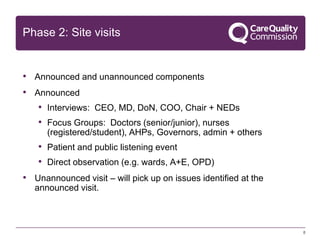
Phase 2: Site visits

• Announced and unannounced components

• Announced
• Interviews: CEO, MD, DoN, COO, Chair + NEDs
• Focus Groups: Doctors (senior/junior), nurses
(registered/student), AHPs, Governors, admin + others

• Patient and public listening event
• Direct observation (e.g. wards, A+E, OPD)
• Unannounced visit – will pick up on issues identified at the
announced visit.

8
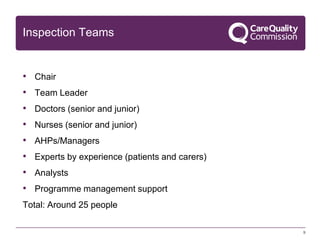
Inspection Teams

• Chair

•
•
•
•
•
•
•

Team Leader
Doctors (senior and junior)
Nurses (senior and junior)

AHPs/Managers
Experts by experience (patients and carers)
Analysts
Programme management support

Total: Around 25 people
9
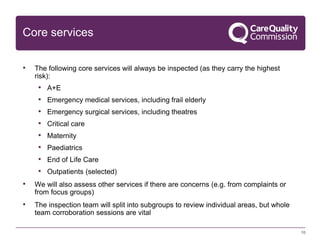
Core services
•

The following core services will always be inspected (as they carry the highest
risk):

•
•
•
•
•
•
•
•

A+E
Emergency medical services, including frail elderly
Emergency surgical services, including theatres
Critical care
Maternity
Paediatrics
End of Life Care
Outpatients (selected)

•

We will also assess other services if there are concerns (e.g. from complaints or
from focus groups)

•

The inspection team will split into subgroups to review individual areas, but whole
team corroboration sessions are vital
10
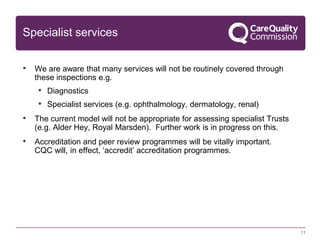
Specialist services
• We are aware that many services will not be routinely covered through
these inspections e.g.

• Diagnostics
• Specialist services (e.g. ophthalmology, dermatology, renal)
• The current model will not be appropriate for assessing specialist Trusts
(e.g. Alder Hey, Royal Marsden). Further work is in progress on this.

• Accreditation and peer review programmes will be vitally important.
CQC will, in effect, ‘accredit’ accreditation programmes.

11
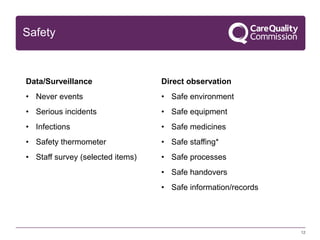
Safety

Data/Surveillance

Direct observation

• Never events

• Safe environment

• Serious incidents

• Safe equipment

• Infections

• Safe medicines

• Safety thermometer

• Safe staffing*

• Staff survey (selected items)

• Safe processes
• Safe handovers
• Safe information/records

12
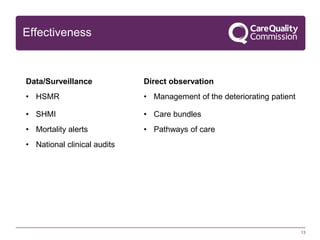
Effectiveness

Data/Surveillance

Direct observation

• HSMR

• Management of the deteriorating patient

• SHMI

• Care bundles

• Mortality alerts

• Pathways of care

• National clinical audits

13
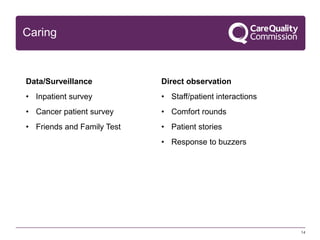
Caring

Data/Surveillance

Direct observation

• Inpatient survey

• Staff/patient interactions

• Cancer patient survey

• Comfort rounds

• Friends and Family Test

• Patient stories
• Response to buzzers

14
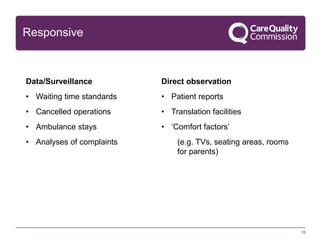
Responsive

Data/Surveillance

Direct observation

• Waiting time standards

• Patient reports

• Cancelled operations

• Translation facilities

• Ambulance stays

• ‘Comfort factors’

• Analyses of complaints

(e.g. TVs, seating areas, rooms
for parents)

15
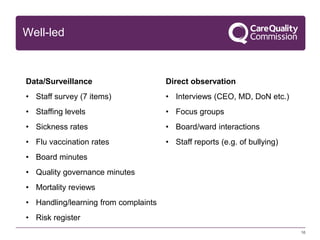
Well-led

Data/Surveillance

Direct observation

• Staff survey (7 items)

• Interviews (CEO, MD, DoN etc.)

• Staffing levels

• Focus groups

• Sickness rates

• Board/ward interactions

• Flu vaccination rates

• Staff reports (e.g. of bullying)

• Board minutes
• Quality governance minutes
• Mortality reviews
• Handling/learning from complaints
• Risk register
16
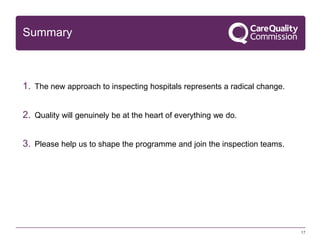
Summary

1. The new approach to inspecting hospitals represents a radical change.
2. Quality will genuinely be at the heart of everything we do.

3. Please help us to shape the programme and join the inspection teams.

17

Mike Richards: Inspection as a driver for improving quality

  • 1.
    The new CQCapproach to hospital inspection Inspection as a driver for quality improvement Professor Sir Mike Richards Chief Inspector of Hospitals Quality Watch Conference 9th October 2013 1
  • 2.
    Our purpose androle Our purpose We make sure health and social care services provide people with safe, effective, compassionate, high-quality care and we encourage care services to improve Our role We monitor, inspect and regulate services to make sure they meet fundamental standards of quality and safety and we publish what we find, including performance ratings to help people choose care 2
  • 3.
    Asking the rightquestions about quality and safety Safe Effective Caring Responsive to people’s needs Well-led 3
  • 4.
    The new CQChospital inspection programme • We recognise that the previous CQC approach was flawed – but it had good elements, in particular in relation to rigorous evidence gathering. • We will build on the Keogh Reviews process for 14 acute hospitals with high mortality. • We are aiming to bring together the best of both approaches (and more) • We aim to be robust, fair, transparent and (hopefully) helpful. 4
  • 5.
    The Chief Inspectorof Hospitals’ task • To inspect all acute NHS hospital Trusts/FTs by December 2015. • To assess whether a Trust is safe, effective, caring, responsive to patients’ needs and well-led. • To provide a rating on each Trust: Outstanding Good Requires improvement Inadequate • To re-inspect when necessary and to undertake focused reviews in response to specific concerns. • To extend the programme to include mental health, community service and ambulance trusts (and independent sector equivalents). 5
  • 6.
    CQC’s approach • 3phases: 1. Preparation 2. Site visits 3. Report 6
  • 7.
    Phase 1: Preparation •Development of a datapack combining • National surveillance data (Safety, effectiveness, caring, responsiveness, well-led) • Local data from the Trust and from others (e.g. CCG, NHS England, HEE, Healthwatch, Royal Colleges, GMC) • Development of Key Lines of Enquiry (KLOEs) • Recruitment of inspection team members 7
  • 8.
    Phase 2: Sitevisits • Announced and unannounced components • Announced • Interviews: CEO, MD, DoN, COO, Chair + NEDs • Focus Groups: Doctors (senior/junior), nurses (registered/student), AHPs, Governors, admin + others • Patient and public listening event • Direct observation (e.g. wards, A+E, OPD) • Unannounced visit – will pick up on issues identified at the announced visit. 8
  • 9.
    Inspection Teams • Chair • • • • • • • TeamLeader Doctors (senior and junior) Nurses (senior and junior) AHPs/Managers Experts by experience (patients and carers) Analysts Programme management support Total: Around 25 people 9
  • 10.
    Core services • The followingcore services will always be inspected (as they carry the highest risk): • • • • • • • • A+E Emergency medical services, including frail elderly Emergency surgical services, including theatres Critical care Maternity Paediatrics End of Life Care Outpatients (selected) • We will also assess other services if there are concerns (e.g. from complaints or from focus groups) • The inspection team will split into subgroups to review individual areas, but whole team corroboration sessions are vital 10
  • 11.
    Specialist services • Weare aware that many services will not be routinely covered through these inspections e.g. • Diagnostics • Specialist services (e.g. ophthalmology, dermatology, renal) • The current model will not be appropriate for assessing specialist Trusts (e.g. Alder Hey, Royal Marsden). Further work is in progress on this. • Accreditation and peer review programmes will be vitally important. CQC will, in effect, ‘accredit’ accreditation programmes. 11
  • 12.
    Safety Data/Surveillance Direct observation • Neverevents • Safe environment • Serious incidents • Safe equipment • Infections • Safe medicines • Safety thermometer • Safe staffing* • Staff survey (selected items) • Safe processes • Safe handovers • Safe information/records 12
  • 13.
    Effectiveness Data/Surveillance Direct observation • HSMR •Management of the deteriorating patient • SHMI • Care bundles • Mortality alerts • Pathways of care • National clinical audits 13
  • 14.
    Caring Data/Surveillance Direct observation • Inpatientsurvey • Staff/patient interactions • Cancer patient survey • Comfort rounds • Friends and Family Test • Patient stories • Response to buzzers 14
  • 15.
    Responsive Data/Surveillance Direct observation • Waitingtime standards • Patient reports • Cancelled operations • Translation facilities • Ambulance stays • ‘Comfort factors’ • Analyses of complaints (e.g. TVs, seating areas, rooms for parents) 15
  • 16.
    Well-led Data/Surveillance Direct observation • Staffsurvey (7 items) • Interviews (CEO, MD, DoN etc.) • Staffing levels • Focus groups • Sickness rates • Board/ward interactions • Flu vaccination rates • Staff reports (e.g. of bullying) • Board minutes • Quality governance minutes • Mortality reviews • Handling/learning from complaints • Risk register 16
  • 17.
    Summary 1. The newapproach to inspecting hospitals represents a radical change. 2. Quality will genuinely be at the heart of everything we do. 3. Please help us to shape the programme and join the inspection teams. 17

Editor's Notes

  • #2 Background Strategy 2013 - 2016 Raising standards, putting people first, published April 2013 June 2013 First of a series of consultations on significant changes – Principles of new model for all care services Detail of NHS intelligence model, inspection and ratings Regulations underpinning the changes Further consultation in October 2013 on further detail and guidance on NHS regulation, fundamentals of care Co-development, engagement and further consultation throughout
  • #3 Thousands of people - members of the public, our staff, providers, professionals and others – have given their views during CQC’s consultation on its strategy for the next three years
  • #4 Safe - People are protected from physical, psychological or emotional harm. Effective - in line with nationally-recognised guidelines. Improving health or independence. Caring - People are treated with compassion, respect and dignity and that care is tailored to their needs. Well-led - effective leadership, governance and clinical involvement at all levels. Open, fair and transparent culture. Using people’s views to make improvements. Responsive to people’s needs - treatment and care at the right time, without undue delay, and that they are listened to in a way that responds to their needs and concerns.