MID 2163
PATHOLOGY
TOPIC 2:
CELL INJURY AND
 ADAPTATIONS
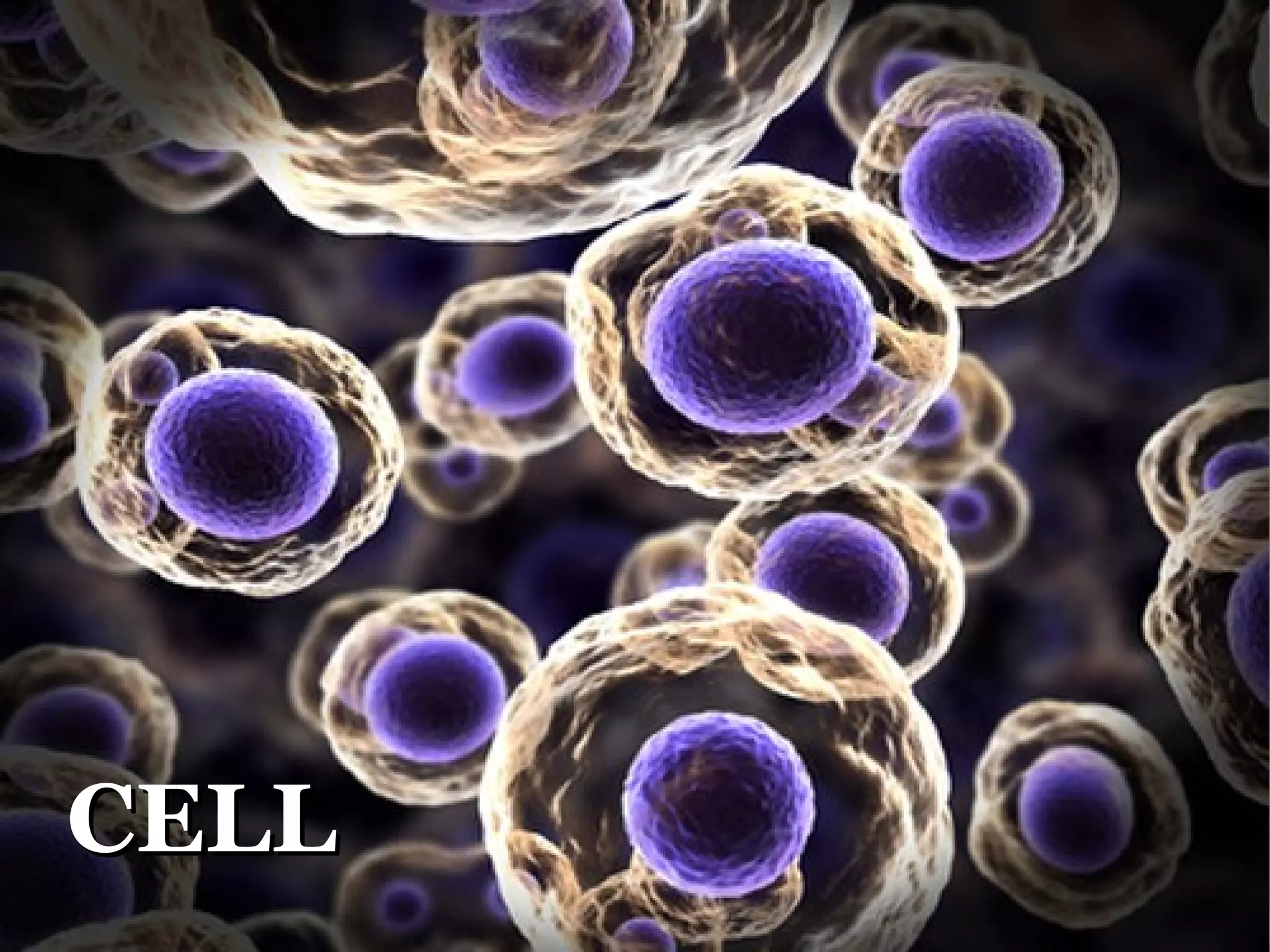
CELL
Cell
Basic structural and functional unit in human
 body
Human contain almost 100 trillion cells
Different cells in tissues constantly interact
 with each other = cell-cell and cell-matrix
Cell
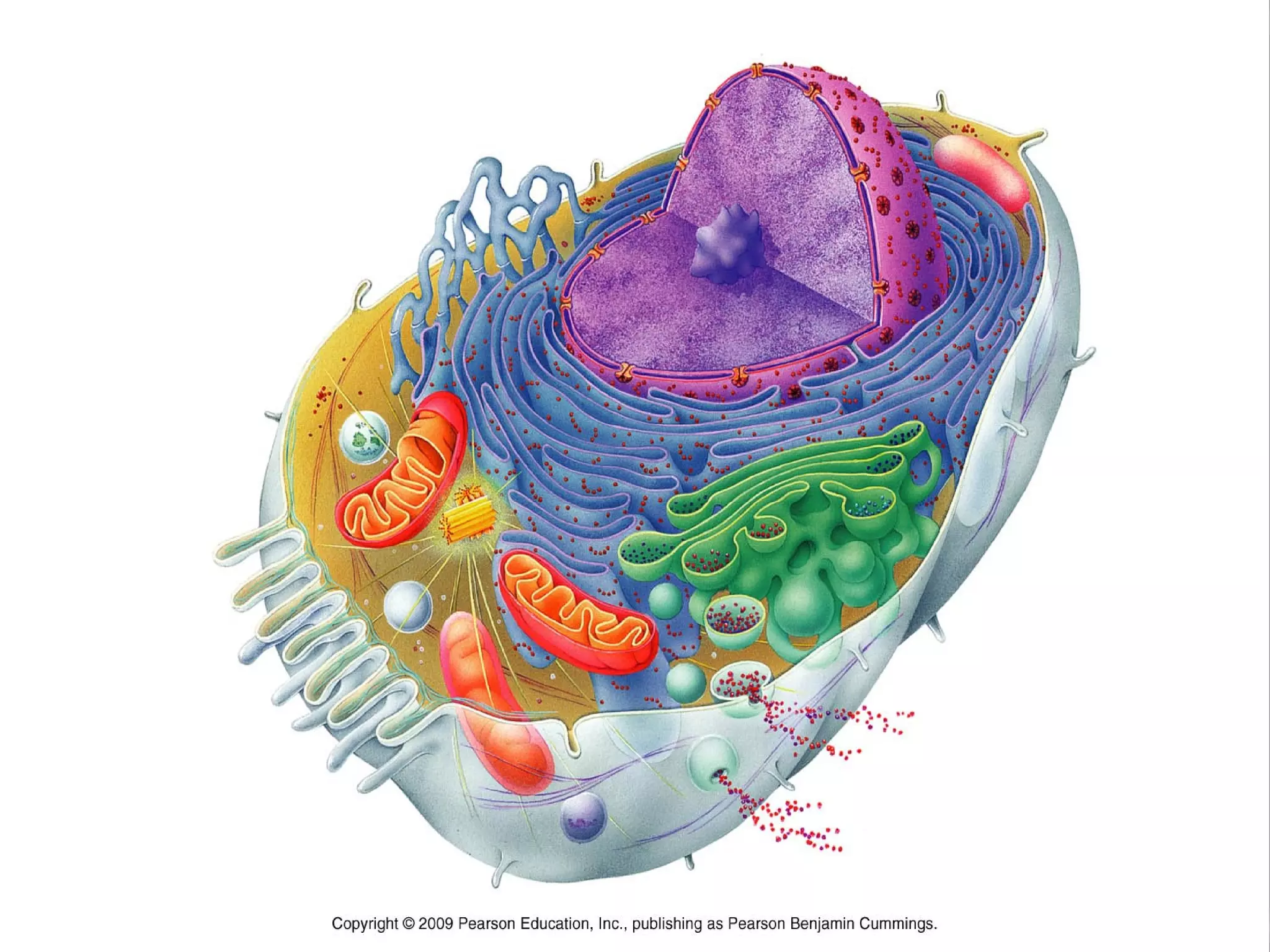
3 principle components
   – Plasma membrane
   – Nucleus
   – Cytoplasm
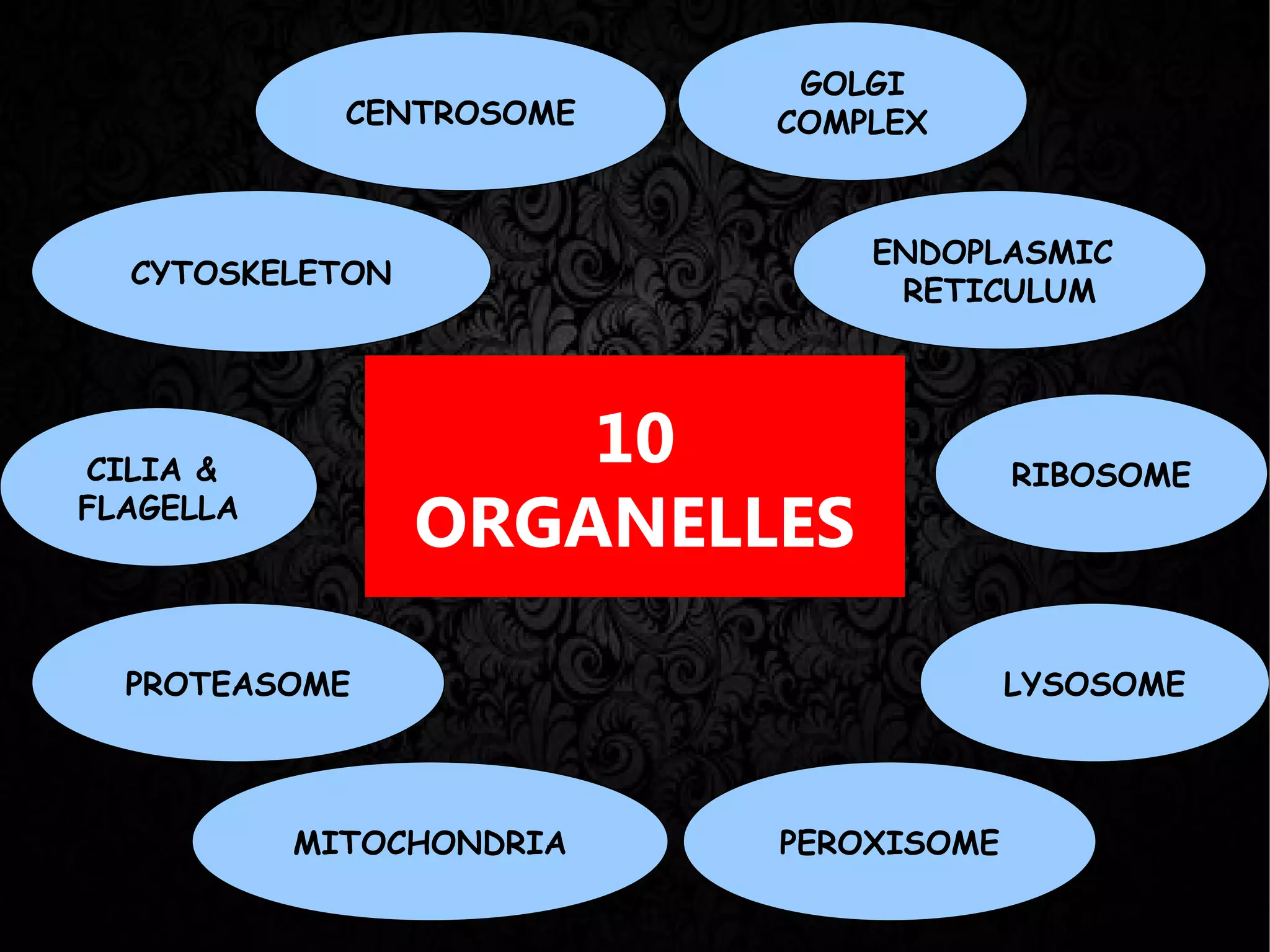
GOLGI
             CENTROSOME   COMPLEX


                              ENDOPLASMIC
  CYTOSKELETON
                               RETICULUM


CILIA &
                     10                RIBOSOME
FLAGELLA
                 ORGANELLES

  PROTEASOME                           LYSOSOME


           MITOCHONDRIA   PEROXISOME
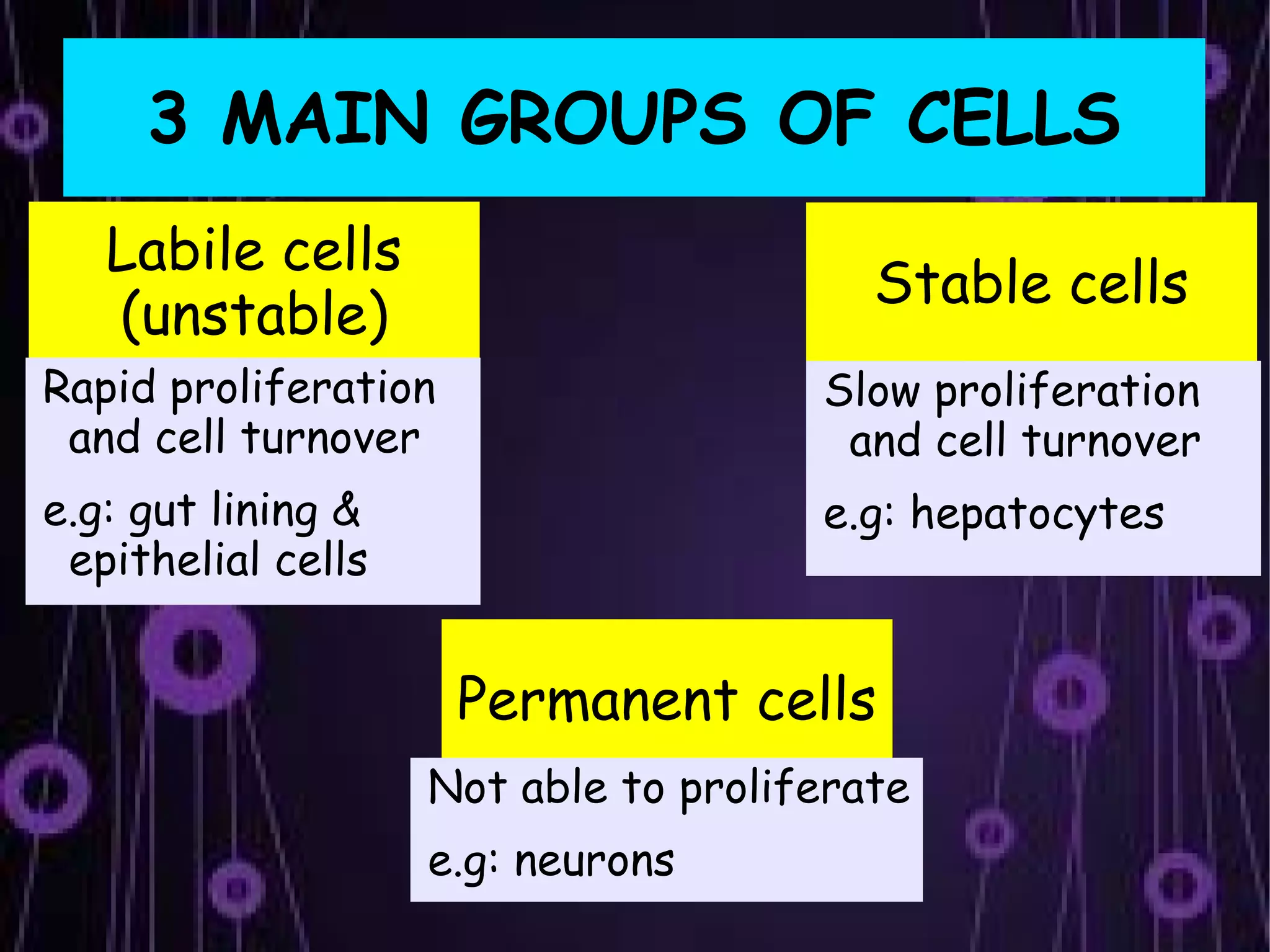
3 MAIN GROUPS OF CELLS
   Labile cells
                                         Stable cells
   (unstable)
Rapid proliferation                   Slow proliferation
 and cell turnover                     and cell turnover
e.g: gut lining &                     e.g: hepatocytes
 epithelial cells


                      Permanent cells
                    Not able to proliferate
                    e.g: neurons
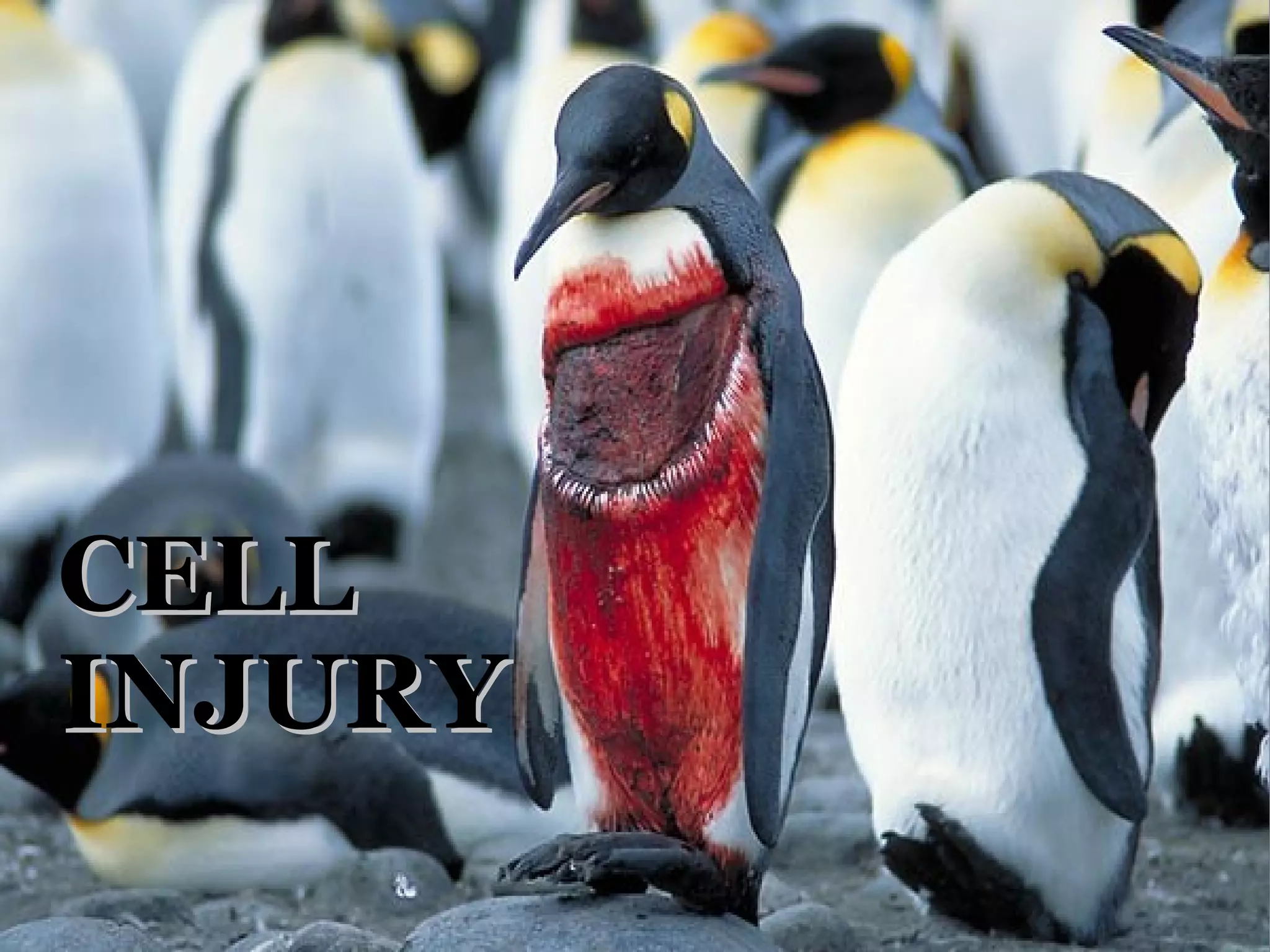
CELL
INJURY
Cell Injury
Cells are active participants in their
 environment
    – constantly adjusting their structure &
      function to accommodate changing
      demands and extracellular stresses
Cells tend to maintain their normal condition
 = homeostasis
Cell Injury
Cells encounter physiologic stresses or
 pathologic stimuli = undergo adaptation
    –   achieving a new steady state and preserving
        viability and function
Ultimate fate of a cell (once exposed to a
 harmful stimulus) depends on the type,
 severity & duration of the stimulus and also
 the type of cells
Cell Injury
Example:
   – Brain cells, heart cells susceptible to
     hypoxia and ischemia
   – liver cells susceptible to chemical injury
   – Calf muscle tolerates 2-3h of ischemia
   – Cardiac muscle dies in 20-30 min
Cell Injury
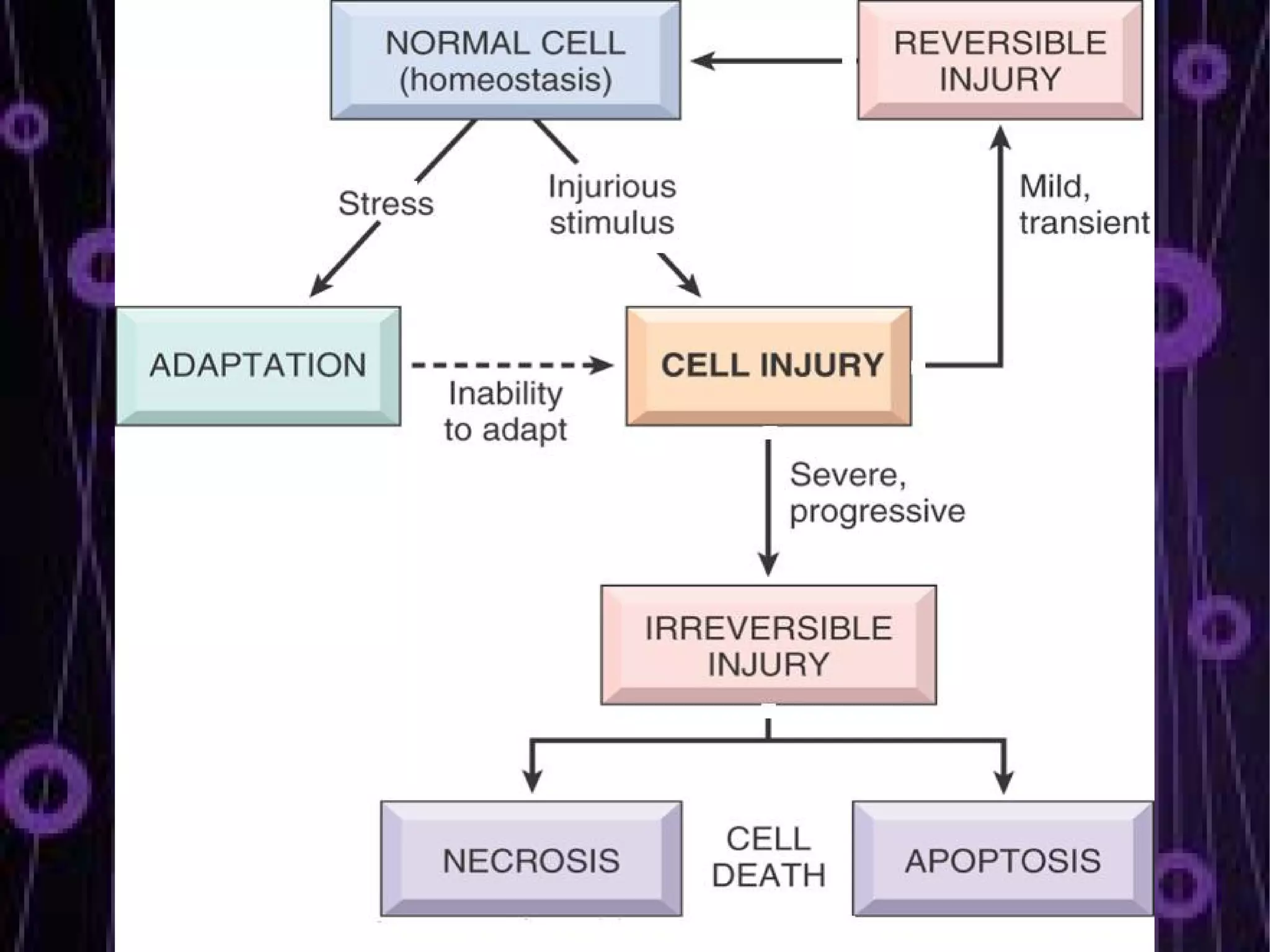
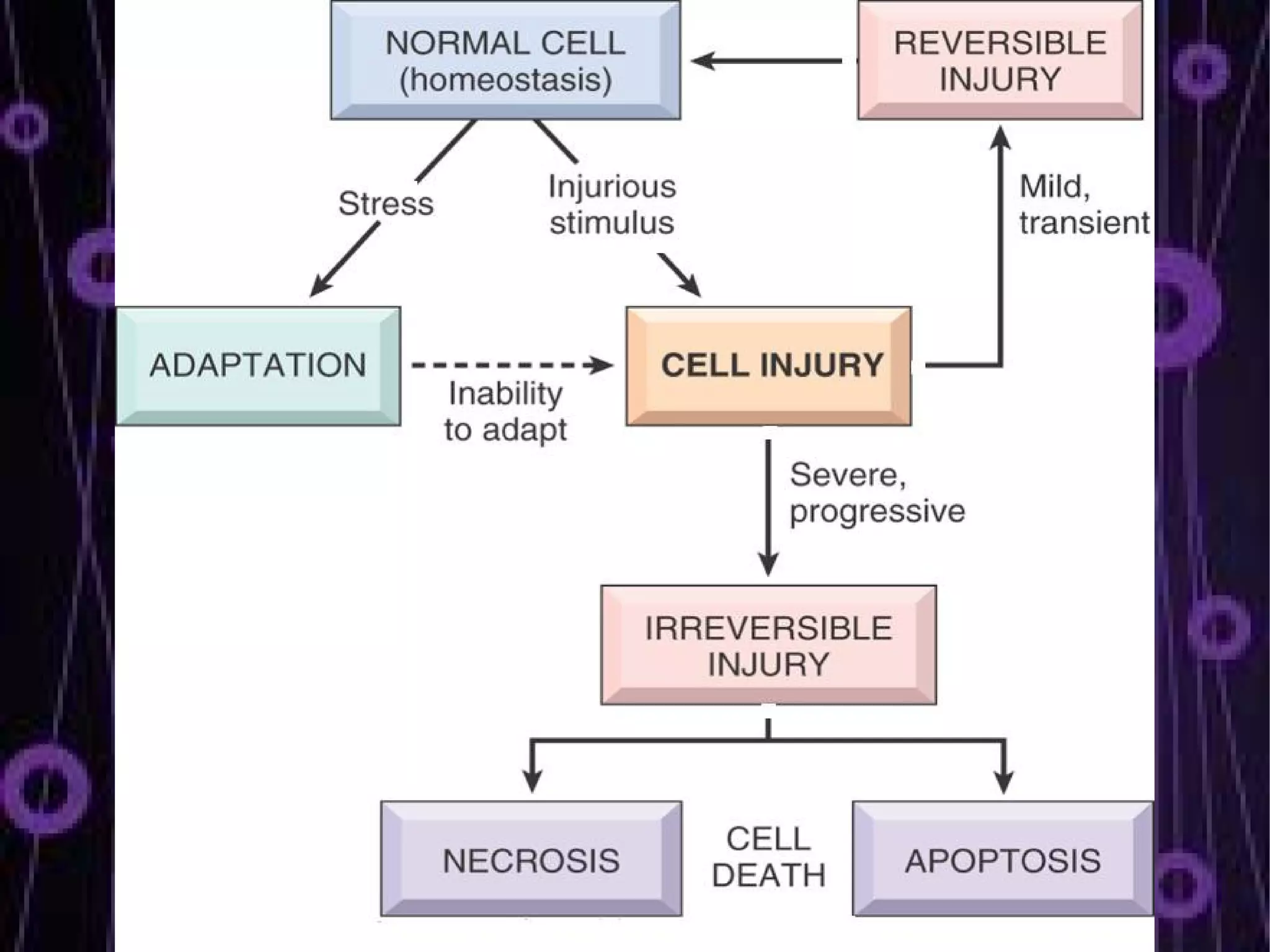
Cell exposed to injurious agents, the
 possible outcomes are:
    i. The cell may adapt to the situation
    ii. The cell may require reversible injury
    iii. The cell may obtained irreversible injury and
         may die
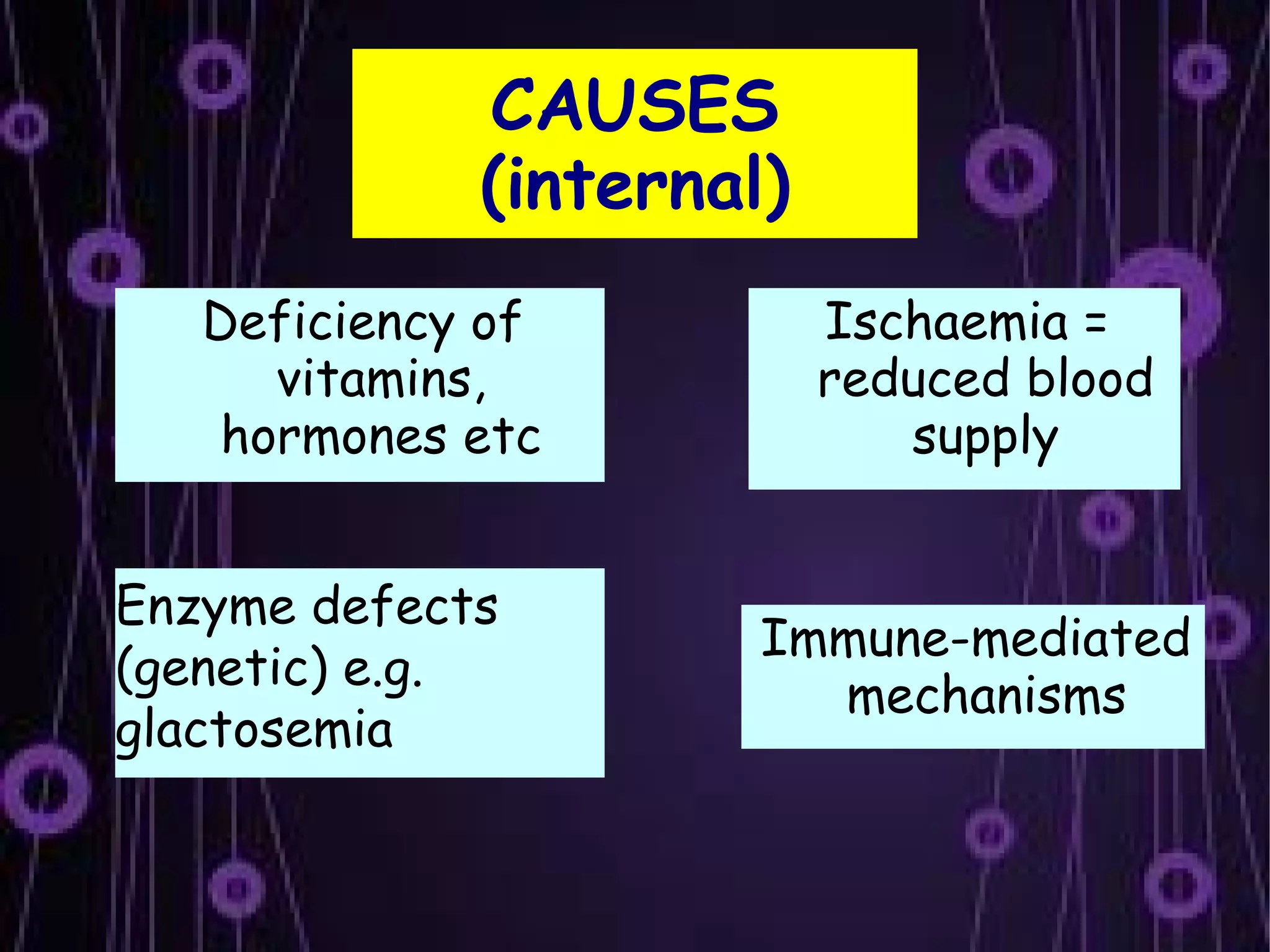
CAUSES
             (internal)
   Deficiency of          Ischaemia =
      vitamins,           reduced blood
    hormones etc             supply


Enzyme defects
                      Immune-mediated
(genetic) e.g.
                        mechanisms
glactosemia
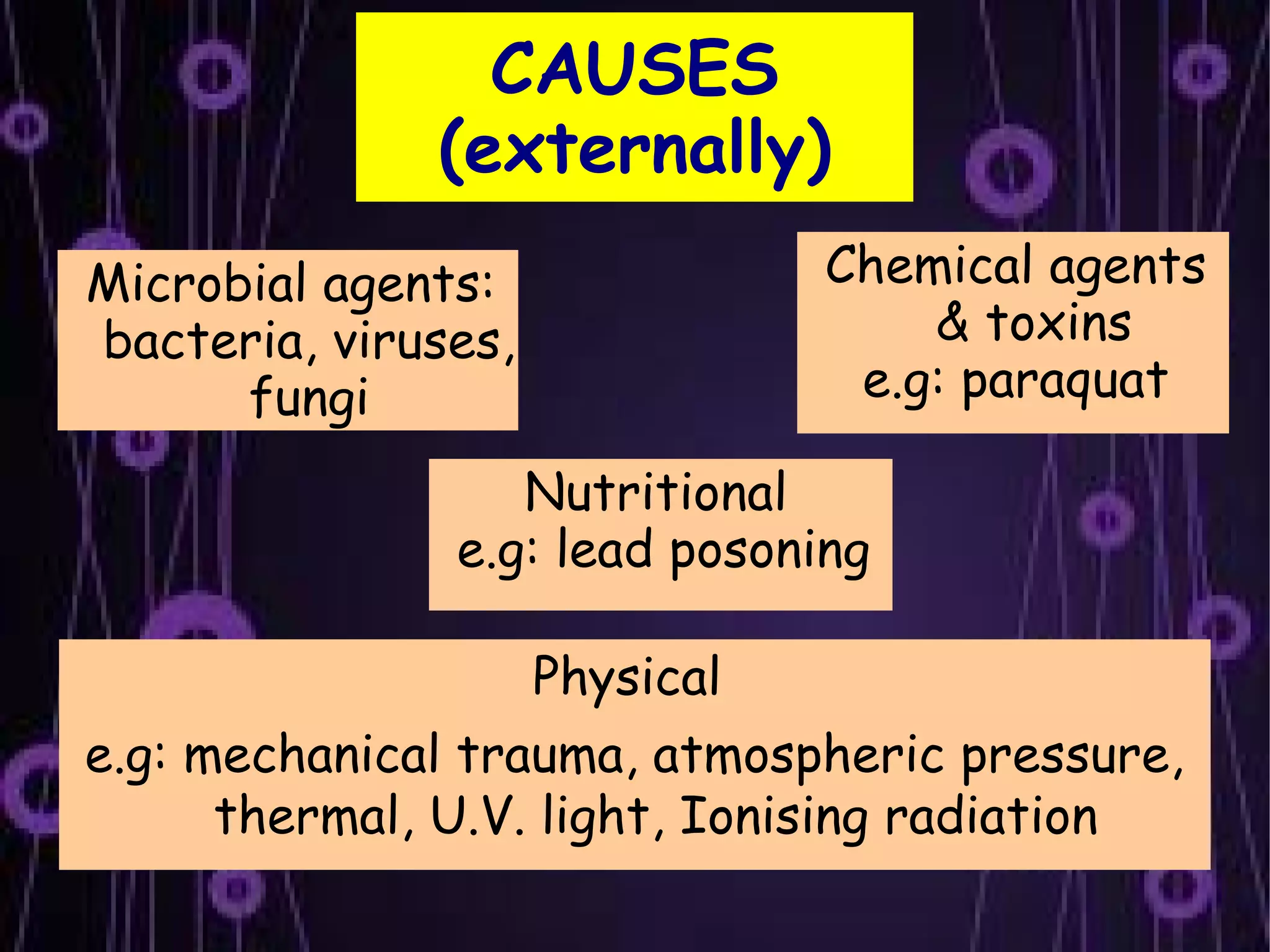
CAUSES
              (externally)
Microbial agents:               Chemical agents
bacteria, viruses,                  & toxins
      fungi                      e.g: paraquat

                  Nutritional
               e.g: lead posoning

                     Physical
e.g: mechanical trauma, atmospheric pressure,
      thermal, U.V. light, Ionising radiation
Cell Injury
Injury to a certain component in cell will lead
 to its dysfunction
The cellular components that are prone to
 injury are:
    →   Plasma membrane
    →   Mitochondria
    →   Nucleus
    →   Lysosomes
Plasma Membrane
Functions:
   – Maintain integrity of cell
   – Contact with extracellular environment =
     cell surface receptors
   – Passage of ions (through permeable
     channels) & complex molecule (pinocytosis
     or phagocytosis)
Plasma Membrane
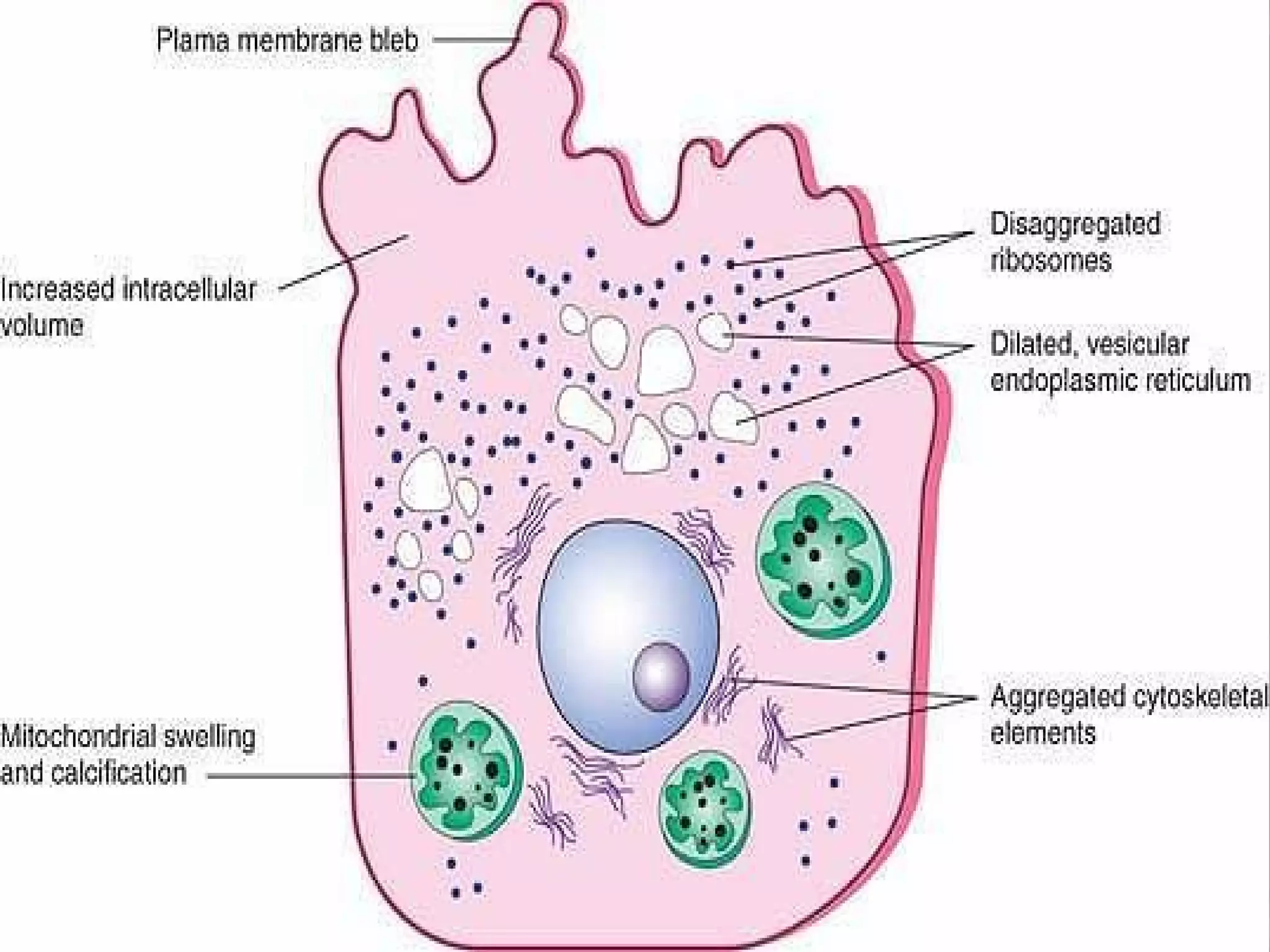
 If the cell injured, blebs of the cellular plasma
 membrane noted
     –   Focal extrusion of the cytoplasm
     –   Cell detach from the membrane
 Contact with extracellular environment = cell
 surface receptors
 Passage of ions (through permeable channels) &
 complex molecule (pinocytosis or phagocytosis)
Plasma Membrane
Effects of plasma membrane injury:
   – Loss of structural integrity - cause cell to
      rupture and die
   – Loss of function - water enters cells and cause
      cloudy swelling hence electrolyte imbalance within
      cell
   – Deposition of lipofuscin (brown atrophy) -
      brown pigments deposited within cytoplasm eg in
      myocardial cells and liver cells
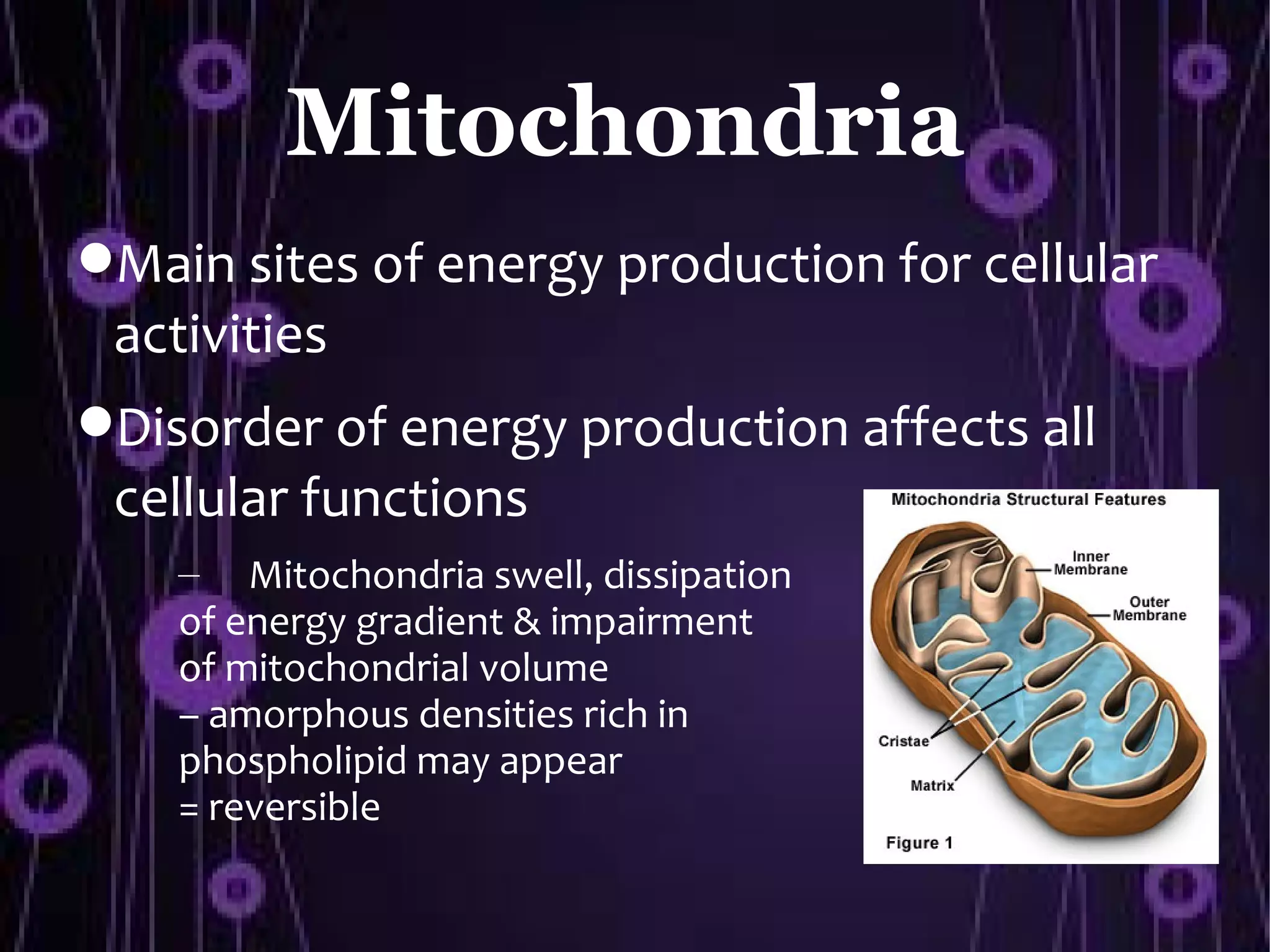
Mitochondria
Main sites of energy production for cellular
 activities
Disorder of energy production affects all
 cellular functions
    – Mitochondria swell, dissipation
    of energy gradient & impairment
    of mitochondrial volume
    – amorphous densities rich in
    phospholipid may appear
    = reversible
Nucleus
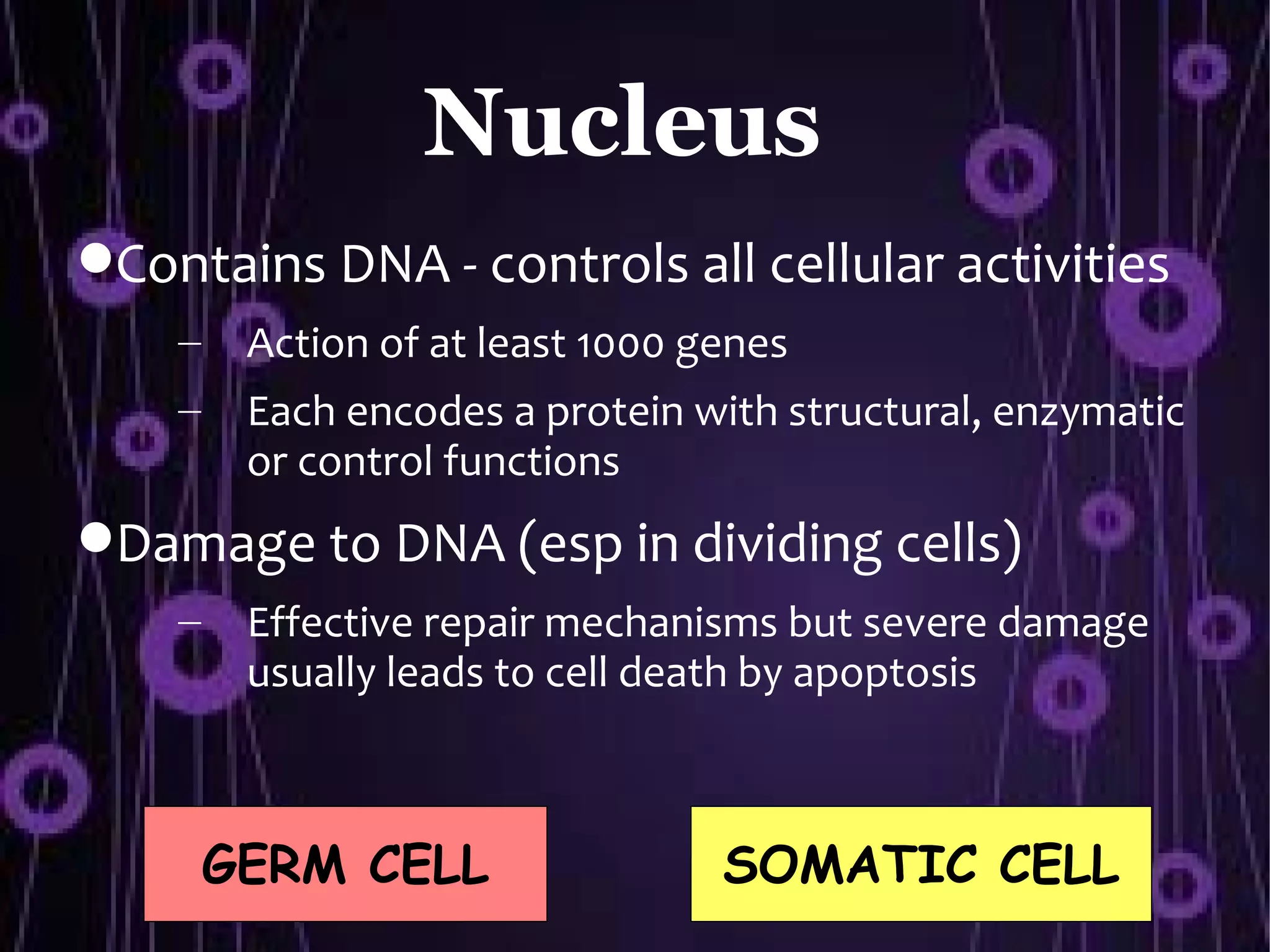
Contains DNA - controls all cellular activities
    –    Action of at least 1000 genes
    –    Each encodes a protein with structural, enzymatic
         or control functions
Damage to DNA (esp in dividing cells)
    –    Effective repair mechanisms but severe damage
         usually leads to cell death by apoptosis


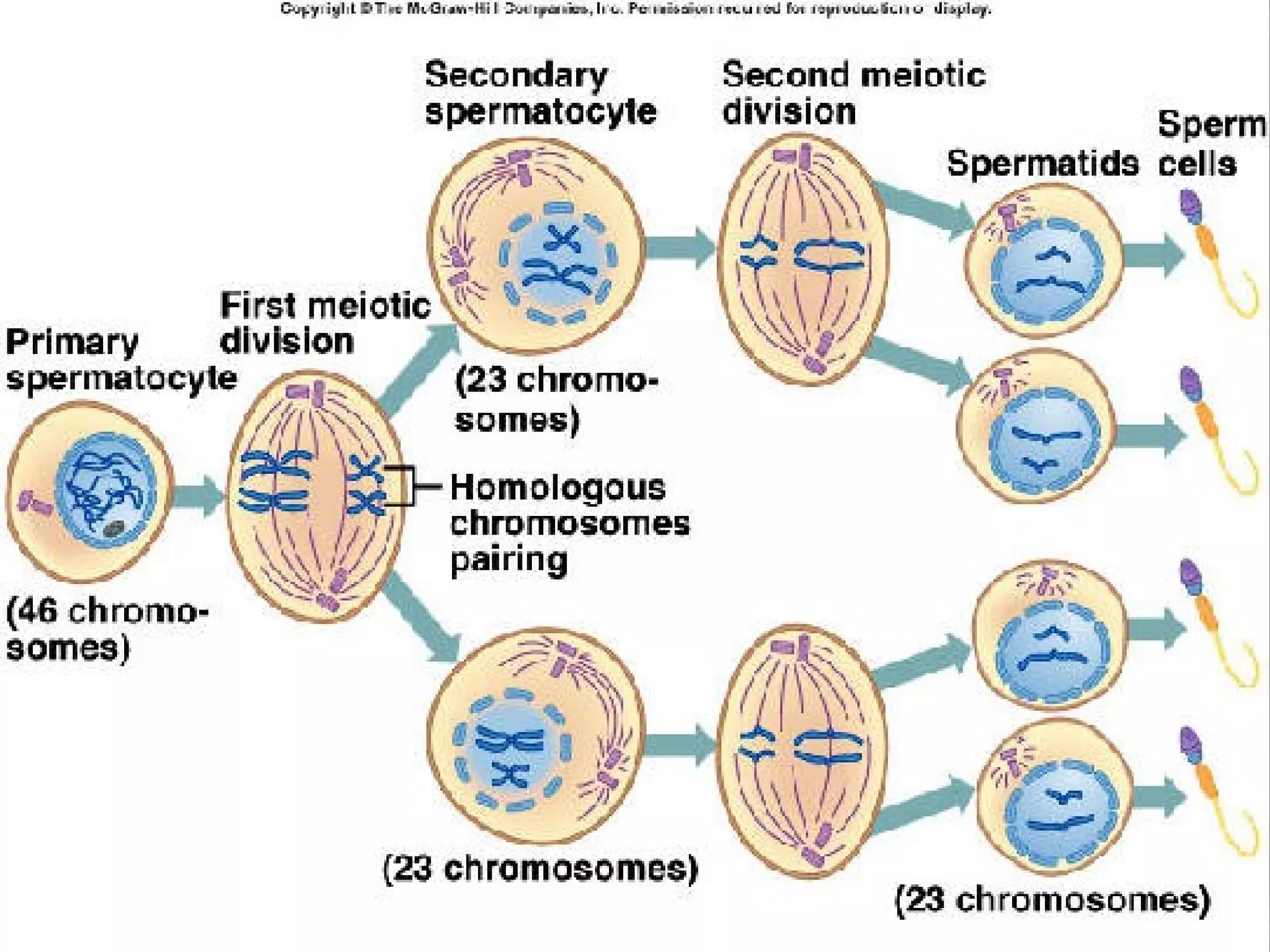
        GERM CELL                 SOMATIC CELL
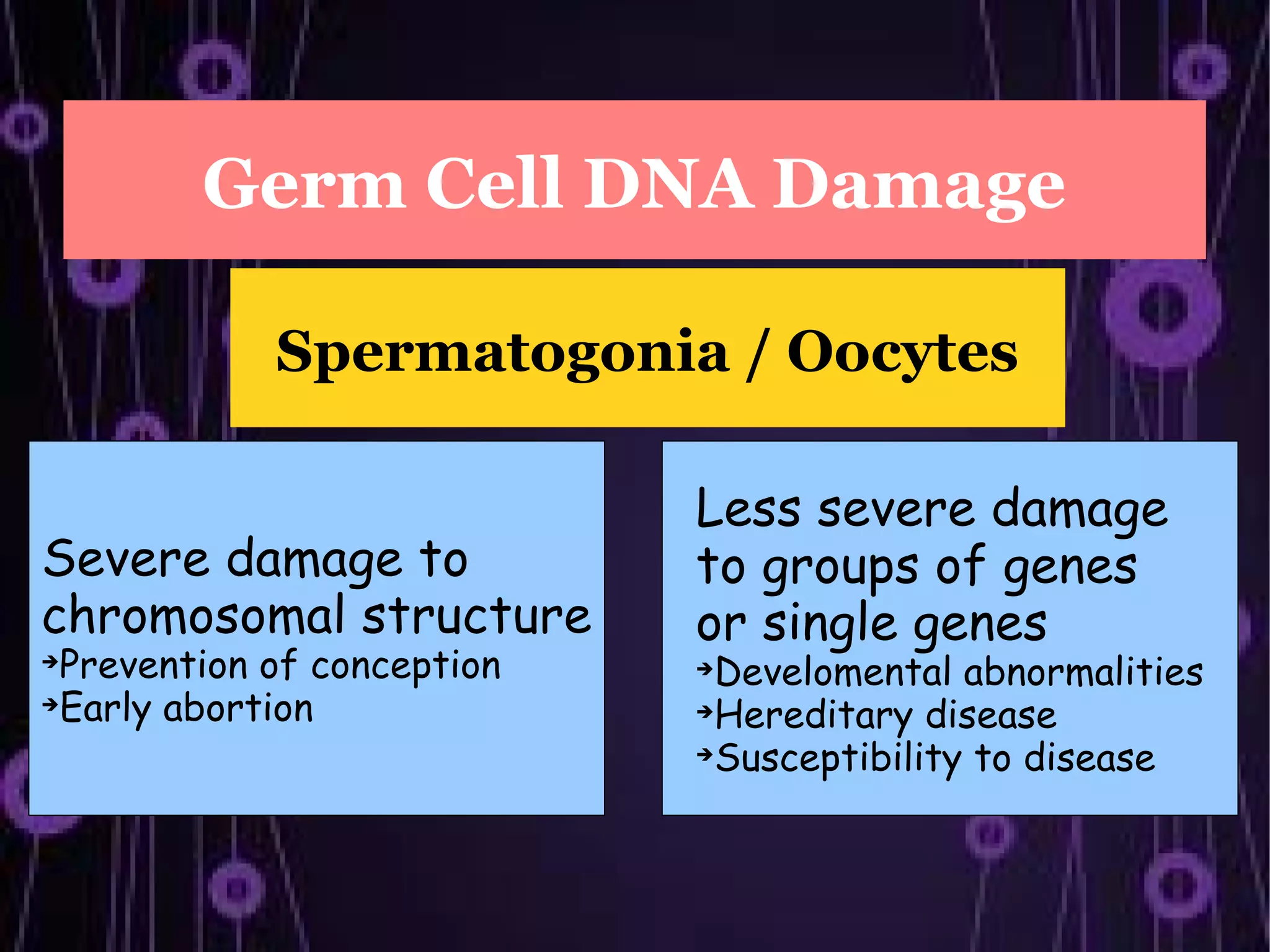
Germ Cell DNA Damage

            Spermatogonia / Oocytes

                            Less severe damage
Severe damage to            to groups of genes
chromosomal structure       or single genes

 Prevention of conception   
                             Develomental abnormalities

 Early abortion             
                             Hereditary disease
                            
                             Susceptibility to disease
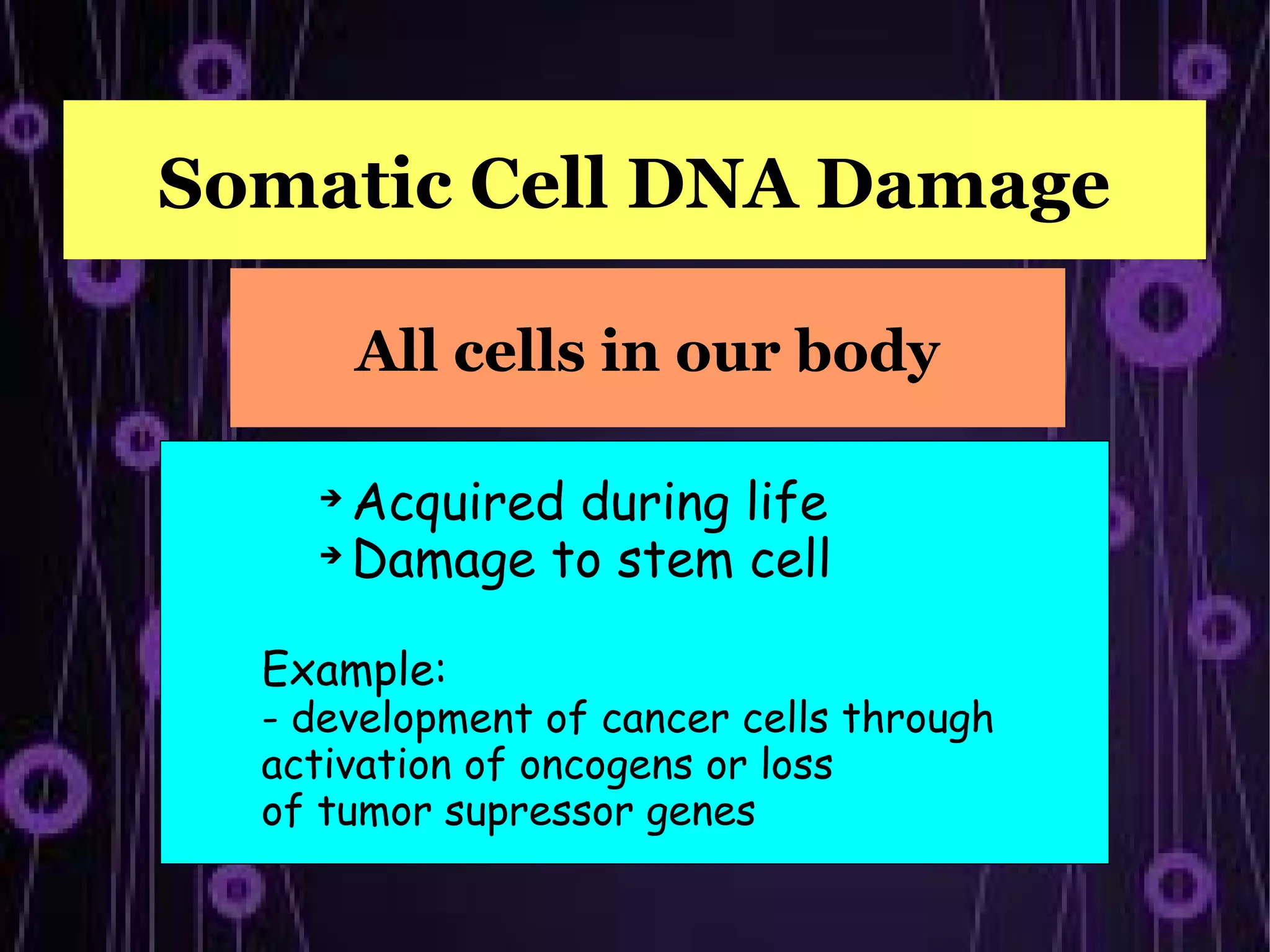
Somatic Cell DNA Damage

        All cells in our body

    
      Acquired during life
    
      Damage to stem cell

  Example:
  - development of cancer cells through
  activation of oncogens or loss
  of tumor supressor genes
Nucleus
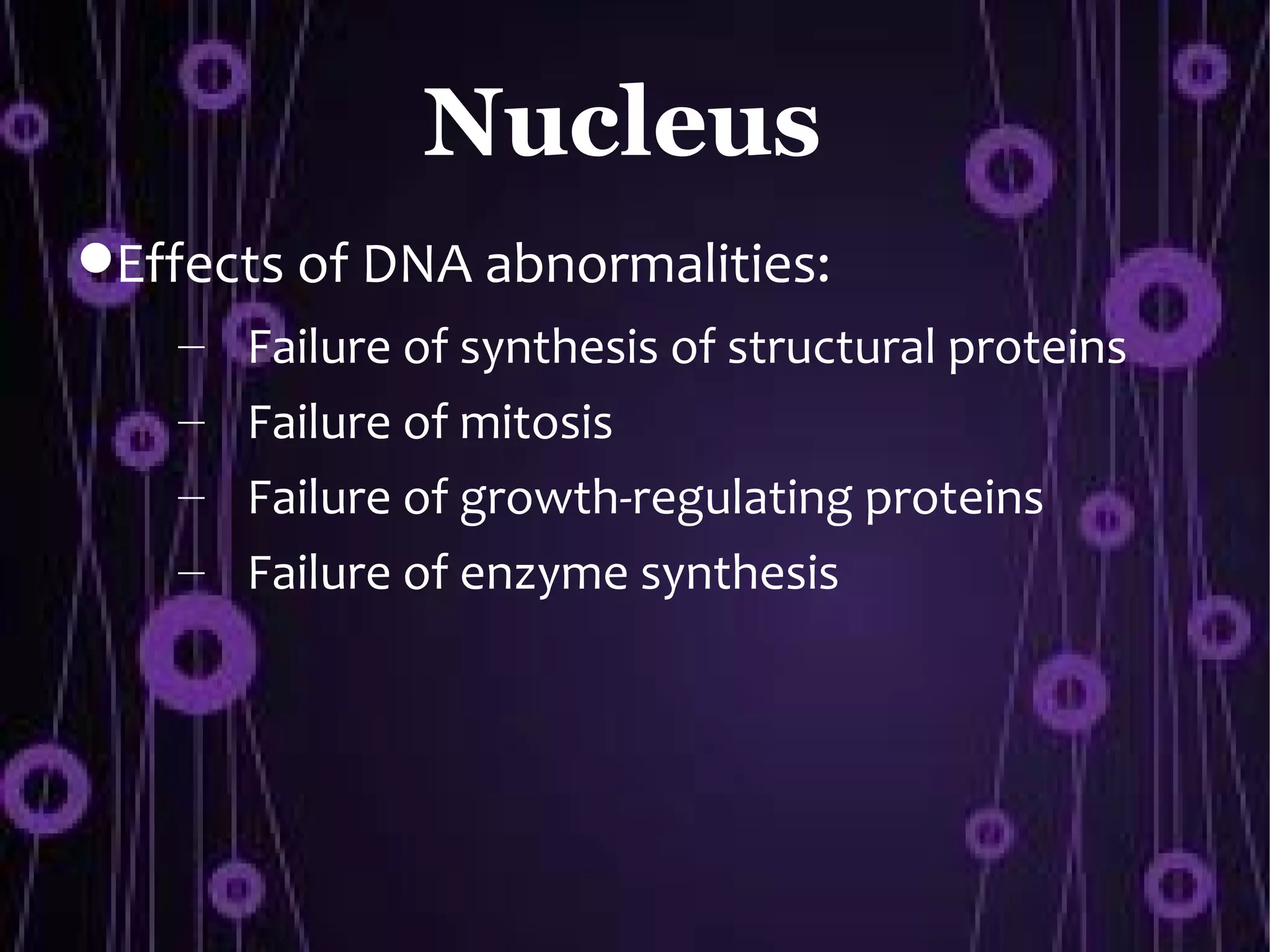
Effects of DNA abnormalities:
    –   Failure of synthesis of structural proteins
    –   Failure of mitosis
    –   Failure of growth-regulating proteins
    –   Failure of enzyme synthesis
Lysosomes
Membrane bound organelles contain
 hydrolytic enzymes
   – Responsible for digestion and disposal of
     complex substances
Disorder may lead to escape of enzymes or
 to cellular overloading (storage disorders)
Cell Injury
Injury may progress to:
    1) Adaptation state
         • Mild/persistant injorious agents = recover to
           normal state
    2) Reversible injury
         • Respond to injury but recover
    3) Irreversible injury
         • Cell respond to injury and cannot recover
           (cell death)
Cell Injury
If the adaptive capability is exceeded or if
 the external stress is inherently harmful
    – cell injury develops!
Severe or persistent stress results in
 irreversible injury and death of the affected
 cells
Cell Injury
Cells are stressed so severely
    – no longer able to adapt
    – exposed to inherently damaging agents
    – suffer from intrinsic abnormalities
Different injurious stimuli affect many
 metabolic pathways and cellular organelles
CELL
ADAPTATIONS
CELL ADAPTATIONS
Changes made by a cell in response
 to adverse environmental changes
      ➲REVERSIBLE CHANGES!
Cell Adaptations
 2 types of adaptations
    1. Physiological adaptations:
          
              usually response of cells to normal
              stimulation by hormones or endogenous
              chemical mediators
          
              e.g: hormone-induced enlargement of the
              breast during pregnancy
    1. Pathological adaptations:
             responses to stress that allow cells to
              modulate their structure and function and
              thus escape injury
Cell Adaptations
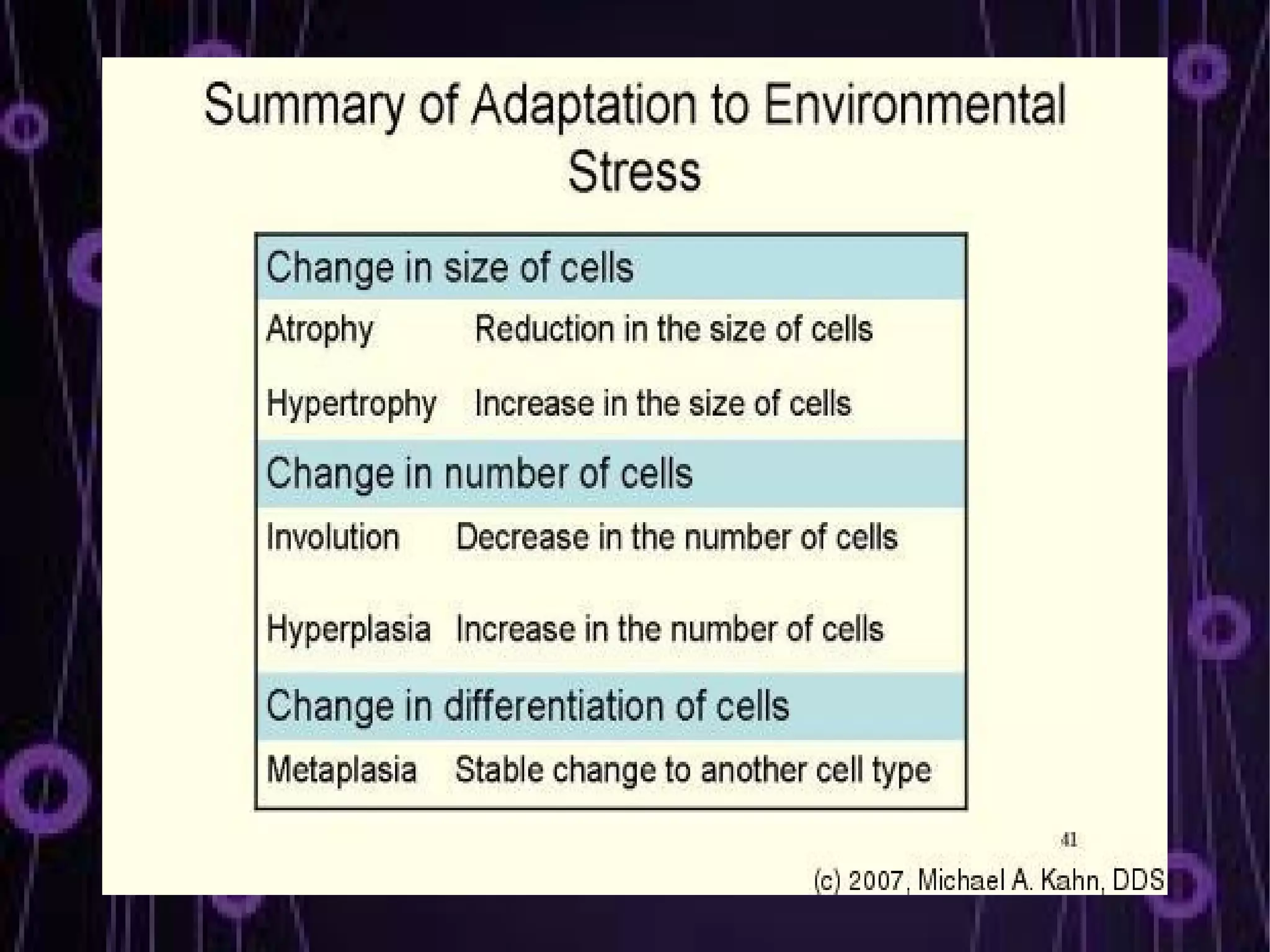
Cells adapt by altering their pattern of
 growth
     – Hypertrophy
     – Hyperplasia
     – Atrophy
     – Metaplasia
     – Dysplasia
*Within certain limits injury is reversible, and cells
 return to a stable baseline
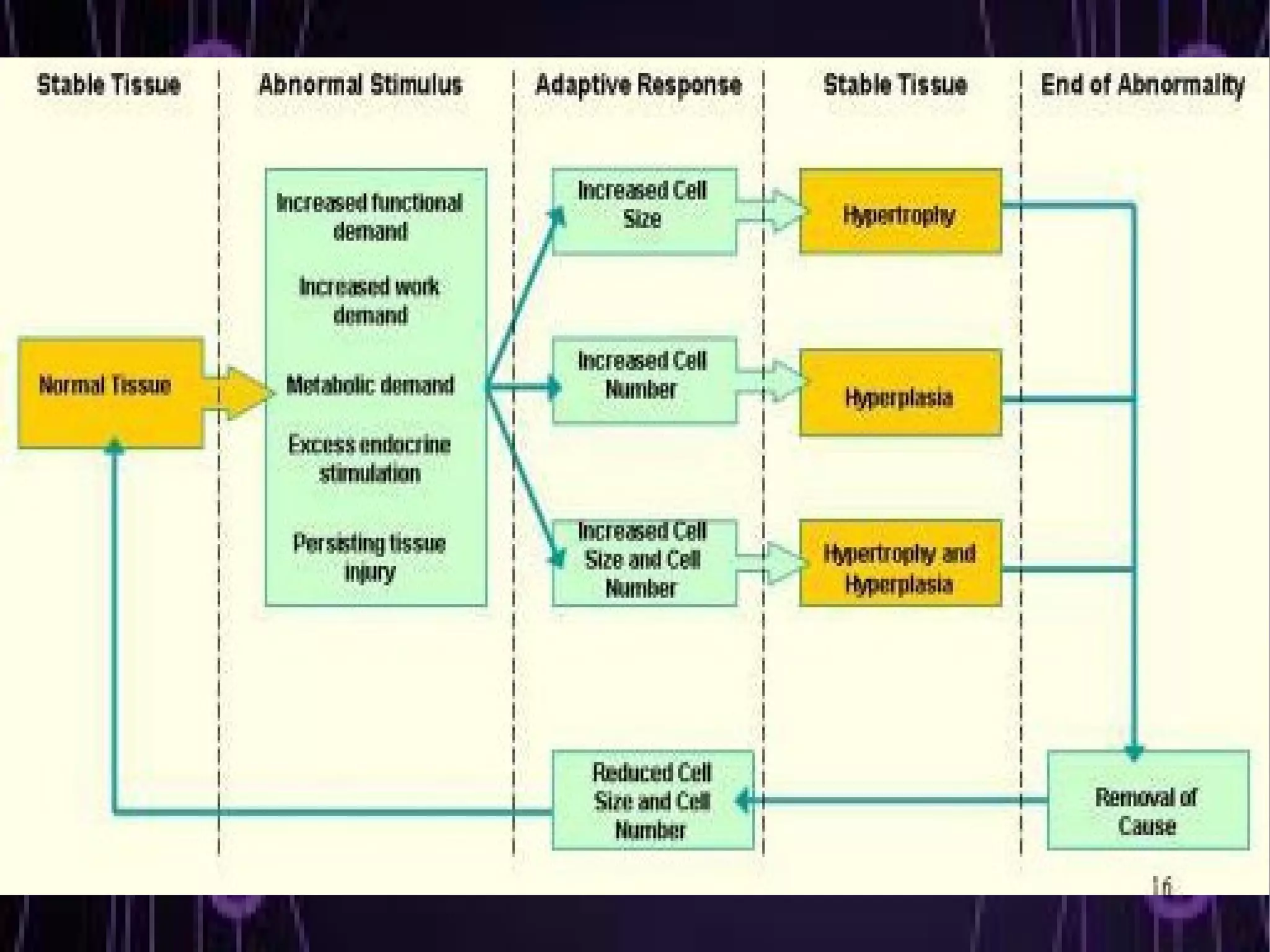
Hypertrophy
Increase in the size of cells
    – Increased workload  increased protein
       synthesize and size & number of
       intracellular organells = increased organ's
       size
    – Happen in cell that cannot be devide
    – Reaches limit  no longer able to
       compensate = failure & degeneration
Hypertrophy
 Example:
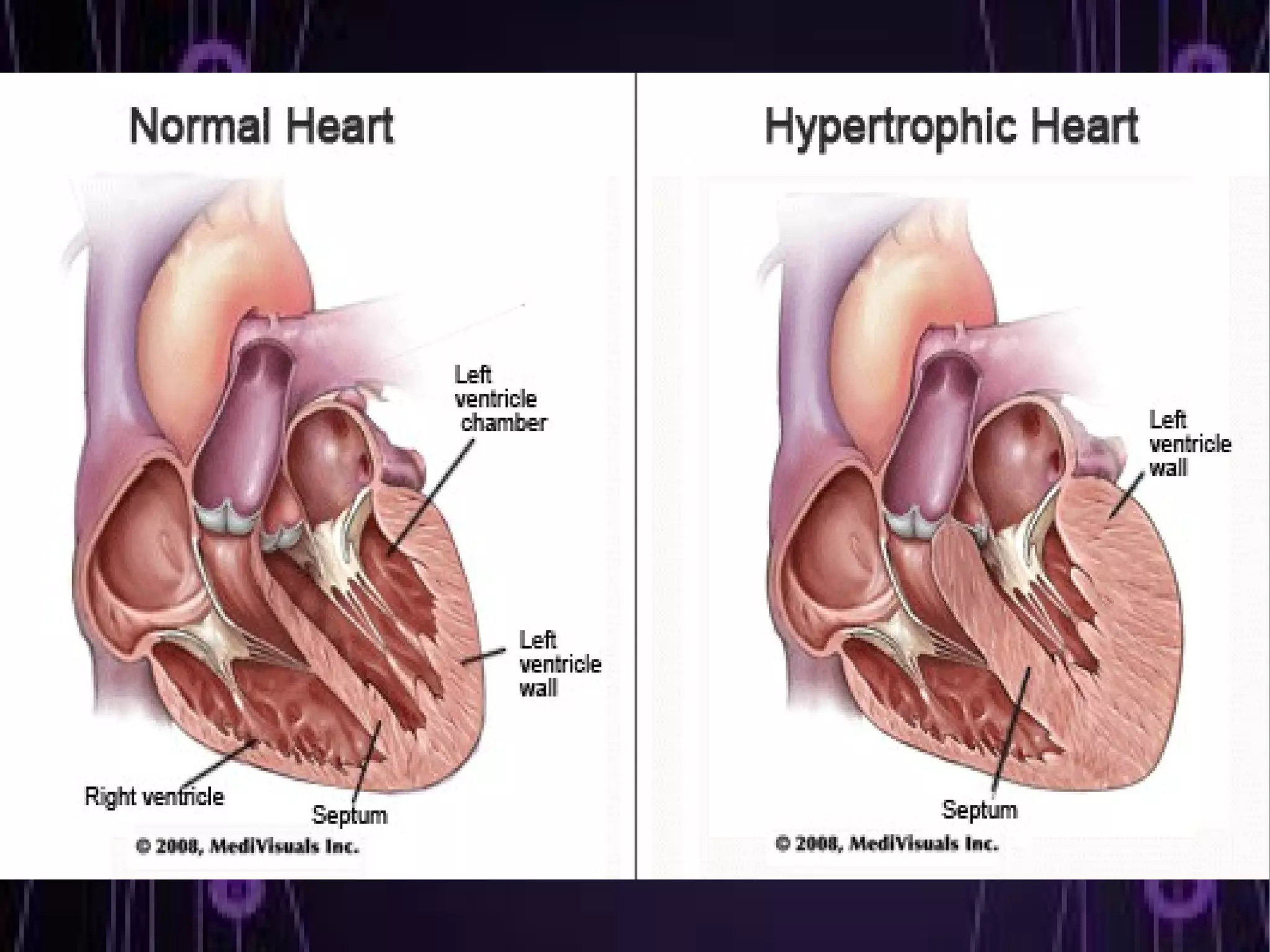
   – Pathological:
       • enlargement of left ventricle in
         hypertensive heart disease
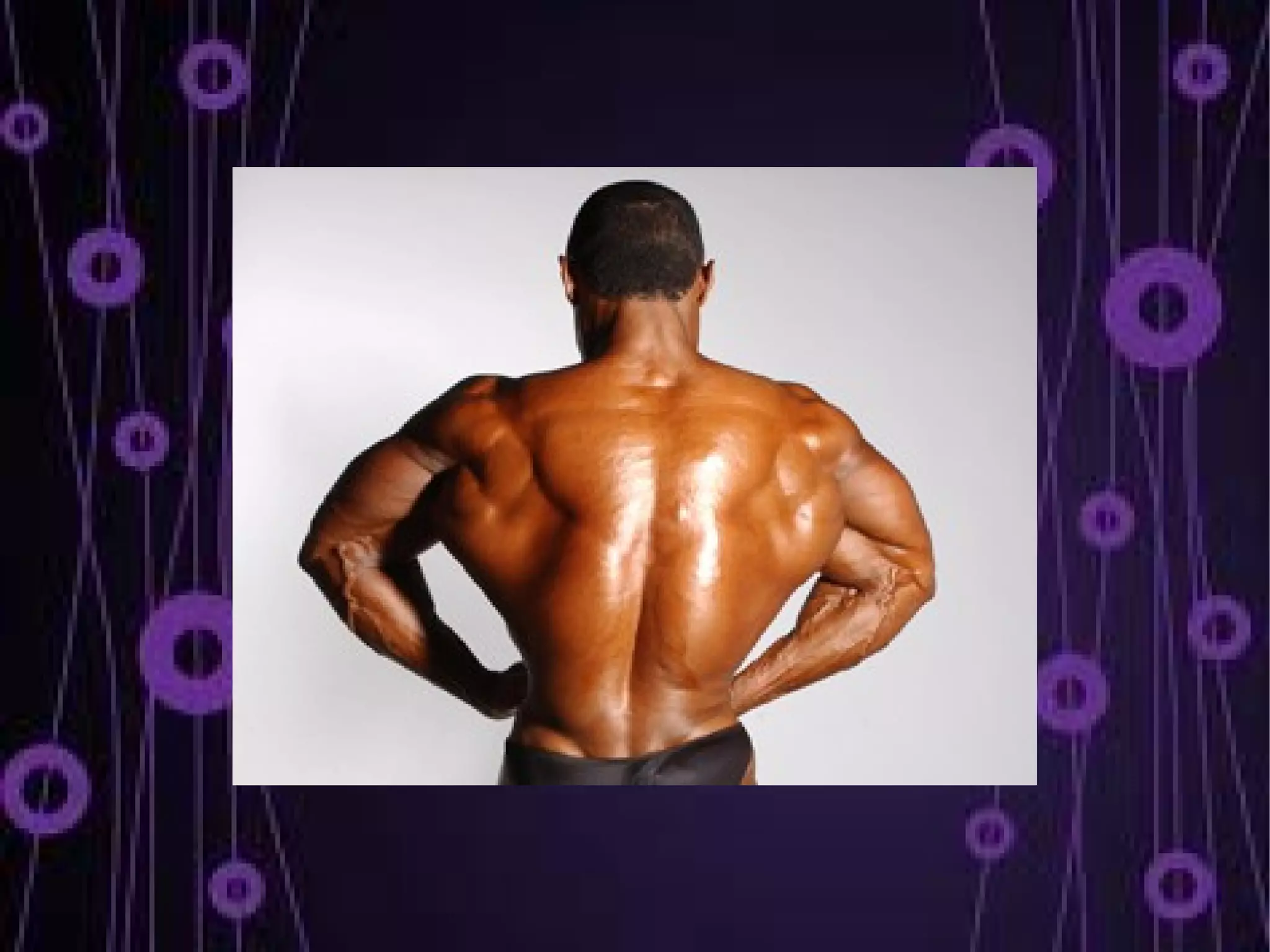
   – Physiological:
       • muscle increase in body builder
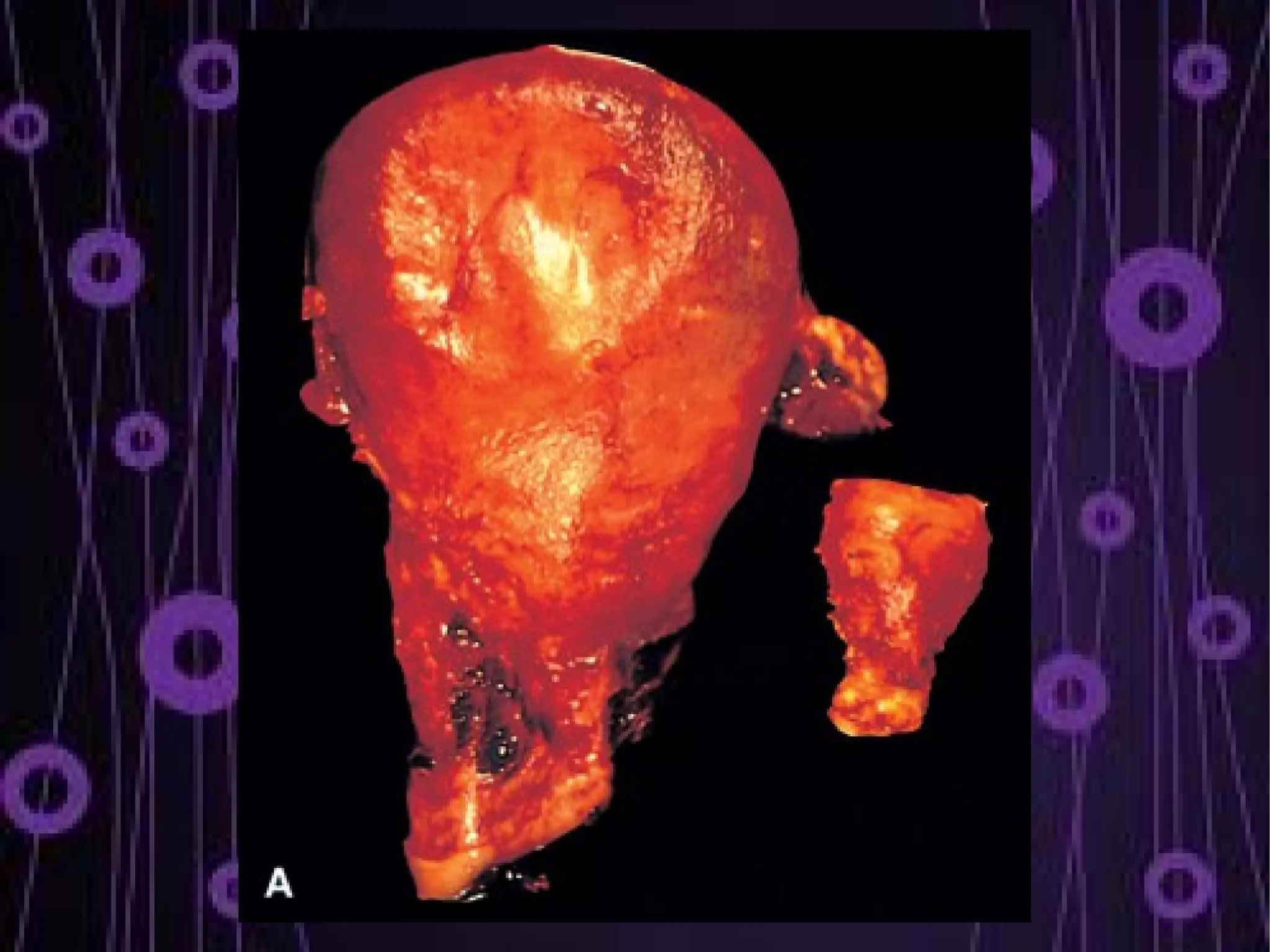
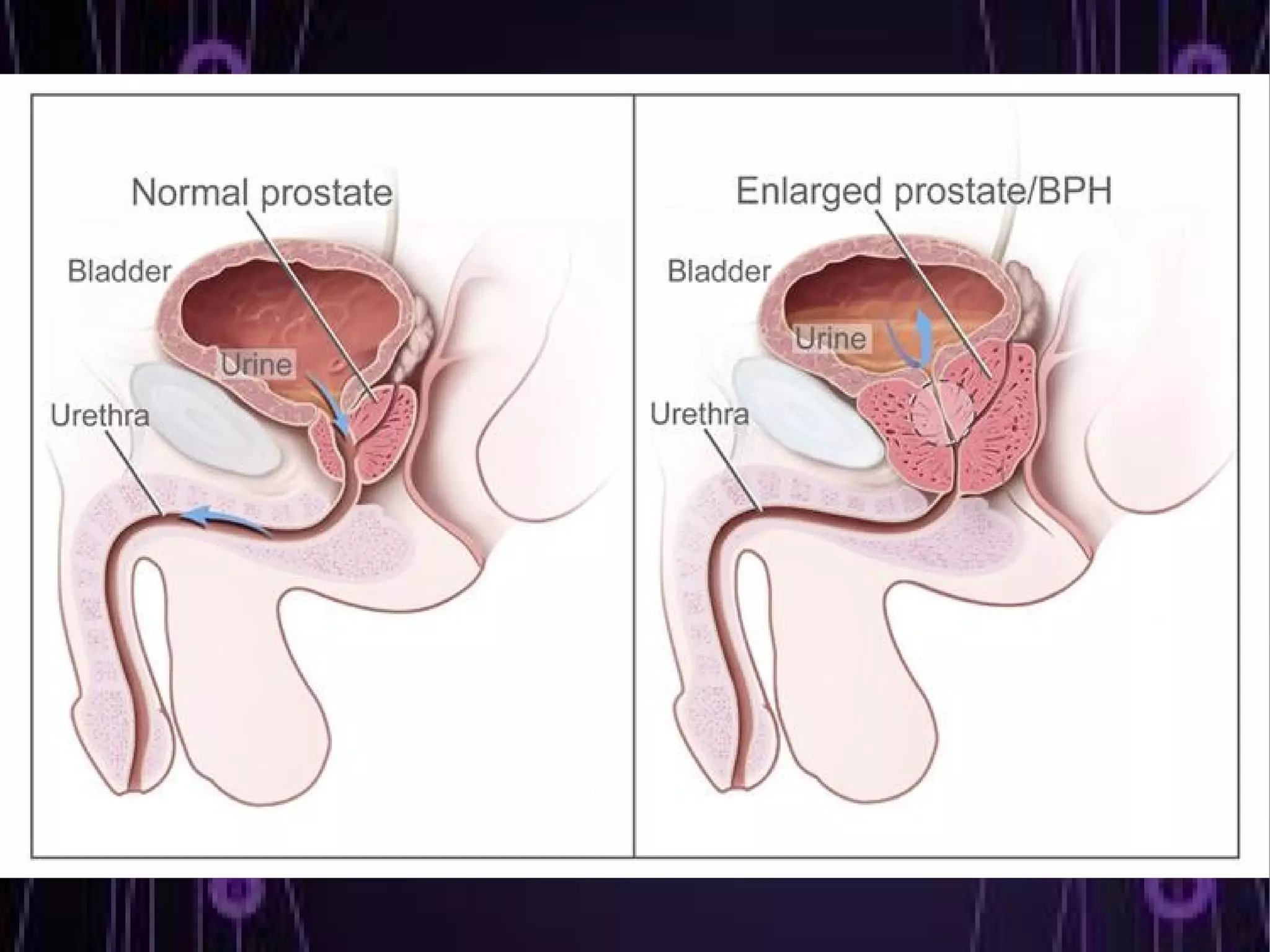
Hyperplasia
Increase in the number of cells
    – Resulting from increase in cell division –
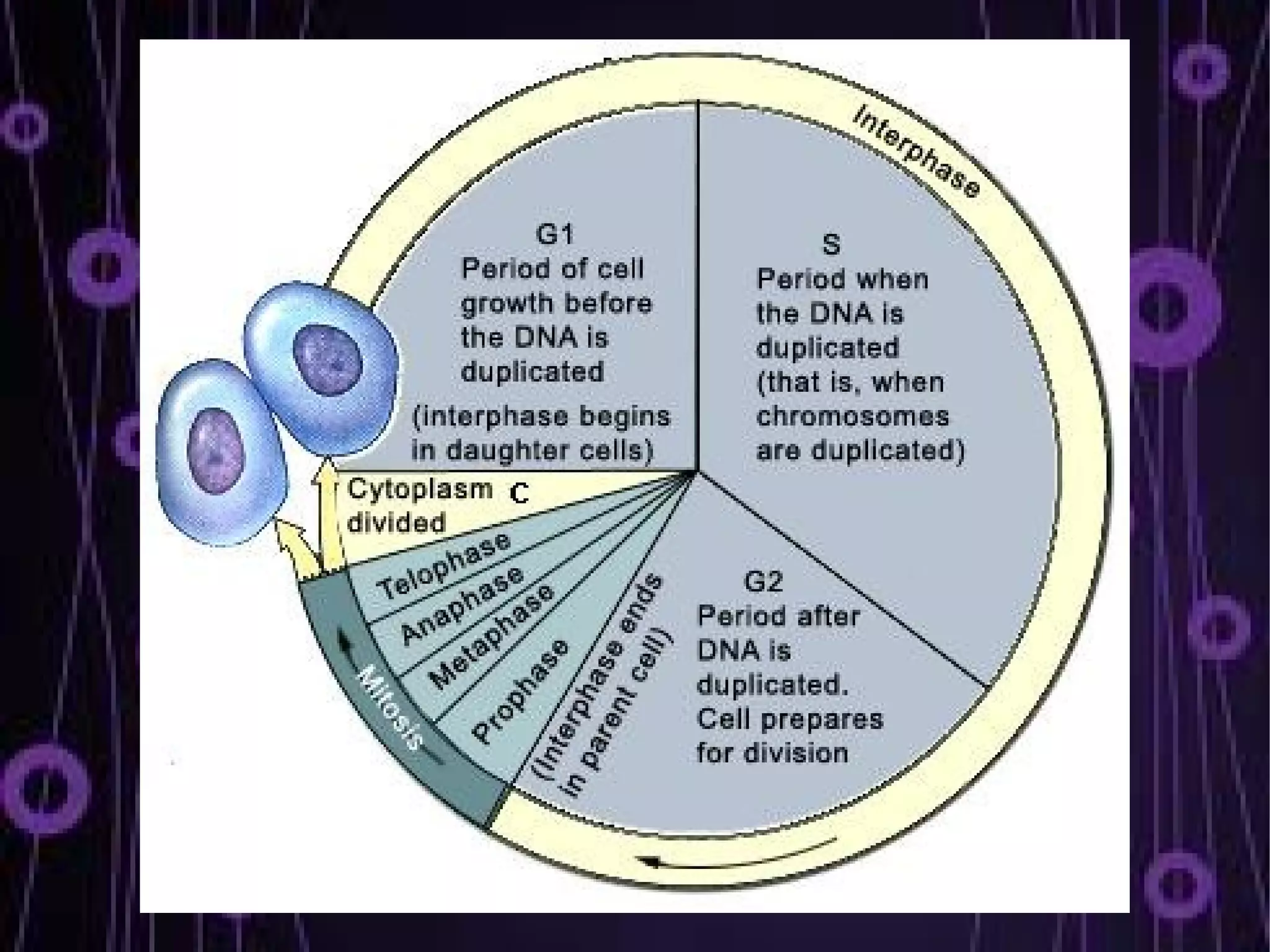
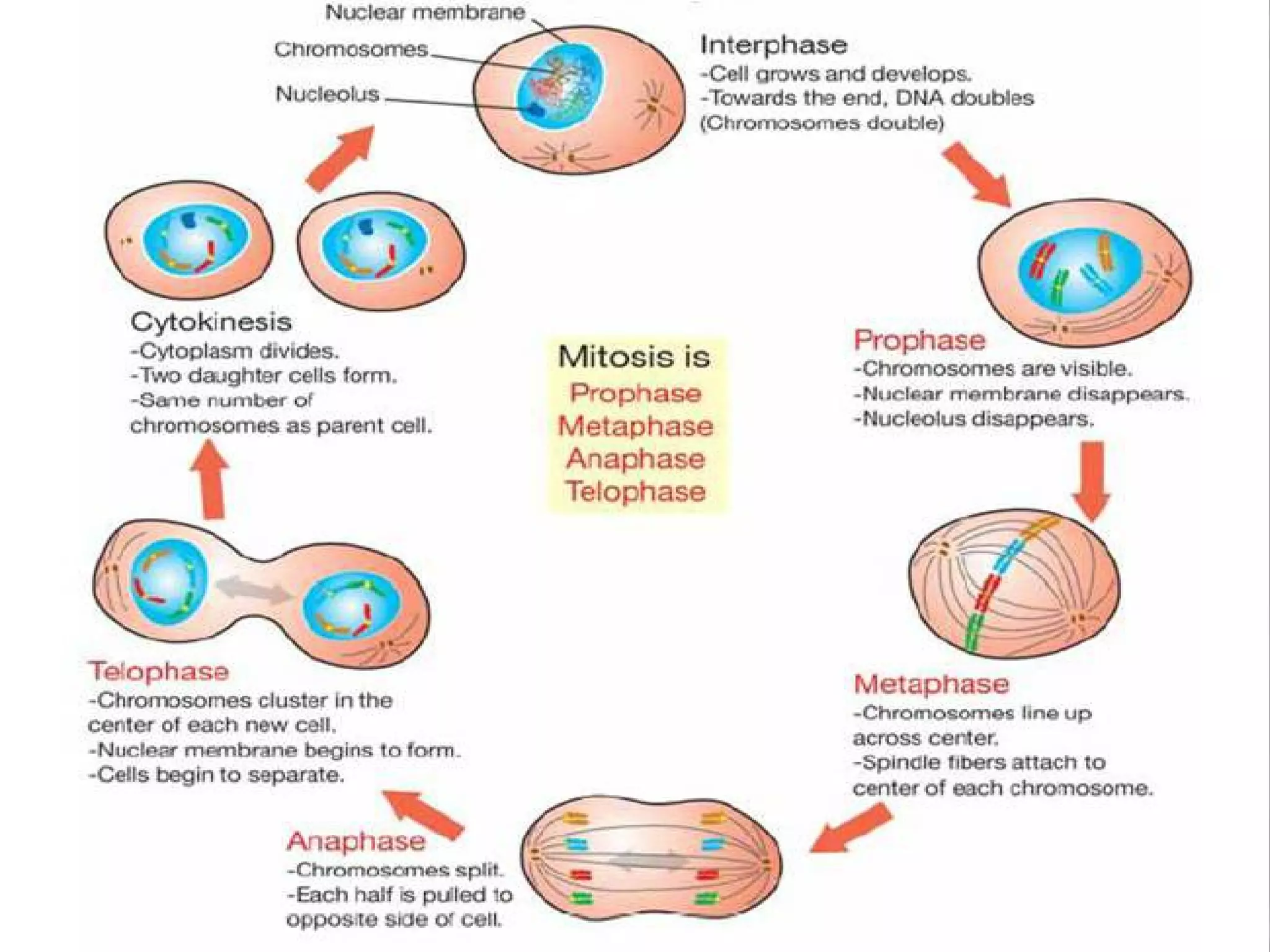
      happen in cell that can divide = mitosis
    – Compensatory (regeneration) &
      hormonal (occurs mainly at organs that
      depend on estrogen)
Hyperplasia
 Example:
   – Physiological:
       • enlargement of breast during
         pregnancy
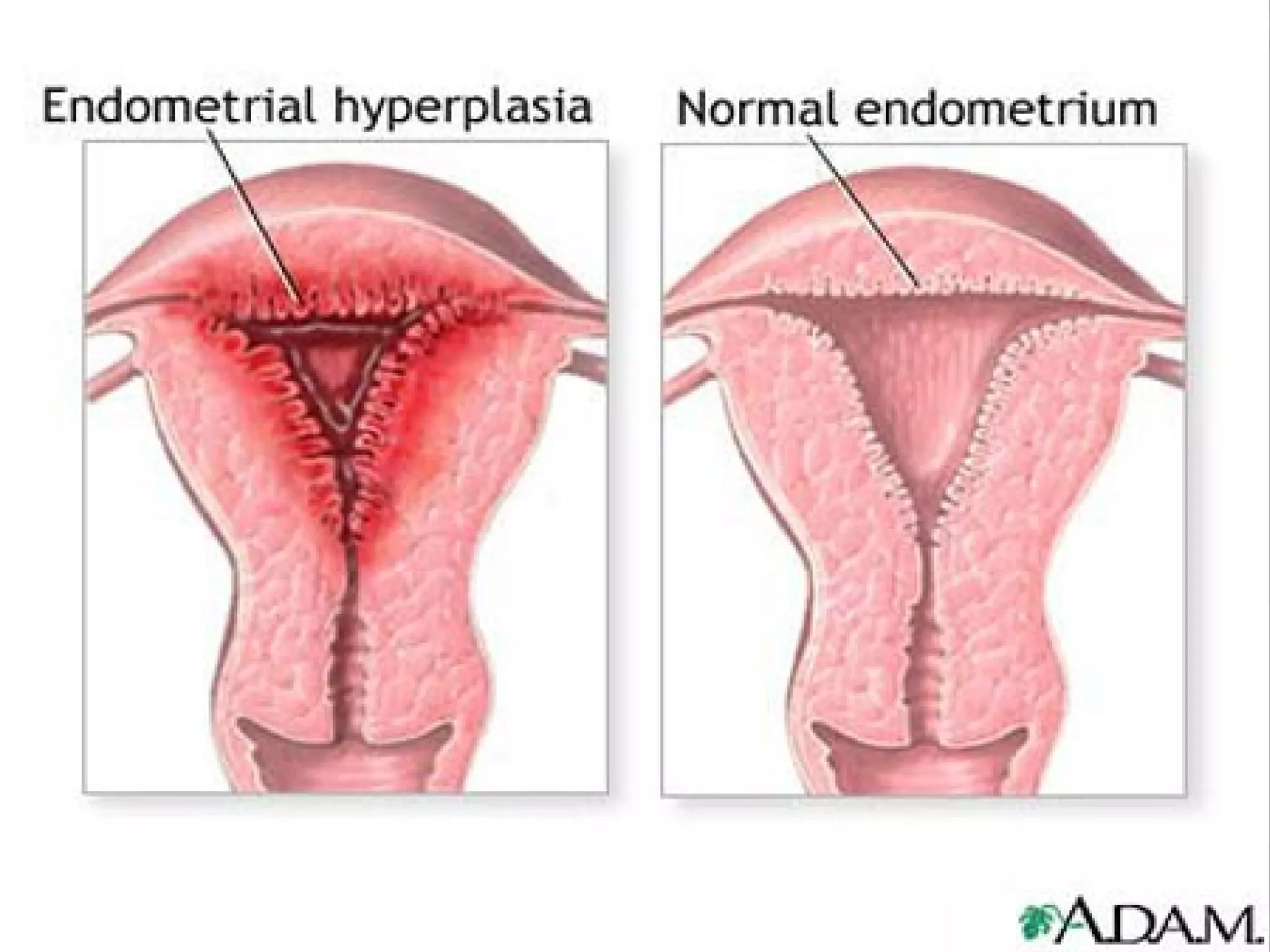
   – Pathological:
       • endometrial hyperplasia
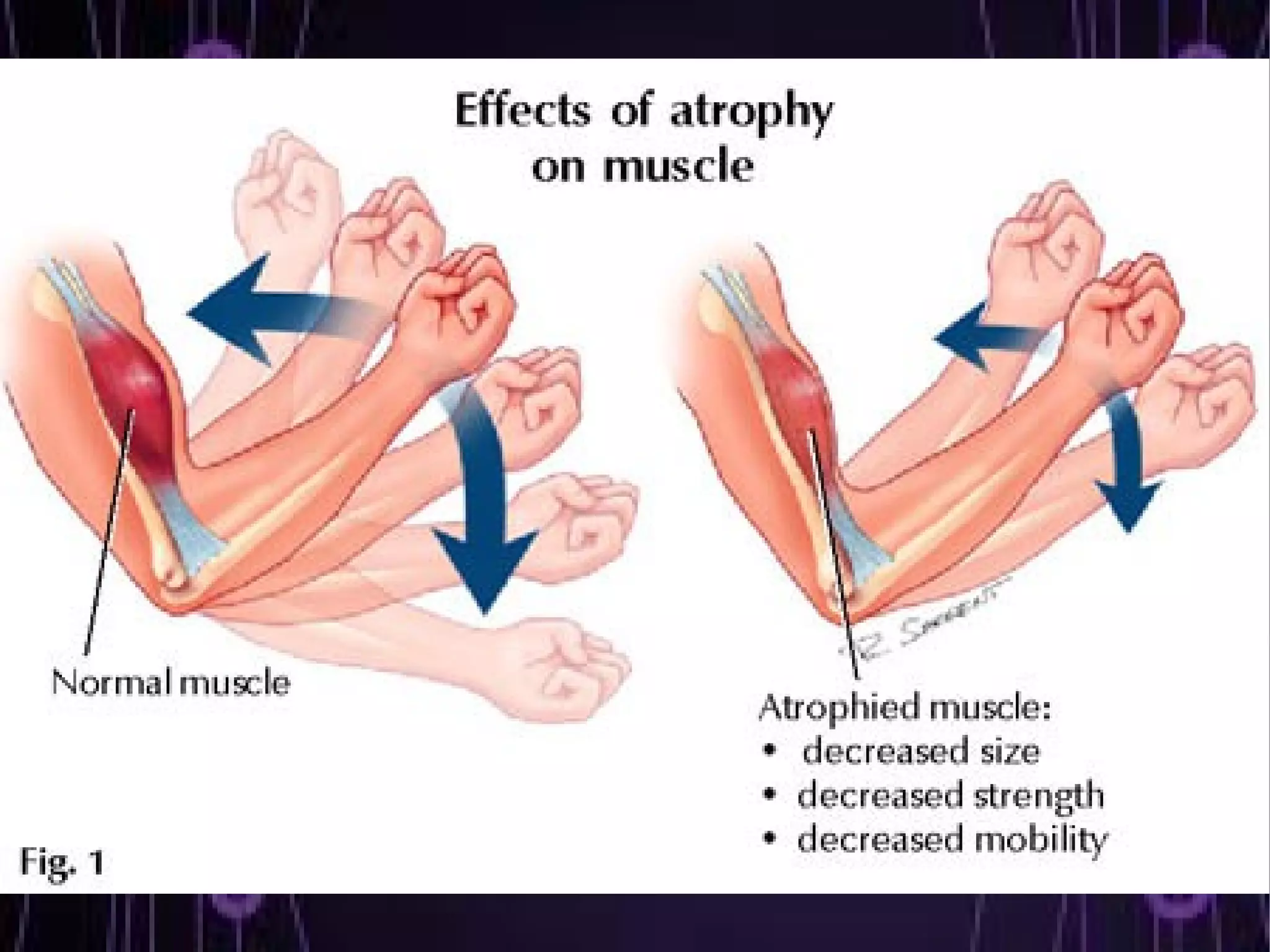
Atrophy
Decrease in the size of cells
    – Reduced functional capacity, lead to
      decrease size of organ
         • Formation of autphagic vacuoles
           contain cellular debris from degraded
           organelles
Atrophy

    Loss of cell substances due to
         decrease workload
         loss of innervation
         diminished blood supply
         inadequate nutrition
         loss of endocrine stimulation
Atrophy
Examples:
   – Physiological:
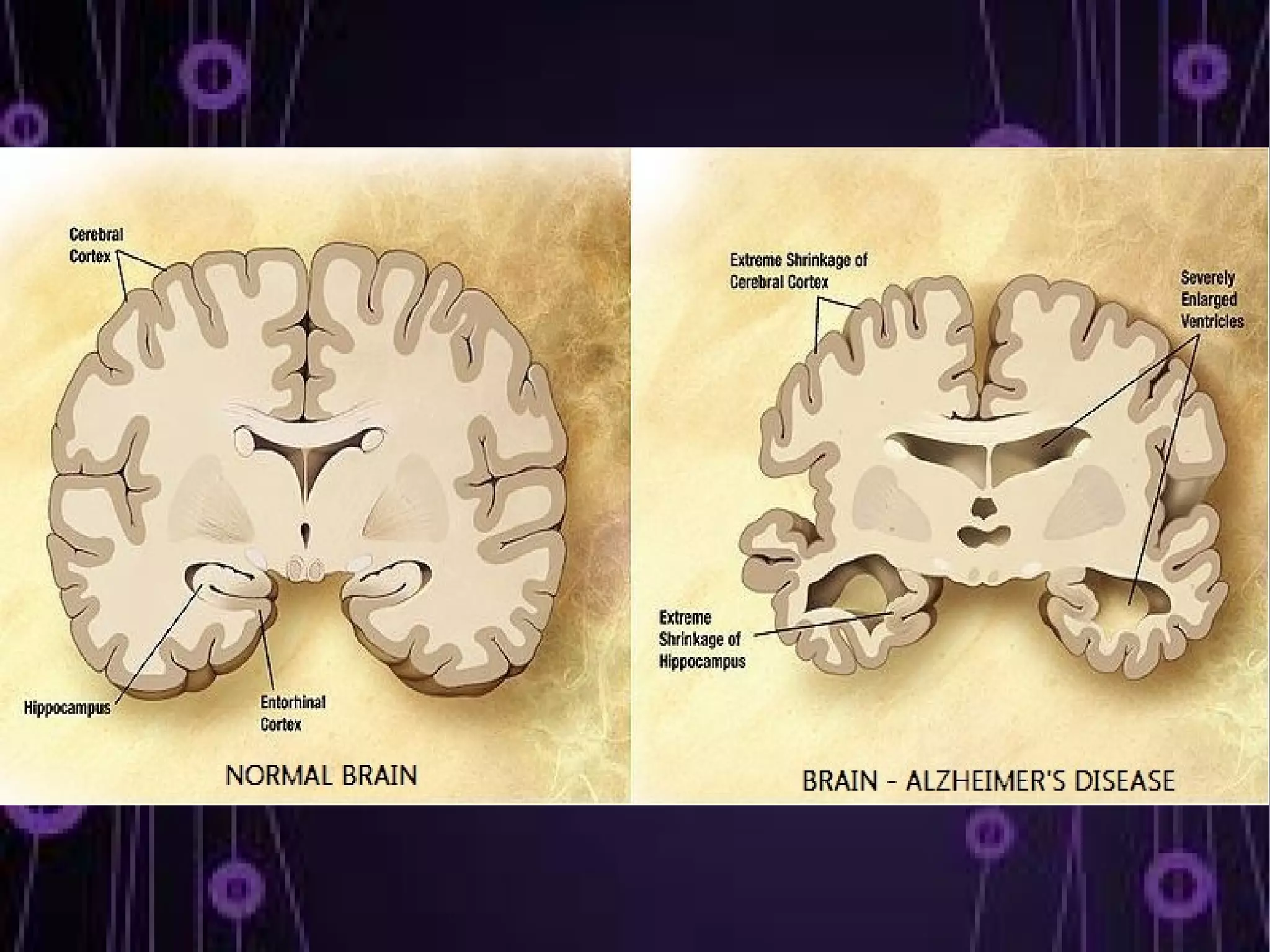
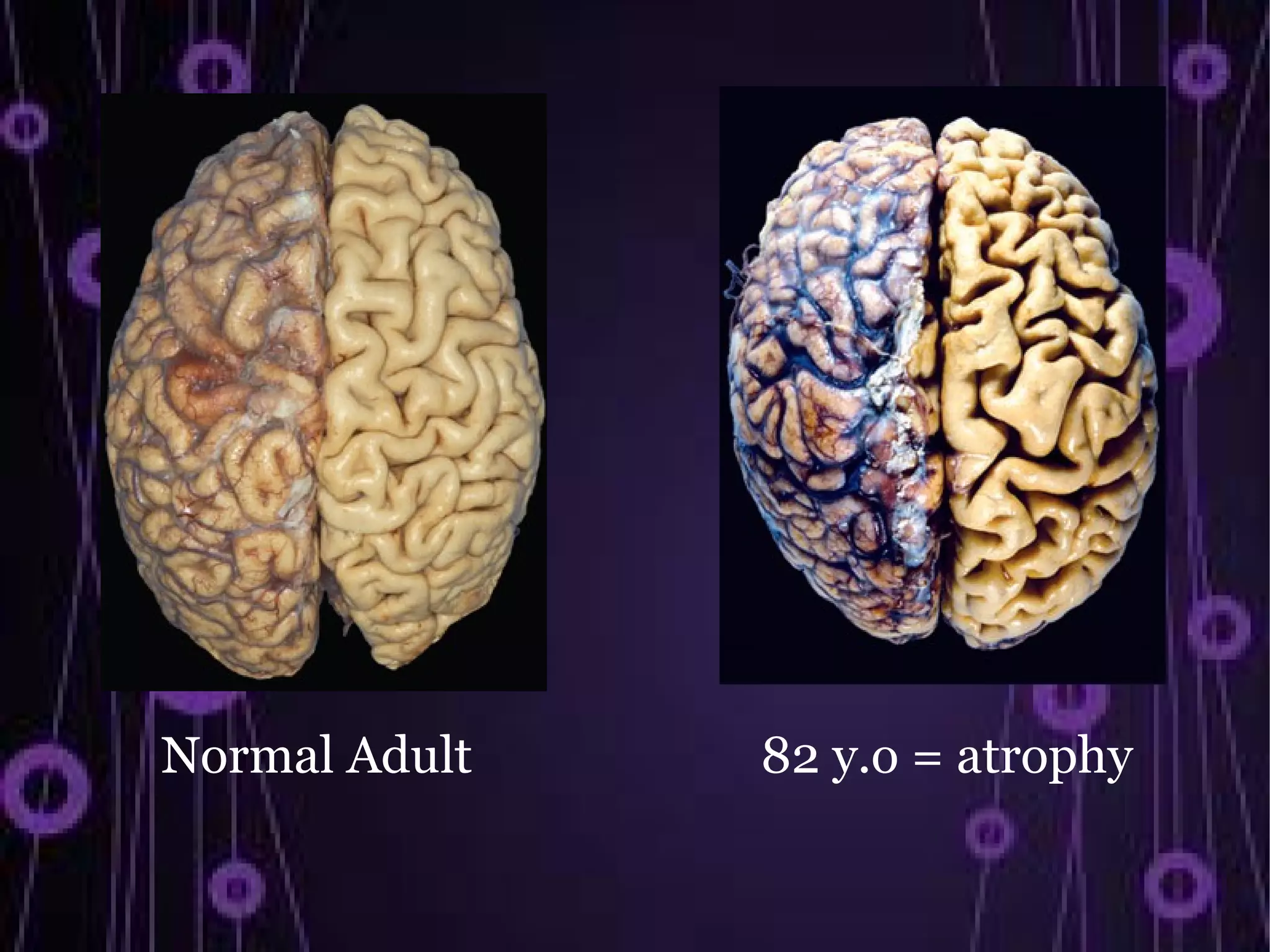
        • reduced activity of old age = decrease in size
          of skeletal muscle, brain and testis
        • Thymus atrophy during early childhood
   – Pathological:
        • Trauma to a supply nerve root = skeletal
          muscle markedly riduced in size following
          loss of innervation
Normal Adult   82 y.o = atrophy
Metaplasia
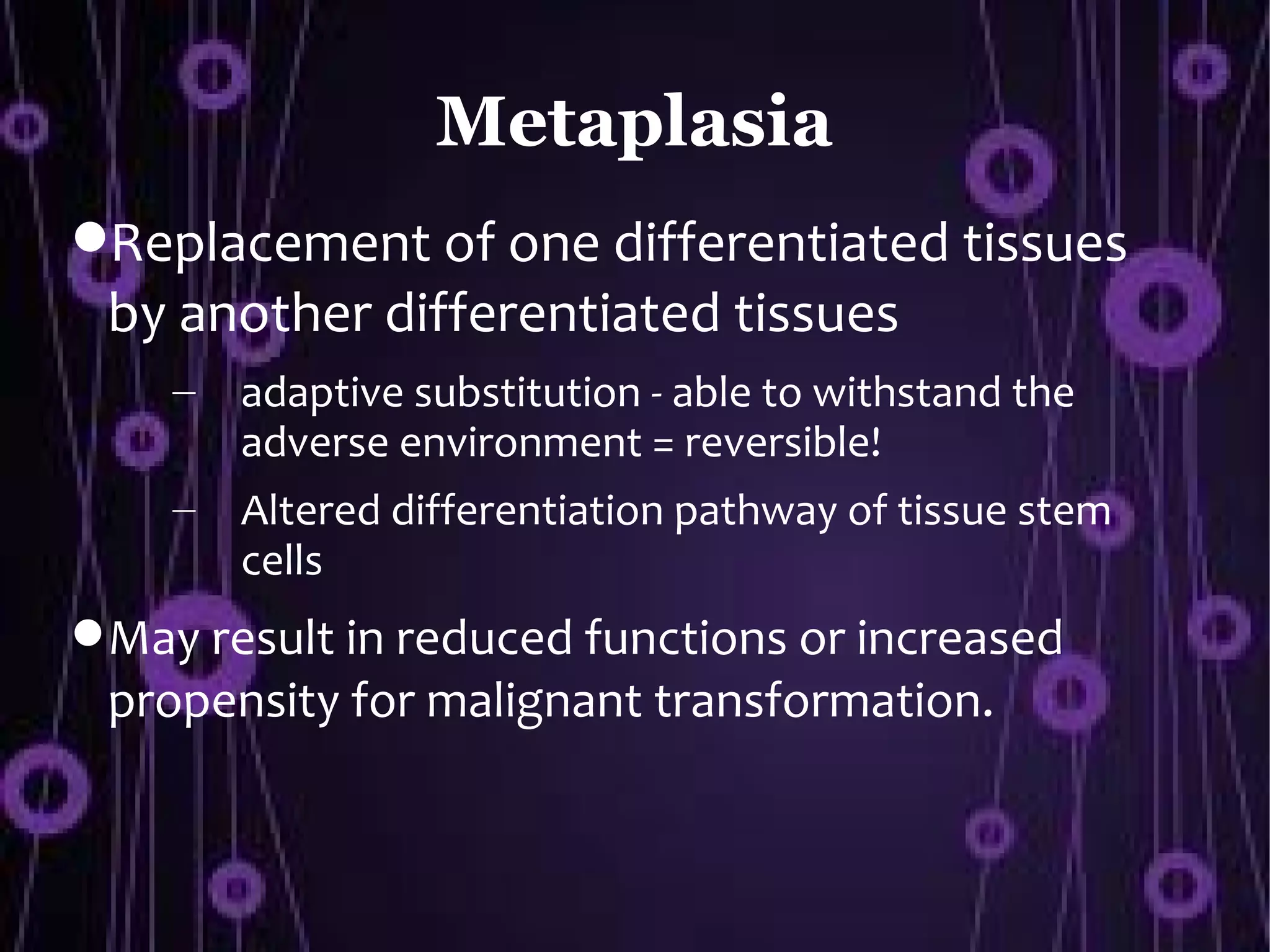
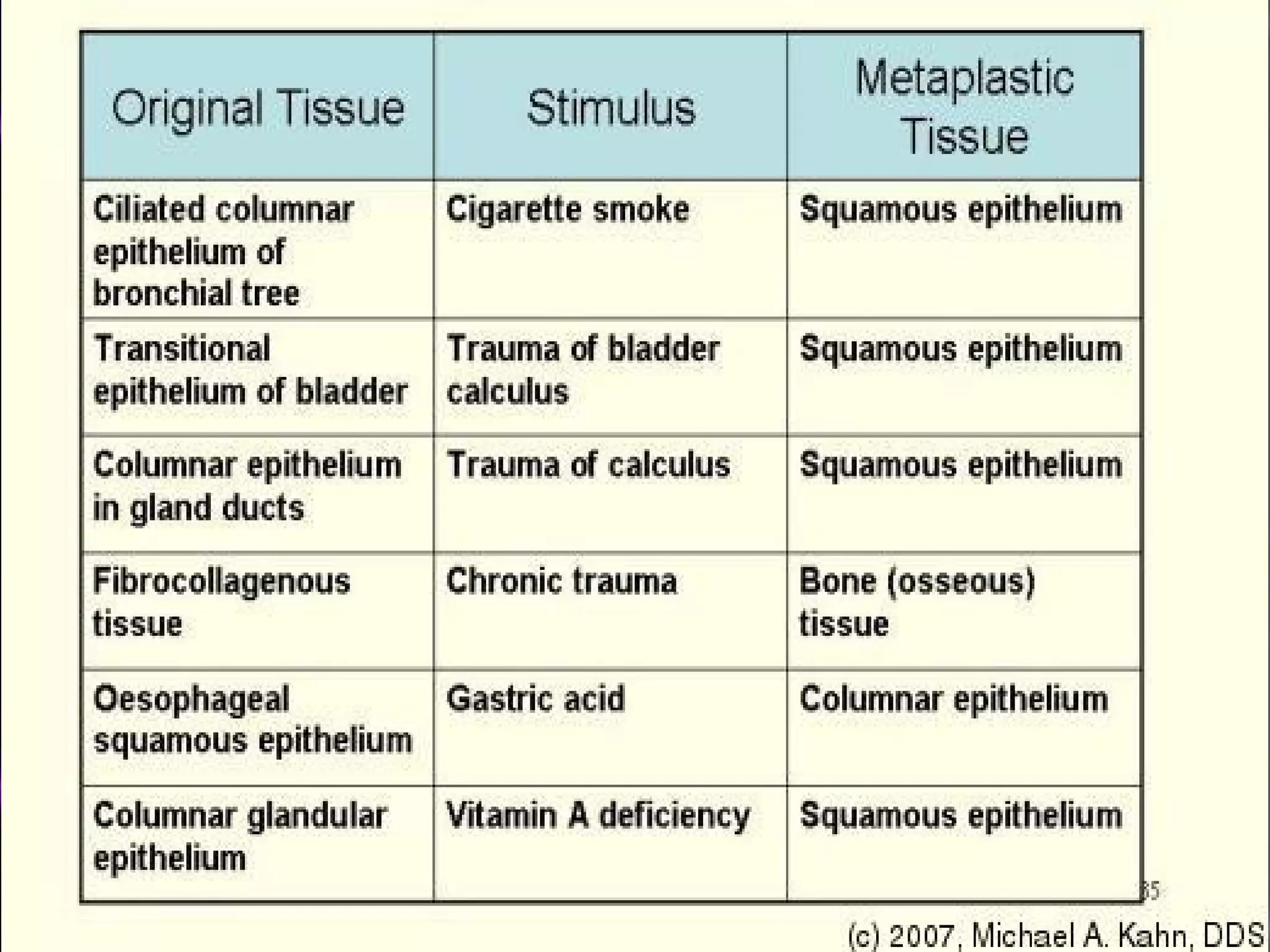
Replacement of one differentiated tissues
 by another differentiated tissues
    –   adaptive substitution - able to withstand the
        adverse environment = reversible!
    –   Altered differentiation pathway of tissue stem
        cells
 May result in reduced functions or increased
 propensity for malignant transformation.
Metaplasia
Example:
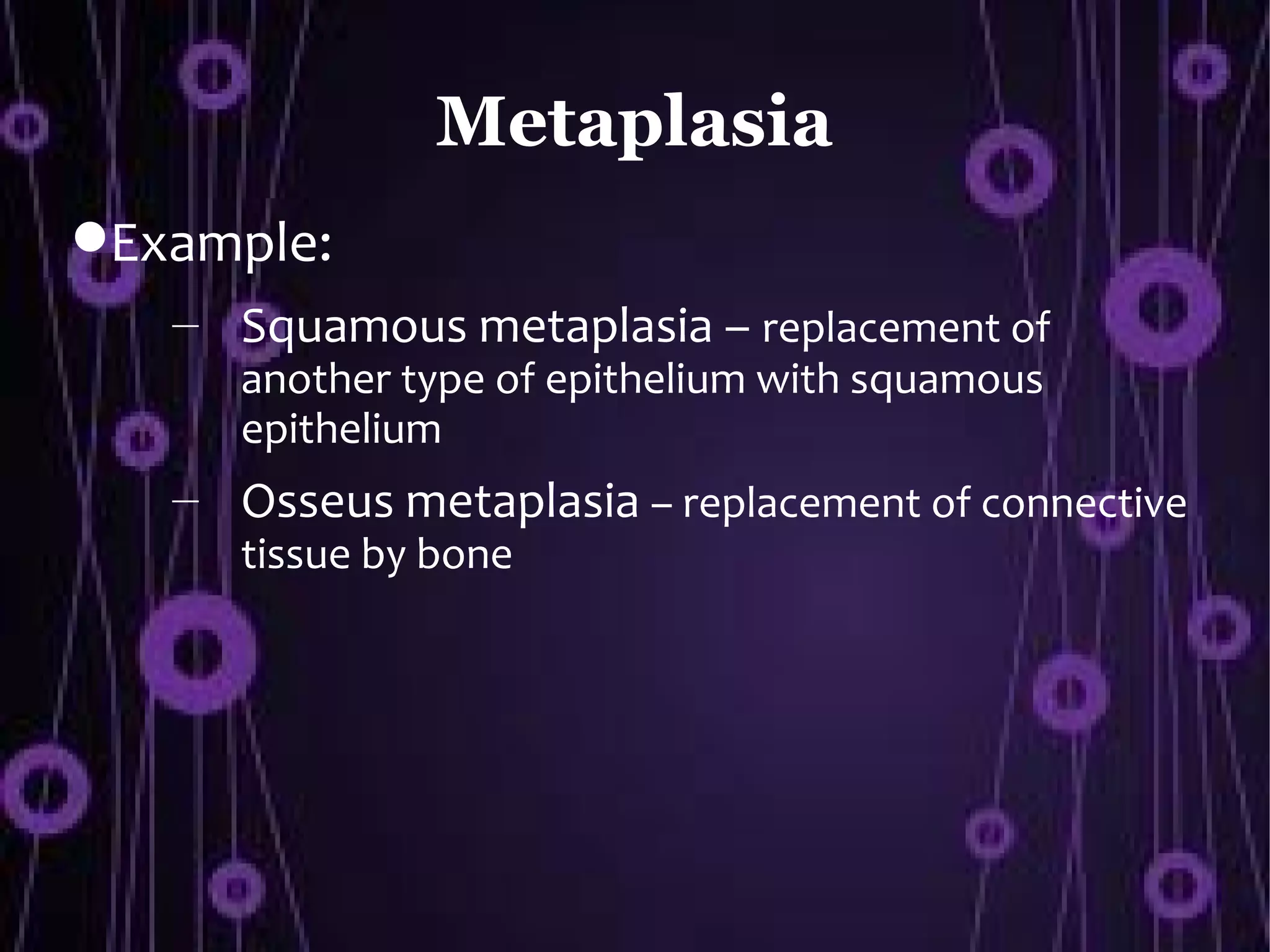
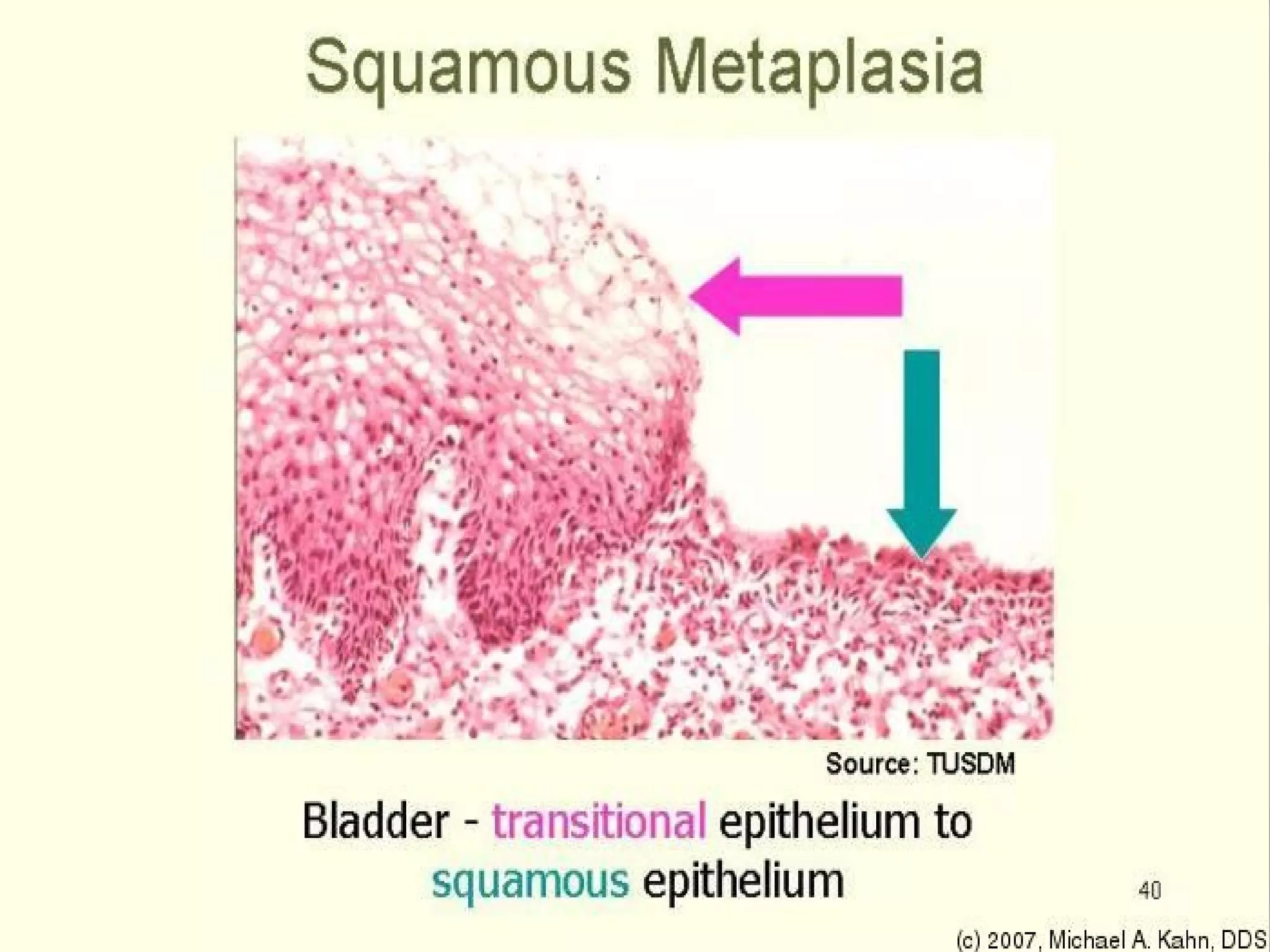
   – Squamous metaplasia – replacement of
      another type of epithelium with squamous
      epithelium
   – Osseus metaplasia – replacement of connective
      tissue by bone
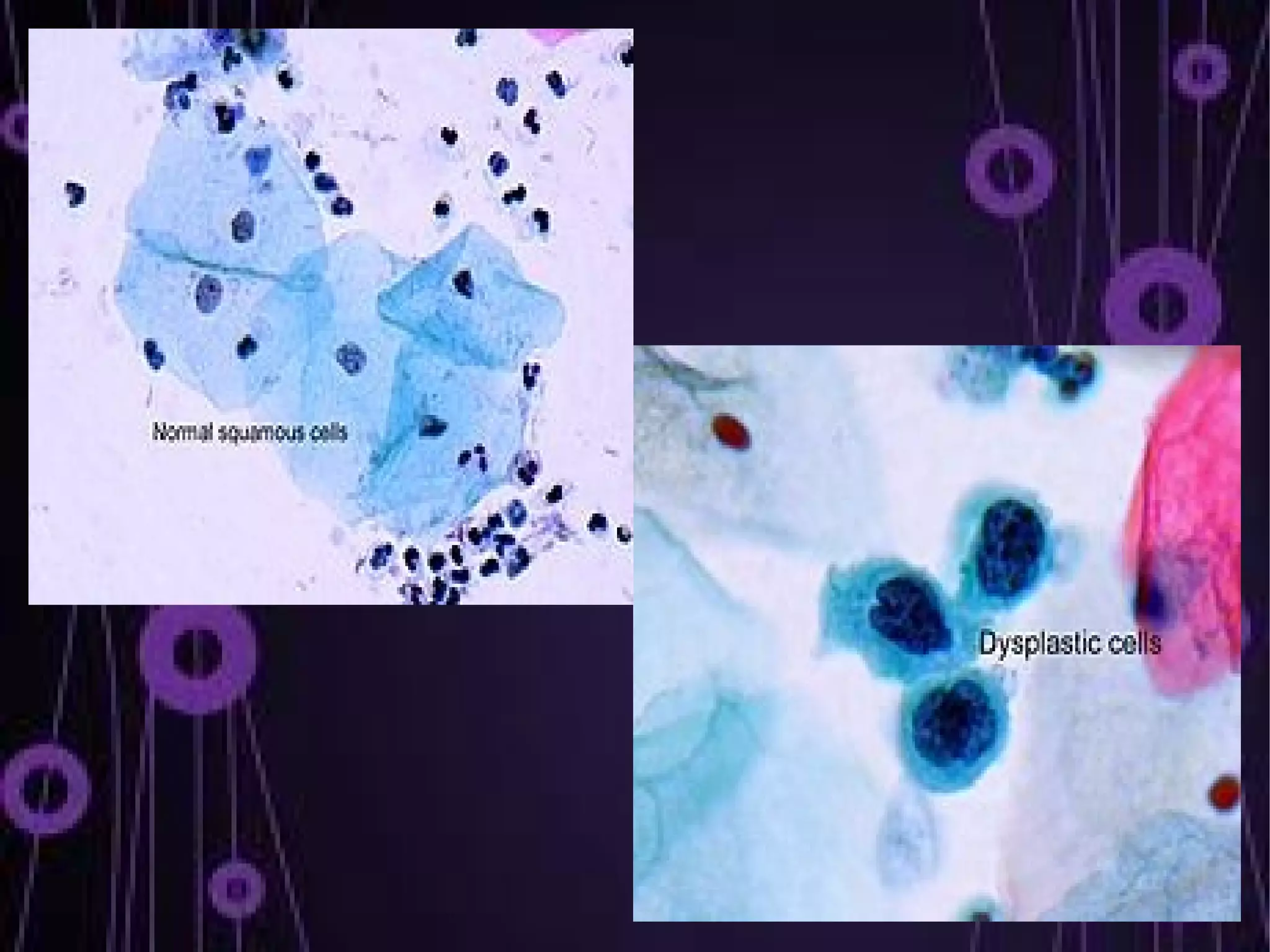
Dysplasia
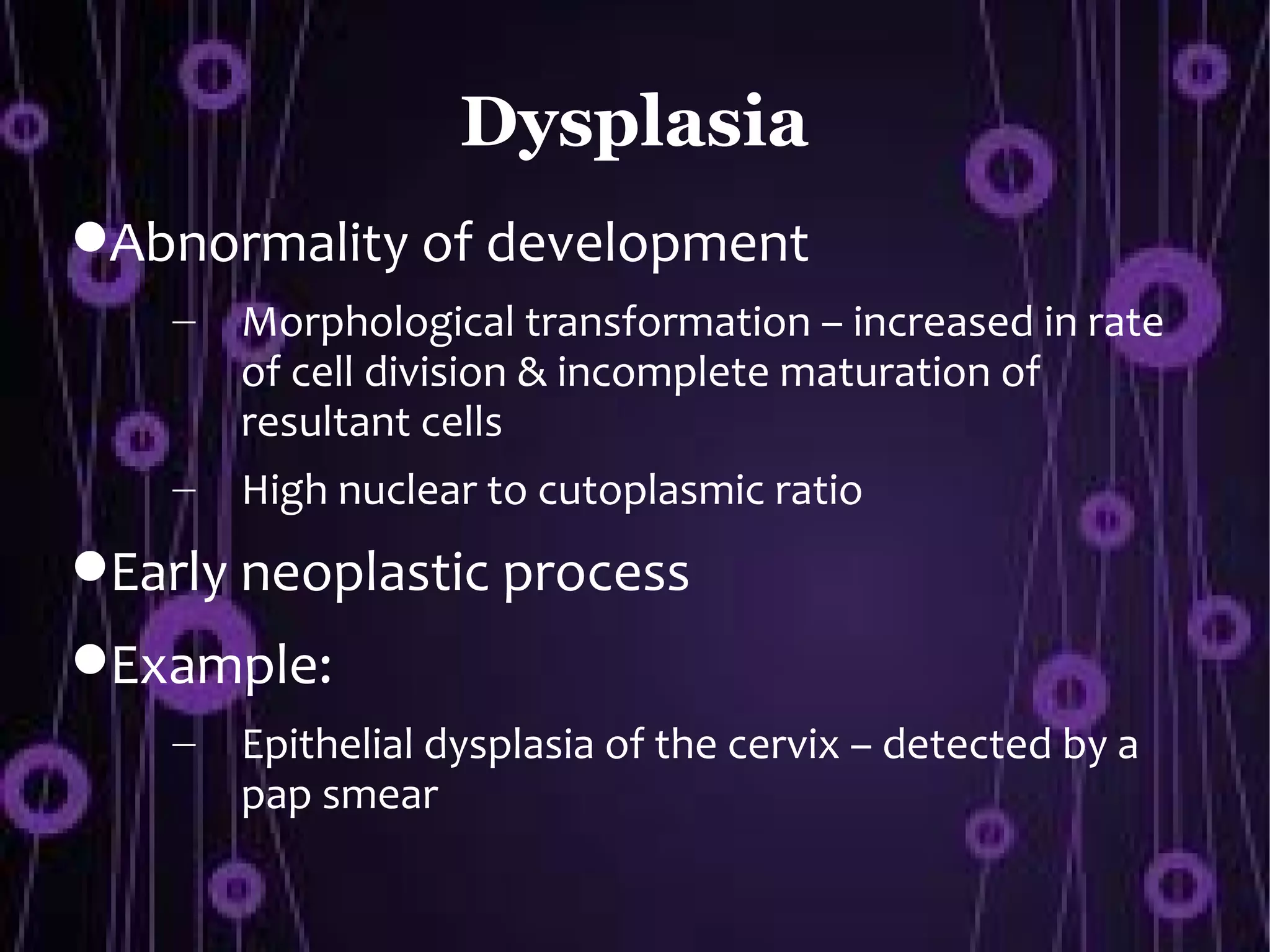
Abnormality of development
    –   Morphological transformation – increased in rate
        of cell division & incomplete maturation of
        resultant cells
    –   High nuclear to cutoplasmic ratio
Early neoplastic process
Example:
    –   Epithelial dysplasia of the cervix – detected by a
        pap smear
MID2163 TOPIC 2
MID2163 TOPIC 2
MID2163 TOPIC 2
MID2163 TOPIC 2

MID2163 TOPIC 2

  • 1.
  • 2.
    TOPIC 2: CELL INJURYAND ADAPTATIONS
  • 3.
  • 4.
    Cell Basic structural andfunctional unit in human body Human contain almost 100 trillion cells Different cells in tissues constantly interact with each other = cell-cell and cell-matrix
  • 5.
    Cell 3 principle components – Plasma membrane – Nucleus – Cytoplasm
  • 7.
    GOLGI CENTROSOME COMPLEX ENDOPLASMIC CYTOSKELETON RETICULUM CILIA & 10 RIBOSOME FLAGELLA ORGANELLES PROTEASOME LYSOSOME MITOCHONDRIA PEROXISOME
  • 11.
    3 MAIN GROUPSOF CELLS Labile cells Stable cells (unstable) Rapid proliferation Slow proliferation and cell turnover and cell turnover e.g: gut lining & e.g: hepatocytes epithelial cells Permanent cells Not able to proliferate e.g: neurons
  • 12.
  • 13.
    Cell Injury Cells areactive participants in their environment – constantly adjusting their structure & function to accommodate changing demands and extracellular stresses Cells tend to maintain their normal condition = homeostasis
  • 14.
    Cell Injury Cells encounterphysiologic stresses or pathologic stimuli = undergo adaptation – achieving a new steady state and preserving viability and function Ultimate fate of a cell (once exposed to a harmful stimulus) depends on the type, severity & duration of the stimulus and also the type of cells
  • 15.
    Cell Injury Example: – Brain cells, heart cells susceptible to hypoxia and ischemia – liver cells susceptible to chemical injury – Calf muscle tolerates 2-3h of ischemia – Cardiac muscle dies in 20-30 min
  • 16.
    Cell Injury Cell exposedto injurious agents, the possible outcomes are: i. The cell may adapt to the situation ii. The cell may require reversible injury iii. The cell may obtained irreversible injury and may die
  • 17.
    CAUSES (internal) Deficiency of Ischaemia = vitamins, reduced blood hormones etc supply Enzyme defects Immune-mediated (genetic) e.g. mechanisms glactosemia
  • 18.
    CAUSES (externally) Microbial agents: Chemical agents bacteria, viruses, & toxins fungi e.g: paraquat Nutritional e.g: lead posoning Physical e.g: mechanical trauma, atmospheric pressure, thermal, U.V. light, Ionising radiation
  • 19.
    Cell Injury Injury toa certain component in cell will lead to its dysfunction The cellular components that are prone to injury are: → Plasma membrane → Mitochondria → Nucleus → Lysosomes
  • 21.
    Plasma Membrane Functions: – Maintain integrity of cell – Contact with extracellular environment = cell surface receptors – Passage of ions (through permeable channels) & complex molecule (pinocytosis or phagocytosis)
  • 22.
    Plasma Membrane  Ifthe cell injured, blebs of the cellular plasma membrane noted – Focal extrusion of the cytoplasm – Cell detach from the membrane  Contact with extracellular environment = cell surface receptors  Passage of ions (through permeable channels) & complex molecule (pinocytosis or phagocytosis)
  • 23.
    Plasma Membrane Effects ofplasma membrane injury: – Loss of structural integrity - cause cell to rupture and die – Loss of function - water enters cells and cause cloudy swelling hence electrolyte imbalance within cell – Deposition of lipofuscin (brown atrophy) - brown pigments deposited within cytoplasm eg in myocardial cells and liver cells
  • 24.
    Mitochondria Main sites ofenergy production for cellular activities Disorder of energy production affects all cellular functions – Mitochondria swell, dissipation of energy gradient & impairment of mitochondrial volume – amorphous densities rich in phospholipid may appear = reversible
  • 25.
    Nucleus Contains DNA -controls all cellular activities – Action of at least 1000 genes – Each encodes a protein with structural, enzymatic or control functions Damage to DNA (esp in dividing cells) – Effective repair mechanisms but severe damage usually leads to cell death by apoptosis GERM CELL SOMATIC CELL
  • 26.
    Germ Cell DNADamage Spermatogonia / Oocytes Less severe damage Severe damage to to groups of genes chromosomal structure or single genes  Prevention of conception  Develomental abnormalities  Early abortion  Hereditary disease  Susceptibility to disease
  • 27.
    Somatic Cell DNADamage All cells in our body  Acquired during life  Damage to stem cell Example: - development of cancer cells through activation of oncogens or loss of tumor supressor genes
  • 28.
    Nucleus Effects of DNAabnormalities: – Failure of synthesis of structural proteins – Failure of mitosis – Failure of growth-regulating proteins – Failure of enzyme synthesis
  • 29.
    Lysosomes Membrane bound organellescontain hydrolytic enzymes – Responsible for digestion and disposal of complex substances Disorder may lead to escape of enzymes or to cellular overloading (storage disorders)
  • 30.
    Cell Injury Injury mayprogress to: 1) Adaptation state • Mild/persistant injorious agents = recover to normal state 2) Reversible injury • Respond to injury but recover 3) Irreversible injury • Cell respond to injury and cannot recover (cell death)
  • 31.
    Cell Injury If theadaptive capability is exceeded or if the external stress is inherently harmful – cell injury develops! Severe or persistent stress results in irreversible injury and death of the affected cells
  • 32.
    Cell Injury Cells arestressed so severely – no longer able to adapt – exposed to inherently damaging agents – suffer from intrinsic abnormalities Different injurious stimuli affect many metabolic pathways and cellular organelles
  • 34.
  • 35.
    CELL ADAPTATIONS Changes madeby a cell in response to adverse environmental changes ➲REVERSIBLE CHANGES!
  • 36.
    Cell Adaptations  2types of adaptations 1. Physiological adaptations:  usually response of cells to normal stimulation by hormones or endogenous chemical mediators  e.g: hormone-induced enlargement of the breast during pregnancy 1. Pathological adaptations:  responses to stress that allow cells to modulate their structure and function and thus escape injury
  • 37.
    Cell Adaptations Cells adaptby altering their pattern of growth – Hypertrophy – Hyperplasia – Atrophy – Metaplasia – Dysplasia *Within certain limits injury is reversible, and cells return to a stable baseline
  • 38.
    Hypertrophy Increase in thesize of cells – Increased workload  increased protein synthesize and size & number of intracellular organells = increased organ's size – Happen in cell that cannot be devide – Reaches limit  no longer able to compensate = failure & degeneration
  • 39.
    Hypertrophy  Example: – Pathological: • enlargement of left ventricle in hypertensive heart disease – Physiological: • muscle increase in body builder
  • 43.
    Hyperplasia Increase in thenumber of cells – Resulting from increase in cell division – happen in cell that can divide = mitosis – Compensatory (regeneration) & hormonal (occurs mainly at organs that depend on estrogen)
  • 44.
    Hyperplasia  Example: – Physiological: • enlargement of breast during pregnancy – Pathological: • endometrial hyperplasia
  • 47.
    Atrophy Decrease in thesize of cells – Reduced functional capacity, lead to decrease size of organ • Formation of autphagic vacuoles contain cellular debris from degraded organelles
  • 48.
    Atrophy  Loss of cell substances due to  decrease workload  loss of innervation  diminished blood supply  inadequate nutrition  loss of endocrine stimulation
  • 49.
    Atrophy Examples: – Physiological: • reduced activity of old age = decrease in size of skeletal muscle, brain and testis • Thymus atrophy during early childhood – Pathological: • Trauma to a supply nerve root = skeletal muscle markedly riduced in size following loss of innervation
  • 52.
    Normal Adult 82 y.o = atrophy
  • 53.
    Metaplasia Replacement of onedifferentiated tissues by another differentiated tissues – adaptive substitution - able to withstand the adverse environment = reversible! – Altered differentiation pathway of tissue stem cells  May result in reduced functions or increased propensity for malignant transformation.
  • 54.
    Metaplasia Example: – Squamous metaplasia – replacement of another type of epithelium with squamous epithelium – Osseus metaplasia – replacement of connective tissue by bone
  • 57.
    Dysplasia Abnormality of development – Morphological transformation – increased in rate of cell division & incomplete maturation of resultant cells – High nuclear to cutoplasmic ratio Early neoplastic process Example: – Epithelial dysplasia of the cervix – detected by a pap smear