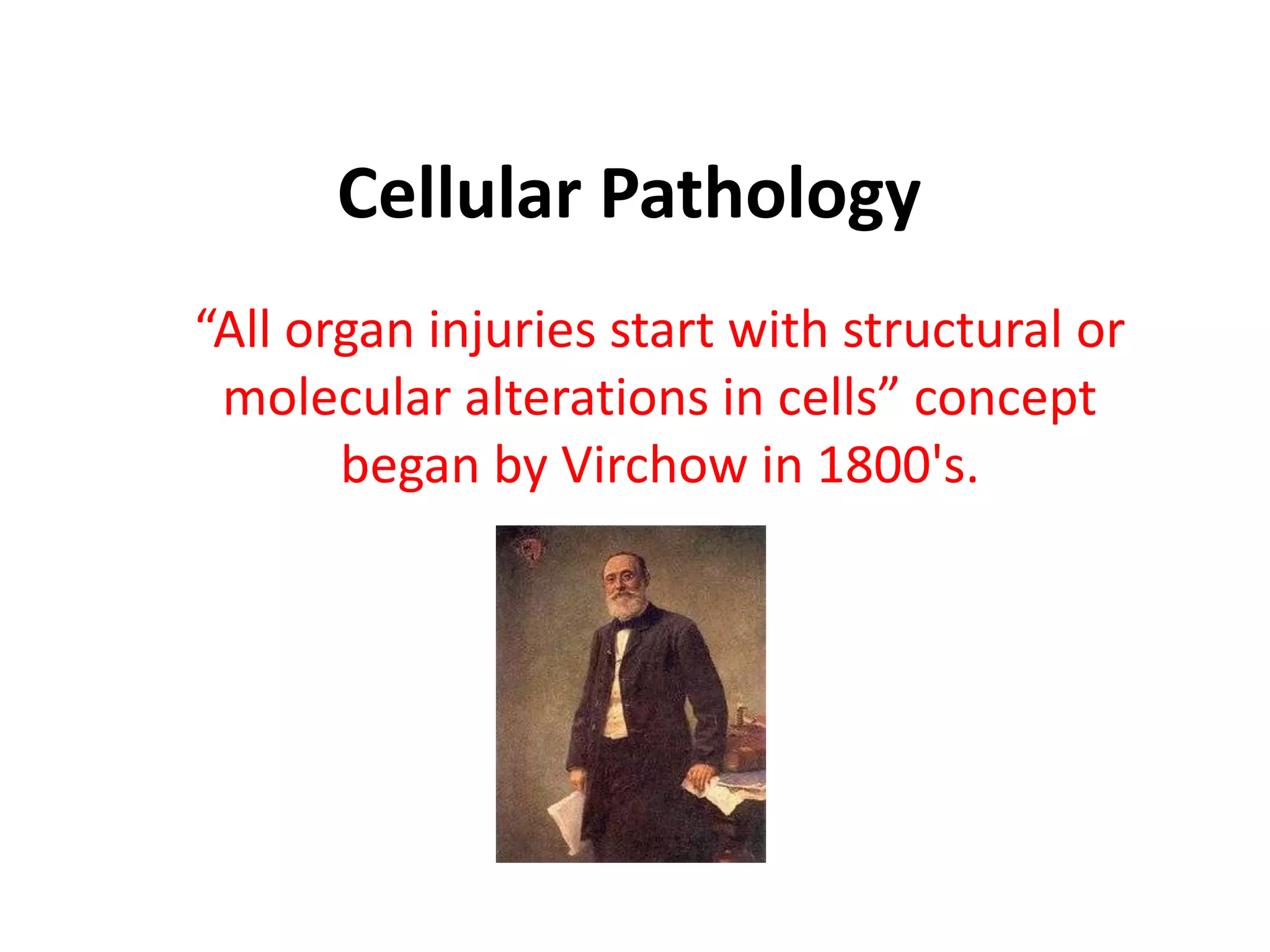
Cellular Pathology“All organ injuries start with structural or molecular alterations in cells” concept began by Virchow in 1800's.
NORMAL CELL
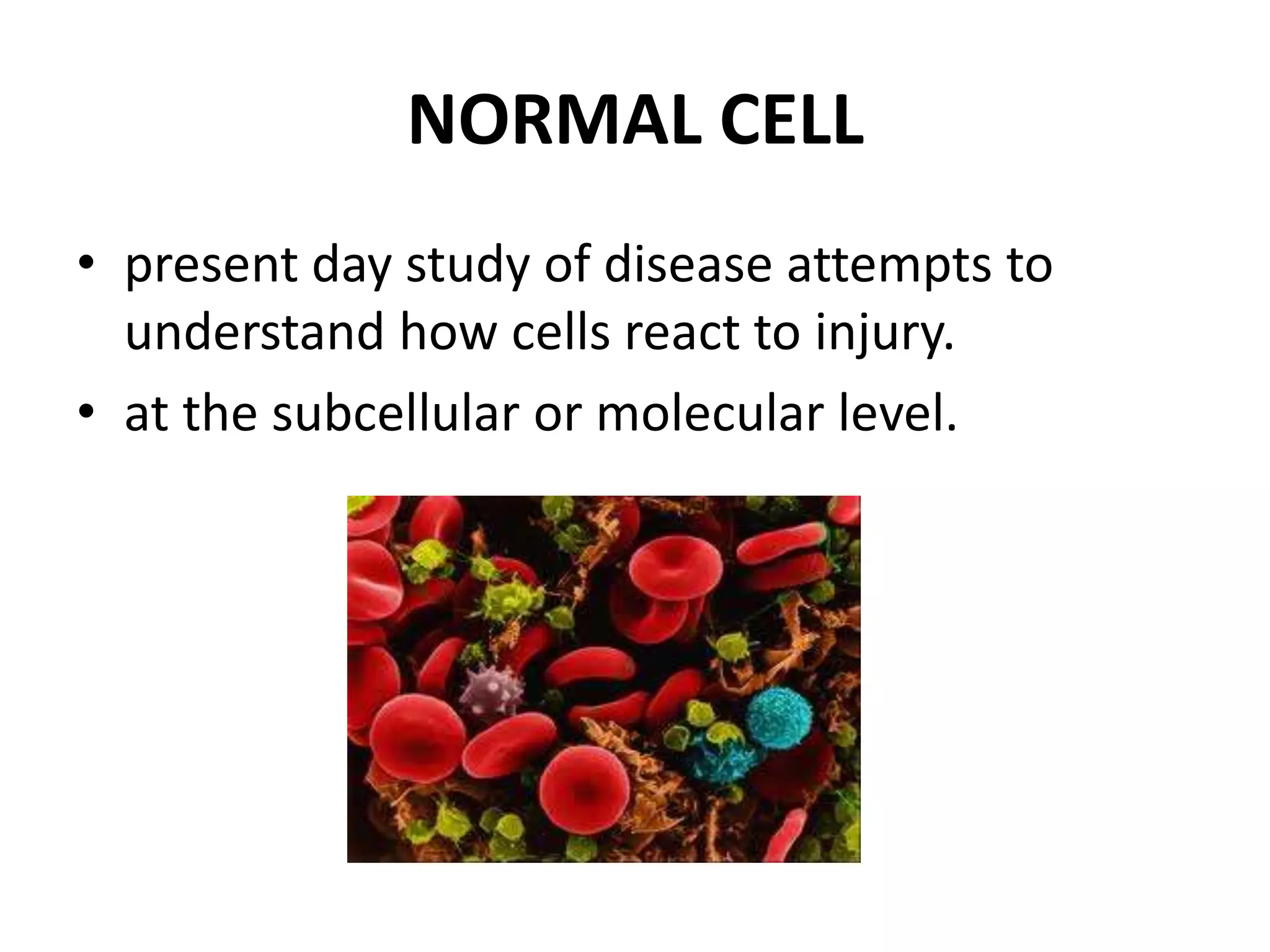
NORMAL CELLpresent day study of disease attempts to understand how cells react to injury.at the subcellular or molecular level.
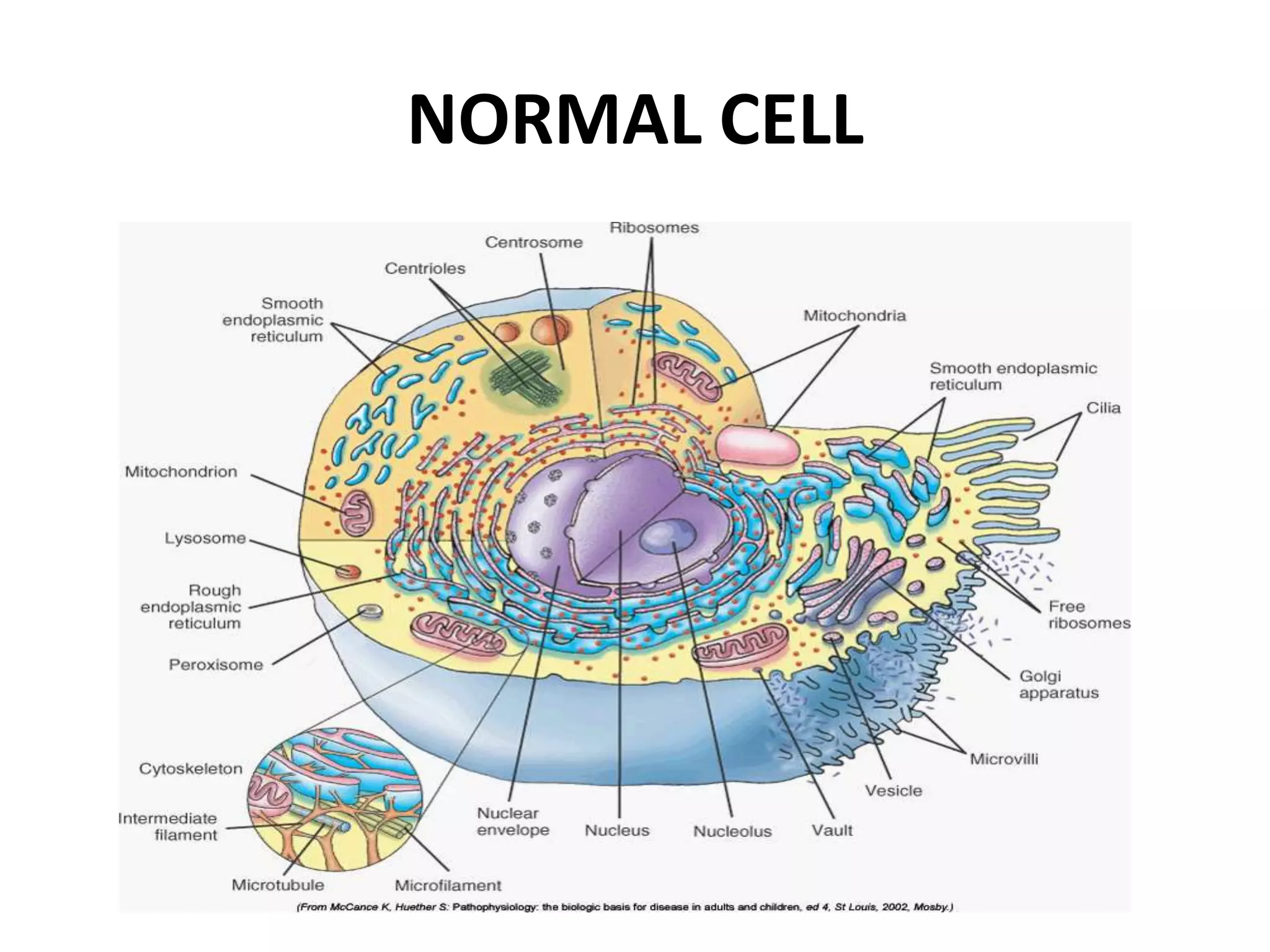
NORMAL CELLall  cells share the basic organelles for the synthesis of proteins, lipids, carbohydrates; energy production.transport of ions and other substances.to understand pathology, review normal structure and function of cells.“you cannot appreciate the abnormal before you understand            the normal”
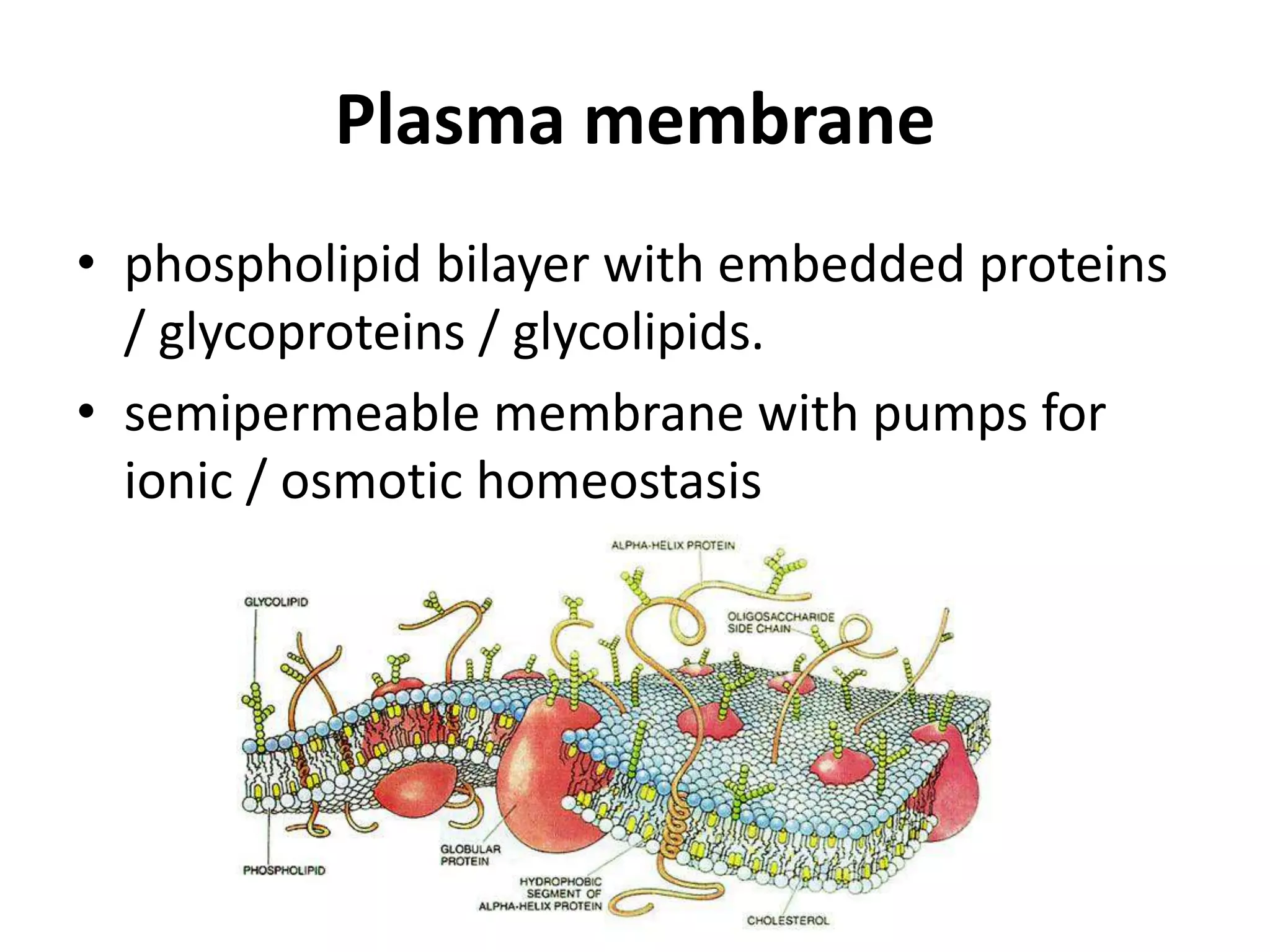
Plasma membranephospholipid bilayer with embedded proteins / glycoproteins / glycolipids.semipermeable membrane with pumps for ionic / osmotic homeostasis
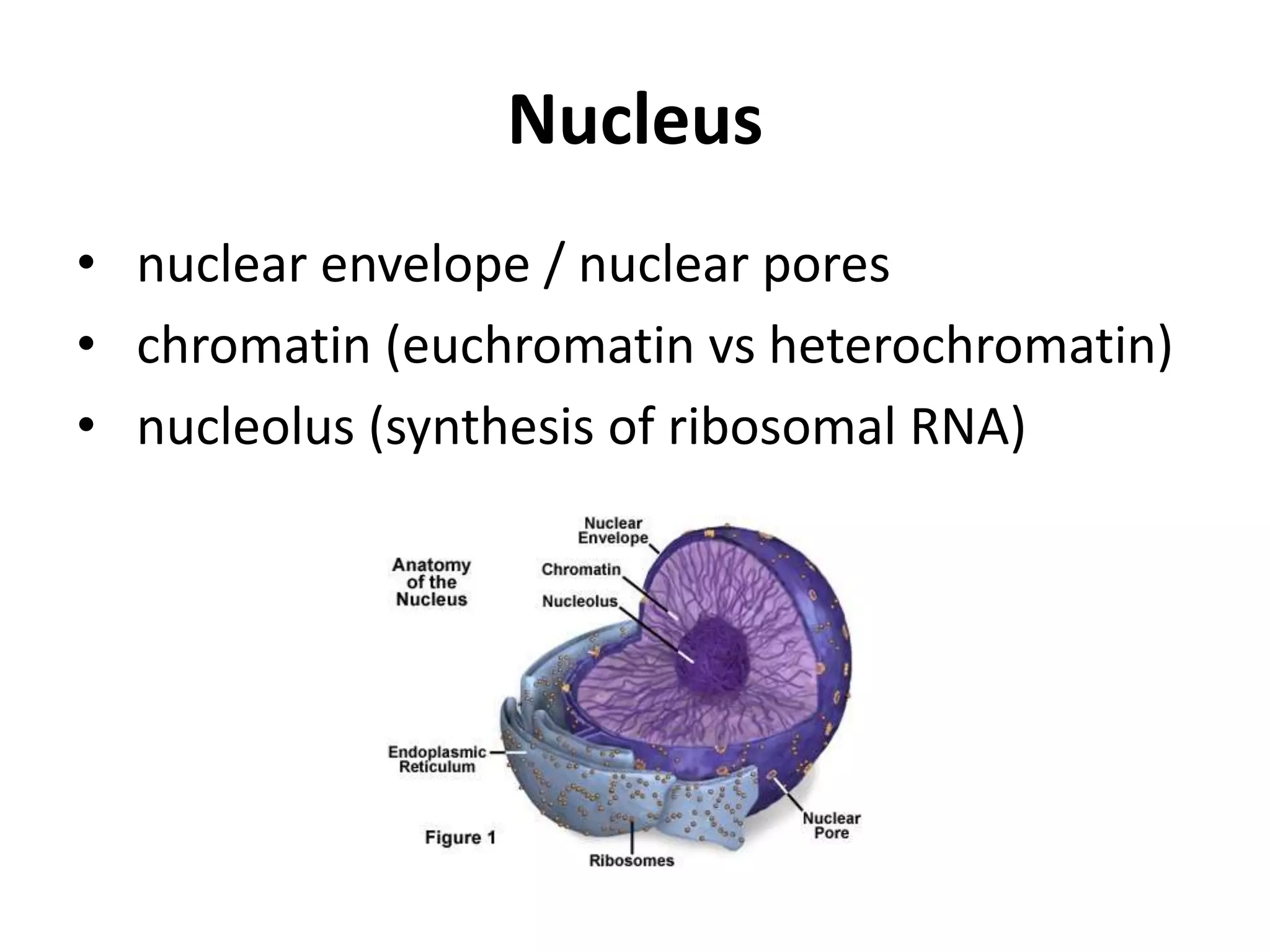
Nucleus nuclear envelope / nuclear poreschromatin (euchromatinvsheterochromatin)nucleolus (synthesis of ribosomal RNA)
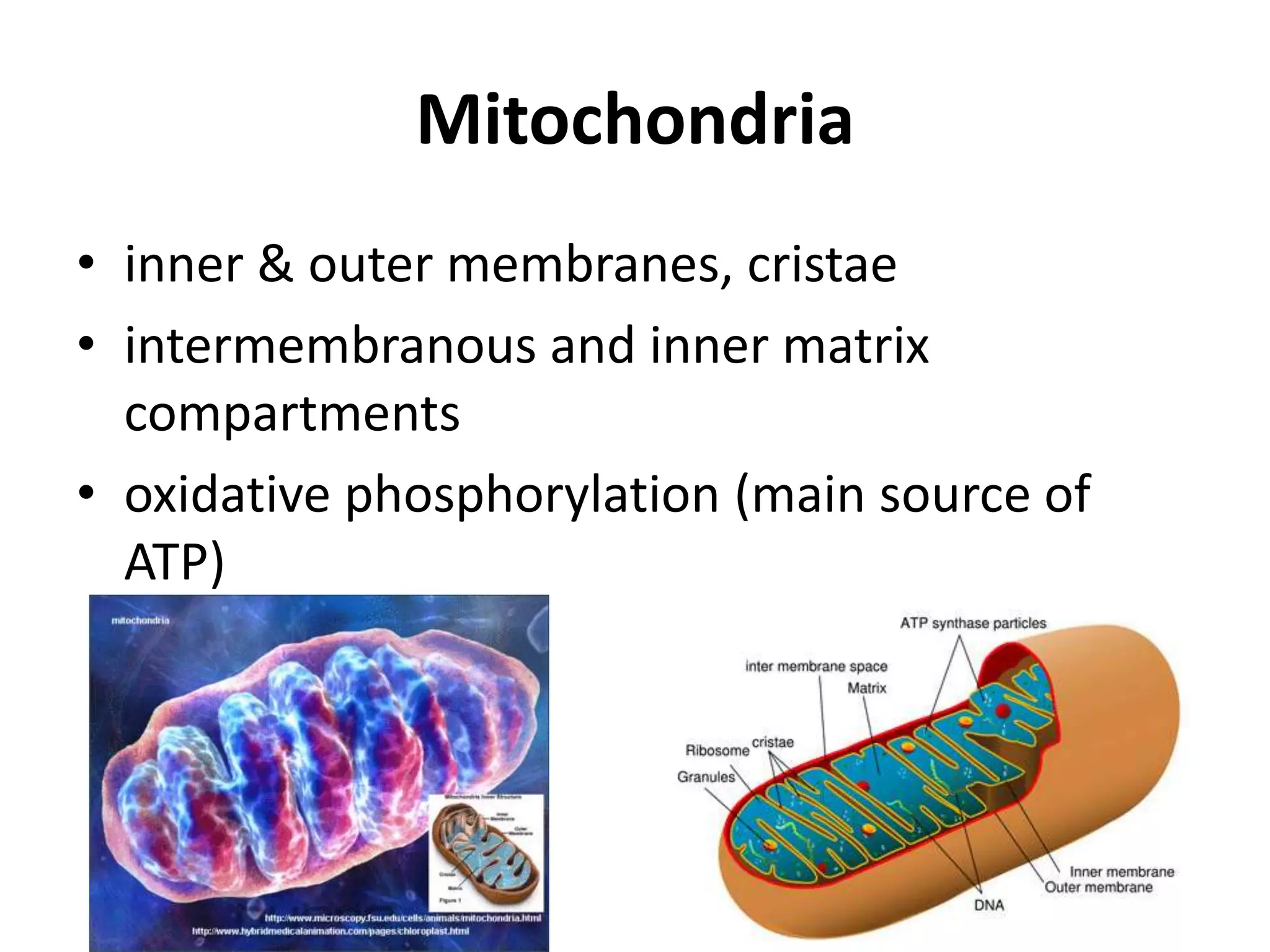
Mitochondriainner & outer membranes, cristaeintermembranousand inner matrix compartmentsoxidative phosphorylation (main source of ATP)
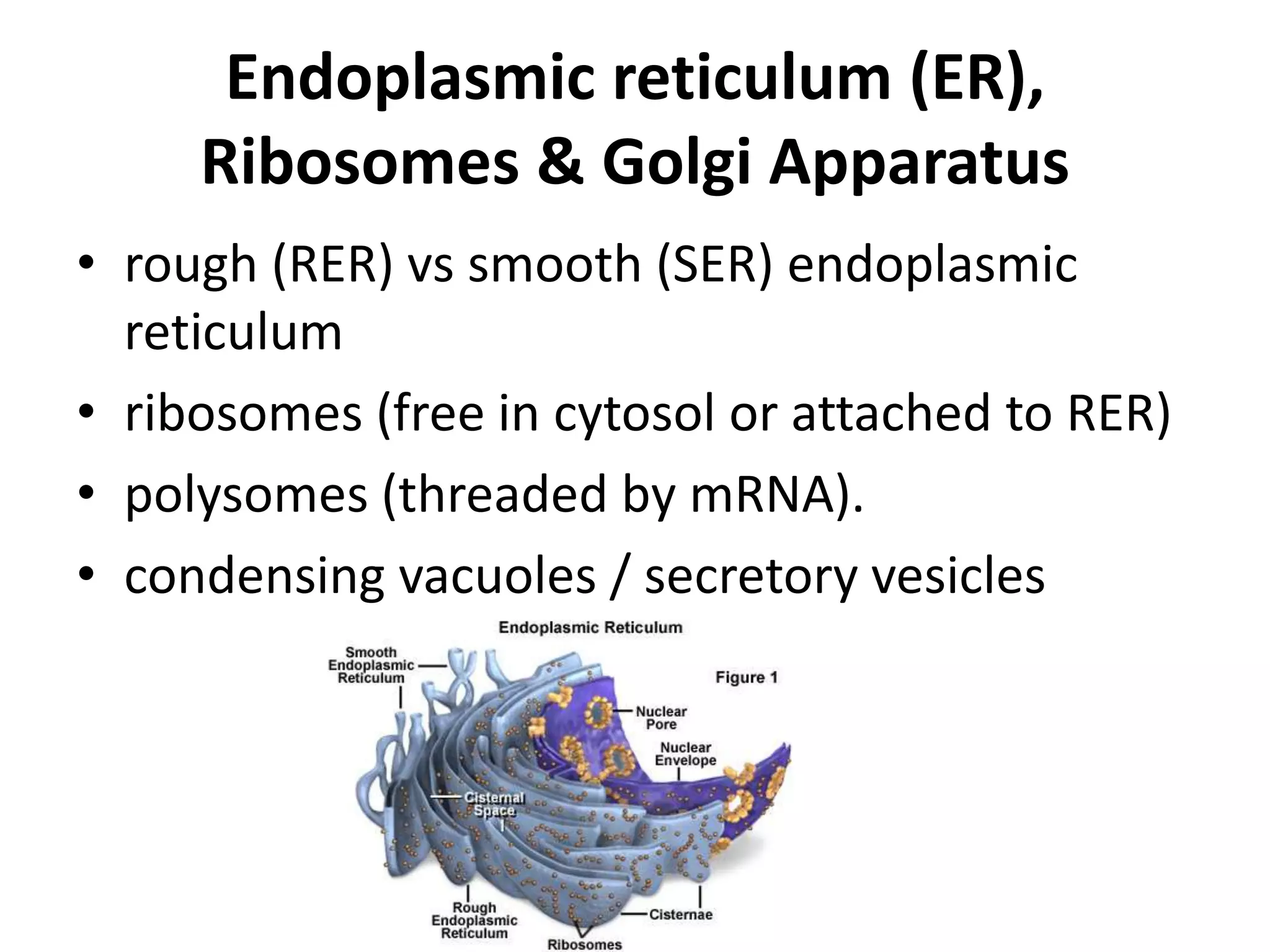
Endoplasmic reticulum (ER),Ribosomes & Golgi Apparatusrough (RER) vs smooth (SER) endoplasmic reticulumribosomes(free in cytosol or attached to RER)polysomes(threaded by mRNA).condensing vacuoles / secretoryvesicles
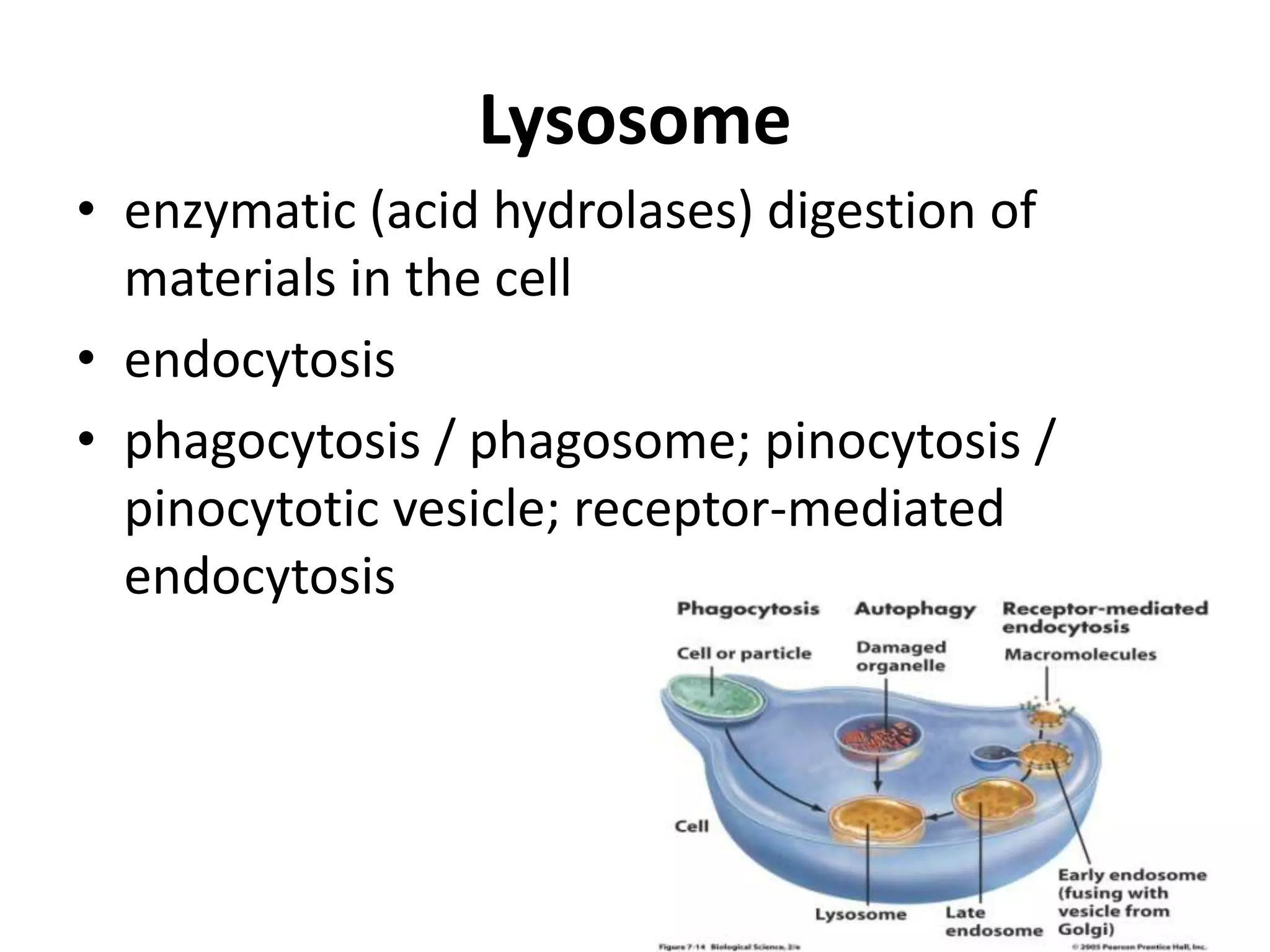
Lysosomeenzymatic (acid hydrolases) digestion of materials in the cellendocytosisphagocytosis/ phagosome; pinocytosis / pinocytotic vesicle; receptor-mediated endocytosis
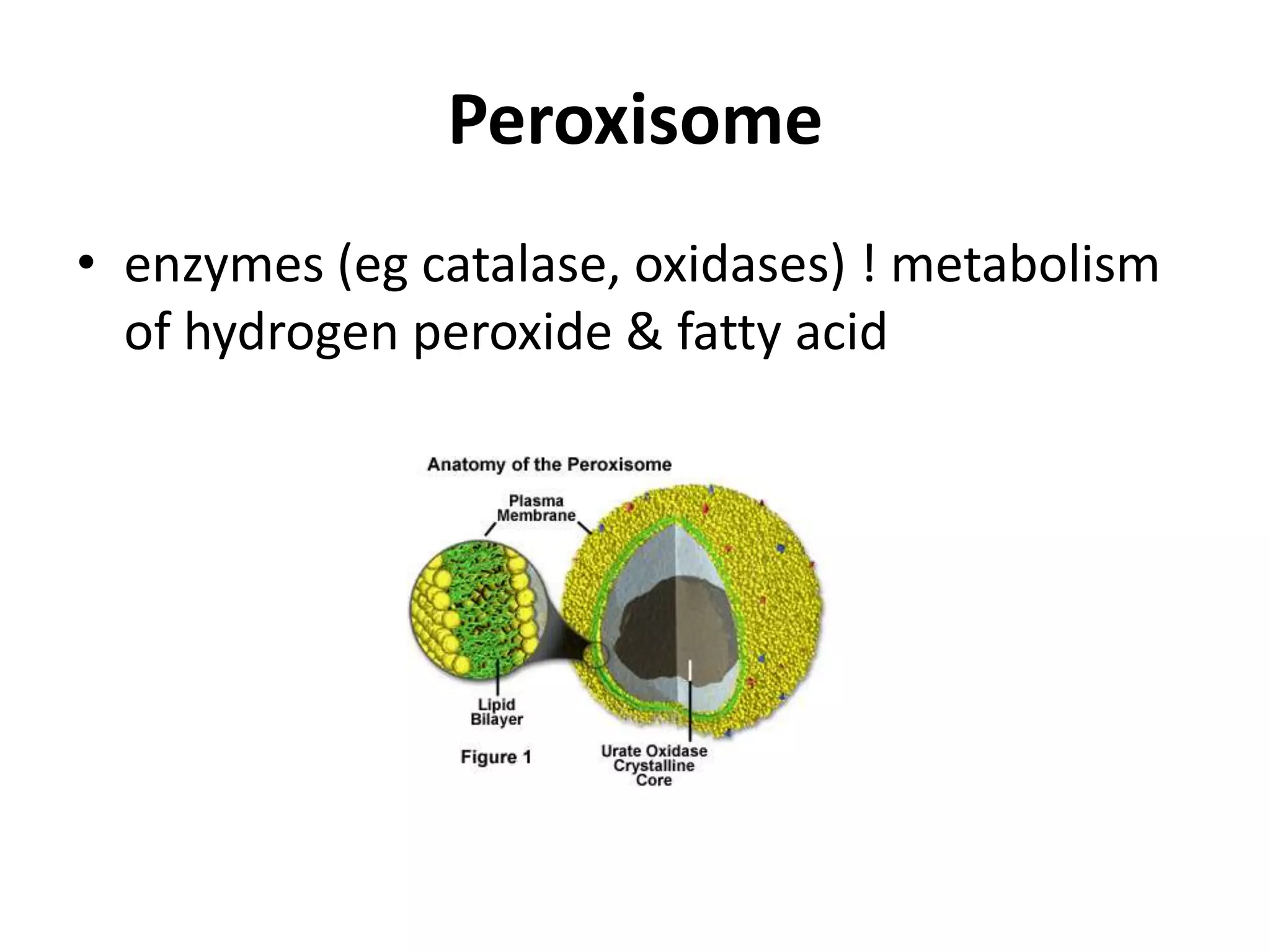
Peroxisomeenzymes (egcatalase, oxidases) ! metabolism of hydrogen peroxide & fatty acid
CELL ADAPTATION, CELL INJURY and CELL DEATHDEFINITIONS AND TERMINOLOGYHomeostasis : cells are able to maintain normal structure and function (eg ion balance, pH, energy metabolism) in response to normal physiologic demands.
Cellular Adaptationas cells encounter stresses, either excessive physiologic demand or some pathologic stimuli, they may make functional or structural adaptations to maintain viability / homeostasis.
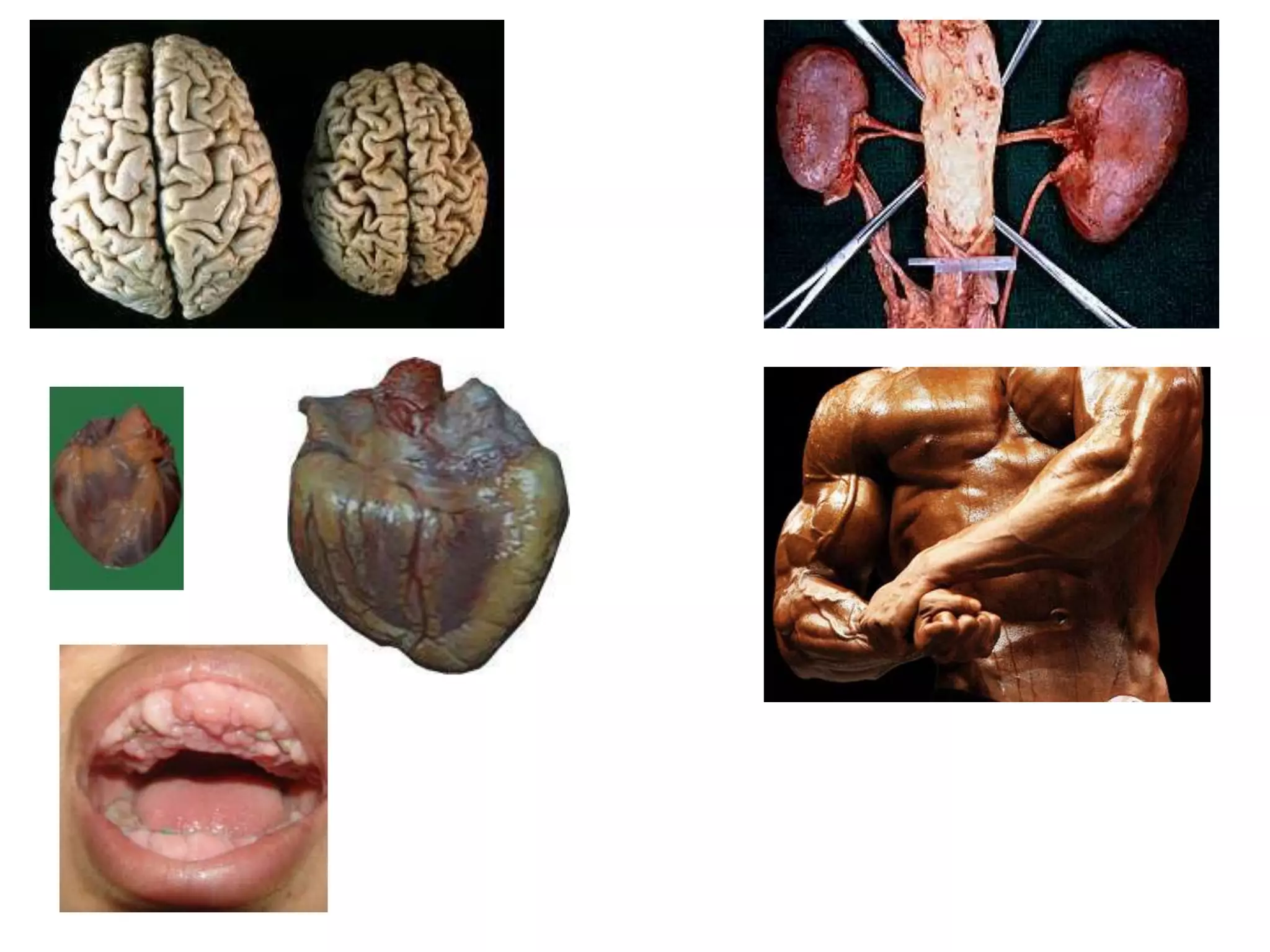
Cellular Adaptationcells may respond to these stimuli by either increasing or decreasing their content of specific organelles.adaptive processes: atrophy, hypertrophy, hyperplasia and metaplasia are forms of adaptation.
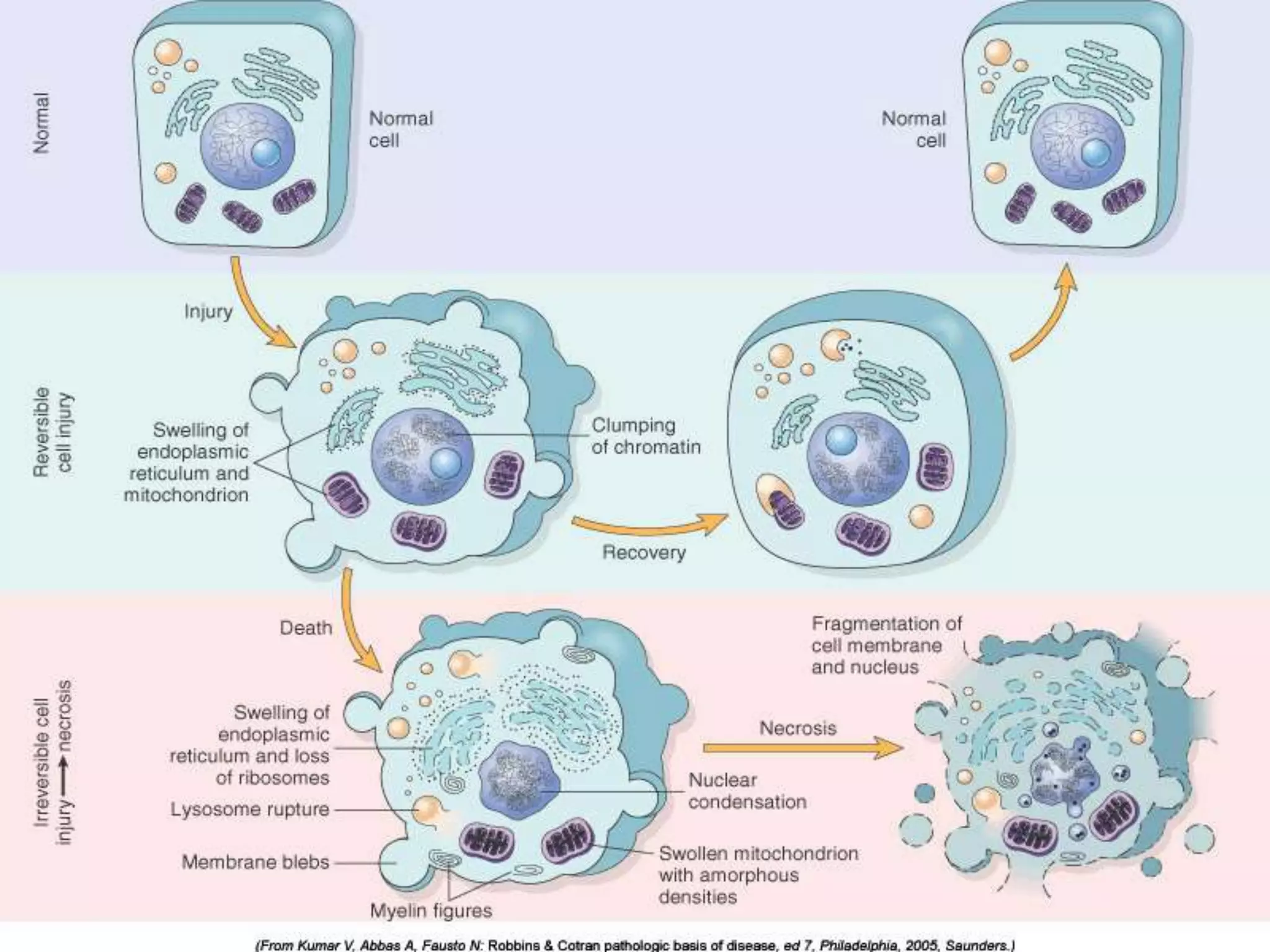
Cell Injuryif the limits of adaptive response are exceeded, or in certain instances when adaptation is not possible, a sequence of events called cell injury occurs.
Cell Injurya) Reversible Cell Injuryremoval of stress will result in complete structural and functional integrity to be restored.
Cell Injury -> Cell DeathIrreversible Cell Injury / Cell Deathif stimulus persists (or severe enough from the start) the cell will suffer irreversible cell injury and death.cell death is one of the most crucial events in pathology and can affect any type of cell.
Cell DeathNecrosis: type of cell death characterized by severe membrane injury and enzymatic degradation; always a pathologic process.Apoptosis: regulated form of cell death; can be physiologic or pathologic process.

Cellular pathology

  • 1.
    Cellular Pathology“All organinjuries start with structural or molecular alterations in cells” concept began by Virchow in 1800's.
  • 2.
  • 3.
    NORMAL CELLpresent daystudy of disease attempts to understand how cells react to injury.at the subcellular or molecular level.
  • 4.
    NORMAL CELLall cells share the basic organelles for the synthesis of proteins, lipids, carbohydrates; energy production.transport of ions and other substances.to understand pathology, review normal structure and function of cells.“you cannot appreciate the abnormal before you understand the normal”
  • 5.
    Plasma membranephospholipid bilayerwith embedded proteins / glycoproteins / glycolipids.semipermeable membrane with pumps for ionic / osmotic homeostasis
  • 6.
    Nucleus nuclear envelope/ nuclear poreschromatin (euchromatinvsheterochromatin)nucleolus (synthesis of ribosomal RNA)
  • 7.
    Mitochondriainner & outermembranes, cristaeintermembranousand inner matrix compartmentsoxidative phosphorylation (main source of ATP)
  • 8.
    Endoplasmic reticulum (ER),Ribosomes& Golgi Apparatusrough (RER) vs smooth (SER) endoplasmic reticulumribosomes(free in cytosol or attached to RER)polysomes(threaded by mRNA).condensing vacuoles / secretoryvesicles
  • 9.
    Lysosomeenzymatic (acid hydrolases)digestion of materials in the cellendocytosisphagocytosis/ phagosome; pinocytosis / pinocytotic vesicle; receptor-mediated endocytosis
  • 10.
    Peroxisomeenzymes (egcatalase, oxidases)! metabolism of hydrogen peroxide & fatty acid
  • 11.
    CELL ADAPTATION, CELLINJURY and CELL DEATHDEFINITIONS AND TERMINOLOGYHomeostasis : cells are able to maintain normal structure and function (eg ion balance, pH, energy metabolism) in response to normal physiologic demands.
  • 12.
    Cellular Adaptationas cellsencounter stresses, either excessive physiologic demand or some pathologic stimuli, they may make functional or structural adaptations to maintain viability / homeostasis.
  • 13.
    Cellular Adaptationcells mayrespond to these stimuli by either increasing or decreasing their content of specific organelles.adaptive processes: atrophy, hypertrophy, hyperplasia and metaplasia are forms of adaptation.
  • 15.
    Cell Injuryif thelimits of adaptive response are exceeded, or in certain instances when adaptation is not possible, a sequence of events called cell injury occurs.
  • 16.
    Cell Injurya) ReversibleCell Injuryremoval of stress will result in complete structural and functional integrity to be restored.
  • 17.
    Cell Injury ->Cell DeathIrreversible Cell Injury / Cell Deathif stimulus persists (or severe enough from the start) the cell will suffer irreversible cell injury and death.cell death is one of the most crucial events in pathology and can affect any type of cell.
  • 19.
    Cell DeathNecrosis: typeof cell death characterized by severe membrane injury and enzymatic degradation; always a pathologic process.Apoptosis: regulated form of cell death; can be physiologic or pathologic process.